
This lesson synthesizes your knowledge of road rules and control into the practice of defensive riding, a core requirement for any motorcyclist on Belgian roads. You will learn to move beyond just obeying laws to actively managing risks, ensuring you can anticipate the errors of others and maintain a safe path in all traffic conditions.

Lesson content overview
Motorcycling offers an exhilarating sense of freedom, but it also demands a heightened level of awareness and a proactive approach to safety. This lesson introduces the critical concept of defensive riding, a comprehensive mindset that empowers you to anticipate risks, manage the space around you, and ultimately take control of your safety on the road. It's about moving beyond simply reacting to hazards and instead developing the foresight to avoid dangerous situations before they even arise.
Defensive riding is a disciplined approach to operating your motorcycle that prioritizes anticipation, risk assessment, and continuous space management. Rather than merely adhering to traffic laws, it involves actively looking for potential hazards, predicting the actions of other road users, and planning an escape route at all times. This proactive mindset is crucial for every motorcyclist, as it significantly reduces the likelihood of accidents and helps mitigate their severity when they do occur.
Motorcyclists are inherently more vulnerable than occupants of other vehicles due to the lack of protective enclosure. This increased vulnerability means that even minor incidents can have serious consequences. Defensive riding acts as your primary layer of protection, turning you into a more aware, prepared, and skilled rider. By continuously monitoring your environment and anticipating potential dangers, you can make timely decisions that prevent collisions, maintain control of your motorcycle, and ensure your safe arrival at your destination. It synthesizes many elements from your Comprehensive Belgian Motorcycle Theory Course, drawing on knowledge of road signs, traffic laws, rider positioning, braking techniques, and risk management to create a holistic safety strategy.
Defensive riding is built upon several interconnected principles, each contributing to a robust safety strategy. Mastering these pillars will transform your riding, making you safer and more confident on Belgian roads.
Situational awareness is the foundation of defensive riding. It's the ongoing process of perceiving your surroundings, understanding their meaning, and projecting future statuses to anticipate potential hazards. It means knowing what is happening around you, what might happen next, and how your actions could influence the situation.
Effective scanning is more than just looking straight ahead. It involves a systematic visual search of the entire road environment – ahead, to the sides, and behind. This continuous movement of your eyes helps you detect early warning signs of trouble.
Practical Meaning: Regularly move your eyes:
Keep Your Eyes Moving: Avoid fixating on a single object. A constant, active visual sweep ensures you gather all necessary information and reduces the chance of 'target fixation' – inadvertently steering towards a hazard you are staring at.
Common Misunderstandings: A single glance is sufficient; only immediate hazards need attention. This limited scanning prevents you from identifying developing situations.
Anticipation is the ability to predict how traffic participants will behave and prepare for possible outcomes. It's about looking beyond the immediate and asking "What if?"
Practical Meaning:
The act of predicting potential events or actions of other road users based on their behavior, positioning, and the surrounding road context, allowing for pre-emptive responses.
Risk minimization involves adopting riding practices that significantly reduce both the probability and the impact of potential accidents. It's about making conscious choices to enhance safety.
One of the most critical risk minimization techniques is maintaining a safe following distance. This creates a crucial time and space buffer, giving you sufficient time to react to sudden braking or unexpected maneuvers by the vehicle ahead.
Practical Meaning: The "two-second rule" is a common guideline in good conditions:
Common Misunderstandings: Assuming risk can be eliminated entirely; underestimating the impact of speed on stopping distance. Remember, a larger gap buys you more time to react and greater space to maneuver.
Your speed must always be appropriate for the prevailing conditions, not just the posted speed limit. This includes traffic flow, road surface, weather, visibility, and your own riding experience.
Practical Meaning:
Motorcyclists are often less visible to other road users. Actively enhancing your visibility is a key risk minimization strategy.
Techniques:
Space management is the active creation and preservation of a safety zone around your motorcycle. This zone acts as a buffer, providing you with time and space to react to unforeseen events.
Definition:
The strategic use of road space around your motorcycle to create and maintain safety margins, enhancing visibility and providing options for evasive maneuvers.
Your position within a lane significantly impacts your visibility, your view of the road ahead, and your escape options.
Practical Meaning:
Motorcyclists have the right to use the full width of their lane, just like any other vehicle. This is crucial for creating adequate space and setting up for turns.
Practical Meaning:
Do not share a lane with another vehicle (lane splitting or filtering is regulated in Belgium, but always maintain a safe distance and only when traffic is stationary or very slow). Your lane is yours alone to ensure adequate space for maneuver.
An escape path is a clear, unobstructed route available for an emergency maneuver at any given moment. It's your "Plan B" if something unexpected happens.
Definition:
A pre-identified, unobstructed route that a rider can take to safely avoid a sudden hazard or collision, requiring constant awareness and space management.
This involves consciously leaving space around your motorcycle to ensure an escape route is always present.
Implementation:
Certain positions on the road can severely limit your escape options.
Implementation:
Predictive riding takes situational awareness to the next level by interpreting the potential intentions and actions of other road users based on their behavior, vehicle position, and the overall context.
Often, drivers give subtle cues about their next move, even before signaling.
Techniques:
Understanding typical traffic flow and common maneuvers helps you anticipate what might happen next.
Practical Meaning:
Common Misunderstandings: Assuming your own right-of-way removes the need for caution. Even if you have priority, a defensive rider assumes others might not yield and is prepared to react.
Understanding and adhering to specific Belgian traffic regulations is integral to defensive riding, as these rules provide the framework for predictable and safe road use.
Belgian law mandates maintaining a safe following distance. While not always specified in exact meters (it can vary by speed and conditions), the principle is clear: you must be able to stop safely if the vehicle in front brakes suddenly. This is legally mandatory and directly supports ensuring sufficient stopping distance. For instance, maintaining a proper distance allows you to brake safely if the car ahead stops abruptly, preventing a rear-end collision.
Motorcyclists must ride within the marked lane, respecting all road markings. This is mandatory and ensures predictable traffic flow and enhances safety for all road users. For example, riding in the left-hand portion of a lane on a narrow road allows you more space from oncoming traffic or roadside hazards, provided you remain within your lane. Incorrect positioning can block other traffic or reduce your own safety margin.
The Belgian Road Code places significant emphasis on right-of-way rules, especially at uncontrolled intersections where you must give way to vehicles approaching from your right. This rule is mandatory for orderly traffic flow and safety. For instance, yielding to a cyclist approaching from your right at a crossroads without signs is a correct and mandatory action. Ignoring right-of-way is a common cause of collisions.
You must never exceed posted speed limits, which are mandatory on all road types in Belgium. Speed limits are set for safety and legal compliance. Reducing your speed before entering a school zone, for instance, is a critical defensive riding practice that respects the legal limits and protects vulnerable road users. Failure to adjust speed for road conditions, even if below the limit, can increase stopping distance and risk.
Even experienced riders can fall into habits that compromise safety. Recognizing these common violations helps you to actively avoid them:
Defensive riding is not a static set of rules; it's a dynamic approach that must adapt to changing circumstances.
Adverse weather significantly impacts visibility and road surface conditions.
Each road environment presents unique challenges requiring adjusted defensive strategies.
Motorcyclists must exercise extreme caution around pedestrians and cyclists, who are the most vulnerable road users.
The state of your motorcycle and how it's loaded directly affects its handling and stopping distance.
The benefits of consistently applying defensive riding techniques are clear:
Practice Makes Perfect: Integrate these defensive strategies into every ride. Over time, they will become second nature, enhancing your safety without conscious effort.
Let's apply these concepts to common Belgian road situations.
Setting: You are riding your motorcycle on a residential street in Belgium with clear weather and moderate traffic, approaching an intersection with no traffic lights or signs indicating priority.
Decision Point: How do you approach and navigate this uncontrolled intersection safely, considering the Belgian right-of-way rule?
Correct Behavior (Defensive Riding):
Incorrect Behavior: Assuming you have priority without checking, leading to a collision, or approaching too fast to react.
Setting: You are riding through a busy urban street with heavy, stop-and-go traffic, flanked by parked cars and occasional pedestrians.
Decision Point: How do you maintain safety and manage space in this congested environment?
Correct Behavior (Defensive Riding):
Incorrect Behavior: Riding too close to the car in front, leaving no room for sudden stops, or hugging parked cars.
Setting: You are on a two-lane road (one lane in each direction) and encounter a large truck moving slower than the speed limit.
Decision Point: How do you safely overtake the truck while minimizing risks?
Correct Behavior (Defensive Riding):
Incorrect Behavior: Riding directly in the truck’s blind spot for an extended period, attempting to overtake with insufficient visibility, or cutting back in too soon.
Defensive riding and situational awareness are not just concepts; they are continuous practices that integrate all aspects of safe motorcycling. By consistently applying these strategies, you not only reduce your risk of accidents but also become a more skilled, confident, and responsible motorcyclist. Always remember that your safety is primarily in your hands. Ride defensively, ride aware, and enjoy the roads safely.
This lesson teaches defensive riding as an essential proactive safety mindset for Belgian motorcyclists, moving beyond rule memorization to active hazard anticipation and risk management. Key techniques include systematic road scanning at multiple distances, maintaining appropriate following distances using the two-second rule adjusted for conditions, and strategic lane positioning that maximizes visibility while preserving escape routes. The lesson emphasizes predictive riding—interpreting driver behavior through wheel direction, body language, and vehicle movement—and covers specific Belgian regulations including right-of-way rules at uncontrolled intersections and lane positioning requirements. By mastering these strategies, riders develop the observational skills and spatial awareness needed to avoid common accident scenarios and handle diverse traffic situations safely.
A short set of high-value points that capture the most important learning from this lesson.
Defensive riding is a proactive mindset that prioritizes anticipation and continuous risk assessment rather than simply reacting to hazards.
Effective scanning requires systematic visual coverage at different distances: 12-15 seconds ahead, 4-6 seconds mid-range, and mirrors checked every 5-8 seconds.
Always maintain a two-second following distance in good conditions, increasing to three or four seconds in adverse weather, heavy traffic, or when carrying a load.
Your lane position should maximize visibility and always preserve an escape path; never allow yourself to become boxed in between vehicles.
Predictive riding means interpreting subtle cues from other road users—wheel direction, driver body language, and vehicle movement—to anticipate their intentions before they signal or act.
Explore all units and lessons included in this driving theory course.
The Belgian Road Code requires yielding to traffic approaching from your right at uncontrolled intersections, but defensive riding means assuming others may not yield and being prepared to react.
Motorcyclists have the legal right to use the full width of their lane to create safety buffers and avoid road hazards.
Avoid lingering in the blind spots of large vehicles; if you cannot see their mirrors, they cannot see you.
In Belgium, lane splitting or filtering is regulated and should only be attempted when traffic is stationary or moving very slowly.
Target fixation—the tendency to steer toward a hazard you are staring at—can be avoided by keeping your eyes moving and scanning systematically.
Assuming right-of-way means others will yield; even with legal priority, a defensive rider prepares to stop if necessary.
Failing to adjust speed for road conditions—riding at the posted limit on wet or gravel surfaces dramatically increases stopping distance.
Riding directly alongside other vehicles for extended periods, especially large trucks, which eliminates escape options and creates blind spot risks.
Positioning too close to parked cars, leaving no buffer for suddenly opening doors or pedestrians stepping out.
Approaching intersections without establishing an escape path or considering what might happen if the vehicle behind fails to stop.
Lesson content overview
A short set of high-value points that capture the most important learning from this lesson.
Defensive riding is a proactive mindset that prioritizes anticipation and continuous risk assessment rather than simply reacting to hazards.
Effective scanning requires systematic visual coverage at different distances: 12-15 seconds ahead, 4-6 seconds mid-range, and mirrors checked every 5-8 seconds.
Always maintain a two-second following distance in good conditions, increasing to three or four seconds in adverse weather, heavy traffic, or when carrying a load.
Your lane position should maximize visibility and always preserve an escape path; never allow yourself to become boxed in between vehicles.
Predictive riding means interpreting subtle cues from other road users—wheel direction, driver body language, and vehicle movement—to anticipate their intentions before they signal or act.
Explore all units and lessons included in this driving theory course.
The Belgian Road Code requires yielding to traffic approaching from your right at uncontrolled intersections, but defensive riding means assuming others may not yield and being prepared to react.
Motorcyclists have the legal right to use the full width of their lane to create safety buffers and avoid road hazards.
Avoid lingering in the blind spots of large vehicles; if you cannot see their mirrors, they cannot see you.
In Belgium, lane splitting or filtering is regulated and should only be attempted when traffic is stationary or moving very slowly.
Target fixation—the tendency to steer toward a hazard you are staring at—can be avoided by keeping your eyes moving and scanning systematically.
Assuming right-of-way means others will yield; even with legal priority, a defensive rider prepares to stop if necessary.
Failing to adjust speed for road conditions—riding at the posted limit on wet or gravel surfaces dramatically increases stopping distance.
Riding directly alongside other vehicles for extended periods, especially large trucks, which eliminates escape options and creates blind spot risks.
Positioning too close to parked cars, leaving no buffer for suddenly opening doors or pedestrians stepping out.
Approaching intersections without establishing an escape path or considering what might happen if the vehicle behind fails to stop.
Explore search topics learners often look for when studying Defensive Riding Strategies and Situational Awareness. These topics reflect common questions about road rules, driving situations, safety guidance, and lesson level theory preparation for learners in Belgium.
Browse additional driving theory lessons that cover connected traffic rules, road signs, and common driving situations related to this topic. Improve your understanding of how different rules interact across everyday traffic scenarios.
Learn about frequent mistakes made in defensive riding and risk management, specifically in the context of Belgian traffic. Understand how to prevent these errors and improve your overall safety on the road.

This lesson provides a step-by-step guide to executing a safe overtaking maneuver in compliance with Belgian law. It covers the necessary pre-maneuver checks, proper signaling, and how to accurately judge the speed and distance of oncoming traffic. You will learn the correct procedure for passing a vehicle and safely returning to your original lane.
This lesson offers specific strategies for motorcyclists navigating roundabouts in Belgium. It covers the rules for entering the roundabout, including yielding to circulating traffic, and how to choose the correct lane for your intended exit. The content stresses the importance of clear signaling and maintaining awareness of other vehicles during entry and exit maneuvers.

This lesson explores the unique challenges presented by dense urban environments, including riding in heavy traffic and navigating narrow streets. It provides strategies for positioning your motorcycle to avoid the 'dooring zone' of parked cars and to maintain visibility. You will learn defensive riding techniques to anticipate sudden actions from other drivers in congested conditions.

This lesson details a motorcyclist's obligations when approaching various types of crossings, including marked pedestrian and bicycle lanes. It emphasizes the legal requirement to yield to vulnerable road users and the importance of thorough visual checks before proceeding. You will learn how to maintain a safe distance and anticipate the movements of pedestrians and cyclists in urban areas.
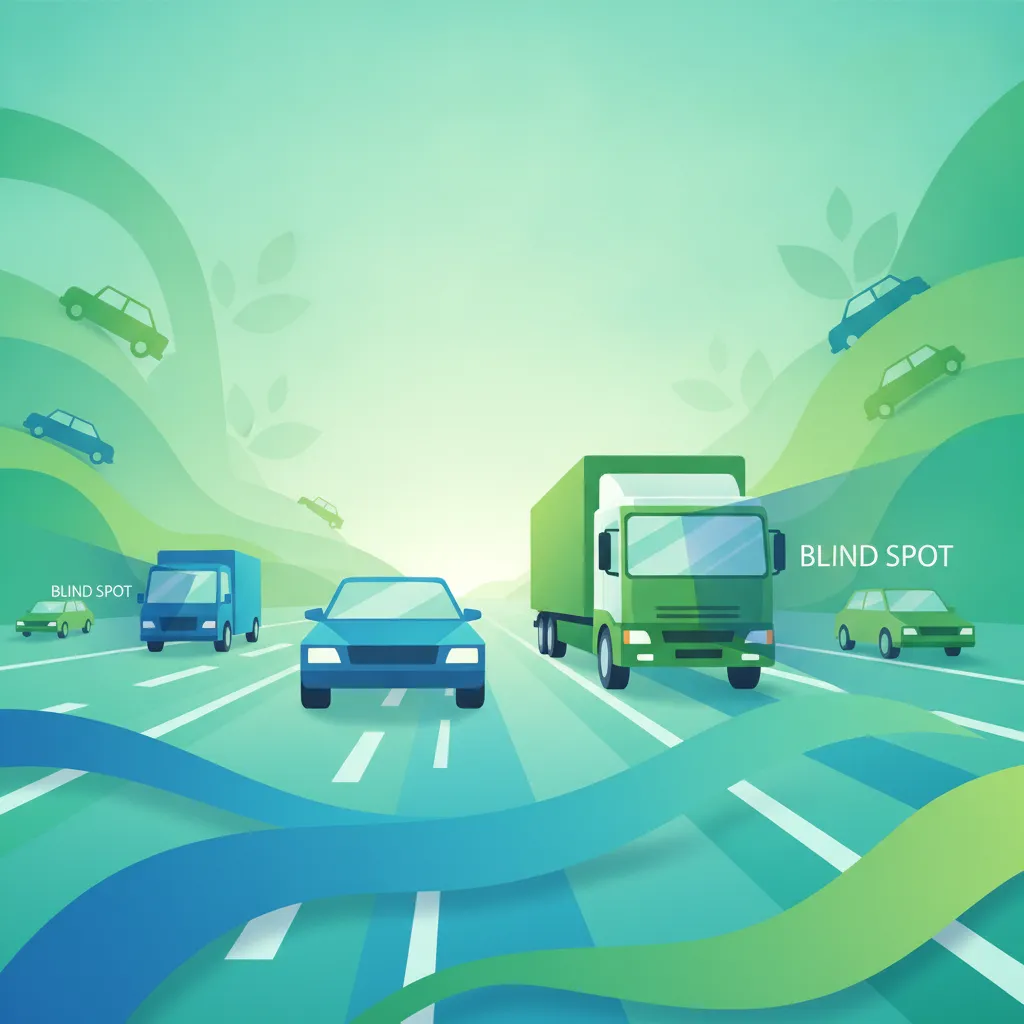
This lesson focuses on recognizing and staying out of the blind spots of other vehicles, especially large trucks and buses where 'no-zones' are significant. It provides practical strategies for managing your position on the road to ensure you remain visible to other drivers at all times. You will learn to anticipate lane changes and other maneuvers from vehicles that may not be aware of your presence.

This lesson provides a comprehensive guide to motorway riding, starting with the procedure for safely merging into high-speed traffic from a slip road. It details the importance of strict lane discipline, including the rules for overtaking and the proper use of lanes. You will also learn the correct technique for planning and executing a safe exit from the motorway.

This lesson details the specific rights and responsibilities of motorcyclists within the Belgian road system, focusing on the correct application of priority rules and safe overtaking. It covers the legal requirements for signaling intentions and adhering to proper road etiquette to ensure smooth traffic flow. The content emphasizes how riders must balance their rights with their safety obligations toward all other road users.
This lesson examines the operation of traffic light systems in Belgium, clarifying the meaning of red, amber, and green signals, including flashing lights and directional arrows. It details a motorcyclist's legal obligations when approaching and navigating signal-controlled intersections. The content also addresses specialized signals for pedestrians and trams that riders must recognize and respond to correctly.
This lesson focuses on the legal responsibilities mandated for all motorcyclists in Belgium, emphasizing strict adherence to the traffic code. It details a rider's obligation to conduct risk assessments, comply with speed limits, and maintain high safety standards. The content also clarifies the legal liability associated with traffic infractions and the importance of carrying correct documentation at all times.
This lesson provides a systematic approach to navigating intersections, emphasizing the importance of observation, speed control, and correct positioning. It reinforces the application of priority-from-the-right and other right-of-way rules in real-world junction scenarios. You will learn effective visual scanning techniques to anticipate the actions of other road users and ensure a safe passage.
Explore practical Belgian road scenarios to understand common hazards, anticipate other road users' actions, and apply defensive riding strategies. Enhance situational awareness for safer urban and rural rides.
This lesson examines the crucial psychological factors that influence riding safety, such as maintaining mental focus and managing stress. It explains the process of accurate risk perception and the dangers of both under-confidence and overconfidence. You will learn about effective decision-making techniques that are essential for navigating complex traffic situations safely and responsibly.
This lesson explores the unique challenges presented by dense urban environments, including riding in heavy traffic and navigating narrow streets. It provides strategies for positioning your motorcycle to avoid the 'dooring zone' of parked cars and to maintain visibility. You will learn defensive riding techniques to anticipate sudden actions from other drivers in congested conditions.

This lesson trains you to actively scan the road ahead for surface hazards that can compromise traction, such as oil spills, wet leaves, and loose gravel. It provides strategies for safely navigating these hazards, including avoidance maneuvers and gentle control inputs. You will also learn how to handle unexpected encounters with potholes and other road imperfections.
This lesson offers specific strategies for motorcyclists navigating roundabouts in Belgium. It covers the rules for entering the roundabout, including yielding to circulating traffic, and how to choose the correct lane for your intended exit. The content stresses the importance of clear signaling and maintaining awareness of other vehicles during entry and exit maneuvers.

This lesson details the specific precautions and techniques required for riding in rain and fog. It explains how water on the road affects tyre grip and braking distances, and how to avoid aquaplaning. You will learn the correct use of lights to be seen in low visibility and how to adjust your speed and following distance accordingly.
This lesson details a motorcyclist's obligations when approaching various types of crossings, including marked pedestrian and bicycle lanes. It emphasizes the legal requirement to yield to vulnerable road users and the importance of thorough visual checks before proceeding. You will learn how to maintain a safe distance and anticipate the movements of pedestrians and cyclists in urban areas.

This lesson provides instruction on how to react in an emergency situation, covering techniques for performing a rapid, controlled stop. It explains how to apply maximum braking force without locking the wheels and how to manage a skid if one occurs. You will also learn about avoidance maneuvers, such as swerving, and the psychological challenge of overcoming target fixation.
This lesson focuses on the legal responsibilities mandated for all motorcyclists in Belgium, emphasizing strict adherence to the traffic code. It details a rider's obligation to conduct risk assessments, comply with speed limits, and maintain high safety standards. The content also clarifies the legal liability associated with traffic infractions and the importance of carrying correct documentation at all times.
Driving safely requires anticipating potential hazards before they become immediate threats. This lesson covers hazard perception techniques, such as effective road scanning and identifying high-risk situations. Learners will practice recognizing common hazards and learn how to formulate a safe response plan in advance to avoid accidents.
This lesson provides a step-by-step guide to executing a safe overtaking maneuver in compliance with Belgian law. It covers the necessary pre-maneuver checks, proper signaling, and how to accurately judge the speed and distance of oncoming traffic. You will learn the correct procedure for passing a vehicle and safely returning to your original lane.
Find clear answers to common questions learners have about Defensive Riding Strategies and Situational Awareness. Learn how the lesson is structured, which driving theory objectives it supports, and how it fits into the overall learning path of units and curriculum progression in Belgium. These explanations help you understand key concepts, lesson flow, and exam focused study goals.
Legal compliance is about following the traffic code, while defensive riding is about actively managing risks you encounter, even when others break the law. In the Belgian theory exam, you must show you can identify potential dangers before they become unavoidable accidents.
Always scan ahead and check your mirrors regularly. The theory exam often tests your ability to spot a hazard early, so look for clues like flickering lights, movement near parked cars, or changing road surfaces that might suggest an imminent threat.
As a motorcyclist, you are vulnerable. Keeping a buffer zone allows you more time to react, maneuver, or brake if another road user makes an unpredictable move, significantly reducing your chance of collision.
Yes, but the application differs. In urban areas, focus is on intersections, cyclists, and car doors, whereas on motorways, the focus shifts to maintaining space at high speeds and anticipating lane changes from heavier vehicles.
Ready to focus your Belgian driving theory revision? Utilize our powerful search tool to pinpoint exact topics, road signs, or difficulty levels. Engage with practice questions that directly address your learning needs and solidify your understanding of Belgian traffic laws for your upcoming exam.