
Understanding how to correctly adjust your headrest is more than just a matter of comfort; it is a fundamental requirement for passive safety as mandated by Spanish traffic law. In this guide, you will learn the precise mechanics of headrest positioning to prevent severe neck injuries, which are among the most frequent insurance claims in Spain. This knowledge is essential for both your upcoming DGT theory exam and your future safety on the road.
Article content overview
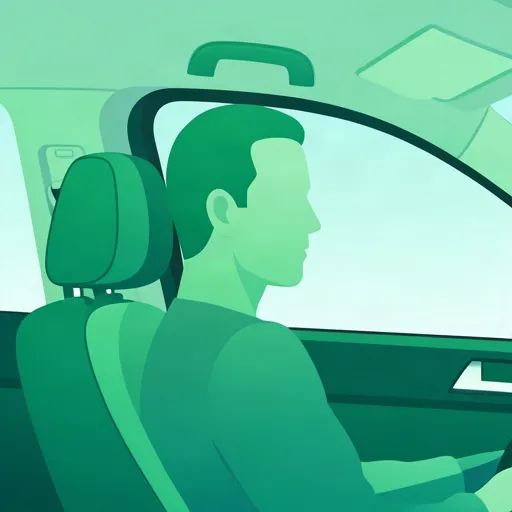
For many learner drivers preparing for the DGT theory exam, vehicle maintenance and safety checks are often viewed through the lens of legal compliance. However, correctly adjusting your car's headrest is one of the most critical passive safety habits you can adopt. Far from being a mere convenience feature for resting your head during long trips, the headrest—or head restraint—is a sophisticated safety device engineered to prevent life-altering neck injuries in the event of a rear-end collision.
In Spain, whiplash injuries resulting from rear-end accidents represent a significant portion of insurance claims, costing the healthcare system and insurance providers hundreds of millions of euros annually. By mastering the correct positioning of your headrest, you are not only fulfilling your duty to adhere to Spanish traffic safety standards but also actively protecting yourself and your passengers from the most common type of traffic-related injury.
In your DGT theory studies, you will encounter the distinction between active and passive safety systems. Active safety features, such as Anti-lock Braking Systems (ABS) or Electronic Stability Control (ESC), are designed to prevent an accident from happening. Passive safety features, conversely, come into play once an accident has already occurred, with the primary goal of minimizing injuries to the vehicle's occupants.
The headrest is classified as a passive safety system. Its technical purpose is to limit the rearward movement of the head during a crash, effectively preventing the "whiplash" effect—a sudden, violent hyperextension of the neck. Modern headrests are manufactured according to strict safety standards, such as the UNECE R25 regulation, which dictates their energy absorption, height, and structural integrity.
To be effective, a headrest must be precisely calibrated to the occupant's physique. Simply having a headrest installed is insufficient if it is improperly adjusted. When a rear-end collision occurs, the seat back pushes the occupant's torso forward while the head, due to inertia, initially moves backward. If the headrest is too low or too far from the skull, the head will travel too far before meeting resistance, leading to severe ligament and muscle damage in the neck.
Not all headrests function in the same way, and understanding your vehicle's equipment is part of responsible driving. While basic manual headrests are common, some modern vehicles feature advanced systems designed for maximum protection.
Spanish traffic regulations emphasize that all vehicles must be maintained in a condition that ensures the safety of all road users. For your theory exam, remember that the headrest is a mandatory safety device. Driving with a removed or improperly adjusted headrest is not only a safety failure but can also lead to complications during technical inspections (ITV) or when establishing liability in the event of an accident.
Insurance companies in Spain prioritize the correct use of safety equipment. If it is determined that a driver failed to adjust their headrest correctly, it could influence the outcome of injury claims. As a learner driver, treating these adjustments as a non-negotiable part of your pre-departure checklist is a hallmark of a mature and responsible motorist.
Article content overview
Explore related topics, search based questions, and concepts that learners often look up when studying Adjusting Headrests for Safety. These themes reflect real search intent and help you understand how this topic connects to wider driving theory knowledge in Spain.
Find clear and practical answers to common questions learners often have about Adjusting Headrests for Safety. This section helps explain difficult points, remove confusion, and reinforce the key driving theory concepts that matter for learners in Spain.
The headrest is classified as passive safety because its primary purpose is to mitigate injury during an accident, specifically by limiting the backward movement of the head during a rear-end collision.
The top of the headrest should be aligned with the top of your head to provide the best possible support and prevent neck strain during an impact.
For maximum protection, the distance between your head and the headrest should be as small as possible, ideally no more than 4 centimeters.
An active headrest is a safety mechanism designed to automatically move toward the occupant's head in the event of a rear-end impact to reduce the distance and intensity of whiplash.
Now that you have found specific articles, continue to deepen your understanding by exploring related DGT regulations or other driving theory topics. Strengthen your knowledge of road signs, traffic scenarios, and essential Spanish driving procedures to prepare for your official driving license exam.