
Understanding modern suspension technology is a key component of vehicle maintenance and safety awareness for the DGT theory exam. This article breaks down the mechanics behind predictive systems, from adaptive dampers to fully active actuators, and explains their critical role in preventing loss of control during maneuvers like braking or cornering. By mastering these concepts, you will gain a deeper insight into how advanced automotive engineering complements essential vehicle maintenance to ensure maximum road safety.
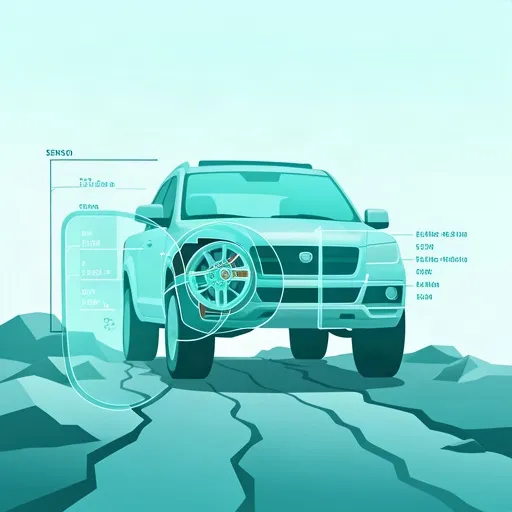
Article content overview
Modern vehicle technology has moved far beyond simple mechanical springs and dampers. As a learner preparing for the DGT theory exam, you will encounter the importance of vehicle maintenance and active safety systems. Predictive active suspension represents the cutting edge of this evolution, designed not only to improve passenger comfort but to fundamentally enhance road safety and vehicle stability. By anticipating road conditions before they are reached, these systems ensure that tires maintain optimal contact with the road surface, which is critical for steering control and braking efficiency.
To understand predictive systems, one must first recognize the role of standard suspension components. Traditional systems rely on elastic elements like springs to absorb energy from road irregularities and dampers, commonly known as shock absorbers, to dissipate that energy and prevent the vehicle from oscillating uncontrollably. Under Spanish road safety standards, ensuring that these components are in good condition is a legal requirement for every vehicle. Worn dampers significantly increase stopping distances and compromise the vehicle's ability to hold a line through a curve, which can lead to dangerous situations on both urban streets and motorways.
While many modern cars feature adaptive suspension, predictive systems take this functionality a step further. Adaptive suspension typically reacts to changes in road conditions or driving style by adjusting the damping force in milliseconds. In contrast, predictive systems use forward-facing cameras and advanced sensors to "scan" the road surface ahead. By processing this data in real-time using artificial intelligence, the vehicle can preemptively adjust its suspension settings to compensate for a speed bump, pothole, or uneven road surface before the wheel actually makes contact.
The sophistication of these systems varies depending on the vehicle class. Understanding these levels of technology helps clarify why maintenance and system knowledge are vital for safe driving.
| System Type | Mechanism | Primary Benefit |
|---|---|---|
| Predictive Adaptive Dampers | Electronic valves adjust oil flow in traditional shock absorbers. | Improved impact mitigation. |
| Predictive Air Suspension | Uses air springs and electronic dampers. | Superior ride height and body isolation. |
| Fully Active Systems | Electro-mechanical/hydraulic actuators at each wheel. | Eliminates body roll and nose dive. |
For the DGT theory exam, you must understand that suspension is not merely for comfort. A stable vehicle is a safe vehicle. Fully active systems, such as those employing 48-volt electrical architectures, can generate independent mechanical forces at each wheel. This capability allows the vehicle to counteract physical forces during extreme maneuvers. For example, during emergency braking, the system can prevent the "nose dive" effect, keeping the vehicle level and ensuring that the rear wheels remain firmly planted, which maintains braking stability. Similarly, when cornering, these systems counteract body roll, allowing for more precise steering inputs and consistent grip.
In the context of the Spanish driving theory exam, questions regarding vehicle maintenance often focus on the driver's responsibility to identify and correct wear. Even with advanced predictive suspension, the physical health of dampers, bushings, and stabilizer bars remains paramount. If your suspension is compromised, no amount of electronic assistance can guarantee that the vehicle will respond predictably in an emergency. Always remember that the ultimate goal of these technologies is to keep the tires in contact with the road, as tire-to-road contact is the only point of control you have over the vehicle’s direction and speed.
Article content overview
Explore related topics, search based questions, and concepts that learners often look up when studying Predictive Active Suspension Explained. These themes reflect real search intent and help you understand how this topic connects to wider driving theory knowledge in Spain.
Find clear and practical answers to common questions learners often have about Predictive Active Suspension Explained. This section helps explain difficult points, remove confusion, and reinforce the key driving theory concepts that matter for learners in Spain.
The primary purpose is to balance vehicle comfort and safety by keeping tires in constant contact with the road, effectively managing body roll and pitch during cornering or braking.
Predictive systems use cameras and sensors to scan the road ahead and adjust suspension stiffness before the wheels encounter an imperfection, whereas traditional systems react only after hitting a bump.
No, electronic systems rely on mechanical components like dampers and springs. These parts must still be maintained and replaced according to manufacturer guidelines to ensure the vehicle remains safe to drive.
Now that you have found specific articles, continue to deepen your understanding by exploring related DGT regulations or other driving theory topics. Strengthen your knowledge of road signs, traffic scenarios, and essential Spanish driving procedures to prepare for your official driving license exam.