
Understanding the nuances of modern vehicle powertrains is increasingly important for the DGT theory exam, which now includes questions on mechanical efficiency and environmental compliance. This guide clarifies the official definitions of hybrid and electric systems in accordance with Spanish traffic legislation, helping you differentiate between vehicle types and their associated eco-labels. By grasping these fundamental technical distinctions, you will be better prepared to handle exam questions related to vehicle mechanics and modern road safety standards.
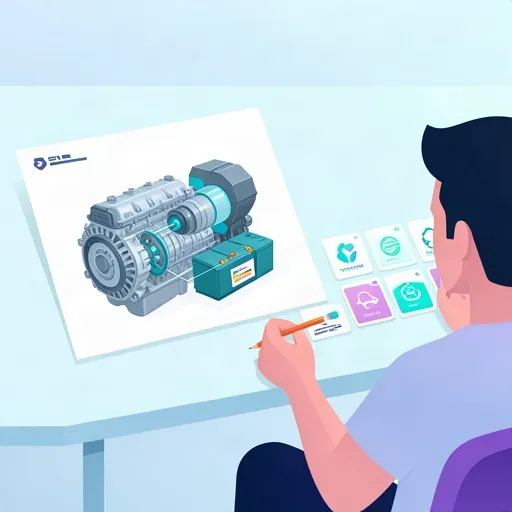
Article content overview
As automotive technology evolves, the Spanish driving theory exam has increasingly integrated questions regarding vehicle mechanics, environmental impact, and modern powertrain systems. For candidates preparing for their driving license in Spain, understanding the differences between conventional combustion engines, hybrid systems, and fully electric vehicles is no longer just for enthusiasts; it is essential knowledge for passing the DGT theory test.
The Dirección General de Tráfico (DGT) focuses heavily on how these vehicle categories affect road safety, traffic regulations, and environmental compliance. By mastering the technical definitions and the classification of these vehicles, you will be better equipped to answer questions about eco-labels, charging infrastructure, and the specific driving dynamics associated with alternative fuels.
The classification of vehicles by the DGT is primarily based on their emissions potential. This system is crucial for drivers in urban areas, as many Spanish cities have implemented Low Emission Zones (ZBE) where access is restricted based on a vehicle's environmental label.
A physical badge issued by the DGT that categorizes vehicles based on their energy efficiency and exhaust emissions, determining their eligibility for circulation in specific urban areas or during high-pollution events.
In the theory exam, you may be asked to distinguish between different hybrid configurations. A common point of confusion for students is the distinction between a mild-hybrid, a standard hybrid, and a plug-in hybrid. Understanding these nuances is fundamental to correctly identifying how a vehicle interacts with the energy grid and the environment.
| Vehicle Type | Power Source | Charging Method |
|---|---|---|
| BEV | Battery Electric Only | External plug-in |
| PHEV | Combustion + Electric | External plug-in + Regenerative |
| HEV | Combustion + Electric | Self-charging via engine/braking |
| MHEV | Combustion + Small Motor | Mild assist, no external plug |
When studying for the exam, it is vital to remember the technical definition of a plug-in hybrid electric vehicle (PHEV). These vehicles utilize both a combustion engine and an electric motor, but unlike a conventional hybrid, the battery can be charged by connecting it to the electricity network. This ability to travel a significant distance in purely electric mode is a common theme in exam questions regarding energy efficiency and fuel consumption.
Remember that even if a vehicle is electric or hybrid, the driver must adhere to all standard traffic laws. Advanced features like regenerative braking are excellent for fuel economy and reducing brake wear, but they do not exempt a driver from maintaining safe following distances or yielding at intersections.
Mechanical knowledge in the theory exam often touches on how these vehicles behave on the road. For instance, the extra weight of large battery packs in electric vehicles can influence braking distances and cornering dynamics. Furthermore, the absence of engine noise in electric vehicles at low speeds requires drivers to be extra vigilant, as pedestrians may not hear an approaching vehicle.
The DGT emphasizes the importance of understanding the infrastructure associated with electric mobility. As a driver, you should be familiar with the basic requirements for charging your vehicle safely, including the use of approved cables and the importance of ensuring that charging points are compatible with your vehicle's connection type.
The curriculum also covers the "eco-driving" philosophy. This includes techniques such as using regenerative braking effectively, maintaining steady speeds on motorways (autovías and autopistas), and using cruise control when appropriate to minimize unnecessary acceleration. These habits are highly relevant to modern driving and are frequently reflected in the practical and theoretical aspects of the Spanish license assessment.
To excel in the mechanics section of the DGT test, focus on the logic behind why these technologies exist. They are not merely mechanical improvements; they are regulatory tools designed to reduce pollution and improve traffic flow in dense urban environments. If you encounter a question regarding the "best" way to drive an electric vehicle, remember that the priority is always safety, followed by the efficient use of the vehicle's unique energy-saving features.
Article content overview
Explore related topics, search based questions, and concepts that learners often look up when studying Hybrid and Electric Vehicles for DGT. These themes reflect real search intent and help you understand how this topic connects to wider driving theory knowledge in Spain.
Find clear and practical answers to common questions learners often have about Hybrid and Electric Vehicles for DGT. This section helps explain difficult points, remove confusion, and reinforce the key driving theory concepts that matter for learners in Spain.
An HEV (Hybrid Electric Vehicle) uses a combustion engine and an electric motor but cannot be plugged into the power grid for charging. A PHEV (Plug-in Hybrid Electric Vehicle) features a battery that can be charged via an external power source, allowing for a longer electric-only driving range.
Yes, understanding the environmental classification system (etiqueta ambiental) is important, as it relates to urban mobility rules, low-emission zones, and overall environmental traffic regulations enforced by the DGT.
Regenerative braking is a system that recovers kinetic energy during deceleration, converting it into electrical energy to recharge the battery, which improves overall vehicle efficiency and reduces fuel consumption.
Now that you have found specific articles, continue to deepen your understanding by exploring related DGT regulations or other driving theory topics. Strengthen your knowledge of road signs, traffic scenarios, and essential Spanish driving procedures to prepare for your official driving license exam.