
As Spain moves towards cleaner mobility, understanding the fundamentals of electric vehicles is becoming a vital part of your driver training. This guide breaks down essential technical concepts like range, power efficiency, and charging protocols, ensuring you are prepared for both the theory exam and real-world driving. You will learn how to interpret vehicle performance data and understand the infrastructure requirements for sustainable transport.
Article content overview
As Spain accelerates its transition toward cleaner mobility, understanding the fundamentals of electric vehicles (EVs) has moved from an optional interest to a core component of your driving theory preparation. The Dirección General de Tráfico (DGT) increasingly emphasizes sustainable mobility, meaning that future drivers must be familiar with how alternative fuel vehicles operate, their specific technical metrics, and the nuances of the charging infrastructure that supports them.
The integration of electric and hybrid vehicles into the Spanish fleet is a key pillar of national road safety and environmental strategy. For learners, this shift means that the theory exam may include questions regarding vehicle classifications based on emissions, the identification of low-emission zones (Zonas de Bajas Emisiones), and the specific regulations governing alternative fuel vehicles. Understanding the transition to electric power is not just about environmental consciousness; it is about mastering the mechanics of modern road transport.
Any vehicle that uses a source of energy other than traditional petrol or diesel, including battery-electric vehicles (BEVs) and plug-in hybrids, which are designed to reduce carbon emissions and reliance on fossil fuels.
When studying for your exam, you will encounter terms that describe the efficiency and performance of electric cars. Unlike traditional combustion engines, the "power" and "range" of an electric vehicle are dictated by battery capacity and motor efficiency. Understanding these metrics helps you interpret how an EV behaves on different road types, such as motorways (autovías) or congested urban environments.
Battery capacity is measured in kilowatt-hours (kWh). A higher kWh rating generally indicates a larger energy reserve, which correlates to a longer driving range. However, real-world range is heavily influenced by driving style, road topography, and the use of auxiliary systems like heating or air conditioning.
Electric motors provide instantaneous torque, which affects how quickly a vehicle accelerates. On the theory exam, it is important to remember that EVs often carry more weight due to their battery packs, which influences vehicle dynamics and stopping distances compared to lighter, traditional vehicles.
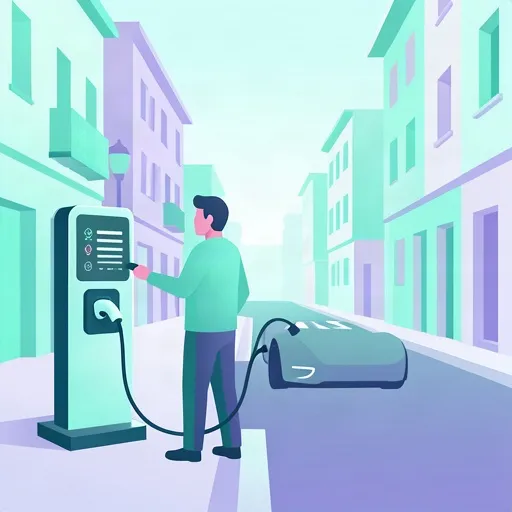
Charging an electric vehicle is fundamentally different from refueling at a traditional station. You must understand the two primary methods of charging to recognize road signs and infrastructure layouts during your practical driving and theory study.
The DGT maintains strict oversight on how new technologies are used on the road. Whether you are driving a fully electric vehicle or a traditional one, you are expected to know the rules regarding vehicle registration, emissions labels, and the importance of adapting your driving behavior to the specific performance characteristics of modern, electrified cars.
Always monitor your vehicle's range in real-time, especially when traveling on rural roads or motorways, to avoid the risk of becoming immobilized due to a depleted battery. This is a critical safety consideration under the "safe driving" principles tested in the DGT exam.
To help you categorize the technical aspects of EVs that often appear in study materials, refer to the following summary table:
| Metric | Typical Unit | Significance |
|---|---|---|
| Battery Capacity | kWh | Determines the total energy storage available. |
| Power Output | CV (or kW) | Reflects the vehicle's potential for acceleration and power. |
| Charging Speed | kW | Higher values indicate faster energy transfer to the battery. |
| Range | Kilometers | The estimated distance possible on a single full charge. |
This article introduces the technical foundations of electric vehicles relevant to the Spanish driving theory exam, covering battery capacity, power output, and the distinction between AC and DC charging methods. It emphasizes that EVs have unique performance characteristics including instant torque and additional weight from battery packs, which affect driving behavior and safety considerations. Understanding low-emission zones, emissions badges, and the importance of monitoring vehicle range are essential for drivers in Spain. The glossary and summary table provide a useful reference for memorizing key terminology like kWh, torque, regenerative braking, and range anxiety.
A short set of high-value points that capture the most important ideas from this article.
Battery capacity measured in kWh directly determines the total energy storage and therefore the driving range of an electric vehicle.
AC charging is slower and suitable for home or overnight use, while DC charging provides rapid or ultra-fast charging at motorway service areas.
Electric vehicles have instant torque from their motors but carry more weight due to battery packs, which affects vehicle dynamics and stopping distances.
Monitoring real-time range is a critical safety consideration, especially on rural roads or motorways where charging stations may be sparse.
Understanding low-emission zones (ZBEs) and emissions badges is required knowledge for driving in Spanish urban areas.
kWh measures battery capacity; CV or kW measures power output; charging speed is measured in kW.
AC charging uses alternating current for slower, home-style charging; DC charging uses direct current for rapid charging stations.
Regenerative braking recovers energy during deceleration to partially recharge the battery.
ZBE (Zona de Bajas Emisiones) refers to Low Emission Zones that restrict access based on vehicle emissions classification.
The DGT exam may include questions about alternative fuel vehicle classifications, emissions labels, and sustainable mobility regulations.
Confusing charging speed (kW) with battery capacity (kWh) — higher kW means faster charging, not a bigger battery.
Assuming electric vehicles have shorter stopping distances because of regenerative braking, when in fact their added weight can increase braking distances.
Overlooking the impact of auxiliary systems like air conditioning on real-world EV range, which can significantly reduce the distance on a single charge.
Not distinguishing between plug-in hybrids and fully battery-electric vehicles when identifying alternative fuel vehicle categories.
Article content overview
A short set of high-value points that capture the most important ideas from this article.
Battery capacity measured in kWh directly determines the total energy storage and therefore the driving range of an electric vehicle.
AC charging is slower and suitable for home or overnight use, while DC charging provides rapid or ultra-fast charging at motorway service areas.
Electric vehicles have instant torque from their motors but carry more weight due to battery packs, which affects vehicle dynamics and stopping distances.
Monitoring real-time range is a critical safety consideration, especially on rural roads or motorways where charging stations may be sparse.
Understanding low-emission zones (ZBEs) and emissions badges is required knowledge for driving in Spanish urban areas.
kWh measures battery capacity; CV or kW measures power output; charging speed is measured in kW.
AC charging uses alternating current for slower, home-style charging; DC charging uses direct current for rapid charging stations.
Regenerative braking recovers energy during deceleration to partially recharge the battery.
ZBE (Zona de Bajas Emisiones) refers to Low Emission Zones that restrict access based on vehicle emissions classification.
The DGT exam may include questions about alternative fuel vehicle classifications, emissions labels, and sustainable mobility regulations.
Confusing charging speed (kW) with battery capacity (kWh) — higher kW means faster charging, not a bigger battery.
Assuming electric vehicles have shorter stopping distances because of regenerative braking, when in fact their added weight can increase braking distances.
Overlooking the impact of auxiliary systems like air conditioning on real-world EV range, which can significantly reduce the distance on a single charge.
Not distinguishing between plug-in hybrids and fully battery-electric vehicles when identifying alternative fuel vehicle categories.
Explore related topics, search based questions, and concepts that learners often look up when studying Electric Vehicles: Charging and Specs. These themes reflect real search intent and help you understand how this topic connects to wider driving theory knowledge in Spain.
Find clear and practical answers to common questions learners often have about Electric Vehicles: Charging and Specs. This section helps explain difficult points, remove confusion, and reinforce the key driving theory concepts that matter for learners in Spain.
The DGT has aligned the driving license curriculum with sustainability objectives and the transition to alternative fuels, making it essential for new drivers to understand electric vehicle mechanics and charging requirements.
AC (alternating current) charging is typically used for home or public slow charging, while DC (direct current) charging, often called fast charging, provides significantly higher power for quicker replenishing of the battery while on the road.
No, you do not need to memorize specific car models. You are expected to understand the general technical concepts like battery capacity, power output, and range, which apply to all electric vehicles on the road.
Understanding your vehicle's range is critical for trip planning to avoid the risk of running out of charge, which contributes to safer driving practices and reduces the stress associated with longer journeys.
Now that you have found specific articles, continue to deepen your understanding by exploring related DGT regulations or other driving theory topics. Strengthen your knowledge of road signs, traffic scenarios, and essential Spanish driving procedures to prepare for your official driving license exam.