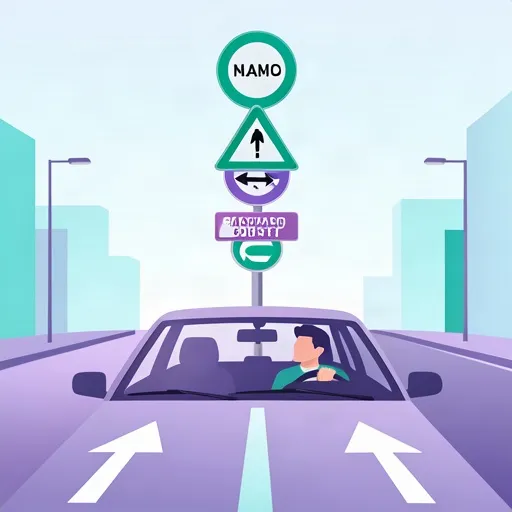
Traffic signs containing arrows are fundamental to organizing safe and orderly movement on Spanish roads. By understanding how these signs function within various categories—including mandatory obligations and priority indicators—you will be better prepared to interpret road instructions during your theory test and in practical driving situations. This article explains the core logic behind these signs and how supplementary panels refine their meaning.
Article content overview
In the Spanish driving theory exam, few elements are as frequently tested as traffic signs incorporating arrows. These signs are essential tools used by the Dirección General de Tráfico (DGT) to organize, warn, and regulate the flow of vehicles across both urban streets and rural roads. Understanding the specific meaning of an arrow in a given context is not just a requirement for passing your test; it is a fundamental skill for maintaining safety in real-world driving scenarios.
To master these signs, you must first understand that they are categorized by their purpose and shape. The DGT defines four main categories: danger signs, which alert you to potential hazards; priority signs, which dictate who has the right of way; obligation signs, which command specific maneuvers; and indication signs, which provide essential information regarding road layout and lane usage.
Obligation signs, such as the R-400 series, are circular with a blue background and white arrows. These are strict instructions. If you encounter a sign showing a straight arrow, you are legally required to continue straight; turning left or right would constitute a traffic violation. Conversely, danger signs are typically triangular with red borders, alerting you to situations like approaching a roundabout or a dual-carriageway segment where directional changes occur.
Indication signs play a critical role in complex driving environments, such as motorways (autovías) and urban interchanges. Signs like the S-11b or S-12a provide visual representations of lane configuration and the legal direction of travel. These signs prevent drivers from entering the wrong lane or inadvertently driving against the flow of traffic, which is a common cause of serious accidents on Spanish roads.
When preparing for your theory exam, pay close attention to the number of arrows on these signs. Each arrow represents a distinct lane of traffic. If you are in a lane marked for a specific direction, you are legally obligated to follow that path. Failing to align with the marked lane is a recurring error in practical evaluations and a frequently tested scenario in the theory modules.
Supplementary panels are often attached beneath primary signs to refine their legal application. For instance, an arrow on a supplementary panel (such as the S-870 series) can indicate that a specific prohibition or instruction applies only to an exit ramp or a specific branch of the road. Understanding how these panels modify the main sign is vital for interpreting complex scenarios, such as where parking is restricted or where a specific speed limit only applies to a diverging lane.
| Sign Type | Primary Purpose | Common Legal Implication |
|---|---|---|
| Obligation | Mandate a specific route | No alternative direction permitted. |
| Priority | Regulate intersection flow | You must yield or you have the right of way. |
| Indication | Provide lane/road layout info | Defines permissible movement per lane. |
| Danger | Warn of upcoming hazards | Requires increased attention and caution. |
A frequent trap in the DGT exam involves confusing the direction of an arrow on the pavement with the instruction provided by a vertical sign. Remember that road markings (painted arrows on the asphalt) are mandatory, but they must always be respected in conjunction with any vertical signage present. If a vertical sign indicates a mandatory turn but the lane marking suggests a different direction, the vertical sign generally holds higher legal precedence.
Arrow traffic signs in Spain are organized into four DGT categories—danger, priority, obligation, and indication—each with distinct shapes and legal implications. Obligation signs like the R-400 mandate specific directions and leave no alternative, while indication signs like S-11b show lane configuration and permissible movements. Supplementary panels attached to main signs refine their application to specific road sections. A key exam trap involves confusing the hierarchy between vertical signs and lane markings, as vertical signage generally holds higher legal precedence when they conflict.
A short set of high-value points that capture the most important ideas from this article.
Traffic signs with arrows are classified into four categories: danger (warning), priority (right of way), obligation (mandatory actions), and indication (lane/road layout information)
Obligation signs like the R-400 series are circular with blue backgrounds and white arrows, creating strict legal requirements that must be followed
The number of arrows on indication signs directly corresponds to the number of lanes and their permitted directions of travel
Supplementary panels refine the scope of main signs, specifying where restrictions or instructions apply (e.g., only on exit ramps)
Vertical signage takes legal precedence over conflicting lane markings when both are present
Blue circular signs = mandatory instruction; white/green signs = informational only
Obligation signs leave no alternative: a straight arrow means you must continue straight
Each arrow on an indication sign represents one distinct lane of traffic
Supplementary panels modify the main sign's application to specific road sections or branches
Danger signs are triangular with red borders and warn of upcoming directional changes or hazards
Confusing vertical sign instructions with lane markings when they suggest different directions
Misidentifying sign shapes and colors, leading to wrong conclusions about legal status
Assuming indication signs are mandatory rather than informational
Ignoring supplementary panels that modify the meaning of the main sign
Failing to recognize that arrow counts on signs correspond to actual lane configuration
Article content overview
A short set of high-value points that capture the most important ideas from this article.
Traffic signs with arrows are classified into four categories: danger (warning), priority (right of way), obligation (mandatory actions), and indication (lane/road layout information)
Obligation signs like the R-400 series are circular with blue backgrounds and white arrows, creating strict legal requirements that must be followed
The number of arrows on indication signs directly corresponds to the number of lanes and their permitted directions of travel
Supplementary panels refine the scope of main signs, specifying where restrictions or instructions apply (e.g., only on exit ramps)
Vertical signage takes legal precedence over conflicting lane markings when both are present
Blue circular signs = mandatory instruction; white/green signs = informational only
Obligation signs leave no alternative: a straight arrow means you must continue straight
Each arrow on an indication sign represents one distinct lane of traffic
Supplementary panels modify the main sign's application to specific road sections or branches
Danger signs are triangular with red borders and warn of upcoming directional changes or hazards
Confusing vertical sign instructions with lane markings when they suggest different directions
Misidentifying sign shapes and colors, leading to wrong conclusions about legal status
Assuming indication signs are mandatory rather than informational
Ignoring supplementary panels that modify the meaning of the main sign
Failing to recognize that arrow counts on signs correspond to actual lane configuration
Explore related topics, search based questions, and concepts that learners often look up when studying Guide to Spanish Arrow Traffic Signs. These themes reflect real search intent and help you understand how this topic connects to wider driving theory knowledge in Spain.
Find clear and practical answers to common questions learners often have about Guide to Spanish Arrow Traffic Signs. This section helps explain difficult points, remove confusion, and reinforce the key driving theory concepts that matter for learners in Spain.
Obligation signs (R-400 series) are typically circular with a blue background and indicate a mandatory direction or maneuver. Indication signs (S-series) are typically square or rectangular and provide information about lane usage or traffic flow without creating an absolute legal obligation to perform a specific maneuver in the same restrictive way.
Supplementary panels provide essential context by modifying the sign's application. They can specify the distance to a hazard (S-810), define the length of a restricted section (S-830), or indicate that a specific rule applies to an exit ramp (S-870), ensuring drivers know exactly where and for how long the rule is active.
Road markings (horizontal signs) on the pavement often reinforce or clarify the direction indicated by vertical signs. In the Spanish traffic system, both are essential for compliance, and failure to follow either can result in penalties or dangerous situations at intersections and roundabouts.
Arrow signs (like P-4 or R-402) define the priority and movement rules within a roundabout. Understanding them is vital for determining who has the right of way and ensuring you follow the mandated circular traffic flow, which is a frequent topic in DGT exam questions.
Now that you have found specific articles, continue to deepen your understanding by exploring related DGT regulations or other driving theory topics. Strengthen your knowledge of road signs, traffic scenarios, and essential Spanish driving procedures to prepare for your official driving license exam.