
Prepare to confidently tow a trailer with this essential unit for your BE license. We cover everything from secure coupling and load distribution to safe maneuvering and DGT regulations specific to towing in Spain. Master these skills to pass your theory exam and drive safely.
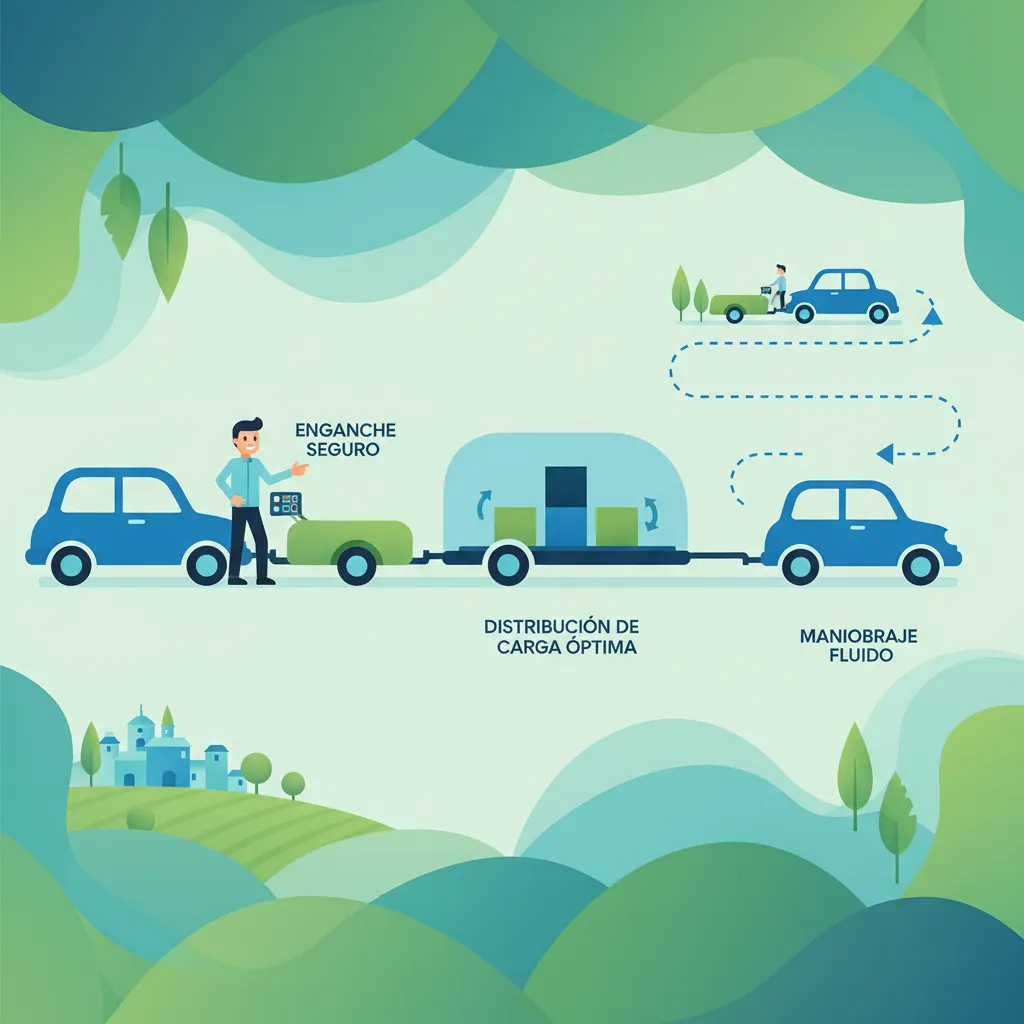
Browse all lessons that make up Trailer Handling (BE). Each lesson focuses on specific topics, learning objectives, and core concepts, helping you build essential knowledge and follow a clear, structured progression toward your study goals in Spain.
This lesson explains the proper procedures for securely coupling and decoupling a trailer. Learners will understand the alignment of hitch components, the use of safety chains and locking mechanisms, and checking electrical connections. The content stresses a pre-drive checklist that includes load verification and adherence to DGT coupling standards to ensure safe towing operations.
In this lesson, the principles of proper load distribution and maintaining an appropriate center of gravity are explored. It covers how uneven weight can cause trailer sway (snaking) and destabilize the towing vehicle. Learners will be instructed on DGT load limits, proper cargo arrangement, and tie-down methods to ensure safe transport.
This lesson addresses the dynamics of accelerating, braking, and turning while towing a trailer. It explains how to adjust for increased load inertia, the impact on stopping distances, and the need for wider turns to account for off-tracking. The content outlines DGT speed guidelines specific to towing and emphasizes smooth control to ensure stability.
This lesson focuses on the complexities of reversing while towing a trailer. It explains the phenomenon of trailer swing and the counter-steering inputs required to guide it correctly. The content details proper use of mirrors and observation to control the trailer's path, adhering to DGT rules and ensuring the maneuver is planned and executed safely.
This lesson details the legal framework for towing in Spain. It covers the concepts of maximum authorized mass, towing capacities of vehicles, and specific weight limits for different axle configurations. The content also explains the documentation and periodic technical inspection (ITV) requirements for trailers to ensure full legal compliance.
Explore high-intent keywords and long-tail search topics learners use when researching Trailer Handling (BE). These terms reflect how people search for reliable study materials, structured explanations, and unit-level theory preparation support in Spain.
Find clear answers to the most common questions learners ask about Trailer Handling (BE). Understand how the unit is organized, what learning goals it supports, and how it contributes to your study progression with structured explanations and practical guidance tailored for learners in Spain.
The primary challenge is the altered vehicle dynamics. A trailer increases the overall length and weight of your vehicle, affecting acceleration, braking distances, and handling, especially during turns and reverses. Maintaining proper load balance is crucial for stability and preventing dangerous trailer sway.
Correct load distribution is vital for trailer stability. The majority of the weight should be over or slightly forward of the trailer's axle(s), with a recommended nose weight (the downward force on the tow ball) between 4-7% of the trailer's total load, or as specified by the manufacturer. Improper loading can cause the trailer to sway dangerously, leading to loss of control.
The DGT has specific regulations for towing, including maximum authorized masses (MAM) for the vehicle and trailer, speed limits (often lower than for solo vehicles, especially on highways), and requirements for lighting and braking systems. For the BE license, you must understand these limits and general safety principles for towing.
Reversing with a trailer requires practice because the trailer's direction of movement is opposite to the steering input at the tow ball. You typically steer the towing vehicle in the opposite direction of where you want the trailer to go, and your field of vision is also more restricted. It demands constant observation and fine motor control.
Speed limits are generally lower when towing. On motorways (autopistas and autovías), the maximum speed is typically 90 km/h, while on other roads, it may be 80 km/h or lower, depending on the trailer's mass and whether it has its own brakes. Always check current DGT regulations and signage for specific limits.
Yes, trailers over a certain weight (typically over 750 kg MAM) must undergo periodic technical inspections (ITV) in Spain, similar to cars. The frequency and requirements depend on the trailer's age and weight. Ensure your trailer meets all legal requirements, including proper lighting and braking systems.
All included lessons
Lessons in Trailer Handling (BE)
See who benefits most from studying Trailer Handling (BE). This overview explains how the unit supports different learning needs, what level of knowledge is helpful before starting, and how it fits into the overall study path in Spain.
This unit is specifically designed for individuals pursuing the BE category driving license in Spain. It's crucial for anyone who plans to tow a trailer weighing over 750 kg with their B category vehicle and needs to pass the dedicated BE theory exam, building on their existing B license knowledge.

Begin your preparation for the Spanish DGT driving licence exam today. Browse our full curriculum to find guided courses, detailed lessons on traffic legislation, road signs, and essential driving practices. Start learning systematically and confidently.
Explore DGT Theory Courses & CurriculumExplore all units and lessons included in this driving theory course.
Begin your preparation for the Spanish DGT driving licence exam today. Browse our full curriculum to find guided courses, detailed lessons on traffic legislation, road signs, and essential driving practices. Start learning systematically and confidently.
Explore DGT Theory Courses & Curriculum