
This lesson is crucial for anyone pursuing a Category B or BE driving license in Spain, focusing on the essential skills of safely attaching and detaching a trailer. Understanding these procedures, along with conducting thorough safety checks, is vital for preventing accidents and ensuring compliance with DGT regulations. It builds upon basic vehicle knowledge and prepares you for real-world towing scenarios and exam questions.
Lesson content overview
Towing a trailer significantly alters a vehicle's dynamics, making proper preparation paramount for safety and legal compliance. For drivers holding a Category BE license in Spain, mastering the procedures for securely coupling, verifying, and decoupling a trailer is not just a best practice; it is a fundamental skill essential for responsible road use and for passing the theoretical exam administered by the Dirección General de Tráfico (DGT).
This comprehensive lesson details the step-by-step process of attaching and detaching a trailer, emphasizing critical safety checks for mechanical and electrical connections, load distribution, and adherence to DGT regulations. By understanding these procedures, you will minimize risks such as accidental detachment, loss of control, and increased stopping distances, ensuring a safer journey for yourself and other road users.
The act of coupling and decoupling a trailer involves a systematic series of actions designed to create a secure, stable, and legally compliant connection between a towing vehicle and its attached trailer. This process goes beyond merely linking two components; it ensures that braking, steering, and overall vehicle stability are maintained, even under dynamic driving conditions. Improper coupling can lead to severe consequences, including trailer detachment, loss of vehicle control, extended stopping distances, and significant legal penalties under DGT regulations.
The underlying principles of safe coupling are rooted in physics and legal requirements. Mechanically, proper alignment ensures forces are distributed correctly through the hitch, preventing undue stress that could lead to component failure or trailer sway. From a legal standpoint, DGT mandates specific inspection points, equipment, and load limits to protect all road users. This lesson will connect with your existing knowledge of vehicle basics, weight limits, and general DGT traffic legislation to provide a holistic understanding of safe trailer operations.
The hitch is the crucial mechanical interface that connects your towing vehicle to the trailer. Understanding its various types and ensuring compatibility is the first step towards safe towing. The DGT requires that the towing vehicle's hitch must be rated for the trailer's maximum permissible mass, as stated in DGT Article 25-3. Failing to meet this requirement can lead to structural failure, loss of control, and legal sanctions.
Various hitch designs cater to different towing needs and trailer weights, each with specific applications and load capacities.
Selecting the correct hitch type is not enough; you must also ensure its rating matches or exceeds the trailer's maximum permissible weight. This rating is typically stamped on the hitch itself or detailed in the vehicle's manual. Assuming any tow-ball can be used for any trailer is a common and dangerous misunderstanding. Always consult both your vehicle's specifications and the trailer's documentation to confirm compatibility and weight limits. Overlooking the required rating can severely compromise safety and lead to mechanical failure.
Coupling a trailer requires precision and a methodical approach. This process involves positioning the tow vehicle, carefully engaging the trailer coupler with the tow-ball, and then securing all locking mechanisms.
Initial Positioning: Position your towing vehicle in a straight line with the trailer. Slowly reverse until the tow-ball is directly underneath the trailer’s coupler. Precision is key to avoid damaging either component or misaligning the connection.
Align and Lower: Using the trailer's jockey wheel or stand, adjust the coupler's height to be just above the tow-ball. Slowly lower the trailer, guiding the coupler onto the tow-ball. Ensure a clean, centered engagement.
Secure the Coupler: Once the coupler is fully seated on the tow-ball, engage its primary locking mechanism. This usually involves a hand lever that snaps into place or a locking pin. Visually inspect that the coupler is completely closed and secured. For many systems, you should be able to see the tow-ball fully encapsulated by the coupler.
Verify Connection: After securing the coupler, attempt to raise the trailer's jockey wheel slightly. If the tow vehicle's rear rises with the trailer, it confirms a secure mechanical connection. If the trailer lifts off the tow-ball, the coupling is not secure, and the process must be repeated. Gently tugging the trailer and visually checking lock pins are part of this critical verification step.
Raise Jockey Wheel and Secure: Fully raise the jockey wheel or stand and secure it in its upright, locked position. This prevents it from dragging on the road or interfering with ground clearance.
A common mistake is approaching the trailer at an angle, which can prevent the coupler from fully engaging or cause unnecessary stress. Another error is relying solely on the visual appearance of engagement without verifying the lock pins or hand lever. Always ensure these secondary locking features are properly engaged.
Beyond the primary mechanical connection of the hitch, two additional systems are critical for safe towing: safety chains and electrical connections. These provide redundancy and ensure communication with other road users.
Safety chains are a mandatory backup system, providing a redundant mechanical connection between the tow vehicle and the trailer. In the event of a primary hitch failure or accidental uncoupling, these chains are designed to keep the trailer connected to the vehicle, preventing it from becoming a free-rolling hazard.
Proper Configuration:
DGT Article 27-2 explicitly mandates that safety chains must be attached before moving the trailer. Common errors include chains that are too slack (defeating their purpose if they drag or cannot catch the coupler) or too tight (which can restrict movement and place undue stress on attachment points).
The electrical connection ensures that the trailer's lighting system functions in sync with the towing vehicle, communicating your intentions (braking, turning) to other road users. This is crucial for safety, especially during low visibility conditions or at night.
Connection and Checklist:
DGT Article 12 states unequivocally that all trailer lights must be operational and visible from a distance of at least 100 metres during daylight. Failure to test these lights after each coupling is a significant misconception, as connections can become loose or bulbs can fail between trips. Faulty connections dramatically increase the risk of collisions, particularly in low-light or adverse weather conditions.
Beyond the physical connection, the way a trailer is loaded profoundly affects the stability and safety of the entire towing combination. Correct load verification and distribution are critical to prevent trailer sway, maintain braking efficiency, and comply with DGT regulations.
Several weight limits govern safe towing:
The placement of cargo within the trailer is as important as its total weight. The goal is to keep the trailer's centre of gravity as close as possible to the trailer's vertical axis, typically slightly forward of the trailer's axle(s).
DGT Article 33-1 mandates that all load must be secured and not exceed the vehicle's GCWR. Ignoring these limits can lead to increased stopping distances, tire wear, reduced handling, and significant legal penalties.
Decoupling a trailer is essentially the reverse of coupling, requiring the same methodical approach to ensure safety and prevent damage.
Park Safely and Chock Wheels: Choose a level, stable surface to decouple. Engage the vehicle's parking brake and, if available, the trailer's parking brake. For added safety, place chocks under the trailer wheels to prevent accidental movement.
Disconnect Electrical Connector: Carefully unplug the electrical connector from the tow vehicle. Ensure no wires are snagged or damaged.
Remove Safety Chains: Unhook the safety chains from the tow vehicle's attachment points.
Lower Jockey Wheel/Stand: Lower the trailer's jockey wheel or extend its stand until it firmly supports the trailer's weight.
Unlock and Raise Coupler: Disengage the coupler's locking mechanism. Use the jockey wheel to raise the trailer, lifting the coupler clear of the tow-ball.
Move Tow Vehicle: Once the coupler is clear, slowly drive the tow vehicle forward a short distance, ensuring adequate clearance from the trailer.
Secure Trailer: Fully lower the trailer onto its jockey wheel/stand to a stable position. Re-engage the trailer's parking brake if applicable and ensure wheel chocks are firmly in place.
Decoupling on a steep incline without chocking the trailer wheels can be extremely dangerous, as the trailer may roll unpredictably. Always prioritize stability before releasing any connections.
Before embarking on any journey with a trailer, a thorough pre-drive safety checklist is indispensable. This structured verification process helps standardize safety measures and significantly reduces the risk of human error or oversight.
Coupler Lock Verification: Double-check that the trailer coupler is fully engaged and all primary and secondary locking pins/levers are securely fastened onto the tow-ball. Perform a gentle tug test.
Safety Chains: Confirm that safety chains are correctly attached in a cross-linked pattern, are not dragging on the ground, and have appropriate slack (e.g., less than 150 mm).
Electrical Connector & Lights: Ensure the electrical plug is firmly seated and locked. Test all trailer lights: brake lights, turn signals (left and right), hazard warning lights, tail lights, and reverse lights.
Trailer Load & Distribution: Verify that the trailer's total weight is within the tow vehicle's GCWR and the trailer's MLW. Confirm cargo is evenly distributed (especially over the axles), secured, and does not obstruct the trailer's lights.
Tow-ball Height: Check that the trailer sits level when hitched, indicating correct tow-ball or adjustable ball-mount height. Misalignment can cause uneven tire wear and increase sway.
Mirrors Adjustment: Adjust your vehicle's side mirrors (and extended towing mirrors, if necessary) to provide a clear view along both sides of the full width of the trailer. This is a DGT requirement (Article 30-4) to eliminate blind spots.
Trailer Brakes (if auxiliary): If the trailer has its own braking system (required for trailers over 750 kg in Spain), confirm it is functional and correctly adjusted. Test its activation.
Tire Pressure: Check the tire pressure on both the towing vehicle and the trailer against manufacturer recommendations for towing, as under-inflated tires can cause instability and blowouts.
Documentation: Ensure you have all necessary vehicle and trailer documentation (registration, ITV, insurance, BE license) readily accessible.
Skipping any step in this checklist can have serious consequences, ranging from minor accidents to major regulatory infractions.
Compliance with DGT regulations is non-negotiable for all trailer towing operations in Spain. These rules are designed to ensure maximum safety for everyone on the road.
Several specific articles within DGT legislation directly govern the aspects of coupling, decoupling, and safe trailer operation:
DGT Article 30-4 specifically addresses the need for clear visibility when towing. It requires that all mirrors (including standard side mirrors and, if necessary, extended towing mirrors) must be adjusted to provide the driver with a comprehensive view of the full width of the trailer and the road behind it.
Understanding the regulations is one aspect; avoiding common mistakes in practice is another. Many incidents stem from recurring errors that drivers make during coupling and towing.
Safe towing practices are not static; they must be adapted to varying environmental and road conditions to maintain control and safety.
Mastering the procedures for coupling, decoupling, and conducting thorough safety checks is fundamental for anyone operating a Category BE vehicle in Spain. By diligently following each step, you ensure mechanical integrity, electrical functionality, proper load distribution, and adherence to DGT regulations.
Always:
By internalizing these principles and consistently applying these safety checks, you will gain the confidence and competence required for safe and responsible trailer towing under your Spanish BE license.
Safe trailer coupling requires precise alignment of the tow-ball with the coupler, full engagement of all locking mechanisms, and verification through a tug test. Safety chains are mandatory and must be cross-linked with minimal slack, while electrical connections require testing of all lights including brake lights, turn signals, and tail markers. Load distribution is critical: cargo should be central and low with tongue weight at 10-15%, and total combined weight must not exceed the vehicle's GCWR. A comprehensive pre-drive checklist must verify coupling security, chain configuration, light functionality, mirror adjustment, tire pressure, and documentation before departure.
A short set of high-value points that capture the most important learning from this lesson.
The tow-ball and coupler must be fully seated with all lock pins and levers secured before moving; a visual tug test confirms proper engagement.
Hitch ratings must match or exceed the trailer's maximum permissible mass (MMA), as mandated by DGT Article 25-3.
Safety chains are mandatory and must be cross-linked in an X-pattern with no more than 150 mm of slack to function as a backup connection.
All trailer lights (brake, turn signals, tail lights) must be tested after each coupling and must be visible from at least 100 metres per DGT Article 12.
The combined weight of vehicle and trailer must never exceed the towing vehicle's Gross Combination Weight Rating (GCWR) to maintain braking efficiency and stability.
Explore all units and lessons included in this driving theory course.
Coupling is performed by aligning the tow-ball under the coupler, lowering the trailer, engaging the lock lever fully, and verifying with a gentle tug test.
DGT regulations require safety chains rated for at least 5 tonnes, properly attached in a cross-linked pattern before any movement.
Cargo must be placed centrally and as low as possible, with tongue weight at 10-15% of trailer weight to prevent sway.
Mirrors must be adjusted to eliminate blind spots created by the trailer's width, a requirement under DGT Article 30-4.
Trailers over 750 kg in Spain must have auxiliary brakes that are tested before each journey, as they dramatically affect stopping distances.
Chains set with too much slack can drag and fail to catch the coupler if detachment occurs, while chains that are too tight restrict articulation and stress attachment points.
Assuming the coupler is engaged without verifying that secondary lock pins are fully inserted, which can fail under braking or bumps.
Overloading the trailer beyond its Maximum Laden Weight (MLW) or exceeding the GCWR, reducing braking capacity and risking suspension failure.
Neglecting to test trailer lights after coupling; connections can loosen or bulbs can fail between trips, creating dangerous visibility issues for other road users.
Failing to chock trailer wheels when decoupling on inclines, allowing the trailer to roll unpredictably.
Lesson content overview
A short set of high-value points that capture the most important learning from this lesson.
The tow-ball and coupler must be fully seated with all lock pins and levers secured before moving; a visual tug test confirms proper engagement.
Hitch ratings must match or exceed the trailer's maximum permissible mass (MMA), as mandated by DGT Article 25-3.
Safety chains are mandatory and must be cross-linked in an X-pattern with no more than 150 mm of slack to function as a backup connection.
All trailer lights (brake, turn signals, tail lights) must be tested after each coupling and must be visible from at least 100 metres per DGT Article 12.
The combined weight of vehicle and trailer must never exceed the towing vehicle's Gross Combination Weight Rating (GCWR) to maintain braking efficiency and stability.
Explore all units and lessons included in this driving theory course.
Coupling is performed by aligning the tow-ball under the coupler, lowering the trailer, engaging the lock lever fully, and verifying with a gentle tug test.
DGT regulations require safety chains rated for at least 5 tonnes, properly attached in a cross-linked pattern before any movement.
Cargo must be placed centrally and as low as possible, with tongue weight at 10-15% of trailer weight to prevent sway.
Mirrors must be adjusted to eliminate blind spots created by the trailer's width, a requirement under DGT Article 30-4.
Trailers over 750 kg in Spain must have auxiliary brakes that are tested before each journey, as they dramatically affect stopping distances.
Chains set with too much slack can drag and fail to catch the coupler if detachment occurs, while chains that are too tight restrict articulation and stress attachment points.
Assuming the coupler is engaged without verifying that secondary lock pins are fully inserted, which can fail under braking or bumps.
Overloading the trailer beyond its Maximum Laden Weight (MLW) or exceeding the GCWR, reducing braking capacity and risking suspension failure.
Neglecting to test trailer lights after coupling; connections can loosen or bulbs can fail between trips, creating dangerous visibility issues for other road users.
Failing to chock trailer wheels when decoupling on inclines, allowing the trailer to roll unpredictably.
Explore search topics learners often look for when studying Coupling, Decoupling, and Safety Checks. These topics reflect common questions about road rules, driving situations, safety guidance, and lesson level theory preparation for learners in Spain.
Browse additional driving theory lessons that cover connected traffic rules, road signs, and common driving situations related to this topic. Improve your understanding of how different rules interact across everyday traffic scenarios.
Understand frequent errors in trailer coupling, load distribution, and safety checks. Learn about critical DGT regulations and the consequences of non-compliance for trailer towing.

This lesson details the legal framework for towing in Spain. It covers the concepts of maximum authorized mass, towing capacities of vehicles, and specific weight limits for different axle configurations. The content also explains the documentation and periodic technical inspection (ITV) requirements for trailers to ensure full legal compliance.

This lesson addresses the dynamics of accelerating, braking, and turning while towing a trailer. It explains how to adjust for increased load inertia, the impact on stopping distances, and the need for wider turns to account for off-tracking. The content outlines DGT speed guidelines specific to towing and emphasizes smooth control to ensure stability.
In this lesson, the principles of proper load distribution and maintaining an appropriate center of gravity are explored. It covers how uneven weight can cause trailer sway (snaking) and destabilize the towing vehicle. Learners will be instructed on DGT load limits, proper cargo arrangement, and tie-down methods to ensure safe transport.

This lesson focuses on the complexities of reversing while towing a trailer. It explains the phenomenon of trailer swing and the counter-steering inputs required to guide it correctly. The content details proper use of mirrors and observation to control the trailer's path, adhering to DGT rules and ensuring the maneuver is planned and executed safely.

This lesson provides a step-by-step guide on what to do when a vehicle breaks down on the road. It explains how to safely bring the truck to a stop, activate hazard warnings, and place reflective warning triangles as required by law. The content also covers the procedures for contacting roadside assistance and communicating the nature of the problem and the vehicle's location accurately.
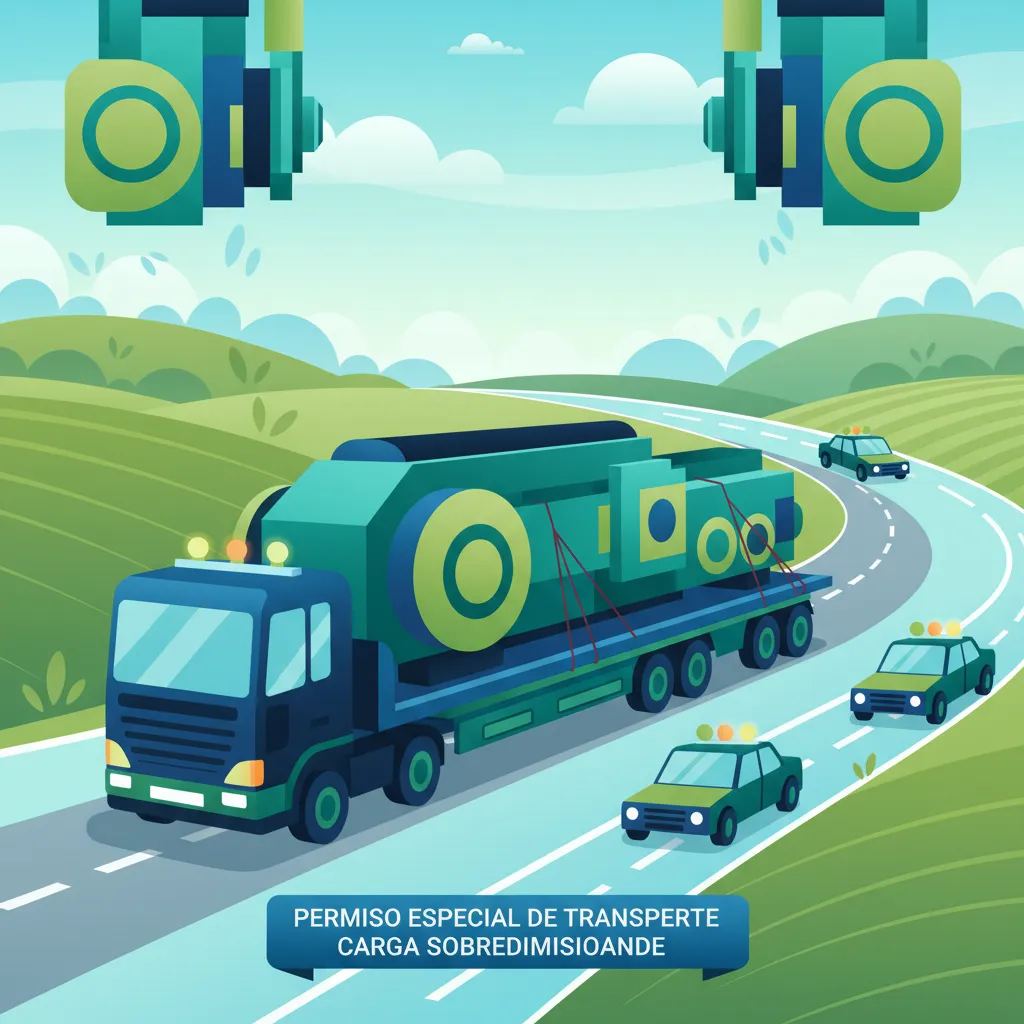
This lesson addresses the special regulations that apply to transporting loads that exceed standard legal dimensions or weight. It explains the process for obtaining the necessary special permits from the DGT and other authorities. The content also covers the requirements for route planning, the use of escort vehicles (pilot cars), and the mandatory signage and lighting for the vehicle.

In this lesson, drivers learn the correct actions to take during a vehicle breakdown. It outlines steps for safely stopping on the hard shoulder, activating hazard lights, and deploying warning devices like the triangle or V16 light. The lesson covers DGT procedures for roadside emergencies, including wearing a high-visibility vest and contacting assistance safely.
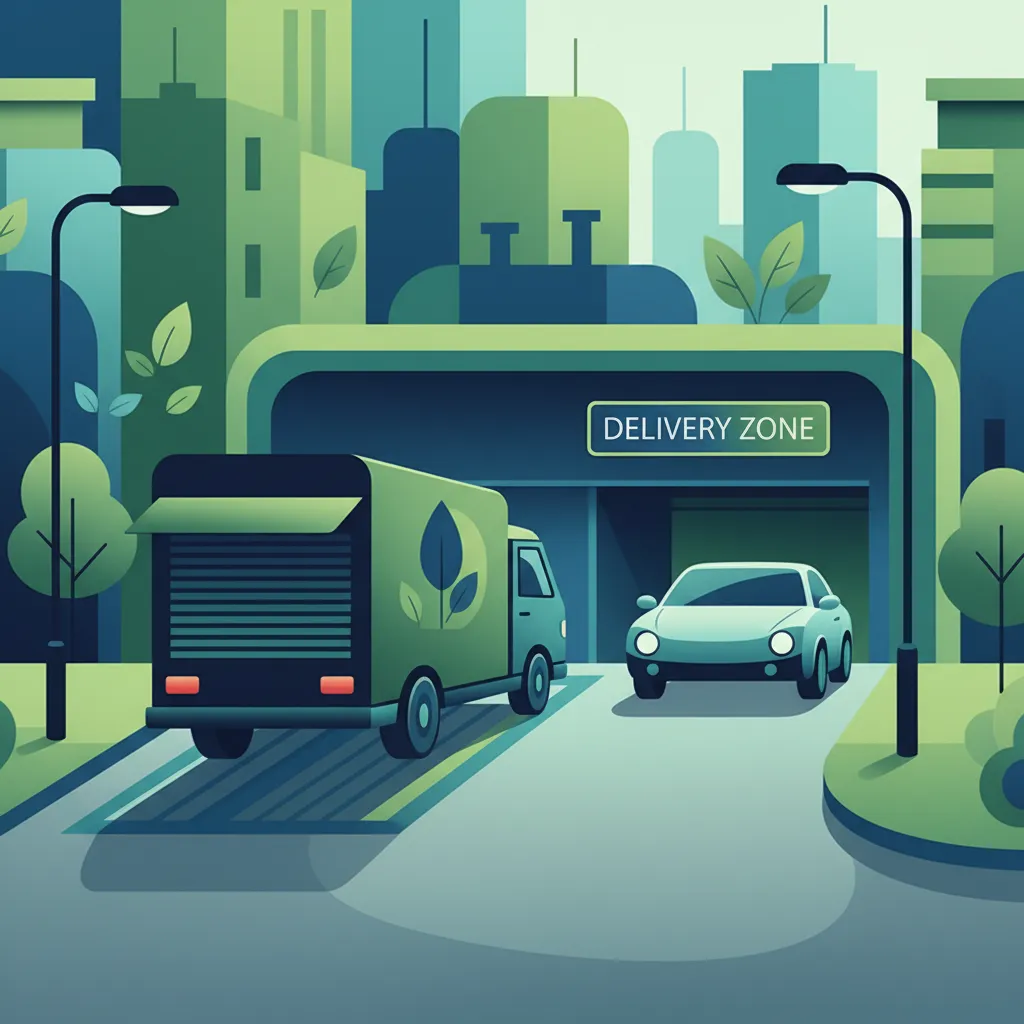
This lesson provides guidance on the practical aspects of parking and making deliveries in urban areas. It covers the techniques for safely maneuvering into and out of loading docks and designated delivery zones, which often involves precise reversing. The content also explains the specific parking regulations that apply to commercial vehicles and best practices for ensuring safety during loading and unloading.
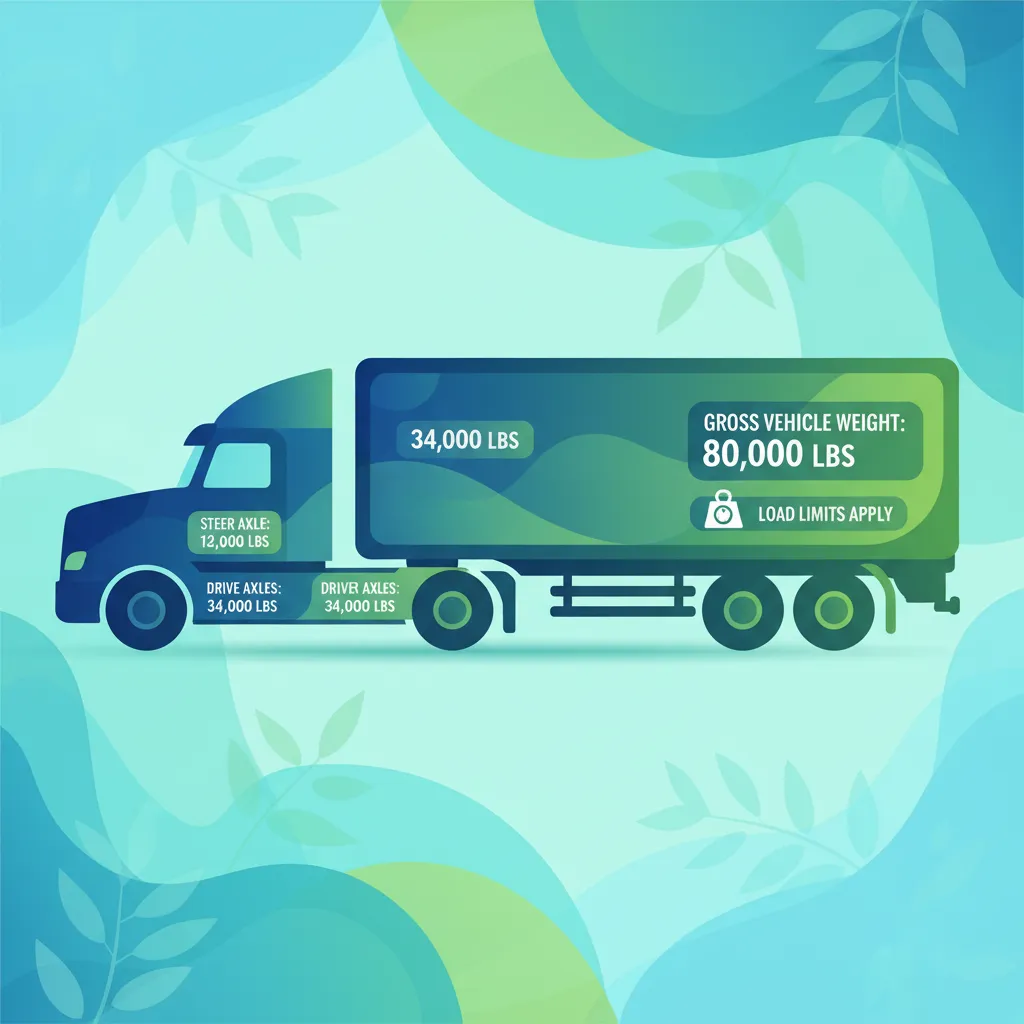
This lesson covers the critical regulations concerning vehicle weight, including Gross Vehicle Weight (GVW) and individual axle load limits. Learners will understand how to calculate tare weight and maximum payload to avoid overloading. The content also explains how proper weight distribution is essential for vehicle stability, braking efficiency, and minimizing road surface damage.

This lesson addresses the legal and practical aspects of carrying passengers, outlining DGT regulations and weight limits. Learners examine how extra weight influences the center of gravity, braking distances, and handling characteristics. Guidance is provided on proper load distribution and communication to maintain control and safety.
Explore how trailer load, coupling, and speed affect towing stability. Learn about tongue weight, center of gravity, and preventing trailer sway based on DGT driving theory.
In this lesson, the principles of proper load distribution and maintaining an appropriate center of gravity are explored. It covers how uneven weight can cause trailer sway (snaking) and destabilize the towing vehicle. Learners will be instructed on DGT load limits, proper cargo arrangement, and tie-down methods to ensure safe transport.
This lesson addresses the dynamics of accelerating, braking, and turning while towing a trailer. It explains how to adjust for increased load inertia, the impact on stopping distances, and the need for wider turns to account for off-tracking. The content outlines DGT speed guidelines specific to towing and emphasizes smooth control to ensure stability.

This lesson explains the physical concept of the center of gravity and its critical importance in heavy vehicle stability. It details how the placement and distribution of cargo can raise or lower the center of gravity, affecting rollover risk and handling. The content also covers factors that contribute to vehicle sway and the principles of load balancing to maintain control during turns and maneuvers.
This lesson focuses on the complexities of reversing while towing a trailer. It explains the phenomenon of trailer swing and the counter-steering inputs required to guide it correctly. The content details proper use of mirrors and observation to control the trailer's path, adhering to DGT rules and ensuring the maneuver is planned and executed safely.

This lesson explores the direct relationship between a vehicle's load and its braking and acceleration performance. It explains how increased mass significantly increases the vehicle's inertia, resulting in longer stopping distances and slower acceleration. Understanding these physical principles helps drivers adjust their driving style, such as increasing following distances, to compensate for the effects of a heavy load.
This lesson explains the critical importance of proper weight distribution and adherence to load limits for buses and coaches, focusing on gross vehicle weight and axle load regulations. It describes how passenger and cargo placement affects the centre of gravity, which in turn influences vehicle stability during acceleration, braking, and cornering. Learners will be taught best practices for load planning to ensure compliance and maintain safe handling.
This lesson covers the critical regulations concerning vehicle weight, including Gross Vehicle Weight (GVW) and individual axle load limits. Learners will understand how to calculate tare weight and maximum payload to avoid overloading. The content also explains how proper weight distribution is essential for vehicle stability, braking efficiency, and minimizing road surface damage.
This lesson details the legal framework for towing in Spain. It covers the concepts of maximum authorized mass, towing capacities of vehicles, and specific weight limits for different axle configurations. The content also explains the documentation and periodic technical inspection (ITV) requirements for trailers to ensure full legal compliance.
Find clear answers to common questions learners have about Coupling, Decoupling, and Safety Checks. Learn how the lesson is structured, which driving theory objectives it supports, and how it fits into the overall learning path of units and curriculum progression in Spain. These explanations help you understand key concepts, lesson flow, and exam focused study goals.
After coupling, you must check that the trailer is securely locked onto the hitch, that the safety chain or cable is correctly attached and has the right slack, and that all electrical connections for lights and indicators are firmly in place and functional. It's also vital to check the trailer's breakaway system if fitted.
You need to reverse the towing vehicle slowly and accurately towards the trailer hitch. The hitch on the vehicle should be directly above the trailer's coupling head. Visual cues, such as aligning markers on the hitch, and ensuring the vehicle's ball or pin is centered, are crucial for a successful alignment.
The safety chain or cable acts as a secondary connection between the trailer and the towing vehicle. In the event that the main coupling fails, the safety chain prevents the trailer from disconnecting completely and potentially causing an accident. It must be attached to a designated point on the towing vehicle's chassis.
Common mistakes include not lowering the trailer's jockey wheel sufficiently before decoupling, attempting to release the lock while the trailer is still under pressure from the hitch, or not securing the trailer properly once it's detached. Rushing the process is also a frequent error.
While this lesson focuses on coupling and decoupling, it's essential to understand that a balanced load is critical for safe towing. You should ensure the load is distributed correctly before you even begin the coupling process. Overloaded or unevenly distributed loads can significantly affect stability and handling.
Use our powerful search functionality to pinpoint specific Spanish DGT driving theory practice sets. Filter by road sign categories, traffic law topics, or question difficulty to build custom study sessions and reinforce your knowledge precisely where it matters for your official exam.