
Welcome to the unit on trailer handling for your Spanish B and BE driving license. This lesson focuses on the critical legal aspects of towing, ensuring you understand weight limits, axle configurations, and inspection requirements mandated by the DGT. Mastering these details is crucial for safe and legal towing, and will prepare you for specific questions on the theory exam.
Lesson content overview
Operating a vehicle with a trailer in Spain, especially under the Category BE driving license, requires a thorough understanding of the specific legal limits, authorized masses, and mandatory technical inspections. This lesson delves into the critical regulations set by the Spanish traffic code (DGT), ensuring you have the knowledge for safe, legal, and compliant towing. Adherence to these rules is not merely a formality; it is crucial for road safety, preventing accidents, and avoiding significant penalties.
The information presented here is vital for any driver undertaking the Complete Spanish Driving License Theory Course for Categories B & BE (DGT). It builds upon your knowledge from previous units, particularly those on coupling, load distribution, and trailer stability, by adding the essential legal framework. Understanding these statutory limits is key to correctly configuring your towing setup and maintaining your trailer’s roadworthiness over time.
The core of Spanish towing legislation revolves around the concept of MAM (Masa Máxima Autorizada), or Maximum Authorised Mass. This is the greatest total mass, expressed in kilograms, that a vehicle or trailer is legally permitted to carry when fully loaded, including its own weight, fuel, occupants, and cargo. The MAM is a fixed value determined by the manufacturer and is officially recorded on the vehicle's or trailer's Permiso de Circulación (registration document).
Every towing vehicle has its own MAM, which represents the maximum weight it can have when driving without a trailer. However, when you attach a trailer, the regulations shift focus to the Combined MAM. This is the sum of the towing vehicle’s MAM and the trailer’s MAM. For drivers holding a Category BE licence, this combined mass is legally capped.
The primary rule for BE licence holders is that the Combined MAM of the towing vehicle and the trailer must not exceed 3,500 kg. This limit ensures that the total weight being moved aligns with the capabilities and training associated with the BE licence category. Exceeding this limit would typically require a higher licence category (e.g., C1E).
It is essential to calculate the combined MAM before starting any journey. This means knowing the MAM of your towing vehicle and the MAM of your trailer, both found on their respective registration documents. Do not confuse MAM with the actual weight of your loaded vehicle and trailer, as MAM represents the maximum permissible weight.
To determine if your setup is compliant, you must check:
For example, if your car has a MAM of 1,800 kg, you can legally tow a trailer with a MAM of up to 1,700 kg (1,800 kg + 1,700 kg = 3,500 kg). If your car's MAM is 2,200 kg, then your trailer's MAM cannot exceed 1,300 kg (2,200 kg + 1,300 kg = 3,500 kg) for BE compliance.
The total maximum authorised mass of the towing vehicle and the trailer together. For a BE licence, this must not exceed 3,500 kg.
Beyond the combined MAM, your towing vehicle has a specific towing capacity (also known as Capacidad de Remolque). This figure, provided by the vehicle manufacturer and stated in your vehicle's technical sheet (Ficha Técnica or Permiso de Circulación), indicates the maximum trailer MAM your vehicle is engineered to safely pull.
This capacity is determined by factors such as the vehicle's engine power, chassis strength, braking system, and transmission. It is a mechanical limit designed to prevent undue strain on your vehicle's components, which could lead to mechanical failure or compromised safety.
Regardless of your licence category, the trailer's MAM must never exceed the towing vehicle's specified towing capacity. Ignoring this limit can damage your vehicle, invalidate your insurance, and create a significant safety hazard.
It's common for a vehicle's actual towing capacity to be lower than what would be theoretically allowed by your BE licence. For instance, even if your BE licence allows for a combined MAM of 3,500 kg, your car might only have a towing capacity of 1,500 kg. In this scenario, you cannot tow a trailer with a MAM greater than 1,500 kg, even if the combined MAM would still be below 3,500 kg.
The design of a trailer, particularly its axle configuration, significantly influences its load-carrying capacity and how weight should be distributed. Different axle types have distinct maximum load limits imposed by Spanish regulations to protect the trailer's structure, its tyres, and the road infrastructure.
Trailers can be classified by the number of axles they possess:
Reglamento General de Circulación (General Traffic Regulations) for precise figures.Correct load distribution is paramount. It involves positioning cargo so that the weight is evenly spread across the trailer's axles and balanced from front to back, as well as side to side. Uneven loading can lead to several problems:
Drivers must ensure that not only the total trailer MAM is respected but also that the load on each individual axle remains within its specified limit. This information is typically found on the trailer's identification plates.
Just like motor vehicles, trailers operating on Spanish roads are subject to mandatory ITV (Inspección Técnica de Vehículos), or Periodic Technical Inspection. The ITV is a comprehensive check designed to ensure that the trailer meets all safety and environmental standards and remains roadworthy.
The requirement for ITV depends primarily on the trailer's MAM:
remolques ligeros): These trailers are generally exempt from periodic ITV inspections. They are, however, still legally required to carry their own registration plate (separate from the towing vehicle's) and must meet basic safety standards (lights, tyres).remolques no ligeros): These trailers are subject to mandatory ITV inspections. The frequency of inspection typically follows this schedule:
Always check the specific registration date and previous ITV dates for your trailer to know when its next inspection is due. Driving with an expired ITV is a serious offense.
During an ITV inspection, technicians will meticulously examine various aspects of your trailer, including:
Failing to present a trailer for its mandatory ITV, or driving with an expired or unfavourable ITV, carries severe consequences:
Legal compliance for towing in Spain extends beyond just weight limits and inspections; it also requires specific documentation and clear visible markings on the trailer itself. These elements provide crucial information for both the driver and enforcement officers.
When towing a trailer, you must always carry the following documents:
In addition to documentation, trailers must prominently display specific plates and markings:
These plates must be present, legible, and securely attached. Missing, damaged, or unreadable plates can lead to fines, as they hinder quick verification of compliance. Ensure any modifications to the trailer that affect its weight or dimensions are properly approved and reflected in its documentation and markings.
Understanding the rules is the first step; applying them correctly prevents common legal violations and associated penalties. Here are some frequent infringements and how to ensure you remain compliant:
tara) and its MAM, then ensure your cargo weight does not push the total beyond the MAM.Ficha Técnica for its maximum towing capacity. The trailer's MAM must always be less than or equal to this figure.Penalties for non-compliance can range from substantial fines (hundreds of euros) to the immobilisation of your vehicle-trailer combination, and in severe cases, loss of points from your driving licence.
The legal limits and inspection requirements for towing are not arbitrary; they are deeply rooted in the physics of vehicle dynamics and road safety. Understanding the underlying reasons reinforces the importance of strict compliance.
Overloading any part of your towing setup — whether the overall combined mass, the trailer's MAM, or an individual axle's load limit — profoundly impacts driving dynamics:
The way weight is distributed within the trailer is just as critical as its total mass. An improperly loaded trailer can suffer from trailer sway, a dangerous oscillating motion where the trailer begins to "wag" from side to side behind the towing vehicle.
The Periodic Technical Inspection (ITV) serves as a vital safety net. By regularly checking critical components, the ITV process helps to:
In essence, strict adherence to legal limits, correct load management, and regular technical inspections collectively contribute to a safer towing experience for you and all other road users. This proactive approach minimizes risks associated with towing and ensures full compliance with Spanish traffic laws.
To recap the crucial aspects of legal towing in Spain for BE licence holders:
Permiso de Circulación and Ficha Técnica for both vehicle and trailer, along with a valid ITV certificate/sticker for the trailer.This lesson covers the essential legal framework for towing trailers in Spain under Category BE licence, focusing on Maximum Authorised Mass (MAM) limits, vehicle towing capacities, and axle weight regulations. Key rules include the 3,500 kg combined MAM cap for BE licence, mandatory ITV inspections for trailers over 750 kg MAM (first at 4 years, then biennially), and the requirement that trailer MAM never exceed the towing vehicle's manufacturer-specified capacity. The lesson also emphasises proper load distribution to prevent axle overload and trailer sway, explains required documentation (Permiso de Circulación, Ficha Técnica, ITV certificate), and outlines consequences of non-compliance including fines, immobilisation, and insurance invalidation.
A short set of high-value points that capture the most important learning from this lesson.
For Category BE licence holders, the combined MAM of towing vehicle and trailer must never exceed 3,500 kg, calculated by adding the MAM values shown on both registration documents
Trailers with MAM exceeding 750 kg require mandatory ITV inspections: first at 4 years from registration, then every 2 years thereafter
The trailer's MAM must not exceed the vehicle's manufacturer-specified towing capacity, regardless of licence category or combined MAM limits
Proper load distribution across axles is legally required; exceeding individual axle limits is a violation even if total trailer MAM is respected
Missing or expired ITV on a trailer subject to inspection invalidates insurance and can result in immobilisation, fines, and personal liability
Explore all units and lessons included in this driving theory course.
MAM (Masa Máxima Autorizada) is the maximum permitted mass including the vehicle/trailer's own weight, fuel, occupants, and cargo
The 3,500 kg combined MAM cap applies to BE licence; exceeding this typically requires C1E or higher licence category
Remolques ligeros (MAM ≤ 750 kg) are exempt from periodic ITV but still need registration plates and must meet basic safety standards
Vehicle towing capacity is a mechanical limit from the manufacturer, often lower than what the BE licence would theoretically allow
The ITV checks braking systems, lighting, tyres, chassis, suspension, and coupling components for roadworthiness
Confusing MAM with the actual loaded weight; MAM represents the legal maximum, not what is currently being carried
Assuming BE licence automatically permits any combined mass up to 3,500 kg without checking the vehicle's actual towing capacity
Failing to distribute cargo evenly, which can overload individual axles even when total trailer weight is within limits
Assuming all trailers are exempt from ITV; only those with MAM of 750 kg or less are exempt
Not verifying ITV dates in advance, leading to expired inspection certificates and immediate non-compliance
Lesson content overview
A short set of high-value points that capture the most important learning from this lesson.
For Category BE licence holders, the combined MAM of towing vehicle and trailer must never exceed 3,500 kg, calculated by adding the MAM values shown on both registration documents
Trailers with MAM exceeding 750 kg require mandatory ITV inspections: first at 4 years from registration, then every 2 years thereafter
The trailer's MAM must not exceed the vehicle's manufacturer-specified towing capacity, regardless of licence category or combined MAM limits
Proper load distribution across axles is legally required; exceeding individual axle limits is a violation even if total trailer MAM is respected
Missing or expired ITV on a trailer subject to inspection invalidates insurance and can result in immobilisation, fines, and personal liability
Explore all units and lessons included in this driving theory course.
MAM (Masa Máxima Autorizada) is the maximum permitted mass including the vehicle/trailer's own weight, fuel, occupants, and cargo
The 3,500 kg combined MAM cap applies to BE licence; exceeding this typically requires C1E or higher licence category
Remolques ligeros (MAM ≤ 750 kg) are exempt from periodic ITV but still need registration plates and must meet basic safety standards
Vehicle towing capacity is a mechanical limit from the manufacturer, often lower than what the BE licence would theoretically allow
The ITV checks braking systems, lighting, tyres, chassis, suspension, and coupling components for roadworthiness
Confusing MAM with the actual loaded weight; MAM represents the legal maximum, not what is currently being carried
Assuming BE licence automatically permits any combined mass up to 3,500 kg without checking the vehicle's actual towing capacity
Failing to distribute cargo evenly, which can overload individual axles even when total trailer weight is within limits
Assuming all trailers are exempt from ITV; only those with MAM of 750 kg or less are exempt
Not verifying ITV dates in advance, leading to expired inspection certificates and immediate non-compliance
Explore search topics learners often look for when studying Legal Limits, Axle Configurations, and Inspection Requirements. These topics reflect common questions about road rules, driving situations, safety guidance, and lesson level theory preparation for learners in Spain.
Browse additional driving theory lessons that cover connected traffic rules, road signs, and common driving situations related to this topic. Improve your understanding of how different rules interact across everyday traffic scenarios.
Understand the critical Spanish DGT regulations for towing, focusing on the combined Maximum Authorised Mass (MAM) limits for BE licence holders and the mandatory Periodic Technical Inspection (ITV) schedules and checks for trailers.

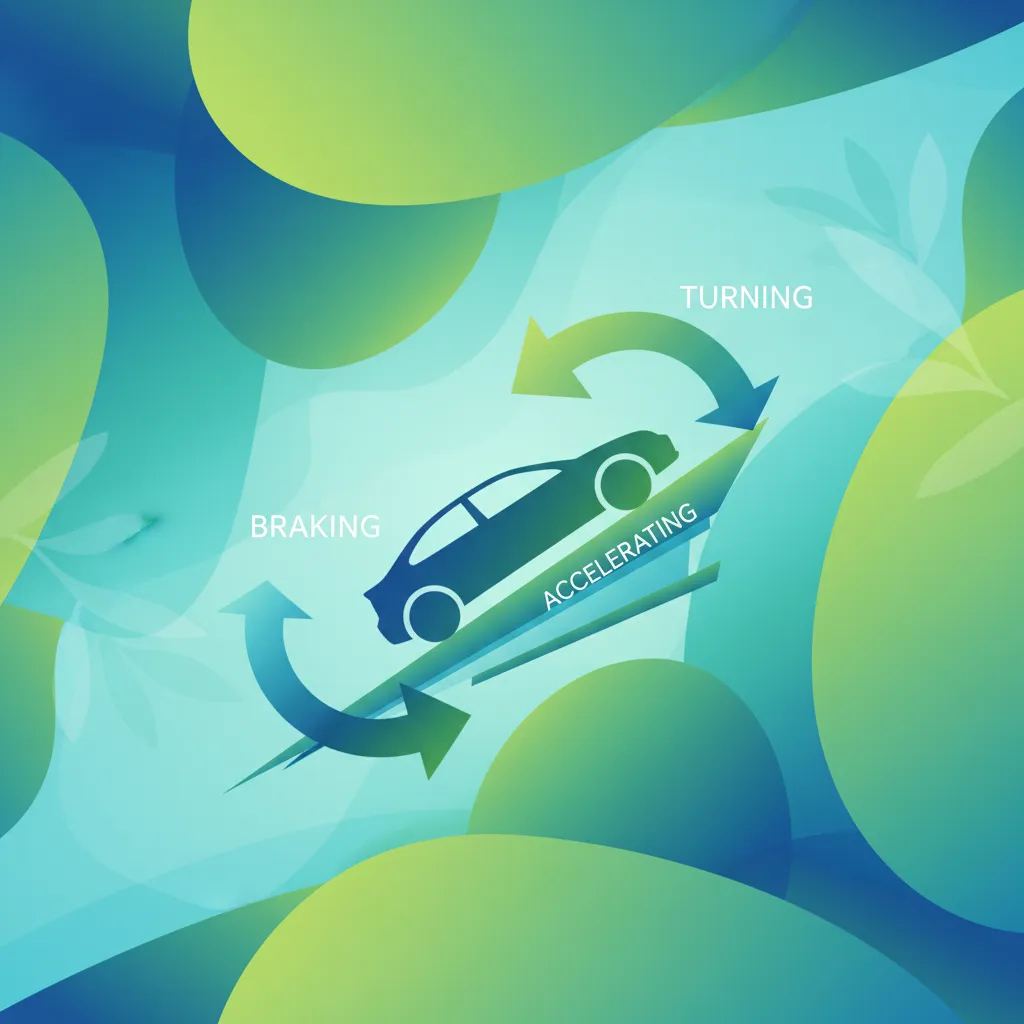
This lesson addresses the dynamics of accelerating, braking, and turning while towing a trailer. It explains how to adjust for increased load inertia, the impact on stopping distances, and the need for wider turns to account for off-tracking. The content outlines DGT speed guidelines specific to towing and emphasizes smooth control to ensure stability.
This lesson explains the proper procedures for securely coupling and decoupling a trailer. Learners will understand the alignment of hitch components, the use of safety chains and locking mechanisms, and checking electrical connections. The content stresses a pre-drive checklist that includes load verification and adherence to DGT coupling standards to ensure safe towing operations.
In this lesson, the principles of proper load distribution and maintaining an appropriate center of gravity are explored. It covers how uneven weight can cause trailer sway (snaking) and destabilize the towing vehicle. Learners will be instructed on DGT load limits, proper cargo arrangement, and tie-down methods to ensure safe transport.
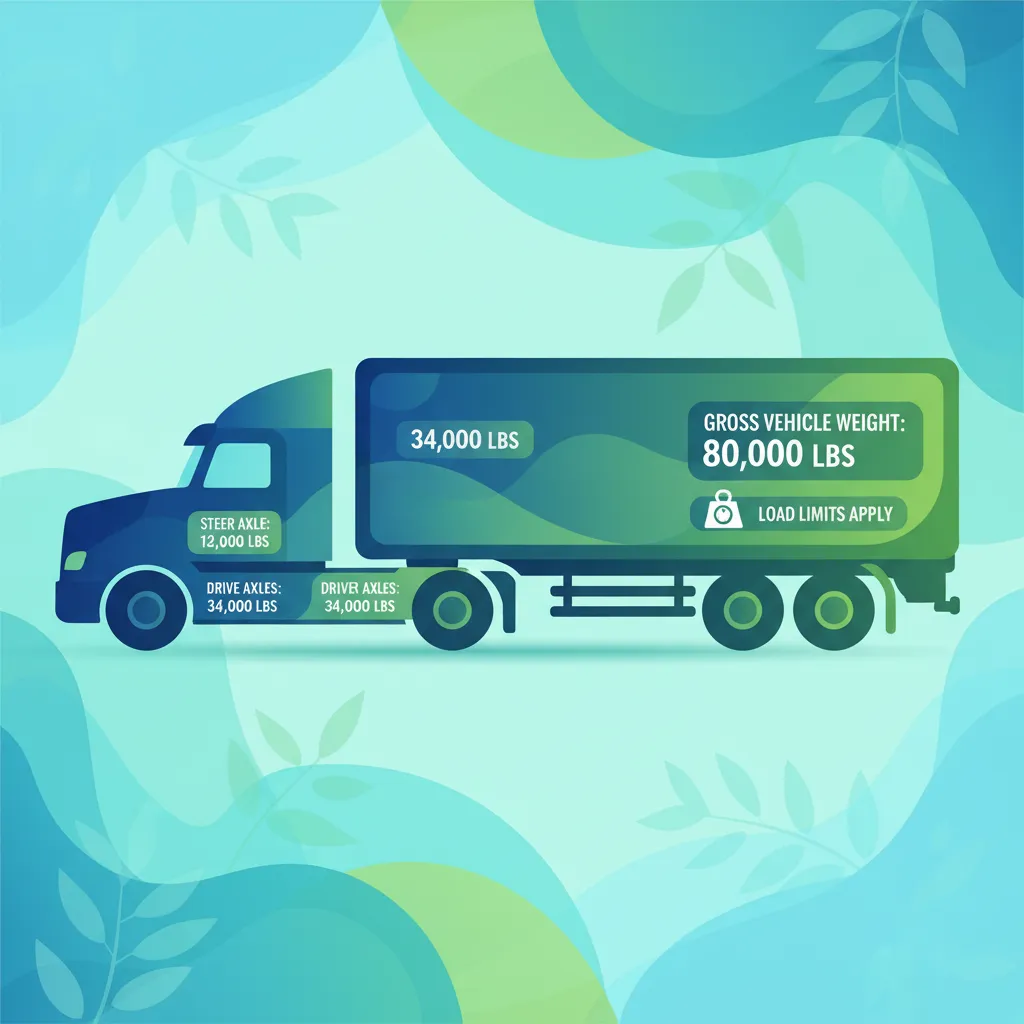
This lesson covers the critical regulations concerning vehicle weight, including Gross Vehicle Weight (GVW) and individual axle load limits. Learners will understand how to calculate tare weight and maximum payload to avoid overloading. The content also explains how proper weight distribution is essential for vehicle stability, braking efficiency, and minimizing road surface damage.

This lesson focuses on the complexities of reversing while towing a trailer. It explains the phenomenon of trailer swing and the counter-steering inputs required to guide it correctly. The content details proper use of mirrors and observation to control the trailer's path, adhering to DGT rules and ensuring the maneuver is planned and executed safely.
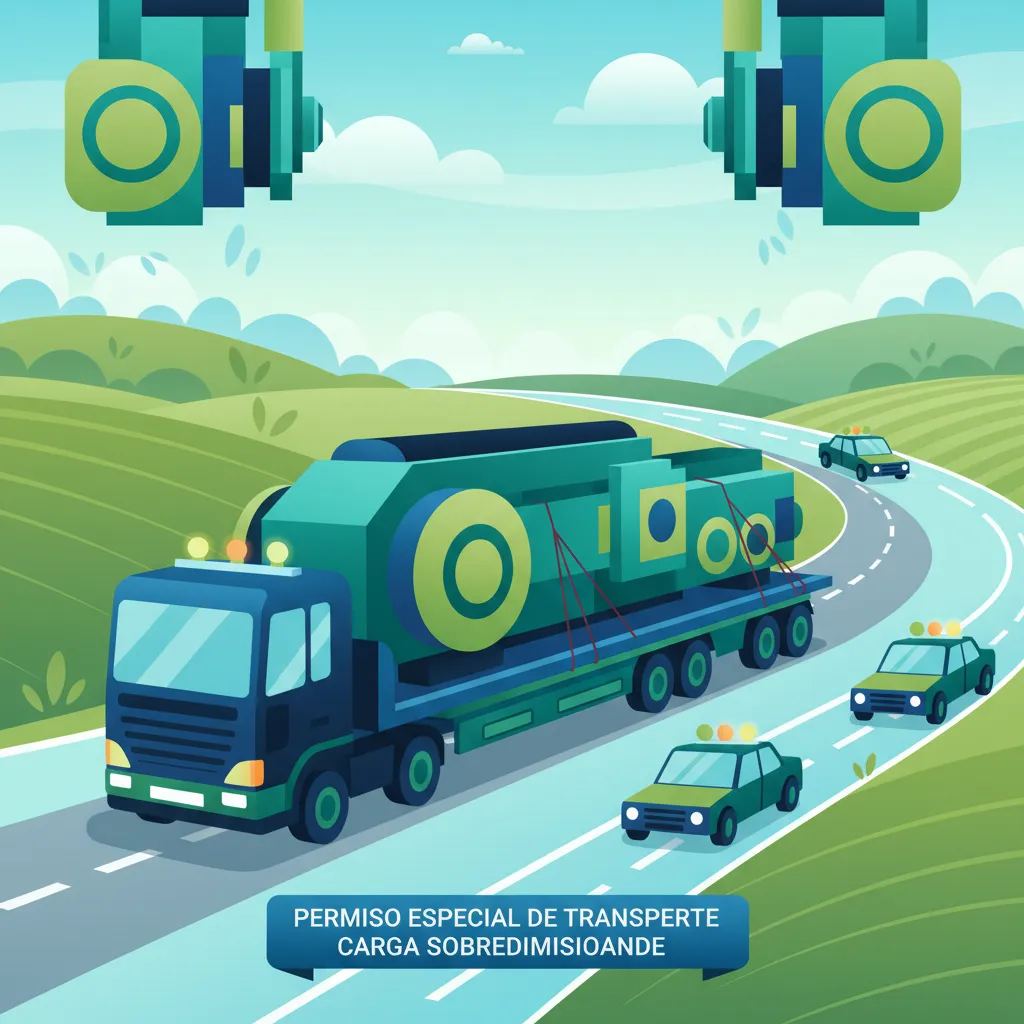
This lesson addresses the special regulations that apply to transporting loads that exceed standard legal dimensions or weight. It explains the process for obtaining the necessary special permits from the DGT and other authorities. The content also covers the requirements for route planning, the use of escort vehicles (pilot cars), and the mandatory signage and lighting for the vehicle.

This lesson focuses on essential safety equipment and routine maintenance tasks required for legal road operation. It explains the correct use of seat belts, airbags, and child restraints, as well as the importance of maintaining proper tire pressure and brake condition. Additionally, it clarifies the legal vehicle inspection (ITV) process mandated by the DGT to ensure roadworthiness.
This lesson explains the specific legal framework governing truck operations on Spain's high-speed road network. It details the different speed limits for trucks on autovías versus autopistas and the regulations regarding which lanes heavy vehicles are permitted to use. Learners will also understand how to interpret specific highway signage relevant to commercial vehicles and any applicable toll regulations.
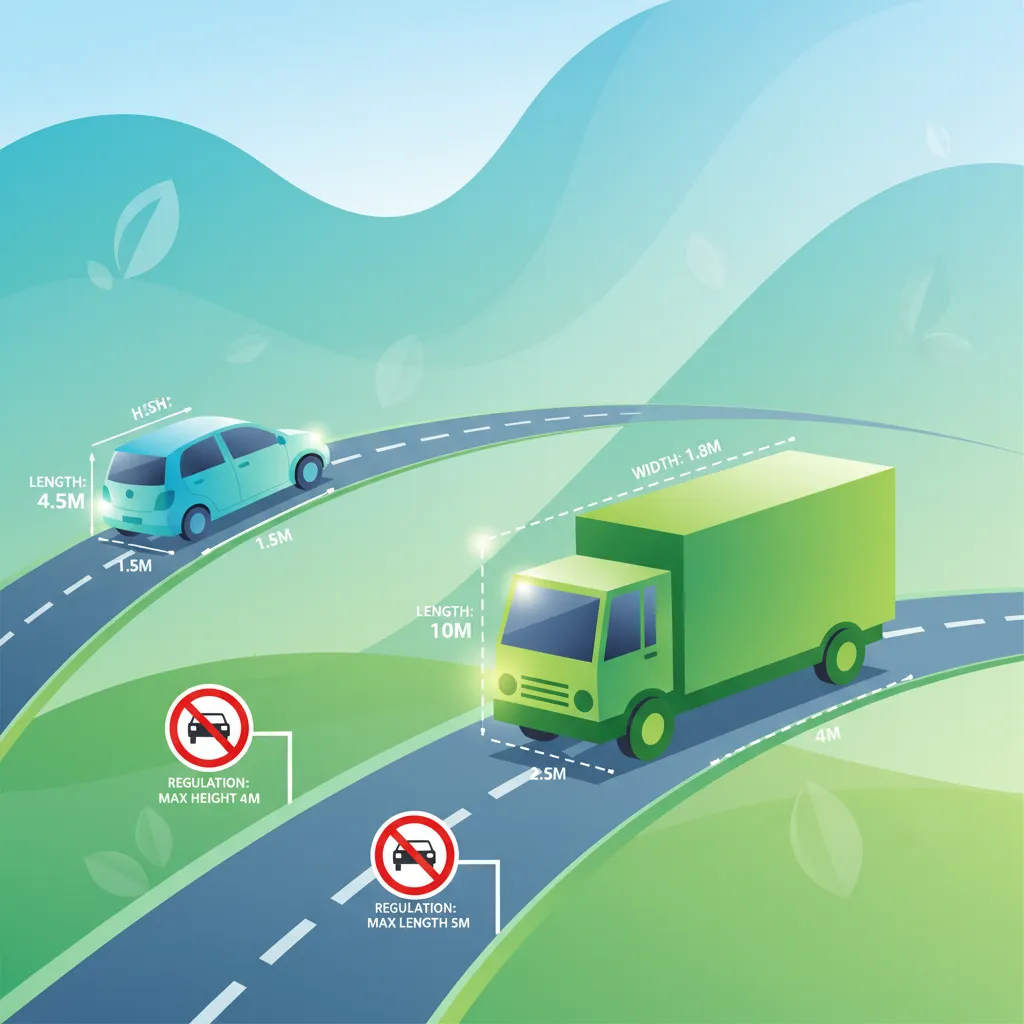
This lesson provides a detailed breakdown of the maximum permissible length, width, and height for heavy vehicles according to Spanish and EU regulations. It explains how these dimensions are measured and how they affect vehicle classification and route planning. The content emphasizes the critical importance of respecting clearance signs for bridges, tunnels, and other overhead structures to prevent accidents.

This lesson provides theoretical guidance on the techniques for safely reversing a heavy vehicle, a high-risk maneuver. It emphasizes the correct use of mirrors, managing extensive blind spots, and the importance of using a spotter when available. The content also breaks down the geometric principles of parallel parking and backing into loading docks, focusing on vehicle positioning and spatial awareness.
Learn about specific trailer axle load limits, how to determine your vehicle's towing capacity, and the essential registration documents and visible markings required for legal towing operations in Spain.
This lesson addresses the dynamics of accelerating, braking, and turning while towing a trailer. It explains how to adjust for increased load inertia, the impact on stopping distances, and the need for wider turns to account for off-tracking. The content outlines DGT speed guidelines specific to towing and emphasizes smooth control to ensure stability.
In this lesson, the principles of proper load distribution and maintaining an appropriate center of gravity are explored. It covers how uneven weight can cause trailer sway (snaking) and destabilize the towing vehicle. Learners will be instructed on DGT load limits, proper cargo arrangement, and tie-down methods to ensure safe transport.
This lesson covers the critical regulations concerning vehicle weight, including Gross Vehicle Weight (GVW) and individual axle load limits. Learners will understand how to calculate tare weight and maximum payload to avoid overloading. The content also explains how proper weight distribution is essential for vehicle stability, braking efficiency, and minimizing road surface damage.
This lesson explains the proper procedures for securely coupling and decoupling a trailer. Learners will understand the alignment of hitch components, the use of safety chains and locking mechanisms, and checking electrical connections. The content stresses a pre-drive checklist that includes load verification and adherence to DGT coupling standards to ensure safe towing operations.
This lesson provides a detailed breakdown of the maximum permissible length, width, and height for heavy vehicles according to Spanish and EU regulations. It explains how these dimensions are measured and how they affect vehicle classification and route planning. The content emphasizes the critical importance of respecting clearance signs for bridges, tunnels, and other overhead structures to prevent accidents.
This lesson addresses the special regulations that apply to transporting loads that exceed standard legal dimensions or weight. It explains the process for obtaining the necessary special permits from the DGT and other authorities. The content also covers the requirements for route planning, the use of escort vehicles (pilot cars), and the mandatory signage and lighting for the vehicle.

This lesson examines the overarching legal framework that governs professional drivers in Spain, focusing on the Reglamento General de Circulación. It details the statutory obligations of a driver, such as maintaining mandatory insurance, ensuring vehicle roadworthiness, and carrying all required documentation. Learners will understand their legal responsibilities and the importance of compliance with DGT regulations to operate lawfully.
This lesson explains the specific legal framework governing truck operations on Spain's high-speed road network. It details the different speed limits for trucks on autovías versus autopistas and the regulations regarding which lanes heavy vehicles are permitted to use. Learners will also understand how to interpret specific highway signage relevant to commercial vehicles and any applicable toll regulations.
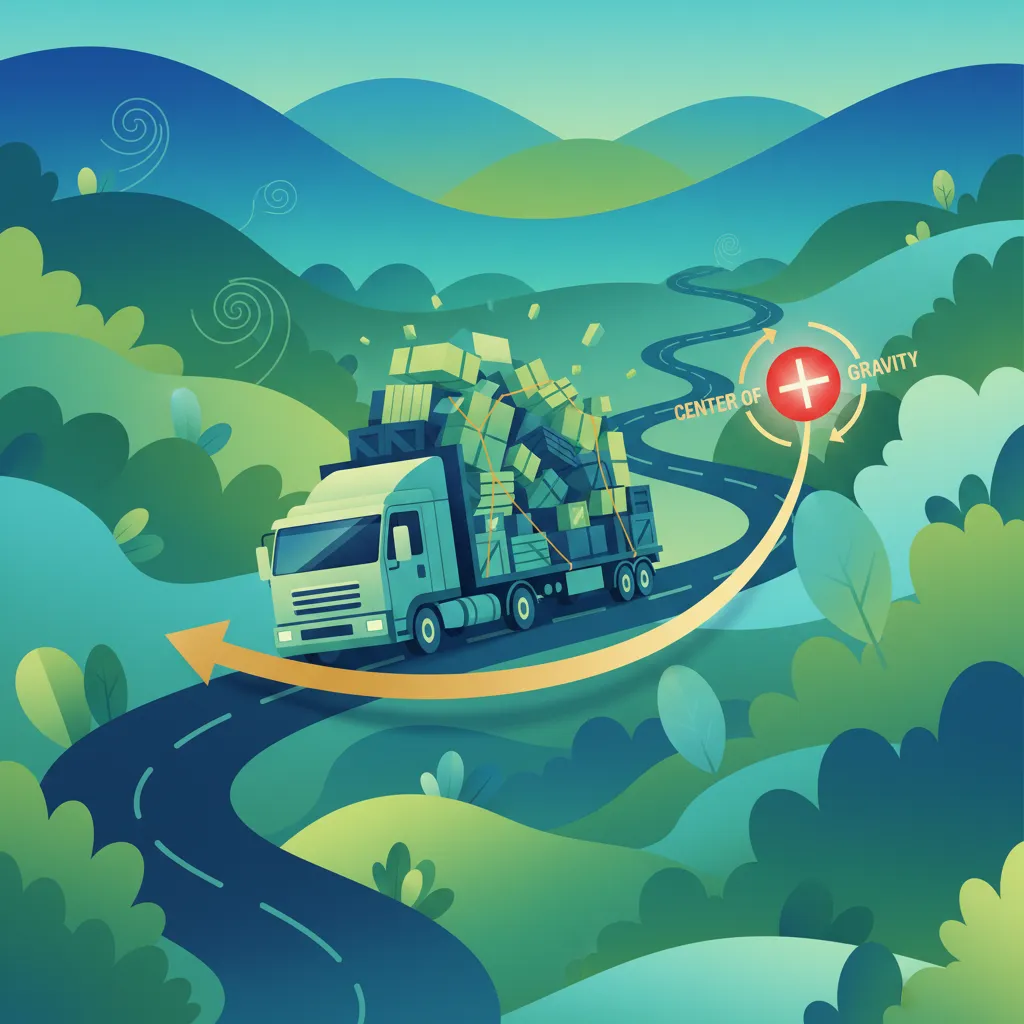
This lesson explains the physical concept of the center of gravity and its critical importance in heavy vehicle stability. It details how the placement and distribution of cargo can raise or lower the center of gravity, affecting rollover risk and handling. The content also covers factors that contribute to vehicle sway and the principles of load balancing to maintain control during turns and maneuvers.
This lesson explains the critical importance of proper weight distribution and adherence to load limits for buses and coaches, focusing on gross vehicle weight and axle load regulations. It describes how passenger and cargo placement affects the centre of gravity, which in turn influences vehicle stability during acceleration, braking, and cornering. Learners will be taught best practices for load planning to ensure compliance and maintain safe handling.
Find clear answers to common questions learners have about Legal Limits, Axle Configurations, and Inspection Requirements. Learn how the lesson is structured, which driving theory objectives it supports, and how it fits into the overall learning path of units and curriculum progression in Spain. These explanations help you understand key concepts, lesson flow, and exam focused study goals.
The Maximum Authorised Mass (MAM), also known as MMA in Spanish, is the maximum weight that a vehicle or trailer can legally be allowed to tow. It is crucial because exceeding this limit can lead to loss of control, vehicle damage, and serious legal penalties. The DGT specifies these limits to ensure road safety and vehicle integrity.
The weight distribution across a trailer's axles is critical for stability and safety. Regulations specify maximum permissible weight for each axle and for the trailer as a whole. Proper axle configuration ensures the trailer tracks correctly behind the towing vehicle and doesn't become unstable, especially at higher speeds or during braking. Understanding these limits is key for both safe towing and compliance with DGT rules.
Besides your driving license (B or BE), the trailer must have its own registration document (ficha técnica) and potentially a separate number plate if its MAM exceeds certain limits. Ensure the trailer has passed its ITV if required. The towing vehicle's documentation will also list its towing capabilities.
The frequency of the ITV for trailers depends on their type and age. Generally, new trailers may be exempt for the first few years. After that, they typically require an inspection every 1-2 years, similar to cars. Always check the specific ITV regulations for your trailer's category and age as defined by the DGT.
Exceeding weight limits can result in significant fines, loss of driving privileges, and immediate prohibition from continuing your journey until the load is reduced. Driving a trailer without a valid ITV or proper documentation also carries substantial penalties and can invalidate insurance in case of an accident. The DGT enforces these rules strictly.
Use our powerful search functionality to pinpoint specific Spanish DGT driving theory practice sets. Filter by road sign categories, traffic law topics, or question difficulty to build custom study sessions and reinforce your knowledge precisely where it matters for your official exam.