
Welcome to the Hazard Perception & Defensive Driving unit! This crucial module will equip you with the skills to anticipate potential dangers on the road before they become critical situations. Understanding these principles is fundamental for safe driving and a key component of the Spanish DGT theory exam.
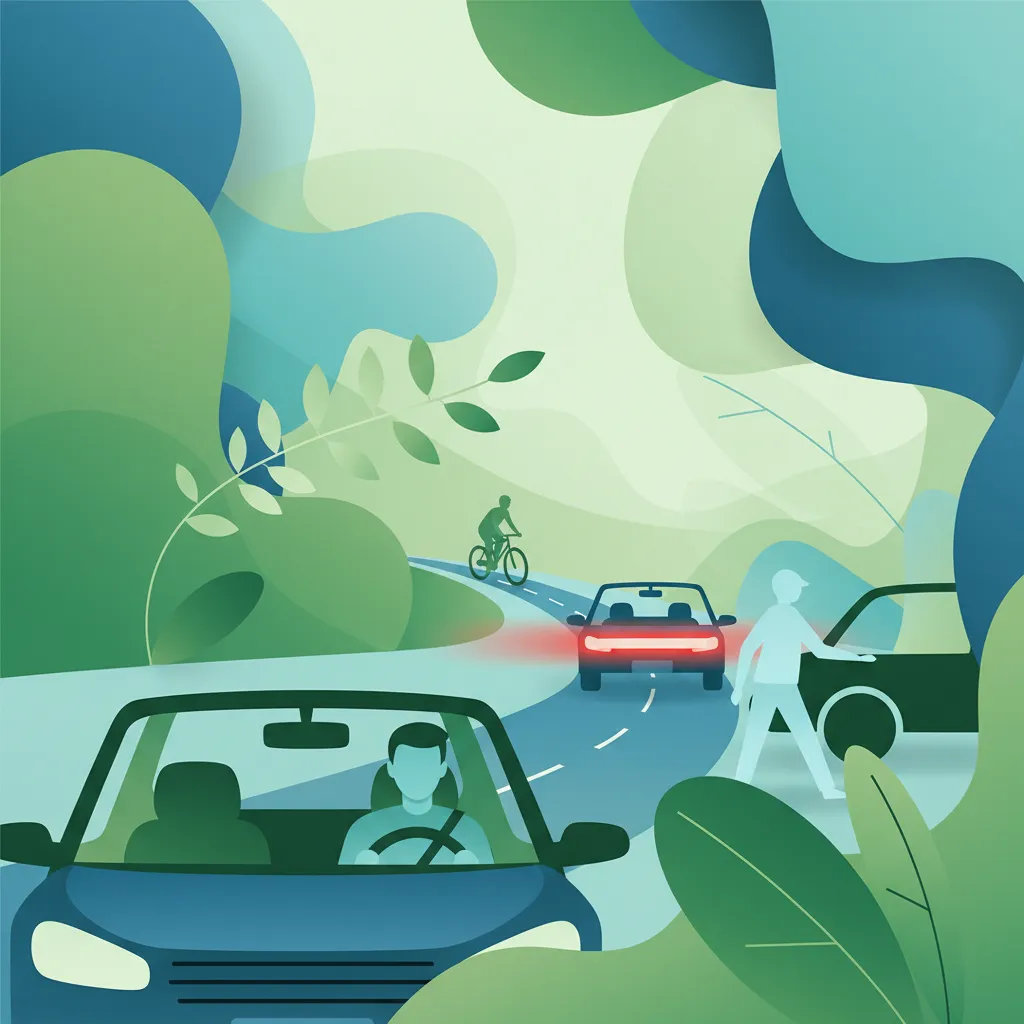
Browse all lessons that make up Hazard Perception & Defensive Driving. Each lesson focuses on specific topics, learning objectives, and core concepts, helping you build essential knowledge and follow a clear, structured progression toward your study goals in Spain.
In this lesson, drivers learn how to identify risk zones where potential hazards are likely to develop. The content explains the use of proactive observation and scanning techniques to detect evolving dangers in the driving environment. Learners will practice anticipating the actions of other road users based on traffic patterns and context, adjusting their speed and position accordingly.
This lesson provides a detailed examination of the components that determine a vehicle’s stopping distance: perception time, reaction time, and braking distance. It outlines how to calculate safe stopping distances under various speeds and road conditions like wet or dry surfaces. Learners will be equipped to compute appropriate safety margins and understand the physics of emergency braking.
This lesson examines the principles of maintaining a safe following distance, including the 'two-second rule' and its adjustments for speed and weather. It focuses on effective blind-spot management, teaching drivers how to use mirrors and head checks. The content integrates DGT guidelines on creating a safety buffer around the vehicle to allow time to react to unexpected events.
This lesson covers how environmental conditions such as rain, fog, and darkness affect driving safety. It instructs drivers on adjusting speed, using appropriate lighting, and increasing following distance to compensate for reduced visibility and traction. The lesson incorporates DGT safety recommendations for handling adverse weather to mitigate risk and maintain control.
This lesson focuses on the driver's mindset and ethical responsibilities. It discusses the importance of courtesy, patience, and consideration for all road users to create a safer driving environment. The content also covers the dangers of distractions, fatigue, and aggressive driving, emphasizing the need to remain calm and focused at all times.
Explore high-intent keywords and long-tail search topics learners use when researching Hazard Perception & Defensive Driving. These terms reflect how people search for reliable study materials, structured explanations, and unit-level theory preparation support in Spain.
Find clear answers to the most common questions learners ask about Hazard Perception & Defensive Driving. Understand how the unit is organized, what learning goals it supports, and how it contributes to your study progression with structured explanations and practical guidance tailored for learners in Spain.
Hazard perception involves your ability to identify potential dangers on the road that could lead to an accident. For the DGT theory exam, this means understanding how to spot developing hazards and what actions to take, or not take, to avoid them. It's about looking ahead and anticipating, not just reacting.
Defensive driving is a proactive approach where you anticipate the actions of other road users and potential hazards, and prepare to react safely. It involves maintaining a safe distance, being aware of blind spots, scanning ahead, and always having an escape route. Regular driving might simply mean following the rules, while defensive driving means expecting the unexpected.
A safe following distance, often called the 'two-second rule' or more in adverse conditions, is critical because it gives you enough time and space to react to sudden braking or unexpected events from the vehicle in front. In Spain, maintaining appropriate distances is a key aspect of safe driving and is assessed in hazard perception scenarios.
Adverse weather conditions like rain, fog, or snow significantly reduce visibility and increase stopping distances. This means you need to increase your following distance, reduce your speed, and be more vigilant. Recognizing these environmental factors and adapting your driving is a core principle of defensive driving taught in this unit.
Blind spots are areas around your vehicle that cannot be seen using your mirrors alone. It's crucial to check your blind spots by physically turning your head before changing lanes, turning, or overtaking. Proper mirror adjustment and head checks are key defensive driving techniques to avoid collisions.
While the DGT doesn't prescribe exact reaction times (as they vary per individual), they emphasize understanding the relationship between speed, reaction time, and braking distance to calculate total stopping distance. The 'two-second rule' is a common guideline for maintaining a safe buffer, which is crucial for avoiding accidents in Spain.
All included lessons
Lessons in Hazard Perception & Defensive Driving
See who benefits most from studying Hazard Perception & Defensive Driving. This overview explains how the unit supports different learning needs, what level of knowledge is helpful before starting, and how it fits into the overall study path in Spain.
This unit is essential for all learners preparing for the Spanish Category B driving theory test, especially those who want to move beyond simply memorizing rules to understanding how to drive safely in real-world situations. It's particularly beneficial for retakers who may struggle with scenario-based questions on the exam.

Begin your preparation for the Spanish DGT driving licence exam today. Browse our full curriculum to find guided courses, detailed lessons on traffic legislation, road signs, and essential driving practices. Start learning systematically and confidently.
Explore DGT Theory Courses & CurriculumExplore all units and lessons included in this driving theory course.
Begin your preparation for the Spanish DGT driving licence exam today. Browse our full curriculum to find guided courses, detailed lessons on traffic legislation, road signs, and essential driving practices. Start learning systematically and confidently.
Explore DGT Theory Courses & Curriculum