
Welcome to the essential lesson on handling a trailer! Towing a trailer significantly changes a vehicle's dynamics, affecting how you accelerate, brake, and steer. This lesson builds upon your understanding of trailer basics and prepares you for specific driving challenges, ensuring you navigate Spanish roads safely and confidently with your BE category license.

Lesson content overview
Driving with a trailer, a skill vital for those holding a Category BE driving license in Spain, introduces a unique set of challenges to vehicle dynamics. The combined mass of your towing vehicle and the trailer significantly alters how the entire unit responds to driver inputs. This lesson will delve into the critical aspects of accelerating, braking, and turning while towing, equipping you with the knowledge to maintain control, ensure stability, and comply with DGT (Dirección General de Tráfico) regulations.
Understanding these dynamics is paramount not only for your safety but also for the safety of other road users. Improper handling can lead to dangerous situations such as trailer sway, jack-knifing, or off-tracking, which can result in accidents and severe consequences. By mastering the principles outlined here, you will learn to adjust your driving style, anticipate potential hazards, and maneuver your vehicle and trailer combination safely and confidently across all road conditions.
Adding a trailer fundamentally transforms your vehicle's behavior, primarily due to the increased total mass and altered center of gravity. These changes demand a more measured and anticipatory driving approach compared to driving a solo vehicle.
The inertial load refers to the total resistance to any change in motion, whether speeding up or slowing down. When you attach a trailer, the combined mass of your towing vehicle and the trailer dramatically increases this inertial load. This means that more force is required to get the combined unit moving and, critically, more force and distance are needed to bring it to a stop.
Practical implications of this increased mass include noticeably slower acceleration and significantly longer braking distances. For instance, accelerating a typical car with a 600 kg trailer might take approximately 25% longer to reach a desired speed than without the trailer. Ignoring this added mass by driving as if the trailer isn't there is a common misunderstanding that can lead to dangerous situations, such as underestimating the time needed to merge into traffic or the distance required to stop safely. DGT regulations inherently acknowledge this by setting reduced speed limits for vehicles towing trailers, aiming to minimize the kinetic energy that needs to be dissipated during braking.
The way cargo is distributed within the trailer and the overall balance between the trailer and the towing vehicle are critical for stability. The center of gravity (CoG) is the theoretical point where the entire mass of the vehicle-trailer system is considered to be concentrated. An ideal CoG provides stability, while an improperly balanced CoG can lead to dangerous instability.
Proper load distribution ensures that weight is appropriately placed over the trailer's axles and that the correct amount of weight rests on the tow hitch. Placing too much weight at the rear of the trailer, for example, can lift the rear of the towing vehicle, reducing the weight on its front wheels. This can severely compromise steering control and front-wheel traction, increasing the risk of trailer sway or loss of stability, particularly at speed or during turns. Conversely, too much weight forward can overload the hitch and the towing vehicle's rear axle. DGT regulations specify maximum permissible axle loads to prevent such issues, making proper loading a legal requirement.
Smooth and controlled acceleration is fundamental when towing to maintain stability and prevent sudden, dangerous shifts in the trailer's weight.
Abrupt acceleration is one of the quickest ways to induce trailer sway, especially with lighter trailers or on slippery surfaces. Always apply the throttle gradually and progressively. This allows the combined mass to build momentum smoothly, minimizing sudden jolts that could destabilize the trailer.
When accelerating from a standstill or at low speeds, select a lower gear than you might typically use for a solo vehicle. This provides more torque (pulling power) at lower engine revolutions, allowing for smoother, less strained acceleration. Avoiding high gears at low speeds prevents the engine from struggling, which can lead to jerky movements that might unsettle the trailer. On inclines, downshift proactively to maintain momentum without over-stressing the engine or resorting to hard acceleration.
Braking with a trailer requires significantly more foresight and a different technique than braking without one. The increased mass dictates longer stopping distances, and the interaction between the towing vehicle and the trailer during deceleration is critical.
The most crucial factor to remember when braking with a trailer is the significantly increased stopping distance. Due to the higher kinetic energy (energy of motion) of the combined unit, more time and space are required to dissipate this energy and come to a complete stop. For instance, if your normal stopping distance is 40 meters, with a heavy trailer, it could easily extend to 60-80 meters or more, depending on speed, road conditions, and trailer weight.
To compensate, always maintain a much greater following distance (distancia de seguridad) from the vehicle in front, especially on highways or in adverse conditions. This provides the necessary buffer zone and additional reaction time to apply brakes smoothly and progressively. DGT Art. 40-1 explicitly mandates that drivers must sustain safe distances that account for increased stopping distance when towing.
For trailers exceeding a certain weight, an integrated braking system is a legal and safety necessity. In Spain, DGT Art. 42-5 specifies that trailers with a Maximum Authorized Mass (MMA) over 750 kg must be equipped with their own functioning braking system. These systems, typically electric or hydraulic, synchronize with the towing vehicle's brakes, distributing the braking effort across more wheels.
An operational trailer brake system significantly reduces the load on the towing vehicle's brakes, prevents overheating, and dramatically improves overall stopping performance. Neglecting trailer brake maintenance or using a non-compliant trailer is not only illegal but extremely dangerous, as it can lead to brake fade, excessive wear on the towing vehicle's brakes, and vastly extended stopping distances.
Sudden, hard braking can cause the trailer to "push" the towing vehicle, leading to jack-knifing—a situation where the trailer pivots sharply and dangerously alongside the towing vehicle, forming a 'V' shape. Always apply brakes smoothly and progressively. Begin with gentle pressure, then gradually increase it as needed. This allows the trailer's braking system to engage smoothly and helps maintain alignment between the vehicle and trailer.
On long descents or when slowing down from higher speeds, engine braking (freno motor) is an invaluable technique. By downshifting to a lower gear, you use the engine's natural resistance to help slow the combined unit. This reduces the reliance on the vehicle's friction brakes, preventing them from overheating and suffering from brake fade, where their effectiveness diminishes due to excessive heat. Engine braking provides a smoother, more controlled deceleration, which is particularly beneficial when towing a heavy load down a gradient.
Turning with a trailer is perhaps the most visually distinct difference from solo driving, primarily due to a phenomenon called off-tracking.
Off-tracking is the lateral deviation of a trailer's rear wheels relative to the towing vehicle's path during a turn. Simply put, the trailer's wheels will always follow a tighter path and cut the corner more sharply than the towing vehicle's front wheels. The longer the trailer, the more pronounced the off-tracking effect will be.
Understanding off-tracking is crucial for preventing collisions with curbs, road signs, parked cars, or even other vehicles. When making a turn, especially a sharp one, you must always aim to take a wider path than you would with a solo vehicle.
Adhering to DGT regulations is not just about avoiding fines; it's fundamental to safe towing practices. These rules are designed to mitigate the inherent risks associated with driving a heavier, longer combination of vehicles.
In Spain, vehicles towing trailers are subject to specific, reduced speed limits compared to solo vehicles. These limits depend on the type and weight of the trailer, as well as the road type.
Exceeding these reduced limits is a common violation and severely increases stopping distances and the risk of losing control.
The Category BE driving license permits you to drive vehicle combinations where the towing vehicle is a Category B vehicle, and the Maximum Authorized Mass (MMA) of the trailer exceeds 750 kg, provided the combined MMA of the vehicle and trailer does not exceed 7,000 kg. DGT Art. 36-2 strictly enforces these weight limits. Exceeding the combined MMA or individual axle loads compromises handling, braking, and can damage road infrastructure, leading to significant fines and potential legal issues.
DGT Art. 38-3 makes it mandatory to use rear-view mirrors that are properly adjusted to provide a clear view of the entire length of the trailer and the traffic behind it. Standard car mirrors are often insufficient for this purpose. You will likely need to fit extended towing mirrors to eliminate blind spots and ensure adequate observation, especially when changing lanes or maneuvering.
Driving with a trailer demands constant vigilance and adaptation to various conditions. Being aware of common pitfalls and employing best practices can prevent dangerous situations.
With a trailer, your ability to perceive hazards and react defensively becomes even more critical. You have less agility, longer stopping distances, and a wider turning radius.
When ascending a steep hill, select a gear that allows the engine to work efficiently without straining, maintaining steady power. On descents, proactively downshift to engage engine braking, preventing your vehicle's brakes from overheating and failing. This is especially important for heavy loads.
Perform thorough pre-trip checks, including tire pressures, hitch security, and light functionality.
Load the trailer correctly, ensuring proper weight distribution and hitch weight.
Adjust your mirrors for full visibility of the trailer's length.
Drive smoothly: gentle acceleration, progressive braking, and gradual steering inputs.
Adhere strictly to DGT speed limits for towing.
Maintain significantly increased following distances.
Anticipate off-tracking by taking wider turns and checking mirrors.
Use engine braking on descents to preserve your service brakes.
Reduce speed and increase caution in adverse weather conditions.
Driving a vehicle with a trailer is a demanding task that requires a deep understanding of vehicle dynamics and a commitment to safe driving practices. By diligently applying the principles of smooth acceleration, effective braking, and mindful turning, especially by accounting for off-tracking and inertial load, you can ensure a safe journey for yourself, your cargo, and everyone else on the road. Always remember to comply with DGT regulations, perform regular maintenance, and adjust your driving style to prevailing conditions. With practice and attention to these details, you will develop the confidence and skill necessary to master trailer handling.
Driving with a trailer fundamentally changes vehicle dynamics due to increased mass and altered center of gravity, requiring smoother inputs and greater anticipation. Off-tracking means trailer wheels follow a tighter path than the towing vehicle, so drivers must initiate turns later and wider while continuously checking mirrors. Braking distances increase significantly, and smooth progressive braking is essential to prevent jack-knifing and maintain alignment between vehicle and trailer. DGT regulations impose reduced speed limits for towing combinations and require extended mirrors and integrated braking systems for trailers over 750 kg MMA, ensuring safer operation of vehicle-trailer combinations on Spanish roads.
A short set of high-value points that capture the most important learning from this lesson.
Towing a trailer dramatically increases inertial load, requiring more time and distance for both acceleration and braking compared to solo driving
Off-tracking means trailer wheels always cut corners tighter than the towing vehicle's path, making wider turns essential to avoid striking curbs or obstacles
DGT sets specific reduced speed limits for trailers: up to 100 km/h on motorways for light trailers, 90 km/h for heavier trailers over 750 kg MMA
Trailers exceeding 750 kg MMA must legally have an integrated braking system that synchronizes with the towing vehicle's brakes
Engine braking on descents is critical when towing to prevent brake fade and maintain control of the heavier combination
Explore all units and lessons included in this driving theory course.
Light trailers (MMA ≤750 kg): 90 km/h on conventional roads, 100 km/h on motorways; heavier trailers: 80 km/h conventional, 90 km/h motorways
DGT Art. 38-3 mandates extended towing mirrors to ensure clear visibility of the entire trailer and traffic behind
Proper load distribution keeps the center of gravity slightly forward of the trailer axle to maintain hitch pressure and stability
Jack-knifing occurs when abrupt braking causes the trailer to swing sharply alongside the towing vehicle in a V-shape
When braking with a trailer, begin gently and progressively to allow the integrated braking system to engage smoothly
Underestimating stopping distances when towing, which can easily double or more compared to solo driving
Taking turns too sharply without compensating for off-tracking, risking collision with curbs or parked vehicles
Neglecting to install extended towing mirrors, leaving dangerous blind spots over the trailer's full length
Loading a trailer with too much weight at the rear, which reduces front-wheel traction and increases sway risk
Braking too hard or suddenly, which can trigger jack-knifing especially on slippery surfaces
Lesson content overview
A short set of high-value points that capture the most important learning from this lesson.
Towing a trailer dramatically increases inertial load, requiring more time and distance for both acceleration and braking compared to solo driving
Off-tracking means trailer wheels always cut corners tighter than the towing vehicle's path, making wider turns essential to avoid striking curbs or obstacles
DGT sets specific reduced speed limits for trailers: up to 100 km/h on motorways for light trailers, 90 km/h for heavier trailers over 750 kg MMA
Trailers exceeding 750 kg MMA must legally have an integrated braking system that synchronizes with the towing vehicle's brakes
Engine braking on descents is critical when towing to prevent brake fade and maintain control of the heavier combination
Explore all units and lessons included in this driving theory course.
Light trailers (MMA ≤750 kg): 90 km/h on conventional roads, 100 km/h on motorways; heavier trailers: 80 km/h conventional, 90 km/h motorways
DGT Art. 38-3 mandates extended towing mirrors to ensure clear visibility of the entire trailer and traffic behind
Proper load distribution keeps the center of gravity slightly forward of the trailer axle to maintain hitch pressure and stability
Jack-knifing occurs when abrupt braking causes the trailer to swing sharply alongside the towing vehicle in a V-shape
When braking with a trailer, begin gently and progressively to allow the integrated braking system to engage smoothly
Underestimating stopping distances when towing, which can easily double or more compared to solo driving
Taking turns too sharply without compensating for off-tracking, risking collision with curbs or parked vehicles
Neglecting to install extended towing mirrors, leaving dangerous blind spots over the trailer's full length
Loading a trailer with too much weight at the rear, which reduces front-wheel traction and increases sway risk
Braking too hard or suddenly, which can trigger jack-knifing especially on slippery surfaces
Explore search topics learners often look for when studying Accelerating, Braking, and Turning with a Trailer. These topics reflect common questions about road rules, driving situations, safety guidance, and lesson level theory preparation for learners in Spain.
Browse additional driving theory lessons that cover connected traffic rules, road signs, and common driving situations related to this topic. Improve your understanding of how different rules interact across everyday traffic scenarios.
Explore the physics of towing beyond basic rules. Understand how trailer inertia, center of gravity, and off-tracking impact vehicle stability and control. Essential theory for safe BE license driving.

This lesson focuses on the complexities of reversing while towing a trailer. It explains the phenomenon of trailer swing and the counter-steering inputs required to guide it correctly. The content details proper use of mirrors and observation to control the trailer's path, adhering to DGT rules and ensuring the maneuver is planned and executed safely.
In this lesson, the principles of proper load distribution and maintaining an appropriate center of gravity are explored. It covers how uneven weight can cause trailer sway (snaking) and destabilize the towing vehicle. Learners will be instructed on DGT load limits, proper cargo arrangement, and tie-down methods to ensure safe transport.
This lesson explores the direct relationship between a vehicle's load and its braking and acceleration performance. It explains how increased mass significantly increases the vehicle's inertia, resulting in longer stopping distances and slower acceleration. Understanding these physical principles helps drivers adjust their driving style, such as increasing following distances, to compensate for the effects of a heavy load.
Understand the specific speed limits and maximum authorized mass (MMA) rules set by the DGT for towing trailers with a BE license in Spain. Essential legal knowledge for safe and compliant driving.
This lesson details the legal framework for towing in Spain. It covers the concepts of maximum authorized mass, towing capacities of vehicles, and specific weight limits for different axle configurations. The content also explains the documentation and periodic technical inspection (ITV) requirements for trailers to ensure full legal compliance.
In this lesson, the principles of proper load distribution and maintaining an appropriate center of gravity are explored. It covers how uneven weight can cause trailer sway (snaking) and destabilize the towing vehicle. Learners will be instructed on DGT load limits, proper cargo arrangement, and tie-down methods to ensure safe transport.
This lesson explains the proper procedures for securely coupling and decoupling a trailer. Learners will understand the alignment of hitch components, the use of safety chains and locking mechanisms, and checking electrical connections. The content stresses a pre-drive checklist that includes load verification and adherence to DGT coupling standards to ensure safe towing operations.
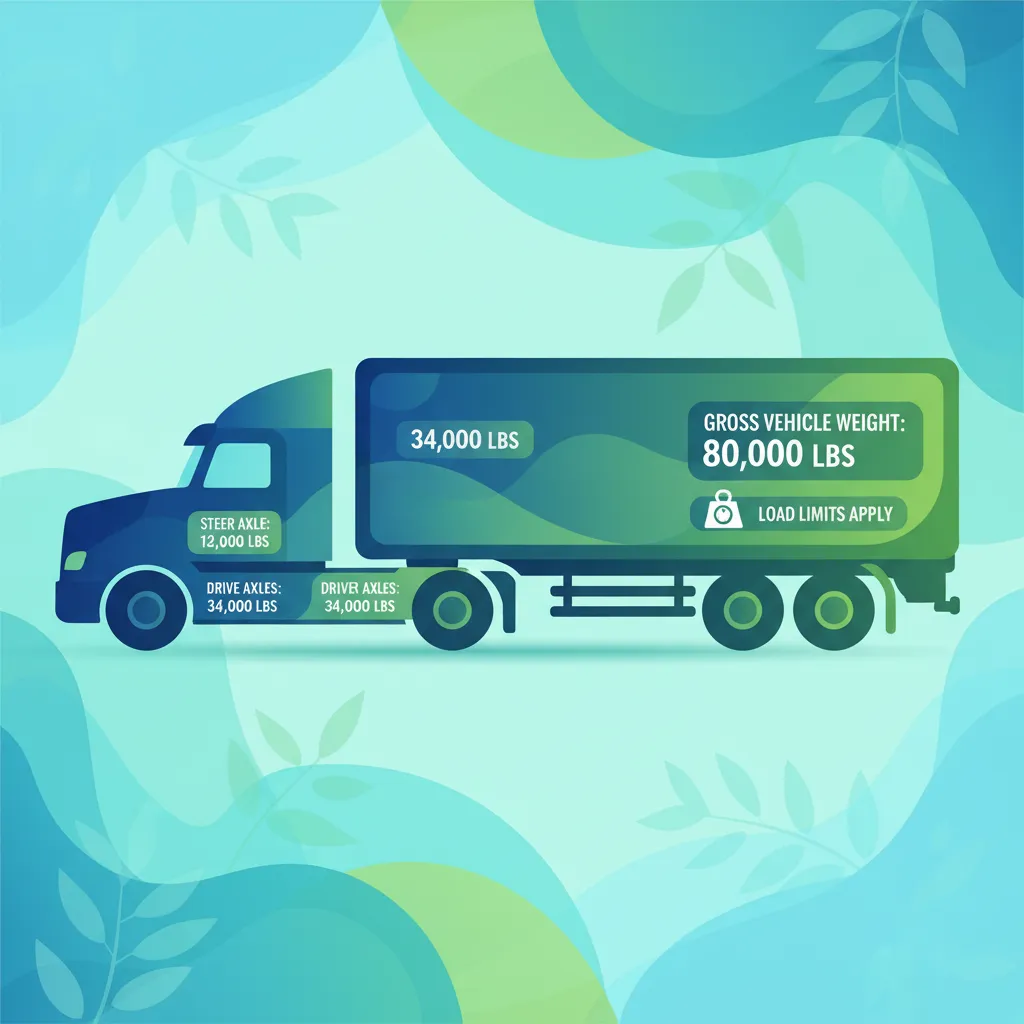
This lesson covers the critical regulations concerning vehicle weight, including Gross Vehicle Weight (GVW) and individual axle load limits. Learners will understand how to calculate tare weight and maximum payload to avoid overloading. The content also explains how proper weight distribution is essential for vehicle stability, braking efficiency, and minimizing road surface damage.
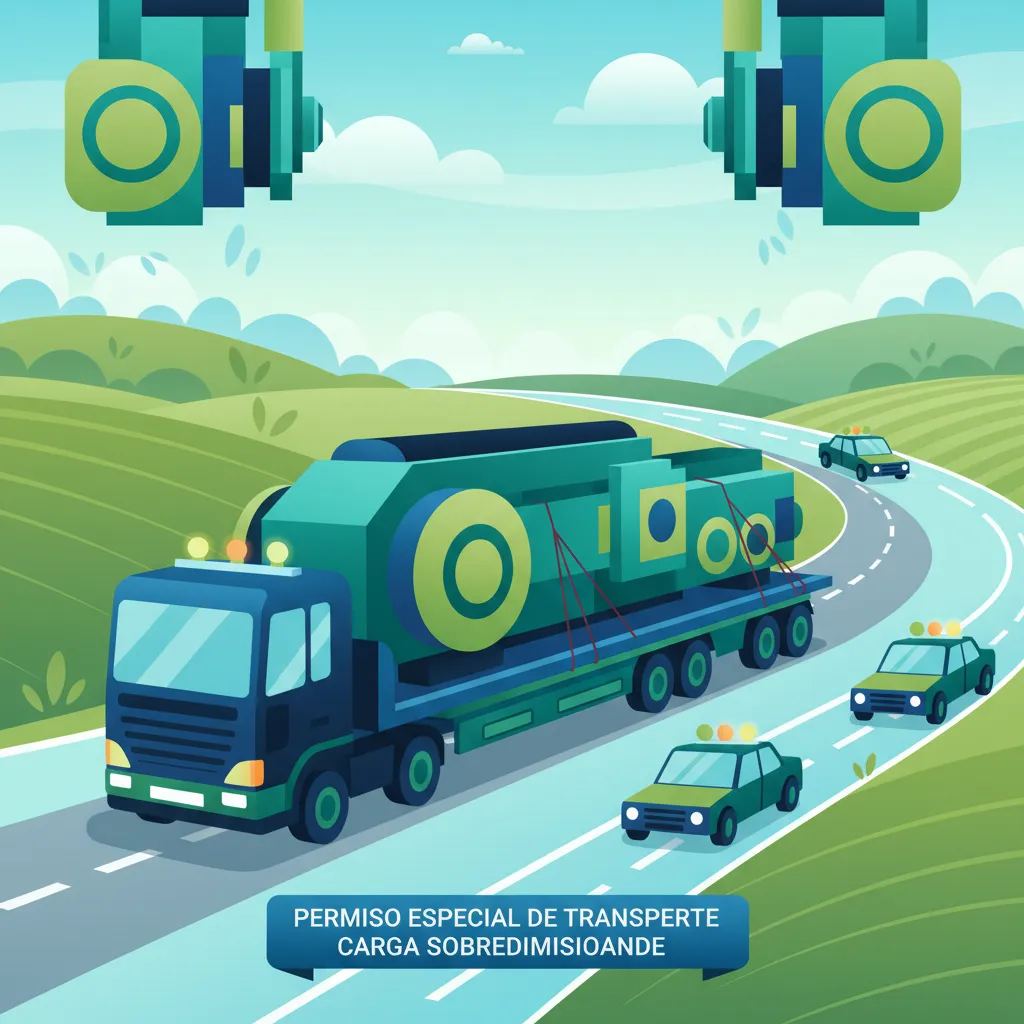
This lesson addresses the special regulations that apply to transporting loads that exceed standard legal dimensions or weight. It explains the process for obtaining the necessary special permits from the DGT and other authorities. The content also covers the requirements for route planning, the use of escort vehicles (pilot cars), and the mandatory signage and lighting for the vehicle.
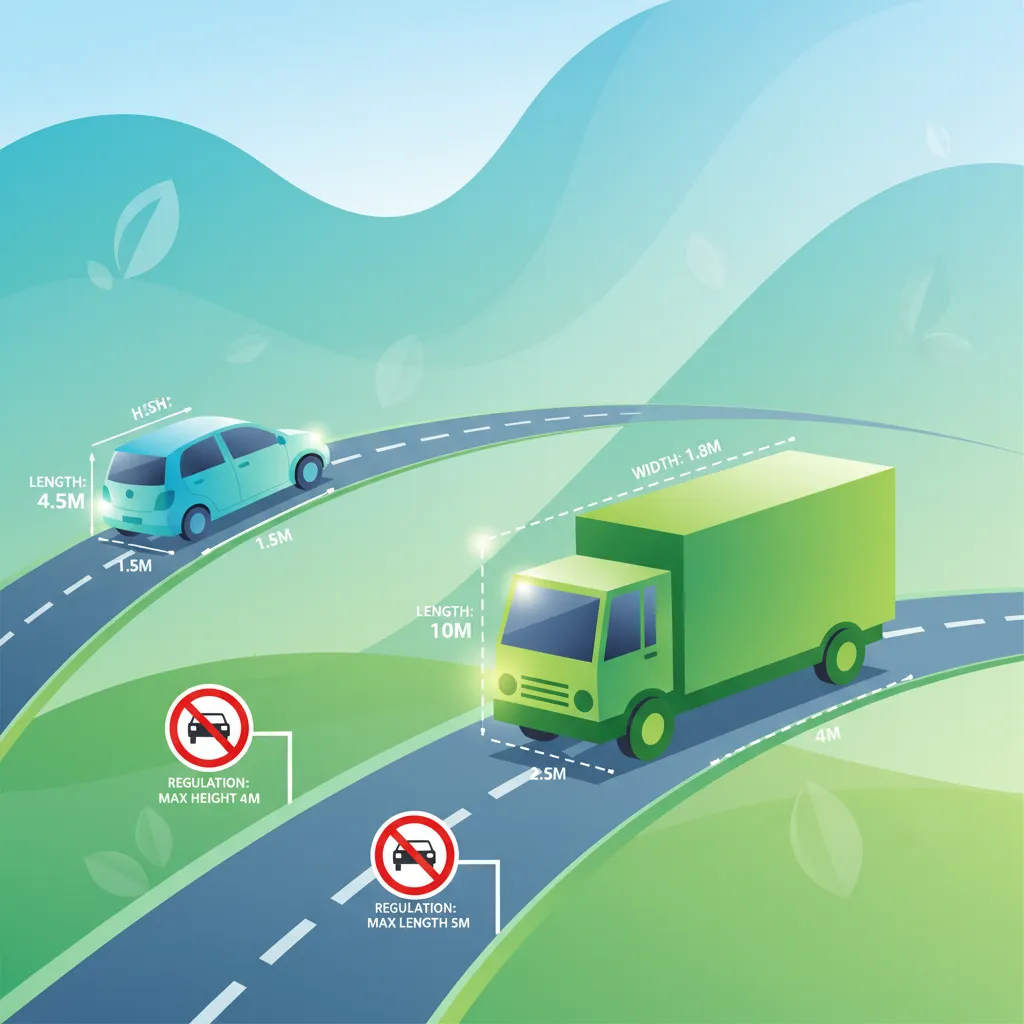
This lesson provides a detailed breakdown of the maximum permissible length, width, and height for heavy vehicles according to Spanish and EU regulations. It explains how these dimensions are measured and how they affect vehicle classification and route planning. The content emphasizes the critical importance of respecting clearance signs for bridges, tunnels, and other overhead structures to prevent accidents.
This lesson explains the specific legal framework governing truck operations on Spain's high-speed road network. It details the different speed limits for trucks on autovías versus autopistas and the regulations regarding which lanes heavy vehicles are permitted to use. Learners will also understand how to interpret specific highway signage relevant to commercial vehicles and any applicable toll regulations.
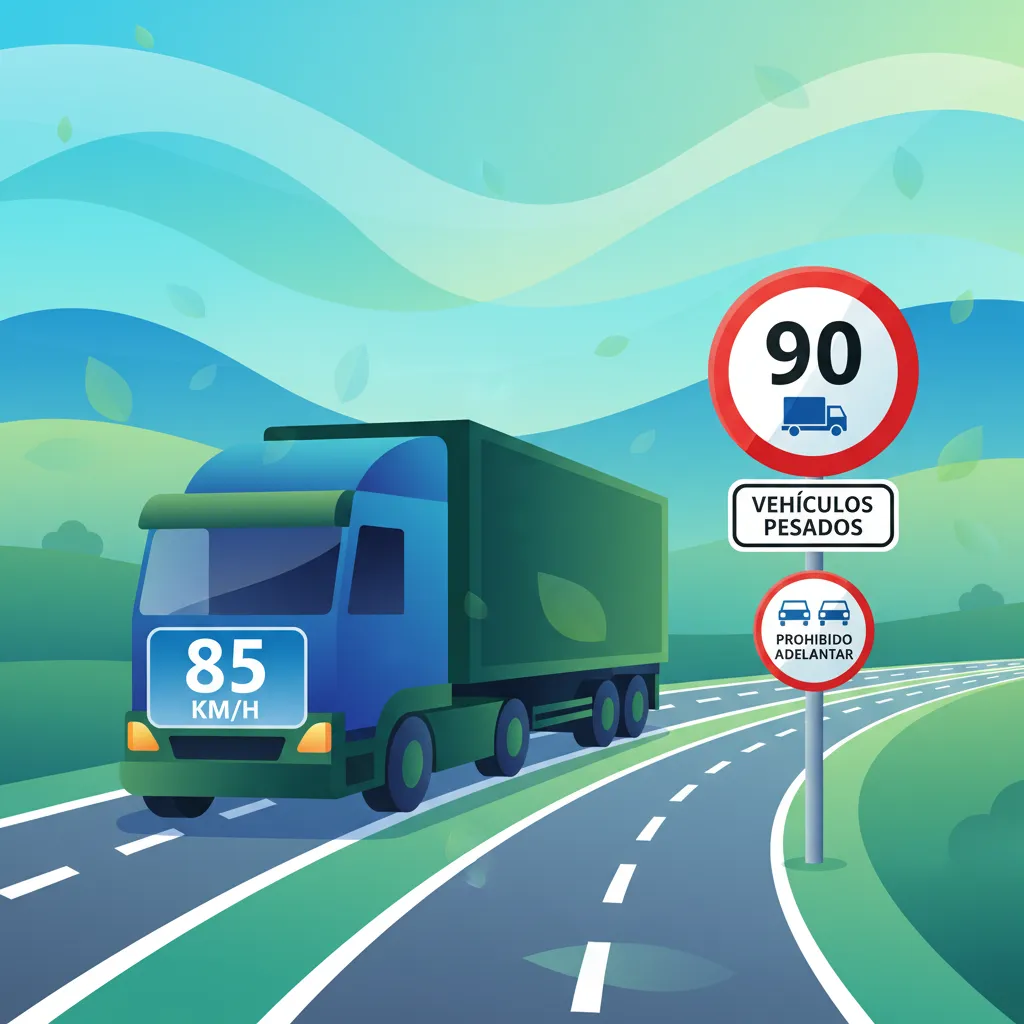
This lesson details the specific legal speed limits that apply to heavy passenger vehicles on Spanish highways, including variable speed zones that adjust based on traffic and weather conditions. Learners will understand the methods for speed monitoring, the function of speed control devices, and the legal consequences of non-compliance. The content also provides guidance on calculating a safe operating speed based on vehicle load and road conditions.
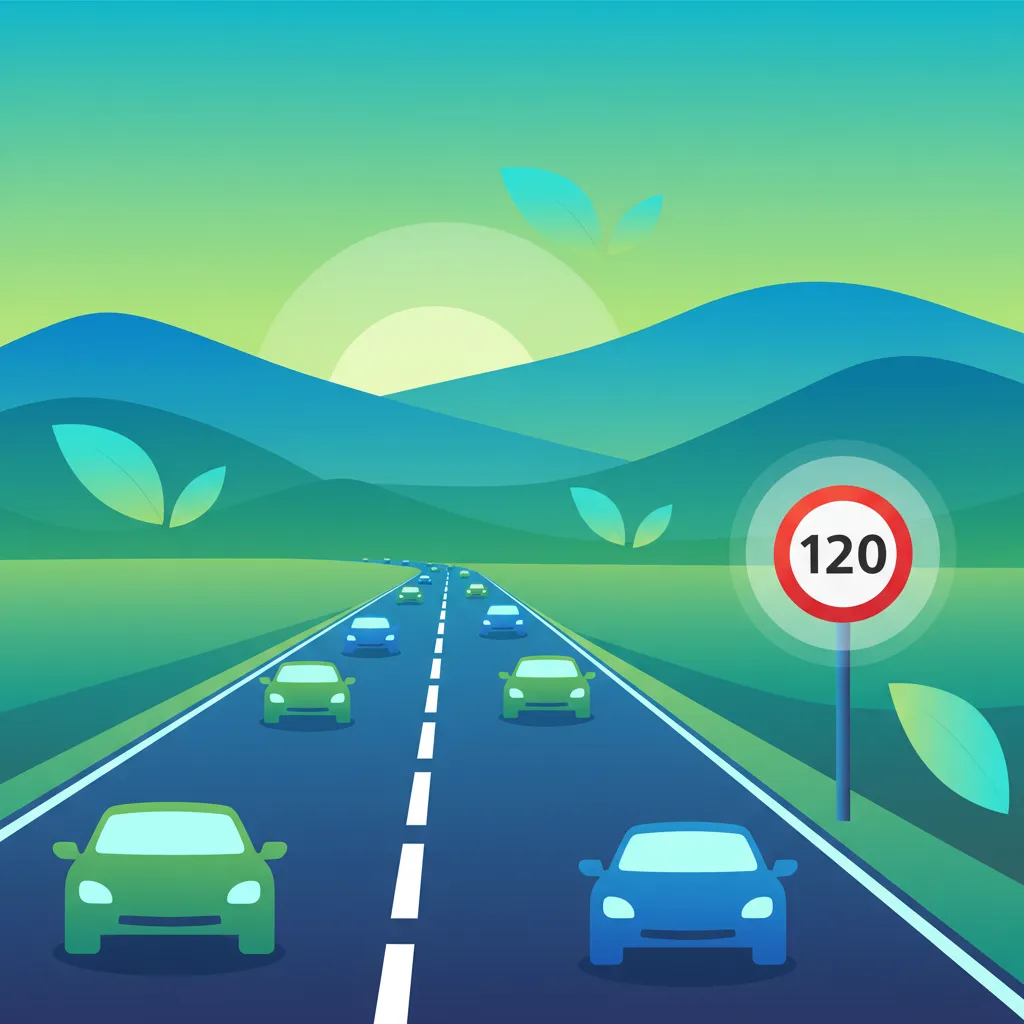
This lesson focuses on the critical relationship between speed, following distance, and overall traffic safety on highways. It explains how to calculate a safe following distance based on speed and weather conditions, accounting for a truck's longer stopping distance. The content also teaches strategies for managing speed to adapt smoothly to changing traffic flow, enhancing both safety and fuel efficiency.
This lesson focuses on the complexities of reversing while towing a trailer. It explains the phenomenon of trailer swing and the counter-steering inputs required to guide it correctly. The content details proper use of mirrors and observation to control the trailer's path, adhering to DGT rules and ensuring the maneuver is planned and executed safely.
Find clear answers to common questions learners have about Accelerating, Braking, and Turning with a Trailer. Learn how the lesson is structured, which driving theory objectives it supports, and how it fits into the overall learning path of units and curriculum progression in Spain. These explanations help you understand key concepts, lesson flow, and exam focused study goals.
The exact increase in braking distance depends on factors like trailer weight, speed, and road conditions. However, a general rule of thumb for your Spanish driving theory exam is to anticipate needing at least double the normal stopping distance. Always leave a larger buffer zone.
Off-tracking occurs when a trailer follows a path inside the turning path of the towing vehicle. For your BE license exam and real driving, this means you must initiate turns wider than you would without a trailer, especially at junctions and roundabouts, to prevent the trailer from hitting obstacles, curbs, or other vehicles.
The DGT sets specific speed limits for towing. Generally, on conventional roads, the maximum is 80 km/h and on motorways (autovías/autopistas) it's 90 km/h. Always check the latest regulations and signs, and reduce speed further if conditions are poor.
A heavier trailer means your vehicle's engine has to work harder, resulting in slower acceleration. You'll need to apply more throttle and allow more time to reach your desired speed. Abrupt acceleration can cause the trailer to sway or become unstable, so smooth inputs are essential.
Yes, using engine braking (down-shifting) is highly recommended when towing, especially on descents. It helps control your speed without relying solely on the trailer's brakes and the vehicle's brakes, reducing wear and preventing overheating, which is critical for safety.
Use our powerful search functionality to pinpoint specific Spanish DGT driving theory practice sets. Filter by road sign categories, traffic law topics, or question difficulty to build custom study sessions and reinforce your knowledge precisely where it matters for your official exam.