
When towing a trailer for your Category B+E license, understanding how to properly distribute weight is crucial for safety. This lesson delves into the principles of maintaining a stable center of gravity, preventing dangerous trailer sway, and adhering to DGT regulations for cargo arrangement. It's a key component of preparing for your Spanish driving theory exam.
Lesson content overview
Operating a vehicle with a trailer, especially under the Spanish DGT BE licence, demands a profound understanding of load dynamics. The way a trailer is loaded profoundly affects the stability, handling, and braking performance of the entire vehicle-trailer combination. Incorrect load distribution is a leading cause of accidents involving trailers, from minor control issues to severe rollovers. This lesson explores the critical principles of load distribution, the concept of the center of gravity, and how to maintain stability to ensure safe and compliant transport.
The Center of Gravity (CG) is a fundamental concept in vehicle dynamics. It represents the single point where the total weight of the vehicle, its passengers, and its cargo is considered to act. Imagine balancing an object on a single point; that point would be its center of gravity. For a vehicle and trailer combination, understanding the CG's position is paramount because it dictates stability, especially during acceleration, braking, and cornering.
Every object has a center of gravity. For a stationary object, if its CG falls directly above its base of support, it remains stable. For a moving vehicle-trailer system, the CG is constantly interacting with the forces of motion and the contact points of the wheels with the road. The goal is always to keep the combined CG as low and as centrally located as possible within the vehicle's footprint.
The center of gravity is not just a single point; it has three dimensions that influence vehicle behavior:
Maintaining a low and central center of gravity is the cornerstone of safe trailer operation. A low CG provides a larger "moment arm" against external forces, meaning it takes more force to cause the vehicle to tip. Similarly, a central CG ensures that weight is evenly distributed over the axles and across the width, preventing undue stress on any single point and promoting balanced handling. Drivers under the DGT BE licence must internalize this principle when loading any trailer.
Load distribution refers to the strategic allocation of cargo weight within the trailer, influencing both the total weight on each axle and the critical tongue weight. Proper load distribution is not just about staying within legal weight limits; it's about dynamic stability and safety.
Load distribution involves carefully planning where each item of cargo is placed. It's about more than just fitting everything in; it's about ensuring the weight is spread in a way that contributes to the stability of the entire towing combination. This directly impacts how the vehicle handles, brakes, and responds to changing road conditions.
The longitudinal distribution of weight is perhaps the most critical factor in preventing trailer sway and maintaining control.
Just as important as front-to-rear balance is side-to-side balance.
Tongue weight is the downward force exerted by the trailer's coupling on the towing vehicle's hitch ball. This seemingly small detail is incredibly important for stability.
Measuring tongue weight can be done with specialized scales or by weighing the hitch point with a standard bathroom scale and a suitable lever system. Adjusting cargo position is usually the solution to correct improper tongue weight.
The concept of the Stability Triangle is a simplified way to visualize the area within which the combined center of gravity must remain for a vehicle-trailer system to maintain static stability and prevent tip-over.
For a four-wheeled towing vehicle and a single-axle trailer, the stability triangle is not a literal triangle but rather the geometric area formed by the contact patches of the towing vehicle's four wheels on the road. For the entire system to remain stable, the combined CG of the towing vehicle and the loaded trailer must project vertically onto the ground within this base area.
The position of the load within the trailer directly affects the position of the combined CG.
To keep the CG within the stability triangle and maximize overall stability:
Trailer sway, often referred to as "snaking," is a dangerous lateral oscillation or side-to-side movement of the trailer that can quickly lead to a loss of control. It is a critical concern for DGT BE licence holders.
Sway occurs when the trailer begins to move uncontrollably from side to side behind the towing vehicle. It can start subtly but quickly escalate into violent oscillations, making the driver lose steering control of the entire combination. This phenomenon is a dynamic instability that happens when forces acting on the trailer overcome its inherent stability.
Several factors can cause or exacerbate trailer sway:
Preventing sway is far safer than trying to correct it once it begins.
If your trailer begins to sway, remain calm and resist the urge to slam on the brakes or make sudden steering corrections. Gradual deceleration is key.
Compliance with DGT (Dirección General de Tráfico) regulations is not just a legal requirement but a fundamental aspect of road safety when operating a BE-category vehicle. These rules dictate maximum permissible masses and specific load distribution criteria.
Every towing vehicle has a Maximum Towing Capacity (Mₜ) specified by its manufacturer. This is the maximum weight the vehicle is designed to tow.
The BE licence itself has specific limits on the Combined Mass (Mₗ), which is the sum of the towing vehicle's Gross Vehicle Weight (GVW) and the trailer's loaded weight.
As discussed, tongue weight is critical for stability.
Trailers themselves are subject to strict braking regulations.
Towing a trailer significantly alters vehicle dynamics, necessitating lower speed limits to maintain safety.
Unsecured cargo is a severe hazard.
Knowing the rules is one thing; applying them effectively is another. Proper cargo securing is a hands-on task that requires attention to detail.
The type and strength of your tie-down equipment are crucial.
Always check the working load limit (WLL) of your tie-downs and ensure they are in good condition, free from cuts, fraying, or corrosion.
Merely placing straps over cargo is often insufficient.
Position heaviest items low and centered, over or slightly forward of the trailer axle.
Measure and adjust cargo to achieve 5-15% tongue weight.
Use appropriate tie-down equipment (ratchet straps, chains, nets) with adequate working load limits.
Secure cargo against movement in all directions (forward, backward, sideways).
Utilize dunnage and anti-slip mats to enhance friction and fill voids.
Protect straps from sharp edges using corner protectors.
After initial securing, re-check tension after driving a short distance (e.g., 10-15 km).
Before every journey, a thorough pre-trip inspection is mandatory.
Neglecting these checks is a common violation that can lead to severe consequences.
The consequences of neglecting proper load distribution and securing are multifaceted, ranging from increased accident risk to significant legal penalties under DGT regulations.
DGT regulations are strict regarding load compliance for a reason. Violations can lead to:
Always prioritize safety over convenience. Taking shortcuts with load distribution or cargo securing can have devastating legal and physical consequences.
External factors and the state of your vehicle can significantly interact with load dynamics, demanding even greater caution and adherence to proper loading principles.
Understanding the direct relationships between loading choices and their outcomes is critical for every BE licence holder.
Mastering load distribution, center of gravity management, and stability control is fundamental for anyone operating a vehicle with a trailer under a DGT BE licence. It moves beyond simply attaching a trailer; it's about understanding the physics and legal obligations that ensure safety for everyone on the road.
By diligently applying these principles, you will significantly enhance the safety, predictability, and legal compliance of your towing operations, protecting yourself, your cargo, and fellow road users.
This lesson covers the critical principles of load distribution for safe BE category trailer towing in Spain. It explains how the Center of Gravity's three dimensions affect vehicle stability and handling, emphasizing that a low and central CG prevents rollover and sway. Key regulatory points include the mandatory 5-15% tongue weight requirement (DGT Order 1263/2008), speed limits of 80-90 km/h on motorways for vehicles with trailers, and the requirement for load-sensing brakes on trailers exceeding 750 kg MMA. The lesson provides practical guidance on cargo securing techniques, pre-trip inspection procedures, and correct responses to trailer sway, all grounded in DGT regulations and vehicle dynamics principles.
A short set of high-value points that capture the most important learning from this lesson.
The Center of Gravity (CG) has three dimensions—vertical, longitudinal, and lateral—each affecting stability differently; a low and central CG is essential for safe trailer operation.
Tongue weight must be maintained between 5% and 15% of the total trailer mass to ensure proper weight transfer to the hitch and prevent dangerous sway.
Heavier cargo should always be placed as low as possible, centered side-to-side, and positioned over or slightly forward of the trailer's axle.
Trailer sway (snaking) is primarily caused by insufficient tongue weight, excessive speed, crosswinds, and improper load distribution; prevention is far safer than correction.
DGT regulations mandate that trailers over 750 kg MMA must have a load-sensing braking system, and speed limits for trailer towing are generally 80 km/h on motorways (90 km/h with approved brakes).
Explore all units and lessons included in this driving theory course.
Tongue weight range: 5% minimum (too little causes sway) and 15% maximum (too much overloads the hitch and lifts front wheels).
Place heavy items low and centered; avoid rearward loading that shifts CG and causes trailer sway or 'wag the dog' instability.
The Stability Triangle is the base area formed by the towing vehicle's wheel contact patches; the combined CG must stay within this area to prevent rollover.
Motorway speed limit for trailer towing in Spain is 80 km/h, increasing to 90 km/h only if the trailer has brakes and lights approved for higher speeds.
All cargo must be secured against movement in all directions using appropriate tie-downs with adequate working load limits.
Loading heavy items too high in the trailer, raising the vertical CG and dramatically increasing rollover risk during turns.
Placing excessive weight behind the trailer axle, which reduces tongue weight, causes severe sway, and may lift the towing vehicle's front wheels.
Assuming that once cargo is secured it will remain stable; loads should be re-checked after driving the first 10-15 km.
Failing to use load-sensing brakes or improperly calibrating the brake controller, leading to inadequate trailer braking and jack-knife risk.
Exceeding the vehicle's Maximum Towing Capacity (Mₜ) or the combined mass limit of 7,000 kg for BE licence, invalidating insurance and risking fines.
Lesson content overview
A short set of high-value points that capture the most important learning from this lesson.
The Center of Gravity (CG) has three dimensions—vertical, longitudinal, and lateral—each affecting stability differently; a low and central CG is essential for safe trailer operation.
Tongue weight must be maintained between 5% and 15% of the total trailer mass to ensure proper weight transfer to the hitch and prevent dangerous sway.
Heavier cargo should always be placed as low as possible, centered side-to-side, and positioned over or slightly forward of the trailer's axle.
Trailer sway (snaking) is primarily caused by insufficient tongue weight, excessive speed, crosswinds, and improper load distribution; prevention is far safer than correction.
DGT regulations mandate that trailers over 750 kg MMA must have a load-sensing braking system, and speed limits for trailer towing are generally 80 km/h on motorways (90 km/h with approved brakes).
Explore all units and lessons included in this driving theory course.
Tongue weight range: 5% minimum (too little causes sway) and 15% maximum (too much overloads the hitch and lifts front wheels).
Place heavy items low and centered; avoid rearward loading that shifts CG and causes trailer sway or 'wag the dog' instability.
The Stability Triangle is the base area formed by the towing vehicle's wheel contact patches; the combined CG must stay within this area to prevent rollover.
Motorway speed limit for trailer towing in Spain is 80 km/h, increasing to 90 km/h only if the trailer has brakes and lights approved for higher speeds.
All cargo must be secured against movement in all directions using appropriate tie-downs with adequate working load limits.
Loading heavy items too high in the trailer, raising the vertical CG and dramatically increasing rollover risk during turns.
Placing excessive weight behind the trailer axle, which reduces tongue weight, causes severe sway, and may lift the towing vehicle's front wheels.
Assuming that once cargo is secured it will remain stable; loads should be re-checked after driving the first 10-15 km.
Failing to use load-sensing brakes or improperly calibrating the brake controller, leading to inadequate trailer braking and jack-knife risk.
Exceeding the vehicle's Maximum Towing Capacity (Mₜ) or the combined mass limit of 7,000 kg for BE licence, invalidating insurance and risking fines.
Explore search topics learners often look for when studying Load Distribution, Center of Gravity, and Stability. These topics reflect common questions about road rules, driving situations, safety guidance, and lesson level theory preparation for learners in Spain.
Browse additional driving theory lessons that cover connected traffic rules, road signs, and common driving situations related to this topic. Improve your understanding of how different rules interact across everyday traffic scenarios.
Explore advanced principles of load distribution, center of gravity, and their critical impact on trailer stability. Understand how to prevent trailer sway and ensure compliance with DGT towing safety regulations for the BE licence.

This lesson explains the physical concept of the center of gravity and its critical importance in heavy vehicle stability. It details how the placement and distribution of cargo can raise or lower the center of gravity, affecting rollover risk and handling. The content also covers factors that contribute to vehicle sway and the principles of load balancing to maintain control during turns and maneuvers.

This lesson addresses the dynamics of accelerating, braking, and turning while towing a trailer. It explains how to adjust for increased load inertia, the impact on stopping distances, and the need for wider turns to account for off-tracking. The content outlines DGT speed guidelines specific to towing and emphasizes smooth control to ensure stability.
This lesson explains the proper procedures for securely coupling and decoupling a trailer. Learners will understand the alignment of hitch components, the use of safety chains and locking mechanisms, and checking electrical connections. The content stresses a pre-drive checklist that includes load verification and adherence to DGT coupling standards to ensure safe towing operations.
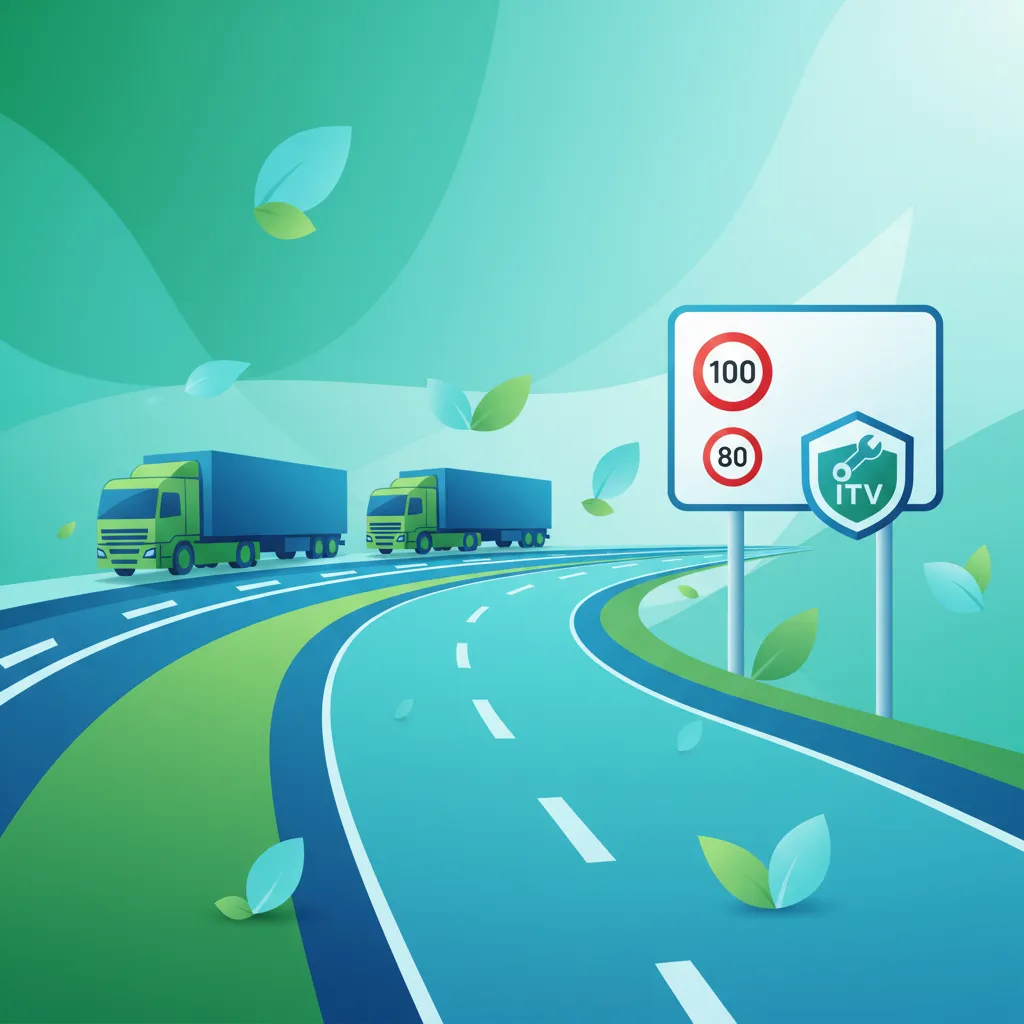
This lesson details the legal framework for towing in Spain. It covers the concepts of maximum authorized mass, towing capacities of vehicles, and specific weight limits for different axle configurations. The content also explains the documentation and periodic technical inspection (ITV) requirements for trailers to ensure full legal compliance.
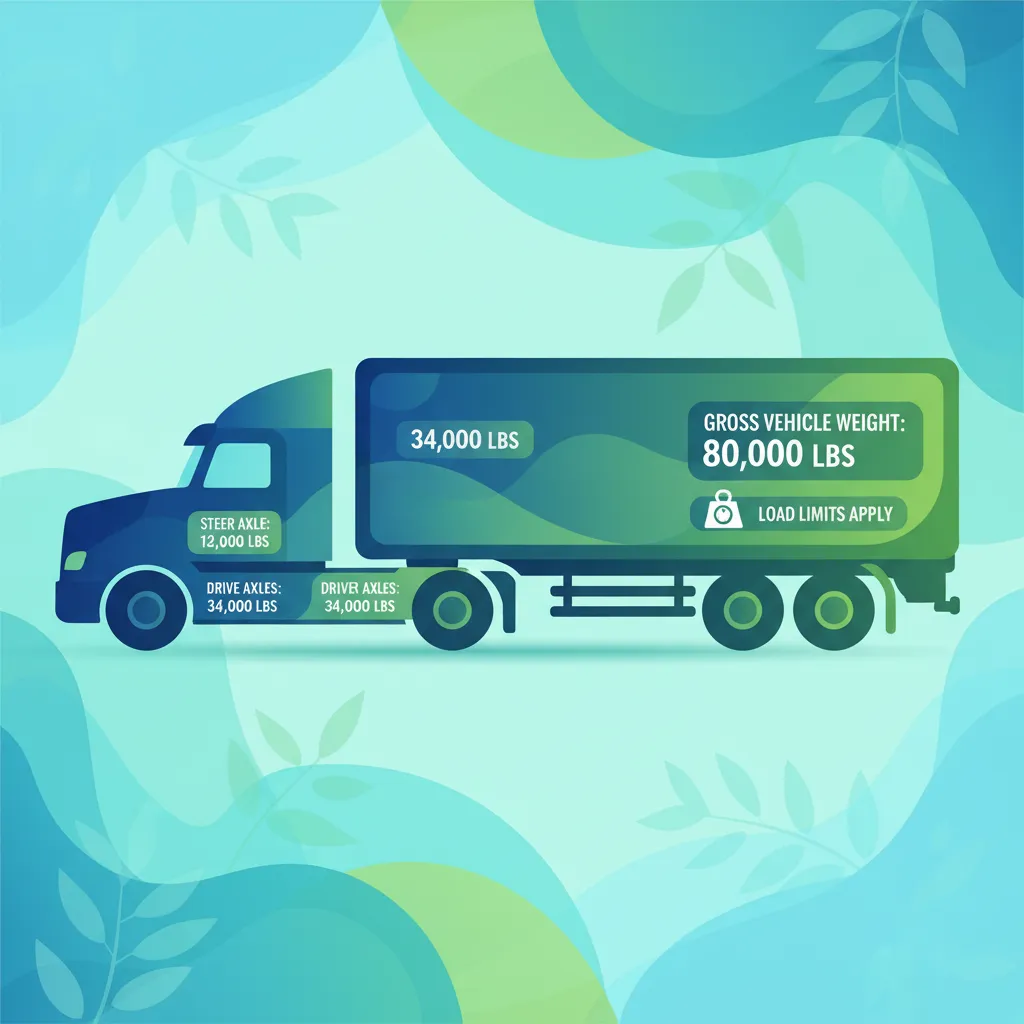
This lesson covers the critical regulations concerning vehicle weight, including Gross Vehicle Weight (GVW) and individual axle load limits. Learners will understand how to calculate tare weight and maximum payload to avoid overloading. The content also explains how proper weight distribution is essential for vehicle stability, braking efficiency, and minimizing road surface damage.
This lesson explains the critical importance of proper weight distribution and adherence to load limits for buses and coaches, focusing on gross vehicle weight and axle load regulations. It describes how passenger and cargo placement affects the centre of gravity, which in turn influences vehicle stability during acceleration, braking, and cornering. Learners will be taught best practices for load planning to ensure compliance and maintain safe handling.

This lesson focuses on the complexities of reversing while towing a trailer. It explains the phenomenon of trailer swing and the counter-steering inputs required to guide it correctly. The content details proper use of mirrors and observation to control the trailer's path, adhering to DGT rules and ensuring the maneuver is planned and executed safely.

This lesson explores the direct relationship between a vehicle's load and its braking and acceleration performance. It explains how increased mass significantly increases the vehicle's inertia, resulting in longer stopping distances and slower acceleration. Understanding these physical principles helps drivers adjust their driving style, such as increasing following distances, to compensate for the effects of a heavy load.

This lesson provides theoretical guidance on the techniques for safely reversing a heavy vehicle, a high-risk maneuver. It emphasizes the correct use of mirrors, managing extensive blind spots, and the importance of using a spotter when available. The content also breaks down the geometric principles of parallel parking and backing into loading docks, focusing on vehicle positioning and spatial awareness.

This lesson introduces fundamental road safety principles applicable to all drivers, with a special emphasis on heavy vehicles. It covers defensive driving techniques, including the importance of anticipating potential hazards and managing speed appropriately for conditions. Learners will also study how to establish and maintain safe following distances and understand the hierarchy of road users to ensure safe interactions.
Understand the crucial DGT legal limits and regulations for trailer towing, including maximum towing capacity, combined mass, and tongue weight. Learn how to comply with Spanish road law for safe and legal trailer operation with a BE licence.
This lesson details the legal framework for towing in Spain. It covers the concepts of maximum authorized mass, towing capacities of vehicles, and specific weight limits for different axle configurations. The content also explains the documentation and periodic technical inspection (ITV) requirements for trailers to ensure full legal compliance.
This lesson covers the critical regulations concerning vehicle weight, including Gross Vehicle Weight (GVW) and individual axle load limits. Learners will understand how to calculate tare weight and maximum payload to avoid overloading. The content also explains how proper weight distribution is essential for vehicle stability, braking efficiency, and minimizing road surface damage.
This lesson addresses the dynamics of accelerating, braking, and turning while towing a trailer. It explains how to adjust for increased load inertia, the impact on stopping distances, and the need for wider turns to account for off-tracking. The content outlines DGT speed guidelines specific to towing and emphasizes smooth control to ensure stability.
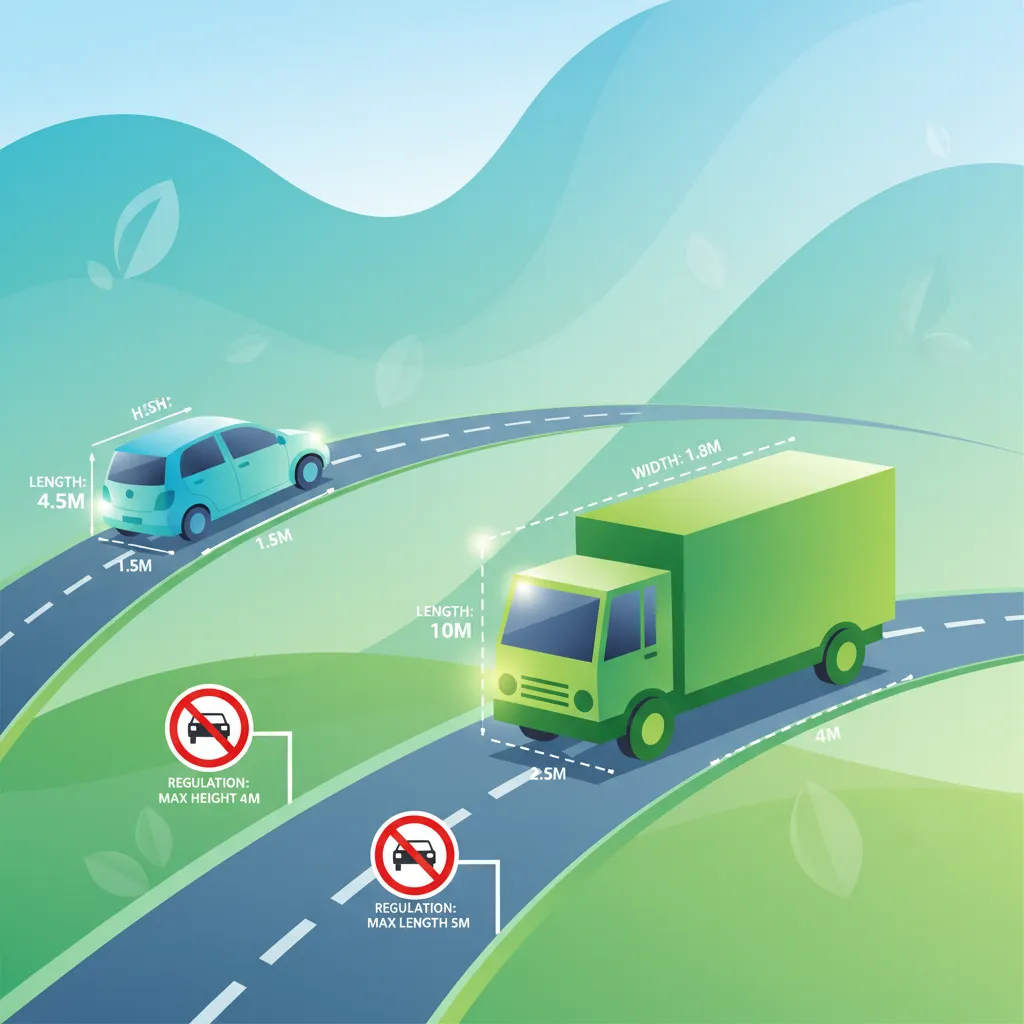
This lesson provides a detailed breakdown of the maximum permissible length, width, and height for heavy vehicles according to Spanish and EU regulations. It explains how these dimensions are measured and how they affect vehicle classification and route planning. The content emphasizes the critical importance of respecting clearance signs for bridges, tunnels, and other overhead structures to prevent accidents.
This lesson explains the proper procedures for securely coupling and decoupling a trailer. Learners will understand the alignment of hitch components, the use of safety chains and locking mechanisms, and checking electrical connections. The content stresses a pre-drive checklist that includes load verification and adherence to DGT coupling standards to ensure safe towing operations.
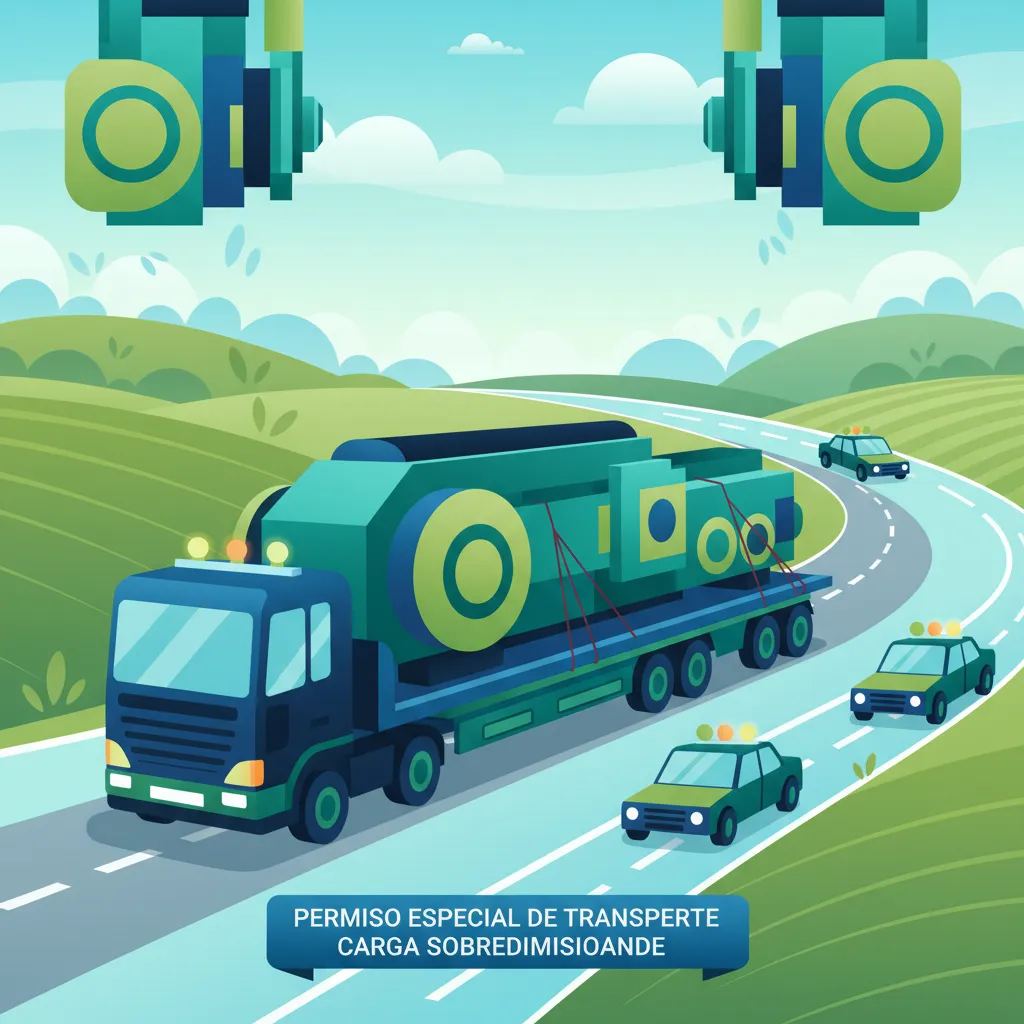
This lesson addresses the special regulations that apply to transporting loads that exceed standard legal dimensions or weight. It explains the process for obtaining the necessary special permits from the DGT and other authorities. The content also covers the requirements for route planning, the use of escort vehicles (pilot cars), and the mandatory signage and lighting for the vehicle.
This lesson provides a broad overview of the key traffic regulations in Spain that directly impact professional truck drivers. It details the rules of priority at intersections, the interpretation of different road markings, and the principles of correct lane discipline. Furthermore, it explains the specific speed limits applicable to heavy vehicles and the legal protocols for safe overtaking and signaling.
Find clear answers to common questions learners have about Load Distribution, Center of Gravity, and Stability. Learn how the lesson is structured, which driving theory objectives it supports, and how it fits into the overall learning path of units and curriculum progression in Spain. These explanations help you understand key concepts, lesson flow, and exam focused study goals.
Trailer sway, often called 'snaking', is a dangerous oscillation where the trailer begins to move side-to-side independently of the towing vehicle. It's primarily caused by an incorrect center of gravity, typically when the load is too far back, making the trailer unstable. Improper distribution of weight means the trailer's natural pivot point is too far behind the axles, leading to this hazardous movement. Ensuring the load is correctly positioned over or slightly forward of the axles is key to stability.
The tongue weight is the downward force the trailer hitch exerts on the tow ball. For most passenger vehicle trailers, it should be between 10-15% of the total trailer weight. Check your trailer's manual or look for a plate specifying maximum tongue weight. You can estimate it by using a bathroom scale placed under the hitch when the trailer is coupled and level.
DGT emphasizes that the load should be distributed evenly and kept as low as possible. The majority of the weight should be positioned over or slightly forward of the trailer's axles. This ensures the tongue weight is within the recommended range and helps maintain a stable center of gravity, preventing the trailer from swaying or becoming unstable.
Securing the load prevents items from shifting during transit, which can drastically alter the trailer's center of gravity and cause instability. Unsecured items can also become projectiles in an accident. DGT requires loads to be firmly fastened using appropriate straps, nets, or tie-downs to ensure they remain in place under all driving conditions, including braking and cornering.
A high center of gravity, whether due to the load itself or how it's stacked, makes the trailer more susceptible to tipping, especially during turns or on uneven surfaces. Keeping the load as low as possible within the trailer minimizes this risk. For example, stacking heavy items on top of lighter ones or placing bulky items high up will increase instability and the likelihood of a rollover.
Use our powerful search functionality to pinpoint specific Spanish DGT driving theory practice sets. Filter by road sign categories, traffic law topics, or question difficulty to build custom study sessions and reinforce your knowledge precisely where it matters for your official exam.