
Navigate the complexities of city driving with confidence. This unit delves into the unique challenges of urban environments in Spain, covering everything from intersection priority to understanding low-emission zones (ZBE). Prepare thoroughly for the DGT theory exam by mastering these essential city driving rules and scenarios.
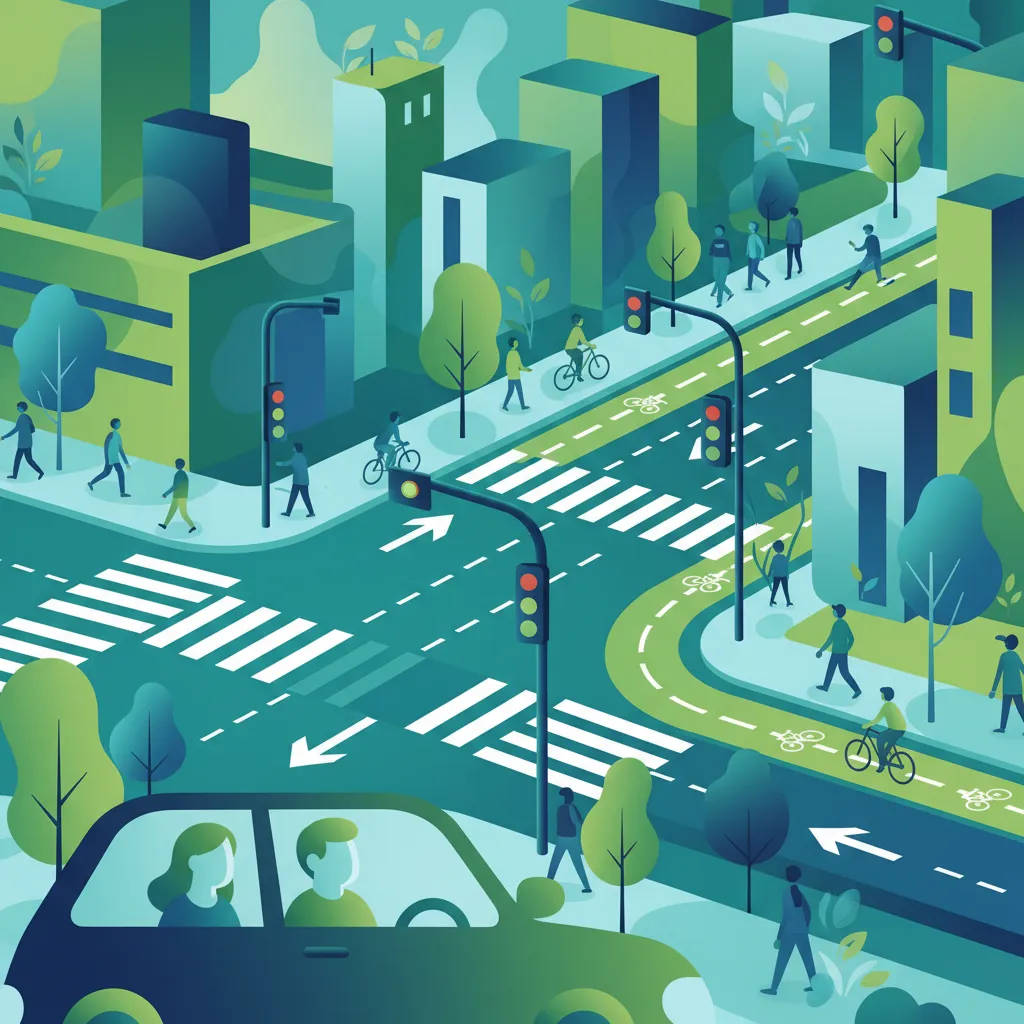
Browse all lessons that make up Urban Driving. Each lesson focuses on specific topics, learning objectives, and core concepts, helping you build essential knowledge and follow a clear, structured progression toward your study goals in Spain.
This lesson analyzes the various intersection configurations found in Spanish cities, such as controlled and uncontrolled junctions. It explains the hierarchy of right-of-way, detailing when vehicles must yield, when pedestrians have priority, and how traffic signs dictate movement. Learners are guided through DGT signage conventions that determine priority at each intersection type.
This lesson focuses on the comprehensive understanding of traffic light signals and their timing sequences. It defines the meanings of steady red, amber, and green lights, as well as flashing amber and arrow signals. The content also covers pedestrian and cyclist phases, describing the actions drivers must take during each signal change to maintain safety and compliance.
This lesson explores the design and legal requirements of pedestrian crossings in Spanish urban areas. It clarifies the rules at zebra crossings, signal-controlled crossings, and areas where cyclists or other vulnerable users share space. The content explains the required safety distances and signage indicating crossing zones to ensure drivers respect all road users.
This lesson discusses the infrastructure dedicated to cyclists, covering dedicated bike lanes and the rules governing interaction and overtaking. It explains DGT regulations on safe passing distances and how to navigate mixed-traffic scenarios where vehicles and bicycles share the road. The content emphasizes driver responsibilities to maintain a safe corridor and respect cyclist priority.
This lesson outlines the speed limits applicable to different types of urban streets and the corresponding road signs that communicate them. It explains the interpretation of speed zone markings, signs indicating reduced speed areas like 30 km/h zones, and the rationale behind speed enforcement in city settings. Learners will understand how to maintain compliance to enhance safety for all road users.
Explore high-intent keywords and long-tail search topics learners use when researching Urban Driving. These terms reflect how people search for reliable study materials, structured explanations, and unit-level theory preparation support in Spain.
Find clear answers to the most common questions learners ask about Urban Driving. Understand how the unit is organized, what learning goals it supports, and how it contributes to your study progression with structured explanations and practical guidance tailored for learners in Spain.
Urban driving in Spain presents unique challenges due to dense traffic, numerous intersections, a high concentration of pedestrians and cyclists, and varied speed limits. Navigating busy junctions, understanding traffic light sequences, and respecting dedicated lanes for cyclists require constant attention and adherence to specific rules. Low-emission zones (ZBE) also add a layer of complexity for drivers entering certain city centers.
Priority at intersections in Spain generally follows the rule of yielding to vehicles on your right unless otherwise indicated by signs or traffic lights. However, specific urban layouts, such as roundabouts or junctions with traffic control, have their own priority rules. This unit details these common scenarios to ensure you understand right-of-way in complex city environments.
ZBE stands for Zona de Bajas Emisiones (Low-Emission Zone). These are designated areas in many Spanish cities where access is restricted for vehicles that do not meet certain environmental standards. Driving into a ZBE without the required permit or vehicle classification can result in significant fines. This unit will explain how to identify these zones and what regulations apply.
Yes, Spain has specific speed limits for urban areas. Generally, the maximum speed limit on roads within built-up areas is 50 km/h. However, this can be reduced to 30 km/h on single-lane roads or increased on certain main roads designated by signage. This unit covers how to identify and comply with these varied urban speed limits.
Pedestrian and cyclist safety are paramount in urban driving and are heavily emphasized in the Spanish theory exam. Drivers must be aware of crosswalks, shared lanes, and the potential presence of cyclists and other vulnerable road users. This unit focuses on recognizing these situations and adopting defensive driving techniques to ensure their safety.
All included lessons
Lessons in Urban Driving
See who benefits most from studying Urban Driving. This overview explains how the unit supports different learning needs, what level of knowledge is helpful before starting, and how it fits into the overall study path in Spain.
This unit is crucial for all learners preparing for the Spanish Category B driving license theory exam, especially those who will be driving frequently in cities like Madrid, Barcelona, or Valencia. It’s also beneficial for drivers unfamiliar with Spanish urban traffic laws or those needing a refresher on city-specific regulations.

Begin your preparation for the Spanish DGT driving licence exam today. Browse our full curriculum to find guided courses, detailed lessons on traffic legislation, road signs, and essential driving practices. Start learning systematically and confidently.
Explore DGT Theory Courses & CurriculumExplore all units and lessons included in this driving theory course.
Begin your preparation for the Spanish DGT driving licence exam today. Browse our full curriculum to find guided courses, detailed lessons on traffic legislation, road signs, and essential driving practices. Start learning systematically and confidently.
Explore DGT Theory Courses & Curriculum