
Navigate the unexpected with confidence. This unit equips you with essential knowledge for driving in adverse weather conditions and handling on-road emergencies, crucial for both passing your Spanish driving theory exam and ensuring your safety on the road.
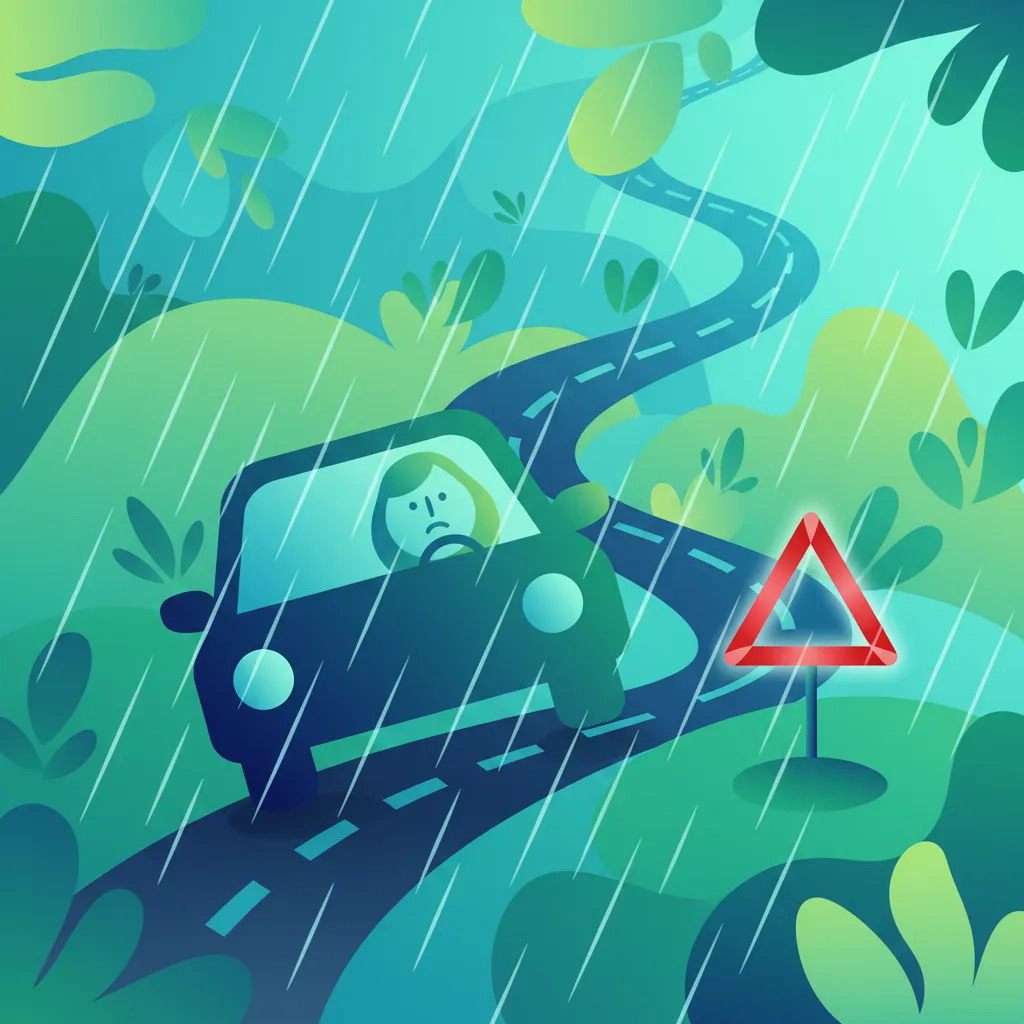
Browse all lessons that make up Adverse Conditions & Emergencies. Each lesson focuses on specific topics, learning objectives, and core concepts, helping you build essential knowledge and follow a clear, structured progression toward your study goals in Spain.
This lesson addresses the specific challenges posed by rain and fog, focusing on reduced visibility and loss of traction. It explains the proper use of windshield wipers and fog lights, and the need to adjust speed and increase following distance. The content covers how to prevent and react to hydroplaning (aquaplaning) to maintain vehicle control.
This lesson focuses on nighttime driving, emphasizing proper headlight usage and glare management from oncoming vehicles. It discusses DGT regulations for night driving, the appropriate use of high-beam and low-beam headlights, and techniques to reduce eye strain. Additionally, the lesson highlights the signs of driver fatigue and the importance of taking breaks.
In this lesson, drivers learn the correct actions to take during a vehicle breakdown. It outlines steps for safely stopping on the hard shoulder, activating hazard lights, and deploying warning devices like the triangle or V16 light. The lesson covers DGT procedures for roadside emergencies, including wearing a high-visibility vest and contacting assistance safely.
This lesson provides guidance on responding to a road accident, following the 'Protect, Alert, Assist' protocol. It details the steps for securing the scene, notifying emergency services, and providing basic aid if necessary. The content covers the legal responsibilities of the driver, including completing an accident report form (parte amistoso) and exchanging insurance information.
This lesson focuses on eco-driving practices that reduce fuel consumption and lower vehicle emissions. It explains techniques such as maintaining a steady speed, smooth acceleration and braking, and selecting the optimal gear. The content also covers how factors like proper tire pressure and reduced use of air conditioning contribute to better fuel efficiency and a smaller environmental footprint.
Explore high-intent keywords and long-tail search topics learners use when researching Adverse Conditions & Emergencies. These terms reflect how people search for reliable study materials, structured explanations, and unit-level theory preparation support in Spain.
Find clear answers to the most common questions learners ask about Adverse Conditions & Emergencies. Understand how the unit is organized, what learning goals it supports, and how it contributes to your study progression with structured explanations and practical guidance tailored for learners in Spain.
In heavy rain, the DGT advises reducing your speed significantly, increasing your following distance, and ensuring your lights and wipers are functioning correctly. Be extra cautious at junctions and when braking, as wet roads reduce tyre grip. Check your tyres for adequate tread depth before setting off, as this is crucial for safety.
During fog, the DGT recommends using your low beam headlights and, if visibility is very poor, your fog lights. Rear fog lights should only be used when visibility is less than 50 meters and must be switched off immediately when visibility improves to avoid dazzling other drivers. Always drive at a speed that allows you to stop within the visible distance.
If your vehicle breaks down on a motorway, activate your hazard warning lights immediately. If possible, move the vehicle to the hard shoulder. Put on your high-visibility vest before exiting the vehicle, and exit from the side away from traffic. Place your warning triangle at an appropriate distance behind the vehicle and use the emergency call box to report the breakdown and request assistance. Do not attempt repairs yourself on the motorway.
In the event of a minor accident, ensure everyone is safe and, if possible, move vehicles out of the traffic flow to avoid further disruption. Exchange details with the other driver(s), including name, address, contact number, and insurance information. If possible, take photos of the damage and the scene. Only involve the DGT or police if there are injuries, significant damage, or a dispute arises.
Night driving in Spain presents challenges such as reduced visibility, potential glare from oncoming headlights, and increased fatigue. The DGT recommends using your headlights correctly for the conditions, dipping them for oncoming vehicles, and being particularly alert for pedestrians, cyclists, and animals, especially on rural roads. Ensure your headlights are properly aimed and clean.
In Spain, you are legally required to carry two red warning triangles and a high-visibility vest for each occupant. While not always mandatory by law for every vehicle type, it is highly recommended to also carry a first-aid kit and a fire extinguisher.
All included lessons
Lessons in Adverse Conditions & Emergencies
See who benefits most from studying Adverse Conditions & Emergencies. This overview explains how the unit supports different learning needs, what level of knowledge is helpful before starting, and how it fits into the overall study path in Spain.
This unit is essential for all learner drivers preparing for the Spanish Category B and BE theory exam, especially those who may be less experienced with challenging driving conditions or have concerns about emergency preparedness. It’s also a vital refresher for anyone wanting to enhance their safe driving skills.

Begin your preparation for the Spanish DGT driving licence exam today. Browse our full curriculum to find guided courses, detailed lessons on traffic legislation, road signs, and essential driving practices. Start learning systematically and confidently.
Explore DGT Theory Courses & CurriculumExplore all units and lessons included in this driving theory course.
Begin your preparation for the Spanish DGT driving licence exam today. Browse our full curriculum to find guided courses, detailed lessons on traffic legislation, road signs, and essential driving practices. Start learning systematically and confidently.
Explore DGT Theory Courses & Curriculum