
This lesson builds upon your understanding of air brake fundamentals by focusing on their critical maintenance. You will learn the importance of proper brake balancing and adjustment, essential for optimal stopping power and safety for Category C and C1 trucks. This knowledge is vital for passing your DGT theory exam and ensuring safe operation of heavy goods vehicles on Spanish roads.

Lesson content overview
Operating heavy vehicles, such as those requiring a Category C or C1 licence, demands an absolute commitment to safety. At the heart of this commitment lies the meticulous maintenance of the air brake system. This lesson provides an in-depth understanding of brake balancing, adjustment, and overall maintenance, crucial for ensuring optimal stopping power, preventing accidents, and complying with stringent DGT (Dirección General de Tráfico) regulations in Spain.
Proper brake function is not merely about stopping; it's about controlled, predictable, and efficient deceleration under all conditions. As a professional driver, your ability to understand, inspect, and maintain these systems directly impacts your safety, the safety of other road users, and the longevity of your vehicle. This knowledge builds upon the foundational understanding of air brake components and serves as a vital prerequisite for advanced topics like load management and emergency procedures.
Air brake systems are the standard for heavy trucks and trailers due to their reliability and robust stopping power. Unlike hydraulic brakes, which use fluid pressure, air brakes rely on compressed air to actuate the braking mechanism. This system comprises several key components including the compressor, air tanks (reservoirs), control valves, and brake chambers at each wheel.
The fundamental principle involves converting compressed air pressure into mechanical force to apply the brake shoes or pads against the drums or discs. Over time, as brake linings wear down, the mechanical linkage requires adjustment to maintain the correct clearance and ensure consistent braking force. Proper maintenance, including regular checks and adjustments, is paramount to prevent brake fade, unequal braking, and extended stopping distances, all of which pose significant hazards on the road.
Effective air brake maintenance revolves around several core principles that collectively ensure the safety and efficiency of a heavy vehicle's braking system. Adhering to these principles is essential for every professional truck driver.
Brake balancing refers to the critical process of ensuring that each wheel on a truck or tractor-trailer combination contributes an appropriate and equal proportion of the total braking effort. This results in the vehicle decelerating in a straight line without any tendency to pull to one side.
The purpose of brake balancing is to guarantee predictable handling and to achieve the shortest possible, uniform stopping distances. If brakes are unbalanced, the vehicle can veer sharply during braking, especially under hard application, leading to a loss of control. Professional drivers must perform checks during pre-trip inspections to verify balanced braking and make adjustments as necessary to prevent such dangerous scenarios.
Slack adjusters are mechanical devices that link the brake chamber's pushrod to the brake shoe or pad. Their primary function is to modify the length of this linkage to compensate for the natural wear of the brake linings.
The proper adjustment of slack adjusters restores the correct clearance between the brake lining and the drum or rotor, thereby maintaining the intended braking force when air pressure is applied. Incorrect adjustment can lead to two critical problems: excessive travel, resulting in spongy brakes and reduced braking power, or over-adjustment, causing constant drag, overheating, and premature wear of components. Regular, precise adjustment is non-negotiable for consistent brake performance.
The air pressure system is the lifeblood of a heavy vehicle's brakes. Air leak detection is the systematic procedure for locating and eliminating any unintended loss of compressed air from this vital system.
Preventing air leaks is crucial because even a small leak can gradually reduce the available brake pressure, potentially causing delayed or insufficient brake response, especially during prolonged or repeated braking. Regular checks of brake chambers, hoses, fittings, and connections are necessary to ensure the entire system remains sealed and capable of holding pressure, thus guaranteeing full braking functionality.
A pre-trip brake inspection is a systematic visual and functional check of the entire brake system performed before each and every journey. This routine is a fundamental requirement for all commercial vehicle operators.
The rationale behind this daily inspection is the early detection of any wear, leaks, or mis-adjustments that could compromise safety on the road. Identifying these issues before departure significantly reduces the risk of accidents and ensures the vehicle meets minimum performance standards mandated by DGT regulations. Skipping this vital step, regardless of perceived vehicle condition, is a direct violation of safety protocols.
Beyond daily checks, periodic maintenance involves scheduled replacement of worn components such as brake linings, drums or rotors, and servicing other critical air brake system components like the compressor, governor, and various valves.
This scheduled maintenance ensures the long-term reliability and efficiency of the braking system and guarantees compliance with legal service intervals. Neglecting periodic maintenance inevitably leads to accelerated wear, reduced braking efficiency, increased operational costs, and potential legal penalties if discovered during official technical inspections.
Understanding the individual components of the air brake system and the precise procedures for their maintenance is fundamental for any professional driver.
Brake linings are the friction material attached to brake shoes (in drum brakes) or pads (in disc brakes). When air pressure activates the brake chamber, these linings are pressed against a rotating surface (the brake drum or disc) to generate the friction required for deceleration.
The effectiveness of your brakes is directly proportional to the thickness and condition of these linings. As linings wear down with use, their thickness decreases, and their ability to dissipate heat and generate consistent friction diminishes. DGT regulations mandate strict minimum thickness requirements for safety: brake linings on drum brakes must have a minimum thickness of 2 mm, while those on disc brakes must not fall below 1 mm. It is a common misconception that visual thickness checks are unnecessary if the vehicle "feels responsive"; however, subtle wear can lead to severe imbalance or failure over time. For example, a driver hearing a squealing sound should immediately suspect worn linings; if inspection reveals rear linings at 1.5 mm, replacement is mandatory regardless of perceived responsiveness.
A slack adjuster is a crucial mechanical device that connects the brake chamber pushrod to the brake S-cam (for drum brakes) or other actuating mechanism (for disc brakes). Its purpose is to adjust the clearance between the brake linings and the drum/rotor as the linings wear.
There are primarily two types: push-type adjusters, commonly found on service brakes, and pull-type adjusters, often used for parking brakes. The correct adjustment ensures that the brake chamber pushrod travels a specified distance, known as "free travel," before the brakes fully engage. This free travel is typically between 10–15 mm. DGT rules specify that any deviation exceeding 5 mm from the manufacturer's recommended free travel is non-compliant. Over-adjusting the brakes, which means setting the slack adjuster too tightly and eliminating free travel, is a common mistake. This causes the brakes to drag continuously, leading to overheating, accelerated wear, and a condition known as brake fade, where braking efficiency drastically reduces due to excessive heat. After a long journey, if a driver measures 18 mm of free travel, the adjuster must be turned clockwise to reduce travel, perhaps to 12 mm, to restore proper function.
The air pressure system, a complex network of air tanks, supply lines, relay valves, and brake chambers, is responsible for delivering the pressure that activates the brakes. Any breach in this system, referred to as an air leak, can severely compromise braking performance.
Air leaks reduce the available pressure, leading to delayed or insufficient brake response and, in severe cases, complete brake failure. DGT regulations are very specific, mandating that air leaks must not exceed 0.1 bar per minute (or approximately 2 psi/min) when the system is fully pressurized. A common misunderstanding among drivers is to dismiss small, persistent hissing sounds as normal. These sounds almost always indicate a leak that requires immediate attention. A standard pre-trip leak test involves fully charging the system, turning off the engine, applying the service brakes, and listening for hisses while observing the pressure gauge. If a continuous pressure drop is observed, a leak is present and must be located, for instance, at a loose hose clamp, and repaired before the vehicle can be safely operated.
Heavy vehicles are equipped with two independent braking systems: the service brake and the parking brake. Each serves a distinct purpose and must be maintained to ensure independent functionality.
The service brake is the primary system used for normal deceleration during driving. It is foot-operated and entirely pneumatic, relying on compressed air to activate the brake chambers. The parking brake is designed to hold the vehicle stationary when parked. It is often spring-applied, meaning springs hold the brakes on, and air pressure is used to release them. It can be hand or foot-operated. DGT regulations stipulate that parking brakes must be capable of holding a vehicle on a gradient of at least 10% for a minimum of 30 seconds. A critical safety error is relying solely on the service brake to secure a parked vehicle on a slope, as air pressure loss could lead to a rollaway. For example, after unloading, a driver must ensure the parking brake holds the vehicle securely on any incline, such as a 5% ramp, for an extended period.
A rigorous pre-trip brake inspection is the most effective way to detect potential issues before they become critical safety hazards. This systematic check should be performed before every journey.
Visual Inspection:
Functional Test (Engine Off, System Pressurized):
Air Leak Test:
Skipping this inspection, even if the vehicle seems "in good condition," is a grave mistake. For instance, a driver must verify the gauge reads over 5 bar, service pedal travel is less than 180 mm, and the parking brake holds the vehicle on a slope every single day.
Brake system balancing is the method used to equalize braking effort across all wheels, primarily through precise slack adjuster settings and subsequent testing. This is crucial for safe and stable braking.
Balancing involves equalizing braking ratios between the front and rear axles, and also left-to-right across the vehicle. When towing, the trailer's braking system must also be carefully balanced with the prime mover to prevent hazardous situations like jackknifing or trailer push. DGT regulations specify that adjustments should aim for a maximum of 5 mm left-to-right travel difference when the service pedal is fully depressed. A key practical test is the "pull test" performed on a safe, deserted road. After making adjustments, the driver applies the brakes moderately. If the vehicle stops in a straight line without pulling to either side, the brakes are considered balanced. It is a dangerous assumption that a vehicle will automatically correct a pull; manual adjustment is mandatory.
Compliance with DGT regulations is not just a legal obligation but a fundamental aspect of professional driving safety in Spain. These rules are designed to ensure that heavy vehicles operate with fully functional and safe braking systems.
It is important to note that exact allowable free travel distances for service and parking brakes can vary slightly by manufacturer; drivers should always cross-reference against their specific vehicle's service manuals. Similarly, specific leak rate limits align with EU normative standards, and it is advisable to verify against the latest DGT technical inspection guidelines (e.g., in the Reglamento General de Vehículos).
Neglecting proper brake maintenance can lead to a range of common malfunctions, each carrying significant safety risks and potential legal penalties.
The effectiveness and necessary diligence of brake maintenance are highly dependent on various operational contexts. Professional drivers must adapt their approach based on these factors.
A deep understanding of the principles governing brake performance enhances a driver's ability to maintain and operate heavy vehicles safely.
These scenarios illustrate the practical application of air brake maintenance principles in everyday professional driving situations.
Scenario – Pre-Trip Inspection on a Wet Morning
Scenario – Brake Balancing on a Steep Descent
Scenario – Trailer Brake Synchronization
autovía (motorway) in Andalusia, approaching slower traffic.The mastery of air brake balancing, adjustment, and maintenance is a cornerstone of professional truck driving. As a Category C & C1 licence holder, your understanding and consistent application of these principles directly correlate with your ability to operate heavy vehicles safely, efficiently, and in full compliance with DGT regulations.
By diligently performing pre-trip inspections, understanding the nuances of brake lining wear and slack adjuster function, actively detecting air leaks, and ensuring balanced braking across all wheels and trailers, you are not just maintaining a machine; you are actively contributing to road safety. Remember that consistent, periodic maintenance, coupled with an awareness of how different conditions (weather, load, road type) impact your braking system, will reduce accident risks, extend the lifespan of your vehicle, and enhance your professional credibility. Your expertise in this critical area makes you a safer, more reliable driver.
This lesson covers essential air brake maintenance for Spanish DGT Category C and C1 truck drivers, focusing on brake balancing, slack adjuster adjustment, and pre-trip inspection procedures. Key regulations include minimum brake lining thickness of 2mm for drums and 1mm for discs, a maximum air leak rate of 0.1 bar per minute, and service brake pedal free travel not exceeding 180mm. Slack adjusters must maintain 10-15mm free travel to compensate for lining wear, with deviations over 5mm from manufacturer specs being non-compliant. The lesson also addresses trailer brake synchronization requirements and explains how improper maintenance leads to dangerous conditions like brake fade, uneven pulling, or complete brake failure.
A short set of high-value points that capture the most important learning from this lesson.
Brake balancing ensures each wheel contributes equal braking effort, preventing vehicle pull during deceleration and achieving the shortest uniform stopping distances.
Slack adjusters must maintain 10-15mm free travel to compensate for lining wear; outside this range causes either spongy brakes or continuous drag and overheating.
Air brake systems must not leak more than 0.1 bar per minute when pressurized and fully applied, with pressure gauges reading above 5.5 bar before departure.
Pre-trip brake inspections are mandatory before every journey, including visual checks, functional tests, and air leak verification—skipping them violates DGT safety protocols.
Trailer brake balance must synchronize with the prime mover; improper balance can cause jackknifing, trailer push, or the trailer doing excessive braking work.
Explore all units and lessons included in this driving theory course.
Brake lining minimum thickness: 2mm for drum brakes, 1mm for disc brakes—replace immediately if below these thresholds.
Service brake pedal free travel must not exceed 180mm before significant resistance is felt during pre-trip checks.
Parking brake must hold the vehicle stationary on at least a 10% gradient for a minimum of 30 seconds when engaged.
Free travel deviation exceeding 5mm from manufacturer specifications makes the slack adjuster non-compliant with DGT regulations.
A simple pull test on a safe road confirms brake balance—if the vehicle stops straight without pulling, the system is correctly balanced.
Over-adjusting slack adjusters to eliminate free travel, causing continuous brake drag, overheating, and brake fade during operation.
Assuming small hissing sounds are normal—persistent air leaks require immediate attention regardless of how minor they seem.
Relying solely on the service brake to secure a parked vehicle on a slope, risking rollaway if air pressure is lost.
Measuring free travel from the pedal's bottomed-out position instead of the correctly depressed position, leading to inaccurate adjustments.
Skipping the leak test after any brake maintenance or component replacement, which can result in sudden pressure loss during operation.
Lesson content overview
A short set of high-value points that capture the most important learning from this lesson.
Brake balancing ensures each wheel contributes equal braking effort, preventing vehicle pull during deceleration and achieving the shortest uniform stopping distances.
Slack adjusters must maintain 10-15mm free travel to compensate for lining wear; outside this range causes either spongy brakes or continuous drag and overheating.
Air brake systems must not leak more than 0.1 bar per minute when pressurized and fully applied, with pressure gauges reading above 5.5 bar before departure.
Pre-trip brake inspections are mandatory before every journey, including visual checks, functional tests, and air leak verification—skipping them violates DGT safety protocols.
Trailer brake balance must synchronize with the prime mover; improper balance can cause jackknifing, trailer push, or the trailer doing excessive braking work.
Explore all units and lessons included in this driving theory course.
Brake lining minimum thickness: 2mm for drum brakes, 1mm for disc brakes—replace immediately if below these thresholds.
Service brake pedal free travel must not exceed 180mm before significant resistance is felt during pre-trip checks.
Parking brake must hold the vehicle stationary on at least a 10% gradient for a minimum of 30 seconds when engaged.
Free travel deviation exceeding 5mm from manufacturer specifications makes the slack adjuster non-compliant with DGT regulations.
A simple pull test on a safe road confirms brake balance—if the vehicle stops straight without pulling, the system is correctly balanced.
Over-adjusting slack adjusters to eliminate free travel, causing continuous brake drag, overheating, and brake fade during operation.
Assuming small hissing sounds are normal—persistent air leaks require immediate attention regardless of how minor they seem.
Relying solely on the service brake to secure a parked vehicle on a slope, risking rollaway if air pressure is lost.
Measuring free travel from the pedal's bottomed-out position instead of the correctly depressed position, leading to inaccurate adjustments.
Skipping the leak test after any brake maintenance or component replacement, which can result in sudden pressure loss during operation.
Explore search topics learners often look for when studying Brake Balancing, Adjustment, and Maintenance. These topics reflect common questions about road rules, driving situations, safety guidance, and lesson level theory preparation for learners in Spain.
Browse additional driving theory lessons that cover connected traffic rules, road signs, and common driving situations related to this topic. Improve your understanding of how different rules interact across everyday traffic scenarios.
Understand typical air brake system failures in heavy vehicles, their consequences, and how to ensure compliance with Spanish DGT regulations. Essential theory for professional drivers.

This lesson explains the fundamental principles of air brake systems used in heavy vehicles. It details the functions of each major component, including the air compressor, reservoirs (air tanks), control valves, and brake chambers. Learners will understand how compressed air is used to apply braking force and the importance of maintaining adequate air pressure for safe operation.

This lesson examines the complex braking systems found in heavy passenger vehicles, with a focus on air brakes and anti-lock braking systems (ABS). It covers how these systems impact stopping distance, brake fade, and overall safety under different load and weather conditions. Learners will also study the required maintenance schedules and safety checks to ensure the braking components remain in optimal working order.
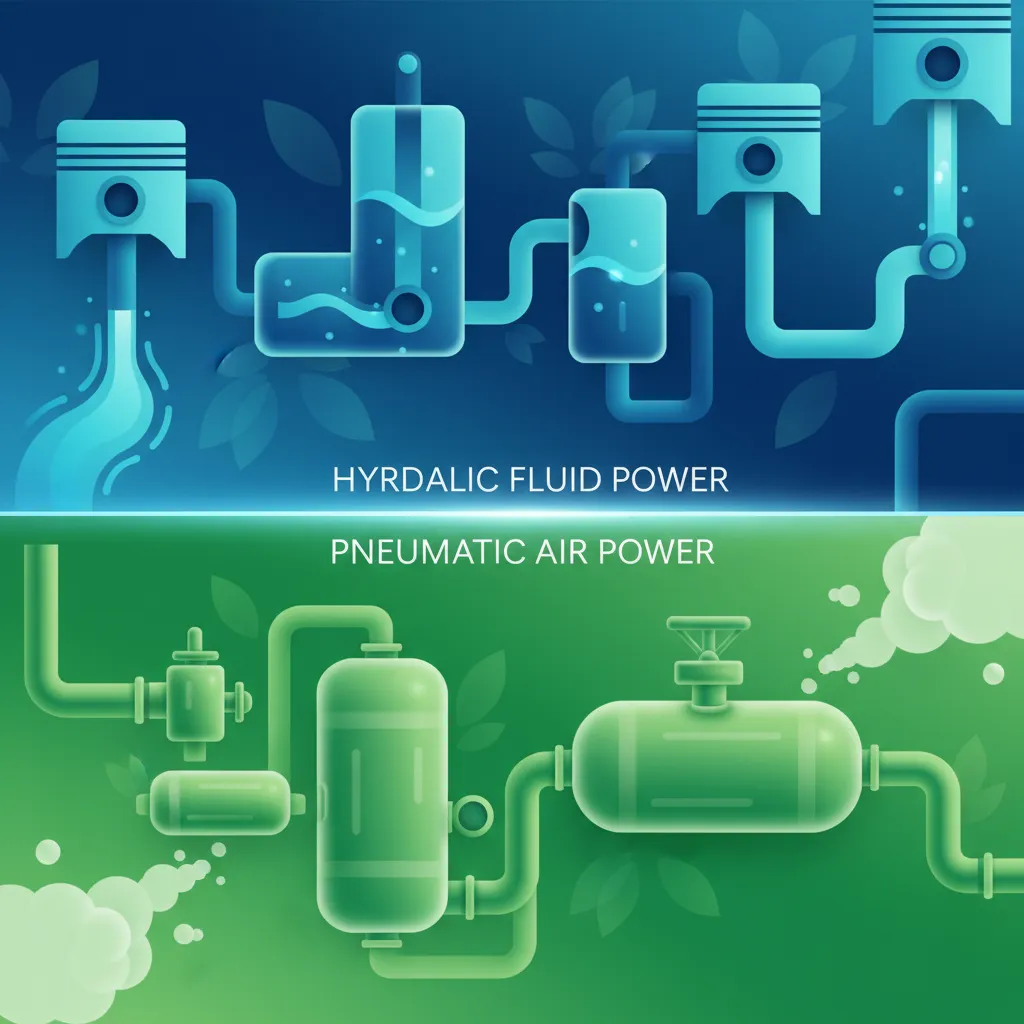
This lesson provides a comparative overview of hydraulic and pneumatic (air) braking systems. It explains the fundamental differences in how each system generates and transmits force, one using liquid and the other using compressed air. The content highlights why pneumatic systems are standard for heavy trucks due to their power and reliability over long vehicle combinations.

This lesson provides an overview of modern driver-assistance technologies designed to prevent collisions. It explains the function of systems like the Anti-lock Braking System (ABS), Electronic Stability Control (ESC), and Automatic Emergency Braking Systems (AEBS). Learners will understand how these systems work to help maintain control during emergency maneuvers, while also recognizing their operational limitations.

This lesson provides a detailed breakdown of the maximum permissible length, width, and height for heavy vehicles according to Spanish and EU regulations. It explains how these dimensions are measured and how they affect vehicle classification and route planning. The content emphasizes the critical importance of respecting clearance signs for bridges, tunnels, and other overhead structures to prevent accidents.

This lesson addresses the special regulations that apply to transporting loads that exceed standard legal dimensions or weight. It explains the process for obtaining the necessary special permits from the DGT and other authorities. The content also covers the requirements for route planning, the use of escort vehicles (pilot cars), and the mandatory signage and lighting for the vehicle.

This lesson provides a broad overview of the key traffic regulations in Spain that directly impact professional truck drivers. It details the rules of priority at intersections, the interpretation of different road markings, and the principles of correct lane discipline. Furthermore, it explains the specific speed limits applicable to heavy vehicles and the legal protocols for safe overtaking and signaling.
Explore how weather, road type, and vehicle load impact air brake system performance. Learn essential safety insights and DGT requirements for professional truck drivers in Spain.
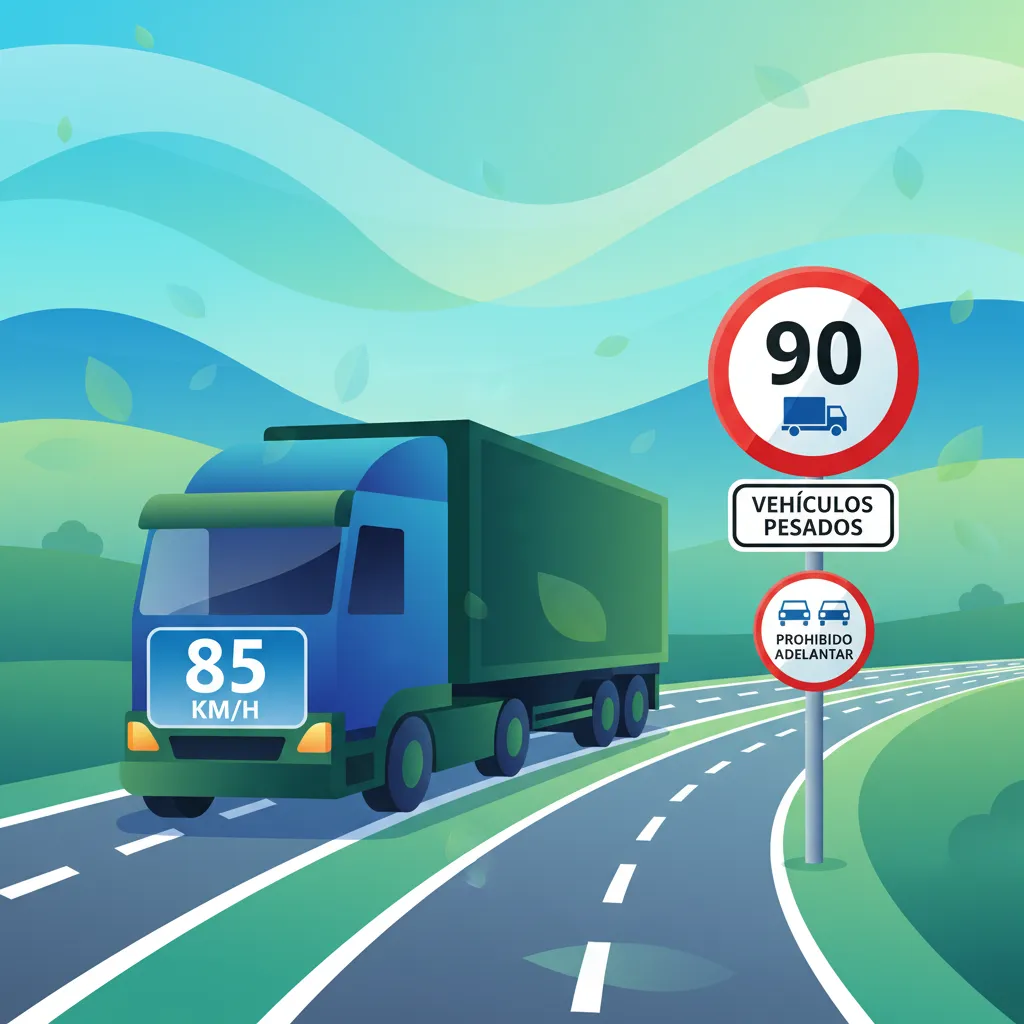
This lesson details the specific legal speed limits that apply to heavy passenger vehicles on Spanish highways, including variable speed zones that adjust based on traffic and weather conditions. Learners will understand the methods for speed monitoring, the function of speed control devices, and the legal consequences of non-compliance. The content also provides guidance on calculating a safe operating speed based on vehicle load and road conditions.
This lesson provides a broad overview of the key traffic regulations in Spain that directly impact professional truck drivers. It details the rules of priority at intersections, the interpretation of different road markings, and the principles of correct lane discipline. Furthermore, it explains the specific speed limits applicable to heavy vehicles and the legal protocols for safe overtaking and signaling.
This lesson covers the regulations and best practices regarding the use of rest areas and service stations during long-haul journeys. It reinforces the rules on mandatory rest periods to combat driver fatigue and explains how to plan routes to include necessary stops. The content also provides guidance on safe parking procedures within designated truck areas and using stops to perform quick vehicle safety checks.
This lesson examines the complex braking systems found in heavy passenger vehicles, with a focus on air brakes and anti-lock braking systems (ABS). It covers how these systems impact stopping distance, brake fade, and overall safety under different load and weather conditions. Learners will also study the required maintenance schedules and safety checks to ensure the braking components remain in optimal working order.
This lesson explains the fundamental principles of air brake systems used in heavy vehicles. It details the functions of each major component, including the air compressor, reservoirs (air tanks), control valves, and brake chambers. Learners will understand how compressed air is used to apply braking force and the importance of maintaining adequate air pressure for safe operation.

This lesson provides a detailed outline of the legal framework that governs driver duty hours in Spain, specifying the maximum continuous driving time and mandatory rest periods defined by the DGT. Learners will understand the limits on cumulative work hours, the necessity of meticulous record-keeping, and methods for monitoring compliance with these regulations. The module also discusses the penalties for violations and reinforces the safety imperative of adherence.

This lesson examines the overarching legal framework that governs professional drivers in Spain, focusing on the Reglamento General de Circulación. It details the statutory obligations of a driver, such as maintaining mandatory insurance, ensuring vehicle roadworthiness, and carrying all required documentation. Learners will understand their legal responsibilities and the importance of compliance with DGT regulations to operate lawfully.
This lesson examines the significant impact of various weather conditions on driving safety, including rain, fog, snow, ice, and high winds. Learners will understand how each condition can affect vehicle traction, reduce visibility, and alter driver perception, learning the appropriate adjustments to speed, following distance, and braking. The module also covers the use of vehicle safety features to mitigate risks in adverse weather.
This lesson provides a detailed breakdown of the maximum permissible length, width, and height for heavy vehicles according to Spanish and EU regulations. It explains how these dimensions are measured and how they affect vehicle classification and route planning. The content emphasizes the critical importance of respecting clearance signs for bridges, tunnels, and other overhead structures to prevent accidents.

This lesson details the strict EU and Spanish regulations governing drivers' working hours, driving times, and mandatory rest periods. It explains how to use a tachograph to record activity and ensure compliance with daily and weekly limits. The content also provides practical strategies for managing fatigue to maintain driver alertness and prevent accidents, a critical aspect of professional road safety.
Find clear answers to common questions learners have about Brake Balancing, Adjustment, and Maintenance. Learn how the lesson is structured, which driving theory objectives it supports, and how it fits into the overall learning path of units and curriculum progression in Spain. These explanations help you understand key concepts, lesson flow, and exam focused study goals.
Slack adjusters should be checked as part of your daily pre-trip inspection, especially before long journeys. Regular checks ensure that the brakes remain properly adjusted, compensating for lining wear and maintaining consistent braking performance, which is a key DGT safety requirement.
Common signs of an air leak include a rapid drop in air pressure when the engine is off, an audible hissing sound, or the air compressor cycling more frequently than usual. Any of these could indicate a serious safety hazard and must be addressed immediately as per DGT regulations.
Brake balancing ensures that all brakes on the vehicle apply force evenly, preventing premature tire wear, maintaining vehicle stability during braking, and reducing stopping distances. Imbalanced brakes can cause the vehicle to pull to one side or jackknife, particularly dangerous for Category C and C1 trucks.
As a professional driver, you are expected to perform basic checks and adjustments, such as using automatic slack adjusters correctly. However, significant repairs, complex diagnostics, or manual slack adjuster adjustments (if applicable and requiring specific tools) often require a qualified mechanic to ensure DGT compliance and safety standards.
Use our powerful search functionality to pinpoint specific Spanish DGT driving theory practice sets. Filter by road sign categories, traffic law topics, or question difficulty to build custom study sessions and reinforce your knowledge precisely where it matters for your official exam.