
Transporting loads that exceed standard legal dimensions requires special attention and adherence to strict DGT regulations. This lesson dives into the specific rules for over-dimensional loads, covering everything from permit applications to necessary escort vehicles and signage. It's a crucial part of your preparation for the Spanish C/C1 truck driver theory exam, building on your knowledge of general vehicle limitations.
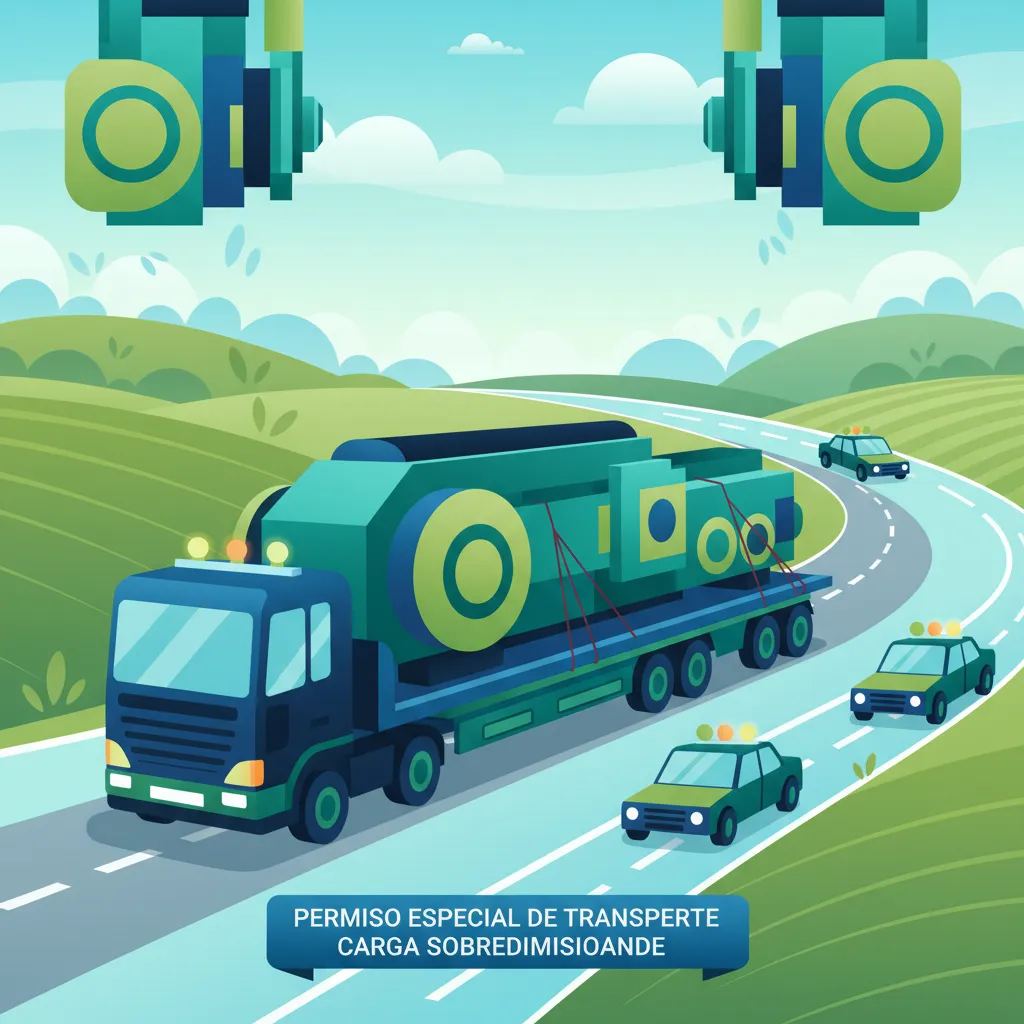
Lesson content overview
Transporting loads that exceed standard legal dimensions or weight requires meticulous planning and strict adherence to specific regulations. For professional truck drivers holding a Spanish Truck Licence Category C or C1, understanding these specialized rules, governed by the Dirección General de Tráfico (DGT), is not merely about avoiding fines; it is crucial for ensuring road safety, protecting infrastructure, and facilitating the smooth flow of traffic. This lesson will provide comprehensive guidance on navigating the complexities of over-dimensional load transport in Spain, covering everything from obtaining permits to route planning and essential safety protocols.
An over-dimensional load (or carga sobredimensionada in Spanish) refers to any load or vehicle combination whose dimensions (height, width, length) or weight surpasses the standard limits established by Spanish traffic regulations. These limits are set to ensure that vehicles can safely navigate roads, bridges, tunnels, and other infrastructure without causing damage or obstruction.
The regulations for over-dimensional transport are designed to protect several key aspects of road use:
For Category C and C1 drivers, mastering these regulations is an indispensable part of professional competence. It enables proactive risk assessment, legal compliance, and the ability to respond effectively to unforeseen challenges during transport. This topic builds upon foundational knowledge from previous lessons on vehicle dimensions, load management, and braking systems, integrating them into the specialized context of abnormal loads.
Navigating the transport of oversized loads is guided by several core principles designed to balance logistical needs with paramount safety and regulatory compliance. These principles dictate the essential steps and considerations a driver must undertake before and during an over-dimensional journey.
The Special Permit is a formal authorization issued by the DGT, or a delegated authority, that explicitly allows the transport of a load exceeding standard dimensions or weight. Its primary purpose is to ensure that every aspect of the load and its journey has been evaluated for safety and compatibility with road infrastructure. Without this permit, an over-dimensional load cannot legally commence its journey. Drivers must carry this permit in the vehicle at all times, as it will be verified by law enforcement en route. The permit is highly specific, detailing the exact maximum dimensions, weight, and the authorized route for the particular transport.
Effective Route Planning involves the careful selection of an itinerary that can safely accommodate the oversized load. This process considers critical factors such as vertical and horizontal clearances (bridges, tunnels, overhead cables), road width, the structural capacity of bridges, and any temporary or permanent traffic restrictions. The goal is to guarantee that the vehicle can complete its journey without causing obstruction, damage, or posing a risk to itself or others. This may involve using designated routes, adhering to specific detours, and sometimes planning for night-time travel when traffic is lighter.
A Pilot Vehicle (also known as an escort vehicle) precedes (lead pilot) and/or follows (tail pilot) the oversized load. These vehicles are equipped with distinct warning signs and lights, acting as an advance warning system for other road users and providing crucial assistance to the oversized vehicle's driver in navigating tight spots or complex maneuvers. The requirement for pilot vehicles is mandatory when loads exceed specific dimensional thresholds, and their drivers must be specially trained to ensure coordinated and safe passage.
Proper Signage and Lighting are non-negotiable for over-dimensional transports. These mandatory external indicators include "SOBREDIMENSIONADO" boards, flashing amber lights, and reflective panels strategically placed on the vehicle and the load. Their purpose is to significantly increase the visibility of the oversized vehicle, clearly alerting other drivers to its unusual dimensions and prompting them to take appropriate cautionary actions. Incorrect or missing signage not only leads to legal penalties but dramatically elevates the risk of accidents.
Load Distribution and Center of Gravity refer to the precise placement of the load to maintain vehicle stability and prevent excessive sway, tilting, or overloading specific axles. Proper distribution is fundamental to preventing loss of control, ensuring effective braking, and avoiding structural strain on the vehicle and road infrastructure. It requires adherence to strict axle weight limits and overall gross vehicle weight (GVW) guidelines, ensuring the vehicle remains balanced throughout the journey.
Understanding the specific requirements for each aspect of over-dimensional transport is vital for compliance and safety.
The Autorización Especial is the cornerstone of legal oversized transport. It is a legally binding document that grants permission to operate a vehicle or combination of vehicles that, due to the nature of their load, exceed standard weight or dimensional limits.
Thorough Route Planning is a critical, complex process that begins long before the wheels turn. It ensures the oversized load can safely traverse its entire journey.
Pilot Vehicles are more than just escorts; they are an integral part of the safety system for over-dimensional transports, providing an extended zone of awareness and control.
Effective Signage and Lighting are crucial for making oversized loads visible and understandable to other road users, both day and night.
Proper Load Distribution and Center of Gravity (Centro de Gravedad) are fundamental to the stability and safety of any truck, but they become critically important with oversized and overweight loads.
Operating over-dimensional loads in Spain is governed by specific DGT regulations that must be meticulously followed. These rules cover various aspects from pre-departure checks to in-transit conduct.
Rule Statement: Always obtain a valid Special Permit from the DGT before transporting any load that exceeds standard dimensions (height, width, length) or weight limits. This permit must be carried in the vehicle and readily available for inspection. Applicability: Mandatory for all over-dimensional transports. Legal Status: Mandatory. Rationale: Ensures that the transport has been thoroughly evaluated for safety, route compatibility, and infrastructural capacity by the authorities. Correct Example: A driver preparing to transport a 4.3-meter-tall industrial component ensures they have the specific permit for this load, which specifies its exact dimensions and the approved route, and keeps it in the cab. Incorrect Example: A driver, believing their standard permit is sufficient, commences a journey with a 3.2-meter-wide load without a specific over-dimensional permit, leading to an immediate stop and fine by the Guardia Civil.
Rule Statement: Deploy one or more Pilot Vehicles (lead and/or tail) when the load exceeds specific thresholds:
Rule Statement: The vehicle and its load must display specific signage ("SOBREDIMENSIONADO" boards), flashing amber warning lights, and reflective panels as prescribed by DGT regulations. Applicability: Mandatory for all oversized transports. Legal Status: Mandatory. Rationale: Significantly improves the visibility of the oversized vehicle, alerting other drivers to its unusual dimensions and the need for caution, especially in varying light conditions. Correct Example: A trailer carrying an extra-wide agricultural machine has "SOBREDIMENSIONADO" signs mounted at its front and rear, along with multiple flashing amber lights on the load's widest points and reflective markings along its sides. Incorrect Example: At dusk, a driver only uses static "SOBREDIMENSIONADO" signs without activating the required flashing amber lights, making the load nearly invisible to following traffic until they are dangerously close.
Rule Statement: The driver must strictly follow the route explicitly approved and detailed in the special permit. Applicability: Only on roads specified in the permit. Legal Status: Mandatory. Rationale: Prevents the vehicle from encountering obstacles (e.g., low bridges, narrow turns, weight-restricted roads) that cannot accommodate the load, thereby avoiding damage to infrastructure and significant traffic disruptions. Correct Example: Faced with an unexpected traffic jam on the approved route, the driver contacts the DGT or relevant traffic authority for an emergency alternative, rather than unilaterally deviating onto an unapproved road. Incorrect Example: A driver takes a shortcut through a town not on the approved route to save time, only to get stuck under a railway bridge with insufficient clearance, causing major delays and structural damage.
Rule Statement: Adhere to specific speed limits for oversized loads, which are generally lower than standard limits (e.g., typically 80 km/h on motorways, 70 km/h on secondary roads, and lower in urban areas). Applicability: All over-dimensional transports. Legal Status: Mandatory. Rationale: Oversized loads have significantly longer stopping distances due to increased mass and potentially reduced maneuverability, requiring lower speeds to ensure safe control and braking. Correct Example: Despite clear stretches of motorway, a driver maintains a steady 75 km/h with an extra-long load, recognizing the increased inertia and reaction time required. Incorrect Example: A driver speeds up to 100 km/h on an empty motorway to "make up time," significantly increasing the risk of losing control or failing to stop in an emergency.
Rule Statement: Thoroughly check and ensure the load is securely fastened and cannot shift during transit, both before departure and after any significant stops. Applicability: All transports, but especially critical for over-dimensional loads. Legal Status: Mandatory. Rationale: Prevents dangerous load shifts that can destabilize the vehicle, cause loss of control, damage the load, or create road hazards. Correct Example: Before departure, the driver performs a meticulous inspection of all tie-downs, chains, and restraints, confirming they meet DGT load securing standards and are properly tensioned. The driver re-checks after an hour of driving and after a rest stop. Incorrect Example: The driver neglects to re-inspect the securing straps after a long uphill climb, leading to a slight loosening of the load which then shifts significantly during a sharp turn, causing the trailer to sway violently.
Rule Statement: Immediately report any incident involving an oversized load, such as an accident, loss of part of the load, or road blockage, to the DGT and local authorities. Applicability: Any accident, loss of load, or road blockage involving the over-dimensional transport. Legal Status: Mandatory. Rationale: Enables rapid response from emergency services, facilitates traffic management and re-routing, and minimizes secondary accidents. Correct Example: After a minor collision with a roadside barrier due to a load shift, the driver immediately calls 112 and then informs the DGT, providing location and details for assistance. Incorrect Example: A driver, embarrassed by a minor load shift that partially blocks a lane, attempts to fix the situation themselves without reporting it, causing a backup that leads to another incident.
Ignoring or misinterpreting regulations can lead to serious consequences. Drivers must be aware of common violations and how to handle specific challenging situations.
The movement of over-dimensional loads is rarely a static process; it constantly interacts with changing environmental and operational conditions. Drivers must be prepared to adapt their approach based on these factors.
| Condition | Variation in Operation | Reasoning Behind Variation |
|---|---|---|
| Weather – High Winds | Reduce speed significantly, especially with tall loads. Consider adding a second pilot vehicle or even postponing the trip if winds are severe. The pilot vehicle should actively warn of strong gusts. | Tall or wide loads present a large surface area to the wind, acting like a sail. High crosswinds can induce dangerous sway, lateral drift, and increase the risk of roll-over. |
| Nighttime Driving | Mandatory flashing amber lights must be activated. Pilot vehicles should use additional reflective markers and be highly visible. Speed limits may be further reduced. | Decreased natural light significantly reduces visibility for all road users. Enhanced warning signals are critical to compensate and provide ample reaction time to other drivers. |
| Urban Areas & City Centers | Often require significantly lower speed limits (e.g., 50 km/h or less) and may prohibit certain oversized loads entirely during peak hours or on specific narrow streets. | Densely populated areas have higher traffic volumes, pedestrians, cyclists, and more complex infrastructure (roundabouts, tight corners), increasing collision risk and reducing maneuverability. |
| Motorway vs. Secondary Road | Different speed limits apply (e.g., 80 km/h on motorways, 70 km/h on secondary roads). Some motorways may ban specific categories of oversized loads altogether, necessitating secondary routes. | Higher speeds on motorways demand greater stopping distances. Motorways lack the alternate lanes or wide shoulders often needed for oversized vehicles to pull over or maneuver. Secondary roads, while slower, might offer more space or less traffic. |
| Load Type – Over-height vs. Over-weight | Over-height loads primarily require a lead pilot to check vertical clearances. Over-weight loads may necessitate both lead and tail pilots, with particular attention to bridge capacities and axle load monitoring. | Different physical properties create different safety concerns. Over-height risks striking overhead structures, while over-weight risks structural damage to roads and bridges, and affects braking performance. |
| Vehicle Maintenance State | If there are any concerns about the vehicle's brakes, tires, or steering, the load must be reduced, the route modified, or the trip postponed until repairs are complete. | Over-dimensional loads put immense strain on vehicle components. Any pre-existing maintenance issues are exacerbated, leading to a higher chance of mechanical failure and catastrophic accidents. |
| Interaction with Vulnerable Users | Implement extra caution, lower speeds, and potentially have pilot vehicles create safe zones when passing or crossing areas with pedestrians or cyclists. Additional "Cuidado Peatones" (Caution Pedestrians) signage may be beneficial. | Vulnerable road users are at extremely high risk in collisions with heavy vehicles. Proactive measures are necessary to ensure their safety and provide clear warnings. |
Understanding the direct links between actions, conditions, and outcomes is essential for risk management in over-dimensional transport.
This lesson on Road Regulations for Over-dimensional Loads draws heavily on foundational knowledge and concepts introduced in earlier modules of the Official DGT Theory Course for Spanish Truck Licence Category C & C1.
The knowledge gained from this lesson will be directly applied in future modules, particularly:
These scenarios illustrate how the regulations are applied in real-world driving situations.
Setting: A Category C truck is transporting a pre-fabricated modular home section that is 4.5 meters tall, traveling on the AP-7 motorway in Andalusia at 22:00. Rules Applied: This requires a special permit, a lead pilot vehicle (due to exceeding 30 cm over standard height), flashing amber lights on the load, reflective panels, and adherence to the 80 km/h motorway speed limit for oversized loads. Night driving also mandates enhanced visibility. Correct Behavior: The driver ensures the special permit is in the cab. The lead pilot car travels ahead, displaying its "PILOTO" sign and flashing amber lights, communicating constantly with the truck driver about upcoming bridge clearances and potential hazards. The truck maintains a steady 75 km/h, with all its flashing amber lights and reflective markings clearly visible. The driver is extra vigilant for signs indicating low bridges. Incorrect Behavior: The driver, feeling confident, tries to overtake a slower truck without the pilot vehicle providing a clear signal. The truck's flashing lights are only partially visible due to dirt, and the driver momentarily exceeds the speed limit, creating a dangerous situation and risking a collision with an unforeseen obstacle.
Setting: A Category C1 truck needs to deliver heavy steel beams (totaling 15 tonnes, exceeding standard axle limits) to a construction site within a city during midday. Rules Applied: A special permit is required for the over-weight nature of the load. Depending on the exact load distribution and route, a tail pilot might be necessary. Mandatory signage and careful route planning to avoid narrow streets, sharp turns, and areas with weight restrictions are crucial. Urban speed limits (e.g., 50 km/h) must be observed. Correct Behavior: The driver possesses a special permit detailing the specific load and an approved route that utilizes wider arterial roads. A tail pilot vehicle assists in monitoring rear clearance and warning following traffic during turns. The truck maintains a reduced speed, especially around intersections and pedestrian crossings, and the load is evenly distributed to prevent individual axle overload. Incorrect Behavior: The driver, frustrated by urban traffic, deviates from the approved route into a residential area with narrow streets. The truck's weight exceeds the limit for a small residential bridge, causing minor structural damage and leading to the truck being stranded, blocking traffic for hours.
Setting: A truck carrying a tall, lightweight prefabricated structure is navigating a mountain pass known for strong crosswinds during the afternoon. Rules Applied: The special permit, pilot vehicles, and signage requirements are already in place. However, the driver must adapt operational procedures due to adverse weather. This involves significantly reducing speed, increasing vigilance, and potentially adjusting the journey if wind conditions are too severe. Correct Behavior: The pilot vehicle, equipped with an anemometer, alerts the truck driver to increasing wind speeds. The truck driver proactively reduces speed to well below the legal limit for oversized loads, maintaining a very stable and controlled pace. The driver anticipates gusts and steers gently, minimizing the load's exposure to wind forces, ensuring stability. Incorrect Behavior: The driver maintains the normal speed for oversized loads on the pass, underestimating the wind's effect. A sudden, strong crosswind gust causes the tall load to sway dangerously, forcing the driver to struggle for control and narrowly avoiding drifting into the oncoming lane or striking the mountain wall.
The stringent regulations for over-dimensional loads are not arbitrary; they are meticulously designed based on scientific principles and extensive accident data to enhance safety for all road users.
Successfully and safely transporting over-dimensional loads requires a comprehensive understanding and disciplined application of DGT regulations. For professional Category C and C1 truck drivers in Spain, remember these key principles:
These actions collectively ensure the legal compliance, safety, and operational efficiency of over-dimensional transport, safeguarding the driver, the load, other road users, and Spain's vital infrastructure.
Transporting over-dimensional loads in Spain requires strict DGT compliance, beginning with obtaining a specific Special Permit that details authorized dimensions, weight, and route. Pilot vehicles are mandatory when loads exceed height (4.3 m), width (3.55 m), or length thresholds, and must display 'SOBREDIMENSIONADO' signs plus flashing amber lights for visibility. Thorough route planning using specialized tools is essential to avoid low clearances and weight-restricted infrastructure, with drivers required to follow the approved route exactly. Proper load distribution across axles and adherence to reduced speed limits (80 km/h motorway, 70 km/h secondary roads) ensure stability and safe stopping distances, while continuous load security checks prevent dangerous shifts during transit.
A short set of high-value points that capture the most important learning from this lesson.
A Special Permit (Autorización Especial) is mandatory for any load exceeding standard dimensions or weight, specifying exact limits, route, and escort requirements
Pilot vehicles are legally required when height exceeds 4.3 m (30 cm over standard), width exceeds 3.55 m (1 m over standard), or length exceeds vehicle combination limits by 0.5 m
All oversized transports must display 'SOBREDIMENSIONADO' signs, flashing amber lights, and reflective panels visible from at least 150 m (day) and 300 m (night)
Route planning must account for vertical clearances, bridge capacities, road widths, and traffic restrictions, using specialized routing tools rather than standard GPS
Both total Gross Vehicle Weight and individual axle load limits must be respected; exceeding GVW does not mean axle limits are satisfied
Explore all units and lessons included in this driving theory course.
Remember the three key thresholds requiring pilot vehicles: 30 cm over height, 1 m over width, 0.5 m over length limits
The special permit must be physically present in the vehicle and strictly followed; deviation from the approved route is prohibited without authorization
Standard vehicle hazard lights are insufficient for oversized loads; mandatory flashing amber lights must be activated at all times
Oversized load speed limits are typically 80 km/h on motorways and 70 km/h on secondary roads, lower than standard vehicle limits
Load securing must be re-checked after rest stops and temperature changes, not just before departure
Believing a standard truck license or registration permit covers all loads; the special permit is specific to each over-dimensional transport
Assuming one pilot vehicle is always sufficient; both lead and tail pilots may be mandatory depending on dimensions and route
Using standard GPS navigation instead of specialized heavy vehicle routing software that accounts for height, width, and weight restrictions
Thinking that as long as total GVW is within limits, the load is safe; individual axle limits must also be respected to prevent structural strain
Neglecting to activate flashing amber lights at night or in poor visibility, relying only on static warning signs
Lesson content overview
A short set of high-value points that capture the most important learning from this lesson.
A Special Permit (Autorización Especial) is mandatory for any load exceeding standard dimensions or weight, specifying exact limits, route, and escort requirements
Pilot vehicles are legally required when height exceeds 4.3 m (30 cm over standard), width exceeds 3.55 m (1 m over standard), or length exceeds vehicle combination limits by 0.5 m
All oversized transports must display 'SOBREDIMENSIONADO' signs, flashing amber lights, and reflective panels visible from at least 150 m (day) and 300 m (night)
Route planning must account for vertical clearances, bridge capacities, road widths, and traffic restrictions, using specialized routing tools rather than standard GPS
Both total Gross Vehicle Weight and individual axle load limits must be respected; exceeding GVW does not mean axle limits are satisfied
Explore all units and lessons included in this driving theory course.
Remember the three key thresholds requiring pilot vehicles: 30 cm over height, 1 m over width, 0.5 m over length limits
The special permit must be physically present in the vehicle and strictly followed; deviation from the approved route is prohibited without authorization
Standard vehicle hazard lights are insufficient for oversized loads; mandatory flashing amber lights must be activated at all times
Oversized load speed limits are typically 80 km/h on motorways and 70 km/h on secondary roads, lower than standard vehicle limits
Load securing must be re-checked after rest stops and temperature changes, not just before departure
Believing a standard truck license or registration permit covers all loads; the special permit is specific to each over-dimensional transport
Assuming one pilot vehicle is always sufficient; both lead and tail pilots may be mandatory depending on dimensions and route
Using standard GPS navigation instead of specialized heavy vehicle routing software that accounts for height, width, and weight restrictions
Thinking that as long as total GVW is within limits, the load is safe; individual axle limits must also be respected to prevent structural strain
Neglecting to activate flashing amber lights at night or in poor visibility, relying only on static warning signs
Explore search topics learners often look for when studying Road Regulations for Over-dimensional Loads. These topics reflect common questions about road rules, driving situations, safety guidance, and lesson level theory preparation for learners in Spain.
Browse additional driving theory lessons that cover connected traffic rules, road signs, and common driving situations related to this topic. Improve your understanding of how different rules interact across everyday traffic scenarios.
Understand the core DGT rules for transporting over-dimensional and overweight loads in Spain. This lesson covers special permits, pilot vehicles, route planning, and essential signage requirements for professional truck drivers.
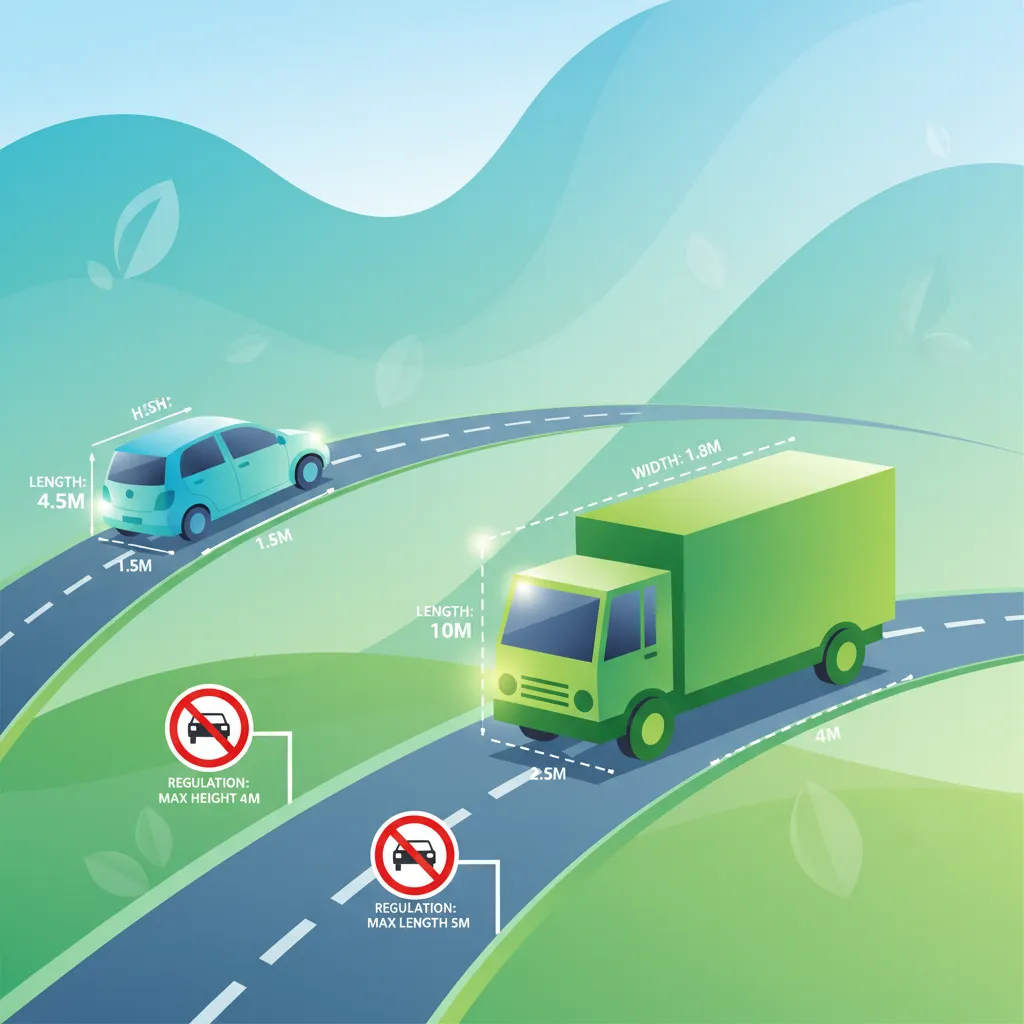
This lesson provides a detailed breakdown of the maximum permissible length, width, and height for heavy vehicles according to Spanish and EU regulations. It explains how these dimensions are measured and how they affect vehicle classification and route planning. The content emphasizes the critical importance of respecting clearance signs for bridges, tunnels, and other overhead structures to prevent accidents.
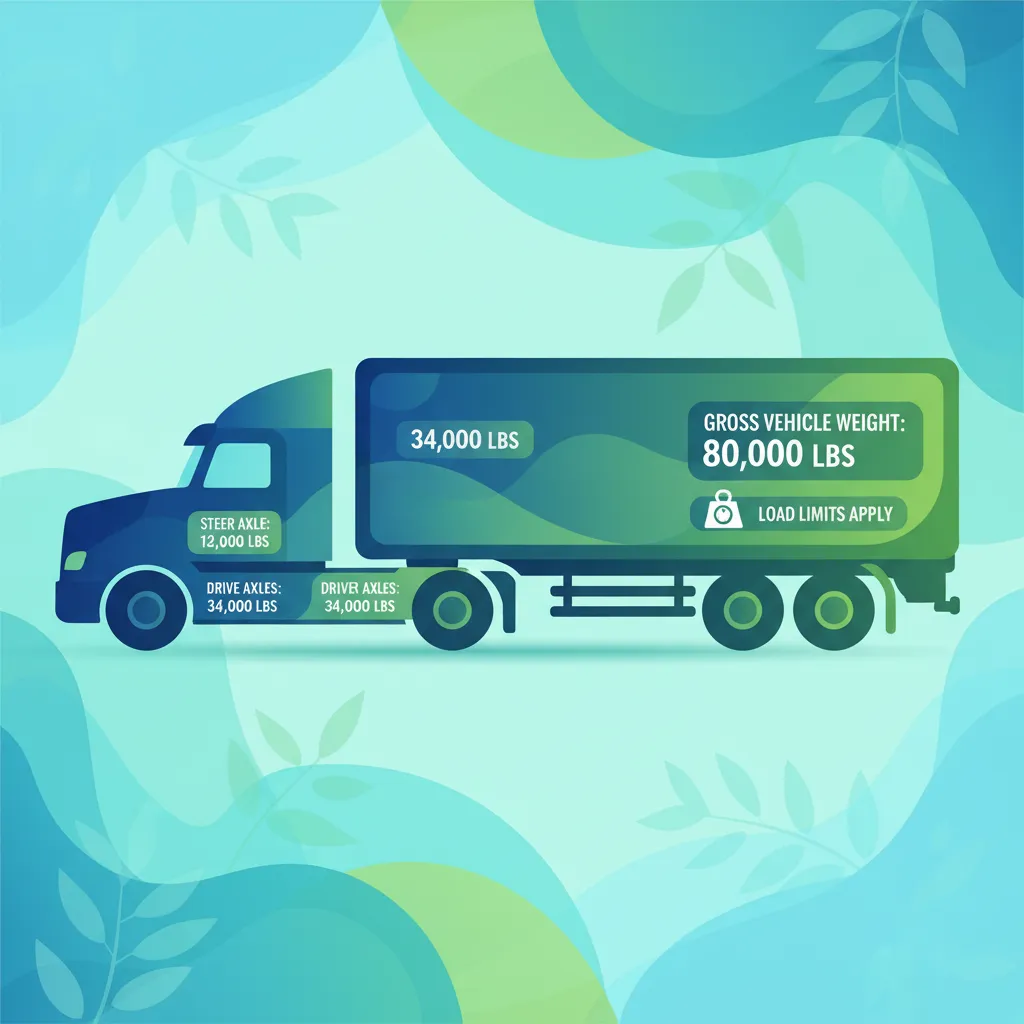
This lesson covers the critical regulations concerning vehicle weight, including Gross Vehicle Weight (GVW) and individual axle load limits. Learners will understand how to calculate tare weight and maximum payload to avoid overloading. The content also explains how proper weight distribution is essential for vehicle stability, braking efficiency, and minimizing road surface damage.
This lesson provides a broad overview of the key traffic regulations in Spain that directly impact professional truck drivers. It details the rules of priority at intersections, the interpretation of different road markings, and the principles of correct lane discipline. Furthermore, it explains the specific speed limits applicable to heavy vehicles and the legal protocols for safe overtaking and signaling.

This lesson explains the specific legal framework governing truck operations on Spain's high-speed road network. It details the different speed limits for trucks on autovías versus autopistas and the regulations regarding which lanes heavy vehicles are permitted to use. Learners will also understand how to interpret specific highway signage relevant to commercial vehicles and any applicable toll regulations.

This lesson focuses on the specific restrictions that heavy vehicles face on public infrastructure and in urban centers. It covers how to interpret signs indicating weight limits for bridges and height restrictions for tunnels and overpasses. The content also explains the various municipal regulations that can restrict truck access to certain urban areas, such as low-emission zones or time-based delivery windows.
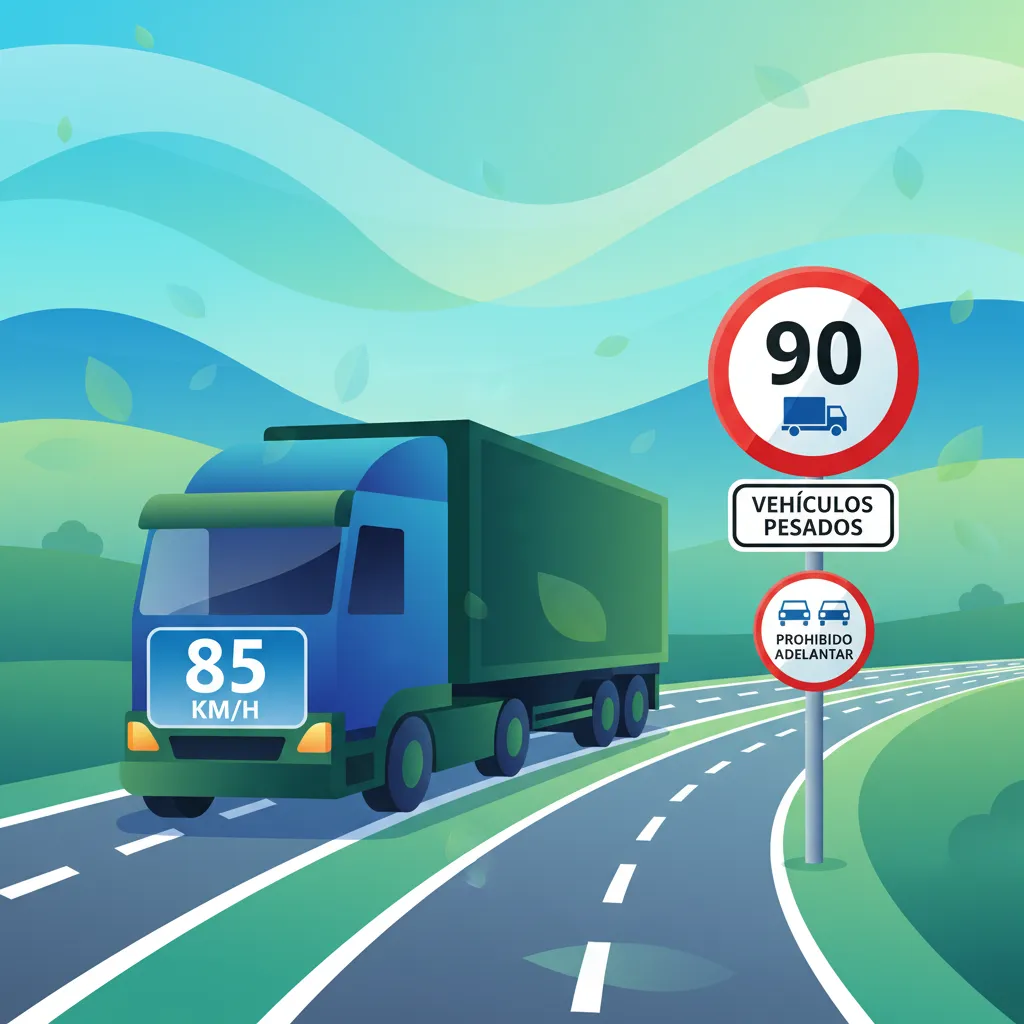
This lesson details the specific legal speed limits that apply to heavy passenger vehicles on Spanish highways, including variable speed zones that adjust based on traffic and weather conditions. Learners will understand the methods for speed monitoring, the function of speed control devices, and the legal consequences of non-compliance. The content also provides guidance on calculating a safe operating speed based on vehicle load and road conditions.

This lesson details the strict EU and Spanish regulations governing drivers' working hours, driving times, and mandatory rest periods. It explains how to use a tachograph to record activity and ensure compliance with daily and weekly limits. The content also provides practical strategies for managing fatigue to maintain driver alertness and prevent accidents, a critical aspect of professional road safety.

This lesson examines the overarching legal framework that governs professional drivers in Spain, focusing on the Reglamento General de Circulación. It details the statutory obligations of a driver, such as maintaining mandatory insurance, ensuring vehicle roadworthiness, and carrying all required documentation. Learners will understand their legal responsibilities and the importance of compliance with DGT regulations to operate lawfully.

This lesson focuses on the principles of safe lane selection and overtaking on multi-lane roads and highways. It covers the importance of maintaining proper lane discipline and the legal protocols for executing a safe pass, including checking blind spots and ensuring sufficient speed differential. The content also stresses the need for clear signaling and judging adequate space before returning to the original lane.
Learn about frequent mistakes and tricky situations when transporting over-dimensional loads in Spain. This lesson highlights common violations related to permits, pilot vehicles, route deviations, and load securing to help drivers avoid penalties and hazards.
This lesson provides a detailed breakdown of the maximum permissible length, width, and height for heavy vehicles according to Spanish and EU regulations. It explains how these dimensions are measured and how they affect vehicle classification and route planning. The content emphasizes the critical importance of respecting clearance signs for bridges, tunnels, and other overhead structures to prevent accidents.
This lesson covers the critical regulations concerning vehicle weight, including Gross Vehicle Weight (GVW) and individual axle load limits. Learners will understand how to calculate tare weight and maximum payload to avoid overloading. The content also explains how proper weight distribution is essential for vehicle stability, braking efficiency, and minimizing road surface damage.
This lesson focuses on the specific restrictions that heavy vehicles face on public infrastructure and in urban centers. It covers how to interpret signs indicating weight limits for bridges and height restrictions for tunnels and overpasses. The content also explains the various municipal regulations that can restrict truck access to certain urban areas, such as low-emission zones or time-based delivery windows.
This lesson provides a broad overview of the key traffic regulations in Spain that directly impact professional truck drivers. It details the rules of priority at intersections, the interpretation of different road markings, and the principles of correct lane discipline. Furthermore, it explains the specific speed limits applicable to heavy vehicles and the legal protocols for safe overtaking and signaling.
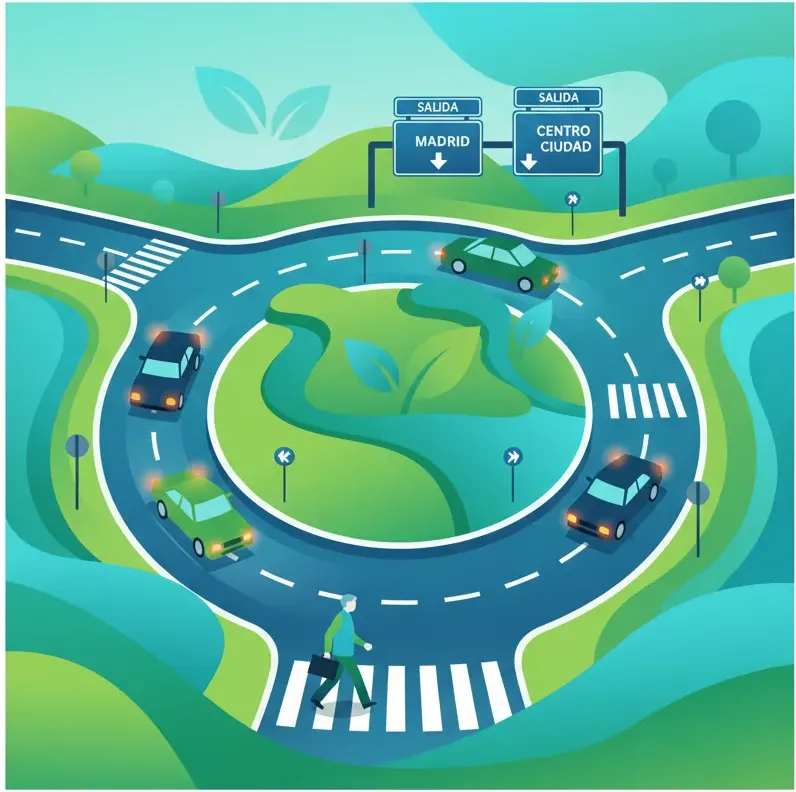
This lesson provides specific instructions on how to safely navigate complex junctions such as roundabouts and intersections with a large vehicle. It explains the rules of priority, the correct lane to use based on the intended exit, and the importance of proper vehicle positioning to account for off-tracking. The content also covers clear signaling to communicate intentions to other road users for safe and efficient passage.
This lesson explains the specific legal framework governing truck operations on Spain's high-speed road network. It details the different speed limits for trucks on autovías versus autopistas and the regulations regarding which lanes heavy vehicles are permitted to use. Learners will also understand how to interpret specific highway signage relevant to commercial vehicles and any applicable toll regulations.
Find clear answers to common questions learners have about Road Regulations for Over-dimensional Loads. Learn how the lesson is structured, which driving theory objectives it supports, and how it fits into the overall learning path of units and curriculum progression in Spain. These explanations help you understand key concepts, lesson flow, and exam focused study goals.
In Spain, an over-dimensional load refers to cargo that, when loaded onto a vehicle, exceeds the maximum legal dimensions permitted for standard circulation. This typically includes exceeding the maximum permitted length, width, height, or weight as defined by the DGT. Specific thresholds are detailed in national legislation and often require special permits for transport.
Yes, if your load, combined with the vehicle, exceeds the standard regulatory dimensions (width, height, length, or weight), you will generally need a specific permit from the DGT or relevant regional authorities. The process and specific requirements depend on how much the dimensions are exceeded and the type of roads being used.
Escort vehicles, known as 'vehículos piloto' or 'coches piloto' in Spain, are mandatory for certain over-dimensional loads. Their primary role is to escort the oversized transport, warn other road users of its presence, control traffic flow, and assist with safe navigation, especially at junctions or in confined areas. Specific requirements for escort vehicles (number, positioning, equipment) are stipulated by the DGT based on the load's dimensions.
Vehicles carrying over-dimensional loads must display specific warning signs and lights to alert other road users. This typically includes large 'DILIGENCIA DEBIDAMENTE SEÑALIZADA' (Oversized Load) panels at the front and rear, as well as flashing lights (usually orange) on the vehicle and sometimes on the load itself. The exact requirements are detailed in the DGT regulations and depend on the nature of the oversize.
Route planning for over-dimensional loads is critical and far more complex than for standard vehicles. It involves detailed analysis of the intended route to ensure clearance for height (bridges, tunnels), width (narrow roads, junctions), and weight limits (bridges, viaducts). It also considers where escort vehicles will be positioned and potential traffic management needs. Routes must often be pre-approved by authorities.
Use our powerful search functionality to pinpoint specific Spanish DGT driving theory practice sets. Filter by road sign categories, traffic law topics, or question difficulty to build custom study sessions and reinforce your knowledge precisely where it matters for your official exam.