
This lesson delves into the critical physics behind heavy vehicle stability, focusing on the center of gravity and how load distribution affects it. Understanding these principles is vital for maintaining control, especially in challenging maneuvers, and is a key topic for your Spanish Category C and C1 driving theory exam.

Lesson content overview
Operating heavy vehicles, such as those requiring a Spanish professional truck driving licence for Category C and C1, demands a profound understanding of vehicle dynamics. The physical principles governing how a truck or a truck-trailer combination behaves on the road are crucial for safety. Among the most important of these are the concepts of the center of gravity, proper load distribution, and controlling vehicle sway. Mismanagement of these factors can dramatically increase the risk of accidents, especially rollovers and loss of control during turns, braking, or adverse weather conditions.
This lesson delves into these critical areas, providing the foundational knowledge necessary to safely manage diverse cargo and maintain vehicle stability under various driving conditions. By understanding how the placement and distribution of your load affect your vehicle's stability, you can make informed decisions that prevent dangerous situations.
The center of gravity (CoG) is a fundamental concept in physics and vehicle dynamics. For heavy vehicles, it is the single most important factor influencing stability. It dictates how the entire weight of the vehicle and its cargo is perceived to act upon the ground.
The Centre of Gravity (CoG) is defined as the theoretical point at which the total weight of the vehicle and its entire load can be considered to act vertically downwards. Imagine balancing a complex object on a single point; that point would be its center of gravity. For a truck or a truck-trailer combination, the CoG is not fixed; it constantly changes depending on the vehicle's design, its empty weight, and most importantly, the weight, position, and distribution of its cargo.
Understanding the CoG is critical because it determines how weight is distributed relative to the vehicle's support points – its wheels. A higher CoG reduces stability, making the vehicle more susceptible to tipping or rolling over, particularly during dynamic maneuvers like cornering, braking, or accelerating. Maintaining the CoG within safe limits is paramount for the safe operation of Category C and C1 vehicles.
The center of gravity is a three-dimensional point, and its position in each dimension has distinct implications for vehicle stability:
The height of the center of gravity above the ground is arguably the most critical dimension for vehicle stability, particularly for large, heavy vehicles. When a truck corners, accelerates, or brakes, or when it is affected by external forces like strong crosswinds, the weight of the vehicle and its load exerts forces that can cause it to lean or even tip over.
A lower CoG means that the base of support (the distance between the wheels, or track width) has a greater mechanical advantage against the overturning forces. Conversely, a higher CoG creates a larger "lever arm" for these forces, requiring less external force to generate an overturning moment. This significantly increases the risk of rollover, especially on curves, during evasive maneuvers, or when dealing with sudden wind gusts. Therefore, a key principle of safe load management is to always strive for the lowest possible CoG.
Keep the CoG Low: Always load the heaviest items at the bottom of the cargo area. This simple practice significantly reduces the vertical CoG and enhances overall vehicle stability.
Beyond merely placing cargo, load distribution refers to the precise spatial arrangement of weight within the vehicle's cargo area. This distribution, both front-to-rear and left-to-right, is crucial for maintaining vehicle balance, complying with legal limits, and ensuring safe handling.
Proper load distribution involves ensuring that the weight of the cargo is spread evenly across all axles and sides of the vehicle. This is not just about staying within the total permissible gross vehicle weight (GVW) but about respecting the individual axle load limits. Each axle on a Category C or C1 vehicle has a maximum permissible load it can carry, which is typically found on the vehicle's load plate. Exceeding these limits can lead to:
Understanding different types of unbalanced loads is essential for prevention:
The DGT (Dirección General de Tráfico) mandates strict adherence to axle load limits. These limits are not arbitrary; they are set to ensure the structural integrity of the vehicle, the safety of its operation, and the longevity of road infrastructure. Drivers of Category C and C1 vehicles must ensure that:
Proper load distribution directly impacts vehicle handling. A well-balanced load contributes to:
Lateral stability is the vehicle's ability to resist tipping sideways when subjected to lateral forces. For trucks and trailers, especially those with high or unbalanced loads, maintaining lateral stability is paramount to prevent dangerous vehicle sway.
Vehicle sway refers to the oscillatory, side-to-side motion of a trailer or the cargo within a truck during travel. This motion can be minor and barely perceptible, or it can escalate rapidly into uncontrollable oscillations that lead to loss of control or rollover. Several factors can cause or exacerbate vehicle sway:
The relationship between lateral stability and rollover risk is direct and critical for heavy vehicle drivers. When a vehicle corners, inertia tries to keep it moving in a straight line, creating a centrifugal force that acts outwards from the center of the turn. This force, combined with the vehicle's CoG, creates an overturning moment.
The rotational force that tends to tip a vehicle sideways. It is calculated by multiplying the lateral force acting on the vehicle by the height of its center of gravity. A higher CoG leads to a greater overturning moment for the same lateral force.
Factors that increase rollover risk due to reduced lateral stability include:
To mitigate the risks associated with vehicle sway, certain vehicles, especially those designed to carry tall or high-volume loads, are mandated or recommended to use sway control devices.
A mechanical or electronic system designed to dampen or prevent the oscillatory lateral motion (sway) of a trailer or its load. These devices typically work by applying controlled resistance to trailer movement.
These devices are crucial for enhancing stability, particularly when transporting containers, tall machinery, or other high-profile cargo. Per DGT regulations, vehicles carrying loads above a certain height threshold (e.g., 1.2 metres) must either be equipped with an active sway control system or adhere to specific lower speed limits to ensure safety.
Relying solely on driver skill to counteract severe sway is dangerous. Proper loading and, when required, the use of appropriate sway control devices are essential safety measures.
Beyond static load distribution, drivers of Category C and C1 vehicles must also understand dynamic load transfer. This refers to the temporary redistribution of weight from one part of the vehicle to another during acceleration, deceleration, or cornering due to inertial forces. While temporary, dynamic load transfer significantly impacts traction, braking, and overall stability.
Dynamic load transfer occurs in two primary directions:
The consequences of neglecting dynamic load transfer can be severe:
Smooth Driver Inputs: The best way to manage dynamic load transfer is through smooth acceleration, gentle braking, and gradual steering inputs. Avoid abrupt actions that can destabilize the vehicle.
The Spanish Directorate-General for Traffic (DGT) implements strict regulations to ensure the safe transport of goods by heavy vehicles. Compliance with these rules is mandatory for all Category C and C1 licence holders and is critical for preventing accidents related to improper loading.
The maximum permissible weight that may rest on a specific axle or group of axles of a vehicle, as indicated on the vehicle's load plate and in DGT regulations.
DGT Circular 3/2015 explicitly states that no axle of a Category C or C1 vehicle may carry more than its maximum permissible load. This regulation is applicable to all road operations and is designed to:
Correct Application: Drivers must consult the vehicle's load plate before loading and distribute cargo meticulously to ensure each axle remains within its limits. This often requires using measuring tools or onboard weighing systems. Incorrect Application: Overloading a single axle, even if the total vehicle weight is within limits, is a serious violation. For example, placing all heavy items at the extreme rear of the trailer might keep the total weight legal but overload the rear axle, while underloading the front.
DGT Guide 9/2020 mandates that all loads must be secured effectively to prevent any movement during normal driving conditions, including acceleration, braking, and cornering. This regulation is fundamental for maintaining the CoG and preventing unexpected shifts that can lead to loss of control.
Rationale: Unsecured or improperly secured loads can shift, abruptly altering the CoG, increasing vehicle sway, damaging the cargo, or even falling off the vehicle, creating extreme hazards for other road users.
Correct Application: Drivers must use appropriate and approved tie-down devices (straps, chains, chocks, nets, bracing) suitable for the weight and type of cargo. The load must be distributed evenly and secured to resist forces in all directions (forward, backward, sideways, and upward). Regular checks of tie-down tension are necessary, especially after the first few kilometres of travel. Incorrect Application: Relying on insufficient or incorrectly applied securing methods, such as using thin ropes for heavy items or failing to tension straps adequately, can lead to dangerous load shifts.
According to DGT Direction 12/2021, vehicles transporting loads with a height exceeding 1.2 metres must either be equipped with a functional sway control device or significantly limit their speeds to 80 km/h on open roads. This regulation specifically targets the increased rollover risk and instability associated with high-CoG loads.
Rationale: Tall loads present a larger surface area to crosswinds and generate a greater overturning moment during turns, making them much more prone to sway and rollover. Sway control devices actively dampen these oscillations, while reduced speed directly lowers the centrifugal forces and the impact of wind.
Correct Application: When carrying high loads, drivers must verify the presence and functionality of sway control devices. If such a device is not present or not operational, strict adherence to lower speed limits (e.g., 80 km/h) is mandatory. Incorrect Application: Ignoring these requirements and driving a truck with a high load at typical motorway speeds (e.g., 100 km/h) without sway control creates an extremely dangerous situation, highly susceptible to severe sway and potential rollover.
Understanding the theoretical principles is vital, but applying them in real-world driving situations is where safety truly lies. Here are some practical scenarios that highlight the importance of proper load management.
Ignoring the principles of CoG and load distribution can lead to dangerous and illegal situations. Drivers must be aware of common violations to prevent them.
Safe load management is not a static process; it requires constant adaptation to changing environmental and road conditions.
This lesson covers the critical physics of center of gravity positioning and its direct impact on heavy vehicle stability for Category C and C1 drivers. It explains how vertical CoG height determines rollover risk, how load distribution affects axle weights and vehicle handling, and how dynamic load transfer redistributes weight during acceleration, braking, and cornering. Key DGT regulations require compliance with axle load limits (Circular 3/2015), proper load securement (Guide 9/2020), and sway control for high loads (Direction 12/2021). Practical scenarios address urban deliveries, highway driving with tall loads, steep descents, and crosswind conditions, highlighting how proper load management prevents dangerous situations.
A short set of high-value points that capture the most important learning from this lesson.
The center of gravity (CoG) is the theoretical point where total vehicle and load weight acts downward, and its height is the primary factor affecting rollover risk during turns and maneuvers.
A lower CoG provides greater mechanical advantage against overturning forces, which is why heavy cargo should always be loaded as low as possible in the vehicle.
Load distribution must respect individual axle load limits, not just total vehicle weight, to ensure proper steering, braking, and traction.
Dynamic load transfer causes temporary weight redistribution during acceleration, braking, and cornering, affecting traction and stability in real-time.
DGT regulations mandate sway control devices for loads exceeding 1.2 metres in height or require reduced speeds to 80 km/h on open roads.
Explore all units and lessons included in this driving theory course.
CoG has three dimensions: vertical (height above ground), longitudinal (front-to-rear position), and lateral (side-to-side position), each affecting stability differently.
Front-heavy loads overload front axles and impair steering; rear-heavy loads reduce front braking traction; side-heavy loads increase rollover risk during turns and crosswinds.
Dynamic load transfer during braking shifts weight forward, lightening rear axles and potentially causing rear brake lock-up or reduced effectiveness.
DGT Circular 3/2015 sets maximum axle load limits; Guide 9/2020 requires proper load securement; Direction 12/2021 mandates sway control for high loads.
The overturning moment equals lateral force multiplied by CoG height—doubling speed in a turn quadruples the centrifugal force acting on the vehicle.
Assuming total vehicle weight is within limits means all axle loads are fine, when in fact individual axles may be overloaded.
Driving at normal motorway speeds with a high load exceeding 1.2 metres without a sway control device, violating DGT Direction 12/2021.
Placing heavy items on top of lighter cargo instead of at the bottom, raising the CoG and increasing rollover susceptibility.
Relying solely on driver skill to counteract severe vehicle sway instead of using proper loading techniques and required sway control devices.
Taking sharp turns at speed with a side-heavy load, not accounting for the combined effect of existing imbalance and dynamic lateral load transfer.
Lesson content overview
A short set of high-value points that capture the most important learning from this lesson.
The center of gravity (CoG) is the theoretical point where total vehicle and load weight acts downward, and its height is the primary factor affecting rollover risk during turns and maneuvers.
A lower CoG provides greater mechanical advantage against overturning forces, which is why heavy cargo should always be loaded as low as possible in the vehicle.
Load distribution must respect individual axle load limits, not just total vehicle weight, to ensure proper steering, braking, and traction.
Dynamic load transfer causes temporary weight redistribution during acceleration, braking, and cornering, affecting traction and stability in real-time.
DGT regulations mandate sway control devices for loads exceeding 1.2 metres in height or require reduced speeds to 80 km/h on open roads.
Explore all units and lessons included in this driving theory course.
CoG has three dimensions: vertical (height above ground), longitudinal (front-to-rear position), and lateral (side-to-side position), each affecting stability differently.
Front-heavy loads overload front axles and impair steering; rear-heavy loads reduce front braking traction; side-heavy loads increase rollover risk during turns and crosswinds.
Dynamic load transfer during braking shifts weight forward, lightening rear axles and potentially causing rear brake lock-up or reduced effectiveness.
DGT Circular 3/2015 sets maximum axle load limits; Guide 9/2020 requires proper load securement; Direction 12/2021 mandates sway control for high loads.
The overturning moment equals lateral force multiplied by CoG height—doubling speed in a turn quadruples the centrifugal force acting on the vehicle.
Assuming total vehicle weight is within limits means all axle loads are fine, when in fact individual axles may be overloaded.
Driving at normal motorway speeds with a high load exceeding 1.2 metres without a sway control device, violating DGT Direction 12/2021.
Placing heavy items on top of lighter cargo instead of at the bottom, raising the CoG and increasing rollover susceptibility.
Relying solely on driver skill to counteract severe vehicle sway instead of using proper loading techniques and required sway control devices.
Taking sharp turns at speed with a side-heavy load, not accounting for the combined effect of existing imbalance and dynamic lateral load transfer.
Explore search topics learners often look for when studying Center of Gravity, Load Distribution, and Sway Control. These topics reflect common questions about road rules, driving situations, safety guidance, and lesson level theory preparation for learners in Spain.
Browse additional driving theory lessons that cover connected traffic rules, road signs, and common driving situations related to this topic. Improve your understanding of how different rules interact across everyday traffic scenarios.
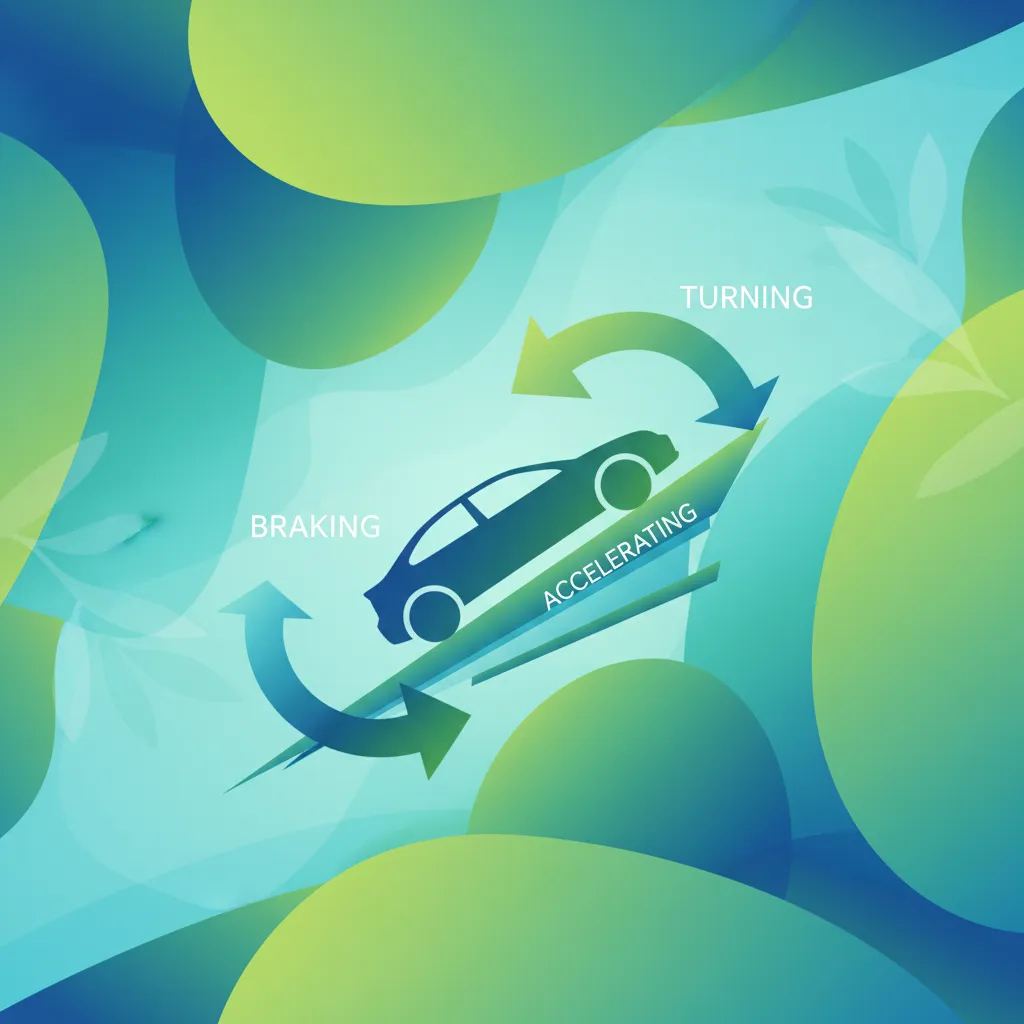
Learn how acceleration, braking, and cornering cause weight to shift in heavy vehicles. This lesson details longitudinal and lateral load transfer and its impact on truck stability, braking effectiveness, and handling, crucial for professional truck drivers in Spain.
In this lesson, the principles of proper load distribution and maintaining an appropriate center of gravity are explored. It covers how uneven weight can cause trailer sway (snaking) and destabilize the towing vehicle. Learners will be instructed on DGT load limits, proper cargo arrangement, and tie-down methods to ensure safe transport.

This lesson explores the direct relationship between a vehicle's load and its braking and acceleration performance. It explains how increased mass significantly increases the vehicle's inertia, resulting in longer stopping distances and slower acceleration. Understanding these physical principles helps drivers adjust their driving style, such as increasing following distances, to compensate for the effects of a heavy load.
Explore typical violations related to truck loading, including rear-heavy loads, side-heavy cargo, and inadequate tie-downs, as per DGT regulations. Understand the significant dangers these practices pose to vehicle stability and road safety.

This lesson covers the legal requirements and practical techniques for securing cargo on a commercial vehicle. It details the various types of approved securement equipment, such as straps, chains, and blocking materials. Learners will understand the DGT regulations regarding the number and strength of tie-downs required for different types and weights of cargo to ensure it remains stable.
In this lesson, the principles of proper load distribution and maintaining an appropriate center of gravity are explored. It covers how uneven weight can cause trailer sway (snaking) and destabilize the towing vehicle. Learners will be instructed on DGT load limits, proper cargo arrangement, and tie-down methods to ensure safe transport.

This lesson covers the critical regulations concerning vehicle weight, including Gross Vehicle Weight (GVW) and individual axle load limits. Learners will understand how to calculate tare weight and maximum payload to avoid overloading. The content also explains how proper weight distribution is essential for vehicle stability, braking efficiency, and minimizing road surface damage.
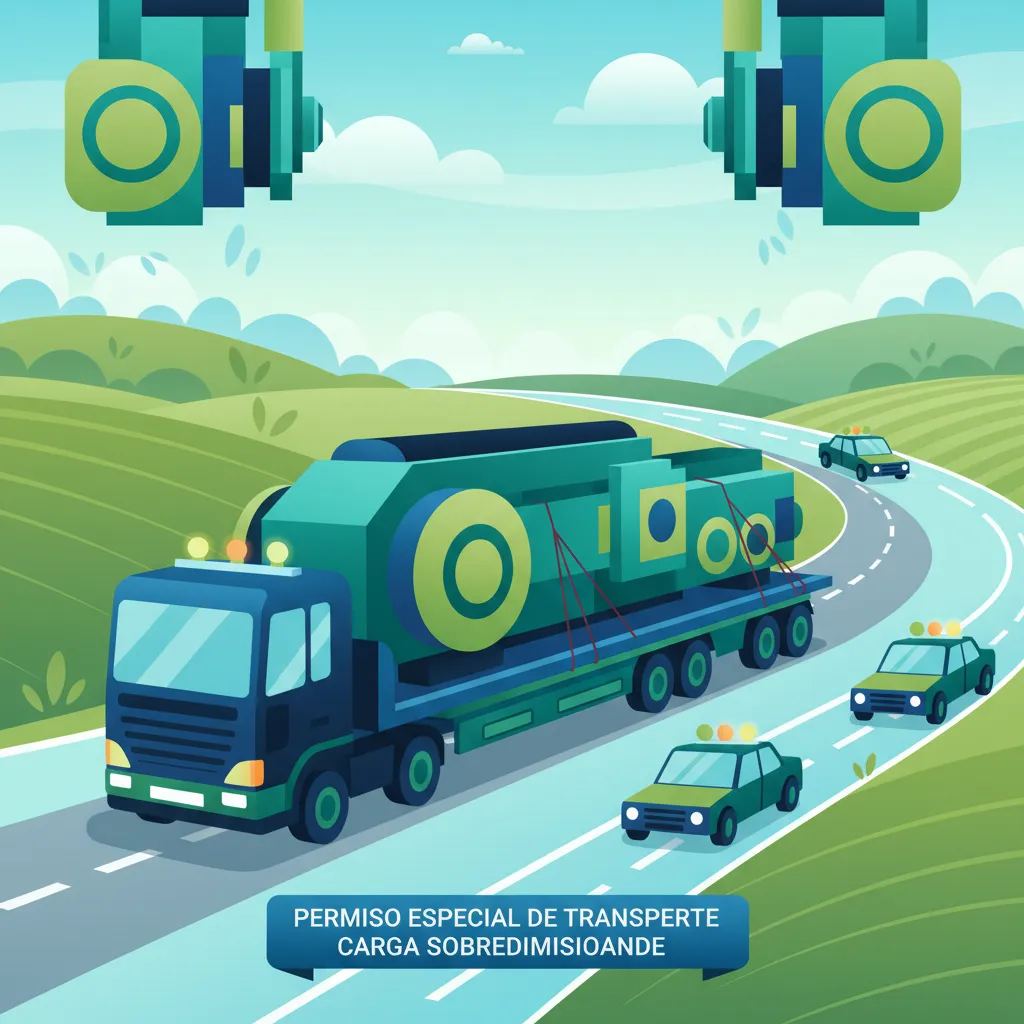
This lesson addresses the special regulations that apply to transporting loads that exceed standard legal dimensions or weight. It explains the process for obtaining the necessary special permits from the DGT and other authorities. The content also covers the requirements for route planning, the use of escort vehicles (pilot cars), and the mandatory signage and lighting for the vehicle.
Find clear answers to common questions learners have about Center of Gravity, Load Distribution, and Sway Control. Learn how the lesson is structured, which driving theory objectives it supports, and how it fits into the overall learning path of units and curriculum progression in Spain. These explanations help you understand key concepts, lesson flow, and exam focused study goals.
The center of gravity is the average location of the weight of an object. For a truck, it's the point where the vehicle's entire weight can be considered to be concentrated. Its position, especially its height, is critical for stability. A higher CoG generally means a higher risk of tipping over.
Placing heavy items low in the trailer lowers the CoG, increasing stability. Conversely, loading heavy items high raises the CoG, making the vehicle more prone to tipping, especially during turns or on uneven surfaces. Even distribution across the width of the trailer is also key to prevent sideways instability.
Vehicle sway, also known as trailer sway or fishtailing, can be caused by several factors, including unevenly distributed loads, high winds, over-steering, sudden braking, or aerodynamic forces from passing vehicles. Proper load balancing and securement are crucial to prevent it.
The DGT exam tests your understanding of safe driving practices for heavy vehicles. Swaying is a dangerous phenomenon that can lead to loss of control and accidents. Questions will assess your knowledge of its causes and how to maintain stability through proper loading and driving techniques.
Good load balancing involves distributing the weight evenly across the trailer floor and ensuring the heaviest items are placed as low as possible. Secure all cargo properly to prevent shifting. Consult the vehicle's manual and DGT guidelines for specific recommendations on load distribution for your type of truck and cargo.
Use our powerful search functionality to pinpoint specific Spanish DGT driving theory practice sets. Filter by road sign categories, traffic law topics, or question difficulty to build custom study sessions and reinforce your knowledge precisely where it matters for your official exam.