
Welcome to Lesson 8.3, focusing on the essential use of rest areas and service stations for Category C and C1 truck drivers in Spain. This lesson builds upon your understanding of highway driving and safe practices, preparing you for the specific requirements of long-haul journeys. Understanding and adhering to these regulations is crucial for both your safety and compliance with DGT rules.
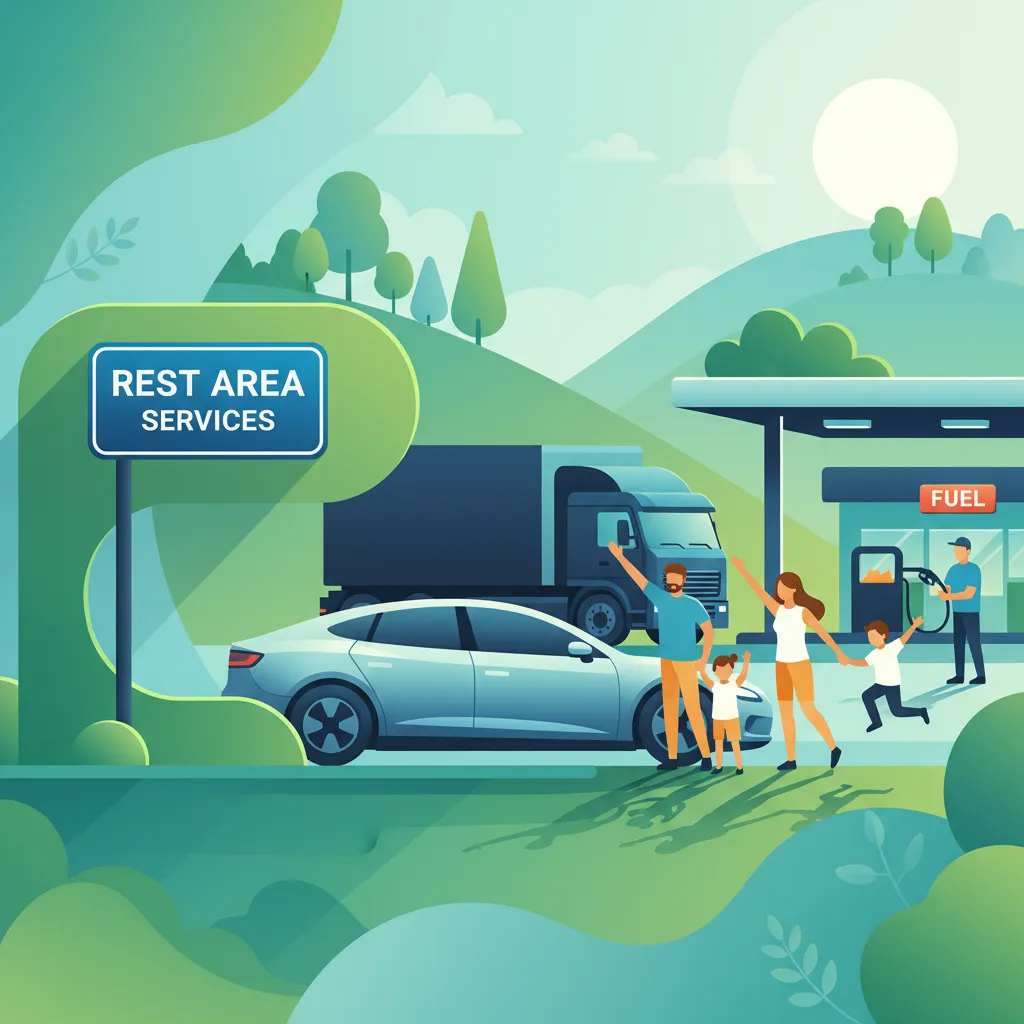
Lesson content overview
Professional truck driving, especially for Category C and C1 vehicles, demands meticulous attention to safety, legal compliance, and operational efficiency. A critical aspect of managing long-haul journeys is the correct and strategic use of designated rest areas (Áreas de Descanso) and service stations (Estaciones de Servicio). These facilities are not merely convenient stops; they are indispensable elements in the fight against driver fatigue, ensuring vehicle integrity, and maintaining the seamless flow of traffic on Spain's motorways and autovías.
This lesson delves into the specific regulations and best practices outlined by the Dirección General de Tráfico (DGT) regarding these essential stopping points. Understanding their purpose, associated rules, and how to integrate them into your route planning is fundamental for all professional drivers operating in Spain.
Driver fatigue is a major contributing factor to serious accidents involving heavy goods vehicles (HGVs). To mitigate this risk, Spanish and European regulations mandate strict limits on continuous driving time and require specific, uninterrupted rest periods. These rules are legally binding for Category C and C1 drivers and are rigorously enforced.
The primary regulation, as stipulated in the Reglamento General de Circulación (RGC), specifically RGC Artículo 153, dictates that after a maximum of 4.5 hours (four and a half hours) of continuous driving, a driver must take a minimum uninterrupted rest of 45 minutes. This rest can be divided into two periods: an initial period of at least 15 minutes, followed by a second period of at least 30 minutes, to be taken within the 4.5-hour driving period. The purpose of these breaks is to restore driver alertness and reduce the physiological effects of prolonged concentration and physical exertion.
Effective route planning is crucial to ensure you can reach a suitable rest area or service station precisely when your mandatory rest period is due. Failing to stop for the required rest can lead to significant penalties and compromises road safety.
These mandatory rests are not optional; they are a cornerstone of road safety for professional transport. They ensure that drivers remain alert, can react effectively to hazards, and maintain overall control of their heavy vehicles, protecting themselves and other road users.
On Spanish roads, particularly on autovías and autopistas, there are two main types of facilities designated for drivers to stop, rest, and attend to vehicle needs: rest areas and service stations. Both play distinct but sometimes overlapping roles in supporting professional driving operations.
Áreas de Descanso are designated zones specifically designed for vehicles to pull off the main carriageway temporarily. Their primary function is to provide a safe space for drivers to take mandatory rests, conduct quick vehicle checks, and attend to personal needs.
A designated zone on a motorway or autovía where drivers can stop temporarily for rest, food, toilet facilities, and short vehicle checks. These are typically marked with specific blue signs.
These facilities typically include parking spaces, often segregated for different vehicle types, and basic amenities such as public toilets. Some larger rest areas may also have picnic tables or vending machines.
Professional drivers must use these official areas for their mandatory breaks. Stopping on the hard shoulder or in non-designated spots off the motorway, even for a rest, is generally prohibited and unsafe.
Estaciones de Servicio are commercial facilities that provide a broader range of services beyond just parking and basic amenities. While they also serve as locations for drivers to take their mandatory rests, their core function is to offer fuel and other vehicle-related services.
A commercial facility located on or adjacent to motorways or main roads, offering fuel, vehicle maintenance services, food, restrooms, and often overnight parking for a fee.
Service stations are critical for the operational continuity of HGV journeys. They allow drivers to refuel their vehicles, often with dedicated high-flow pumps for diesel trucks, and to perform more comprehensive vehicle checks if needed.
When using a service station, drivers should prioritize their tasks – refuelling, vehicle checks, and personal needs – while ensuring that their stop duration complies with mandatory rest regulations and any specific rules of the station regarding parking duration.
The proper use of rest areas and service stations is governed by specific articles within the Reglamento General de Circulación (RGC) and other DGT circulars. Adherence to these regulations is crucial for safety, traffic flow, and avoiding penalties.
One of the most important rules is the requirement to park heavy goods vehicles only in designated areas. RGC Artículo 154 specifies that rest periods must be taken in officially designated areas such as rest areas (áreas de descanso), service stations (estaciones de servicio), or other approved parking lots. It explicitly prohibits stopping on the hard shoulder (arcén) or other unauthorized locations for routine breaks.
Furthermore, RGC Artículo 155 stipulates that within these designated areas, trucks must use parking spaces specifically marked for heavy goods vehicles. These "Zona de Camiones" (Truck Zone) or "Parking para Camiones" (Truck Parking) signs and markings are crucial for several reasons:
Drivers must pay close attention to the signage when approaching and entering these facilities.
Regulations also govern the maximum duration a vehicle can remain stationary in a rest area. While mandatory rest periods are fixed, the overall stationary time is often limited to manage capacity and prevent misuse. According to DGT guidelines, a standard rest area typically has a maximum stationary time of 2 hours, unless the area is specifically marked for overnight stays.
For overnight stays, drivers must use officially designated overnight rest areas or service stations that explicitly permit extended parking, often for a fee. Parking overnight in a standard rest area not designated for long stays can lead to fines and, in some cases, the vehicle being towed. These rules are in place to ensure that these public resources are available for all drivers who need to take their mandatory short breaks.
When refuelling, RGC Artículo 118 mandates that the operation must be performed at authorized service stations. For heavy goods vehicles, it is critical to use designated fuel pumps, if present. These pumps are typically designed for larger vehicles, offering higher flow rates and better access. Drivers must ensure they select the correct type of fuel (e.g., diesel for trucks) to avoid engine damage and comply with safety protocols, such as turning off the engine during refuelling and refraining from smoking.
Another crucial regulation related to stops is RGC Artículo 40, which pertains to load securing. While not specific to rest areas, it dictates that any load must be properly secured before the vehicle begins its journey and remain secure throughout. This means that during a stop, particularly after a period of driving or if the terrain was challenging, drivers should quickly inspect their load. Any necessary adjustments to secure the cargo (e.g., re-tightening straps, adjusting tarps) must be performed in a safe area within the rest facility, before re-entering the motorway. This proactive check prevents dangerous load shifts that could compromise vehicle stability or cause cargo loss on the road.
Beyond the legal regulations, several practical procedures contribute to safe and efficient use of rest areas and service stations. Adhering to these guidelines ensures personal safety, vehicle integrity, and respect for other road users.
Approaching a rest area or service station requires careful observation and planning. Drivers must utilize the designated deceleration lanes (carril de salida) to slow down gradually and exit the motorway safely. Similarly, upon departure, the acceleration lane (carril de entrada) must be used effectively to merge back into motorway traffic at an appropriate speed.
Never brake suddenly or directly on the main carriageway to exit, as this can lead to rear-end collisions. Maintain awareness of surrounding traffic, especially when merging back onto high-speed roads.
Once inside the facility, drivers of Category C and C1 vehicles must navigate to and park within the designated truck parking zones. These areas are specifically designed to accommodate the length, width, and turning radius of HGVs. Parking incorrectly in areas meant for smaller vehicles can block access, create hazards, and result in fines. Always look for signs indicating "Zona de Camiones" or similar markings.
Rest periods are not just for driver recuperation; they are also an ideal opportunity to perform quick, essential vehicle safety checks. These brief inspections can help detect potential issues early, preventing breakdowns or accidents on the road.
Tire Pressure and Condition: Visually inspect all tires for adequate inflation, cuts, bulges, and foreign objects. Check dual tires for proper spacing.
Fluid Levels: Briefly check critical fluid levels, such as engine oil, coolant, and windshield washer fluid. Look for any visible leaks beneath the vehicle.
Brake Function: Listen for unusual noises during braking and check for any signs of brake fluid leaks. For air brake systems, ensure adequate air pressure.
Load Securing: Inspect straps, chains, and tarps to ensure the load remains stable and has not shifted. Make adjustments as needed, especially after traversing rough terrain or sudden stops.
Lights and Indicators: Briefly check that all headlights, taillights, brake lights, and turn signals are functional.
These checks should be incorporated into every mandatory rest stop, taking only a few minutes but significantly enhancing road safety.
At service stations, drivers must strictly follow the refuelling protocol:
Effective route planning is a cornerstone of professional truck driving. It involves more than just identifying the shortest or fastest path; it necessitates integrating legal requirements like mandatory rest periods seamlessly into the journey.
Drivers must consult their route maps, GPS navigation systems, or digital tachograph data to proactively identify suitable rest areas and service stations along their planned route. The goal is to anticipate when the 4.5-hour driving limit will be reached and pinpoint an appropriate stop before that time. This foresight prevents the stressful situation of scrambling for a parking spot when time is running out.
Consider factors such as:
Modern navigation systems, including those specifically designed for trucks, often include features that highlight rest areas, service stations, and even designated truck parking zones. Many can integrate with driving hour regulations, providing alerts when a rest is approaching. Utilize these tools effectively to make informed decisions about your stops.
Non-compliance with rest area and service station regulations can lead to significant consequences, including fines, points on your driving record, and increased accident risk. Awareness of common violations is the first step in avoiding them.
Understanding these pitfalls helps professional drivers make safer, more compliant choices.
The effective use of rest areas and service stations can vary significantly depending on external conditions and the state of your vehicle. Professional drivers must adapt their approach to ensure safety and compliance in all circumstances.
The design and mandatory use of rest areas and service stations are underpinned by fundamental safety and operational logic. They represent a critical control point in the ecosystem of commercial transport.
Ultimately, the correct and conscientious use of rest areas and service stations is a professional responsibility that significantly contributes to the safety and efficiency of the entire Spanish road network.
The use of rest areas and service stations is a fundamental aspect of operating Category C and C1 vehicles in Spain. These facilities are not mere conveniences but integral components of road safety regulations designed to combat driver fatigue and ensure vehicle integrity.
Key principles to remember:
By diligently following these guidelines, professional truck drivers uphold their legal obligations, enhance their own safety, contribute to the well-being of all road users, and maintain the efficiency of their operations within the Spanish transport network.
This lesson covers the DGT regulations for mandatory rest periods for Spanish Category C and C1 truck drivers, specifically the 4.5-hour driving limit followed by a 45-minute rest under RGC Artículo 153. It distinguishes between rest areas (Áreas de Descanso) and service stations (Estaciones de Servicio), explaining their different purposes, subcategories, and signage. Key rules include mandatory use of designated truck parking zones, adherence to time limits (typically 2 hours for standard rest areas), proper refuelling protocols, and quick vehicle safety checks during stops. The lesson also covers route planning to integrate mandatory stops, contextual considerations for weather and visibility conditions, and common violations to avoid for compliance and safety.
A short set of high-value points that capture the most important learning from this lesson.
Mandatory rest: stop after 4.5 hours of continuous driving for at least 45 minutes (can be split into 15 + 30 minutes)
Only park heavy goods vehicles in designated truck zones (Zona de Camiones) within official rest areas or service stations
Standard rest areas typically limit stationary time to 2 hours; overnight stops require specifically marked areas
Perform quick vehicle checks at every mandatory stop: tires, fluids, brakes, load securing, and lights
Route planning must integrate mandatory rest periods before the 4.5-hour limit is reached
Explore all units and lessons included in this driving theory course.
RGC Artículo 153: 4.5 hours continuous driving triggers 45-minute mandatory rest requirement
RGC Artículo 154/155: Parking outside designated truck zones is prohibited and can result in fines
RGC Artículo 118: Always switch off the engine during refuelling and use designated HGV fuel pumps
Rest areas are marked with blue S-104 signs; service stations with S-103 signs
Vehicle safety checks should take only a few minutes but can prevent breakdowns and accidents
Parking in passenger car spaces or blocking access points in rest areas
Continuing to drive beyond the 4.5-hour limit to reach a preferred stop
Performing routine vehicle checks on the hard shoulder instead of in designated areas
Confusing standard rest area time limits with overnight rest area permissions
Failing to actually rest during mandatory breaks (simply stopping without genuine recuperation does not fulfill the requirement)
Lesson content overview
A short set of high-value points that capture the most important learning from this lesson.
Mandatory rest: stop after 4.5 hours of continuous driving for at least 45 minutes (can be split into 15 + 30 minutes)
Only park heavy goods vehicles in designated truck zones (Zona de Camiones) within official rest areas or service stations
Standard rest areas typically limit stationary time to 2 hours; overnight stops require specifically marked areas
Perform quick vehicle checks at every mandatory stop: tires, fluids, brakes, load securing, and lights
Route planning must integrate mandatory rest periods before the 4.5-hour limit is reached
Explore all units and lessons included in this driving theory course.
RGC Artículo 153: 4.5 hours continuous driving triggers 45-minute mandatory rest requirement
RGC Artículo 154/155: Parking outside designated truck zones is prohibited and can result in fines
RGC Artículo 118: Always switch off the engine during refuelling and use designated HGV fuel pumps
Rest areas are marked with blue S-104 signs; service stations with S-103 signs
Vehicle safety checks should take only a few minutes but can prevent breakdowns and accidents
Parking in passenger car spaces or blocking access points in rest areas
Continuing to drive beyond the 4.5-hour limit to reach a preferred stop
Performing routine vehicle checks on the hard shoulder instead of in designated areas
Confusing standard rest area time limits with overnight rest area permissions
Failing to actually rest during mandatory breaks (simply stopping without genuine recuperation does not fulfill the requirement)
Explore search topics learners often look for when studying Use of Rest Areas and Service Stations. These topics reflect common questions about road rules, driving situations, safety guidance, and lesson level theory preparation for learners in Spain.
Browse additional driving theory lessons that cover connected traffic rules, road signs, and common driving situations related to this topic. Improve your understanding of how different rules interact across everyday traffic scenarios.
Understand the critical DGT regulations and best practices for managing driver fatigue on Spanish roads. This lesson details mandatory rest periods, how to use rest areas effectively, and strategies to ensure alertness for Category C and C1 drivers.

This lesson details the strict EU and Spanish regulations governing drivers' working hours, driving times, and mandatory rest periods. It explains how to use a tachograph to record activity and ensure compliance with daily and weekly limits. The content also provides practical strategies for managing fatigue to maintain driver alertness and prevent accidents, a critical aspect of professional road safety.

This lesson teaches drivers to identify the common symptoms of fatigue and to understand its dangerous impact on reaction time and decision-making ability. Learners will explore techniques for monitoring their own alertness, the influence of circadian rhythms, and the absolute necessity of taking regular, quality rest breaks. The module also covers the legal limits on duty hours and presents practical strategies for mitigating fatigue during long shifts.

This lesson provides a detailed outline of the legal framework that governs driver duty hours in Spain, specifying the maximum continuous driving time and mandatory rest periods defined by the DGT. Learners will understand the limits on cumulative work hours, the necessity of meticulous record-keeping, and methods for monitoring compliance with these regulations. The module also discusses the penalties for violations and reinforces the safety imperative of adherence.

This lesson focuses on the critical relationship between speed, following distance, and overall traffic safety on highways. It explains how to calculate a safe following distance based on speed and weather conditions, accounting for a truck's longer stopping distance. The content also teaches strategies for managing speed to adapt smoothly to changing traffic flow, enhancing both safety and fuel efficiency.

This lesson focuses on the core principles of defensive driving as they apply to operating a large truck. It explains the importance of managing the space around the vehicle to create a safety buffer and always having an 'escape route' in mind. The content emphasizes anticipating the actions of other road users and being prepared to react calmly and safely to unexpected situations.
Learn the essential DGT rules for safe parking and effective use of rest areas and service stations in Spain. This theory covers designated parking zones, vehicle checks during stops, and operational procedures for Category C and C1 drivers.

This lesson provides guidance on the practical aspects of parking and making deliveries in urban areas. It covers the techniques for safely maneuvering into and out of loading docks and designated delivery zones, which often involves precise reversing. The content also explains the specific parking regulations that apply to commercial vehicles and best practices for ensuring safety during loading and unloading.
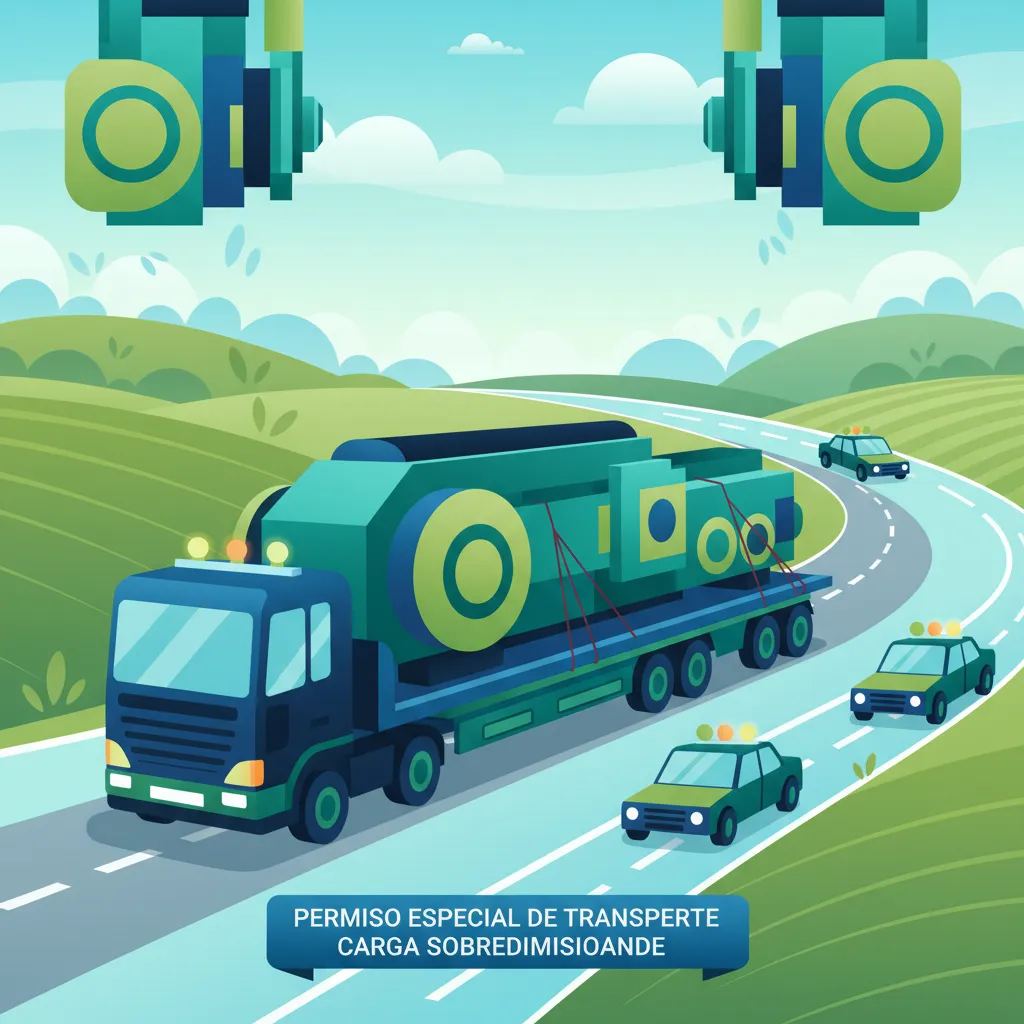
This lesson addresses the special regulations that apply to transporting loads that exceed standard legal dimensions or weight. It explains the process for obtaining the necessary special permits from the DGT and other authorities. The content also covers the requirements for route planning, the use of escort vehicles (pilot cars), and the mandatory signage and lighting for the vehicle.

This lesson provides theoretical guidance on the techniques for safely reversing a heavy vehicle, a high-risk maneuver. It emphasizes the correct use of mirrors, managing extensive blind spots, and the importance of using a spotter when available. The content also breaks down the geometric principles of parallel parking and backing into loading docks, focusing on vehicle positioning and spatial awareness.
This lesson details the strict EU and Spanish regulations governing drivers' working hours, driving times, and mandatory rest periods. It explains how to use a tachograph to record activity and ensure compliance with daily and weekly limits. The content also provides practical strategies for managing fatigue to maintain driver alertness and prevent accidents, a critical aspect of professional road safety.

This lesson provides a broad overview of the key traffic regulations in Spain that directly impact professional truck drivers. It details the rules of priority at intersections, the interpretation of different road markings, and the principles of correct lane discipline. Furthermore, it explains the specific speed limits applicable to heavy vehicles and the legal protocols for safe overtaking and signaling.
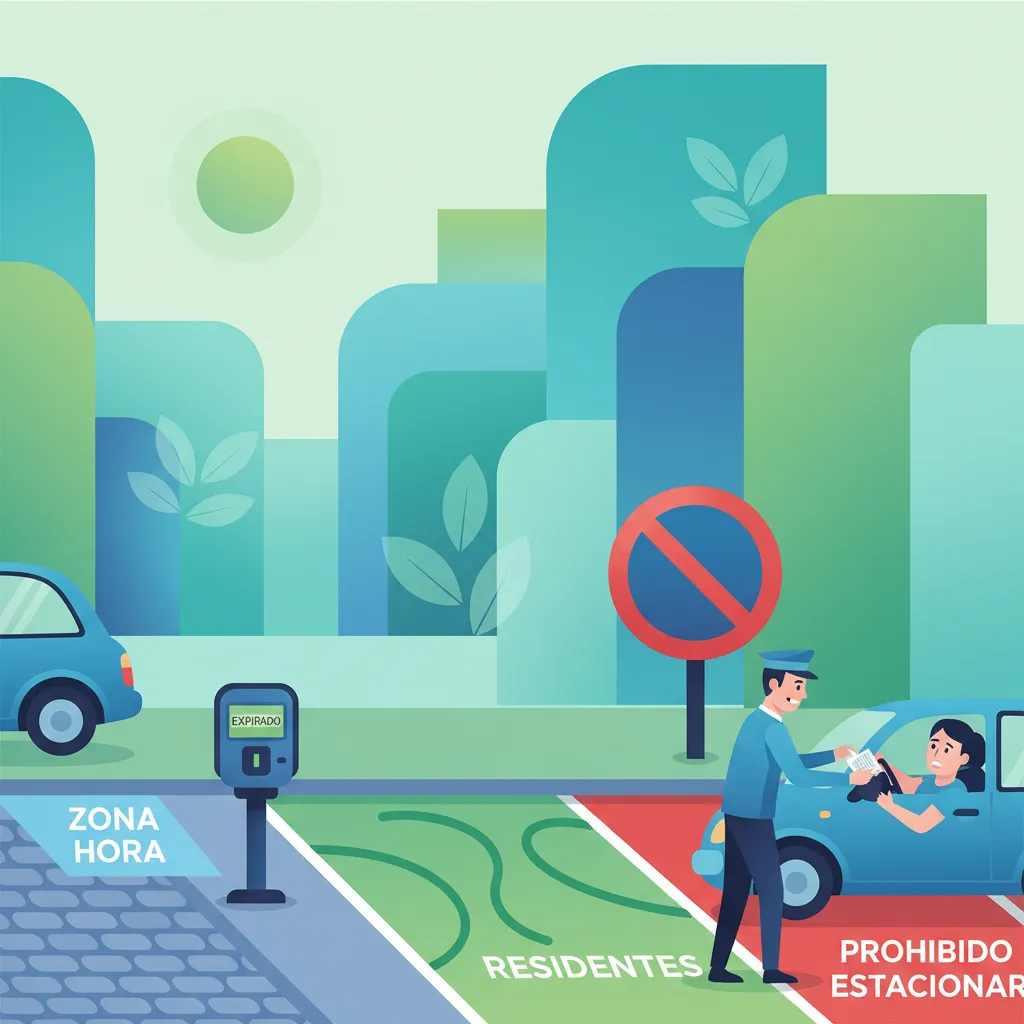
This lesson outlines the legal framework surrounding parking regulations in Spain, including the identification of regulated zones (e.g., ORA/SER), no-parking areas, and disabled parking spaces. It explains DGT signage interpretation and how improper parking can affect traffic flow and result in penalties. Learners will understand the regulatory environment to comply with parking laws and avoid fines.

This lesson introduces fundamental road safety principles applicable to all drivers, with a special emphasis on heavy vehicles. It covers defensive driving techniques, including the importance of anticipating potential hazards and managing speed appropriately for conditions. Learners will also study how to establish and maintain safe following distances and understand the hierarchy of road users to ensure safe interactions.
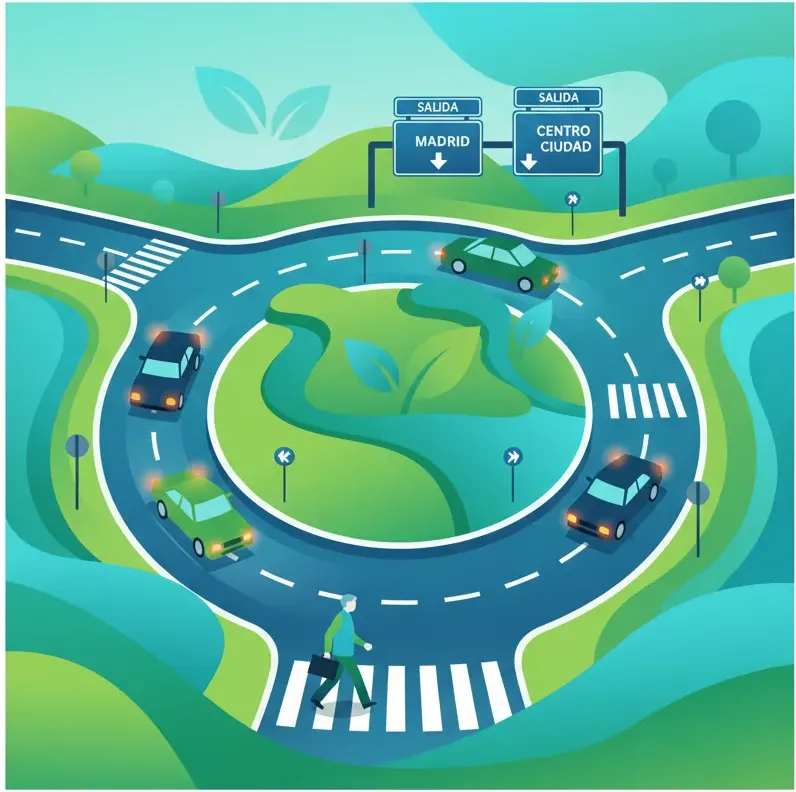
This lesson provides specific instructions on how to safely navigate complex junctions such as roundabouts and intersections with a large vehicle. It explains the rules of priority, the correct lane to use based on the intended exit, and the importance of proper vehicle positioning to account for off-tracking. The content also covers clear signaling to communicate intentions to other road users for safe and efficient passage.

This lesson focuses on the specific restrictions that heavy vehicles face on public infrastructure and in urban centers. It covers how to interpret signs indicating weight limits for bridges and height restrictions for tunnels and overpasses. The content also explains the various municipal regulations that can restrict truck access to certain urban areas, such as low-emission zones or time-based delivery windows.

This lesson explains the specific legal framework governing truck operations on Spain's high-speed road network. It details the different speed limits for trucks on autovías versus autopistas and the regulations regarding which lanes heavy vehicles are permitted to use. Learners will also understand how to interpret specific highway signage relevant to commercial vehicles and any applicable toll regulations.
Find clear answers to common questions learners have about Use of Rest Areas and Service Stations. Learn how the lesson is structured, which driving theory objectives it supports, and how it fits into the overall learning path of units and curriculum progression in Spain. These explanations help you understand key concepts, lesson flow, and exam focused study goals.
The DGT mandates specific rest periods to combat driver fatigue. For professional drivers, these often involve continuous daily rest periods and weekly rest periods, which must be taken in designated areas like rest stops or service stations. The total driving time between breaks is also regulated. Exceeding these limits can result in penalties.
Effective route planning involves calculating your driving time between mandatory breaks based on DGT regulations. Use maps and navigation tools to identify service stations and rest areas along your route, considering their facilities for trucks. It's wise to have alternative stops identified in case your primary choice is full or unavailable.
Yes, most service stations have designated areas for heavy goods vehicles. It is crucial to park only in these marked zones to avoid obstructing other traffic or parking illegally. Ensure you engage your parking brake and, if necessary, use chocks for added security, especially on slopes.
Regular, brief checks during stops help ensure your vehicle remains safe for operation. This includes checking tire pressures, lights, fluid levels, and looking for any visible damage or leaks. Identifying minor issues early can prevent major breakdowns and ensure compliance with safety standards.
While the primary goal is to rest, the DGT regulations encourage or sometimes mandate that rest periods, particularly longer ones, be taken in facilities equipped for drivers, such as official rest areas or service stations. This ensures safety and access to necessary amenities. Pulling over on the hard shoulder or unauthorised areas is generally prohibited for extended rests.
The core regulations regarding mandatory rest periods and the use of rest areas/service stations apply to both Category C1 and C licensed drivers due to the nature of operating heavy goods vehicles for professional purposes. The emphasis on fatigue management and safe stopping is consistent across these categories.
Use our powerful search functionality to pinpoint specific Spanish DGT driving theory practice sets. Filter by road sign categories, traffic law topics, or question difficulty to build custom study sessions and reinforce your knowledge precisely where it matters for your official exam.