
Welcome to the crucial lesson on driving trucks on Spain's high-speed road network. Understanding the distinct rules for autovías and autopistas is vital for your Category C and C1 licence. This lesson will clarify speed limits, permitted lanes, and specific signage to ensure safe and legal operation on these major routes.
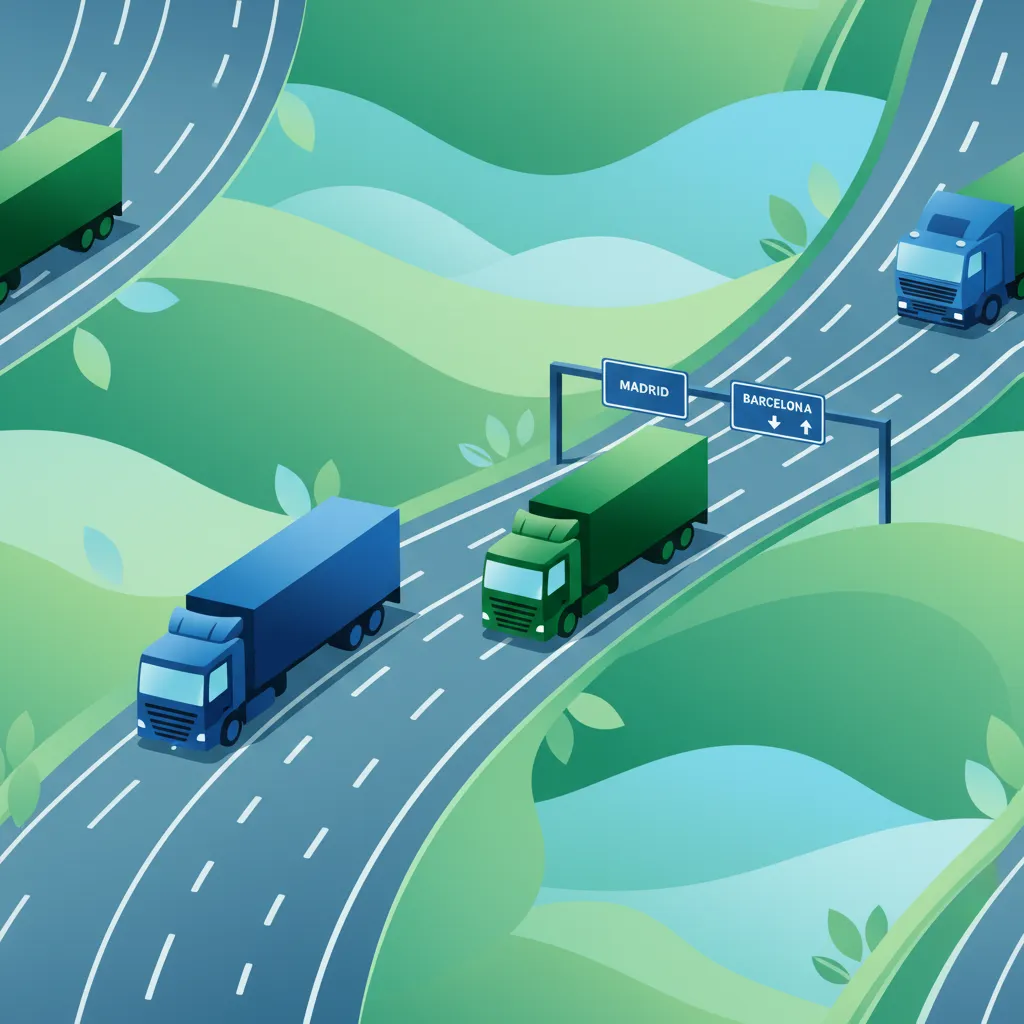
Lesson content overview
Operating commercial trucks (Category C and C1 vehicles) on Spain's high-speed road network, which includes autovías and autopistas, demands a comprehensive understanding of specific regulations. These rules are crucial for ensuring safety, maintaining efficient traffic flow, and complying with the law. This lesson provides an in-depth guide to the legal and operational framework that governs heavy goods vehicles on these motorways, preparing you for the Official DGT Theory Course for Spanish Truck Licence Category C & C1 exam and for safe professional driving.
Spain's network of autovías and autopistas forms the backbone of its transportation infrastructure. While similar in function, there are key distinctions:
A high-speed road, usually free of tolls, often developed from existing roads. It may have some at-grade intersections, though these are increasingly being replaced by grade-separated junctions. Autovías are typically indicated by green A-## signs.
A controlled-access highway with full grade separation, meaning all intersections are handled by bridges or tunnels. Autopistas are often tolled (autopistas de peaje) and are marked with blue AP-## signs.
Mastering the regulations discussed here is not only vital for legal compliance but also for preventing accidents and ensuring smooth operations for both professional drivers and other road users.
Speed limits for heavy goods vehicles on Spanish motorways are designed to account for their increased mass, longer braking distances, and different handling characteristics compared to passenger cars. Drivers of Category C and C1 vehicles must adhere to these specific limits, which are significantly lower than the general speed limits for light vehicles.
The general maximum speed limits for trucks on autovías and autopistas in Spain are:
It is a common misunderstanding to assume that trucks can travel at the same speed as cars (which is 120 km/h on these roads). This is incorrect and can lead to severe penalties and dangerous situations. Drivers must constantly be aware of their vehicle's specific category, weight, and whether they are towing a trailer to apply the correct speed limit. These regulations are primarily mandated by the General Traffic Regulations (Reglamento General de Circulación, RGC), specifically Article 54-2.
Beyond the standard limits, truck drivers must also be vigilant for special speed limits that may apply to specific sections of autovías and autopistas. These are often indicated by specific signage:
Failing to adjust speed according to vehicle type, load status, or specific road conditions is a serious violation. It significantly increases stopping distances and the risk of severe accidents.
Maintaining proper lane discipline is paramount for heavy goods vehicles on multi-lane autovías and autopistas. These rules are designed to facilitate smooth traffic flow, reduce congestion, and enhance overall road safety by segregating faster and slower traffic streams.
On any motorway with more than one lane available for traffic in the same direction, trucks are generally required to travel in the extreme right-hand lane. This fundamental rule helps prevent slower-moving heavy vehicles from obstructing the flow of faster traffic, which typically uses the central and left-hand lanes. Adherence to this principle is a key element of Spanish traffic law, as outlined in RGC Article 64-1.
While the rightmost lane rule is strict, there is an important exception for overtaking. A truck driver may temporarily move into an adjacent left-hand lane to overtake another vehicle, provided it is safe to do so and the maneuver can be completed without impeding faster traffic.
Key principles for overtaking:
When planning an overtaking maneuver, consider the increased length and acceleration time of your truck. Ensure there is ample space and time to complete the maneuver safely and return to the right lane without causing disruption.
Traffic signs are essential for conveying real-time, location-specific regulations. For truck drivers, it is critical to not only understand general road signs but also to recognize and interpret those that apply specifically to heavy vehicles. Ignoring these specific signs can lead to violations and compromise safety.
These signs are designed to clarify that a particular speed restriction applies specifically to heavy vehicles. They typically feature the standard circular speed limit sign (red border, black number) but include a small silhouette of a truck below or within the main sign.
When you see such a sign, the indicated speed limit overrides any general speed limit for that section of the road for your vehicle type. For example, if a general sign indicates 100 km/h but a truck-specific sign shows 80 km/h, the truck must adhere to 80 km/h.
Some motorways or specific sections may have signs that restrict certain lanes for heavy vehicles or, conversely, prohibit heavy vehicles from specific lanes. These signs might display:
These signs inform truck drivers about specific hours during which heavy vehicles are prohibited from using a particular autovía or autopista section. They usually display a truck silhouette along with specific times or days of the week. For example, a sign might read "Prohibido circular con camiones de carga entre 7:00 y 9:00" (No cargo trucks between 7:00 and 9:00). These restrictions are put in place to reduce congestion during peak hours, enhance safety, or for environmental reasons.
Spain's autopistas are often toll roads (autopistas de peaje). For truck drivers, understanding the specific toll regulations, vehicle classifications, and payment methods is crucial for smooth and legal travel.
Toll rates in Spain are typically calculated based on several factors, including the distance traveled, the type of vehicle, and its classification. Trucks generally fall into higher toll categories due to their weight, number of axles, and impact on road wear. The most common classification for heavy goods vehicles is "Clase C" (Class C) or similar, which carries a significantly higher fee than for passenger cars.
These differential rates ensure that vehicles that cause more wear and tear on the infrastructure contribute appropriately to road maintenance and construction.
To streamline toll payment and avoid delays at toll plazas, many Spanish autopistas utilize Electronic Toll Collection (ETC) systems. The most common system is often referred to as "Telepeaje" or "Via-T."
Always ensure your ETC transponder is correctly installed and functional before embarking on a journey involving toll roads. A malfunctioning transponder can lead to delays, fines, or require you to stop and pay manually.
Beyond general speed and lane rules, commercial vehicles may encounter time-based access restrictions on specific motorway sections. These regulations are designed to manage traffic flow, reduce pollution, and enhance safety in particularly congested or environmentally sensitive areas.
Time-based restrictions are often imposed by regional traffic authorities rather than uniformly across the entire national network. This means that rules can vary significantly from one autonomous community to another, or even between different sections of the same motorway.
For professional truck drivers, being aware of these varied restrictions is vital for effective route planning.
Ignoring time-based restrictions can result in fines and significant delays if enforcement checkpoints are in place.
The specific regulations governing trucks on autovías and autopistas are not arbitrary. They are rooted in fundamental principles of physics, traffic flow theory, and road safety, all aimed at mitigating the inherent risks associated with heavy goods vehicles.
Adherence to these regulations is a professional obligation that directly translates into safer roads for everyone and a more efficient transportation network.
Understanding the rules is one thing; applying them correctly in dynamic driving situations is another. Here are some common violations and practical scenarios that highlight the importance of adhering to truck regulations on Spanish motorways:
Scenario: Speeding in a Tunnel
Scenario: Lingering in the Left Lane
Scenario: Ignoring Time-Based Restrictions
Scenario: Toll Payment Issues
Scenario: Misinterpreting Signage
By thoroughly understanding and diligently applying these regulations, drivers of Category C and C1 trucks will ensure their compliance with Spanish law, contribute significantly to road safety, and perform successfully on their DGT Theory Exam related to highway operations.
This lesson covers the DGT regulations governing Category C and C1 trucks on Spain's autovías and autopistas, emphasizing the critical speed limit distinctions based on vehicle weight and trailer status. The rightmost lane principle applies to heavy goods vehicles except during safe overtaking maneuvers, with specific legal citations from the Reglamento General de Circulación. Truck drivers must recognize and obey truck-specific signage, which overrides general limits, and be aware that toll rates for heavy vehicles fall under Clase C classification. Time-based access restrictions vary by region and route, making pre-journey regulation checks essential for compliance and avoiding fines.
A short set of high-value points that capture the most important learning from this lesson.
Speed limits for trucks on Spanish motorways are category-specific: 90 km/h for rigid trucks up to 3.5t, 80 km/h when towing a trailer, and 70 km/h for heavy trucks over 3.5t with trailer.
On multi-lane motorways, trucks must stay in the rightmost lane except when actively overtaking, then return promptly to the right lane.
Autovías (green A-## signs) are generally free toll roads with some at-grade intersections, while autopistas (blue AP-## signs) are fully grade-separated and usually tolled.
Truck-specific speed limit signs displaying a truck silhouette override general speed limits for heavy vehicles on that section.
Time-based access restrictions for trucks vary by autonomous community and route section, requiring drivers to check current local regulations before travel.
Explore all units and lessons included in this driving theory course.
Autopistas are toll roads (autopistas de peaje) with higher fees for trucks under Clase C classification, often payable via Via-T/Telepeaje transponder.
Tunnels, bridges, and construction zones impose special reduced speed limits (often 60 km/h) indicated by specific signage that takes precedence over standard limits.
Lane discipline rules are codified in RGC Article 64-1; lingering in left lanes after overtaking is a violation even if no sign explicitly prohibits it.
Time-based truck restrictions commonly apply during peak hours (e.g., 7:00-9:00 and 17:00-19:00) and weekends near metropolitan areas.
Regulations mandating lower speeds and right-lane usage for heavy vehicles exist because trucks have longer braking distances and greater kinetic energy than passenger vehicles.
Assuming trucks can travel at car speeds (120 km/h) on motorways, when the maximum for Category C vehicles is 90 km/h or lower depending on configuration.
Remaining in the middle or left lane after completing an overtake, violating the rightmost lane principle codified in traffic law.
Misinterpreting a truck-specific speed limit sign (truck silhouette) as not applying to the driver, leading to unintentional speeding violations.
Failing to verify regional time-based restrictions before a journey, assuming restrictions are uniformly applied across Spain.
Attempting to use an ETC lane without a functional transponder, blocking the toll lane and causing delays.
Lesson content overview
A short set of high-value points that capture the most important learning from this lesson.
Speed limits for trucks on Spanish motorways are category-specific: 90 km/h for rigid trucks up to 3.5t, 80 km/h when towing a trailer, and 70 km/h for heavy trucks over 3.5t with trailer.
On multi-lane motorways, trucks must stay in the rightmost lane except when actively overtaking, then return promptly to the right lane.
Autovías (green A-## signs) are generally free toll roads with some at-grade intersections, while autopistas (blue AP-## signs) are fully grade-separated and usually tolled.
Truck-specific speed limit signs displaying a truck silhouette override general speed limits for heavy vehicles on that section.
Time-based access restrictions for trucks vary by autonomous community and route section, requiring drivers to check current local regulations before travel.
Explore all units and lessons included in this driving theory course.
Autopistas are toll roads (autopistas de peaje) with higher fees for trucks under Clase C classification, often payable via Via-T/Telepeaje transponder.
Tunnels, bridges, and construction zones impose special reduced speed limits (often 60 km/h) indicated by specific signage that takes precedence over standard limits.
Lane discipline rules are codified in RGC Article 64-1; lingering in left lanes after overtaking is a violation even if no sign explicitly prohibits it.
Time-based truck restrictions commonly apply during peak hours (e.g., 7:00-9:00 and 17:00-19:00) and weekends near metropolitan areas.
Regulations mandating lower speeds and right-lane usage for heavy vehicles exist because trucks have longer braking distances and greater kinetic energy than passenger vehicles.
Assuming trucks can travel at car speeds (120 km/h) on motorways, when the maximum for Category C vehicles is 90 km/h or lower depending on configuration.
Remaining in the middle or left lane after completing an overtake, violating the rightmost lane principle codified in traffic law.
Misinterpreting a truck-specific speed limit sign (truck silhouette) as not applying to the driver, leading to unintentional speeding violations.
Failing to verify regional time-based restrictions before a journey, assuming restrictions are uniformly applied across Spain.
Attempting to use an ETC lane without a functional transponder, blocking the toll lane and causing delays.
Explore search topics learners often look for when studying Autovías and Autopistas Regulations for Trucks. These topics reflect common questions about road rules, driving situations, safety guidance, and lesson level theory preparation for learners in Spain.
Browse additional driving theory lessons that cover connected traffic rules, road signs, and common driving situations related to this topic. Improve your understanding of how different rules interact across everyday traffic scenarios.
Understand the specific speed limits for heavy goods vehicles on Spanish autovías and autopistas, including when to use the rightmost lane and overtaking rules. Essential DGT theory for Category C drivers.
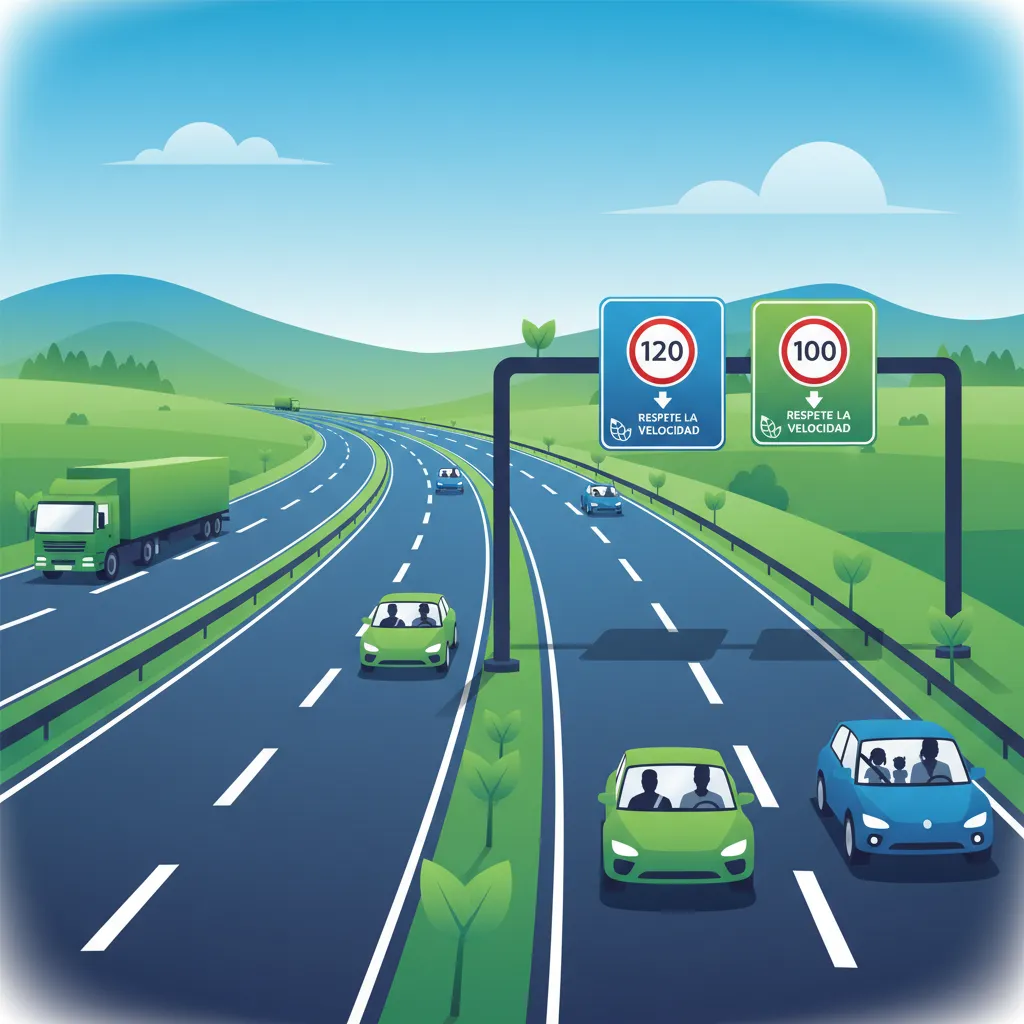
This lesson explains the classification differences between Spanish autovías and autopistas, detailing the specific speed limits and lane restrictions applicable to coaches on each. Learners will become proficient in interpreting motorway signage, adhering to minimum speed requirements, and recognizing vehicle type restrictions as enforced by the DGT. The module also covers the correct procedures for using entry and exit ramps to ensure safe and fluid traffic flow.
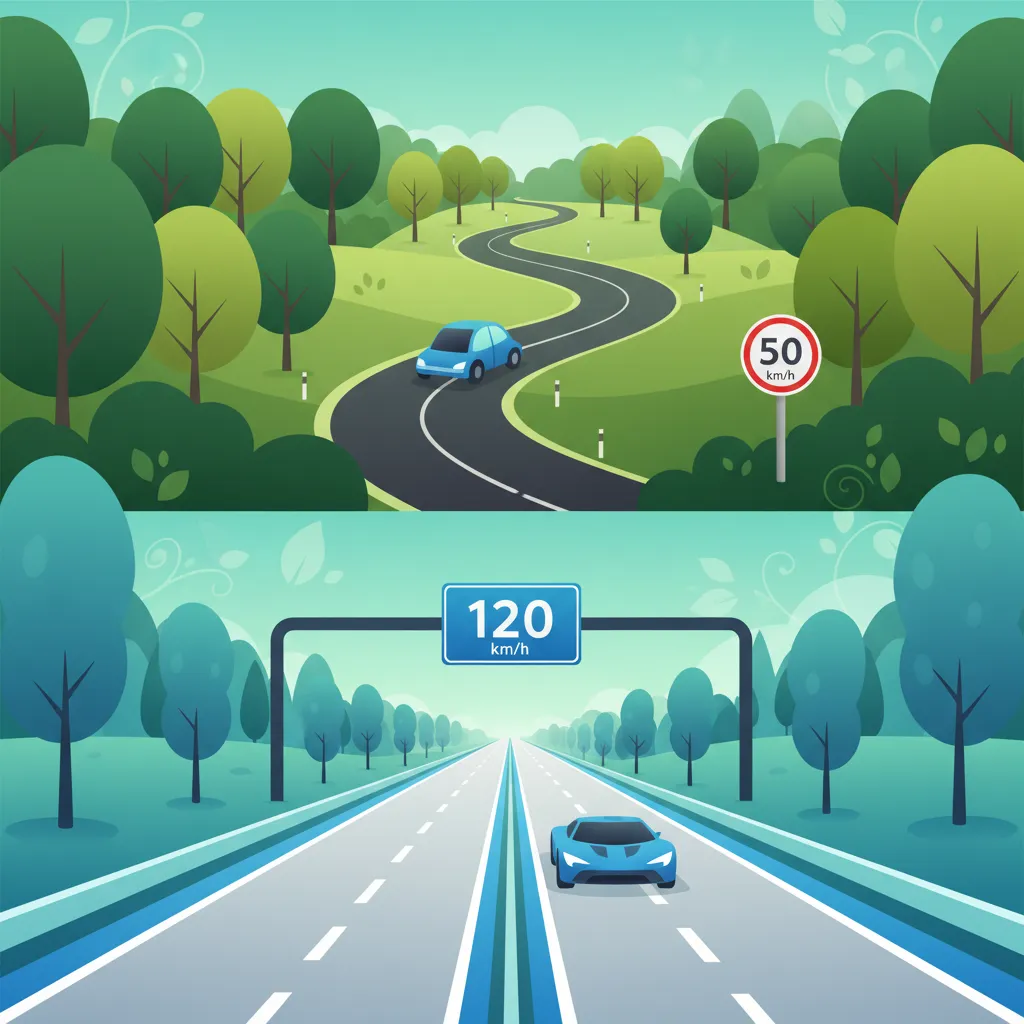
In this lesson, the different speed limits applied to rural roads and autovías (highways) are examined. Learners will understand the classification of road types and the DGT-mandated speed limits for each, including how to interpret variable speed limit signs. The lesson also includes techniques for maintaining speed control and adapting to road conditions and traffic flow.
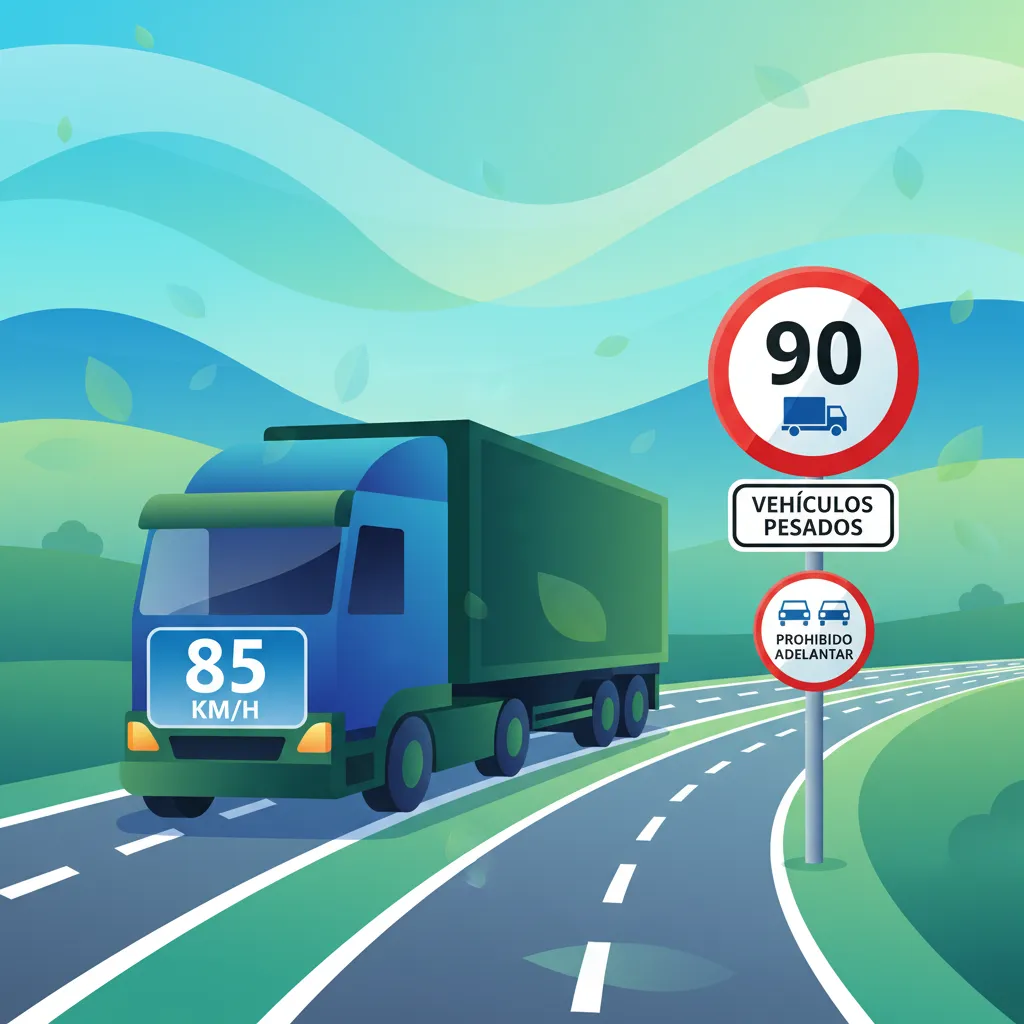
This lesson details the specific legal speed limits that apply to heavy passenger vehicles on Spanish highways, including variable speed zones that adjust based on traffic and weather conditions. Learners will understand the methods for speed monitoring, the function of speed control devices, and the legal consequences of non-compliance. The content also provides guidance on calculating a safe operating speed based on vehicle load and road conditions.
This lesson provides a broad overview of the key traffic regulations in Spain that directly impact professional truck drivers. It details the rules of priority at intersections, the interpretation of different road markings, and the principles of correct lane discipline. Furthermore, it explains the specific speed limits applicable to heavy vehicles and the legal protocols for safe overtaking and signaling.
This lesson focuses on the critical relationship between speed, following distance, and overall traffic safety on highways. It explains how to calculate a safe following distance based on speed and weather conditions, accounting for a truck's longer stopping distance. The content also teaches strategies for managing speed to adapt smoothly to changing traffic flow, enhancing both safety and fuel efficiency.

This lesson focuses on the principles of safe lane selection and overtaking on multi-lane roads and highways. It covers the importance of maintaining proper lane discipline and the legal protocols for executing a safe pass, including checking blind spots and ensuring sufficient speed differential. The content also stresses the need for clear signaling and judging adequate space before returning to the original lane.
Learn to identify and understand truck-specific signage, navigate Spanish autopista toll systems, and recognize time-based traffic restrictions for heavy vehicles. Crucial knowledge for professional truck drivers.
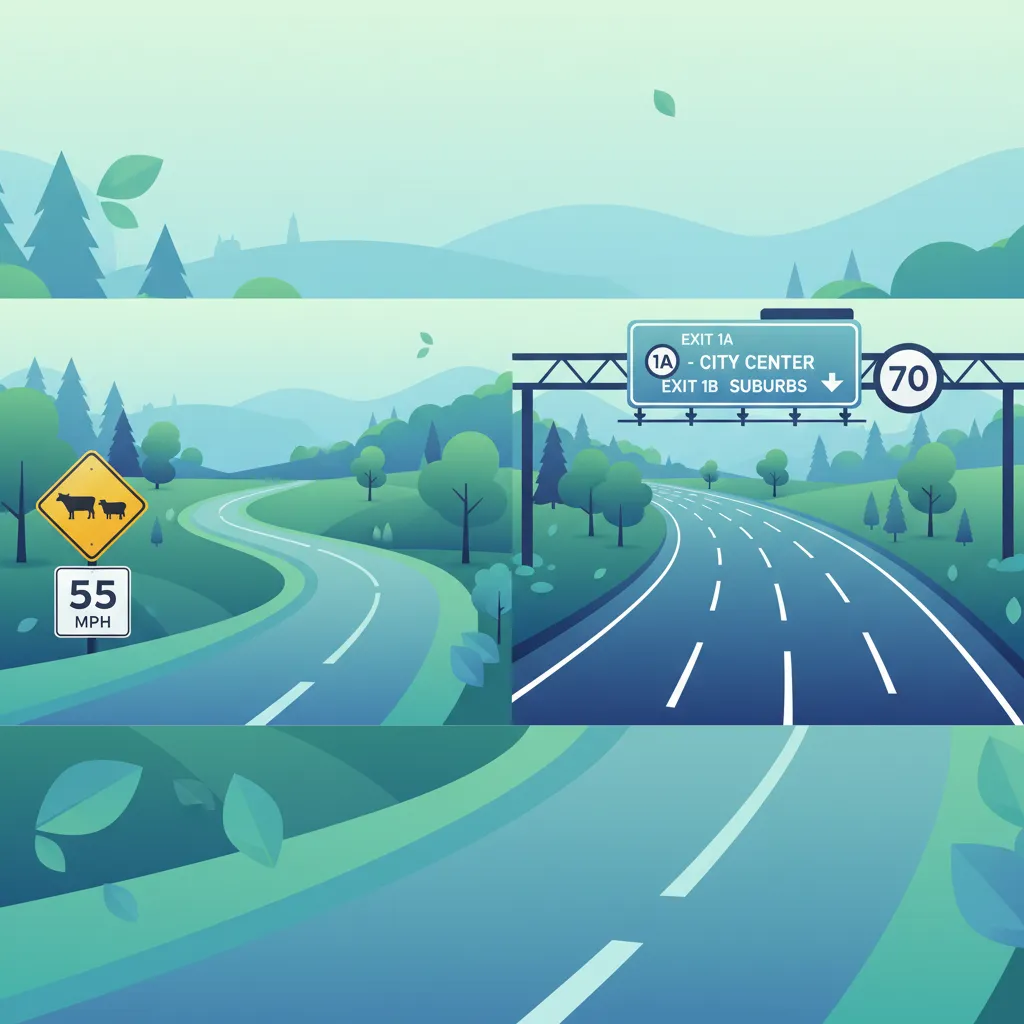
This lesson focuses on the specific signage systems used in rural and highway environments in Spain. It explains how to interpret directional signs, exit numbering, distance markers, and signs for services like fuel and rest areas. Understanding these signs is crucial for effective navigation and safe driving at high speeds.
This lesson provides a broad overview of the key traffic regulations in Spain that directly impact professional truck drivers. It details the rules of priority at intersections, the interpretation of different road markings, and the principles of correct lane discipline. Furthermore, it explains the specific speed limits applicable to heavy vehicles and the legal protocols for safe overtaking and signaling.
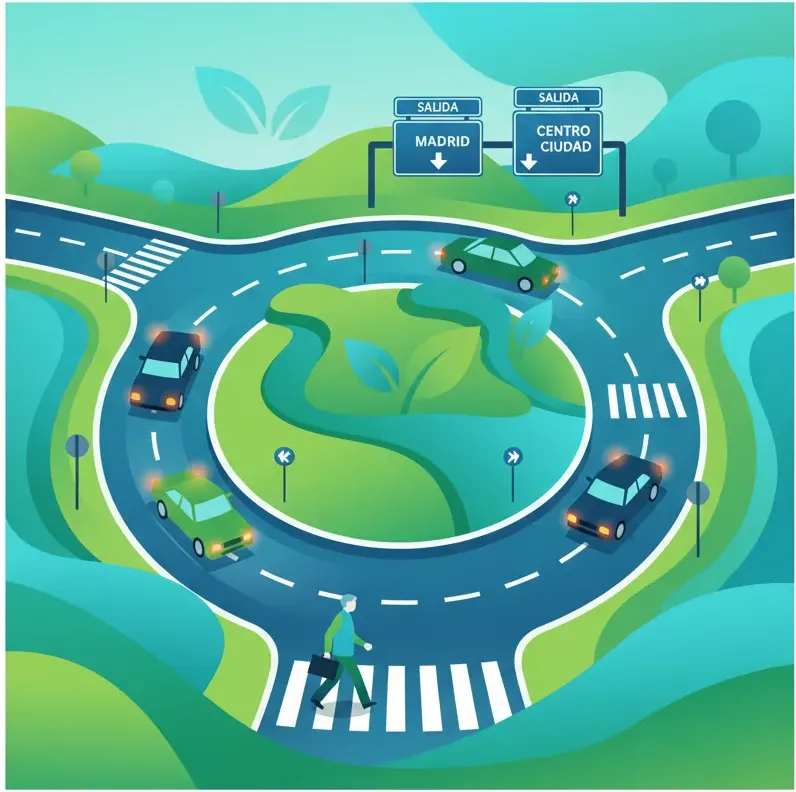
This lesson provides specific instructions on how to safely navigate complex junctions such as roundabouts and intersections with a large vehicle. It explains the rules of priority, the correct lane to use based on the intended exit, and the importance of proper vehicle positioning to account for off-tracking. The content also covers clear signaling to communicate intentions to other road users for safe and efficient passage.
This lesson covers the regulations and best practices regarding the use of rest areas and service stations during long-haul journeys. It reinforces the rules on mandatory rest periods to combat driver fatigue and explains how to plan routes to include necessary stops. The content also provides guidance on safe parking procedures within designated truck areas and using stops to perform quick vehicle safety checks.
This lesson explains the various access restrictions that trucks face in modern cities. It covers the rules and requirements for entering low-emission zones (LEZ), including necessary vehicle standards and permits. The content also details time-window restrictions, where deliveries are only permitted during specific hours of the day to reduce congestion, requiring careful logistical planning.

This lesson focuses on the specific restrictions that heavy vehicles face on public infrastructure and in urban centers. It covers how to interpret signs indicating weight limits for bridges and height restrictions for tunnels and overpasses. The content also explains the various municipal regulations that can restrict truck access to certain urban areas, such as low-emission zones or time-based delivery windows.
This lesson focuses on the critical relationship between speed, following distance, and overall traffic safety on highways. It explains how to calculate a safe following distance based on speed and weather conditions, accounting for a truck's longer stopping distance. The content also teaches strategies for managing speed to adapt smoothly to changing traffic flow, enhancing both safety and fuel efficiency.

This lesson provides a step-by-step guide on what to do when a vehicle breaks down on the road. It explains how to safely bring the truck to a stop, activate hazard warnings, and place reflective warning triangles as required by law. The content also covers the procedures for contacting roadside assistance and communicating the nature of the problem and the vehicle's location accurately.
This lesson focuses on the principles of safe lane selection and overtaking on multi-lane roads and highways. It covers the importance of maintaining proper lane discipline and the legal protocols for executing a safe pass, including checking blind spots and ensuring sufficient speed differential. The content also stresses the need for clear signaling and judging adequate space before returning to the original lane.
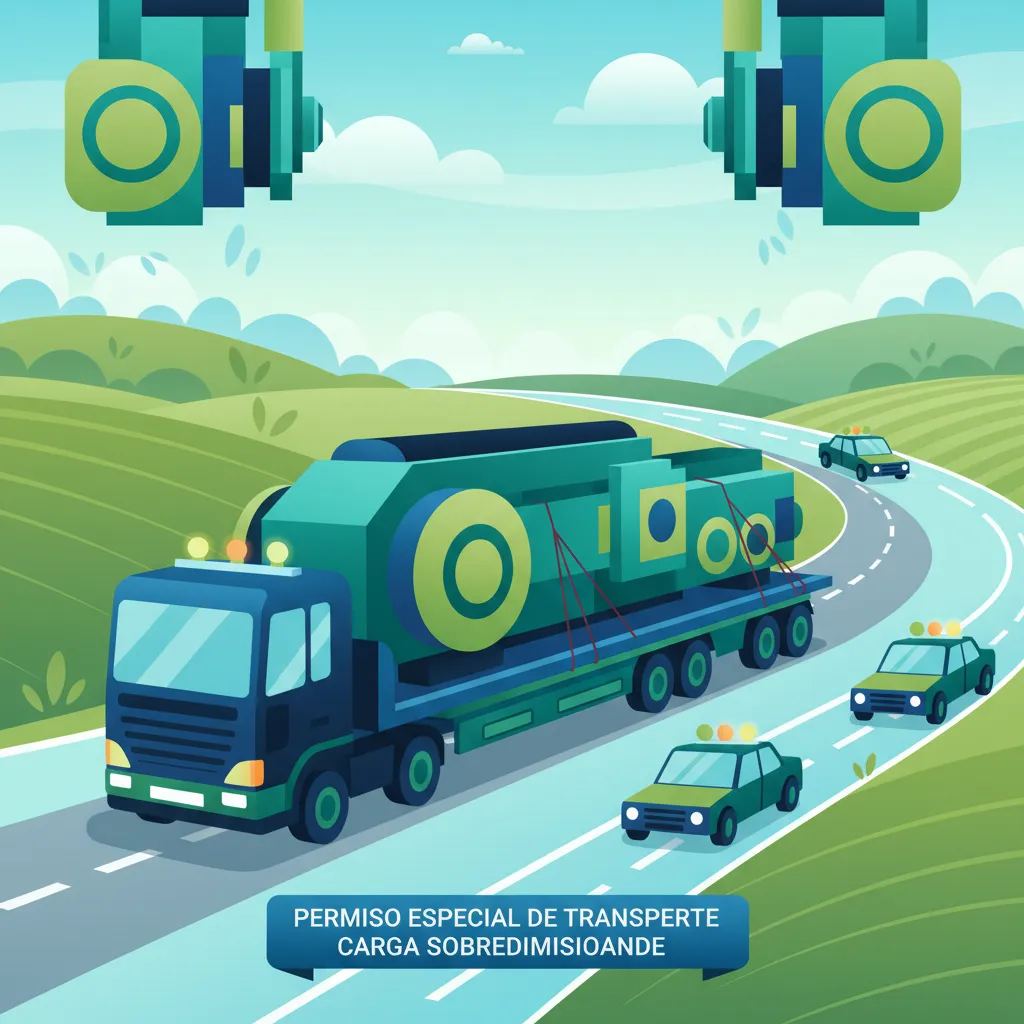
This lesson addresses the special regulations that apply to transporting loads that exceed standard legal dimensions or weight. It explains the process for obtaining the necessary special permits from the DGT and other authorities. The content also covers the requirements for route planning, the use of escort vehicles (pilot cars), and the mandatory signage and lighting for the vehicle.
Find clear answers to common questions learners have about Autovías and Autopistas Regulations for Trucks. Learn how the lesson is structured, which driving theory objectives it supports, and how it fits into the overall learning path of units and curriculum progression in Spain. These explanations help you understand key concepts, lesson flow, and exam focused study goals.
Autovías are generally toll-free dual carriageways, while autopistas are typically toll roads. Both are high-speed roads, but their ownership and toll status differ. For trucks, specific regulations regarding speed and lane usage may apply to both, but it's crucial to understand the context of each.
Yes, speed limits can vary. Generally, for trucks and truck combinations (Category C/C1), the maximum speed limit on autovías and autopistas is 90 km/h. However, always pay close attention to variable speed limit signs, as these can be temporarily reduced due to traffic, weather, or specific road conditions.
Trucks (and vehicles with trailers) must generally use the right-most lane or the lane immediately to its left, depending on the number of lanes. They are prohibited from using the overtaking lanes unless specific signage permits it or traffic conditions require them to move to facilitate overtaking by other vehicles.
Expect questions about speed limits specific to truck categories, which lane to use in different traffic situations, rules for overtaking, and the interpretation of signs indicating restrictions or specific instructions for heavy vehicles on autovías and autopistas.
While the theory test primarily focuses on traffic rules and safety, understanding that autopistas are often toll roads is part of the general knowledge for professional drivers. You won't typically be tested on toll payment procedures, but you will be tested on the rules of driving on these roads.
Use our powerful search functionality to pinpoint specific Spanish DGT driving theory practice sets. Filter by road sign categories, traffic law topics, or question difficulty to build custom study sessions and reinforce your knowledge precisely where it matters for your official exam.