
Welcome to this crucial lesson on overtaking strategies and blind spot awareness for Category C and C1 truck drivers. As part of Unit 8, 'Highway Driving & Overtaking', this module builds on your understanding of highway regulations and preparing you for the complex maneuvers required when driving large vehicles on Spanish autovías and autopistas.

Lesson content overview
Overtaking is one of the most dynamic and potentially hazardous maneuvers a professional truck driver will perform, especially on Spain's autovías and autopistas. For drivers holding a Category C or C1 licence, mastering safe and legal overtaking strategies is not just about efficiency; it's a critical component of road safety and DGT compliance. This lesson provides a comprehensive guide to executing overtaking maneuvers with heavy vehicles, placing particular emphasis on understanding and mitigating the significant risks associated with truck blind spots, calculating appropriate speed differentials, and ensuring adequate clearance.
The inherent size, weight, and momentum of a truck fundamentally alter the physics of overtaking compared to lighter vehicles. Misjudgment can lead to severe consequences, including collisions, loss of control, and disruption of traffic flow. Therefore, a thorough understanding of DGT regulations, vehicle dynamics, and advanced observational techniques is paramount for every professional driver.
One of the most crucial aspects of safe heavy vehicle operation is a comprehensive understanding of blind spots. These are areas around a truck that the driver cannot see, either directly through the windows or indirectly through mirrors. Due to their immense size, trucks have considerably larger and more numerous blind spots than passenger vehicles, posing significant risks if not properly managed during maneuvers like overtaking.
For Category C and C1 trucks, especially those towing trailers, three primary blind zones demand constant vigilance:
Never assume that if you can see a vehicle in your mirror, the driver of that vehicle can see you. Many drivers of passenger vehicles underestimate the size and extent of a truck's blind spots.
To effectively mitigate the dangers of blind spots, professional drivers must adopt a systematic approach:
Overtaking with a heavy vehicle is a complex maneuver that requires precise judgment, a keen understanding of physics, and strict adherence to DGT regulations. Unlike passenger cars, trucks require significantly more power, distance, and time to accelerate and complete a pass safely.
Speed differential refers to the difference in speed between your truck and the vehicle you intend to overtake. A sufficient speed differential is crucial to minimize the time spent in the adjacent lane and to complete the maneuver before encountering potential hazards, such as oncoming traffic or road features.
The difference in speed between your truck and the vehicle being overtaken, enabling a safe pass within the available distance.
Assess Current Speed: Determine your current speed and the speed of the vehicle you wish to overtake.
Check Speed Limits: Confirm the maximum legal speed limit for your Category C truck on the specific road type.
Consider Load & Gradient: Factor in your truck's weight and the road's incline/decline. A heavy load or uphill climb will require more power and time.
Plan Acceleration: Select the appropriate gear to provide sufficient torque for acceleration. Avoid 'lugging' the engine.
Aim for Efficiency: Strive to complete the overtake as quickly and smoothly as possible while staying within legal speed limits.
Beyond speed, adequate clearance distance—both longitudinal (front-to-back) and lateral (side-to-side)—is paramount for safe overtaking. This ensures you have enough space to complete the maneuver and return to your lane without endangering other road users.
The minimal longitudinal and lateral space required for your truck to overtake another vehicle and safely return to its lane.
A systematic approach to overtaking minimizes risk:
Compliance with DGT traffic regulations is non-negotiable for professional drivers. Specific rules dictate where, when, and how overtaking can be performed, especially for heavy vehicles like Category C and C1 trucks.
Spanish traffic law (Reglamento General de Circulación) contains precise stipulations regarding overtaking. Key articles include:
DGT Regulation 73 – Speed Limits for Trucks (Category C): It is critical to adhere to the maximum speed limits for Category C trucks at all times, including during an overtaking maneuver.
Generally, speed limits for Category C trucks are:
Lane Usage:
On autopistas with more than two lanes in one direction, professional truck drivers are usually prohibited from using the leftmost lane. Plan your overtaking maneuvers carefully to avoid violating this rule.
Safe overtaking is not a static procedure; it must be adapted to a dynamic environment. External factors and the state of your vehicle play a significant role in determining the feasibility and safety of an overtaking maneuver.
The nature of your load profoundly affects your truck's performance and stability during any maneuver, especially overtaking:
The movement of cargo during transit, often caused by vehicle dynamics, which can destabilize the truck and lead to loss of control.
Before every journey, and especially before contemplating an overtaking maneuver, ensure your cargo is correctly loaded, distributed, and securely fastened according to DGT regulations.
Adverse weather conditions and reduced visibility drastically increase the risk associated with overtaking:
When visibility is compromised by weather conditions (rain, fog, snow), the 150-meter visibility rule for overtaking becomes even more critical. If you cannot clearly see far enough ahead, do not overtake.
While both are dual carriageways, there can be subtle differences in overtaking dynamics:
Even experienced drivers can fall victim to common errors during overtaking. Being aware of these pitfalls is the first step to avoiding them:
Overtaking with a Category C or C1 truck in Spain is a skill that demands constant vigilance, precise judgment, and strict adherence to DGT regulations. The key takeaway from this lesson is the absolute necessity of planning and thorough observation before initiating any lane change or overtaking maneuver.
Always remember the critical impact of your truck's size and weight on its dynamics: longer braking distances, slower acceleration, and significantly larger blind spots. By systematically checking your mirrors, performing shoulder-checks, calculating appropriate speed differentials, ensuring ample clearance, and respecting all legal restrictions and environmental factors, you can perform these high-risk maneuvers safely and efficiently. Prioritizing safety not only protects you and your cargo but also every other road user sharing Spain's highways.
This lesson covers safe and legal overtaking procedures specific to Category C and C1 trucks on Spanish highways. It emphasizes the critical importance of managing large blind spots through systematic mirror checks and mandatory shoulder-checks, calculating appropriate speed differentials and clearance distances, and adhering to DGT regulations including the 150-metre visibility rule and specific speed limits for heavy vehicles. Understanding these procedures is essential for both passing the Spanish truck theory exam and performing this high-risk maneuver safely in real driving conditions.
A short set of high-value points that capture the most important learning from this lesson.
Trucks have three primary blind zones: front corners, near-side rear (right side), and far rear directly behind the trailer
A minimum speed differential of approximately 20 km/h is needed to safely overtake on Spanish motorways
Overtaking is prohibited when visibility ahead is less than 150 metres (DGT Article 104)
A physical shoulder-check is mandatory before any lane change, supplementing mirror checks (DGT Article 105.3)
Category C trucks are generally restricted from using the leftmost lane on multi-lane autopistas
Explore all units and lessons included in this driving theory course.
Solid white road lines prohibit overtaking; broken white lines permit it (DGT Article 94)
Before returning to your lane, you must see the entire front of the overtaken vehicle in your right mirror
Maximum speed for Category C trucks on autovías and autopistas is 90 km/h
Load securing affects vehicle stability and must be checked before any overtaking maneuver
Adverse weather drastically increases risk — if visibility is compromised, do not overtake regardless of other conditions
Assuming a vehicle in your mirror can see you — many passenger vehicle drivers underestimate truck blind spots
Returning to the original lane too early, cutting off the overtaken vehicle before it clears your path
Attempting to overtake on curves, hill crests, or in fog where the 150-metre visibility requirement cannot be met
Exceeding the 90 km/h speed limit for Category C trucks to complete an overtake faster
Failing to perform a systematic mirror check sequence before initiating the lane change
Lesson content overview
A short set of high-value points that capture the most important learning from this lesson.
Trucks have three primary blind zones: front corners, near-side rear (right side), and far rear directly behind the trailer
A minimum speed differential of approximately 20 km/h is needed to safely overtake on Spanish motorways
Overtaking is prohibited when visibility ahead is less than 150 metres (DGT Article 104)
A physical shoulder-check is mandatory before any lane change, supplementing mirror checks (DGT Article 105.3)
Category C trucks are generally restricted from using the leftmost lane on multi-lane autopistas
Explore all units and lessons included in this driving theory course.
Solid white road lines prohibit overtaking; broken white lines permit it (DGT Article 94)
Before returning to your lane, you must see the entire front of the overtaken vehicle in your right mirror
Maximum speed for Category C trucks on autovías and autopistas is 90 km/h
Load securing affects vehicle stability and must be checked before any overtaking maneuver
Adverse weather drastically increases risk — if visibility is compromised, do not overtake regardless of other conditions
Assuming a vehicle in your mirror can see you — many passenger vehicle drivers underestimate truck blind spots
Returning to the original lane too early, cutting off the overtaken vehicle before it clears your path
Attempting to overtake on curves, hill crests, or in fog where the 150-metre visibility requirement cannot be met
Exceeding the 90 km/h speed limit for Category C trucks to complete an overtake faster
Failing to perform a systematic mirror check sequence before initiating the lane change
Explore search topics learners often look for when studying Overtaking Strategies and Blind Spot Awareness. These topics reflect common questions about road rules, driving situations, safety guidance, and lesson level theory preparation for learners in Spain.
Browse additional driving theory lessons that cover connected traffic rules, road signs, and common driving situations related to this topic. Improve your understanding of how different rules interact across everyday traffic scenarios.
Learn essential DGT rules and strategies for identifying and overcoming blind spots on large trucks. This lesson covers critical checks and techniques for safe overtaking maneuvers on Spanish highways.

This lesson focuses on identifying blind spot zones created by larger vehicles and the rider’s own positioning. It covers effective mirror usage, lateral awareness techniques, and the importance of head checks before lane changes. DGT blind spot guidelines are referenced, emphasizing situational scanning to maintain safety in traffic.

This lesson focuses on the principles of safe lane selection and overtaking on multi-lane roads and highways. It covers the importance of maintaining proper lane discipline and the legal protocols for executing a safe pass, including checking blind spots and ensuring sufficient speed differential. The content also stresses the need for clear signaling and judging adequate space before returning to the original lane.

This lesson provides theoretical guidance on the techniques for safely reversing a heavy vehicle, a high-risk maneuver. It emphasizes the correct use of mirrors, managing extensive blind spots, and the importance of using a spotter when available. The content also breaks down the geometric principles of parallel parking and backing into loading docks, focusing on vehicle positioning and spatial awareness.

This lesson focuses on interaction dynamics with larger vehicles like cars, trucks, and buses, detailing their specific blind spot zones. Strategies for safely sharing lanes, overtaking etiquette, and proper approach when a bus stops are covered. The lesson also includes guidance on merging onto acceleration lanes following DGT policies.

This lesson focuses on the core principles of defensive driving as they apply to operating a large truck. It explains the importance of managing the space around the vehicle to create a safety buffer and always having an 'escape route' in mind. The content emphasizes anticipating the actions of other road users and being prepared to react calmly and safely to unexpected situations.

This lesson addresses overtaking procedures and lane discipline specifically for large coaches, emphasizing correct lane positioning and safe passing practices on multi-lane highways. It covers the legal rules for overtaking, the critical need for comprehensive blind spot checks before changing lanes, and the importance of signaling intentions early. Learners will also be taught how to maintain appropriate safety gaps when maneuvering around slower-moving traffic.

This lesson examines the interaction between large vehicles, such as trucks, and vulnerable road users within roundabouts. It addresses the wide turning radius of heavy vehicles, the importance of checking blind spots, and the correct yielding behavior toward pedestrians and cyclists. Learners will understand how to maintain safe distances and anticipate the movements of different road users.
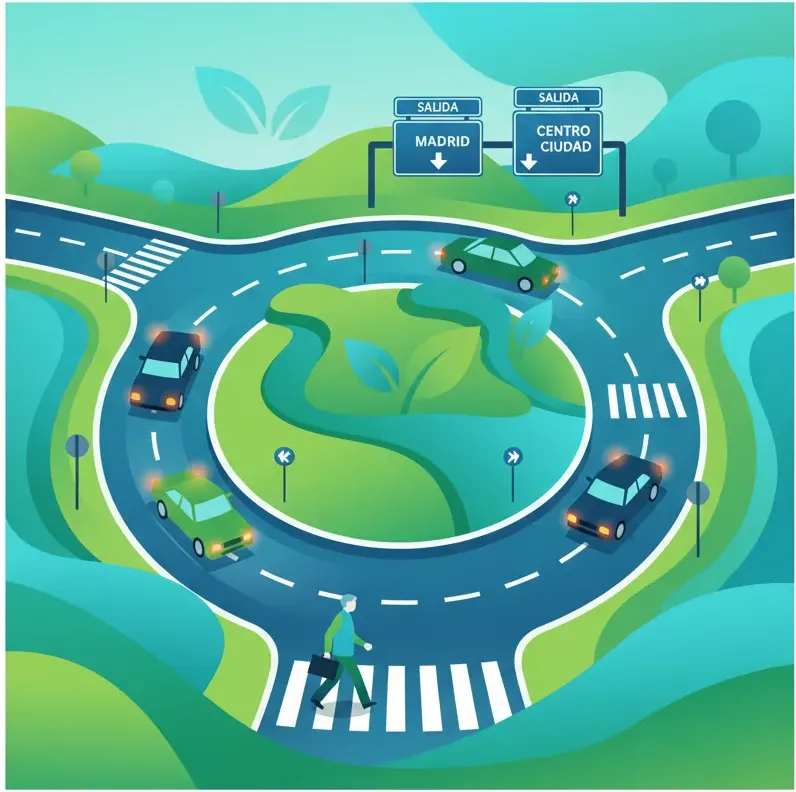
This lesson provides specific instructions on how to safely navigate complex junctions such as roundabouts and intersections with a large vehicle. It explains the rules of priority, the correct lane to use based on the intended exit, and the importance of proper vehicle positioning to account for off-tracking. The content also covers clear signaling to communicate intentions to other road users for safe and efficient passage.

This lesson focuses on the critical skill of safely interacting with vulnerable road users, such as pedestrians and cyclists, in an urban setting. It highlights the extensive blind spots around a truck and teaches drivers to be extra vigilant, especially at intersections and crosswalks. The content covers the legal requirements for yielding and the importance of making eye contact to confirm intentions.
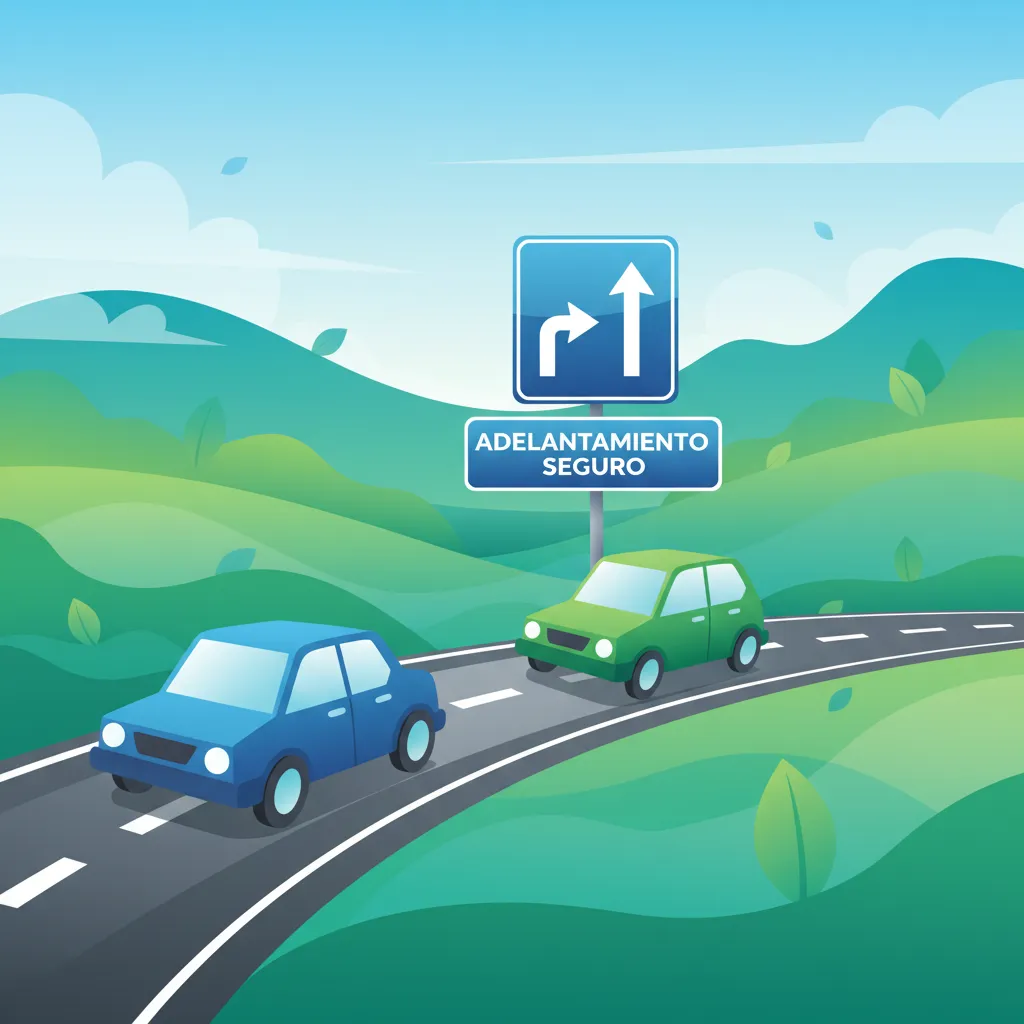
This lesson covers the legal overtaking procedures applicable on different road types, focusing on identifying safe passing zones and executing maneuvers correctly. Learners will be taught how to maintain adequate safety distances before, during, and after overtaking. The content includes DGT regulations for overtaking, appropriate signaling, and visibility checks to ensure safe completion of the maneuver.
Explore typical errors drivers make during truck overtaking maneuvers. This lesson details how cargo, load stability, weather, and road conditions affect safety and legal compliance in Spain.
This lesson focuses on the principles of safe lane selection and overtaking on multi-lane roads and highways. It covers the importance of maintaining proper lane discipline and the legal protocols for executing a safe pass, including checking blind spots and ensuring sufficient speed differential. The content also stresses the need for clear signaling and judging adequate space before returning to the original lane.
This lesson provides specific instructions on how to safely navigate complex junctions such as roundabouts and intersections with a large vehicle. It explains the rules of priority, the correct lane to use based on the intended exit, and the importance of proper vehicle positioning to account for off-tracking. The content also covers clear signaling to communicate intentions to other road users for safe and efficient passage.

This lesson addresses the practical aspects of maneuvering a large vehicle in various environments. It explains concepts like turning radius, off-tracking, and the vehicle's total footprint, which determine the space needed for turns and other maneuvers. Learners will develop the spatial awareness required to navigate tight corners, loading bays, and urban streets while maintaining safe clearance from obstacles.
This lesson focuses on the core principles of defensive driving as they apply to operating a large truck. It explains the importance of managing the space around the vehicle to create a safety buffer and always having an 'escape route' in mind. The content emphasizes anticipating the actions of other road users and being prepared to react calmly and safely to unexpected situations.

This lesson teaches drivers how to proactively identify potential road hazards, from potholes and debris to unpredictable driver behavior. It provides specific guidance on how to adjust driving techniques to cope with adverse weather conditions such as heavy rain, fog, high winds, and icy roads. The content focuses on managing reduced visibility and traction to maintain vehicle control and safety.
This lesson focuses on the critical skill of safely interacting with vulnerable road users, such as pedestrians and cyclists, in an urban setting. It highlights the extensive blind spots around a truck and teaches drivers to be extra vigilant, especially at intersections and crosswalks. The content covers the legal requirements for yielding and the importance of making eye contact to confirm intentions.

This lesson provides strategies for navigating dense and often unpredictable city traffic. It explains how to maintain a safe following distance and position the vehicle correctly in stop-and-go situations to optimize flow and visibility. The content emphasizes the importance of anticipation, patience, and defensive driving techniques to safely manage the challenges of urban congestion.
This lesson provides theoretical guidance on the techniques for safely reversing a heavy vehicle, a high-risk maneuver. It emphasizes the correct use of mirrors, managing extensive blind spots, and the importance of using a spotter when available. The content also breaks down the geometric principles of parallel parking and backing into loading docks, focusing on vehicle positioning and spatial awareness.

This lesson introduces fundamental road safety principles applicable to all drivers, with a special emphasis on heavy vehicles. It covers defensive driving techniques, including the importance of anticipating potential hazards and managing speed appropriately for conditions. Learners will also study how to establish and maintain safe following distances and understand the hierarchy of road users to ensure safe interactions.

This lesson explains the physical concept of the center of gravity and its critical importance in heavy vehicle stability. It details how the placement and distribution of cargo can raise or lower the center of gravity, affecting rollover risk and handling. The content also covers factors that contribute to vehicle sway and the principles of load balancing to maintain control during turns and maneuvers.
Find clear answers to common questions learners have about Overtaking Strategies and Blind Spot Awareness. Learn how the lesson is structured, which driving theory objectives it supports, and how it fits into the overall learning path of units and curriculum progression in Spain. These explanations help you understand key concepts, lesson flow, and exam focused study goals.
For the Spanish Category C and C1 theory exam, you must be aware of several critical blind spots. These include the areas directly to the sides of the truck, particularly around the rear wheels; directly behind the vehicle; and the area to the front and sides which may not be visible directly in the mirrors. Proper mirror adjustment and using additional spot mirrors are essential for covering these zones.
Before overtaking, you must use all mirrors (rear-view and side mirrors) and perform a distinct head check over your shoulder towards the lane you intend to enter. For trucks, this head check is crucial as mirrors alone do not cover the entire blind area. Only proceed with the overtake if you have a clear indication that the lane is free and you can complete the maneuver safely within the required distance.
Spanish DGT regulations require that when overtaking, you must be able to complete the maneuver quickly and safely. This means you should have a sufficient speed advantage over the vehicle you are overtaking. If you cannot achieve a safe overtaking speed due to your own vehicle's limitations or traffic conditions, you should not attempt to overtake. You must also ensure you can safely return to your lane without impeding other traffic.
Yes, while general overtaking rules apply, Category C and C1 trucks may face specific restrictions. For instance, on certain stretches of highway or in adverse weather conditions, overtaking may be prohibited for heavy vehicles. Always adhere to posted signs and road markings that might indicate overtaking prohibitions or lane restrictions for larger vehicles.
While the DGT doesn't specify an exact 'following distance' that prohibits overtaking, common sense and safe driving practices dictate that you should maintain a significant gap to assess the situation. If you are too close to the vehicle ahead, you won't have adequate visibility of the road beyond it, nor sufficient space to safely initiate an overtake. Maintain a safe following distance relevant to your speed and conditions, which typically increases for trucks.
Use our powerful search functionality to pinpoint specific Spanish DGT driving theory practice sets. Filter by road sign categories, traffic law topics, or question difficulty to build custom study sessions and reinforce your knowledge precisely where it matters for your official exam.