
Welcome to the Protective Gear & Rider Safety unit. This lesson dives into Helmet Homologation Standards, a critical topic for your Spanish motorcycle theory exam. Understanding helmet safety ensures you meet DGT requirements and ride protected, which is vital for both passing your test and for your personal safety on the road.
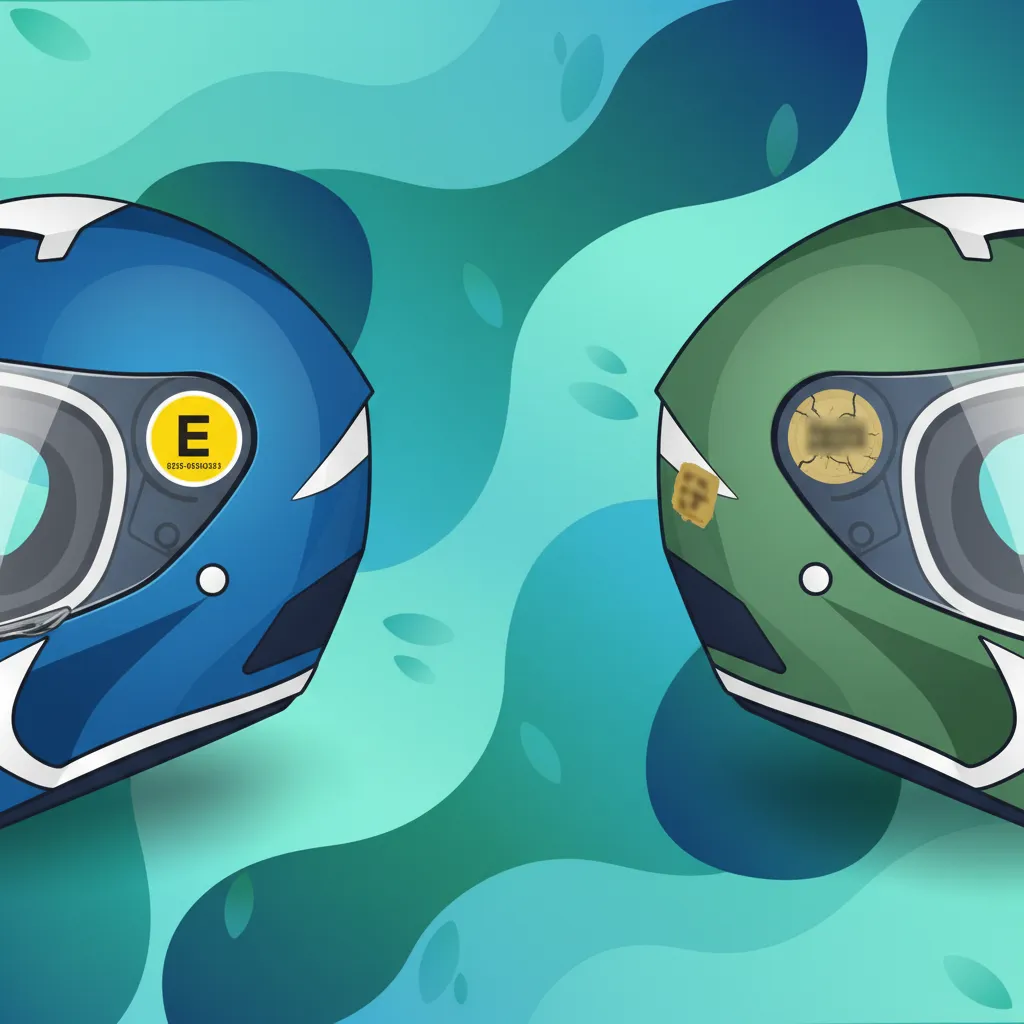
Lesson content overview
Navigating the roads on a motorcycle offers unparalleled freedom, but it comes with a fundamental responsibility: ensuring your safety. Paramount among protective gear is the helmet, which acts as your primary defense against head injuries in the event of a crash. However, not all helmets offer the same level of protection, nor are they all legally permissible for use on public roads. This lesson delves into the crucial world of motorcycle helmet homologation standards, focusing on the European ECE regulations that govern helmet safety and legality for the Spanish Motorcycle Theory Exam: A, A1, A2 Licence Prep Course.
Understanding these standards is not merely an academic exercise; it is a legal obligation and a vital component of rider safety. A homologated helmet has undergone rigorous testing to confirm its ability to absorb impact, remain secure on your head, and provide clear vision, significantly reducing the risk of severe injury.
The concept of helmet homologation is rooted in a commitment to rider safety. It establishes a uniform, verifiable baseline for the protective performance of motorcycle helmets sold and used within the European Union, including Spain. Without such standards, riders would have no reliable way to assess the safety claims of different helmet manufacturers.
Homologation refers to a standardized certification process that validates a product's compliance with specific safety, performance, and labeling requirements before it can be legally marketed and used. For motorcycle helmets, this process is defined by the United Nations Economic Commission for Europe (UNECE) Regulation No. 22. This regulation ensures that every helmet bearing the "E-mark" has met strict criteria designed to protect a rider's head during a collision. By setting mandatory technical specifications, homologation significantly reduces the severity of head injuries by ensuring helmets can withstand various impact forces, maintain structural integrity, and stay secured to the rider's head.
In Spain, as throughout the EU, wearing a homologated helmet is not just recommended; it is a legal requirement for all motorcycle and scooter riders and passengers. The Dirección General de Tráfico (DGT), Spain's traffic authority, enforces this rule through the Reglamento de Circulación (Traffic Regulations). Using a helmet that does not comply with ECE standards can lead to significant penalties, including fines and points deducted from your driving license. More importantly, it compromises your safety, potentially invalidating insurance claims in the event of an accident.
The ECE Regulation No. 22 is the definitive standard for motorcycle helmets in Europe. This regulation has seen updates over time, with ECE 22.05 being the long-standing standard and ECE 22.06 representing the latest iteration with enhanced safety requirements.
ECE 22.05 was the primary European standard for many years, laying down the fundamental tests for impact absorption, retention system strength, and visor integrity. It mandated specific testing protocols to ensure a minimum level of protection across all helmet types.
ECE 22.06 is the newer, more stringent standard, which became mandatory for all new helmets sold in the EU from June 2022. It builds upon 22.05 by introducing several critical improvements. These include new impact points (testing a wider area of the helmet), an oblique impact test to simulate glancing blows (which often cause rotational brain injuries), enhanced retention system performance, and stricter criteria for visors and external accessories. The new standard also incorporates field impact protection for children's helmets and addresses helmets with integrated communication systems. Helmets homologated under ECE 22.05 can still be legally used, but all new helmets entering the market must now comply with 22.06.
To verify that a helmet meets European safety standards, look for the "E-mark" label, which is typically sewn into the chin strap or affixed to the back of the helmet. This mark is your guarantee of homologation.
The E-mark provides specific information:
Beware of counterfeit E-marks. Always purchase helmets from reputable dealers and ensure the label is clear, integrated into the helmet, and matches the product's official specifications.
Homologation is not a self-declaration; it involves a series of stringent laboratory tests performed by designated Notified Bodies. These tests simulate various crash scenarios to assess a helmet's protective capabilities.
The most critical aspect of helmet safety is its ability to absorb impact energy, thereby limiting the force transmitted to the rider's skull. This is measured in G-forces (gravitational force equivalent). During impact tests, helmets are dropped from specific heights onto different anvil shapes (flat, kerb, hemispherical) at defined velocities.
The helmet's shell material (e.g., polycarbonate, fiberglass, carbon fiber) and the inner expanded polystyrene (EPS) liner are crucial for energy absorption. The EPS acts as a crush zone, deforming to dissipate energy.
A helmet can only protect you if it stays on your head during a crash. The retention system, comprising the chin strap and buckle, is rigorously tested to ensure it can withstand significant forces without failing or loosening.
Common retention systems include the double D-ring (considered very secure) and quick-release mechanisms (micrometric buckles). All must pass the same strength tests.
While impact absorption is vital, the helmet's shell must also resist penetration from sharp or pointed objects encountered in an accident. This test typically involves dropping a pointed striker onto the helmet surface from a specified height. The helmet shell must prevent the striker from piercing through to the head form beneath, safeguarding the skull from direct trauma.
For helmets equipped with visors or face shields, these components are also subject to specific homologation requirements. They must provide clear, undistorted vision and possess sufficient impact resistance to protect the rider's eyes and face from debris.
Homologation standards also differentiate between various helmet types, recognizing their intended use and design variations. Each category has specific test criteria it must satisfy.
Full-face or integral helmets offer the highest level of protection by enclosing the entire head, including the chin and face. They come with a fixed chin bar and a visor. These helmets undergo all standard impact, retention, and penetration tests, with a mandatory visor impact test. They are generally considered the safest option for road riding due to their comprehensive coverage.
Modular helmets, also known as flip-up helmets, combine the features of a full-face helmet with the convenience of an open-face design. They have a chin bar that can be pivoted upwards. For a modular helmet to be homologated for use with the chin bar closed, it must pass the same stringent impact tests as a full-face helmet (P-homologation). If it is also approved for use with the chin bar in the open position, it will have a P/J-homologation. The hinge mechanisms for the chin bar are also tested for durability and security.
Open-face helmets (or jet helmets) cover the top, back, and sides of the head but lack a chin bar. While they provide protection against skull impacts, they leave the face and chin exposed. They are subject to the same impact and retention tests as other helmets but do not have requirements for chin bar impact. Visors are often optional or integrated into the helmet. Due to the lack of chin protection, they offer a lower overall safety level compared to full-face or modular helmets.
Designed for motocross, enduro, and other off-road disciplines, these helmets are typically lighter, have an elongated chin bar for ventilation, and a peak (visor) to deflect roost and sunlight. They generally do not come with an integrated face shield but are worn with goggles. Off-road helmets are specifically tested for field impacts, simulating collisions with elements like tree branches or posts. While providing excellent protection in their intended environment, their aerodynamic properties and lack of an integrated full-face visor make them less suitable for high-speed road use.
A homologated helmet can only provide its intended protection if it fits correctly. An improperly fitted helmet can shift during an impact, compromising its ability to absorb energy and potentially exposing vulnerable areas of the head.
To find the right size, measure the circumference of your head just above your eyebrows and around the widest part of the back of your head. Compare this measurement to the manufacturer's sizing chart. Helmet sizes are typically given in centimeters (e.g., 53-54 cm for XS, 55-56 cm for S, etc.).
When trying on a helmet, it should feel snug around your entire head, with uniform pressure. There should be no pressure points that cause discomfort, but also no excessive room.
Put the helmet on: Ensure it sits level on your head and your eyes are centered in the eye port.
Check for movement: With the chin strap fastened, try to rotate the helmet from side to side and front to back. Your skin should move with the helmet; if the helmet slides independently, it is too loose. A small amount of movement (e.g., 1-2 cm) is acceptable, but it should not wobble.
Check cheek pads: Cheek pads should fit snugly against your cheeks, preventing excessive movement.
Test the chin strap: Fasten the chin strap securely. You should be able to fit one finger snugly between the strap and your chin, but no more. Try to pull the helmet off your head from the back; if it comes off, the strap is too loose or the helmet is the wrong size.
Wear the helmet for a few minutes. Any immediate discomfort or pressure points will only worsen on a longer ride. Remember, helmet padding will compress slightly over time, so a new helmet should feel quite snug. Never purchase a helmet that is clearly too large, expecting to "grow into it."
Even a perfectly fitted, homologated helmet requires proper maintenance and timely replacement to ensure it remains effective. A helmet's protective capabilities degrade over time and especially after an impact.
Before every ride, conduct a quick inspection of your helmet:
The most critical rule regarding helmet replacement is after an accident. A helmet should always be replaced after any impact, even if there is no visible damage to the outer shell. The EPS liner, designed to crush and absorb energy, may have sustained internal damage that compromises its ability to protect in a subsequent impact. This internal damage is often invisible from the outside.
Beyond impacts, helmets have a limited lifespan. Manufacturers generally recommend replacing helmets every five years from the date of manufacture (stamped inside the helmet) or three years from the date of first use. This is because materials like the EPS liner, adhesives, and shell resins can degrade over time due to exposure to UV light, sweat, chemicals, and general wear and tear, reducing their protective performance. Spanish DGT guidelines reinforce this recommendation.
Never attempt to repair a damaged helmet or use a helmet that has been involved in an impact. Its structural integrity is compromised, and it will not offer adequate protection.
Compliance with helmet homologation standards is legally enforced in Spain. The Reglamento de Circulación, Article 20, explicitly mandates the use of approved helmets for all riders and passengers of motorized two-wheelwheelers.
Riding without a homologated helmet, or using a helmet incorrectly (e.g., with the chin strap undone), constitutes a serious traffic infraction in Spain. The consequences include:
Understanding helmet homologation standards is a cornerstone of responsible motorcycling and a mandatory requirement for passing the Spanish Motorcycle Theory Exam. The ECE 22.05 and particularly the enhanced ECE 22.06 regulations provide a robust framework for ensuring helmet safety, guaranteeing that products available on the market meet stringent protection criteria.
As a rider preparing for your A, A1, or A2 license, your commitment to safety must extend beyond knowing traffic rules to include selecting, wearing, and maintaining a properly homologated helmet. Always check for the E-mark, ensure a correct fit, perform regular inspections, and replace your helmet after any impact or when it reaches its recommended lifespan. By adhering to these principles, you not only comply with Spanish law but, more importantly, dramatically enhance your personal safety on every ride.
This lesson covers the essential European ECE homologation framework for motorcycle helmets required in Spain, distinguishing between ECE 22.05 and the stricter ECE 22.06 standards that mandate new impact testing including oblique tests for rotational forces. Learners must understand how to identify homologated helmets through the E-mark label's coded information (country code, regulation version, protection type), and recognize the three critical test categories: impact energy absorption measured in G-forces, retention system strength under static and dynamic loads, and visor penetration resistance. The content also clarifies helmet types (full-face/integral, modular, open-face) with their specific homologation classes, proper fitting procedures, and the legal requirement under the Reglamento de Circulación for all riders and passengers to wear approved helmets. Key maintenance rules include replacement after any impact and within five years of manufacture or three years of first use, with penalties including fines, license points, and potential insurance implications for non-compliance.
A short set of high-value points that capture the most important learning from this lesson.
ECE 22.06 became mandatory for all new helmets sold in the EU from June 2022, introducing stricter impact tests including oblique impacts for rotational brain injury protection
The E-mark label contains specific coded information: country code (e.g., E9 for Spain), regulation version (22.05 or 22.06), and protection type (J for open-face, P for full-face chin bar, P/J for modular)
A helmet must be replaced after any impact, even if no visible damage exists, because the EPS liner may have internal compression damage that compromises future protection
Modular helmets with P/J homologation can legally be worn with the chin bar open, while those with only P homologation require the chin bar to be closed at all times
Helmet lifespan is typically five years from manufacture or three years from first use, due to degradation of EPS liner, adhesives, and shell materials from UV exposure and general wear
Explore all units and lessons included in this driving theory course.
ECE 22.05 helmets remain legal for continued use; only new helmets entering the market must comply with ECE 22.06
The visor impact test requires withstand of a 6mm steel ball at 80 m/s, and tinted visors must comply with light transmission limits especially at night
Retention system tests include a static tensile load of approximately 25 kg and dynamic release tests simulating crash forces
Impact absorption is measured in G-forces with a threshold typically below 260G for ECE compliance
Only helmets with a clear, integrated E-mark label purchased from reputable dealers are reliable; counterfeit marks are a known risk
Assuming any helmet with an E-mark is automatically safe without verifying it matches the official product specifications and has genuine labeling
Continuing to use a helmet after an impact because no visible cracks or damage are apparent on the outer shell
Wearing a tinted visor in low-light conditions or at night, which is illegal in Spain and severely reduces visibility
Purchasing budget helmets without proper homologation labels to save money, risking significant fines and license point deductions
Modifying helmets by drilling holes, applying incompatible paints, or altering the shell structure, which compromises structural integrity and voids homologation
Lesson content overview
A short set of high-value points that capture the most important learning from this lesson.
ECE 22.06 became mandatory for all new helmets sold in the EU from June 2022, introducing stricter impact tests including oblique impacts for rotational brain injury protection
The E-mark label contains specific coded information: country code (e.g., E9 for Spain), regulation version (22.05 or 22.06), and protection type (J for open-face, P for full-face chin bar, P/J for modular)
A helmet must be replaced after any impact, even if no visible damage exists, because the EPS liner may have internal compression damage that compromises future protection
Modular helmets with P/J homologation can legally be worn with the chin bar open, while those with only P homologation require the chin bar to be closed at all times
Helmet lifespan is typically five years from manufacture or three years from first use, due to degradation of EPS liner, adhesives, and shell materials from UV exposure and general wear
Explore all units and lessons included in this driving theory course.
ECE 22.05 helmets remain legal for continued use; only new helmets entering the market must comply with ECE 22.06
The visor impact test requires withstand of a 6mm steel ball at 80 m/s, and tinted visors must comply with light transmission limits especially at night
Retention system tests include a static tensile load of approximately 25 kg and dynamic release tests simulating crash forces
Impact absorption is measured in G-forces with a threshold typically below 260G for ECE compliance
Only helmets with a clear, integrated E-mark label purchased from reputable dealers are reliable; counterfeit marks are a known risk
Assuming any helmet with an E-mark is automatically safe without verifying it matches the official product specifications and has genuine labeling
Continuing to use a helmet after an impact because no visible cracks or damage are apparent on the outer shell
Wearing a tinted visor in low-light conditions or at night, which is illegal in Spain and severely reduces visibility
Purchasing budget helmets without proper homologation labels to save money, risking significant fines and license point deductions
Modifying helmets by drilling holes, applying incompatible paints, or altering the shell structure, which compromises structural integrity and voids homologation
Explore search topics learners often look for when studying Helmet Homologation Standards. These topics reflect common questions about road rules, driving situations, safety guidance, and lesson level theory preparation for learners in Spain.
Browse additional driving theory lessons that cover connected traffic rules, road signs, and common driving situations related to this topic. Improve your understanding of how different rules interact across everyday traffic scenarios.
Understand the European ECE 22.06 homologation standards crucial for motorcycle helmets in Spain. This guide covers safety tests, types of helmets, and legal requirements mandated by the DGT for rider safety and compliance.

This lesson examines the legal framework for motorcyclists in Spain, including mandatory registration, compulsory insurance, and equipment standards enforced by the DGT. It covers the legal necessity of a homologated helmet, reflective clothing, and compliance with noise and emission standards. Learners also review documentation checks, vehicle inspections, and penalties for non-compliance.

This lesson explores the specifications of DGT-approved protective clothing, focusing on abrasion-resistant jackets and CE-rated armor for limbs. It covers the importance of gloves and boots with protective padding and the role of reflective strips for visibility. Attention is given to material choices that balance durability, breathability, and weather protection.

This lesson outlines the compulsory equipment and documentation required for an AM-class vehicle. It emphasizes the legal mandate for an approved helmet, a valid insurance policy, and a vehicle registration plate. Learners will also understand the requirements for the roadworthiness certificate (ITV) and other essential documents needed to prove compliance with DGT safety and legal standards during a traffic stop.

This lesson focuses on strategies for maximizing rider visibility in daylight and nighttime conditions, covering high-visibility apparel, reflective vests, and LED accessories. It delves into rider posture and lane positioning that improve sightlines and reduce collision risk. The content aligns with DGT regulations for illumination levels on motorcycles.
Learn about Spanish DGT laws regarding motorcycle helmet homologation, types, and proper usage. Understand penalties for non-compliance and crucial advice on helmet lifespan, maintenance, and replacement after impacts.
This lesson examines the legal framework for motorcyclists in Spain, including mandatory registration, compulsory insurance, and equipment standards enforced by the DGT. It covers the legal necessity of a homologated helmet, reflective clothing, and compliance with noise and emission standards. Learners also review documentation checks, vehicle inspections, and penalties for non-compliance.
This lesson explores the specifications of DGT-approved protective clothing, focusing on abrasion-resistant jackets and CE-rated armor for limbs. It covers the importance of gloves and boots with protective padding and the role of reflective strips for visibility. Attention is given to material choices that balance durability, breathability, and weather protection.
This lesson outlines the compulsory equipment and documentation required for an AM-class vehicle. It emphasizes the legal mandate for an approved helmet, a valid insurance policy, and a vehicle registration plate. Learners will also understand the requirements for the roadworthiness certificate (ITV) and other essential documents needed to prove compliance with DGT safety and legal standards during a traffic stop.

This lesson outlines the mandatory lighting and visibility equipment as per DGT regulations. It covers the correct use of headlights (low and high beams), taillights, and turn signals, ensuring the moped is visible to others, especially at night or in poor weather. The importance of wearing high-visibility or reflective clothing is also emphasized as a critical measure to enhance personal safety by making the rider more conspicuous.

This lesson focuses on safe nighttime riding, covering headlight alignment, rear-light visibility, and the use of reflective gear to enhance conspicuity. It explains DGT night riding requirements, including mandatory lighting standards. Topics also include managing glare from oncoming vehicles and mitigating rider fatigue during low-light conditions.
This lesson presents a systematic pre-ride safety checklist covering tire pressure, brake fluid levels, lighting operation, and chain tension to ensure the motorcycle is road-ready. It also emphasizes personal checks such as helmet strap security and appropriate gear for weather conditions. Integrating DGT-recommended inspection procedures helps minimize equipment-related failures.
Find clear answers to common questions learners have about Helmet Homologation Standards. Learn how the lesson is structured, which driving theory objectives it supports, and how it fits into the overall learning path of units and curriculum progression in Spain. These explanations help you understand key concepts, lesson flow, and exam focused study goals.
ECE homologation refers to the European standard (Economic Commission for Europe) that a helmet must meet to be legally sold and used in Spain and other member countries. It signifies that the helmet has undergone rigorous testing for safety, including impact resistance, retention system integrity, and visor quality, ensuring it provides adequate protection for motorcyclists.
All three types can be homologated if they meet ECE standards. A full-face helmet offers complete facial protection and is typically the safest. Modular helmets (flip-up) must be homologated in the closed position, and some may have a dual P/J homologation for riding with the chin bar up. Integral helmets are essentially full-face helmets.
Look for a label sewn into the helmet strap or inside the helmet lining. This label will typically have a capital 'E' followed by a number (indicating the country of homologation, e.g., E3 for Spain) and then a series of numbers. The label should also include the standard number, such as '22.05' or the newer '22.06'.
While there's no strict time limit set by the DGT for replacement, manufacturers generally recommend replacing a helmet every 5-7 years from the date of manufacture, or immediately after any significant impact, even if no damage is visible. Materials degrade over time, reducing protective capabilities.
For A, A1, and A2 licence holders, only helmets that are homologated and comply with ECE regulations are legal. While some open-face helmets might be homologated, the DGT strongly advises and most riders opt for full-face or integral helmets due to their superior protection, especially in urban environments.
Use our powerful search functionality to pinpoint specific Spanish DGT driving theory practice sets. Filter by road sign categories, traffic law topics, or question difficulty to build custom study sessions and reinforce your knowledge precisely where it matters for your official exam.