
This lesson focuses on crucial strategies for enhancing your visibility as a motorcyclist on Spanish roads. We'll cover how to use high-visibility apparel, effective positioning, and essential illumination techniques to significantly reduce your risk of accidents. Mastering these concepts is vital for both your DGT theory exam and safe riding in real-world conditions.

Lesson content overview
For motorcyclists, being seen on the road is as crucial as wearing a helmet. This lesson, part of the Spanish Motorcycle Theory Exam: A, A1, A2 Licence Prep Course, explores the essential strategies and techniques for enhancing rider visibility and significantly reducing collision risk. Understanding and applying these principles can provide vital seconds of reaction time for other road users, preventing accidents before they happen.
Motorcycles, by their very nature, present a smaller visual profile than cars or trucks, making them less conspicuous. This reduced visibility contributes to a substantial percentage of motorcycle accidents. By actively employing high-visibility apparel, proper lighting, strategic road positioning, and attentive riding posture, riders can dramatically increase their presence and safety on Spanish roads. This lesson delves into the science behind being seen and the regulations that support safer riding practices.
Effective motorcycle visibility relies on several core principles that leverage how human vision and light interact. Mastering these concepts forms the foundation for reducing accident risk.
Conspicuity is not merely about being bright; it's about being distinguishable from the background and catching the attention of other drivers. This includes being visible in their peripheral vision and standing out against a complex visual environment like a busy city street. Maximizing conspicuity involves a combination of color, reflection, and light emission to create a strong visual signal for other road users.
Retro-reflective materials, commonly found on safety vests and jackets, are critical for night-time visibility. Unlike standard reflective surfaces that scatter light, retro-reflective materials contain microscopic beads or prisms that redirect light with remarkable precision back to the original source. This means that a driver's headlights, for instance, illuminate a retro-reflective patch on a motorcyclist, and that light is bounced directly back to the driver's eyes, making the rider appear much brighter to them than to an observer off to the side. The Dirección General de Tráfico (DGT) mandates the use of such materials for motorcyclists during low-light conditions.
The human eye detects objects more easily when they stand out against their surroundings. This is where contrast enhancement plays a vital role. Using high-contrast colors, particularly fluorescent hues like yellow, orange, or lime green, can make a motorcyclist highly visible during daylight and twilight hours. These colors are especially effective because they absorb ultraviolet light and re-emit it as visible light, making them appear to glow, especially in overcast conditions. This phenomenon makes a rider "pop" against natural and urban backdrops, significantly improving detection distance.
Beyond reflective materials, active illumination from a motorcycle's lighting system is fundamental. This includes headlamps (low and high beam), position lights, tail lights, and auxiliary lights. Ensuring these lights meet the minimum luminous intensity levels set by the DGT is crucial for both illuminating the road ahead for the rider and making the motorcycle visible to other drivers, particularly at night or in adverse weather. Regular maintenance and checks of all lighting components are essential.
The rider's position within a traffic lane profoundly impacts how visible they are to other road users and how well they can see potential hazards. Strategic lane positioning involves choosing a line of travel that maximizes sightlines for both the rider and others, helping to avoid common blind spots of larger vehicles. It's about actively placing oneself where one is most likely to be seen by drivers entering intersections, changing lanes, or performing turning maneuvers.
A rider's posture and body language can also influence their visibility. Maintaining an upright or slightly inclined posture ensures that reflective elements on clothing and the motorcycle's lights remain unobstructed. A visible silhouette and clear display of lights are vital for frontal and lateral detection by other traffic. An attentive posture also conveys confidence and alertness, which can subconsciously influence how other drivers perceive the motorcyclist.
Selecting the right gear is the first step toward maximizing your presence on the road. High-visibility elements should be an integral part of every rider's wardrobe.
High-visibility apparel combines bright, fluorescent colors with retro-reflective materials to make riders stand out in all conditions. Jackets, vests, gloves, and even pants are available with these features. The fluorescent base layer, often in shades of yellow, orange, or green, dramatically increases daytime conspicuity, especially in challenging light like dawn, dusk, or overcast weather. This is because fluorescent colors have a unique ability to convert invisible ultraviolet light into visible light, making them appear brighter than non-fluorescent colors.
The reflective layer, consisting of strips or patches, takes over when light levels drop, bouncing back light from other vehicles' headlamps. For example, a rider wearing a fluorescent yellow jacket with 50 mm wide reflective strips on the sleeves and back will be easily identifiable from a much greater distance than a rider in dark clothing, particularly during twilight or at night. The DGT places specific requirements on the use of retro-reflective elements for night visibility.
Reflective vests are standalone safety garments, often worn over a rider's primary jacket, that incorporate retro-reflective material. These vests provide a high-visibility silhouette and are especially useful when a rider's main gear may not meet sufficient reflective standards or when additional visibility is desired. They are particularly effective for making the rider's torso and upper body visible to surrounding traffic.
Beyond full vests, various accessories can enhance visibility. This includes reflective armbands, helmet stickers, and even reflective panels integrated into backpack designs. While reflective vests are commonly associated with night riding, they are also highly beneficial during adverse daylight conditions such such as heavy rain or fog, where ambient light is diminished and visual contrast is reduced.
Light-Emitting Diode (LED) accessories offer active illumination, projecting light outwards to supplement passive retro-reflection. These can be integrated into helmets (front and rear LEDs), jackets (illuminated strips), or as auxiliary lights on the motorcycle itself (e.g., LED pillars, side markers). The benefit of LEDs is that they emit their own light, making them effective even when there's no external light source to reflect.
Helmet-mounted LEDs, for instance, can significantly increase the head-and-shoulder profile of the rider, which is often the first part of a motorcyclist's silhouette that other drivers perceive. Auxiliary bike lights, strategically placed, can increase the perceived width of the motorcycle, making it easier for other drivers to gauge its presence. However, it is crucial that any LED accessories comply with DGT regulations regarding luminous intensity and placement to avoid causing glare for other road users. Riders should also be mindful of battery life for such devices.
Beyond equipment, how a rider positions themselves and carries themselves on the motorcycle significantly contributes to their visibility and overall safety.
A rider's posture on the motorcycle is not just about comfort and control; it also impacts how visible they are to other drivers. Maintaining an upright or slightly inclined posture keeps the rider's silhouette prominent and ensures that reflective surfaces on clothing, as well as the motorcycle's lights, are not obscured. For example, a rider with slumped shoulders might hide reflective elements on their jacket, making them harder to spot, especially from the side or rear.
An upright posture also allows for better eye contact with other drivers, enhancing communication and indicating the rider's awareness. While "tucking in" might reduce wind resistance at high speeds, it significantly reduces the rider's frontal and lateral profile, making them much less visible to surrounding traffic. This trade-off between aerodynamics and visibility should be carefully considered based on the riding environment.
The strategic placement of a motorcycle within its lane is a fundamental defensive riding technique that directly enhances visibility and safety. The goal is to maximize the rider's sightlines to potential hazards and to place the motorcycle in a position where it is most likely to be seen by other road users, avoiding their blind spots.
Key Lane Positioning Strategies:
DGT Article 71 specifies that riders must occupy a position that ensures safe passage, which inherently includes considerations for visibility. Riding too far to the right, close to the curb, can make a motorcyclist virtually invisible to drivers intending to overtake or those turning from side streets.
Compliance with DGT regulations is not just a legal requirement; it's a critical safety measure designed to protect motorcyclists. These rules cover both the motorcycle's equipment and the rider's attire.
Under DGT Order 182/97, motorcyclists and their vehicles are mandated to use retro-reflective elements for night visibility. This regulation ensures that even in the absence of active illumination, light from other vehicles is effectively returned to its source, making the motorcycle and rider detectable.
This typically means wearing a reflective vest or a jacket with integrated reflective strips when riding after sunset, in tunnels, or in conditions of reduced visibility (e.g., fog, heavy rain). The aim is to create a visible silhouette of the rider that stands out against the dark background, giving other drivers sufficient time to react. Failure to comply can result in fines and, more importantly, a significantly increased risk of accidents.
DGT Order 1003/1998 sets out the minimum luminous intensity requirements for motorcycle lighting systems. These standards are crucial for ensuring that a motorcycle's lights are bright enough to be seen at appropriate distances and to properly illuminate the road for the rider.
Always perform a quick check of your motorcycle's lights before each ride. Ensure all headlamps, tail lights, indicators, and auxiliary lights are clean and fully functional. A dim or faulty light is a significant safety hazard.
All motorcycles in Spain are subject to periodic Vehicle Technical Inspections (Inspección Técnica de Vehículos - ITV). During this inspection, the functionality and compliance of all lighting components, including headlamps, position lights, brake lights, indicators, and reflective elements, are thoroughly checked. A motorcycle will fail its ITV if its lighting system does not meet the specified DGT standards for luminous intensity or if any required reflective elements are missing or damaged. Regular maintenance of your motorcycle's lighting system is therefore not only a safety practice but also a legal necessity.
Even with an understanding of visibility principles, certain errors can compromise a rider's safety. Awareness of these common pitfalls can help prevent accidents.
Optimal visibility is not a static concept; it requires dynamic adjustments based on the prevailing conditions.
The direct link between rider visibility and accident statistics is undeniable. In Spain, a significant percentage of motorcycle fatalities involve situations where other drivers claim not to have seen the motorcyclist. Improving conspicuity directly addresses this issue by:
By actively implementing the strategies discussed, motorcyclists are not just adhering to regulations; they are fundamentally reducing their risk of being involved in a collision caused by another driver's failure to see them.
Let's consider how these principles apply in real-world riding situations.
Setting: A busy city street during a light rain shower, with moderate traffic and many pedestrian crossings. Challenge: Reduced ambient light and wet roads decrease visibility and increase glare, making it harder for drivers to spot motorcycles. Correct Behavior: The rider wears a fluorescent orange jacket with wide reflective strips, ensures the low-beam headlamp is on, and positions the motorcycle slightly left of center in the lane to be clearly visible to turning vehicles and those in adjacent lanes. They maintain an upright posture, keeping their silhouette clear. Incorrect Behavior: The rider wears a dark, non-fluorescent jacket, thinking it's still daytime. They turn off their low beam, believing it reduces glare in the rain, and ride too close to parked cars on the right. Explanation: Rain significantly reduces contrast and ambient light. The bright jacket and always-on low beam maintain conspicuity despite the reduced visibility. Good lane positioning prevents the rider from being hidden by parked cars or the blind spots of larger vehicles.
Setting: A two-lane country road after dark, with minimal street lighting and low traffic volume. Challenge: Extreme darkness makes it difficult for both the rider to see and for others to see the rider. Correct Behavior: The rider wears a highly reflective vest over their riding gear, ensures both their low and high beam headlamps are functioning, using the high beam when there's no oncoming traffic. They also verify that their side markers are clean and visible. Incorrect Behavior: The rider uses only the low beam, assuming it's sufficient, and their jacket is dark with minimal reflective elements. They neglect to check their side markers. Explanation: On rural roads, the high beam is necessary to illuminate hazards at a sufficient distance. Reflective gear is mandatory and critical for detection by oncoming vehicles whose headlights provide the primary source of light. Functional side markers enhance lateral visibility to vehicles approaching from junctions.
Setting: A multi-lane motorway during daylight hours, with high speeds and continuous opposing traffic. Challenge: High speeds require greater detection distances, and multiple lanes mean drivers may be focusing on various traffic flows. Correct Behavior: The rider uses the low beam headlamp (required by DGT for all times), wears a bright fluorescent jacket, and maintains a consistent lane position slightly to the left within their lane, ensuring they are clearly visible in other drivers' mirrors and not in blind spots. Incorrect Behavior: The rider uses the high beam, causing glare for drivers in the opposing lanes, and rides too far to the right, almost on the hard shoulder, making them less visible to fast-moving overtaking traffic. Explanation: High beam is inappropriate and dangerous with oncoming traffic. A bright jacket and correct lane positioning ensure the rider is seen early by vehicles in all lanes and prevents them from being overlooked amidst the complexity of motorway traffic.
Visibility is a cornerstone of motorcycle safety, requiring a multi-faceted approach that integrates proper apparel, active lighting, attentive posture, and strategic lane positioning. Adherence to DGT regulations (Orders 182/97 and 1003/1998) is mandatory, stipulating the use of retro-reflective materials and minimum headlamp intensities.
High-visibility apparel, combining fluorescent colors with retro-reflective strips, is crucial for enhancing detection in all lighting conditions, from bright daylight to twilight. LED accessories provide active illumination, complementing reflective gear by emitting light directly, which is especially effective in low-light scenarios.
A rider's posture and lane positioning directly impact their silhouette visibility and ability to see and be seen. Maintaining an upright stance and strategically avoiding common blind spots significantly reduces the likelihood of collisions. Illumination requirements dictate the performance of headlamps, with specific luminous intensity mandates for low beam (for oncoming traffic) and high beam (for open roads), alongside functional side markers.
Finally, conditional adjustments based on weather, road type, and even the motorcycle's load must be applied to maintain optimal visibility at all times. The underlying safety logic is clear: improved conspicuity increases detection distance for other road users, grants them additional reaction time, and ultimately leads to fewer accidents.
Maximizing motorcycle visibility combines passive elements like fluorescent and retro-reflective apparel with active illumination from proper headlamps and LED accessories. DGT regulations mandate specific luminous intensity levels and require reflective materials after dark. Strategic lane positioning and upright rider posture ensure visibility is not obscured by the rider's own body or the motorcycle's blind spots. Detection distance directly translates to reaction time: a highly visible rider gives other drivers more time to respond, significantly reducing collision risk. Visibility strategies must adapt to weather, light conditions, and road type to remain effective in all scenarios.
A short set of high-value points that capture the most important learning from this lesson.
Conspicuity is the core concept: a motorcyclist's noticeability to other road users under varying conditions, not just being bright.
Retro-reflection bounces light directly back to its source, making riders significantly brighter to drivers whose headlights illuminate them.
Fluorescent colors absorb ultraviolet light and re-emit it as visible light, creating a 'glow' effect that enhances daytime detection against natural backdrops.
Strategic lane positioning places the motorcycle slightly offset in the lane to avoid blind spots and remain visible to cross-traffic and adjacent vehicles.
Rider posture directly affects visibility: an upright stance keeps reflective elements and lights unobstructed, while a slouched posture conceals them.
Explore all units and lessons included in this driving theory course.
DGT Order 1003/1998 mandates minimum luminous intensity of 10 cd for low beam and 50 cd for high beam headlamps.
DGT Order 182/97 requires motorcyclists to wear retro-reflective materials when riding after sunset, in tunnels, or in reduced visibility conditions.
Side reflectors must emit a minimum of 12 cd to comply with Spanish regulations.
When you cannot see a driver's face in their mirror, you are likely in their blind spot.
In fog or heavy rain, use low beam only; high beam reflects off moisture and causes glare for the rider.
Riding without reflective clothing after sunset dramatically reduces detection distance for other drivers, increasing rear-end collision risk.
Using excessively bright or inappropriately flashing helmet LEDs can cause glare for other drivers, violating DGT guidelines.
Riding too close to the curb makes a motorcyclist nearly invisible to drivers overtaking or turning from side streets.
Adopting a slouched posture conceals reflective elements on the shoulders, reducing the rider's visible silhouette from multiple angles.
Using only high-beam in traffic blinds oncoming drivers; DGT requires low-beam when there is opposing traffic or when following another vehicle closely.
Lesson content overview
A short set of high-value points that capture the most important learning from this lesson.
Conspicuity is the core concept: a motorcyclist's noticeability to other road users under varying conditions, not just being bright.
Retro-reflection bounces light directly back to its source, making riders significantly brighter to drivers whose headlights illuminate them.
Fluorescent colors absorb ultraviolet light and re-emit it as visible light, creating a 'glow' effect that enhances daytime detection against natural backdrops.
Strategic lane positioning places the motorcycle slightly offset in the lane to avoid blind spots and remain visible to cross-traffic and adjacent vehicles.
Rider posture directly affects visibility: an upright stance keeps reflective elements and lights unobstructed, while a slouched posture conceals them.
Explore all units and lessons included in this driving theory course.
DGT Order 1003/1998 mandates minimum luminous intensity of 10 cd for low beam and 50 cd for high beam headlamps.
DGT Order 182/97 requires motorcyclists to wear retro-reflective materials when riding after sunset, in tunnels, or in reduced visibility conditions.
Side reflectors must emit a minimum of 12 cd to comply with Spanish regulations.
When you cannot see a driver's face in their mirror, you are likely in their blind spot.
In fog or heavy rain, use low beam only; high beam reflects off moisture and causes glare for the rider.
Riding without reflective clothing after sunset dramatically reduces detection distance for other drivers, increasing rear-end collision risk.
Using excessively bright or inappropriately flashing helmet LEDs can cause glare for other drivers, violating DGT guidelines.
Riding too close to the curb makes a motorcyclist nearly invisible to drivers overtaking or turning from side streets.
Adopting a slouched posture conceals reflective elements on the shoulders, reducing the rider's visible silhouette from multiple angles.
Using only high-beam in traffic blinds oncoming drivers; DGT requires low-beam when there is opposing traffic or when following another vehicle closely.
Explore search topics learners often look for when studying Visibility and Risk Reduction Techniques. These topics reflect common questions about road rules, driving situations, safety guidance, and lesson level theory preparation for learners in Spain.
Browse additional driving theory lessons that cover connected traffic rules, road signs, and common driving situations related to this topic. Improve your understanding of how different rules interact across everyday traffic scenarios.
Explore advanced strategies for maximizing motorcycle visibility on Spanish roads. This lesson covers the interplay of active lighting, retro-reflective materials, and optimal lane positioning to significantly reduce collision risks in various conditions.
This lesson focuses on identifying blind spot zones created by larger vehicles and the rider’s own positioning. It covers effective mirror usage, lateral awareness techniques, and the importance of head checks before lane changes. DGT blind spot guidelines are referenced, emphasizing situational scanning to maintain safety in traffic.

This lesson introduces anticipation techniques that improve a rider’s ability to predict potential hazards before they manifest. It covers scanning ahead, evaluating traffic patterns, and applying DGT risk assessment criteria. Emphasis is placed on developing a defensive riding mindset and maintaining safety margins to reduce accident likelihood.

This lesson focuses on safe nighttime riding, covering headlight alignment, rear-light visibility, and the use of reflective gear to enhance conspicuity. It explains DGT night riding requirements, including mandatory lighting standards. Topics also include managing glare from oncoming vehicles and mitigating rider fatigue during low-light conditions.
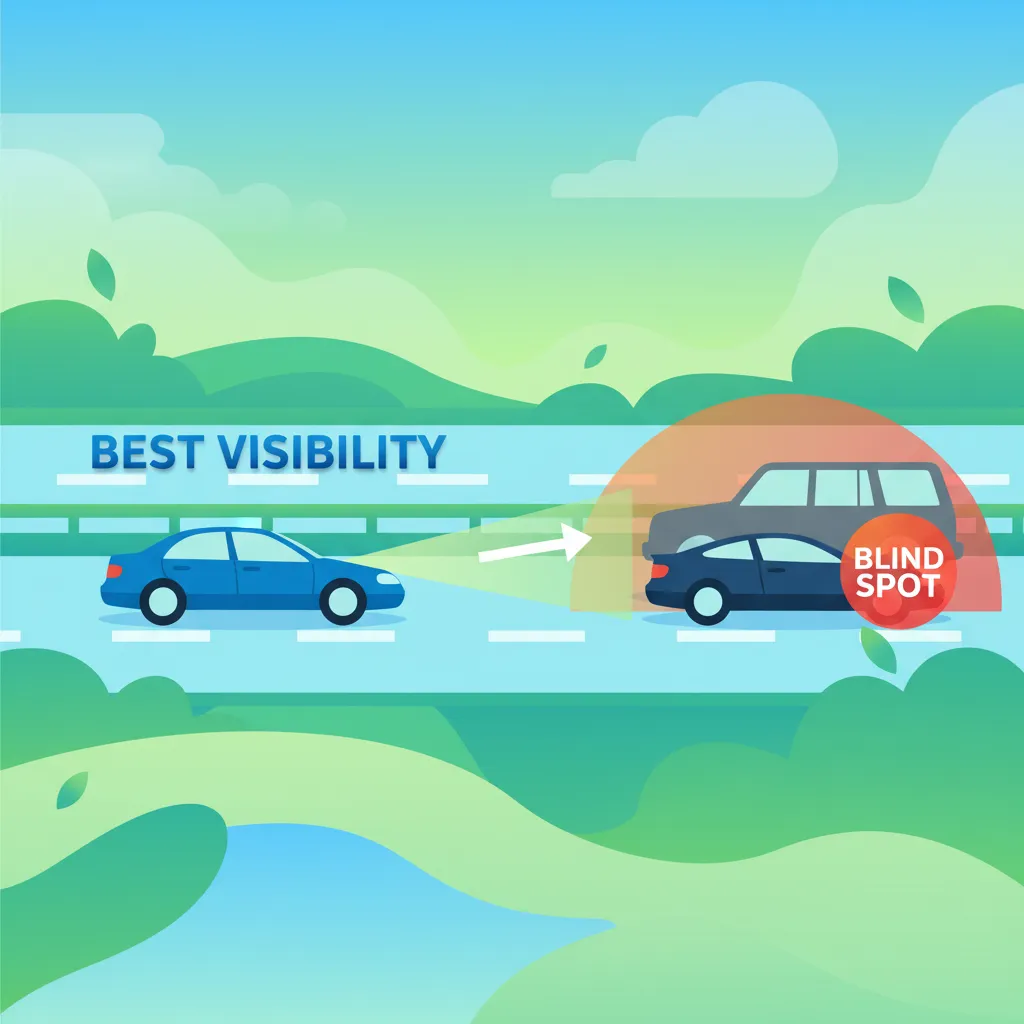
This lesson explores proper lane positioning, emphasizing strategic selection of traffic lanes for optimal visibility. It explains the importance of rider line of sight and peripheral vision in maintaining situational awareness. The content also covers legal aspects of lane splitting and correct usage of road shoulders, abiding by DGT regulations.
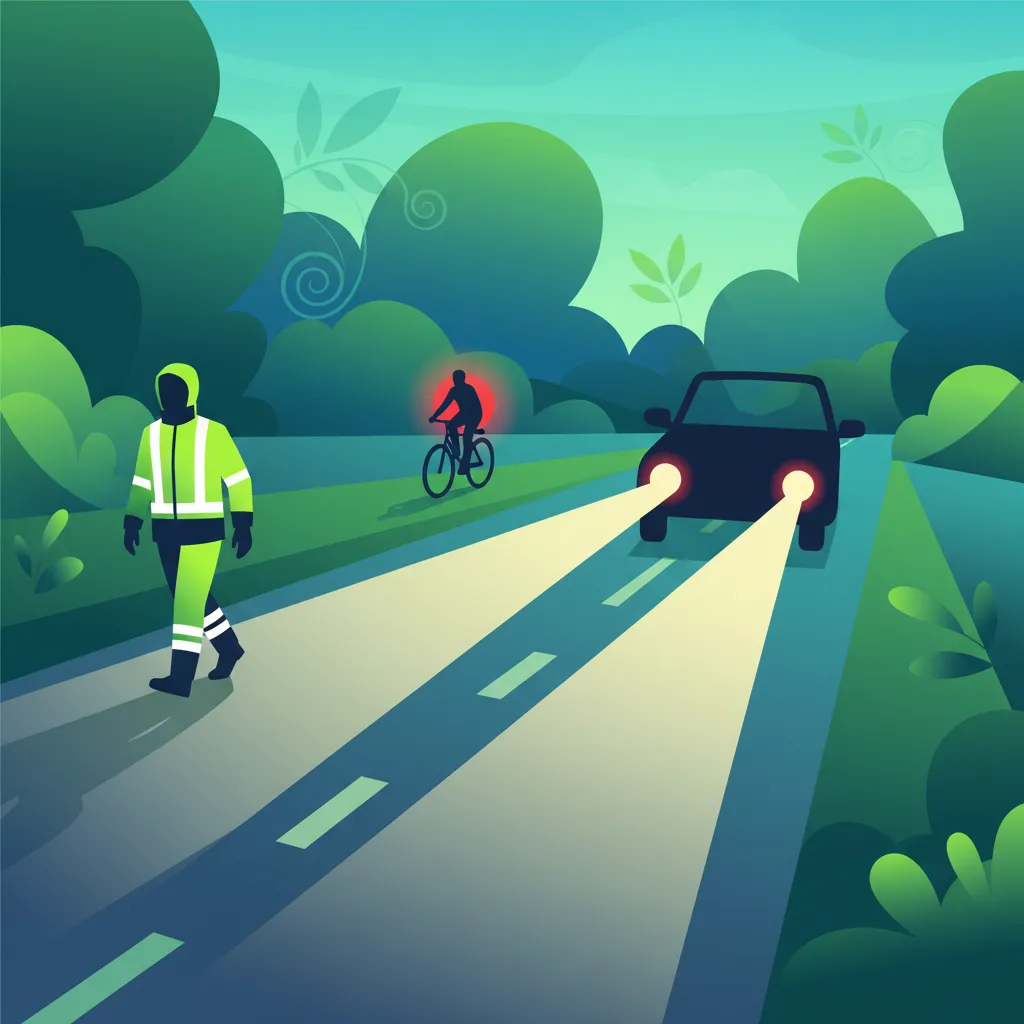
This lesson outlines the mandatory lighting and visibility equipment as per DGT regulations. It covers the correct use of headlights (low and high beams), taillights, and turn signals, ensuring the moped is visible to others, especially at night or in poor weather. The importance of wearing high-visibility or reflective clothing is also emphasized as a critical measure to enhance personal safety by making the rider more conspicuous.

This lesson focuses on interaction dynamics with larger vehicles like cars, trucks, and buses, detailing their specific blind spot zones. Strategies for safely sharing lanes, overtaking etiquette, and proper approach when a bus stops are covered. The lesson also includes guidance on merging onto acceleration lanes following DGT policies.

This lesson outlines the proper use and legal requirements of vehicle lighting and mirror systems. It covers headlamps, fog lights, turn signals, and brake lights, clarifying when each must be used according to DGT regulations. The lesson also explains the correct adjustment of rearview and side mirrors and strategies for effective blind-spot monitoring.

This lesson presents advanced cornering scenarios common on Spanish roads, such as mountain hairpins and high-speed autovía exits. It outlines specific techniques for descent control, ascent maneuvers, and safely merging into traffic after cornering. Interaction with cyclists and emergency cornering strategies are also covered in accordance with DGT regulations.
Understand the specific DGT regulations in Spain concerning mandatory visibility gear for motorcyclists. This lesson details requirements for high-visibility clothing, reflective elements, and motorcycle lighting standards to ensure legal compliance and rider safety.
This lesson outlines the mandatory lighting and visibility equipment as per DGT regulations. It covers the correct use of headlights (low and high beams), taillights, and turn signals, ensuring the moped is visible to others, especially at night or in poor weather. The importance of wearing high-visibility or reflective clothing is also emphasized as a critical measure to enhance personal safety by making the rider more conspicuous.
This lesson focuses on safe nighttime riding, covering headlight alignment, rear-light visibility, and the use of reflective gear to enhance conspicuity. It explains DGT night riding requirements, including mandatory lighting standards. Topics also include managing glare from oncoming vehicles and mitigating rider fatigue during low-light conditions.

This lesson explores the specifications of DGT-approved protective clothing, focusing on abrasion-resistant jackets and CE-rated armor for limbs. It covers the importance of gloves and boots with protective padding and the role of reflective strips for visibility. Attention is given to material choices that balance durability, breathability, and weather protection.
This lesson outlines the proper use and legal requirements of vehicle lighting and mirror systems. It covers headlamps, fog lights, turn signals, and brake lights, clarifying when each must be used according to DGT regulations. The lesson also explains the correct adjustment of rearview and side mirrors and strategies for effective blind-spot monitoring.
This lesson examines the legal framework for motorcyclists in Spain, including mandatory registration, compulsory insurance, and equipment standards enforced by the DGT. It covers the legal necessity of a homologated helmet, reflective clothing, and compliance with noise and emission standards. Learners also review documentation checks, vehicle inspections, and penalties for non-compliance.
Find clear answers to common questions learners have about Visibility and Risk Reduction Techniques. Learn how the lesson is structured, which driving theory objectives it supports, and how it fits into the overall learning path of units and curriculum progression in Spain. These explanations help you understand key concepts, lesson flow, and exam focused study goals.
The DGT mandates that motorcycles must have functioning headlights (dipped and main beam), taillights, brake lights, and indicators. For enhanced visibility, especially during daytime and in poor weather, using the dipped headlight at all times is strongly recommended and often legally required in Spain. Ensure all lights are clean and correctly aimed to be effective.
While not always mandatory to wear at all times by law for every rider, carrying a certified reflective vest (like those required for car drivers) is highly recommended for motorcyclists. It's essential for roadside emergencies or any situation where you need to exit your motorcycle in low-visibility conditions to ensure you are seen by approaching traffic.
Your lane position is critical for visibility. Positioning yourself within a lane to be seen by other drivers, rather than hugging the edge, is key. For instance, riding in the middle of a lane can make you more visible and less likely to be overlooked by car drivers at intersections or when changing lanes. Avoid riding in mirrors' blind spots.
Clothing with bright, fluorescent colours (like yellow or orange) and integrated reflective strips or panels offers the best visibility, especially in daylight and at night. Look for garments certified to safety standards (e.g., EN 471 or EN 20471) that specifically address visibility for motorcyclists.
Yes, rider posture can influence visibility. Maintaining an upright and alert posture helps you see and be seen. Looking through turns and positioning your head and eyes to scan effectively allows you to anticipate hazards and also signals your presence and intentions to other road users more clearly.
Use our powerful search functionality to pinpoint specific Spanish DGT driving theory practice sets. Filter by road sign categories, traffic law topics, or question difficulty to build custom study sessions and reinforce your knowledge precisely where it matters for your official exam.