
This lesson covers DGT regulations for adequate moped lighting and rider visibility, essential for safe riding in Spain. You'll learn about mandatory equipment, proper use of lights, and the importance of reflective clothing, building on your knowledge of adverse conditions to prepare you for critical exam questions on safety and compliance for your AM licence.
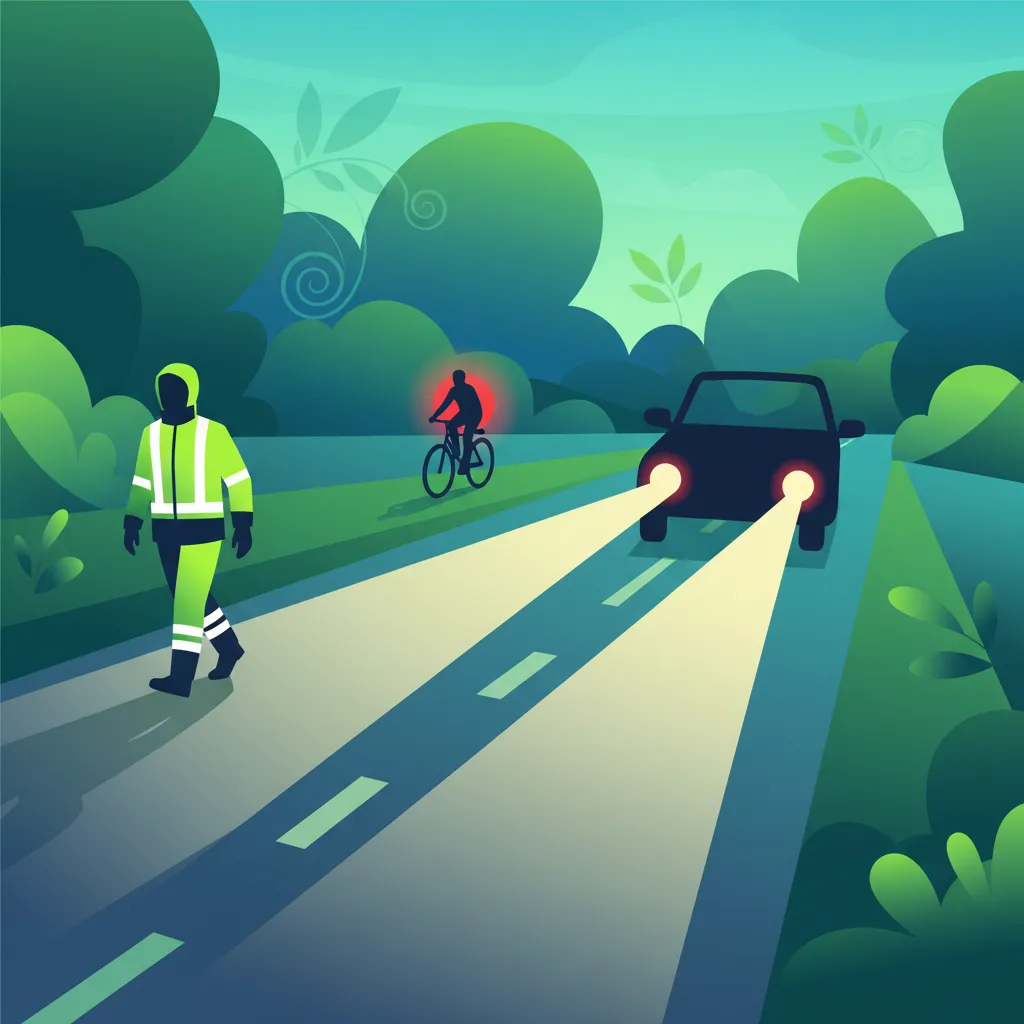
Lesson content overview
Riding an AM-category vehicle, such as a moped or light scooter, on Spanish roads requires not only skill and adherence to traffic rules but also a profound understanding of lighting and visibility requirements. These regulations, primarily defined by the Dirección General de Tráfico (DGT), are crucial for ensuring your safety and the safety of others. This lesson will explore the mandatory lighting equipment, its correct use, and personal visibility measures essential for all moped riders.
The ability to see and be seen is foundational to road safety, especially for moped riders who are considered vulnerable road users. Adequate lighting and high visibility significantly reduce the risk of collisions, particularly during periods of low light, adverse weather, or in complex urban environments. Understanding and correctly applying these rules is a critical component of the Spanish Driving License Theory – AM Category Full Curriculum.
The DGT places a strong emphasis on visibility requirements for mopeds due to their smaller size and often lower speed compared to other vehicles. This focus aims to integrate mopeds safely into the traffic flow, ensuring they are easily detectable by drivers of larger vehicles, pedestrians, and cyclists. Compliance with these regulations is not just a legal obligation; it's a proactive measure to protect lives.
When a moped is adequately lit and its rider is highly visible, other road users have more time to react, anticipate maneuvers, and avoid potential conflicts. This increased reaction time is a direct consequence of improved detection distance, a fundamental principle of road safety physics. From dusk till dawn, in rain, fog, or through tunnels, your ability to be seen is as vital as your ability to see the road ahead.
Spanish traffic law mandates specific lighting equipment for all vehicles, including mopeds. These devices serve distinct purposes, from illuminating the path ahead to signaling your intentions to other road users.
Mopeds are equipped with headlights that have at least two distinct settings: low beam and high beam. Understanding when and how to use each is paramount for safe driving and preventing glare for others.
Low beam headlights, also known as dipped headlights, provide a focused, short-range illumination that is angled downwards. This design illuminates the road directly in front of your moped without blinding oncoming traffic or pedestrians. They are the default headlight setting for most riding conditions outside of perfectly clear, unlit rural roads.
Always activate your low beam headlights when riding in urban areas, during twilight hours (dusk and dawn), in tunnels, or whenever visibility is reduced due to weather conditions.
High beam headlights, or main headlights, offer a longer-range, upward-angled illumination. They are designed to provide maximum forward visibility on unlit roads, allowing you to see hazards far in advance. However, their intense light can cause significant glare and temporarily blind other drivers, making their use highly restricted.
The DGT's Reglamento General de Circulación (RGC) explicitly states the rules for headlight use. Article 90 of the RGC stipulates that high beam headlights must be switched to low beam whenever a vehicle approaches within approximately 150 meters (or when following another vehicle closely). This rule applies to all conditions where high beams are otherwise permissible.
Using high beams in urban areas, even if they appear well-lit, is generally prohibited because of the constant presence of other road users and potential for glare.
Rear lighting is crucial for indicating your moped's presence and actions to following traffic. It comprises continuous running lights and brighter brake lights.
The taillight is a red, rear-facing light that illuminates continuously, making your moped visible from behind. It signals your presence and helps other drivers gauge your distance. This light must be operational whenever visibility is reduced.
Your brake light is a brighter red light, also rear-facing, that activates automatically when you apply the brakes. Its primary function is to clearly and immediately communicate your intention to slow down or stop to vehicles behind you, significantly reducing the risk of rear-end collisions.
According to DGT Article 91, rear running lights must be activated from sunset to sunrise and whenever visibility is reduced. This includes periods of fog, heavy rain, snow, or when passing through tunnels, irrespective of the time of day. Failure to activate these lights under such conditions is a serious safety violation.
Turn signals, also known as indicators, are amber lights located at the front and rear of your moped. They are essential for communicating your intended lateral movements to other road users, preventing uncertainty and potential accidents.
DGT Article 106 mandates that turn signals must be activated at least 3 seconds before initiating any maneuver that involves a change in lateral position. This includes changing lanes, turning at an intersection, entering or exiting a roundabout, or overtaking another vehicle. The signal should remain active throughout the maneuver and be canceled only once the maneuver is completed.
Common mistakes include failing to signal, signaling too late, or failing to cancel the signal after completing a maneuver. Any of these can lead to confusion, causing other drivers to misinterpret your intentions or react unpredictably.
Hazard warning lights involve the simultaneous flashing of all your moped's amber turn signals. They are a critical tool for signaling a stationary hazard or vehicle breakdown.
DGT Article 108 explicitly states that hazard warning lights should only be used when your vehicle is stationary and poses a danger to traffic, such as during a breakdown on the side of the road. Their purpose is to alert surrounding traffic to an unexpected obstruction.
It is strictly prohibited to use hazard warning lights while your moped is in motion, even if you are moving slowly due to heavy traffic or adverse conditions. Using them while driving can create confusion about your vehicle's status and movement, potentially increasing the risk of a collision.
Never use hazard lights to indicate "slow traffic" or "caution" while moving. This usage is illegal and dangerous.
Beyond your moped's built-in lighting, your personal attire plays a significant role in your visibility, especially as a vulnerable road user.
Reflective clothing and accessories are treated with retroreflective material. This special material has the unique property of reflecting light directly back to its source, rather than scattering it in all directions. This makes the wearer appear significantly brighter to a driver whose headlights are illuminating them, drastically increasing detection distance at night or in poor weather. Brightly colored clothing helps in daylight, but without retroreflectivity, its effectiveness plummets in low-light conditions.
While wearing reflective clothing is generally a strong recommendation from the DGT for enhanced safety, it becomes a mandatory legal requirement in specific situations. DGT Article 108 (sub-clause) stipulates that if your moped's mandatory lighting (e.g., headlights or taillights) fails, you must wear reflective clothing, such as a high-visibility vest, when riding at night or in conditions of reduced visibility. This ensures that even with vehicle lighting failure, you remain visible to other road users.
Even the best lighting equipment is ineffective if it's not working correctly. Regular maintenance is key to ensuring continuous compliance and safety.
Before every ride, especially when planning to ride at night or in poor weather, conduct a quick check of all your moped's lights. This includes:
Turn on your ignition and check that your low beam headlight illuminates.
Activate your high beam to ensure it works.
Verify that your rear running light is on.
Squeeze your brake lever to confirm the brake light brightens.
Test both left and right turn signals, ensuring they flash correctly at the front and rear.
Activate your hazard warning lights to check all four indicators.
Any faulty lights must be repaired immediately. Riding with non-functional mandatory lighting is illegal and highly dangerous.
Some modern mopeds may come equipped with automatic lighting systems that use sensors to detect ambient light levels and activate headlights accordingly. While convenient, these systems do not absolve the rider of responsibility. Always verify that the automatic system has correctly activated the appropriate lights. A sensor malfunction or external factor could lead to insufficient lighting, requiring you to manually engage your lights.
Environmental factors heavily influence lighting requirements. Adapting your lighting strategy to weather, time of day, and road type is essential for optimal visibility.
Any condition that reduces visibility, such as heavy rain, dense fog, or snowfall, necessitates the immediate activation of both your low beam headlights and rear running lights, regardless of the time of day. In fog, especially, low beams are preferred over high beams as high beams can reflect off fog particles, creating glare that further reduces your own visibility. Reflective clothing is also highly recommended in these conditions.
From sunset to sunrise, all mandatory lighting (headlights, taillights, and registration plate lights) must be fully functional and activated. During daylight hours, if natural light is sufficient, front headlights may not be mandatory, but rear lights must still be on whenever visibility is reduced. The transition periods of dawn and dusk, when light levels are changing rapidly, are particularly critical times to ensure your lights are on.
When interacting with vulnerable road users like pedestrians and cyclists, an extra "visibility margin" is crucial. Ensure your lights are on and consider wearing reflective clothing to make yourself as conspicuous as possible. Your visible presence can prevent them from making assumptions about your absence.
Ignoring DGT regulations regarding lighting and visibility can lead to fines, but more importantly, it significantly increases accident risk. Awareness of common violations helps you avoid them.
One frequent violation is the misuse of high beam headlights in urban traffic or when approaching other vehicles. This causes severe glare for pedestrians and drivers, momentarily impairing their vision and potentially leading to accidents. Always dim your headlights to low beam as required by DGT Article 90.
Many riders neglect to activate their rear lights during reduced visibility, such as in rain or light fog, mistakenly thinking they are only for night-time use. This dramatically reduces their moped's visibility from behind, making it difficult for following traffic to detect them. Always ensure rear lights are on when precipitation is present or visibility is impaired.
Failing to signal a turn or lane change, or signaling too late, is a common error that creates uncertainty for other drivers and can cause sudden, dangerous maneuvers. Conversely, leaving a turn signal on accidentally after completing a maneuver (e.g., exiting a roundabout) can also mislead other drivers about your next move. Always signal clearly and cancel promptly.
All lighting and visibility requirements discussed are enshrined in Spanish traffic law, primarily the Reglamento General de Circulación (RGC). Adherence to these legal mandates is non-negotiable for obtaining and maintaining your AM driving license.
Effective lighting and visibility leverage principles of physics and human perception. Adequate light intensity, proper beam angles, and the use of retroreflective materials increase the amount of light returned to other drivers' eyes, making detection easier and faster. From a psychological perspective, clear signaling and consistent visibility build predictable behavior, reducing driver stress and improving overall traffic flow safety.
Consider the "cone of vision" of other drivers. Your goal is to be visible within this cone for as long as possible, allowing maximum reaction time.
Understanding the rules in theory is one thing; applying them correctly in real-world scenarios is another. Here are some practical examples:
Setting: You are riding your moped through a residential street in a Spanish city at 10 PM. The street has streetlights, and a pedestrian is walking on the sidewalk ahead. Correct Behavior: You have your low beam headlights and rear running lights on. You maintain a safe distance from the pedestrian, knowing your low beams provide sufficient light without causing glare. Incorrect Behavior: You ride with your high beams activated. This action could momentarily blind the pedestrian and any drivers of parked cars who might be pulling out, violating DGT Art. 90.
Setting: It's dawn on a rural, unlit two-lane road in Spain, and dense fog has reduced visibility to approximately 30 meters. Correct Behavior: You immediately switch on your low beam headlights and ensure your rear running light is active. You also put on your reflective vest (if not already wearing one) to enhance your personal visibility. You adjust your speed to match the extremely reduced visibility. Incorrect Behavior: You rely on the faint ambient light and assume your bright moped color is enough, riding without headlights or reflective gear. This makes you almost invisible to other vehicles and is a clear violation of DGT Art. 91.
Setting: While traveling on a highway at night, your moped unexpectedly breaks down. You manage to pull over safely onto the shoulder. Correct Behavior: You immediately activate your hazard warning lights to alert approaching traffic to your stationary vehicle. If you weren't already wearing it, you put on your reflective vest before exiting the moped or attempting any repairs. Incorrect Behavior: To save battery, you turn off your hazard lights. You also don't wear reflective gear, making you and your moped extremely difficult to see by fast-moving traffic, a direct violation of DGT Art. 108.
Setting: You are approaching a multi-lane urban roundabout in Spain during moderate daytime traffic, intending to take the second exit (straight through). Correct Behavior: As you approach the roundabout, after having selected the correct lane, you do not signal upon entering if going straight. After passing the first exit, approximately 3 seconds before your intended exit, you activate your right turn signal to clearly communicate your intention to leave the roundabout to other vehicles. You cancel the signal once you have fully exited. Incorrect Behavior: You enter the roundabout without signaling or signal right upon entering, confusing other drivers about your intended path. Or, you exit the roundabout without signaling at all, surprising vehicles waiting to enter or those following you.
This lesson covers the mandatory lighting and visibility equipment for Spanish mopeds under DGT regulations, essential for the AM licence theory exam. Key rules include using low beams in urban areas and adverse weather, dimming high beams within 150 meters of other traffic, activating rear lights whenever visibility is reduced, and signaling turns at least 3 seconds in advance. Reflective clothing becomes legally mandatory if your moped's lights fail during low-light conditions. The lesson also clarifies that hazard warning lights are reserved strictly for stationary emergencies and must never be used while moving.
A short set of high-value points that capture the most important learning from this lesson.
Low beam headlights are mandatory in urban areas, tunnels, and whenever visibility is reduced, not just at night.
High beams must be dimmed to low beam when approaching oncoming traffic or following another vehicle within approximately 150 meters.
Rear running lights must be activated from sunset to sunrise and during any condition that reduces visibility, including daytime fog or heavy rain.
Turn signals must be activated at least 3 seconds before any lateral maneuver and canceled only after completing the maneuver.
Hazard warning lights are strictly for stationary emergencies only and must never be used while the moped is in motion.
Explore all units and lessons included in this driving theory course.
DGT Article 90: The 150-meter rule for dimming high beams to low beam when traffic is approaching or being followed.
DGT Article 106: The mandatory 3-second advance activation of turn signals before any lane change, turn, or roundabout exit.
Reflective clothing is legally mandatory if your moped's lighting fails during night riding or reduced visibility conditions.
In fog, always use low beams only—high beams reflect off fog particles and worsen your own visibility.
Always check all lights before every ride: headlights (low and high), rear running light, brake light, and both turn signals.
Using high beam headlights in urban areas or when traffic is present, causing dangerous glare to other road users.
Failing to activate rear running lights during daytime reduced visibility such as rain or fog, assuming they are only for nighttime use.
Not canceling turn signals after completing a maneuver, which misleads other drivers about your intended next action.
Using hazard warning lights while moving in heavy traffic to indicate slow speed—this is illegal and creates confusion.
Forgetting to wear reflective clothing when vehicle lighting fails at night, which is a mandatory legal requirement under DGT Article 108.
Lesson content overview
A short set of high-value points that capture the most important learning from this lesson.
Low beam headlights are mandatory in urban areas, tunnels, and whenever visibility is reduced, not just at night.
High beams must be dimmed to low beam when approaching oncoming traffic or following another vehicle within approximately 150 meters.
Rear running lights must be activated from sunset to sunrise and during any condition that reduces visibility, including daytime fog or heavy rain.
Turn signals must be activated at least 3 seconds before any lateral maneuver and canceled only after completing the maneuver.
Hazard warning lights are strictly for stationary emergencies only and must never be used while the moped is in motion.
Explore all units and lessons included in this driving theory course.
DGT Article 90: The 150-meter rule for dimming high beams to low beam when traffic is approaching or being followed.
DGT Article 106: The mandatory 3-second advance activation of turn signals before any lane change, turn, or roundabout exit.
Reflective clothing is legally mandatory if your moped's lighting fails during night riding or reduced visibility conditions.
In fog, always use low beams only—high beams reflect off fog particles and worsen your own visibility.
Always check all lights before every ride: headlights (low and high), rear running light, brake light, and both turn signals.
Using high beam headlights in urban areas or when traffic is present, causing dangerous glare to other road users.
Failing to activate rear running lights during daytime reduced visibility such as rain or fog, assuming they are only for nighttime use.
Not canceling turn signals after completing a maneuver, which misleads other drivers about your intended next action.
Using hazard warning lights while moving in heavy traffic to indicate slow speed—this is illegal and creates confusion.
Forgetting to wear reflective clothing when vehicle lighting fails at night, which is a mandatory legal requirement under DGT Article 108.
Explore search topics learners often look for when studying Adequate Lighting and Visibility Requirements. These topics reflect common questions about road rules, driving situations, safety guidance, and lesson level theory preparation for learners in Spain.
Browse additional driving theory lessons that cover connected traffic rules, road signs, and common driving situations related to this topic. Improve your understanding of how different rules interact across everyday traffic scenarios.
Understand the mandatory lighting and visibility requirements for mopeds in Spain as per DGT rules. This lesson covers correct use of headlights, taillights, turn signals, and the importance of reflective gear for rider safety.
This lesson focuses on safe nighttime riding, covering headlight alignment, rear-light visibility, and the use of reflective gear to enhance conspicuity. It explains DGT night riding requirements, including mandatory lighting standards. Topics also include managing glare from oncoming vehicles and mitigating rider fatigue during low-light conditions.

This lesson outlines the proper use and legal requirements of vehicle lighting and mirror systems. It covers headlamps, fog lights, turn signals, and brake lights, clarifying when each must be used according to DGT regulations. The lesson also explains the correct adjustment of rearview and side mirrors and strategies for effective blind-spot monitoring.
This lesson outlines the compulsory equipment and documentation required for an AM-class vehicle. It emphasizes the legal mandate for an approved helmet, a valid insurance policy, and a vehicle registration plate. Learners will also understand the requirements for the roadworthiness certificate (ITV) and other essential documents needed to prove compliance with DGT safety and legal standards during a traffic stop.
This lesson introduces the regulatory signs that impose obligations or prohibitions on road users, with a focus on those pertinent to mopeds. It covers common signs such as speed limits, 'no entry', and mandatory turn directions, explaining how their shape and color indicate their function. Learners will be able to identify and correctly interpret these signs to navigate urban road networks legally and safely, avoiding potential fines.
This lesson focuses on strategies for maximizing rider visibility in daylight and nighttime conditions, covering high-visibility apparel, reflective vests, and LED accessories. It delves into rider posture and lane positioning that improve sightlines and reduce collision risk. The content aligns with DGT regulations for illumination levels on motorcycles.
This lesson explains each phase of a Spanish traffic light, detailing the specific action required for red, amber, and green signals. It clarifies the meaning of a flashing amber light, which indicates yielding to other traffic or pedestrians, and the red-amber combination. Understanding these signals is fundamental for safely navigating controlled intersections and ensuring compliance with traffic flow rules established by the DGT.
This lesson focuses on nighttime driving, emphasizing proper headlight usage and glare management from oncoming vehicles. It discusses DGT regulations for night driving, the appropriate use of high-beam and low-beam headlights, and techniques to reduce eye strain. Additionally, the lesson highlights the signs of driver fatigue and the importance of taking breaks.

This lesson clarifies the technical classification of mopeds under Spanish law, differentiating them from motorcycles based on engine displacement not exceeding 50cc and specific power limits. It explains how these specifications impact vehicle categorization, registration, and permissible road speed. The content also covers how electric mopeds fit within the same legal framework and the implications for their use on public roads.
Learn the proper application of turn signals and hazard lights for mopeds in Spain. This lesson details the DGT requirements for signaling maneuvers and when hazard lights are appropriate or prohibited.
This lesson introduces the regulatory signs that impose obligations or prohibitions on road users, with a focus on those pertinent to mopeds. It covers common signs such as speed limits, 'no entry', and mandatory turn directions, explaining how their shape and color indicate their function. Learners will be able to identify and correctly interpret these signs to navigate urban road networks legally and safely, avoiding potential fines.
This lesson explains each phase of a Spanish traffic light, detailing the specific action required for red, amber, and green signals. It clarifies the meaning of a flashing amber light, which indicates yielding to other traffic or pedestrians, and the red-amber combination. Understanding these signals is fundamental for safely navigating controlled intersections and ensuring compliance with traffic flow rules established by the DGT.
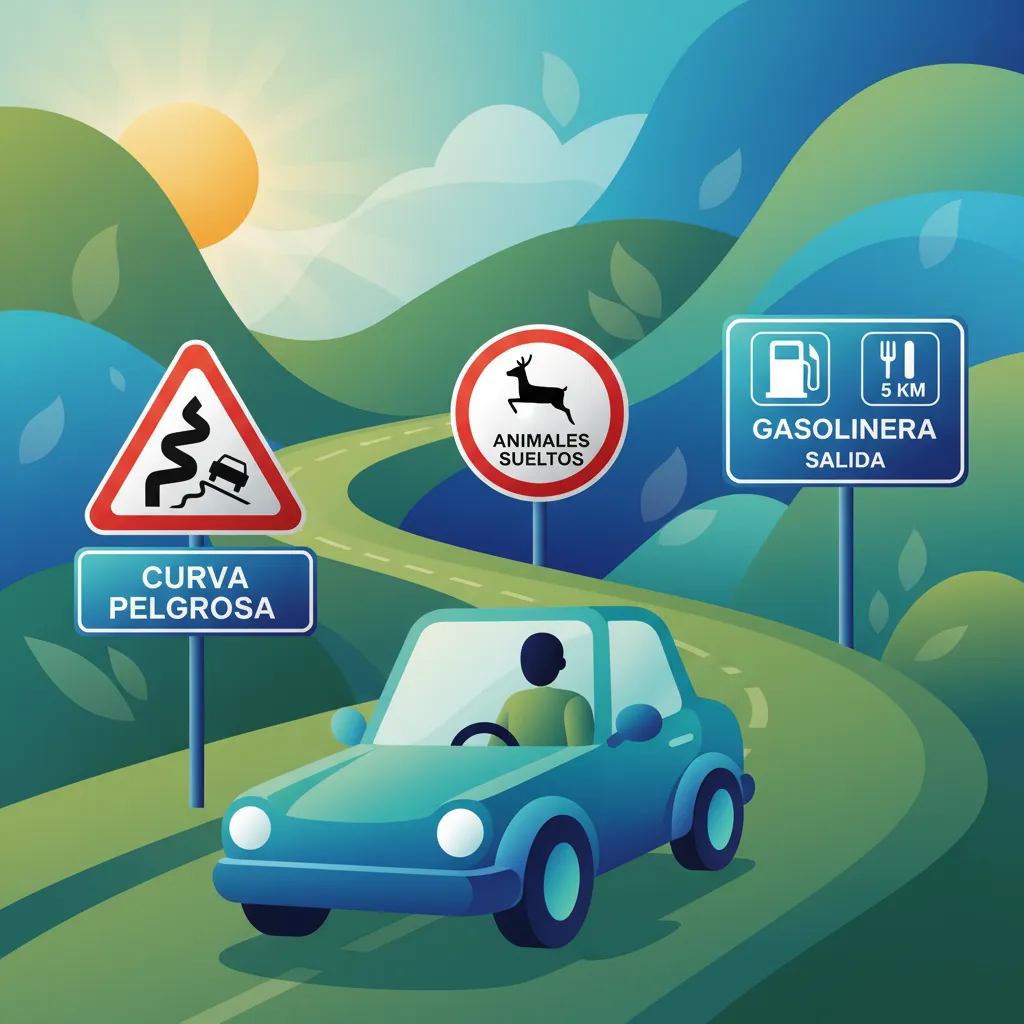
This lesson covers warning and informational signs, which are crucial for anticipating road conditions. It explains how triangular warning signs alert riders to upcoming hazards like sharp curves, slippery surfaces, or pedestrian crossings. The content also describes rectangular informational signs that provide directions, distances, and other useful guidance, helping riders to plan their route and adjust their driving in advance.

This lesson provides a detailed guide to safely starting a moped, from the ignition sequence to the coordinated use of the throttle and brakes. It explains the importance of a pre-ride checklist to verify lights and controls are functional. The content also covers techniques for achieving smooth acceleration from a standstill and performing controlled stops, which is crucial for managing stop-and-go urban traffic conditions.
This lesson clarifies the primary rule for roundabouts: all vehicles entering must yield to traffic already on the circular roadway. It explains how to approach a roundabout, select the appropriate lane based on the intended exit, and merge safely into the flow of traffic. Proper signaling before exiting is also covered, ensuring other drivers can anticipate the rider's movements for a smooth and safe negotiation of the junction.
This lesson teaches riders the critical importance of maintaining a safe following distance to allow for adequate reaction and braking time. It explains practical methods for judging this distance, such as the 'two-second rule,' and how this gap must be increased in adverse weather or poor visibility. Understanding this principle is fundamental to preventing rear-end collisions, one of the most common types of traffic accidents.
This lesson focuses on the optimal position for a moped within a traffic lane to maximize visibility and safety. It discusses the importance of maintaining a safety buffer from other vehicles and hazards, particularly the risk posed by the doors of parked cars. The content explains how to use lane positioning strategically to discourage unsafe overtaking and to be clearly seen by drivers in front and behind, especially when approaching intersections.
This lesson outlines the proper use and legal requirements of vehicle lighting and mirror systems. It covers headlamps, fog lights, turn signals, and brake lights, clarifying when each must be used according to DGT regulations. The lesson also explains the correct adjustment of rearview and side mirrors and strategies for effective blind-spot monitoring.
This lesson clarifies the technical classification of mopeds under Spanish law, differentiating them from motorcycles based on engine displacement not exceeding 50cc and specific power limits. It explains how these specifications impact vehicle categorization, registration, and permissible road speed. The content also covers how electric mopeds fit within the same legal framework and the implications for their use on public roads.
This lesson teaches riders how to react effectively in a sudden, critical situation. It explains the technique for applying maximum braking force without locking the wheels, ensuring the shortest possible stopping distance while maintaining stability. The content also covers how to perform a swift and controlled swerve to avoid an obstacle when stopping is not possible, emphasizing the importance of looking where you want to go.
Find clear answers to common questions learners have about Adequate Lighting and Visibility Requirements. Learn how the lesson is structured, which driving theory objectives it supports, and how it fits into the overall learning path of units and curriculum progression in Spain. These explanations help you understand key concepts, lesson flow, and exam focused study goals.
While not explicitly mandatory for mopeds as they are for some other vehicles, DGT highly recommends using your low beam headlight during the day to increase your visibility to other road users. This is a crucial safety measure, especially in urban areas and for vulnerable road users like moped riders, and often featured in theory exam scenarios for the AM licence.
Low beams (luces de cruce) are for normal driving, providing sufficient light without dazzling others, and are required at night or in poor visibility. High beams (luces de carretera) are for unlit roads outside urban areas when there's no oncoming traffic, providing maximum illumination. You must switch back to low beams when approaching other vehicles to prevent blinding them, a common exam question topic for the AM licence.
The DGT mandates that if you are riding outside urban areas between sunset and sunrise, or at any time in conditions of poor visibility, and you are wearing protective clothing (like a motorcycle jacket), that clothing must incorporate reflective elements visible from at least 150 meters. While not always mandatory within urban areas, wearing reflective clothing is always highly recommended to enhance your visibility and safety, particularly for AM licence holders.
Mopeds in Spain must be equipped with functional turn signals (intermitentes) that are clearly visible to other road users. You are legally required to use them to indicate any change of direction, such as turning or changing lanes. Failing to signal, or signaling incorrectly, is not only dangerous but also a common source of DGT theory exam questions for the AM licence and can result in fines.
No, DGT regulations specify that mopeds must only use approved lighting equipment that complies with European standards. Decorative or non-standard lighting is generally prohibited as it can be distracting to other drivers or misinterpreted as official signals, leading to confusion and potential hazards. Ensure all your moped's lights are standard and fully functional to pass inspections and avoid fines, especially for your AM licence.
Use our powerful search functionality to pinpoint specific Spanish DGT driving theory practice sets. Filter by road sign categories, traffic law topics, or question difficulty to build custom study sessions and reinforce your knowledge precisely where it matters for your official exam.