
This lesson explores two critical phenomena in heavy vehicle operation: brake lag and brake fade. By understanding the mechanical delays in compressed-air systems and the risks of overheating, you will be better prepared to handle your vehicle safely during your Category C or C1 driving theory exam.
Lesson content overview
Operating heavy goods vehicles safely on Swiss roads, particularly on challenging mountain passes, demands a thorough understanding of advanced braking principles. Two critical phenomena, brake lag and brake fade, directly impact a heavy vehicle's braking performance and overall safety. This lesson, part of the Official Swiss Driving Theory Course for Category C & C1 Goods Vehicles, delves into these concepts, their causes, implications, and crucial preventative strategies to ensure effective braking control under all conditions.
Heavy goods vehicles rely predominantly on compressed-air braking systems, which operate differently from the hydraulic systems found in passenger cars. While powerful and reliable, these air systems introduce unique characteristics that drivers must understand and anticipate. The time it takes for air to travel and exert pressure, and the thermal properties of brake components, are central to comprehending brake lag and brake fade.
Brake lag refers to the measurable delay between the moment a driver depresses the brake pedal and the actual engagement and full application of the service brakes (Betriebsbremse) at the wheels. This delay is inherent to compressed-air systems and is a critical factor for heavy vehicle drivers to consider for safe operation.
In heavy vehicles, brake lag typically ranges from 0.5 to 1.0 seconds. This seemingly short period can translate into significant distances traveled, especially at higher speeds. The delay is primarily due to the dynamics of the air-brake system:
The practical meaning of brake lag is straightforward: your heavy vehicle will travel an additional distance before it even begins to decelerate after you press the brake pedal. This means that if you initiate braking exactly when you perceive the need to slow down, you will have already traveled an extra distance equivalent to a full second of reaction time before any braking force is applied.
Drivers often report a "soft" or non-responsive pedal initially, which is a manifestation of the primary lag as the air system begins to engage. Failing to account for this can lead to overshooting stop signs, misjudging distances in traffic, or, most critically, insufficient stopping distance in emergency situations or on steep downhill slopes.
The only way to safely manage brake lag is through anticipatory braking. This means initiating your brake application earlier than you would in a passenger car, especially when:
Compensating for Lag: Always apply the brakes earlier than your instinct tells you, particularly in heavy vehicles. This proactive approach ensures that by the time the brakes fully engage, you are at the intended point for deceleration.
While brake lag is a delay, brake fade represents a dangerous reduction in the actual braking power itself. It occurs when brake components overheat during prolonged or excessive use, leading to a significant decrease in the friction required to slow or stop the vehicle.
Brake fade is the gradual decrease in the braking efficiency of the service brake system due to an excessive rise in the temperature of its components. When brake linings (friction material) and drums or discs become too hot, their material properties change:
The primary cause of brake fade is the sustained, heavy use of the service brake, which is common during long or steep descents, or when trying to slow a heavily loaded vehicle from high speeds without adequate assistance from auxiliary braking systems.
Brake fade is extremely hazardous because it directly compromises your ability to control the vehicle's speed. As fade sets in:
Brake Fade is NOT Prevented by ABS: While Anti-lock Braking Systems (ABS) prevent wheel lock-up, they cannot restore lost friction due to overheating. If the brakes have faded, ABS can only manage the reduced braking power, not magically provide more.
Preventing brake fade is paramount for safe heavy vehicle operation, especially on descents. The key lies in minimizing the use of the service brake by employing alternative braking methods and selecting the correct gear.
Endurance brakes are auxiliary braking systems designed to control vehicle speed without relying on the service brakes. Their primary function is to convert the vehicle's kinetic energy into heat outside the primary wheel brake system, thereby preserving the service brakes for emergencies and full stops.
Engine Brake (Motorbremse / Exhaust Brake): These systems use the engine's compression resistance to slow the vehicle. Common types include:
Retarder: A separate component, usually integrated into the drivetrain, that provides continuous braking torque.
Use Endurance Brakes Early and Often: Engage your engine brake or retarder before you start a long descent, not after your service brakes are already overheating. This proactive use is the cornerstone of fade prevention.
Selecting the appropriate gear is a fundamental aspect of safe downhill driving and brake fade prevention. By downshifting to a lower gear, you harness the engine's natural resistance, providing significant engine braking.
Before the Descent: Assess the grade, length, and vehicle load.
Select a Low Gear: Downshift to a gear that allows the engine to rev at a suitable RPM (check manufacturer recommendations) to provide engine braking without over-speeding.
Engage Endurance Brakes: Activate your engine brake or retarder to control speed continuously.
Monitor Speed: Use the service brake only for short, firm applications (snubs) if speed increases beyond your desired limit, then release to allow brakes to cool.
Avoid Continuous Braking: Never ride the service brake pedal on a long descent.
Swiss road traffic regulations place strong emphasis on safe braking practices for heavy vehicles, especially concerning brake lag and the prevention of brake fade. Adhering to these rules is not just about legal compliance but is crucial for safety on Switzerland's varied and often challenging terrain.
Drivers of heavy vehicles must always anticipate the inherent brake lag when calculating stopping distances. Braking must be initiated earlier than the perceived point of deceleration.
This rule is foundational for defensive driving with heavy vehicles and is implied by general safety principles in the Road Traffic Act.
On prolonged downhill segments, drivers are legally obliged to use endurance brakes (engine brake or retarder) and select appropriate gear to minimize service brake usage.
Drivers must select a gear that provides sufficient engine braking to maintain a safe and controlled speed, especially on grades.
Understanding brake lag and fade is one thing; consistently applying preventative measures is another. Several common driving errors lead to increased risk:
Late Service Brake Application on Descents:
Riding the Service Brake Downhill:
Inadequate Gear Downshifting:
Ignoring Signs of Overheating:
The principles of brake lag and fade remain constant, but their practical implications vary significantly with different driving conditions:
This lesson covers two critical braking phenomena affecting heavy goods vehicles equipped with compressed-air brake systems. Brake lag is the inherent 0.5 to 1.0 second delay between pedal actuation and full brake engagement, requiring drivers to brake earlier and maintain greater following distances. Brake fade is the dangerous loss of braking efficiency caused by overheating of service brake components during prolonged use, which cannot be reversed by ABS. Prevention focuses on proactive use of endurance brakes (engine brakes and retarders) and selecting appropriate low gears on descents to minimize service brake usage. Swiss regulations mandate endurance brake use when service braking would exceed 30 seconds on downhills exceeding 5% grade for vehicles over 3 tonnes, and low gear selection on grades exceeding 4% when loaded.
A short set of high-value points that capture the most important learning from this lesson.
Brake lag is the inherent 0.5 to 1.0 second delay in compressed-air braking systems between pedal press and full brake engagement.
Brake fade is a dangerous reduction in braking power caused by overheating of brake components during prolonged or excessive service brake use.
Endurance brakes (engine brakes and retarders) are auxiliary systems that control speed without overheating the service brakes.
Anticipatory braking—initiating brake application earlier than in a passenger car—is the only safe compensation for brake lag.
On descents, the engine brake and retarder must be engaged proactively before service brakes begin to overheat, not after.
Explore all units and lessons included in this driving theory course.
Brake lag delay plus reaction time means a heavy vehicle travels significantly further before deceleration begins compared to a passenger car.
A spongy pedal feel and increased pedal force required are key symptoms that brake fade is developing.
Descend hills in the same gear you would use to climb them to ensure effective engine braking.
Service brakes should be used only for intermittent snubs on long descents, never continuously.
ABS cannot prevent or restore braking power lost to brake fade—it only manages wheel lock-up of the reduced braking force available.
Applying service brakes too late on descents because drivers fail to account for the inherent lag in air-brake systems.
Riding the service brake pedal continuously downhill instead of using endurance brakes, causing rapid heat buildup and fade.
Descending steep grades in too high a gear, forcing over-reliance on service brakes to control speed.
Continuing to drive despite warning signs of fade such as a spongy pedal, burning smell, or excessive pedal effort.
Assuming ABS will compensate for faded brakes—ABS manages reduced braking force, it cannot create more friction when components are overheated.
Lesson content overview
A short set of high-value points that capture the most important learning from this lesson.
Brake lag is the inherent 0.5 to 1.0 second delay in compressed-air braking systems between pedal press and full brake engagement.
Brake fade is a dangerous reduction in braking power caused by overheating of brake components during prolonged or excessive service brake use.
Endurance brakes (engine brakes and retarders) are auxiliary systems that control speed without overheating the service brakes.
Anticipatory braking—initiating brake application earlier than in a passenger car—is the only safe compensation for brake lag.
On descents, the engine brake and retarder must be engaged proactively before service brakes begin to overheat, not after.
Explore all units and lessons included in this driving theory course.
Brake lag delay plus reaction time means a heavy vehicle travels significantly further before deceleration begins compared to a passenger car.
A spongy pedal feel and increased pedal force required are key symptoms that brake fade is developing.
Descend hills in the same gear you would use to climb them to ensure effective engine braking.
Service brakes should be used only for intermittent snubs on long descents, never continuously.
ABS cannot prevent or restore braking power lost to brake fade—it only manages wheel lock-up of the reduced braking force available.
Applying service brakes too late on descents because drivers fail to account for the inherent lag in air-brake systems.
Riding the service brake pedal continuously downhill instead of using endurance brakes, causing rapid heat buildup and fade.
Descending steep grades in too high a gear, forcing over-reliance on service brakes to control speed.
Continuing to drive despite warning signs of fade such as a spongy pedal, burning smell, or excessive pedal effort.
Assuming ABS will compensate for faded brakes—ABS manages reduced braking force, it cannot create more friction when components are overheated.
Explore search topics learners often look for when studying Understanding Brake Lag and Brake Fade. These topics reflect common questions about road rules, driving situations, safety guidance, and lesson level theory preparation for learners in Switzerland.
Browse additional driving theory lessons that cover connected traffic rules, road signs, and common driving situations related to this topic. Improve your understanding of how different rules interact across everyday traffic scenarios.
Understand how engine brakes and retarders work to prevent brake fade on descents. Learn crucial gear selection techniques for safe downhill driving in Swiss heavy vehicle theory.
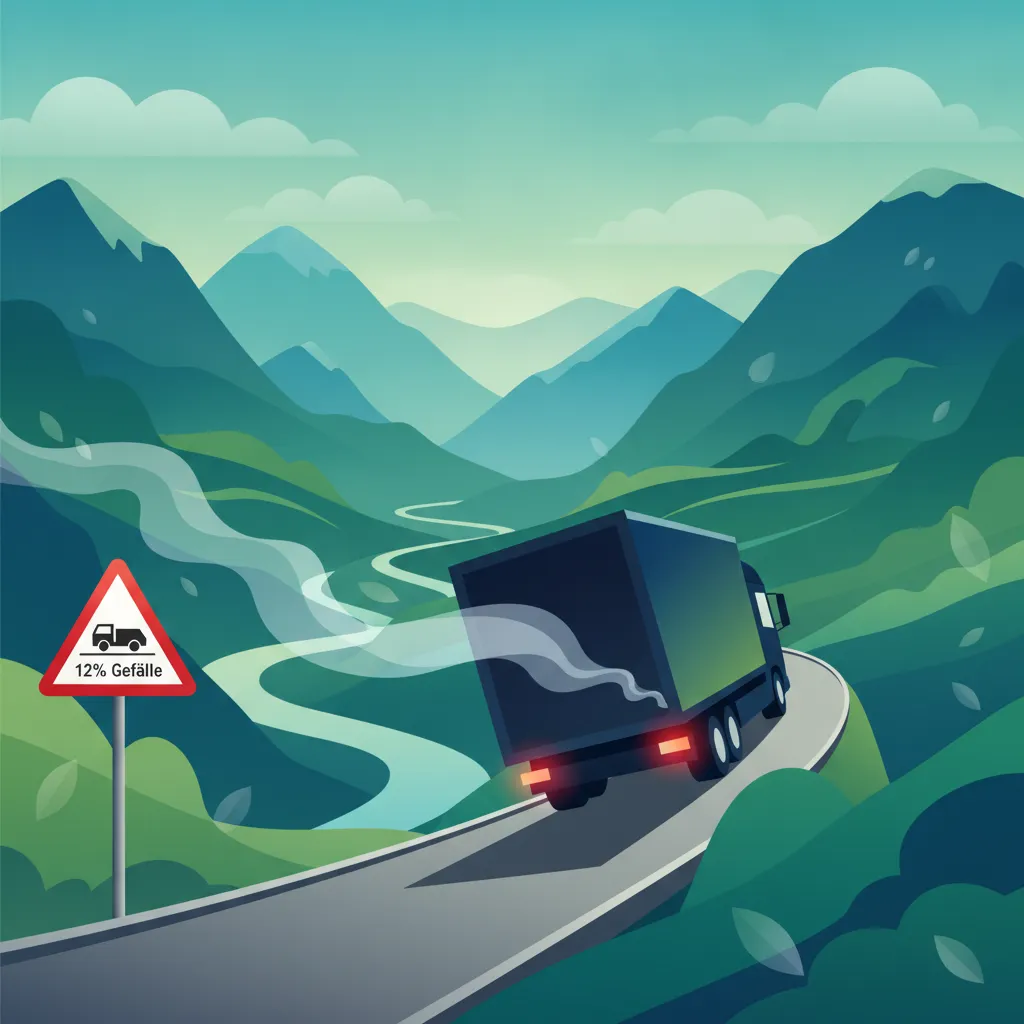
To prevent the service brakes from overheating and failing on long downhill gradients, heavy vehicles are equipped with endurance (or auxiliary) braking systems. This lesson explains the function of engine brakes (which alter valve timing) and retarders (which use hydrodynamic or electromagnetic force). These systems allow the driver to maintain a safe, controlled speed without relying solely on the service brakes.
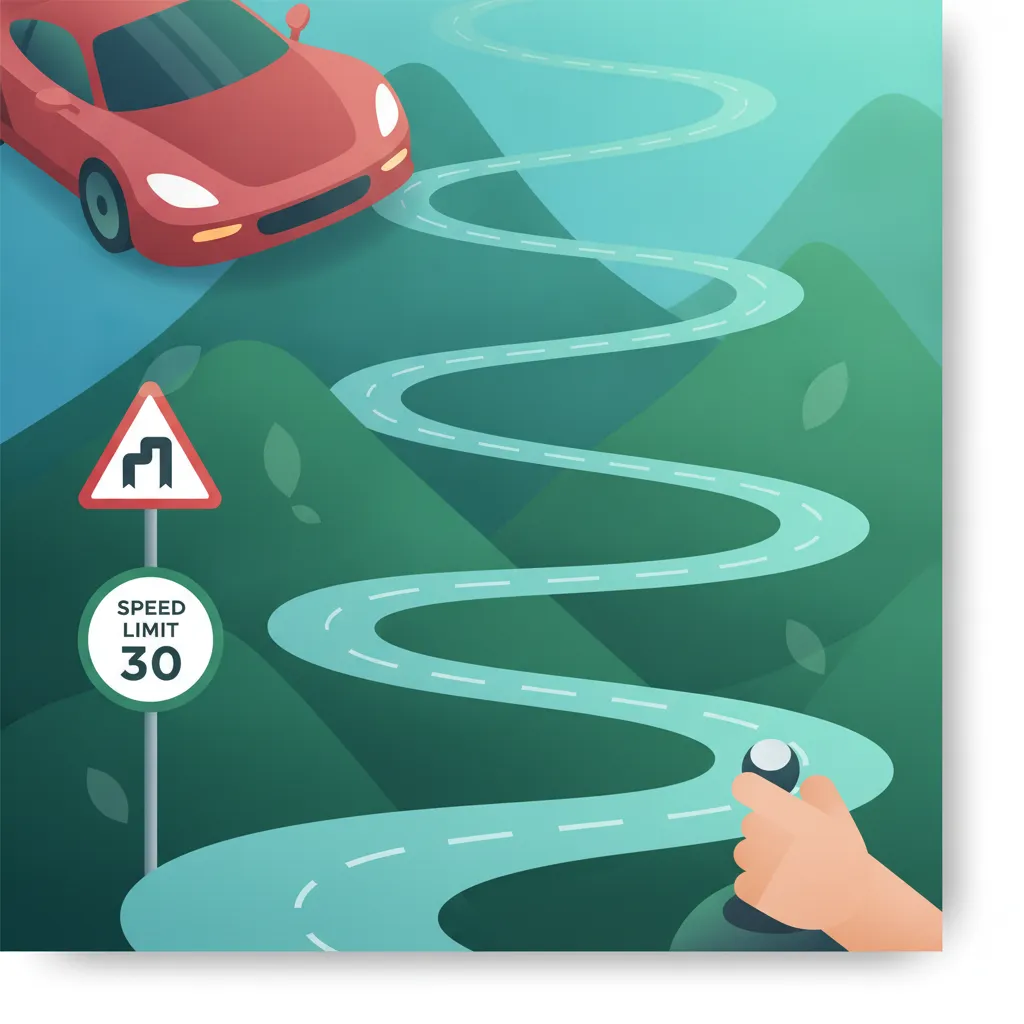
Controlling a heavy vehicle on a steep downhill grade requires a specific technique to avoid disaster. This lesson teaches the golden rule: select a low gear before starting the descent, one that is low enough to control the speed with minimal use of the service brakes. It explains how to effectively combine this with the engine brake or retarder to maintain a safe, steady speed and keep the service brakes cool and ready for an emergency.
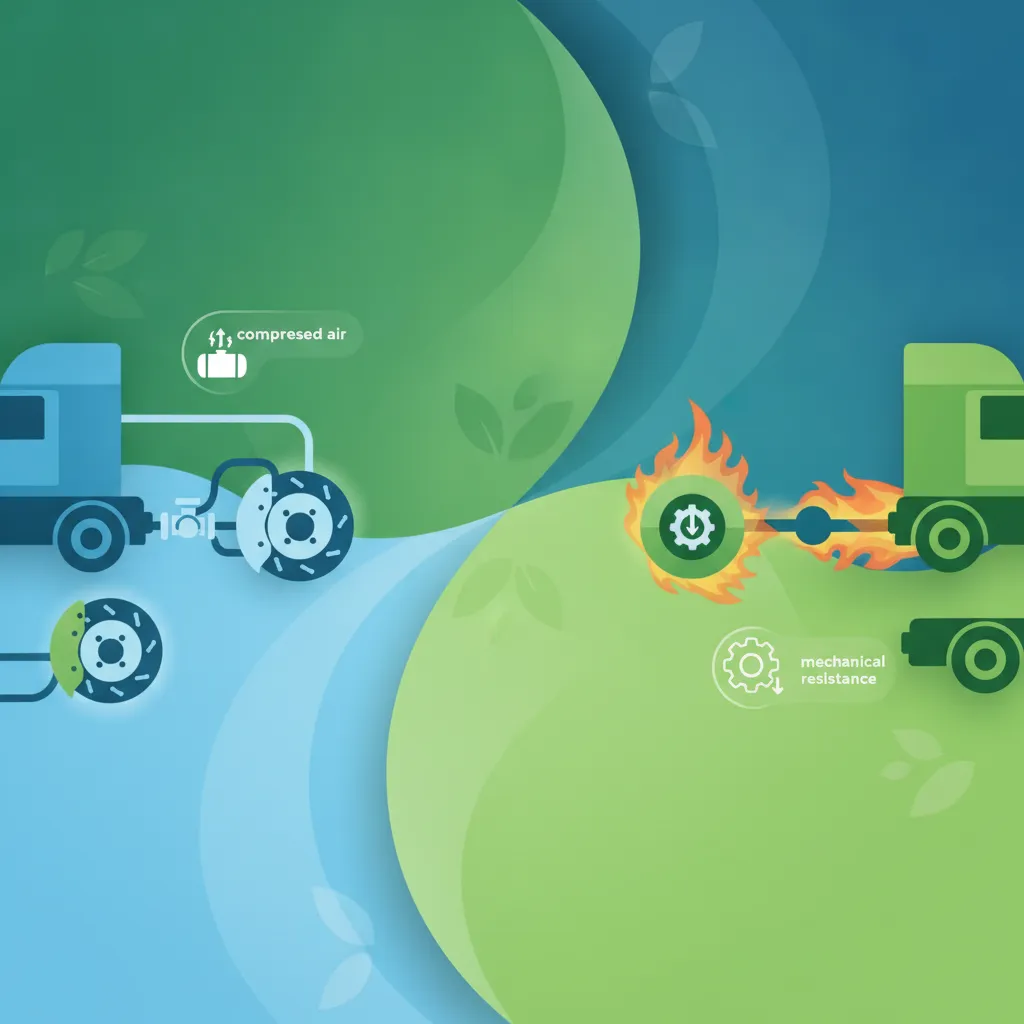
Large passenger vehicles rely on powerful air brake systems. This lesson explains how these systems work, including the importance of monitoring air pressure. It also details the function and proper use of auxiliary braking systems (retarders) to control speed on long descents and reduce wear on the service brakes.
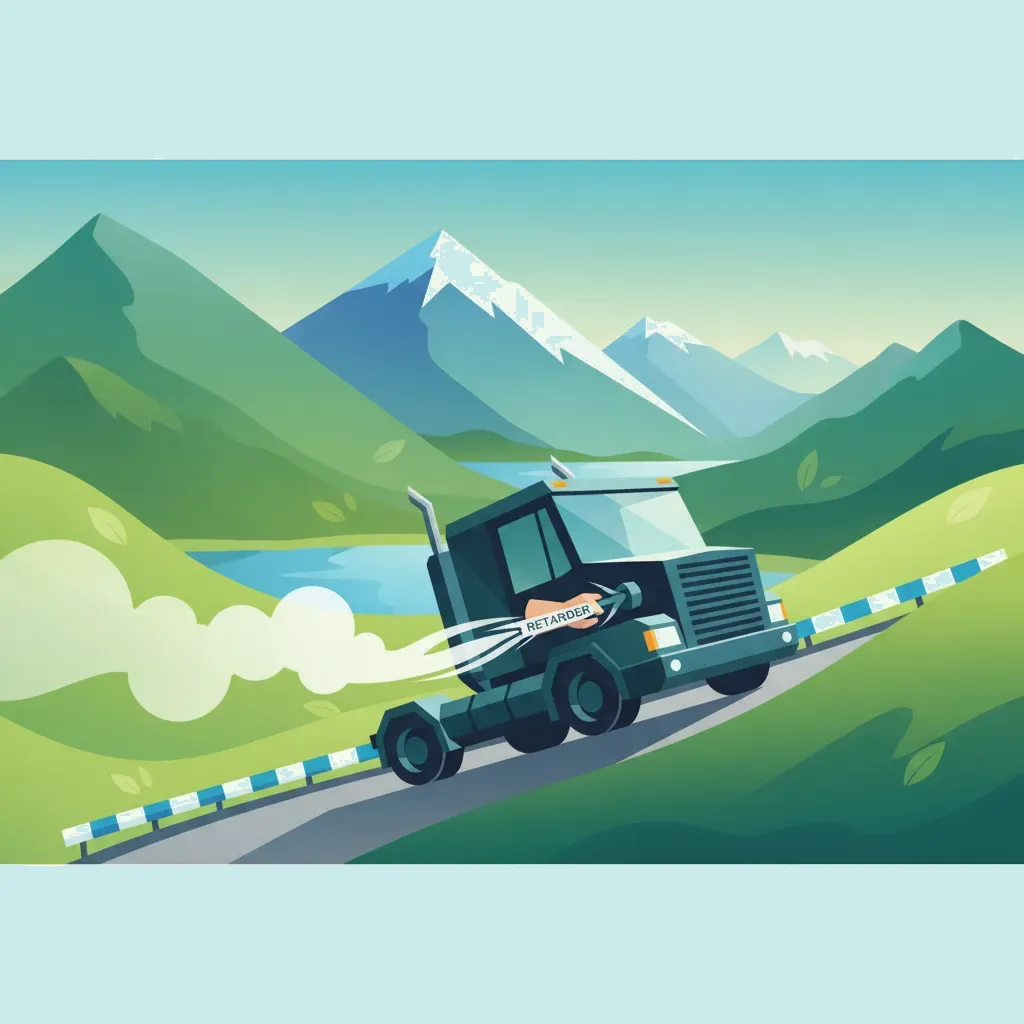
Relying solely on the service brakes on a long downhill stretch can lead to overheating and complete brake failure (brake fade). This lesson explains the function of auxiliary brakes like retarders. You will learn how and when to engage them to maintain a safe, controlled speed, preserving the main brakes for when they are truly needed.
Wet or icy roads drastically reduce tyre grip and can double or triple braking distances. This lesson stresses the importance of significantly reducing overall speed and increasing following distances in such conditions. It advises on using brakes with extreme care to avoid skidding and explains how the vehicle's retarder should be used with caution as it can cause the drive wheels to lock up on slippery surfaces.

Driving in the Alps requires a high level of skill and vehicle sympathy. This lesson covers techniques for climbing steep gradients by selecting the correct gear to maintain momentum without straining the engine. It reiterates the critical importance of using low gears and auxiliary brakes for descending, to ensure the service brakes remain cool and effective for the entire descent.
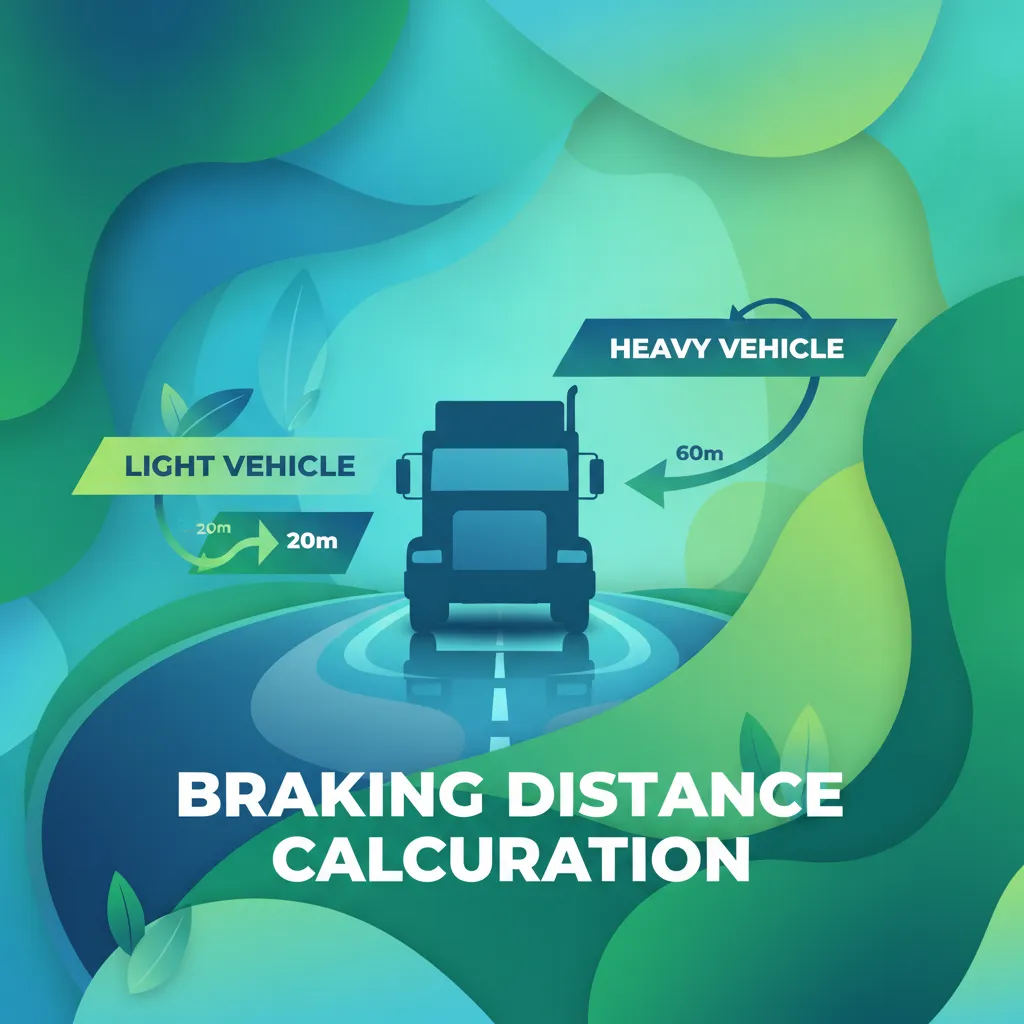
The immense mass of a loaded truck means its braking distance is far greater than that of a car. This lesson breaks down total stopping distance into reaction distance and braking distance, explaining how speed, weight, and road conditions have an exponential effect. It reinforces the necessity of maintaining a significantly larger following distance to ensure enough space to stop safely in an emergency.
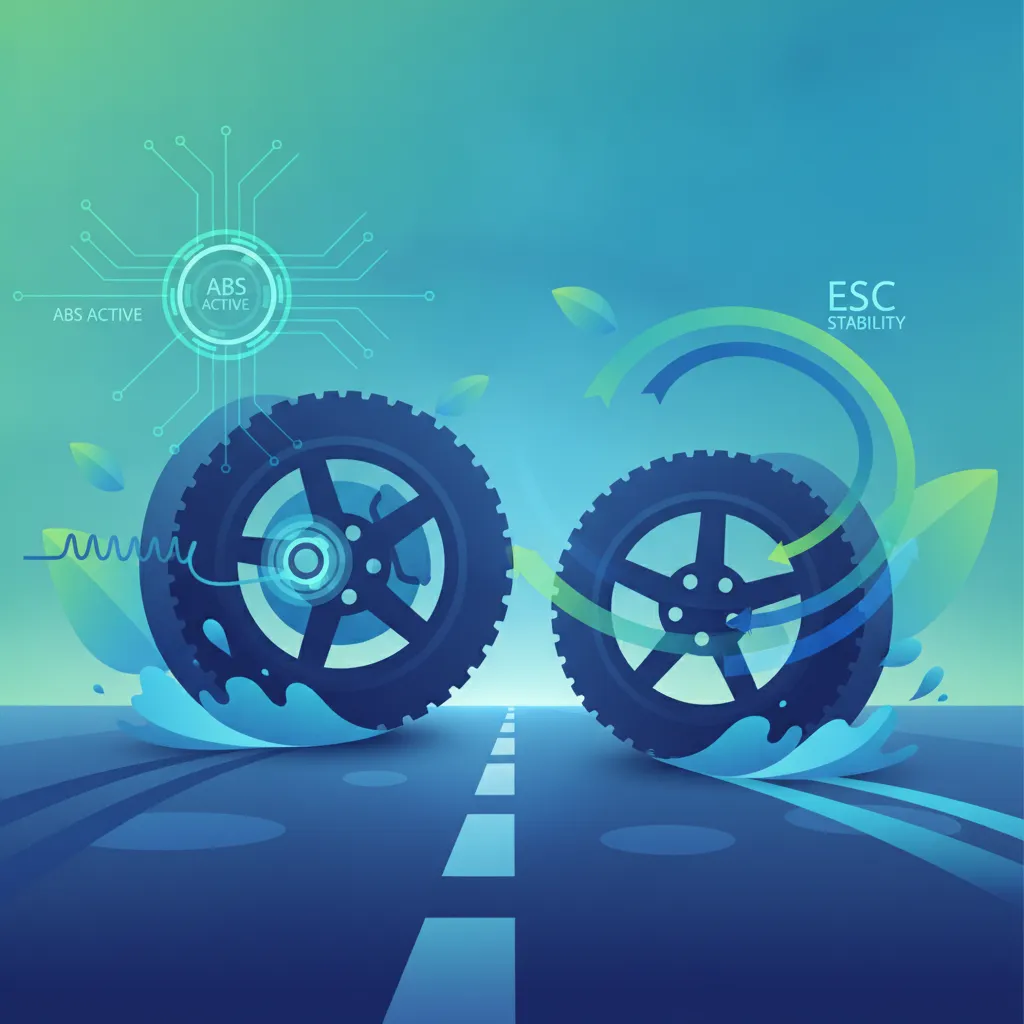
Modern lorries are equipped with advanced electronic safety systems. This lesson explains how the Anti-lock Braking System (ABS) prevents wheels from locking up during hard braking, allowing the driver to maintain steering control. It also covers Electronic Stability Control (ESC), which can detect and mitigate skids or potential rollovers by automatically applying individual brakes and reducing engine power.

This lesson details the function of the two primary braking circuits. The service brake (Betriebsbremse) is the main system operated by the foot pedal for slowing and stopping the vehicle. The parking brake (Feststellbremse) is a powerful spring-applied system that is held off by air pressure, meaning it engages automatically if a major air leak occurs, serving as a critical fail-safe.
Explore the dangerous effects of brake lag and brake fade on heavy vehicle braking performance. Learn why these phenomena occur and the critical safety implications for drivers in Switzerland.
To prevent the service brakes from overheating and failing on long downhill gradients, heavy vehicles are equipped with endurance (or auxiliary) braking systems. This lesson explains the function of engine brakes (which alter valve timing) and retarders (which use hydrodynamic or electromagnetic force). These systems allow the driver to maintain a safe, controlled speed without relying solely on the service brakes.
Large passenger vehicles rely on powerful air brake systems. This lesson explains how these systems work, including the importance of monitoring air pressure. It also details the function and proper use of auxiliary braking systems (retarders) to control speed on long descents and reduce wear on the service brakes.
The immense mass of a loaded truck means its braking distance is far greater than that of a car. This lesson breaks down total stopping distance into reaction distance and braking distance, explaining how speed, weight, and road conditions have an exponential effect. It reinforces the necessity of maintaining a significantly larger following distance to ensure enough space to stop safely in an emergency.
Wet or icy roads drastically reduce tyre grip and can double or triple braking distances. This lesson stresses the importance of significantly reducing overall speed and increasing following distances in such conditions. It advises on using brakes with extreme care to avoid skidding and explains how the vehicle's retarder should be used with caution as it can cause the drive wheels to lock up on slippery surfaces.
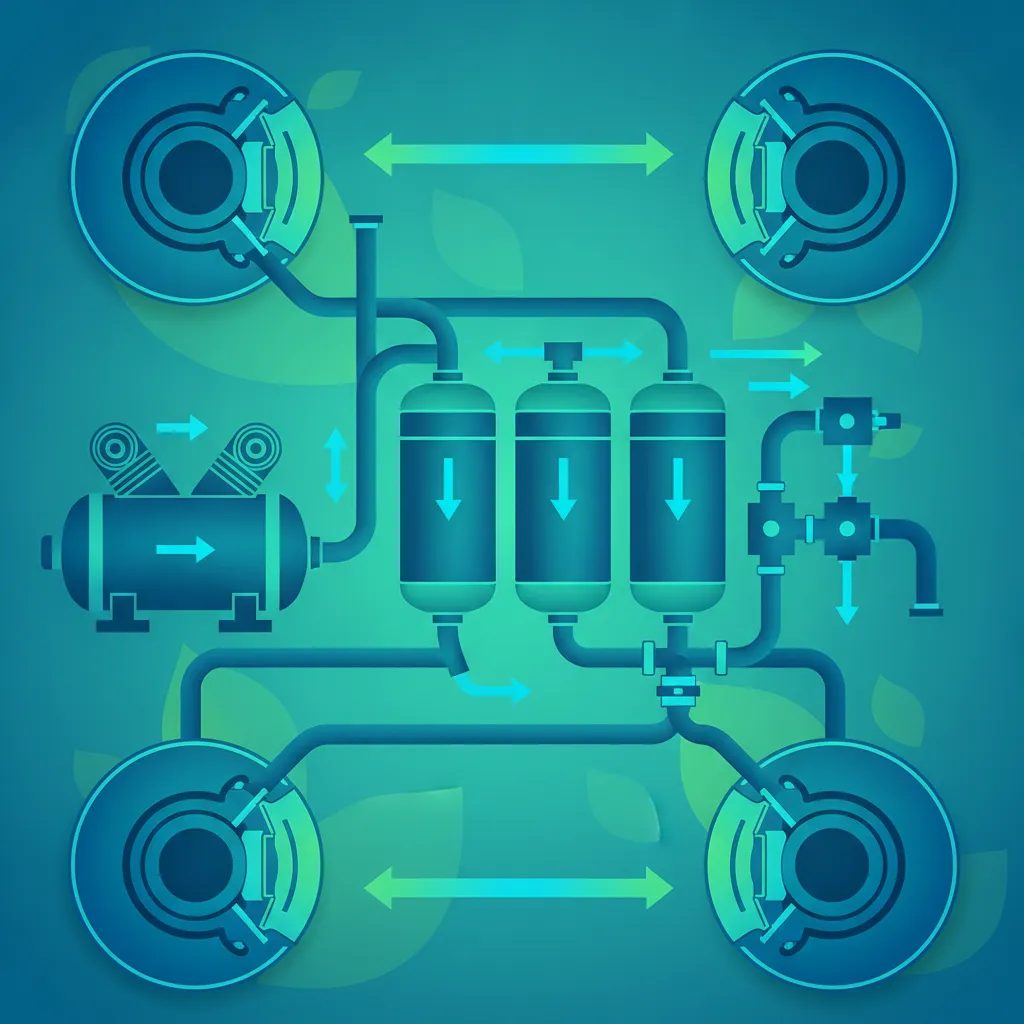
Unlike the hydraulic brakes in cars, heavy vehicles use a compressed-air system for its power and reliability. This lesson explains the basic operating principle, covering key components like the engine-driven compressor, air storage tanks, and the brake chambers that actuate the brakes. Understanding this system is fundamental to appreciating its capabilities and limitations.
This lesson details the function of the two primary braking circuits. The service brake (Betriebsbremse) is the main system operated by the foot pedal for slowing and stopping the vehicle. The parking brake (Feststellbremse) is a powerful spring-applied system that is held off by air pressure, meaning it engages automatically if a major air leak occurs, serving as a critical fail-safe.
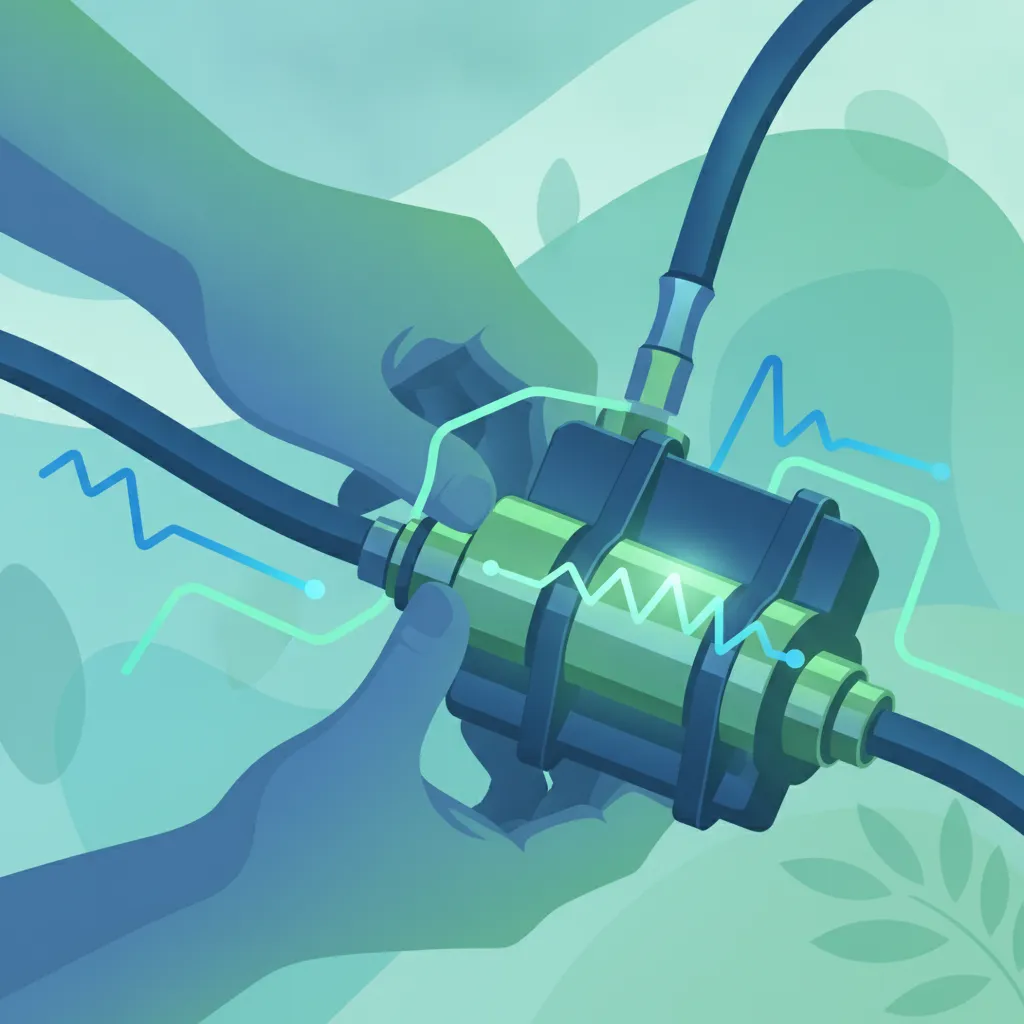
A secure connection between the tractor and trailer requires linking the braking and electrical systems. This lesson explains the function of the red (emergency) and yellow (service) air lines and the main electrical socket, which powers the trailer's lights and ABS. It outlines the correct, safe sequence for connecting and disconnecting these lines to ensure the trailer's brakes function correctly.
Relying solely on the service brakes on a long downhill stretch can lead to overheating and complete brake failure (brake fade). This lesson explains the function of auxiliary brakes like retarders. You will learn how and when to engage them to maintain a safe, controlled speed, preserving the main brakes for when they are truly needed.
Modern lorries are equipped with advanced electronic safety systems. This lesson explains how the Anti-lock Braking System (ABS) prevents wheels from locking up during hard braking, allowing the driver to maintain steering control. It also covers Electronic Stability Control (ESC), which can detect and mitigate skids or potential rollovers by automatically applying individual brakes and reducing engine power.
Overloading is a serious offence with severe safety and legal ramifications. This lesson details how excess weight drastically increases braking distances, puts extreme stress on tyres leading to blowouts, and negatively affects steering and overall stability. Furthermore, it discusses the substantial fines, potential license withdrawal, and driver liability that result from violating Swiss weight regulations.
Find clear answers to common questions learners have about Understanding Brake Lag and Brake Fade. Learn how the lesson is structured, which driving theory objectives it supports, and how it fits into the overall learning path of units and curriculum progression in Switzerland. These explanations help you understand key concepts, lesson flow, and exam focused study goals.
This is known as brake lag, which occurs because compressed-air systems require time to build and move pressure through the lines to the brake actuators at each wheel. It is a fundamental characteristic of air brakes that you must account for by increasing your following distance.
Prolonged use of the service brake can lead to brake fade, where the brake components become so hot that their friction material loses effectiveness. This causes a dangerous reduction in braking power, which is why using the engine brake or retarder is mandatory on long descents.
Symptoms include a 'spongy' pedal feel, the need to press the brake pedal much harder than usual to achieve the same deceleration, or a noticeable burning smell. If these occur, you must stop in a safe place immediately and allow the brakes to cool.
Yes, you will likely encounter questions regarding safe following distances and the operational characteristics of air brakes. Understanding that your vehicle does not react instantaneously is key to selecting the correct answers.
Pinpoint specific Swiss traffic rules, road signs, or driving situations you need to master. Use the practice search to start a focused revision session now and build confidence for your official driving theory exam.