
This lesson introduces the critical mechanisms of compressed-air braking systems, which are standard on heavy goods vehicles. You will learn how these systems differ from hydraulic brakes to prepare for the technical requirements of the Swiss Category C and C1 theory exam.
Lesson content overview
Operating heavy goods vehicles, particularly in categories C and C1, requires a profound understanding of their unique braking systems. Unlike the hydraulic brakes found in passenger cars, heavy vehicles rely on compressed-air, or pneumatic, braking systems. This lesson delves into the fundamental principles, essential components, and critical safety considerations of these robust systems, crucial for safe and compliant driving on Swiss roads.
Compressed-air braking systems are the standard for heavy vehicles due to their immense power, reliability, and adaptability to large, multi-axle configurations. The sheer mass and kinetic energy of a fully loaded heavy goods vehicle demand a braking force far beyond what hydraulic systems can efficiently provide. Pneumatic systems achieve this by using pressurized air as the medium to transmit force, offering significant advantages such as continuous energy generation, redundancy, and consistent performance under heavy loads and demanding conditions like long descents.
The functioning of a compressed-air braking system can be broken down into several key principles, all working in concert to ensure the powerful and controlled deceleration of heavy vehicles.
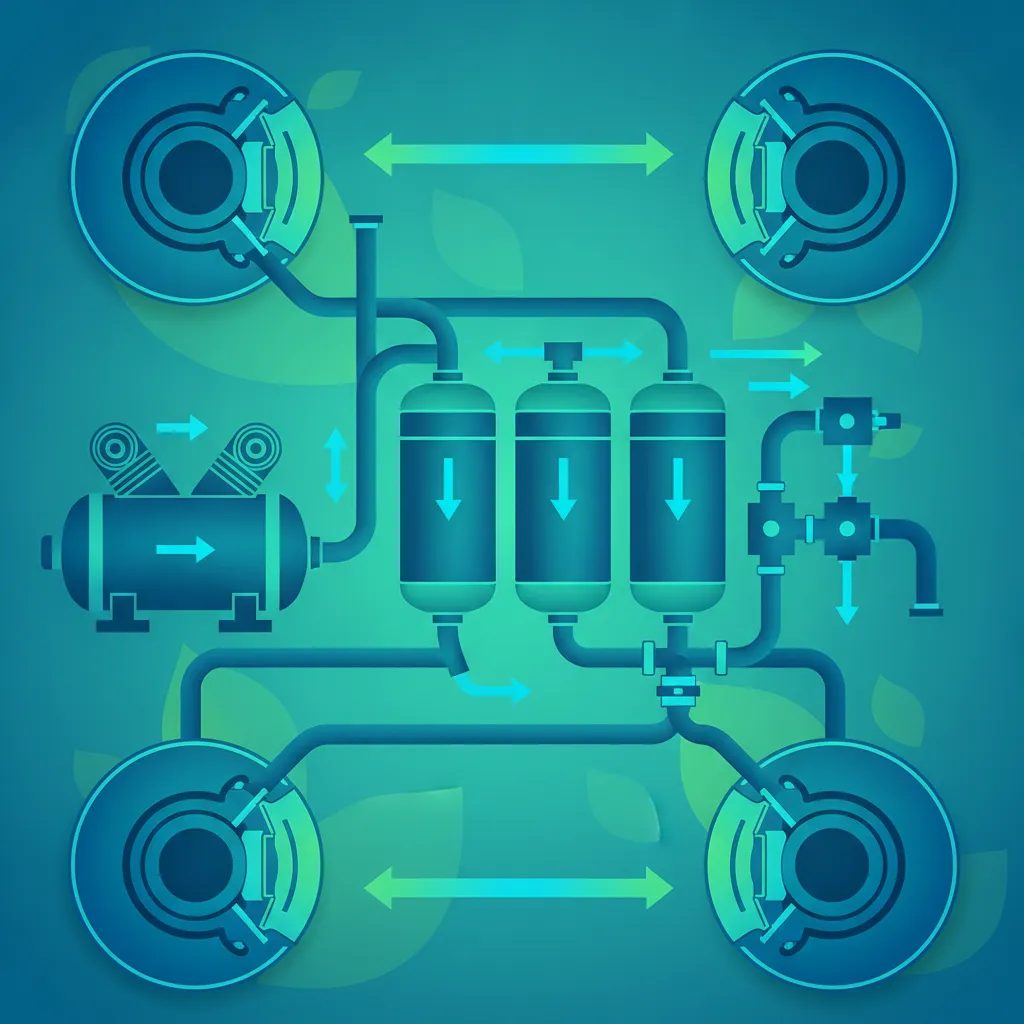
At the heart of the system is the air compressor, an engine-driven device that continuously draws in atmospheric air, compresses it, and delivers it to air reservoirs, also known as air tanks. These tanks store the pressurized air (typically between 8 to 10 bar) and act as an energy bank for the braking system. This constant replenishment and storage ensure that ample air supply is always available for repeated and sustained braking, independent of fluid levels, unlike hydraulic systems. The system's ability to store compressed air is vital; it means that even if the compressor temporarily stops or fails, there is a reserve supply to operate the brakes.
When the driver applies the brake pedal, a service brake valve modulates the stored air pressure, directing it through a network of lines and relay valves to the brake chambers located at each wheel. Inside the brake chamber, the incoming air pressure acts on a diaphragm or piston, converting the pneumatic energy into mechanical force. This mechanical force then pushes brake shoes against a drum or brake pads against a disc, generating friction that slows the vehicle. The more pressure applied via the pedal, the greater the force exerted on the brakes.
Equally important to applying the brakes is their smooth and rapid release. When the driver releases the brake pedal, the control valves quickly vent the air pressure from the brake chambers. This allows the brake shoes or pads to retract, disengaging the brakes and permitting the vehicle to roll freely again. A swift release is crucial to prevent brake drag, which can lead to overheating and unnecessary wear.
A deep understanding of each component is vital for recognizing potential faults and ensuring safe operation.
The air compressor is the tireless workhorse of the pneumatic braking system. It typically takes mechanical energy from the vehicle's engine (either via a belt or direct drive) to pressurize air. Its primary function is to maintain sufficient air pressure within the reservoirs for continuous brake operation. Regular checks of the compressor's functionality and its associated belts (if belt-driven) are part of a thorough pre-trip inspection. A malfunctioning compressor will eventually lead to insufficient air pressure, compromising braking effectiveness.
Heavy vehicles are equipped with multiple air reservoirs or tanks. These cylindrical containers store the compressed air. A typical setup includes a primary tank for the main service brake circuit and an auxiliary (secondary) tank that serves as a reserve, often for the second brake circuit or for auxiliary systems. This redundancy is a critical safety feature.
The primary tank ensures the main service brakes have a consistent supply of air. The secondary tank provides a backup, ensuring that even if there's a problem with the primary supply or compressor, there's still air available for braking. Both tanks are regulated to a specific pressure range, usually around 8–10 bar.
Compressed air naturally contains water vapour. As air is compressed and cools in the tanks, this water vapour condenses into liquid water. If not removed, this water can lead to corrosion inside the tanks and other components, especially in colder climates where it can freeze and obstruct air lines or damage valves. Therefore, regular draining of moisture from the air tanks is an essential maintenance task. Many modern systems feature automatic drain valves, but manual checks are still recommended.
Various valves throughout the system regulate the flow and pressure of air, responding to driver input and system conditions.
The service brake valve, commonly known as the foot valve, is directly connected to the brake pedal. When you press the pedal, this valve opens, modulating the flow of compressed air from the reservoirs to the brake chambers. The harder you press, the more air pressure is directed, resulting in greater braking force. The sensitivity and response of this valve directly influence the driver's control over braking.
For heavy vehicles, especially those with multiple axles and large brake chambers, the service brake valve alone might not be able to deliver the required volume or pressure of air quickly enough to all brake chambers. This is where the relay valve comes in. Positioned closer to the brake chambers, the relay valve acts as an amplifier. It receives a small pilot pressure signal from the service brake valve, which then causes it to open and directly release a larger volume of high-pressure air from the local reservoir (or from a supply line) to the brake chambers. This significantly speeds up brake application and ensures consistent force distribution across all wheels.
The parking brake valve, also known as the Feststellbremse in Swiss German, is crucial for immobilizing the vehicle. In most heavy vehicle air brake systems, the parking brake is spring-applied and air-released. This means strong springs engage the brakes when there is no air pressure. To release the parking brake, compressed air is routed to the parking brake chambers to overcome the spring force. The parking brake valve controls this air flow. It must be manually released before driving and properly engaged when parking, especially on inclines.
Always ensure the parking brake (Feststellbremse) is fully engaged when leaving your heavy vehicle, particularly on slopes, to prevent unintended movement.
Brake chambers are the final actuators in the system, directly converting air pressure into the mechanical force needed to apply the brakes. Most commonly, these are diaphragm-type chambers where air pressure pushes against a flexible diaphragm, which then moves a pushrod. This pushrod, in turn, operates the slack adjuster and cam (for drum brakes) or caliper mechanism (for disc brakes), forcing the friction material against the braking surface.
Some advanced brake chambers incorporate an End-of-Travel (EOT) valve. This valve's purpose is to regulate the maximum air pressure within the brake chamber. Once the pushrod has moved sufficiently to fully apply the brake, the EOT valve will prevent further air from entering the chamber and may vent any excess pressure. This prevents over-application, potential damage to brake components, and helps ensure a consistent braking feel.
To prevent the accumulation of dangerously high pressure, safety valves are integrated into the system. These valves are designed to automatically release air if the system pressure exceeds a predetermined safe limit, typically around 12 bar. This protects the air tanks, lines, and other components from potential rupture or damage due to overpressure. Pressure regulators work to maintain system pressure within the optimal operating range, ensuring consistent brake performance.
Pressure gauges, or manometers, are indispensable instruments that display the current air pressure in each circuit of the braking system. Located prominently on the dashboard, these gauges allow the driver to monitor the system's health in real-time. They are critical for ensuring sufficient pressure before starting a journey and for detecting pressure drops that could indicate a leak or compressor malfunction during operation. Many heavy vehicles have separate gauges for the primary and secondary circuits, clearly indicating the redundancy of the system.
Beyond the individual components, several overarching principles govern the safe and effective use of compressed-air brakes.
A cornerstone of heavy vehicle braking safety is the dual-circuit system. This design separates the braking system into two completely independent air circuits, each capable of operating at least half of the vehicle's brakes. For example, one circuit might control the front axle brakes, and the other the rear axle brakes, or they might be configured as diagonal splits.
The primary benefit of this redundancy is safety: if one circuit fails due to a leak or component malfunction, the other circuit remains fully operational, providing partial braking capability and allowing the driver to bring the vehicle to a controlled stop. Swiss regulations mandate dual-circuit systems for heavy vehicles exceeding specific weight thresholds, typically above 3.5 tonnes. This ensures a vital safety net, mitigating the risk of total brake failure.
Brake lag refers to the time delay between the moment the driver depresses the brake pedal and when full braking force is actually developed at the brake chambers. This lag is inherent in pneumatic systems because it takes time for air to travel through the lines, for valves to react, and for the pressure to build up in the brake chambers. While often only a fraction of a second, brake lag significantly impacts stopping distances, especially for heavy vehicles traveling at higher speeds or on steep descents.
Drivers of heavy vehicles must always anticipate brake lag. This means applying the brakes earlier than you would in a passenger car, especially in emergency situations or when descending steep grades.
Brake fade is a critical safety concern for heavy vehicles, especially on long or steep descents. It describes the reduction in braking effectiveness due to the overheating of brake components, such as brake linings, pads, drums, or discs. Prolonged or heavy use of the service brakes converts the vehicle's kinetic energy into heat. When temperatures become too high, the friction materials can lose their effectiveness, leading to a significant decrease in stopping power. In severe cases, brake fade can result in a near-total loss of braking ability.
To prevent brake fade, heavy vehicle drivers must judiciously use endurance braking systems, such as engine brakes and retarders, which dissipate kinetic energy without relying on the friction brakes. This allows the service brakes to remain cool and ready for situations requiring full stopping power.
Adherence to specific Swiss road traffic regulations is paramount for all Category C & C1 drivers.
Swiss Road Traffic Regulations stipulate that the service pressure in each brake circuit of a heavy vehicle must be maintained at a minimum level while the vehicle is in motion. This minimum pressure, typically around 5 bar, is essential to ensure adequate brake force for safe stopping. Driving with insufficient pressure in any circuit is illegal and extremely dangerous.
For heavy vehicles exceeding a certain weight threshold (e.g., typically over 3.5 tonnes), a dual-circuit pneumatic braking system is a mandatory requirement in Switzerland. This regulation underscores the critical importance of redundancy for public safety on Swiss roads, particularly considering the challenging mountainous terrain.
All heavy vehicles equipped with pneumatic brakes must have clear warning indicators. An illuminated warning light and often an audible alarm must activate if the air pressure in any circuit falls below the minimum required safe operating pressure while the vehicle is moving. Ignoring these warnings is a severe safety violation.
The entire braking system, including air tanks, valves, lines, and brake chambers, must undergo regular, periodic inspections. These inspections, stipulated by Swiss Vehicle Inspection Ordinance, ensure continued safe operation, detect leaks, check for corrosion, and verify component functionality. Failure to conduct these inspections or operate a vehicle with known brake defects can lead to significant penalties.
When parking a heavy vehicle, especially on an incline, the parking brake (Feststellbremse) must be fully engaged and its effectiveness confirmed. This mandatory measure prevents the vehicle from rolling due to gravity, a critical safety protocol to avoid collisions and ensure public safety. In some situations, additional measures like wheel chocks may also be advised or required.
Awareness of common pitfalls can prevent dangerous situations and ensure compliance.
One of the most frequent violations is starting a journey with insufficient air pressure, or continuing to drive despite a low-pressure warning. If your pressure gauges indicate below the minimum service pressure (e.g., 5 bar) before departure, you must wait for the compressor to build up adequate pressure. During a journey, a warning light signifies a serious issue, such as a leak or compressor failure, demanding immediate and safe stopping.
A common and dangerous mistake is relying solely on the service brakes during long, steep descents. This leads directly to brake fade. Instead, drivers must manage their speed using a low gear and supplementary endurance braking systems like engine brakes or retarders, reserving the service brakes for intermittent, sharp applications to maintain control.
Inadvertently driving with the parking brake (Feststellbremse) partially or fully engaged causes continuous brake drag. This not only wastes fuel and increases wear on brake components but can also lead to severe overheating and brake fade, potentially compromising the service brakes when they are most needed. Always confirm the parking brake is fully released before moving.
Neglecting maintenance, such as failing to regularly drain moisture from air tanks, can lead to internal corrosion and component failure. Air leaks, if undetected, can cause gradual pressure drops, especially under repeated braking, making the system unstable and unsafe. Regular inspection and servicing are non-negotiable for pneumatic braking systems.
The compressed-air braking system is a complex yet highly reliable engineering marvel designed for the unique demands of heavy goods vehicles. For Swiss Category C & C1 drivers, a thorough understanding of its principles, components, safety features, and regulatory requirements is not merely academic—it is fundamental to road safety. Mastering concepts such as air compression, dual-circuit redundancy, brake lag, and brake fade, alongside diligent pre-trip checks and appropriate driving techniques, empowers you to operate heavy vehicles safely and confidently, especially on Switzerland's challenging and diverse road network.
Compressed-air braking systems power heavy goods vehicles by using an engine-driven compressor to fill air tanks with pressurized air (typically 8-10 bar), which is then directed to brake chambers through control valves to create mechanical braking force. Key components include the service brake valve (foot valve), relay valves for rapid air delivery to distant wheels, and brake chambers that convert air pressure into physical brake application. Safety-critical features include dual-circuit redundancy with primary and secondary tanks, ensuring partial braking if one circuit fails. Drivers must understand brake lag (response delay requiring earlier braking) and brake fade (overheating from prolonged use, prevented by using engine brakes and retarders on descents). Swiss regulations require minimum 5 bar service pressure, mandatory dual circuits for vehicles over 3.5 tonnes, functional warning indicators, and regular inspections to maintain roadworthiness.
A short set of high-value points that capture the most important learning from this lesson.
Heavy vehicles use compressed-air (pneumatic) braking systems instead of hydraulic systems because they provide superior power, reliability, and adaptability for large vehicle configurations.
The air compressor continuously draws and compresses atmospheric air into storage tanks, maintaining pressure typically between 8-10 bar for brake operation.
Air pressure from storage tanks is directed through the service brake valve and relay valves to brake chambers, where it converts into mechanical force that applies the brakes.
Heavy vehicles must have dual-circuit braking systems with independent primary and secondary tanks, ensuring partial braking capability even if one circuit fails.
Swiss regulations mandate minimum service pressure of approximately 5 bar in each circuit and require dual-circuit systems for vehicles typically over 3.5 tonnes.
Explore all units and lessons included in this driving theory course.
The parking brake (Feststellbremse) is spring-applied and air-released, meaning brakes engage when air pressure is absent and must be released before driving.
Brake lag is the inherent time delay between pressing the brake pedal and full brake force development, requiring heavy vehicle drivers to brake earlier than passenger car drivers.
Brake fade occurs when prolonged service brake use on descents causes overheating and loss of braking effectiveness; use engine brakes and retarders instead.
Moisture in compressed air condenses in tanks and must be regularly drained to prevent corrosion, freezing, and component damage.
Pressure gauges (manometers) on the dashboard display real-time air pressure in each circuit; always verify adequate pressure before departure.
Starting or continuing a journey with air pressure below the minimum required level (approximately 5 bar), which compromises braking ability.
Relying solely on service brakes during long or steep descents, leading directly to brake fade and potentially dangerous loss of stopping power.
Driving with the parking brake (Feststellbremse) even partially engaged, causing brake drag, overheating, excessive wear, and wasted fuel.
Failing to drain moisture from air tanks, which can corrode internal components and freeze in cold conditions to obstruct air lines.
Not anticipating brake lag in emergency situations or when descending steep grades, resulting in longer stopping distances than expected.
Lesson content overview
A short set of high-value points that capture the most important learning from this lesson.
Heavy vehicles use compressed-air (pneumatic) braking systems instead of hydraulic systems because they provide superior power, reliability, and adaptability for large vehicle configurations.
The air compressor continuously draws and compresses atmospheric air into storage tanks, maintaining pressure typically between 8-10 bar for brake operation.
Air pressure from storage tanks is directed through the service brake valve and relay valves to brake chambers, where it converts into mechanical force that applies the brakes.
Heavy vehicles must have dual-circuit braking systems with independent primary and secondary tanks, ensuring partial braking capability even if one circuit fails.
Swiss regulations mandate minimum service pressure of approximately 5 bar in each circuit and require dual-circuit systems for vehicles typically over 3.5 tonnes.
Explore all units and lessons included in this driving theory course.
The parking brake (Feststellbremse) is spring-applied and air-released, meaning brakes engage when air pressure is absent and must be released before driving.
Brake lag is the inherent time delay between pressing the brake pedal and full brake force development, requiring heavy vehicle drivers to brake earlier than passenger car drivers.
Brake fade occurs when prolonged service brake use on descents causes overheating and loss of braking effectiveness; use engine brakes and retarders instead.
Moisture in compressed air condenses in tanks and must be regularly drained to prevent corrosion, freezing, and component damage.
Pressure gauges (manometers) on the dashboard display real-time air pressure in each circuit; always verify adequate pressure before departure.
Starting or continuing a journey with air pressure below the minimum required level (approximately 5 bar), which compromises braking ability.
Relying solely on service brakes during long or steep descents, leading directly to brake fade and potentially dangerous loss of stopping power.
Driving with the parking brake (Feststellbremse) even partially engaged, causing brake drag, overheating, excessive wear, and wasted fuel.
Failing to drain moisture from air tanks, which can corrode internal components and freeze in cold conditions to obstruct air lines.
Not anticipating brake lag in emergency situations or when descending steep grades, resulting in longer stopping distances than expected.
Explore search topics learners often look for when studying Principles of Compressed-Air Braking Systems. These topics reflect common questions about road rules, driving situations, safety guidance, and lesson level theory preparation for learners in Switzerland.
Browse additional driving theory lessons that cover connected traffic rules, road signs, and common driving situations related to this topic. Improve your understanding of how different rules interact across everyday traffic scenarios.
Understand the critical safety feature of dual-circuit air braking systems in Swiss Category C & C1 vehicles. Learn how redundancy ensures continuous braking capability even with a single circuit failure and its importance for road safety.
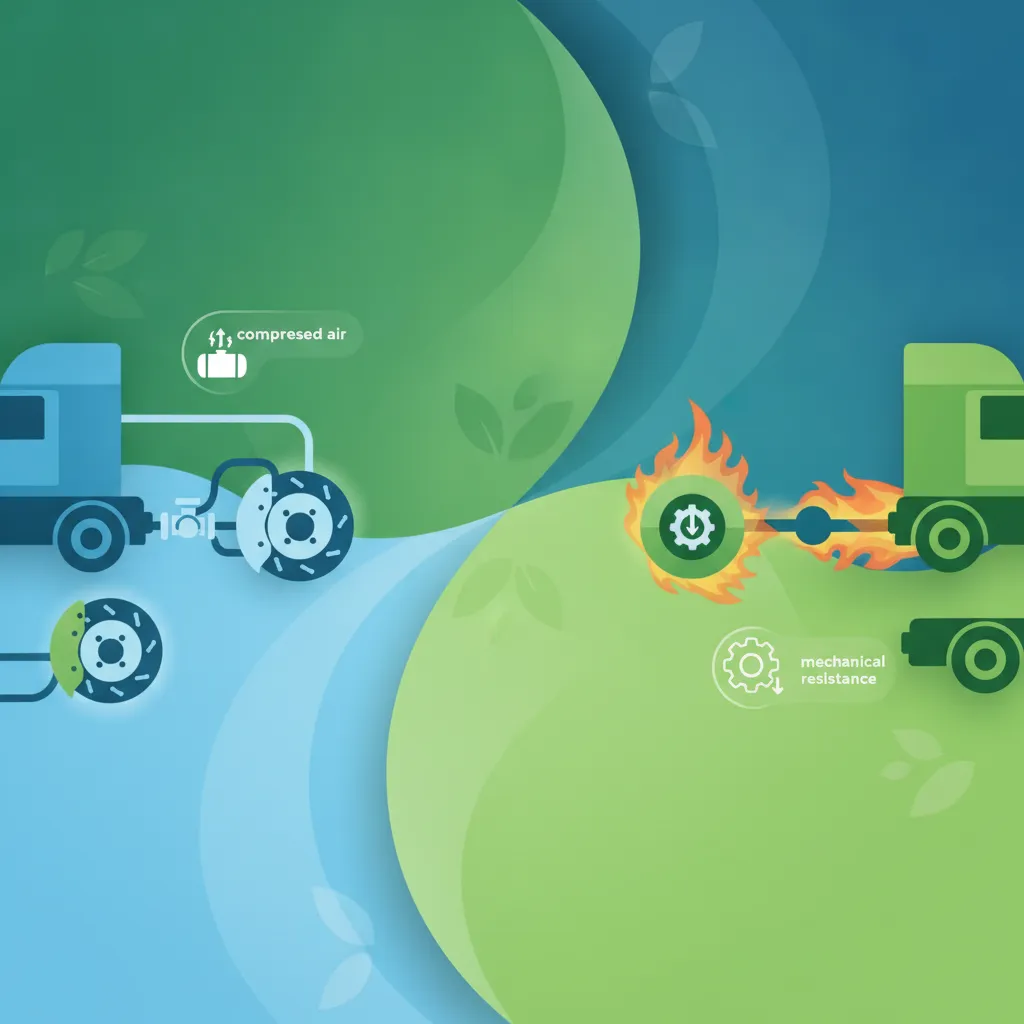
Large passenger vehicles rely on powerful air brake systems. This lesson explains how these systems work, including the importance of monitoring air pressure. It also details the function and proper use of auxiliary braking systems (retarders) to control speed on long descents and reduce wear on the service brakes.

This lesson details the function of the two primary braking circuits. The service brake (Betriebsbremse) is the main system operated by the foot pedal for slowing and stopping the vehicle. The parking brake (Feststellbremse) is a powerful spring-applied system that is held off by air pressure, meaning it engages automatically if a major air leak occurs, serving as a critical fail-safe.
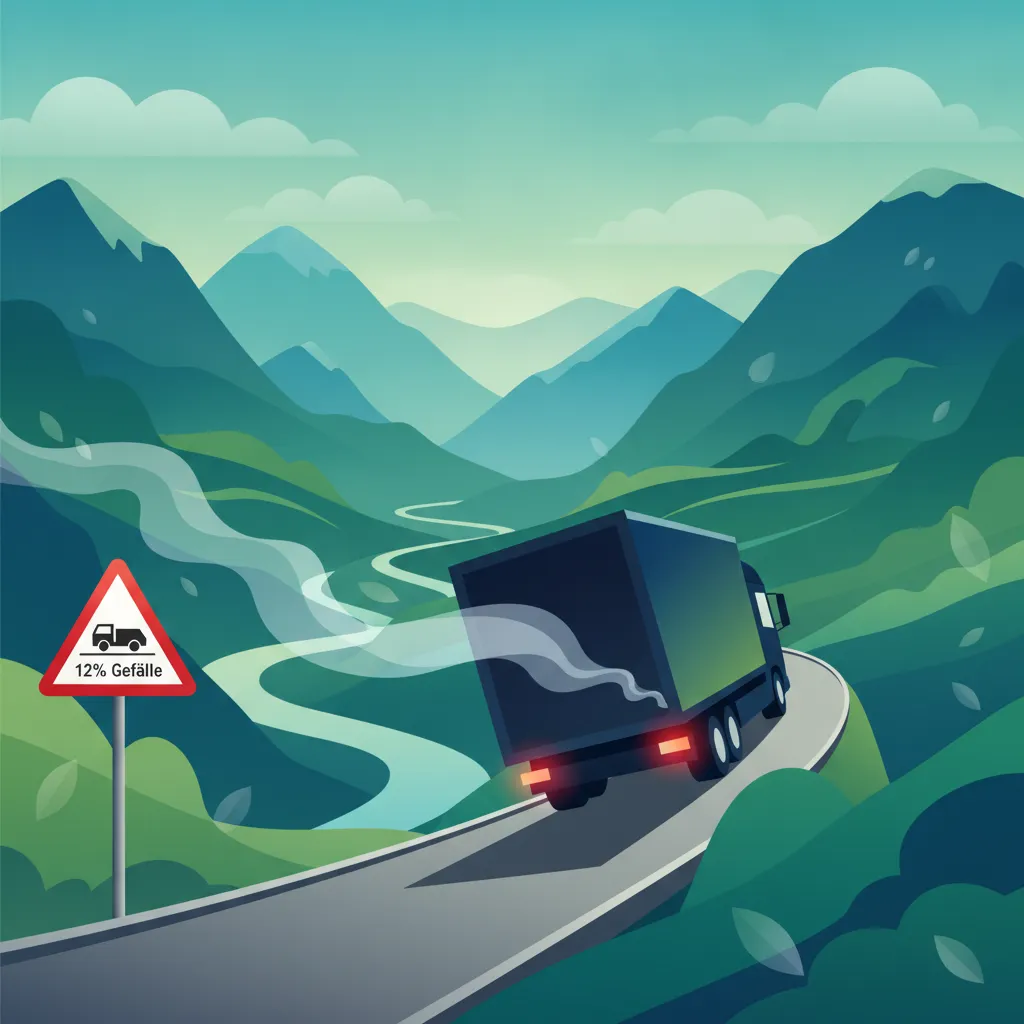
To prevent the service brakes from overheating and failing on long downhill gradients, heavy vehicles are equipped with endurance (or auxiliary) braking systems. This lesson explains the function of engine brakes (which alter valve timing) and retarders (which use hydrodynamic or electromagnetic force). These systems allow the driver to maintain a safe, controlled speed without relying solely on the service brakes.

A secure connection between the tractor and trailer requires linking the braking and electrical systems. This lesson explains the function of the red (emergency) and yellow (service) air lines and the main electrical socket, which powers the trailer's lights and ABS. It outlines the correct, safe sequence for connecting and disconnecting these lines to ensure the trailer's brakes function correctly.

Driving in the Alps requires a high level of skill and vehicle sympathy. This lesson covers techniques for climbing steep gradients by selecting the correct gear to maintain momentum without straining the engine. It reiterates the critical importance of using low gears and auxiliary brakes for descending, to ensure the service brakes remain cool and effective for the entire descent.
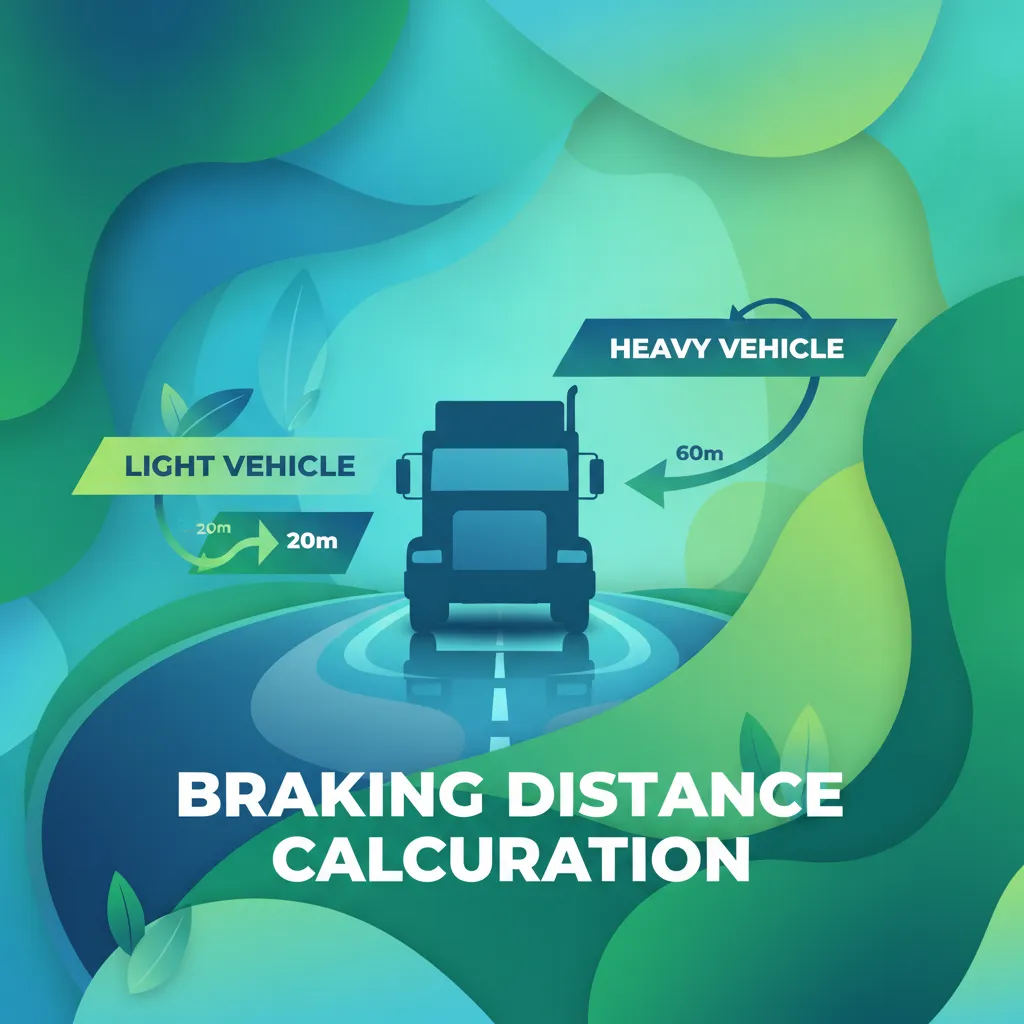
The immense mass of a loaded truck means its braking distance is far greater than that of a car. This lesson breaks down total stopping distance into reaction distance and braking distance, explaining how speed, weight, and road conditions have an exponential effect. It reinforces the necessity of maintaining a significantly larger following distance to ensure enough space to stop safely in an emergency.
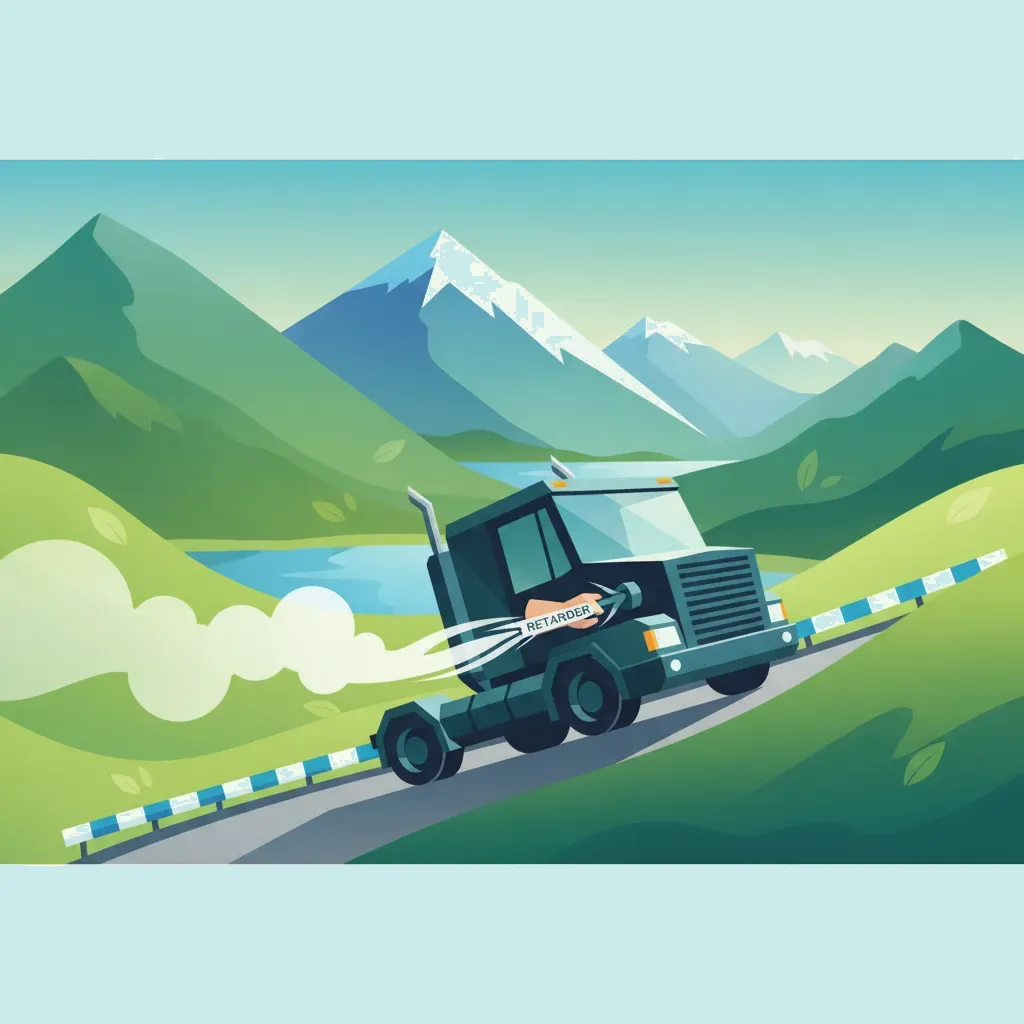
Relying solely on the service brakes on a long downhill stretch can lead to overheating and complete brake failure (brake fade). This lesson explains the function of auxiliary brakes like retarders. You will learn how and when to engage them to maintain a safe, controlled speed, preserving the main brakes for when they are truly needed.

Wet or icy roads drastically reduce tyre grip and can double or triple braking distances. This lesson stresses the importance of significantly reducing overall speed and increasing following distances in such conditions. It advises on using brakes with extreme care to avoid skidding and explains how the vehicle's retarder should be used with caution as it can cause the drive wheels to lock up on slippery surfaces.
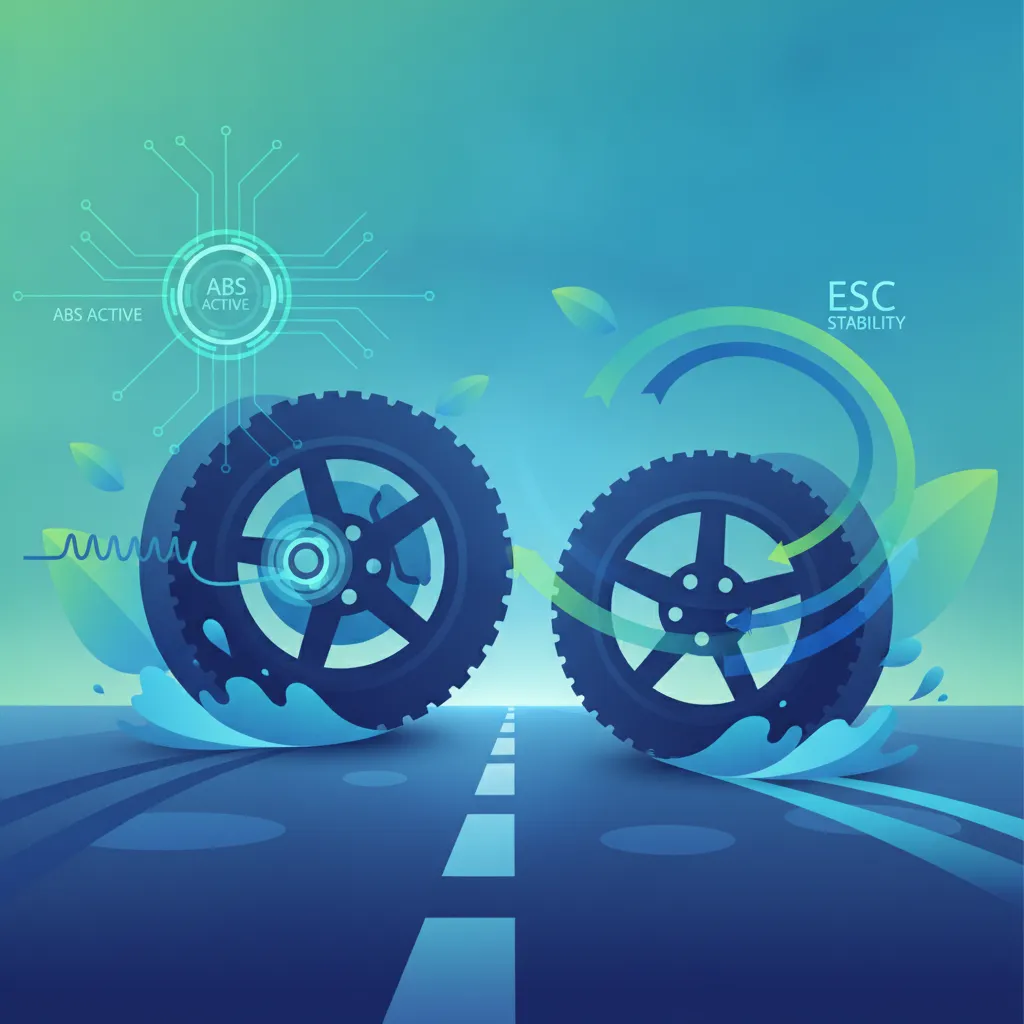
Modern lorries are equipped with advanced electronic safety systems. This lesson explains how the Anti-lock Braking System (ABS) prevents wheels from locking up during hard braking, allowing the driver to maintain steering control. It also covers Electronic Stability Control (ESC), which can detect and mitigate skids or potential rollovers by automatically applying individual brakes and reducing engine power.

The dashboard is the vehicle's primary communication interface with the driver. This lesson explains how to read essential gauges, such as the air pressure gauges for the braking system, the tachometer, and the fuel level. It focuses on recognizing the meaning of different warning lights (red for urgent, amber for caution) and the importance of stopping safely to investigate any critical alerts immediately.
Learn essential techniques for managing brake lag and preventing brake fade in compressed-air systems for Swiss Category C & C1 vehicles. Understand how to anticipate response times and use endurance braking effectively on descents.
Two critical issues can affect air brake performance. This lesson explains brake lag, the slight delay between pressing the pedal and the brakes applying, and brake fade, a dangerous loss of braking power caused by overheating from prolonged or heavy use. It emphasizes that using endurance brakes and selecting the correct gear on descents are key techniques to prevent brake fade.
To prevent the service brakes from overheating and failing on long downhill gradients, heavy vehicles are equipped with endurance (or auxiliary) braking systems. This lesson explains the function of engine brakes (which alter valve timing) and retarders (which use hydrodynamic or electromagnetic force). These systems allow the driver to maintain a safe, controlled speed without relying solely on the service brakes.
Driving in the Alps requires a high level of skill and vehicle sympathy. This lesson covers techniques for climbing steep gradients by selecting the correct gear to maintain momentum without straining the engine. It reiterates the critical importance of using low gears and auxiliary brakes for descending, to ensure the service brakes remain cool and effective for the entire descent.
Wet or icy roads drastically reduce tyre grip and can double or triple braking distances. This lesson stresses the importance of significantly reducing overall speed and increasing following distances in such conditions. It advises on using brakes with extreme care to avoid skidding and explains how the vehicle's retarder should be used with caution as it can cause the drive wheels to lock up on slippery surfaces.
Large passenger vehicles rely on powerful air brake systems. This lesson explains how these systems work, including the importance of monitoring air pressure. It also details the function and proper use of auxiliary braking systems (retarders) to control speed on long descents and reduce wear on the service brakes.
The immense mass of a loaded truck means its braking distance is far greater than that of a car. This lesson breaks down total stopping distance into reaction distance and braking distance, explaining how speed, weight, and road conditions have an exponential effect. It reinforces the necessity of maintaining a significantly larger following distance to ensure enough space to stop safely in an emergency.
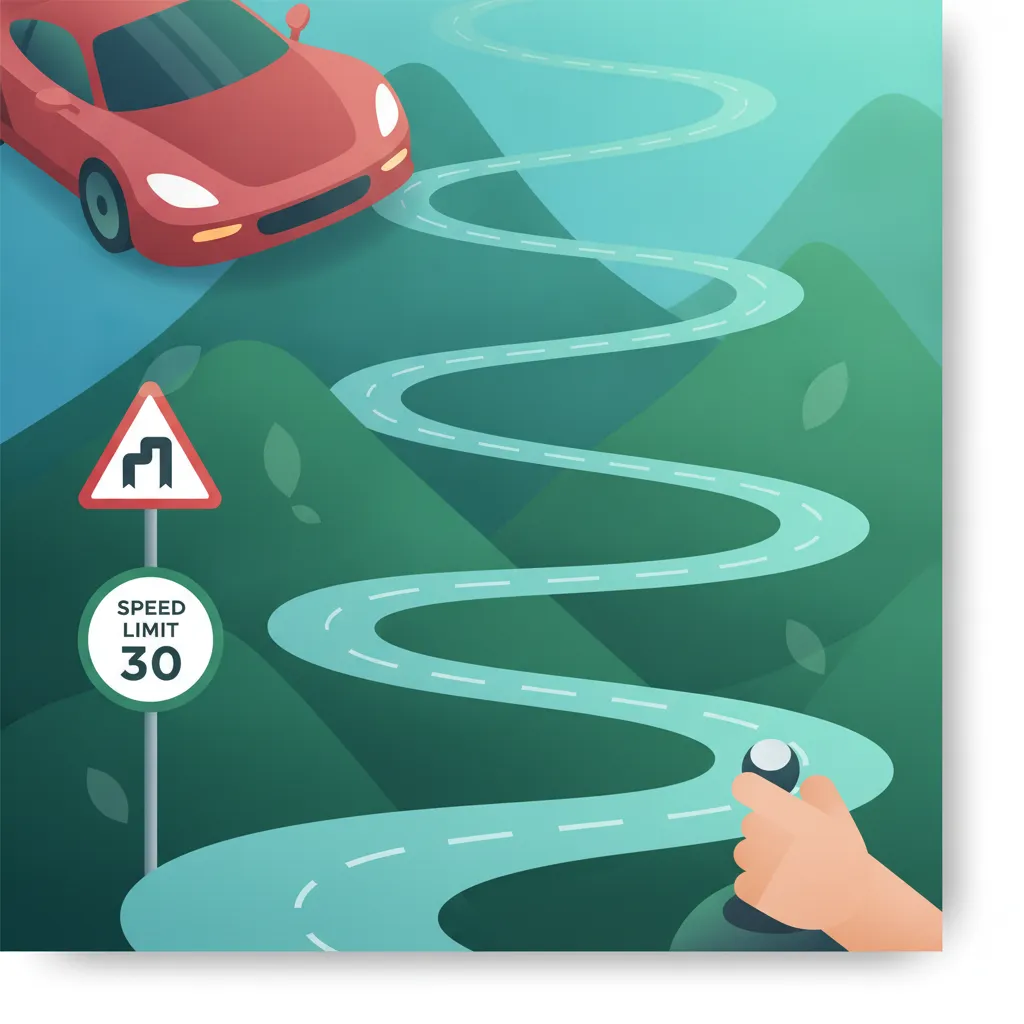
Controlling a heavy vehicle on a steep downhill grade requires a specific technique to avoid disaster. This lesson teaches the golden rule: select a low gear before starting the descent, one that is low enough to control the speed with minimal use of the service brakes. It explains how to effectively combine this with the engine brake or retarder to maintain a safe, steady speed and keep the service brakes cool and ready for an emergency.
This lesson details the function of the two primary braking circuits. The service brake (Betriebsbremse) is the main system operated by the foot pedal for slowing and stopping the vehicle. The parking brake (Feststellbremse) is a powerful spring-applied system that is held off by air pressure, meaning it engages automatically if a major air leak occurs, serving as a critical fail-safe.
Relying solely on the service brakes on a long downhill stretch can lead to overheating and complete brake failure (brake fade). This lesson explains the function of auxiliary brakes like retarders. You will learn how and when to engage them to maintain a safe, controlled speed, preserving the main brakes for when they are truly needed.

Driving a large vehicle on mountain passes is a demanding skill. This lesson covers selecting the correct gear for both ascents and descents to maintain control and avoid overheating the brakes. It also explains the specific priority rules that apply on mountain roads and the importance of being aware of sudden weather changes.
Find clear answers to common questions learners have about Principles of Compressed-Air Braking Systems. Learn how the lesson is structured, which driving theory objectives it supports, and how it fits into the overall learning path of units and curriculum progression in Switzerland. These explanations help you understand key concepts, lesson flow, and exam focused study goals.
Air is used because it provides enough force to stop massive, heavy loads efficiently. Unlike hydraulic systems, compressed air can be stored in large volumes, which is necessary for the constant braking power required by large Category C vehicles.
If air pressure falls below a safe operating level, the brakes are designed to automatically engage or lock. This is a critical safety feature of spring-applied parking brakes, ensuring the vehicle cannot roll if the air system fails.
You do not need to be an engineer, but you must understand the basic functional principle: the compressor creates air, tanks store it, and the pedal sends that air to the chambers. Understanding this flow is essential for answering many technical exam questions.
Pinpoint specific Swiss traffic rules, road signs, or driving situations you need to master. Use the practice search to start a focused revision session now and build confidence for your official driving theory exam.