
Controlling a heavy vehicle on a steep Swiss mountain pass requires precise technique to maintain safety and prevent brake failure. This lesson covers the crucial relationship between gear selection, endurance braking, and service brake management to ensure you stay in total control on every descent.
Lesson content overview
Controlling a heavy goods vehicle on a steep downhill grade is one of the most critical skills a Category C or C1 driver must master. The immense weight and momentum of these vehicles mean that improper technique can quickly lead to a dangerous loss of control, brake failure, and severe accidents. This lesson outlines the essential techniques and strategies required to safely descend steep inclines, ensuring you maintain control, preserve your braking systems, and comply with important traffic regulations.
Operating a heavy goods vehicle (HGV) like a truck in Category C or C1 through mountainous terrain, such as the numerous passes in Switzerland, presents unique challenges. The sheer mass of these vehicles means that gravity exerts a powerful accelerating force on descents.
As a heavy vehicle travels downhill, its potential energy (energy due to height) converts into kinetic energy (energy of motion). If this kinetic energy is not controlled, the vehicle's speed will rapidly increase, potentially beyond safe limits. The primary goal of downhill driving is to manage this energy conversion safely and efficiently. Instead of relying solely on friction to dissipate this energy as heat through the service brakes, professional drivers leverage the engine and auxiliary systems to provide controlled resistance.
The conventional service brakes (Betriebsbremse) in heavy vehicles, while powerful, are designed for stopping and speed reduction, not for continuous speed control on long descents. Prolonged application of the service brakes generates immense heat. This heat can lead to a phenomenon known as brake fade, where the effectiveness of the brakes significantly diminishes, potentially resulting in a complete loss of stopping power. Understanding this risk is fundamental to safe downhill driving.
The single most important principle for safe downhill driving in a heavy goods vehicle is to select a low gear before commencing the descent. This "golden rule" is the foundation of effective speed control.
A low gear refers to a transmission setting that results in a higher engine RPM (revolutions per minute) for a given vehicle speed. This higher RPM allows the engine to generate significant resistance through its natural compression. This engine resistance acts as a continuous braking force, converting the vehicle's kinetic energy into heat within the engine itself, rather than within the friction brakes.
For most heavy trucks, this often means selecting 2nd or 3rd gear, depending on the specifics of the vehicle and the grade. By engaging a low gear, you effectively use the engine to hold the vehicle back, ensuring that speed remains manageable without constant reliance on the service brakes.
Choosing the appropriate low gear is not a one-size-fits-all decision. Several critical factors must be assessed:
The critical aspect of the golden rule is selecting the low gear before the descent begins. While still on level ground or a slight incline leading to the downgrade, reduce your speed to what you anticipate maintaining on the descent, and then shift into the appropriate low gear.
Attempting to downshift into a much lower gear while already accelerating down a steep hill can be extremely dangerous. The sudden increase in engine RPM can cause severe engine damage, lead to a loss of traction in the drive wheels, or result in a sudden, violent deceleration (gear shock) that destabilizes the vehicle. Always prepare your gear before the grade.
While low gear selection is paramount, modern heavy goods vehicles are equipped with powerful auxiliary braking systems that provide additional retarding force, further reducing reliance on the service brakes.
An engine brake, also known as a compression release brake or exhaust brake, is a sophisticated system that uses the engine itself to slow the vehicle down without using the friction brakes.
Most engine brakes are activated by a switch or lever on the dashboard or steering column. They often have multiple stages (e.g., low, medium, high) to control the level of braking force.
Engage Before the Descent: Activate the engine brake (or retarder) before you begin the downgrade, ideally immediately after selecting your low gear.
Match to Speed and Gear: The effectiveness of an engine brake is directly related to engine RPM. The higher the RPM (achieved through lower gears), the greater the retarding force.
Continuous Use: Keep the engine brake engaged throughout the descent. It should be your primary tool for speed control.
Monitor Road Conditions: On very slippery surfaces (ice, packed snow), excessive engine braking could cause the drive wheels to lose traction. Use it judiciously and in conjunction with careful gear selection.
Retarders are auxiliary braking systems that are entirely separate from the service brakes and the engine itself. They are specifically designed to provide continuous braking force on long, steep descents, often supplementing or exceeding the power of engine brakes.
Retarders are typically activated by a separate lever or pedal and offer multiple stages of braking force. For heavy goods vehicles, particularly those operating in mountainous regions, retarders are invaluable.
When descending a long, steep grade, the ideal strategy combines low gear, engine brake, and retarder. Select the lowest appropriate gear first, then engage your engine brake, and finally, activate your retarder to fine-tune your speed and provide additional continuous braking power. This multi-layered approach ensures your service brakes remain cool and fully functional for emergency stops.
The service brakes (Betriebsbremse) are the primary system for stopping your vehicle. On descents, their role shifts from primary speed control to secondary speed correction and emergency stopping.
Brake fade is the reduction of braking efficiency due to excessive heat. It's a dangerous condition that can compromise vehicle safety significantly.
This occurs when the brake pads or linings and the brake drums or discs become extremely hot. High temperatures can:
In air-over-hydraulic systems or pure hydraulic systems, continuous heavy braking can transfer enough heat to the brake fluid to cause it to boil. When brake fluid boils, it turns into gas bubbles. Gas is compressible, unlike fluid. When the driver presses the brake pedal, instead of directly transmitting pressure to the calipers/wheel cylinders, the pedal force compresses these gas bubbles, leading to a "spongy" or even entirely unresponsive brake pedal.
Brake fade is a silent killer. It develops gradually, often without immediate warning signs, until the driver needs full braking power and finds it unavailable.
To avoid brake fade, service brakes should be used sparingly on descents.
Constant vigilance over your speed and a proactive approach to adapting to changing conditions are vital for safe downhill driving.
Always be aware of your current speed. Your speedometer is your primary tool. Don't allow your vehicle to accelerate to the maximum legal speed on a descent if a slower speed feels safer given the gradient, load, and road conditions. Anticipate curves and potential hazards, and adjust your speed accordingly.
The "golden rule" and auxiliary braking systems form the core technique, but variations are necessary.
A heavier load or the presence of a trailer significantly increases the vehicle's momentum.
Reduced traction on wet or icy surfaces demands a more cautious approach.
Swiss traffic law places a strong emphasis on safe vehicle control, particularly for heavy goods vehicles on descents. Compliance with these regulations is not only a legal requirement but a fundamental aspect of road safety.
According to Swiss traffic law, drivers must ensure their vehicle's speed is controlled through appropriate gear selection, especially on descents. This implicitly mandates the selection of a low gear to prevent uncontrolled acceleration and reliance on service brakes.
While the exact thresholds for mandatory engine brake or retarder use (e.g., gradient percentages or load percentages) can be subject to specific regulations, the general principle is that these auxiliary braking systems must be utilized on long or steep descents where gravitational forces make speed control challenging. This is especially true in mountainous regions common across Switzerland. The intent is to prevent service brake failure.
Swiss law emphasizes that service brakes should not be continuously used for speed control on downhill grades. Their primary function is for emergency stopping and occasional speed correction, not as the main retarding force. This preserves their effectiveness and prevents overheating.
Understanding common errors is crucial for avoiding dangerous situations.
Many drivers make the mistake of waiting too long to downshift. They enter the descent in a high gear, the vehicle accelerates rapidly, and then they attempt a frantic downshift.
This is perhaps the most dangerous and common mistake. Drivers continuously apply the service brakes, often lightly, throughout the descent.
Failing to engage the engine brake or retarder, or choosing a gear that is too high for the conditions, puts immense strain on the service brakes.
Mastering safe downhill driving techniques is a cornerstone of professional heavy vehicle operation. By understanding the physics involved and applying the correct procedures, you can ensure the safety of yourself, your vehicle, and other road users.
The core principles are:
Adhering to these principles will prevent brake fade, maintain vehicle control, and ensure you remain compliant with critical traffic regulations, especially on challenging routes like those found in the Official Swiss Driving Theory Course for Category C & C1 Goods Vehicles.
Safe downhill driving for heavy goods vehicles requires mastering the golden rule: select an appropriate low gear before starting the descent, then engage engine brakes and/or retarders as your primary speed control. This multi-layered approach prevents brake fade by keeping service brakes cool and ready for emergencies. Swiss regulations explicitly require auxiliary braking use on steep descents, and drivers must continuously monitor speed while adapting technique for load conditions, weather, and gradient. Understanding the difference between thermal and hydraulic brake fade, knowing when to moderate engine braking on slippery surfaces, and preserving service brakes for brief corrections or emergencies are essential skills for both the theory exam and professional mountain driving.
A short set of high-value points that capture the most important learning from this lesson.
Always select a low gear BEFORE starting the descent while still on level ground or a gentle approach, never during the downgrade itself.
Engine brakes and retarders are your primary speed control tools on descents, not the service brakes which should be reserved for emergencies.
Brake fade occurs when service brakes overheat from continuous use, progressively reducing stopping power without warning signs.
Low gear selection must account for gradient steepness, vehicle load, and road conditions—steeper and heavier requires lower gears.
Swiss law mandates auxiliary braking systems on steep descents to prevent service brake failure and ensure road safety.
Explore all units and lessons included in this driving theory course.
Low gear provides higher engine RPM, creating natural resistance that converts kinetic energy into engine heat instead of brake heat.
Engine brakes include compression release types (e.g., Jake Brake) and exhaust brakes—both use engine resistance rather than friction for braking.
Retarders (hydraulic or electric) provide additional continuous braking force independent of the engine and service brakes.
Brake fade has two types: thermal fade from overheated friction materials and hydraulic fade from boiling brake fluid—both compromise braking.
On slippery surfaces, a slightly higher gear may be needed to prevent drive wheel lock-up from excessive engine braking force.
Waiting too long to downshift—entering a descent in high gear and attempting frantic downshifts while already accelerating is dangerous and can cause gear shock.
Riding the brakes (continuous light application) throughout a descent accelerates brake fade more than intermittent firm applications.
Failing to engage the engine brake or retarder, or selecting a gear too high for conditions, places excessive strain on service brakes.
Neglecting to assess road conditions before selecting gear—wet or icy surfaces require gentler engine braking to maintain traction.
Allowing speed to build before applying auxiliary brakes—engagement should happen early, before full descent acceleration begins.
Lesson content overview
A short set of high-value points that capture the most important learning from this lesson.
Always select a low gear BEFORE starting the descent while still on level ground or a gentle approach, never during the downgrade itself.
Engine brakes and retarders are your primary speed control tools on descents, not the service brakes which should be reserved for emergencies.
Brake fade occurs when service brakes overheat from continuous use, progressively reducing stopping power without warning signs.
Low gear selection must account for gradient steepness, vehicle load, and road conditions—steeper and heavier requires lower gears.
Swiss law mandates auxiliary braking systems on steep descents to prevent service brake failure and ensure road safety.
Explore all units and lessons included in this driving theory course.
Low gear provides higher engine RPM, creating natural resistance that converts kinetic energy into engine heat instead of brake heat.
Engine brakes include compression release types (e.g., Jake Brake) and exhaust brakes—both use engine resistance rather than friction for braking.
Retarders (hydraulic or electric) provide additional continuous braking force independent of the engine and service brakes.
Brake fade has two types: thermal fade from overheated friction materials and hydraulic fade from boiling brake fluid—both compromise braking.
On slippery surfaces, a slightly higher gear may be needed to prevent drive wheel lock-up from excessive engine braking force.
Waiting too long to downshift—entering a descent in high gear and attempting frantic downshifts while already accelerating is dangerous and can cause gear shock.
Riding the brakes (continuous light application) throughout a descent accelerates brake fade more than intermittent firm applications.
Failing to engage the engine brake or retarder, or selecting a gear too high for conditions, places excessive strain on service brakes.
Neglecting to assess road conditions before selecting gear—wet or icy surfaces require gentler engine braking to maintain traction.
Allowing speed to build before applying auxiliary brakes—engagement should happen early, before full descent acceleration begins.
Explore search topics learners often look for when studying Safe Downhill Driving Techniques and Gear Selection. These topics reflect common questions about road rules, driving situations, safety guidance, and lesson level theory preparation for learners in Switzerland.
Browse additional driving theory lessons that cover connected traffic rules, road signs, and common driving situations related to this topic. Improve your understanding of how different rules interact across everyday traffic scenarios.
Understand the principles and operation of engine brakes and retarders in heavy goods vehicles. Learn how these auxiliary systems are crucial for safe speed control on steep descents in Switzerland and how to integrate them with gear selection to prevent brake fade.
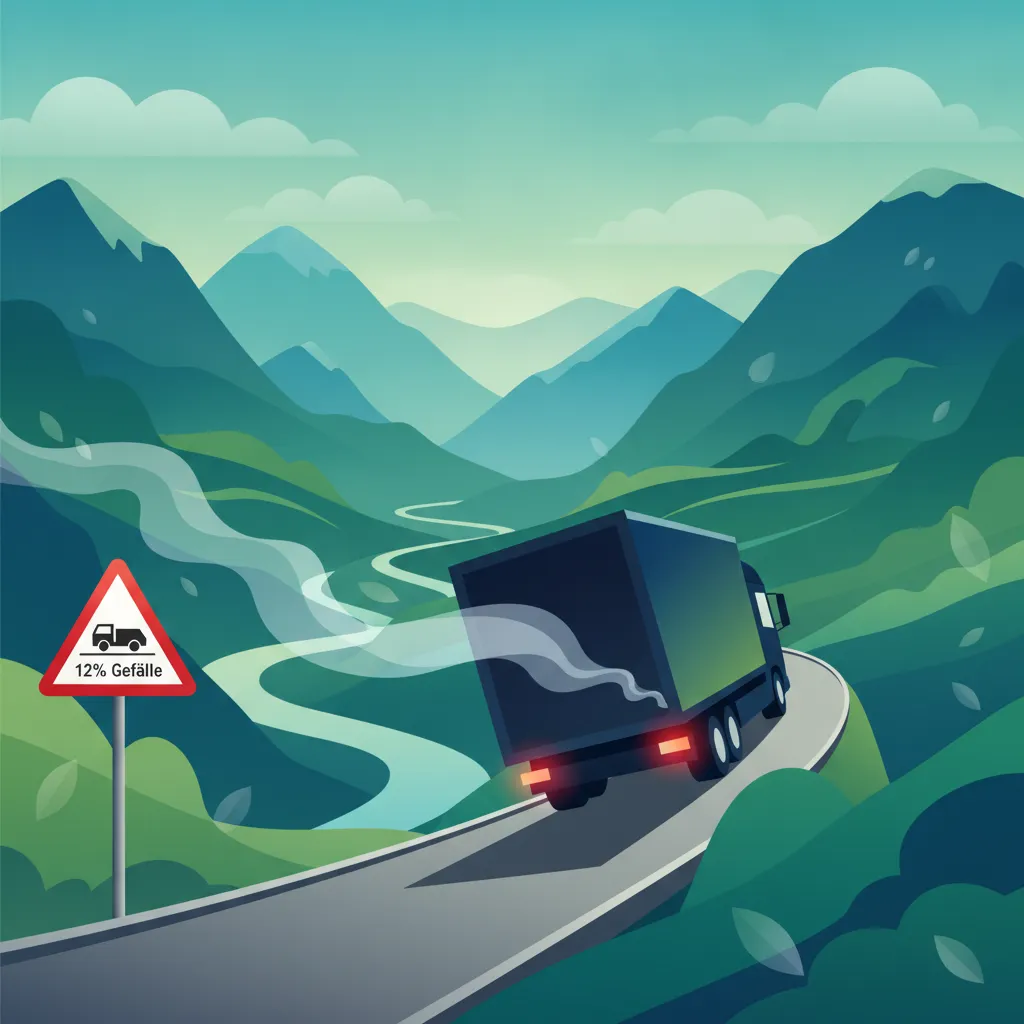
To prevent the service brakes from overheating and failing on long downhill gradients, heavy vehicles are equipped with endurance (or auxiliary) braking systems. This lesson explains the function of engine brakes (which alter valve timing) and retarders (which use hydrodynamic or electromagnetic force). These systems allow the driver to maintain a safe, controlled speed without relying solely on the service brakes.
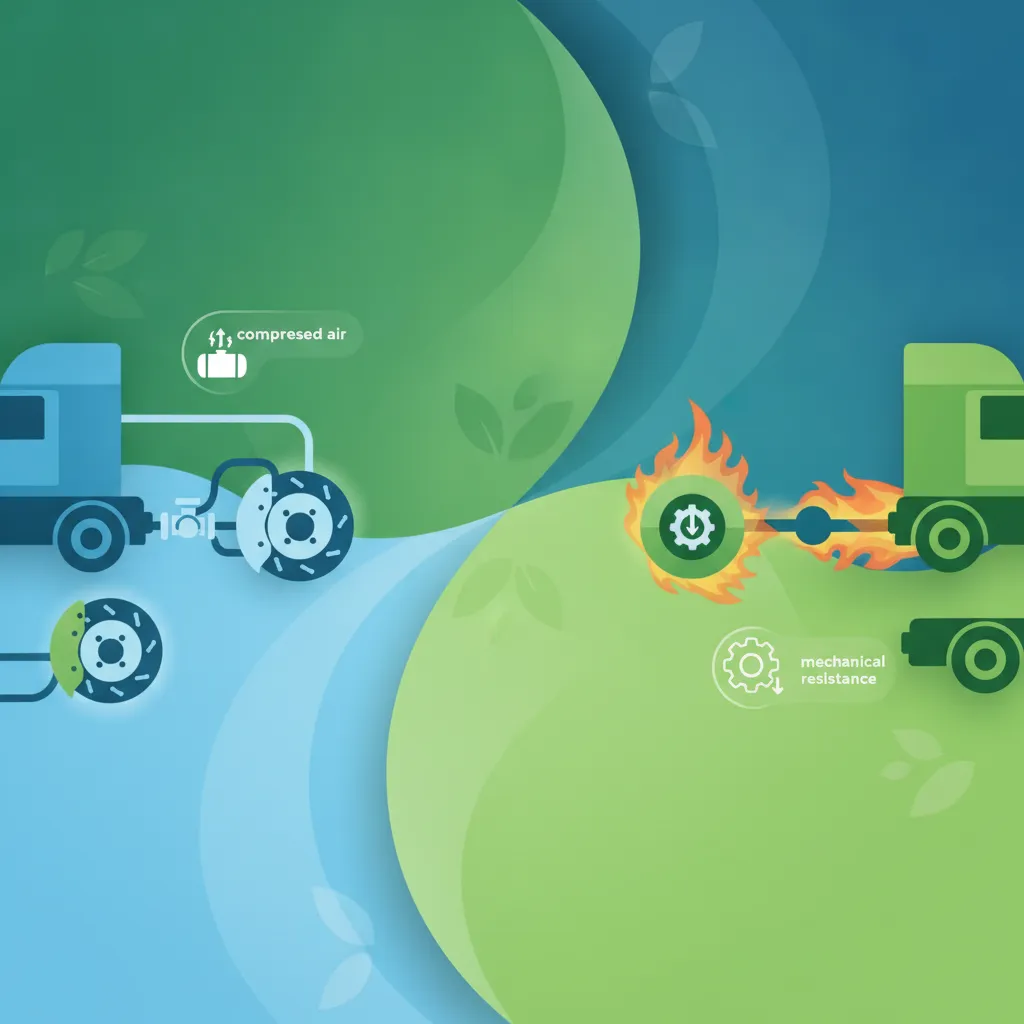
Large passenger vehicles rely on powerful air brake systems. This lesson explains how these systems work, including the importance of monitoring air pressure. It also details the function and proper use of auxiliary braking systems (retarders) to control speed on long descents and reduce wear on the service brakes.
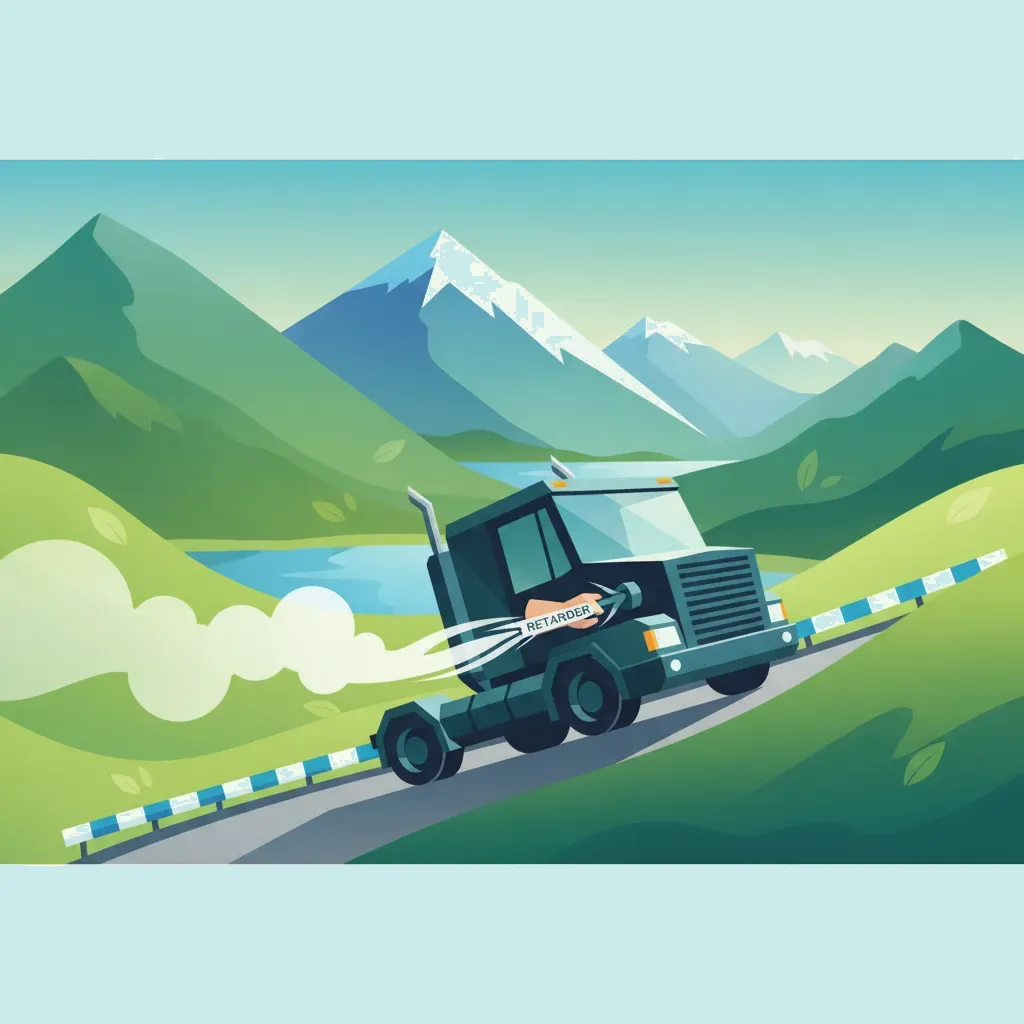
Relying solely on the service brakes on a long downhill stretch can lead to overheating and complete brake failure (brake fade). This lesson explains the function of auxiliary brakes like retarders. You will learn how and when to engage them to maintain a safe, controlled speed, preserving the main brakes for when they are truly needed.
Wet or icy roads drastically reduce tyre grip and can double or triple braking distances. This lesson stresses the importance of significantly reducing overall speed and increasing following distances in such conditions. It advises on using brakes with extreme care to avoid skidding and explains how the vehicle's retarder should be used with caution as it can cause the drive wheels to lock up on slippery surfaces.
Two critical issues can affect air brake performance. This lesson explains brake lag, the slight delay between pressing the pedal and the brakes applying, and brake fade, a dangerous loss of braking power caused by overheating from prolonged or heavy use. It emphasizes that using endurance brakes and selecting the correct gear on descents are key techniques to prevent brake fade.
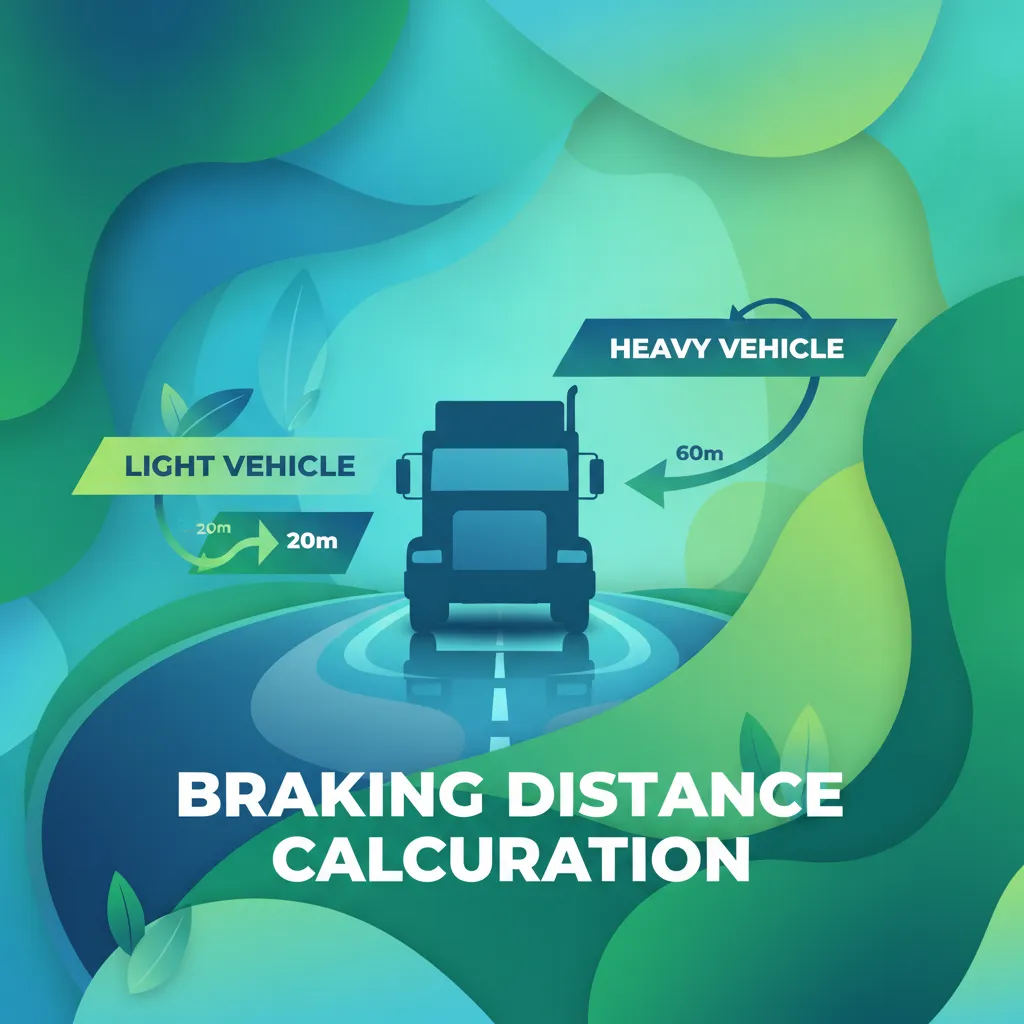
The immense mass of a loaded truck means its braking distance is far greater than that of a car. This lesson breaks down total stopping distance into reaction distance and braking distance, explaining how speed, weight, and road conditions have an exponential effect. It reinforces the necessity of maintaining a significantly larger following distance to ensure enough space to stop safely in an emergency.
Driving in the Alps requires a high level of skill and vehicle sympathy. This lesson covers techniques for climbing steep gradients by selecting the correct gear to maintain momentum without straining the engine. It reiterates the critical importance of using low gears and auxiliary brakes for descending, to ensure the service brakes remain cool and effective for the entire descent.

This lesson details the function of the two primary braking circuits. The service brake (Betriebsbremse) is the main system operated by the foot pedal for slowing and stopping the vehicle. The parking brake (Feststellbremse) is a powerful spring-applied system that is held off by air pressure, meaning it engages automatically if a major air leak occurs, serving as a critical fail-safe.
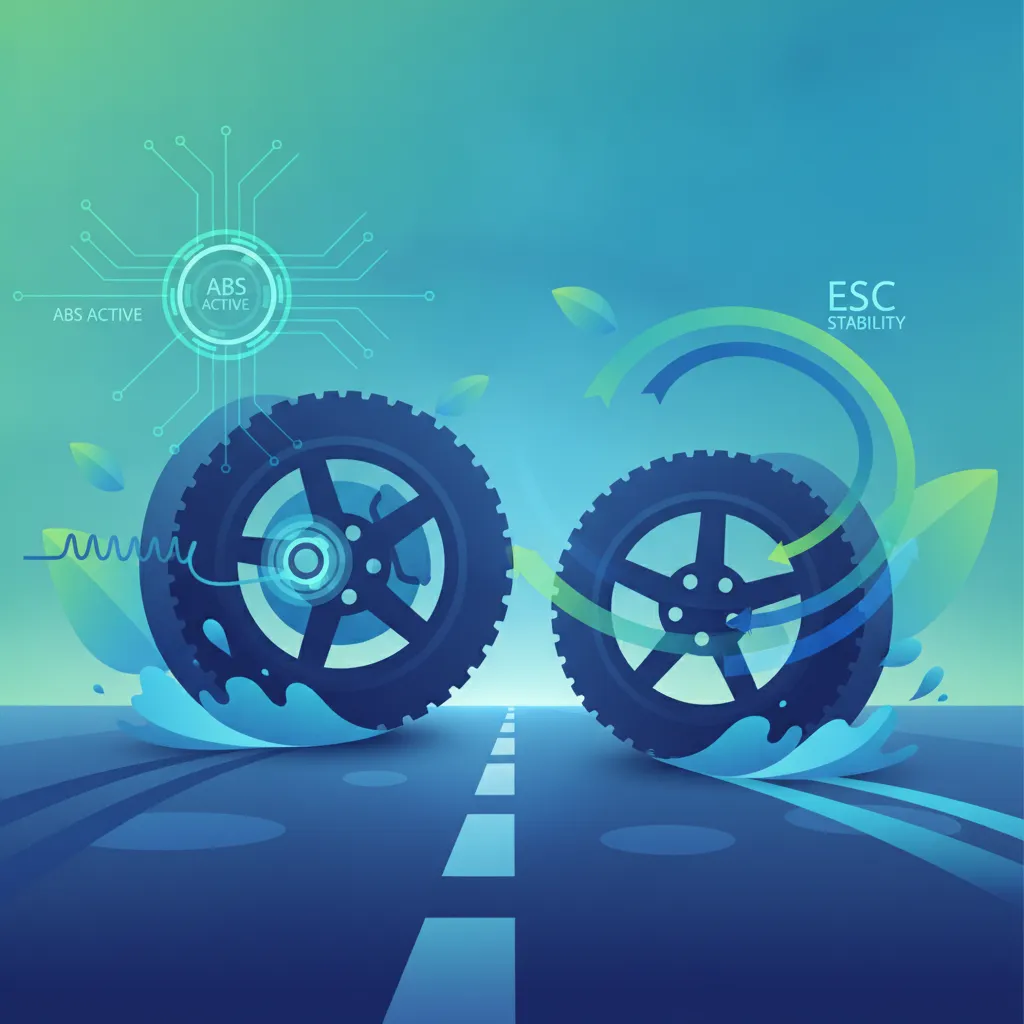
Modern lorries are equipped with advanced electronic safety systems. This lesson explains how the Anti-lock Braking System (ABS) prevents wheels from locking up during hard braking, allowing the driver to maintain steering control. It also covers Electronic Stability Control (ESC), which can detect and mitigate skids or potential rollovers by automatically applying individual brakes and reducing engine power.
Identify and learn to avoid critical errors during downhill driving with heavy goods vehicles. This lesson focuses on issues like late gear selection, over-reliance on service brakes, and incorrect auxiliary brake use, crucial for Swiss driving theory.
Rural roads present challenges like narrow lanes, poor surfaces, sharp bends, and limited visibility. This lesson teaches drivers how to position their large vehicle to maximize space and visibility, anticipate oncoming traffic at blind corners, and be aware of specific rural hazards. These hazards include slow-moving agricultural vehicles, animals on the road, and concealed farm entrances.
Motorway driving requires constant concentration due to high speeds. This lesson emphasizes the importance of staying in the right-hand lane unless overtaking and the specific restrictions on lorry overtaking in Switzerland. It reinforces the need for a following distance of at least four seconds to compensate for the vehicle's long stopping distance and provides guidance on safely merging and exiting.
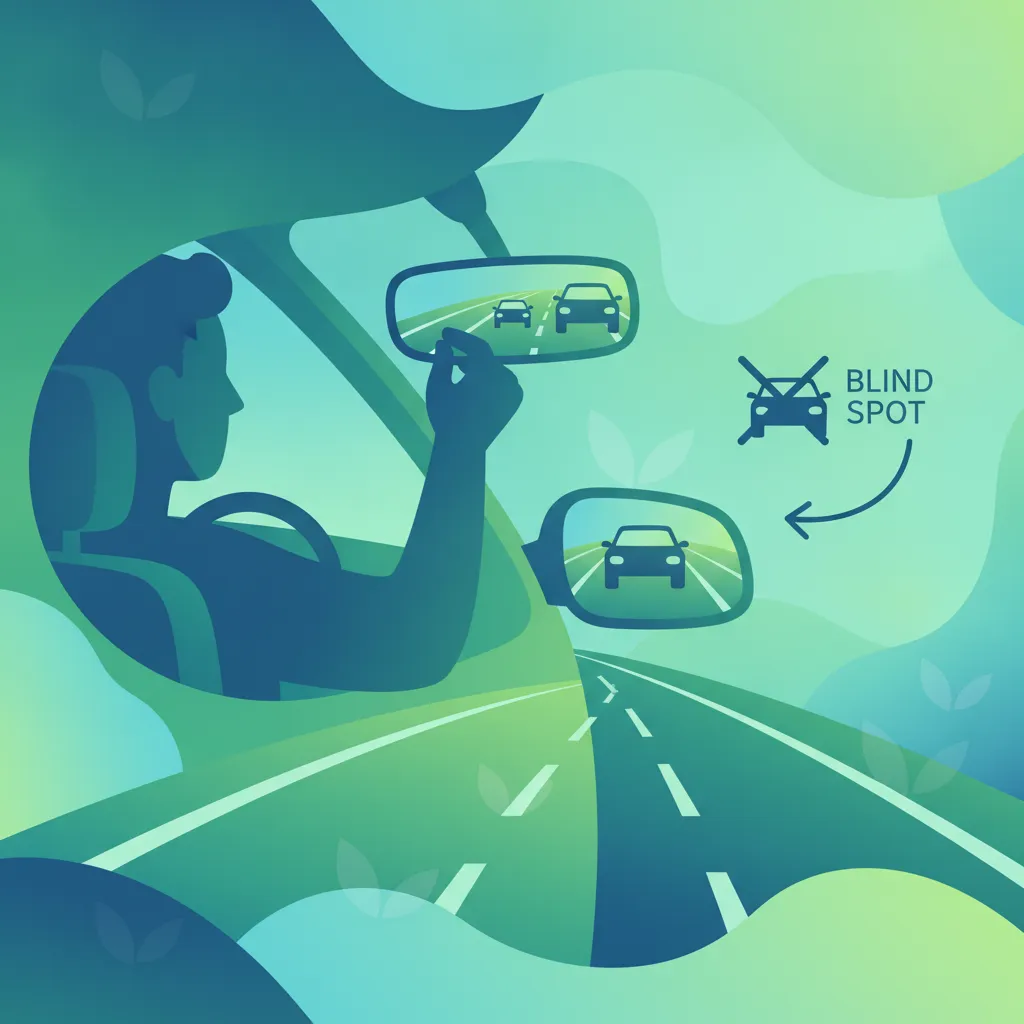
Despite the complex mirror systems, large areas around a truck remain hidden from the driver's view. This lesson maps out these significant blind spots: directly in front, behind, and along both sides of the vehicle. It teaches drivers to be constantly aware of these 'no-zones' and to anticipate that smaller vehicles, cyclists, or pedestrians may be hidden within them, especially before changing lanes or turning.
Driving in the Alps requires a high level of skill and vehicle sympathy. This lesson covers techniques for climbing steep gradients by selecting the correct gear to maintain momentum without straining the engine. It reiterates the critical importance of using low gears and auxiliary brakes for descending, to ensure the service brakes remain cool and effective for the entire descent.
Unlike cars, heavy vehicles cannot travel on every road. This lesson stresses the importance of using HGV-specific satellite navigation systems or carefully checking maps to plan routes that avoid low bridges, weak bridges, and roads with weight or width restrictions. Proper planning saves time, fuel, and prevents dangerous situations or costly damage.
Rural driving requires a different mindset from urban driving. This lesson covers how to position your vehicle on narrow roads, how to use passing places effectively, and how to anticipate hazards like slow-moving farm machinery, animals, and concealed junctions. Managing vehicle width and height is a key focus.
Losing part of a load on the road creates an immediate and serious hazard for other drivers. This lesson outlines the driver's responsibilities: stop in a safe place, assess the situation from a safe distance, and immediately alert the police. The driver's primary role is to warn other road users and not to attempt to retrieve the load from a live carriageway.

Turning a long vehicle requires careful planning and execution. This lesson covers the correct procedure: approach, observation, signalling, and positioning the vehicle correctly to allow for the trailer's off-tracking without mounting the kerb. It also highlights the need for constant mirror checks throughout the turn to monitor for cyclists or other vulnerable road users who may enter the danger zone.
The driver is legally responsible for the roadworthiness of their vehicle at the start of and during every journey. This lesson outlines the formal process for reporting any identified defects to the transport manager or maintenance staff. It stresses the critical rule that a vehicle with a known safety-critical defect must not be driven until it has been professionally repaired and declared safe.
Heavy vehicles, especially those with a high centre ofgravity, are susceptible to rolling over. This lesson examines the primary causes, including excessive speed on bends or roundabouts, sudden steering manoeuvres, and the 'sloshing' effect of liquid loads in tankers. It reinforces that maintaining a sensible speed and driving smoothly are the best ways to mitigate this serious risk.
Find clear answers to common questions learners have about Safe Downhill Driving Techniques and Gear Selection. Learn how the lesson is structured, which driving theory objectives it supports, and how it fits into the overall learning path of units and curriculum progression in Switzerland. These explanations help you understand key concepts, lesson flow, and exam focused study goals.
Using service brakes continuously leads to brake fade, where the heat generated causes the brake linings to lose friction efficiency. This significantly reduces your braking power exactly when you might need it most for an emergency stop.
These systems act as secondary braking sources that dissipate energy through the engine or transmission instead of through the friction brakes. They allow you to maintain a safe, constant speed on long downgrades without overheating your service brakes.
You must select the appropriate low gear before you begin the descent. Once the vehicle starts to gain speed on a steep slope, it is often difficult or impossible to downshift safely, which can lead to a loss of control.
Swiss theory focuses on anticipation and the 'correct gear' principle, meaning the vehicle should descend at a speed where the engine braking alone keeps the vehicle stable, requiring only minimal, intermittent use of the service brakes.
Pinpoint specific Swiss traffic rules, road signs, or driving situations you need to master. Use the practice search to start a focused revision session now and build confidence for your official driving theory exam.