
This lesson explores the essential braking systems of heavy goods vehicles as required for the Swiss Category C and C1 theory exam. You will gain a clear understanding of how the service brake and the spring-applied parking brake operate, ensuring you understand their critical roles in vehicle safety and emergency fail-safes.

Lesson content overview
Operating heavy goods vehicles, such as those in categories C and C1, demands a thorough understanding of their complex braking systems. Unlike passenger cars, these vehicles rely primarily on compressed air to activate their brakes, incorporating sophisticated mechanisms to ensure safety and reliability. This lesson delves into the two fundamental braking systems: the service brake (Betriebsbremse) and the parking brake (Feststellbremse), exploring their design, operation, and critical role in maintaining vehicle control and ensuring secure immobilisation.
Effective braking is paramount for heavy goods vehicles, not only for routine deceleration and stopping but also as a vital safety measure on Switzerland's varied terrain, including steep mountain passes. Mastering the nuances of these systems is a prerequisite for safe and compliant driving, building upon the foundational principles of compressed-air braking systems.
The service brake, known in Switzerland as the Betriebsbremse, is the primary braking system used for routine slowing, stopping, and speed regulation during driving. Activated by the foot pedal, it operates by converting pneumatic pressure into mechanical force, which then applies friction to all wheels of the vehicle. This system is engineered to provide proportional braking, meaning the harder the driver presses the pedal, the greater the braking force applied.
When the driver depresses the service brake pedal, an air valve opens, allowing compressed air from the vehicle's air reservoirs to flow into the brake chambers at each wheel. Inside these chambers, the air pressure pushes against a diaphragm, which in turn moves a pushrod. This pushrod then activates the brake mechanism, typically causing brake pads or shoes to press against the brake disc or drum, generating the friction needed to slow or stop the vehicle. The efficiency and responsiveness of this system are crucial for safe operation, especially given the significant mass of heavy goods vehicles.
The service brake must be capable of delivering a minimum service brake pressure as defined by Swiss regulations, typically at least 5 bar, to ensure adequate stopping power under various load conditions. Misunderstanding the function of the service brake, such as believing it operates without air pressure, can lead to dangerous situations and vehicle control loss.
The parking brake, or Feststellbremse in Swiss terminology, serves a distinct and critically important role: to hold the vehicle stationary when parked. Unlike the service brake, which is operated by pneumatic pressure to apply braking force, the parking brake is inherently a spring-applied brake. This means it is engaged by strong spring force and is held off (released) only by pneumatic pressure.
This design principle is a key safety feature for heavy goods vehicles. If there is a major loss of air pressure within the braking system—due to a leak or compressor failure, for example—the springs will automatically engage the parking brake. This fail-safe mechanism prevents the vehicle from rolling away uncontrollably. Therefore, it is crucial that sufficient air pressure builds up in the system before the parking brake can be released and the vehicle can be moved.
Drivers must never confuse the parking brake with the service brake. The parking brake is not designed for routine slowing while driving and using it for this purpose can lead to severe overheating and damage to the brake system, significantly reducing its effectiveness in an emergency. Swiss regulations mandate that the parking brake must be capable of holding the vehicle stationary even under its maximum permissible load, particularly on inclines.
A fundamental safety feature of heavy goods vehicle braking systems is the dual-circuit system. This design incorporates two entirely separate and independent pneumatic circuits, often designated as Circuit A and Circuit B. Each circuit is capable of operating the service brakes on all wheels.
The primary purpose of the dual-circuit system is to provide redundancy. In the event of a failure in one circuit, such as a major air leak, the other circuit remains fully operational. This ensures that the driver still has sufficient braking capability to bring the vehicle to a safe stop, albeit with potentially reduced efficiency.
Drivers must be acutely aware of any warning indicators signalling a loss of pressure in one of the brake circuits. Continuing to drive with a compromised braking circuit significantly increases the risk of an accident.
During pre-trip inspections, it is mandatory to check that both dual-circuit air lines are properly charged to their operating pressure. This vital check confirms the integrity and readiness of both circuits before beginning a journey, preventing accidental movement or unexpected brake failure on the road.
Beyond the basic operation of the service and parking brakes, heavy goods vehicle drivers must understand specific phenomena that influence braking performance: brake lag and brake fade.
Brake lag refers to the time delay between the moment a driver depresses the service brake pedal and the actual application of braking force at the wheels. This delay is inherent in compressed-air systems due to the time it takes for air to travel from the brake valve through the air lines to the brake chambers and then for the mechanical components to react.
The time delay between a driver's pedal input and the actual actuation of the brakes, caused by the pneumatic system's air dynamics.
While typically very short, brake lag becomes a critical factor for heavy vehicles, especially at higher speeds or with heavy loads. It means the vehicle will travel a greater distance before the brakes fully engage. Drivers must anticipate this delay and begin braking earlier than they might in a passenger car, effectively increasing their required stopping distance.
Brake fade is a reduction in braking efficiency that occurs when brake components, such as drums, discs, pads, or linings, overheat due to prolonged or excessive use. When brake materials become too hot, their friction coefficient decreases significantly, leading to a noticeable loss of braking power. The pedal may feel softer, and more pressure is required to achieve the same deceleration.
A reduction in braking effectiveness due to the overheating of brake components, leading to decreased friction and longer stopping distances.
Brake fade is particularly dangerous on long, steep downhill gradients if the service brake is used continuously. To prevent brake fade, heavy goods vehicle drivers are strongly advised to utilise endurance braking systems, such as engine brakes or retarders, which dissipate speed without relying on the primary service brakes. This keeps the service brakes cool and ready for emergency stops.
Compliance with Swiss regulations concerning service and parking brakes is not just a legal requirement but a fundamental aspect of road safety for Category C and C1 goods vehicles. These regulations ensure that braking systems are robust, reliable, and capable of handling the demands placed upon heavy vehicles.
Service Brake Performance: The service brake (Betriebsbremse) must be capable of achieving full braking force on all wheels when commanded. This includes specific deceleration rates and stopping distances defined by law.
This regulation ensures that heavy vehicles can stop effectively under their maximum permissible load, crucial for preventing accidents. For example, a full service brake application at 80 km/h must bring the vehicle to a stop within a legally defined distance.
Spring-Applied Parking Brake Mandate: The parking brake (Feststellbremse) must be spring-applied and held off by air pressure. It must be able to hold the vehicle stationary under maximum load, even on significant inclines. This fail-safe design is mandatory for all heavy goods vehicles in Switzerland, preventing uncontrolled roll-away in the event of air pressure loss or driver oversight. For instance, if the air pressure drops below a critical threshold (e.g., 1 bar), the parking brake automatically engages.
Pre-Trip Inspection Requirements: Drivers are legally obliged to check that both dual-circuit air lines are fully charged and that the parking brake releases correctly before moving the vehicle. This crucial pre-trip inspection ensures the entire braking system is fully functional and prevents hazardous situations.
Start the engine and allow the air compressor to build up full system air pressure (typically 8-10 bar).
Verify that both air pressure gauges (for the dual circuits) show adequate pressure.
Check that the parking brake warning light is off after releasing the brake.
Briefly test the service brake for proper feel and response before driving off.
Mistakes and oversights related to braking systems in heavy vehicles can have severe consequences. Understanding common violations and their implications is crucial for safe driving.
The effective use of service and parking brakes is highly dependent on various contextual factors. Drivers must adapt their braking techniques based on road conditions, weather, vehicle state, and the presence of vulnerable road users.
Understanding the direct cause-and-effect relationships within the braking system is key to proactive and safe driving.
The design and operational principles of the service brake and parking brake in heavy goods vehicles are fundamentally rooted in safety and engineering logic.
This lesson covers the essential differences between the service brake (Betriebsbremse), which uses compressed air to actively slow or stop the vehicle, and the parking brake (Feststellbremse), which is spring-applied and automatically engages if air pressure is lost. Heavy goods vehicles incorporate a dual-circuit air brake system for redundancy, meaning either circuit can independently operate all brakes if the other fails. Drivers must understand brake lag—the pneumatic delay before brakes engage—and brake fade, where overheating reduces braking efficiency, making endurance braking essential on long descents. Swiss regulations mandate spring-applied parking brakes capable of holding maximum loads stationary, and pre-trip inspections must verify both circuits are charged and functional.
A short set of high-value points that capture the most important learning from this lesson.
The service brake (Betriebsbremse) uses compressed air to actively apply braking force for routine deceleration and stopping.
The parking brake (Feststellbremse) is spring-applied and held off by air pressure, automatically engaging if air pressure is lost as a critical fail-safe.
Heavy goods vehicles use a dual-circuit system where two independent pneumatic circuits can each operate all wheels' brakes, providing essential redundancy.
Brake lag is the unavoidable time delay between pedal input and brake application in compressed-air systems, requiring drivers to anticipate braking earlier.
Endurance braking systems (engine brakes, retarders) must be used on long descents to prevent brake fade from overheating service brake components.
Explore all units and lessons included in this driving theory course.
Parking brake is spring-engaged and held off by air pressure; air loss automatically applies the brake.
Dual-circuit systems require both circuits to be properly charged during pre-trip inspections.
Brake lag increases stopping distance requirements, especially at higher speeds with heavy loads.
Brake fade occurs when prolonged braking overheats components, reducing friction and effectiveness.
Continuous service brake use downhill without engine brakes leads to dangerous brake fade.
Driving with the parking brake partially engaged, which overheats components and reduces service brake effectiveness.
Neglecting to check dual-circuit air pressure before departure, risking operation with compromised braking capacity.
Using the parking brake for slowing on long descents instead of endurance braking systems, causing rapid overheating and system damage.
Failing to engage the parking brake when parked on an incline, risking roll-away if air pressure leaks slowly.
Relying solely on the service brake on steep downhill gradients without using engine brakes or retarders.
Lesson content overview
A short set of high-value points that capture the most important learning from this lesson.
The service brake (Betriebsbremse) uses compressed air to actively apply braking force for routine deceleration and stopping.
The parking brake (Feststellbremse) is spring-applied and held off by air pressure, automatically engaging if air pressure is lost as a critical fail-safe.
Heavy goods vehicles use a dual-circuit system where two independent pneumatic circuits can each operate all wheels' brakes, providing essential redundancy.
Brake lag is the unavoidable time delay between pedal input and brake application in compressed-air systems, requiring drivers to anticipate braking earlier.
Endurance braking systems (engine brakes, retarders) must be used on long descents to prevent brake fade from overheating service brake components.
Explore all units and lessons included in this driving theory course.
Parking brake is spring-engaged and held off by air pressure; air loss automatically applies the brake.
Dual-circuit systems require both circuits to be properly charged during pre-trip inspections.
Brake lag increases stopping distance requirements, especially at higher speeds with heavy loads.
Brake fade occurs when prolonged braking overheats components, reducing friction and effectiveness.
Continuous service brake use downhill without engine brakes leads to dangerous brake fade.
Driving with the parking brake partially engaged, which overheats components and reduces service brake effectiveness.
Neglecting to check dual-circuit air pressure before departure, risking operation with compromised braking capacity.
Using the parking brake for slowing on long descents instead of endurance braking systems, causing rapid overheating and system damage.
Failing to engage the parking brake when parked on an incline, risking roll-away if air pressure leaks slowly.
Relying solely on the service brake on steep downhill gradients without using engine brakes or retarders.
Explore search topics learners often look for when studying The Service Brake (Betriebsbremse) and Parking Brake (Feststellbremse). These topics reflect common questions about road rules, driving situations, safety guidance, and lesson level theory preparation for learners in Switzerland.
Browse additional driving theory lessons that cover connected traffic rules, road signs, and common driving situations related to this topic. Improve your understanding of how different rules interact across everyday traffic scenarios.
Understand the crucial role of dual-circuit air brake systems in Swiss heavy goods vehicles. Learn how the spring-applied parking brake acts as a fail-safe and its operational requirements for C and C1 licences.
Large passenger vehicles rely on powerful air brake systems. This lesson explains how these systems work, including the importance of monitoring air pressure. It also details the function and proper use of auxiliary braking systems (retarders) to control speed on long descents and reduce wear on the service brakes.

A secure connection between the tractor and trailer requires linking the braking and electrical systems. This lesson explains the function of the red (emergency) and yellow (service) air lines and the main electrical socket, which powers the trailer's lights and ABS. It outlines the correct, safe sequence for connecting and disconnecting these lines to ensure the trailer's brakes function correctly.
To prevent the service brakes from overheating and failing on long downhill gradients, heavy vehicles are equipped with endurance (or auxiliary) braking systems. This lesson explains the function of engine brakes (which alter valve timing) and retarders (which use hydrodynamic or electromagnetic force). These systems allow the driver to maintain a safe, controlled speed without relying solely on the service brakes.
Modern lorries are equipped with advanced electronic safety systems. This lesson explains how the Anti-lock Braking System (ABS) prevents wheels from locking up during hard braking, allowing the driver to maintain steering control. It also covers Electronic Stability Control (ESC), which can detect and mitigate skids or potential rollovers by automatically applying individual brakes and reducing engine power.
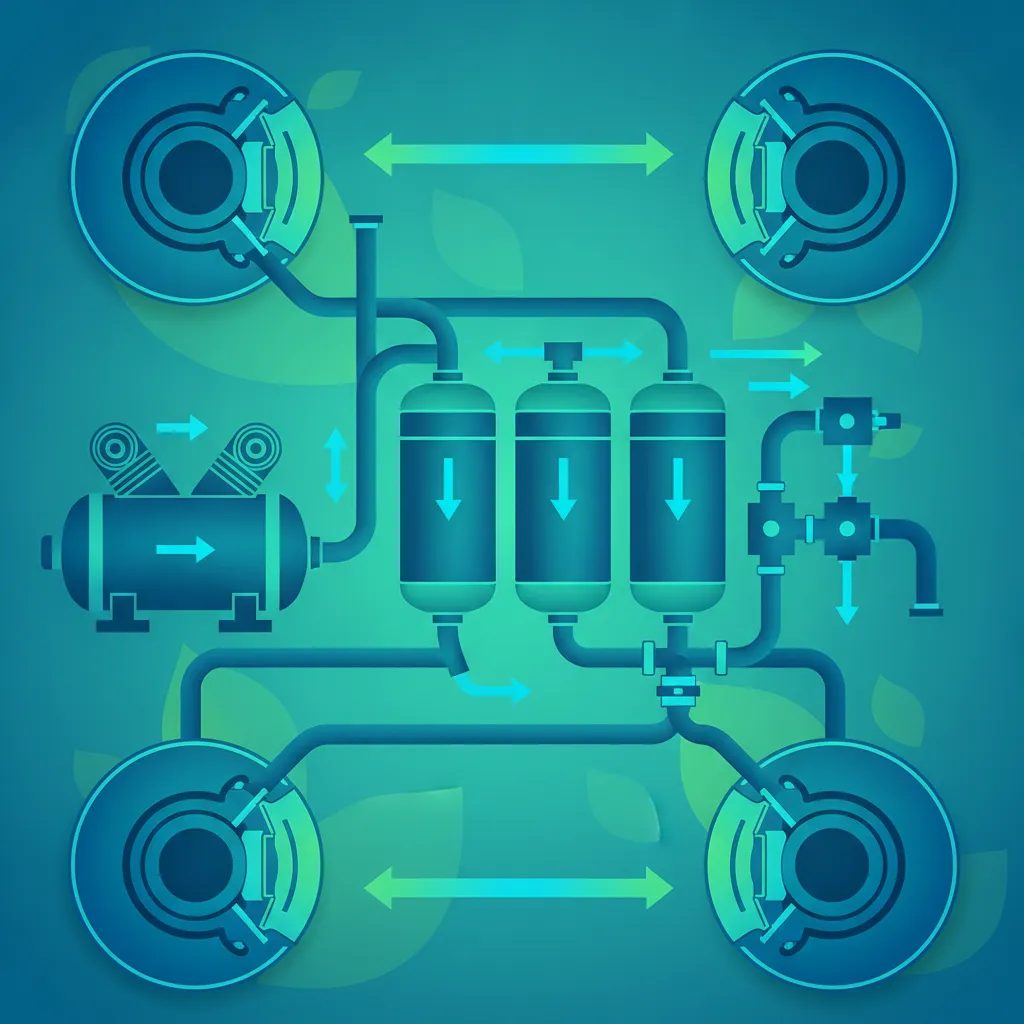
Unlike the hydraulic brakes in cars, heavy vehicles use a compressed-air system for its power and reliability. This lesson explains the basic operating principle, covering key components like the engine-driven compressor, air storage tanks, and the brake chambers that actuate the brakes. Understanding this system is fundamental to appreciating its capabilities and limitations.
This lesson outlines the mandatory documentation required during any professional transport journey in Switzerland. Drivers must be able to present the vehicle registration document ('Fahrzeugausweis'), their valid driving license, and the OACP qualification card upon request. It also touches upon transport-specific documents like consignment notes, which are crucial for legal compliance during roadside inspections by authorities.
Two critical issues can affect air brake performance. This lesson explains brake lag, the slight delay between pressing the pedal and the brakes applying, and brake fade, a dangerous loss of braking power caused by overheating from prolonged or heavy use. It emphasizes that using endurance brakes and selecting the correct gear on descents are key techniques to prevent brake fade.
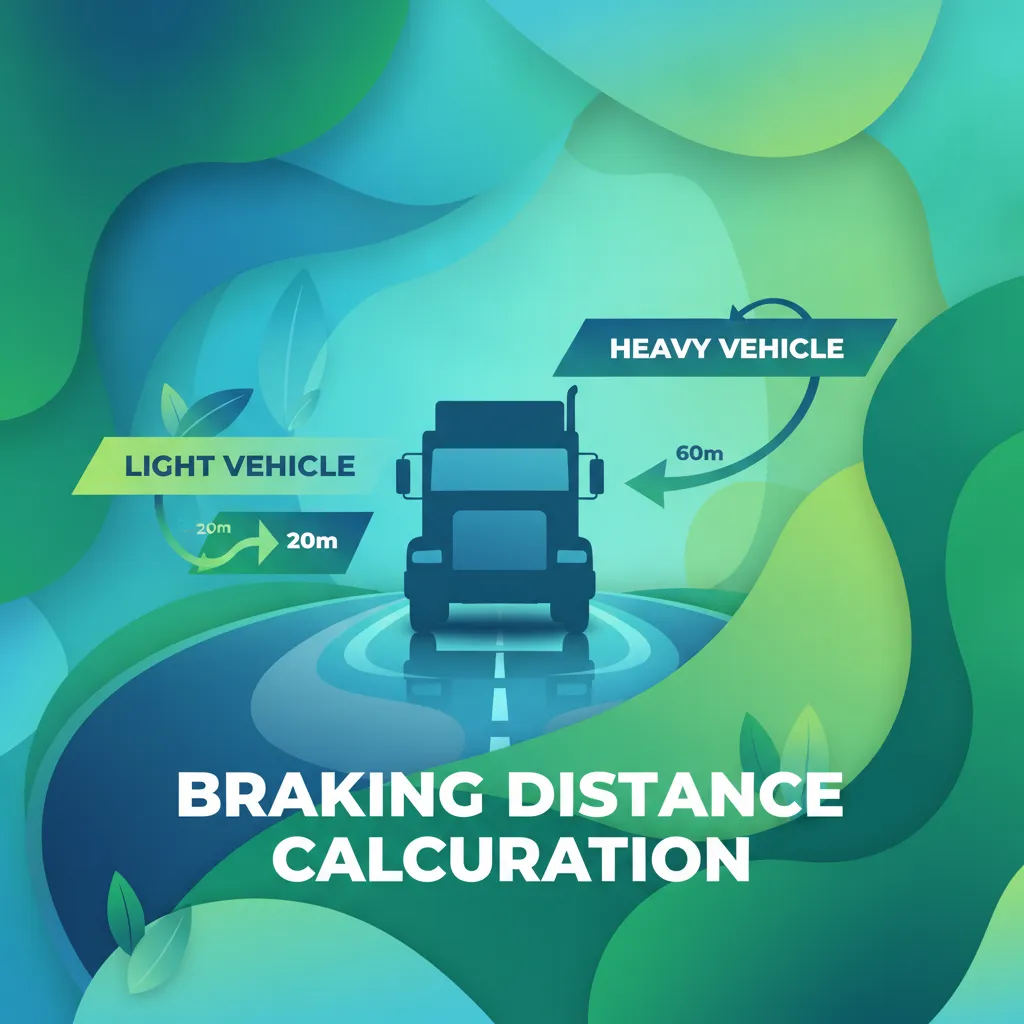
The immense mass of a loaded truck means its braking distance is far greater than that of a car. This lesson breaks down total stopping distance into reaction distance and braking distance, explaining how speed, weight, and road conditions have an exponential effect. It reinforces the necessity of maintaining a significantly larger following distance to ensure enough space to stop safely in an emergency.

Driving in the Alps requires a high level of skill and vehicle sympathy. This lesson covers techniques for climbing steep gradients by selecting the correct gear to maintain momentum without straining the engine. It reiterates the critical importance of using low gears and auxiliary brakes for descending, to ensure the service brakes remain cool and effective for the entire descent.
The suspension system connects the vehicle's axles to its frame, supporting the massive weight and absorbing shocks from the road surface. This lesson describes the two common types: traditional leaf springs and modern air suspension. It explains how a well-maintained suspension is crucial for vehicle stability, proper handling, braking effectiveness, and preventing damage to the load and the vehicle itself.
Explore key factors affecting heavy vehicle braking, including brake lag and brake fade. Learn essential driving techniques for safe deceleration and downhill control on Swiss roads, focusing on C/C1 theory.
Two critical issues can affect air brake performance. This lesson explains brake lag, the slight delay between pressing the pedal and the brakes applying, and brake fade, a dangerous loss of braking power caused by overheating from prolonged or heavy use. It emphasizes that using endurance brakes and selecting the correct gear on descents are key techniques to prevent brake fade.
Wet or icy roads drastically reduce tyre grip and can double or triple braking distances. This lesson stresses the importance of significantly reducing overall speed and increasing following distances in such conditions. It advises on using brakes with extreme care to avoid skidding and explains how the vehicle's retarder should be used with caution as it can cause the drive wheels to lock up on slippery surfaces.
The immense mass of a loaded truck means its braking distance is far greater than that of a car. This lesson breaks down total stopping distance into reaction distance and braking distance, explaining how speed, weight, and road conditions have an exponential effect. It reinforces the necessity of maintaining a significantly larger following distance to ensure enough space to stop safely in an emergency.
This lesson focuses on the rules governing when and how to stop a vehicle safely. You will learn to calculate the required stopping distance, considering reaction time and braking distance. The content also covers how to adjust stopping behavior for different road conditions and safe stopping techniques on inclines to ensure the vehicle remains under control.
To prevent the service brakes from overheating and failing on long downhill gradients, heavy vehicles are equipped with endurance (or auxiliary) braking systems. This lesson explains the function of engine brakes (which alter valve timing) and retarders (which use hydrodynamic or electromagnetic force). These systems allow the driver to maintain a safe, controlled speed without relying solely on the service brakes.
Driving in the Alps requires a high level of skill and vehicle sympathy. This lesson covers techniques for climbing steep gradients by selecting the correct gear to maintain momentum without straining the engine. It reiterates the critical importance of using low gears and auxiliary brakes for descending, to ensure the service brakes remain cool and effective for the entire descent.
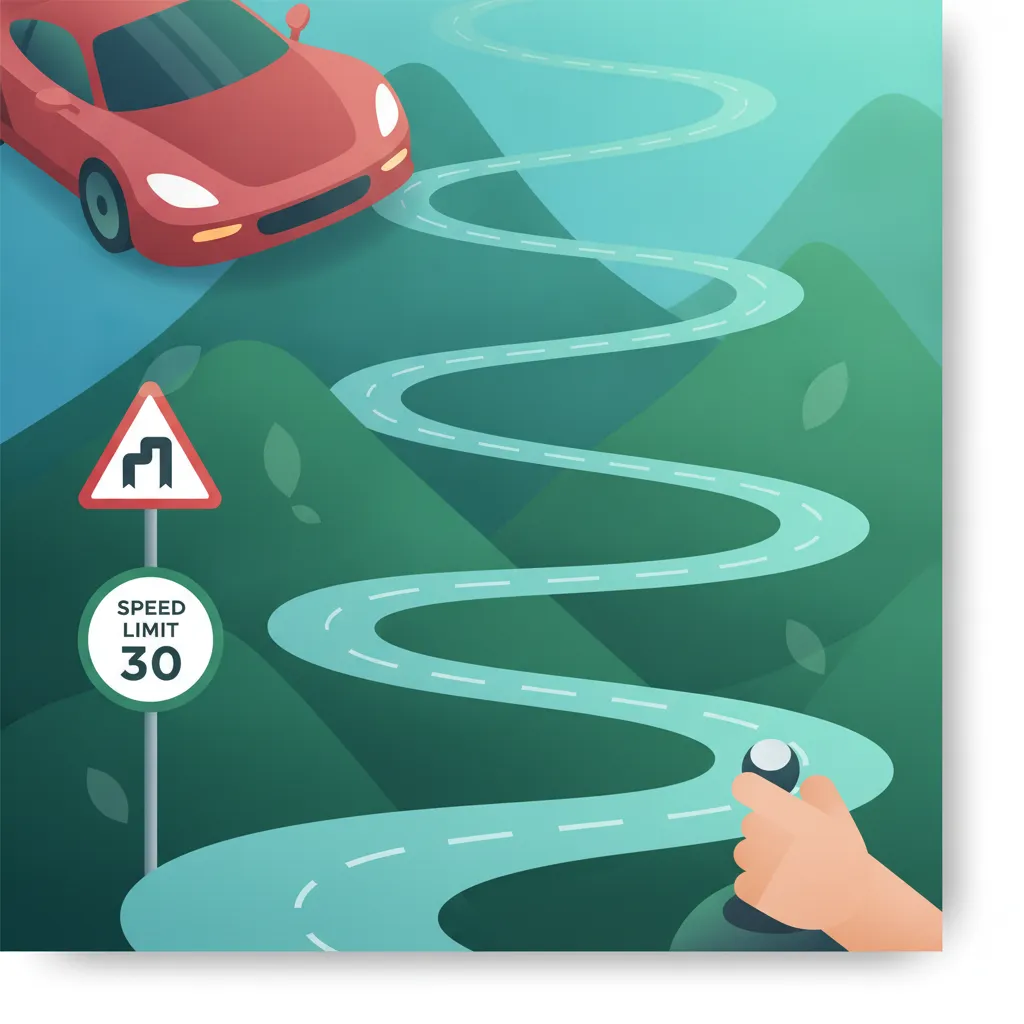
Controlling a heavy vehicle on a steep downhill grade requires a specific technique to avoid disaster. This lesson teaches the golden rule: select a low gear before starting the descent, one that is low enough to control the speed with minimal use of the service brakes. It explains how to effectively combine this with the engine brake or retarder to maintain a safe, steady speed and keep the service brakes cool and ready for an emergency.
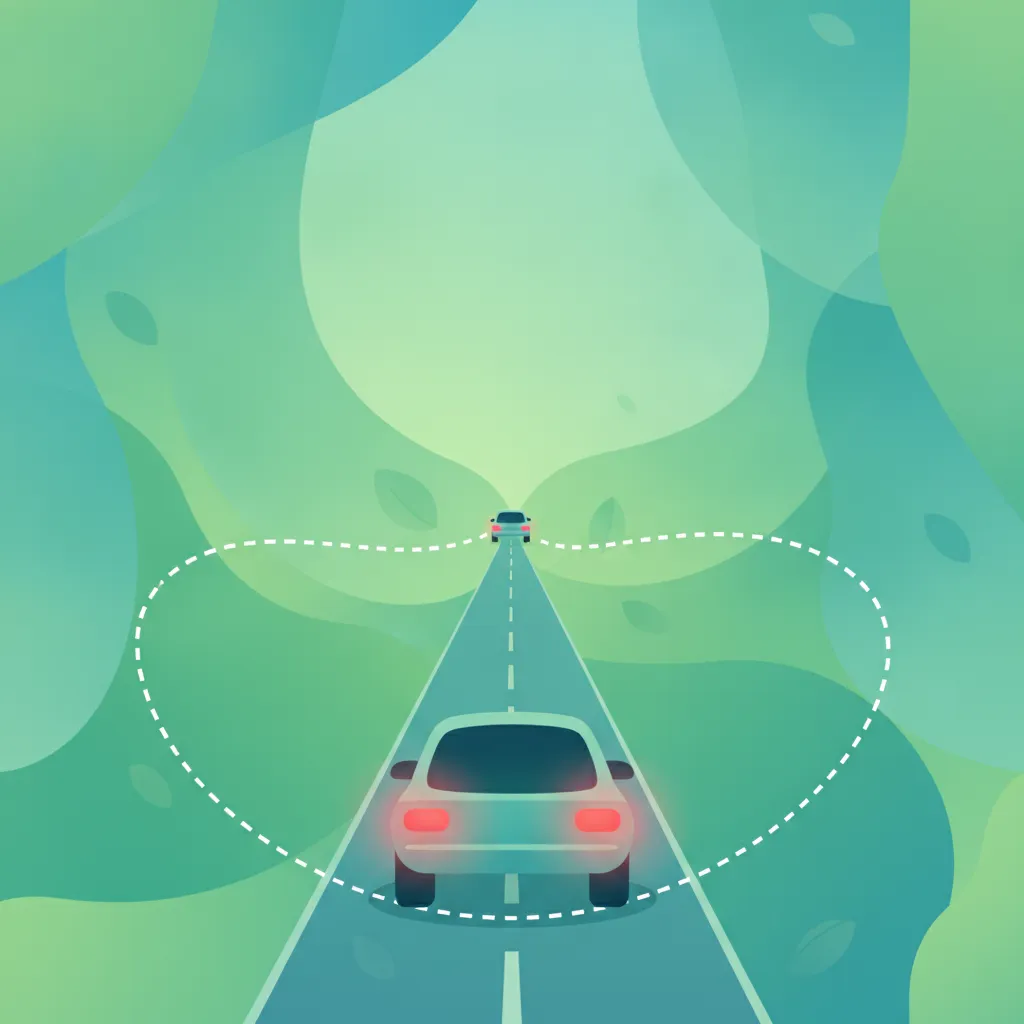
This lesson focuses on calculating total stopping distance, incorporating perception-reaction distance and the vehicle's braking distance. You will also learn to determine an appropriate following gap based on speed, visibility, and road conditions. The content emphasizes maintaining a safe distance to avoid collisions, especially in adverse weather.

Driving a large vehicle on mountain passes is a demanding skill. This lesson covers selecting the correct gear for both ascents and descents to maintain control and avoid overheating the brakes. It also explains the specific priority rules that apply on mountain roads and the importance of being aware of sudden weather changes.
Large passenger vehicles rely on powerful air brake systems. This lesson explains how these systems work, including the importance of monitoring air pressure. It also details the function and proper use of auxiliary braking systems (retarders) to control speed on long descents and reduce wear on the service brakes.
Find clear answers to common questions learners have about The Service Brake (Betriebsbremse) and Parking Brake (Feststellbremse). Learn how the lesson is structured, which driving theory objectives it supports, and how it fits into the overall learning path of units and curriculum progression in Switzerland. These explanations help you understand key concepts, lesson flow, and exam focused study goals.
The parking brake in heavy vehicles is spring-applied. It requires constant air pressure to hold the brakes in the released position. If the air system fails or leaks, the pressure drops and the springs automatically apply the brakes as a vital fail-safe to prevent the vehicle from rolling away.
The service brake is for slowing and stopping the vehicle during normal operation via the foot pedal. The parking brake is designed to hold a stationary vehicle in place and acts as a secondary emergency system if the primary air circuit fails.
Yes, understanding the basic principle of compressed-air braking systems is a standard requirement for heavy vehicle theory to ensure drivers understand the safety systems they operate.
Pinpoint specific Swiss traffic rules, road signs, or driving situations you need to master. Use the practice search to start a focused revision session now and build confidence for your official driving theory exam.