
This lesson explores the vital role of modern electronic safety systems in heavy goods vehicles, specifically Anti-lock Braking Systems (ABS) and Electronic Stability Control (ESC). Understanding these technologies is essential for maintaining control during challenging driving conditions and is a key topic within the Category C and C1 theory requirements.
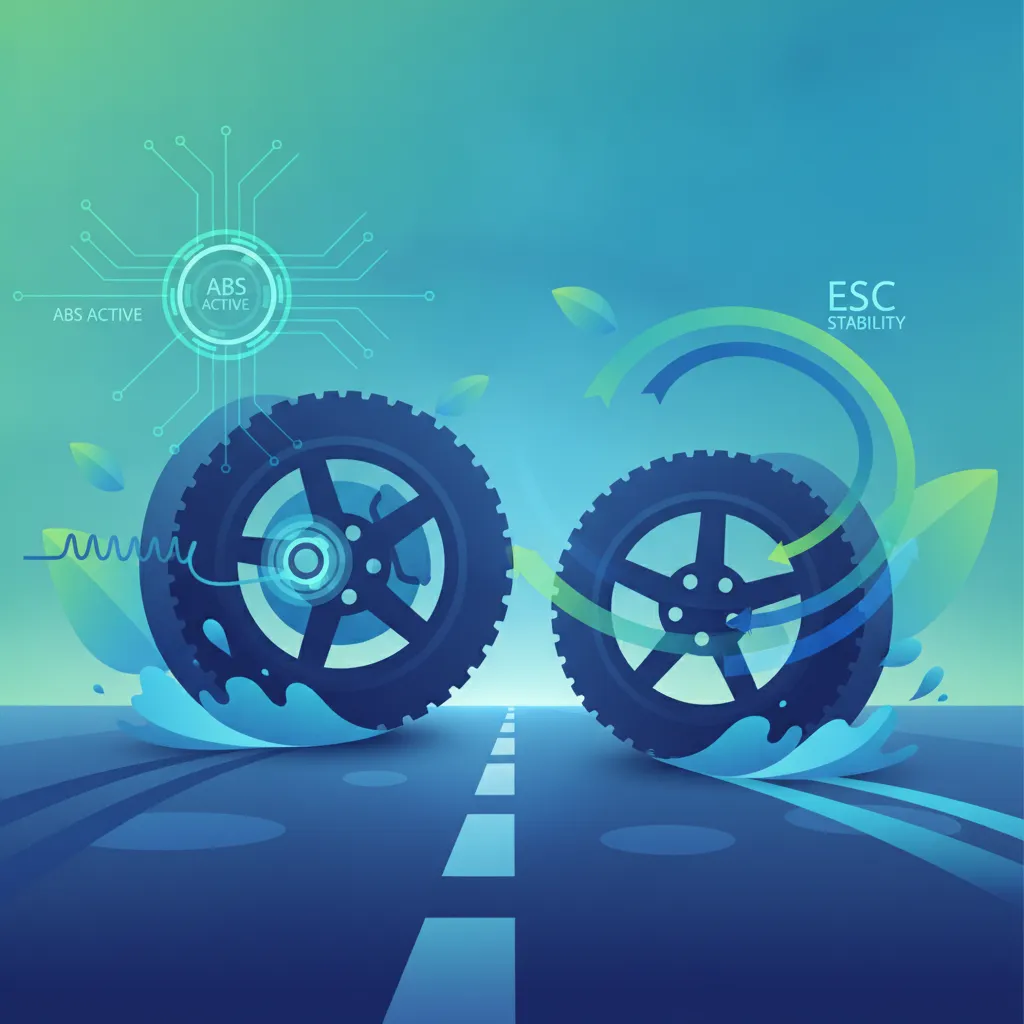
Lesson content overview
Modern heavy goods vehicles, including those in Category C and C1, are equipped with sophisticated electronic safety systems designed to enhance control and prevent accidents. Among the most crucial of these are the Anti-lock Braking System (ABS) and Electronic Stability Control (ESC). These technologies represent a significant advancement in vehicle safety, actively intervening to assist drivers in maintaining control during critical situations such as emergency braking, sudden evasive manoeuvres, or driving on slippery surfaces. Understanding how these systems work, their capabilities, and their limitations is fundamental for any professional driver operating heavy vehicles on Swiss roads, especially given the diverse terrain and weather conditions encountered, from motorways to challenging mountain passes.
This lesson, part of the Official Swiss Driving Theory Course for Category C & C1 Goods Vehicles, delves into the core principles of ABS and ESC. It explains their underlying mechanics, how they interact with driver inputs, and the legal obligations associated with their functionality. Mastering these concepts is essential for ensuring not only personal safety but also the safety of other road users and the integrity of the cargo.
The Anti-lock Braking System (ABS) is a primary safety feature designed to prevent the wheels of a vehicle from locking up during heavy or emergency braking. When wheels lock, the vehicle loses steering ability, and on most surfaces, stopping distances can actually increase. For heavy goods vehicles, which have substantial mass and momentum, maintaining steering control during braking is paramount to avoid skidding, jackknifing, or colliding with obstacles.
During intense braking, especially on low-traction surfaces like wet or icy roads, a driver might apply so much pressure that the wheels stop rotating, or "lock up." When this happens, the tires lose their grip, and the vehicle becomes uncontrollable in terms of steering. ABS constantly monitors the rotational speed of each wheel using dedicated sensors. If a sensor detects that a wheel is slowing down significantly faster than the others, indicating it's about to lock, the ABS control unit rapidly modulates the brake pressure to that specific wheel.
This modulation involves quickly releasing and then reapplying the brake pressure many times per second. By doing so, ABS keeps the wheel rotating just at the threshold of locking, allowing the tire to maintain maximum grip (static friction) with the road surface. The driver can often feel this rapid pulsing sensation through the brake pedal, which is a normal indication that ABS is active. Crucially, this process allows the driver to continue steering the vehicle, enabling them to navigate around obstacles even while braking hard.
ABS systems in heavy goods vehicles can vary in their sophistication, primarily categorized by the number of independent control channels they employ. Each channel controls the brake pressure to one or more wheels:
The practical meaning for drivers is that during hard stops, regardless of the specific channel configuration, the system is actively working to prevent wheel lock-up. Drivers should resist the natural instinct to "pump" the brake pedal when ABS activates, as this will interfere with the system's effectiveness. Instead, they must maintain firm, continuous pressure on the brake pedal and continue steering.
When ABS activates, the driver will typically experience a pulsating sensation in the brake pedal, and sometimes an audible vibration or grinding noise. These are normal operating characteristics and indicate that the system is functioning as intended. The correct response from a driver is to:
A common misunderstanding is that ABS always shortens stopping distance on all surfaces. While ABS can reduce stopping distance on slippery surfaces by maintaining optimal traction, its primary goal is to preserve steering control. On dry pavement, an experienced driver without ABS might sometimes achieve a slightly shorter stopping distance through precise braking just shy of lock-up, but the steering control afforded by ABS is invaluable in almost all emergency situations.
Electronic Stability Control (ESC), often known by various manufacturer-specific names (e.g., ESP, VSC, DSC), is an advanced electronic system designed to improve a vehicle's directional stability and prevent skidding or loss of control, particularly during cornering or sudden evasive manoeuvres. It works by detecting when the vehicle is deviating from the driver's intended path and automatically intervening to correct its trajectory.
ESC continuously monitors several parameters, including the driver's steering wheel angle, the vehicle's actual direction of travel (yaw rate), and its lateral acceleration (side-to-side forces). If the system detects a significant discrepancy between the driver's steering input and the vehicle's actual movement – for instance, if the vehicle begins to oversteer (the rear slides out) or understeer (the front pushes wide) – ESC will intervene.
The system's intervention involves selectively applying the brakes to individual wheels and/or reducing engine power. For example, if a heavy lorry starts to oversteer and the rear wheels slide outwards in a curve, ESC might apply the brake to the outer front wheel. This action helps to create a yaw moment that steers the vehicle back into the intended path, counteracting the skid. Conversely, if understeer occurs, ESC might brake an inner rear wheel to help turn the vehicle more sharply. These actions happen much faster than a driver could react, making ESC an invaluable aid in maintaining stability.
ESC systems rely on a network of sensors and a sophisticated control unit to operate effectively:
Often integrated within the ESC system, Traction Control (TC) is specifically designed to prevent wheel spin during acceleration. On slippery surfaces like snow, ice, or loose gravel, applying too much throttle can cause the drive wheels to lose traction and spin excessively. TC detects this wheel spin via the wheel speed sensors and responds by momentarily reducing engine power (e.g., by cutting fuel, retarding ignition timing) or by applying light brake pressure to the spinning wheel. This allows the non-spinning wheel to receive more power, or the spinning wheel to regain traction, enabling more efficient acceleration and preventing loss of control. For heavy vehicles, TC is particularly useful when starting uphill on low-traction surfaces, helping to prevent the vehicle from sliding back or losing grip.
Both ABS and ESC rely on specific components to gather data and execute corrective actions. Understanding these components clarifies how the systems operate.
Wheel speed sensors are fundamental to both ABS and ESC. Located at each wheel, these sensors continuously measure the rotational speed of their respective wheel. They transmit this real-time data to the ABS/ESC control units. Without precise wheel speed data, the systems cannot detect when a wheel is about to lock during braking, when it's spinning excessively during acceleration, or when there's a discrepancy in wheel speeds that indicates a skid. Any malfunction in these sensors can severely impair or disable the ABS and ESC systems.
The modulator is the component responsible for physically adjusting the brake pressure at each wheel. When the ABS or ESC control unit determines that a brake intervention is needed, it sends a signal to the hydraulic modulator. This unit then rapidly opens and closes valves to release or apply brake fluid pressure to the individual wheel calipers. In an ABS event, this results in the rapid pulsing of brake pressure. In an ESC event, it can apply brake pressure to a single wheel independently to correct vehicle trajectory. This precise and rapid control over brake pressure is what enables both systems to function effectively without direct driver input for each brake application.
In Switzerland, as in much of Europe, the functionality of critical safety systems like ABS and ESC in heavy goods vehicles is not merely a recommendation but a legal requirement. Drivers of Category C and C1 vehicles have specific obligations regarding the operational status and maintenance of these systems.
Before operating any heavy goods vehicle, drivers are legally required to perform a thorough pre-trip inspection. This includes verifying the functionality of safety systems like ABS and ESC.
Regulation 1 – ABS Operational Requirement: Category C and C1 vehicles equipped with ABS must ensure the system is functional, and that the ABS warning lamp is extinguished before vehicle operation. If the ABS warning lamp remains illuminated after starting the engine and performing a self-check, it indicates a malfunction, and the vehicle should not be operated until the fault is rectified. This is a mandatory requirement to guarantee the driver benefits from steering control during hard braking.
Similarly for ESC:
Regulation 2 – ESC Functional Requirement: Vehicles equipped with ESC must have the ESC system functional, and the ESC indicator lamp must be extinguished after the system self-checks following ignition. If the ESC lamp remains illuminated, it signifies a system fault, and the driver must not assume ESC assistance is available. Operating the vehicle with a malfunctioning ESC can compromise safety, particularly on high-speed roads or challenging terrain.
These warning lamps are designed to alert the driver to potential safety issues. A driver who proceeds with a vehicle showing persistent ABS or ESC warning lights is not only risking an accident but also violating legal safety standards.
While ABS and ESC are active safety aids, they do not replace the driver's responsibility for safe operation.
Regulation 3 – Driver Obligations During ABS/ESC Events: The driver must maintain normal steering control and consistent pedal pressure while ABS or ESC is active. They must not release the brake pedal prematurely or steer abruptly. The systems are designed to assist the driver's inputs, not to take complete control. Continuous driver input ensures optimal performance of these systems.
For example, when ABS is active, the driver must continue to press the brake pedal firmly and steer the vehicle in the intended direction. Similarly, if ESC intervenes during a skid, the driver should continue to steer into the desired path, allowing ESC to help realign the vehicle. Over-correction or releasing the pedals can hinder the system's ability to stabilize the vehicle.
Any indication of a malfunction in ABS or ESC must be taken seriously.
Regulation 4 – Maintenance and Fault Reporting: Any fault in ABS or ESC, indicated by persistent warning lights on the dashboard, must be addressed immediately by qualified personnel before the vehicle is placed back in service. Ignoring these warnings can lead to system failure and significantly increase the risk of an accident.
Regular maintenance and timely repair of these systems are critical for the safe operation of heavy goods vehicles and compliance with Swiss road traffic regulations.
While ABS and ESC are incredibly effective safety systems, they are not infallible and have inherent limitations. Drivers must be aware of these to avoid a false sense of security.
The effectiveness of ABS and ESC can be degraded by several factors:
It's a common misunderstanding that ESC can completely correct a loss of control without any driver steering input. This is incorrect. ESC assists in bringing the vehicle back onto its intended path but relies on the driver's steering wheel input to understand that intended path. If the driver does not steer appropriately during a skid, the system's effectiveness is reduced. Similarly, believing that ABS can always shorten stopping distance on dry pavement is misleading. Its primary function is maintaining steerability.
Another common violation is pumping the brake pedal during ABS activation. This interferes with the system's rapid modulation, reducing its effectiveness and potentially leading to wheel lock-up and loss of steering control. Heavy vehicle drivers must also be aware that activating an "ESC button" on a dashboard if the vehicle is not actually equipped with ESC can create a false sense of security. Always know your vehicle's features.
The performance and importance of ABS and ESC vary significantly depending on external conditions and the vehicle's state.
Wet, icy, or snow-covered roads dramatically reduce tire traction, making wheel lock-up and skidding much more likely. In these conditions, ABS becomes critical for maintaining steering control during braking, helping the driver avoid obstacles. ESC's role is also amplified, as the risk of oversteer or understeer in curves or during lane changes increases significantly. Both systems work harder to mitigate the increased risk of loss of control, but drivers must still modulate their speed and adjust their driving style accordingly. For instance, even with ABS, braking distances on ice will be substantially longer than on dry pavement.
The enormous weight and high centre of gravity of heavy goods vehicles significantly influence their dynamics. A heavily loaded lorry has greater inertia, meaning it takes longer to stop and is more prone to rollovers or severe skids if stability is compromised. ESC is particularly crucial for loaded vehicles, as it can detect the onset of a skid or potential rollover earlier than a driver might and intervene to stabilize the vehicle. Uneven load distribution can shift the vehicle's centre of gravity, altering braking dynamics and increasing yaw moments, potentially causing ESC to intervene earlier or more frequently. Understanding how load affects vehicle stability is paramount for professional drivers (a topic covered in detail in lesson 5).
To illustrate the real-world application of these systems, consider the following scenarios:
Both ABS and ESC are indispensable active safety systems for heavy goods vehicles, significantly reducing the risk of accidents by maintaining control during challenging driving conditions.
Adhering to legal requirements for functional ABS and ESC, coupled with a deep understanding of their operation and limitations, empowers heavy goods vehicle drivers to operate safely and confidently in diverse Swiss driving environments.
This lesson explains how Anti-lock Braking Systems (ABS) prevent wheel lock-up to preserve steering during hard braking, and how Electronic Stability Control (ESC) detects and corrects skids by automatically applying individual brakes and reducing engine torque. Both systems are mandatory on Swiss Category C and C1 heavy vehicles and require functional warning lamps before operation. Drivers must maintain firm brake pressure and appropriate steering input during system interventions, remembering that these aids assist rather than replace careful driving and cannot overcome the fundamental laws of physics.
A short set of high-value points that capture the most important learning from this lesson.
ABS prevents wheel lock-up during hard braking by rapidly modulating brake pressure, allowing the driver to maintain steering control.
ESC detects vehicle skids and corrects trajectory by selectively braking individual wheels and/or reducing engine power.
Traction Control, often integrated with ESC, prevents drive wheel spin during acceleration on low-traction surfaces.
The driver must maintain firm, continuous brake pressure and steer into the intended path when ABS or ESC activates.
ABS and ESC have limitations: they cannot overcome physics, and their effectiveness depends on tire condition, road surface, and vehicle speed.
Explore all units and lessons included in this driving theory course.
ABS warning lamp must be extinguished before driving; if illuminated, the vehicle must not be operated until the fault is rectified.
During ABS activation, do not pump the brake pedal—maintain continuous pressure and steer around obstacles.
ESC requires driver steering input to know the intended path; it assists but does not replace driver control.
ESC monitors yaw rate, lateral acceleration, steering angle, and wheel speeds through dedicated sensors.
Poor tire condition, extreme surfaces, or excessive speed can overwhelm ABS and ESC systems.
Pumping the brake pedal when ABS activates, which disrupts the system's rapid modulation and can cause wheel lock-up.
Assuming ESC can fully correct a skid without any steering input from the driver.
Believing ABS always shortens stopping distance on all surfaces—its primary goal is steering control, not minimum stopping distance.
Continuing to drive with illuminated ABS or ESC warning lamps, which signals a system malfunction.
Over-relying on electronic systems and failing to adjust speed and driving style for adverse conditions.
Lesson content overview
A short set of high-value points that capture the most important learning from this lesson.
ABS prevents wheel lock-up during hard braking by rapidly modulating brake pressure, allowing the driver to maintain steering control.
ESC detects vehicle skids and corrects trajectory by selectively braking individual wheels and/or reducing engine power.
Traction Control, often integrated with ESC, prevents drive wheel spin during acceleration on low-traction surfaces.
The driver must maintain firm, continuous brake pressure and steer into the intended path when ABS or ESC activates.
ABS and ESC have limitations: they cannot overcome physics, and their effectiveness depends on tire condition, road surface, and vehicle speed.
Explore all units and lessons included in this driving theory course.
ABS warning lamp must be extinguished before driving; if illuminated, the vehicle must not be operated until the fault is rectified.
During ABS activation, do not pump the brake pedal—maintain continuous pressure and steer around obstacles.
ESC requires driver steering input to know the intended path; it assists but does not replace driver control.
ESC monitors yaw rate, lateral acceleration, steering angle, and wheel speeds through dedicated sensors.
Poor tire condition, extreme surfaces, or excessive speed can overwhelm ABS and ESC systems.
Pumping the brake pedal when ABS activates, which disrupts the system's rapid modulation and can cause wheel lock-up.
Assuming ESC can fully correct a skid without any steering input from the driver.
Believing ABS always shortens stopping distance on all surfaces—its primary goal is steering control, not minimum stopping distance.
Continuing to drive with illuminated ABS or ESC warning lamps, which signals a system malfunction.
Over-relying on electronic systems and failing to adjust speed and driving style for adverse conditions.
Explore search topics learners often look for when studying Anti-lock Braking Systems (ABS) and Electronic Stability Control (ESC). These topics reflect common questions about road rules, driving situations, safety guidance, and lesson level theory preparation for learners in Switzerland.
Browse additional driving theory lessons that cover connected traffic rules, road signs, and common driving situations related to this topic. Improve your understanding of how different rules interact across everyday traffic scenarios.
Understand the internal workings of Anti-lock Braking Systems (ABS) and Electronic Stability Control (ESC) in lorries. Covers sensors, control units, and hydraulic modulators crucial for vehicle safety and Swiss theory exam preparation.
This lesson explores the function and benefits of ABS and ESC, focusing on how these systems enhance vehicle control during emergency braking. It explains how ABS prevents wheel lock-up and how ESC maintains vehicle stability. Understanding these safety systems helps drivers respond appropriately during emergencies, ensuring optimal brake performance.

Many modern lorries are equipped with technologies designed to improve safety. This lesson introduces common systems like reversing cameras, blind spot detection sensors, and lane departure warnings. It is crucial for drivers to understand that while these systems are valuable aids, they do not replace the need for fundamental skills of all-round observation and mirror use.

To prevent the service brakes from overheating and failing on long downhill gradients, heavy vehicles are equipped with endurance (or auxiliary) braking systems. This lesson explains the function of engine brakes (which alter valve timing) and retarders (which use hydrodynamic or electromagnetic force). These systems allow the driver to maintain a safe, controlled speed without relying solely on the service brakes.
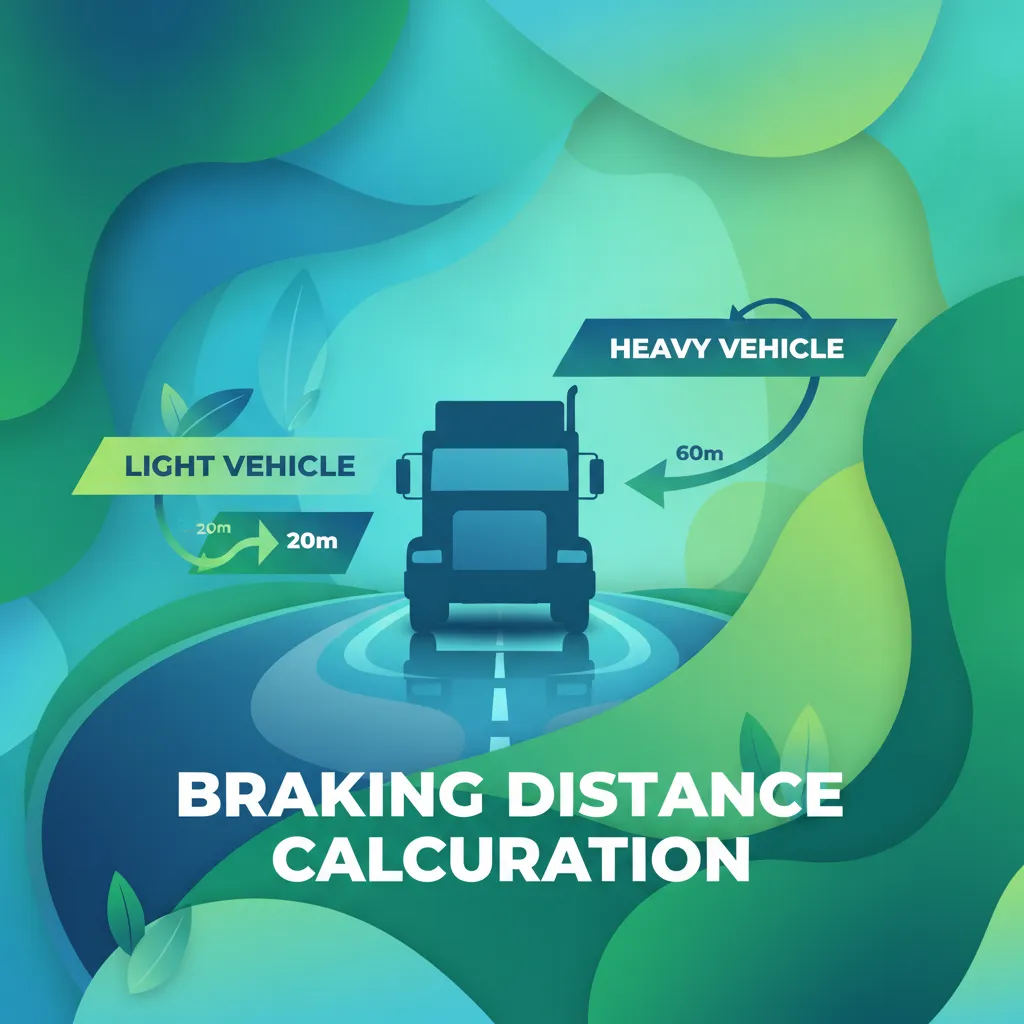
The immense mass of a loaded truck means its braking distance is far greater than that of a car. This lesson breaks down total stopping distance into reaction distance and braking distance, explaining how speed, weight, and road conditions have an exponential effect. It reinforces the necessity of maintaining a significantly larger following distance to ensure enough space to stop safely in an emergency.

This lesson details the function of the two primary braking circuits. The service brake (Betriebsbremse) is the main system operated by the foot pedal for slowing and stopping the vehicle. The parking brake (Feststellbremse) is a powerful spring-applied system that is held off by air pressure, meaning it engages automatically if a major air leak occurs, serving as a critical fail-safe.

Driving in the Alps requires a high level of skill and vehicle sympathy. This lesson covers techniques for climbing steep gradients by selecting the correct gear to maintain momentum without straining the engine. It reiterates the critical importance of using low gears and auxiliary brakes for descending, to ensure the service brakes remain cool and effective for the entire descent.

Large passenger vehicles rely on powerful air brake systems. This lesson explains how these systems work, including the importance of monitoring air pressure. It also details the function and proper use of auxiliary braking systems (retarders) to control speed on long descents and reduce wear on the service brakes.

The dashboard is the vehicle's primary communication interface with the driver. This lesson explains how to read essential gauges, such as the air pressure gauges for the braking system, the tachometer, and the fuel level. It focuses on recognizing the meaning of different warning lights (red for urgent, amber for caution) and the importance of stopping safely to investigate any critical alerts immediately.

The suspension system connects the vehicle's axles to its frame, supporting the massive weight and absorbing shocks from the road surface. This lesson describes the two common types: traditional leaf springs and modern air suspension. It explains how a well-maintained suspension is crucial for vehicle stability, proper handling, braking effectiveness, and preventing damage to the load and the vehicle itself.

Wet or icy roads drastically reduce tyre grip and can double or triple braking distances. This lesson stresses the importance of significantly reducing overall speed and increasing following distances in such conditions. It advises on using brakes with extreme care to avoid skidding and explains how the vehicle's retarder should be used with caution as it can cause the drive wheels to lock up on slippery surfaces.
Learn about your legal responsibilities as a driver concerning ABS and ESC functionality in heavy vehicles. Understand pre-trip checks, how to react to warning lamps, and the real-world limitations of these safety aids.
This lesson explores the function and benefits of ABS and ESC, focusing on how these systems enhance vehicle control during emergency braking. It explains how ABS prevents wheel lock-up and how ESC maintains vehicle stability. Understanding these safety systems helps drivers respond appropriately during emergencies, ensuring optimal brake performance.
Many modern lorries are equipped with technologies designed to improve safety. This lesson introduces common systems like reversing cameras, blind spot detection sensors, and lane departure warnings. It is crucial for drivers to understand that while these systems are valuable aids, they do not replace the need for fundamental skills of all-round observation and mirror use.
The dashboard is the vehicle's primary communication interface with the driver. This lesson explains how to read essential gauges, such as the air pressure gauges for the braking system, the tachometer, and the fuel level. It focuses on recognizing the meaning of different warning lights (red for urgent, amber for caution) and the importance of stopping safely to investigate any critical alerts immediately.

The driver is legally responsible for the roadworthiness of their vehicle at the start of and during every journey. This lesson outlines the formal process for reporting any identified defects to the transport manager or maintenance staff. It stresses the critical rule that a vehicle with a known safety-critical defect must not be driven until it has been professionally repaired and declared safe.
Large passenger vehicles rely on powerful air brake systems. This lesson explains how these systems work, including the importance of monitoring air pressure. It also details the function and proper use of auxiliary braking systems (retarders) to control speed on long descents and reduce wear on the service brakes.

The condition of tyres and wheels is paramount to safety. This lesson details how to check tyre pressures, tread depth, and sidewalls for any damage or defects. You will also learn to inspect wheel nuts for security and look for signs of issues with the suspension system.

A secure connection between the tractor and trailer requires linking the braking and electrical systems. This lesson explains the function of the red (emergency) and yellow (service) air lines and the main electrical socket, which powers the trailer's lights and ABS. It outlines the correct, safe sequence for connecting and disconnecting these lines to ensure the trailer's brakes function correctly.

While others may have loaded the vehicle, the driver holds the final legal responsibility for the security of the load once on the public highway. This lesson clarifies this crucial point of law, explaining that the driver must inspect the load and its securing arrangements before departure and re-check them during the journey. The consequences of a load shifting or falling can be catastrophic and result in severe legal penalties for the driver.

Being seen and being able to see are critical for safety. This lesson covers the systematic check of all exterior lights, including headlights, brake lights, and indicators. It also emphasizes the importance of ensuring all mirrors and camera lenses are clean, undamaged, and properly adjusted for maximum visibility.

After stopping for an emergency, making the scene safe is the top priority. This lesson details the procedure: activate hazard warning lights, put on high-visibility clothing before exiting the cab, and place the warning triangle at the correct distance behind the vehicle (at least 100m on motorways). This warns approaching traffic and creates a safer environment for the driver and emergency responders.
Find clear answers to common questions learners have about Anti-lock Braking Systems (ABS) and Electronic Stability Control (ESC). Learn how the lesson is structured, which driving theory objectives it supports, and how it fits into the overall learning path of units and curriculum progression in Switzerland. These explanations help you understand key concepts, lesson flow, and exam focused study goals.
The primary goal of ABS is not necessarily to shorten the stopping distance, but to prevent the wheels from locking. This allows the driver to maintain steering control while braking heavily, which is crucial for avoiding obstacles.
ESC monitors the vehicle's actual movement compared to the driver's steering input. If it detects a risk of skidding or rolling over, it automatically adjusts engine power and applies specific individual brakes to restore stability.
While these systems significantly improve safety on ice, snow, or wet roads, they cannot defy the laws of physics. They are aids, not a substitute for safe, defensive driving techniques appropriate for the road conditions.
Yes, understanding active safety systems like ABS and ESC is part of the vehicle construction and safety curriculum for Swiss C and C1 licenses, as these systems are standard equipment on modern heavy goods vehicles.
Pinpoint specific Swiss traffic rules, road signs, or driving situations you need to master. Use the practice search to start a focused revision session now and build confidence for your official driving theory exam.