
This lesson explores the essential techniques of load securing, a critical responsibility for all Category C and C1 drivers. You will learn how to use physical blocking and tension-based lashing to prevent cargo from shifting, ensuring compliance with Swiss transport regulations and road safety standards.

Lesson content overview
Operating Category C and C1 goods vehicles on Swiss roads demands a comprehensive understanding of load securing techniques. The proper restraint of cargo is not merely a legal requirement; it is a fundamental safety imperative that directly impacts vehicle stability, braking performance, and overall road safety. This lesson provides a detailed exploration of the two primary methods for load securing: blocking (Formschluss) and lashing (Kraftschluss und Direktzurren), crucial for anyone driving heavy goods vehicles.
Cargo that shifts during transit can have catastrophic consequences, ranging from loss of vehicle control and increased braking distances to severe accidents involving other road users. Understanding and correctly applying load securing principles prevents such incidents by ensuring your cargo remains stable regardless of driving forces. This knowledge is especially vital for professional drivers of Category C and C1 vehicles, who transport diverse loads across various terrains, including challenging mountain passes and high-speed motorways.
This lesson builds upon foundational knowledge of vehicle dynamics, load distribution, and the physics of forces acting on a load, providing the practical methods to counteract these forces effectively.
Load securing is a systematic process designed to prevent any unintended movement of cargo in all directions while the vehicle is in motion. This includes movement during acceleration, braking, cornering, and swerving. By ensuring static stability of the cargo, drivers mitigate destabilizing forces, thereby preserving vehicle handling and complying with stringent safety legislation.
The two overarching methods are:
Both methods work in tandem with the physical principles of friction, inertia, and careful management of the vehicle's centre of gravity.
Blocking, also known as positive blocking or Formschluss in German, is a foundational method of load securing that involves positioning cargo snugly against immovable vehicle components or filling empty spaces with suitable materials. This technique physically prevents cargo from moving by eliminating free space.
Blocking is defined as the process of limiting cargo movement by placing it tightly against fixed structures of the vehicle, such as the headboard, sidewalls, or floor, or by using dunnage to fill any voids. The primary purpose of blocking is to provide resistance against cargo shift without necessarily relying on additional tensioning devices. It works by reducing the space available for the load to accelerate into, effectively using the vehicle's structure or other cargo as a barrier.
This method is often sufficient for loads that inherently offer good stability and for limiting movement in specific directions, particularly forward and sideways.
Two main approaches fall under the umbrella of blocking:
Always ensure a snug fit. Even with dunnage, the goal is to eliminate any significant free space that would allow the cargo to build momentum before hitting a restraint.
Proper blocking simplifies load preparation and reduces the reliance on extensive lashing equipment. However, it requires careful planning of the load layout and an understanding of the cargo's shape and weight distribution.
Materials such as wood, foam, inflatable bags, or specialised shoring bars used to fill empty spaces, brace, and support cargo within a vehicle's load area to prevent movement.
Lashing involves the application of straps, chains, ropes, or similar devices to restrain cargo through tension. It provides an additional layer of security beyond blocking, essential for high-mass, tall, or potentially unstable loads.
Lashing devices connect the cargo to the vehicle's load-rated anchor points, applying force to prevent movement. The choice of lashing method and equipment depends heavily on the cargo's characteristics, weight, shape, and the forces it will be subjected to during transit.
Never assume any strap will suffice. Lashing devices must be rated for the load's weight and meet specific strength standards to be effective and compliant with regulations.
Friction lashing, or Niederzurren in German, is a technique where restraint devices (typically tensioned straps) are used to generate increased friction between the cargo and the vehicle's load bed. The lashing devices are tightened over the load, pressing it downwards, which in turn increases the normal force and thus the frictional resistance to movement.
A load securing method where restraint devices are tensioned over the cargo to press it downwards, thereby increasing the friction between the load and the vehicle's floor to prevent sliding.
Direct lashing, or Direktzurren, involves directly connecting the cargo to fixed anchor points on the vehicle using straps, chains, or ropes. Unlike friction lashing, which relies on increasing friction, direct lashing actively holds the load in place, preventing movement by acting as a direct mechanical restraint against external forces.
Direct lashing can be applied in various configurations, often combined to provide comprehensive restraint:
A load securing method where cargo is physically tied down or braced directly to certified anchor points on the vehicle, preventing movement by acting as a mechanical restraint.
While not a securing method in itself, correct load distribution and understanding the centre of gravity (CG) are fundamental prerequisites for effective blocking and lashing. How cargo weight is positioned influences vehicle stability, braking performance, and the forces that load securing devices must counteract. A poorly distributed load, even if "secured," can still destabilise the vehicle or shift dangerously.
In Switzerland, the safe transport of goods is governed by strict regulations, particularly within the Swiss Road Traffic Regulations (Strassenverkehrsordnung). Drivers of Category C and C1 vehicles bear direct responsibility for ensuring their loads are secured appropriately before and during transit. Non-compliance can lead to severe penalties, including fines, points, and potential liability in the event of an accident.
The following regulations outline mandatory requirements for all Category C and C1 goods vehicles operating on Swiss roads, regardless of weather or road conditions.
Even experienced drivers can make mistakes in load securing. Being aware of these common pitfalls can help prevent accidents and ensure compliance.
Insufficient Blocking:
Underrated Lashing Devices:
Improper Tensioning:
Failure to Secure Vertical Movement:
Inadequate Number of Lashings:
Neglecting Post-Movement Inspection:
Improper Use of Dunnage:
Blocking Only in One Dimension:
Load securing is not a static process; it must adapt to changing conditions. Factors such as weather, road type, and vehicle state necessitate adjustments to securing measures.
The rationale behind stringent load securing rules is deeply rooted in physics and practical safety.
Mastering the methods of load securing – blocking and lashing – is indispensable for operating Category C and C1 goods vehicles safely and legally in Switzerland. By understanding the principles of Formschluss (blocking) and the nuances of Kraftschluss (friction lashing) and Direktzurren (direct lashing), drivers can ensure their cargo remains stable, thereby protecting themselves, their vehicles, and all other road users. Always remember that load securing is a continuous responsibility, requiring vigilance, correct equipment, and adherence to regulatory standards.
Load securing on Swiss Category C and C1 vehicles relies on two complementary methods: blocking (Formschluss), which uses vehicle structures and dunnage to physically prevent cargo movement, and lashing (Kraftschluss), which applies tension through straps or chains. Friction lashing (Niederzurren) presses cargo downward to increase friction, while direct lashing (Direktzurren) provides superior restraint by anchoring cargo to certified tie-down points. Swiss regulations under Art. 25 and Art. 38 mandate specific securing requirements, minimum lashings for loads over 1,000 kg, direct lashing for lift-prone cargo, and mandatory re-inspection duties. Understanding these techniques is essential for vehicle stability, braking performance, and road safety, particularly on Swiss mountain passes and motorways where dynamic forces are amplified.
A short set of high-value points that capture the most important learning from this lesson.
Blocking (Formschluss) prevents cargo movement by eliminating free space through snug loading against fixed structures or filling voids with dunnage
Friction lashing (Niederzurren) increases downward pressure to enhance frictional resistance between cargo and vehicle floor
Direct lashing (Direktzurren) provides superior mechanical restraint by connecting cargo directly to certified vehicle anchor points
Swiss regulations mandate direct lashing for any load that could lift off the floor, and minimum two lashings for cargo exceeding 1,000 kg or half the vehicle width
Load distribution and centre of gravity management are prerequisite knowledge that directly influences securing effectiveness
Explore all units and lessons included in this driving theory course.
Direct lashing is mandatory for tall loads and those with high centre of gravity that risk lifting during braking
Friction lashing effectiveness drops significantly in wet, icy, or dirty conditions due to reduced friction coefficients
Swiss Art. 38 requires drivers to re-inspect load securing after any substantial vehicle movement, including loading/unloading or hard braking
Anti-slip mats complement friction lashing but should not be the sole securing method for heavy loads
Diagonal lashing provides multi-directional restraint and is essential on mountain roads with steep gradients and sharp curves
Using insufficient or improperly sized dunnage that cannot withstand cargo forces during transit
Applying friction lashing alone for heavy or tall loads that require direct mechanical restraint
Failing to secure cargo against lateral movement when only forward-back blocking is implemented
Neglecting to re-check lashing tension after prolonged driving or road surface changes
Using lashing devices with inadequate load capacity (LC) without proper safety factors for the cargo weight
Lesson content overview
A short set of high-value points that capture the most important learning from this lesson.
Blocking (Formschluss) prevents cargo movement by eliminating free space through snug loading against fixed structures or filling voids with dunnage
Friction lashing (Niederzurren) increases downward pressure to enhance frictional resistance between cargo and vehicle floor
Direct lashing (Direktzurren) provides superior mechanical restraint by connecting cargo directly to certified vehicle anchor points
Swiss regulations mandate direct lashing for any load that could lift off the floor, and minimum two lashings for cargo exceeding 1,000 kg or half the vehicle width
Load distribution and centre of gravity management are prerequisite knowledge that directly influences securing effectiveness
Explore all units and lessons included in this driving theory course.
Direct lashing is mandatory for tall loads and those with high centre of gravity that risk lifting during braking
Friction lashing effectiveness drops significantly in wet, icy, or dirty conditions due to reduced friction coefficients
Swiss Art. 38 requires drivers to re-inspect load securing after any substantial vehicle movement, including loading/unloading or hard braking
Anti-slip mats complement friction lashing but should not be the sole securing method for heavy loads
Diagonal lashing provides multi-directional restraint and is essential on mountain roads with steep gradients and sharp curves
Using insufficient or improperly sized dunnage that cannot withstand cargo forces during transit
Applying friction lashing alone for heavy or tall loads that require direct mechanical restraint
Failing to secure cargo against lateral movement when only forward-back blocking is implemented
Neglecting to re-check lashing tension after prolonged driving or road surface changes
Using lashing devices with inadequate load capacity (LC) without proper safety factors for the cargo weight
Explore search topics learners often look for when studying Methods of Load Securing (Ladungssicherung): Blocking and Lashing. These topics reflect common questions about road rules, driving situations, safety guidance, and lesson level theory preparation for learners in Switzerland.
Browse additional driving theory lessons that cover connected traffic rules, road signs, and common driving situations related to this topic. Improve your understanding of how different rules interact across everyday traffic scenarios.
Understand the key differences between direct lashing and friction lashing methods for securing heavy vehicle cargo. Learn when to apply each technique for optimal safety and compliance with Swiss regulations.

Using the right equipment is crucial for effective load securing. This lesson introduces common lashing equipment, including synthetic webbing straps with ratchets and heavy-duty chains with binders. It emphasizes the importance of inspecting all equipment for cuts, wear, or damage before use and understanding the labels that indicate their load capacity (Lashing Capacity - LC).

Overloading is a serious offence with severe safety and legal ramifications. This lesson details how excess weight drastically increases braking distances, puts extreme stress on tyres leading to blowouts, and negatively affects steering and overall stability. Furthermore, it discusses the substantial fines, potential license withdrawal, and driver liability that result from violating Swiss weight regulations.
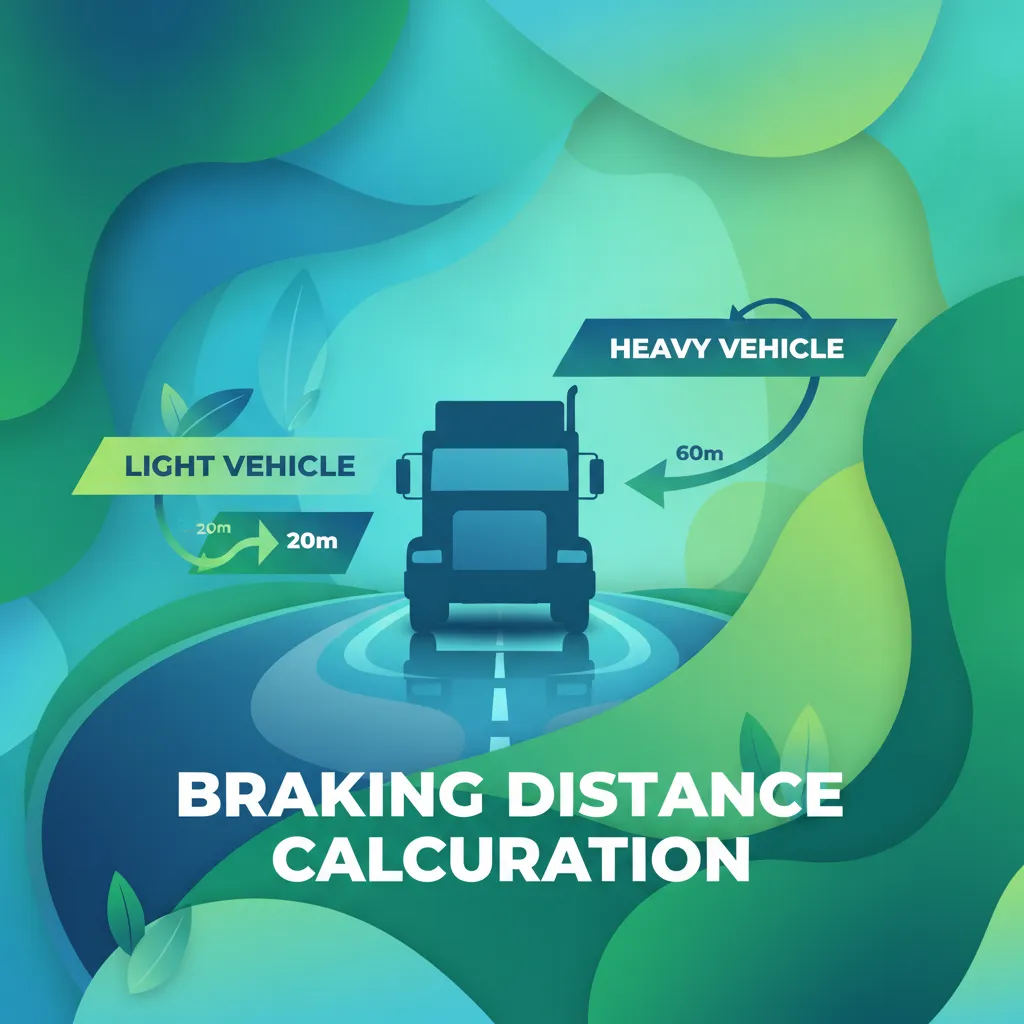
The immense mass of a loaded truck means its braking distance is far greater than that of a car. This lesson breaks down total stopping distance into reaction distance and braking distance, explaining how speed, weight, and road conditions have an exponential effect. It reinforces the necessity of maintaining a significantly larger following distance to ensure enough space to stop safely in an emergency.

Losing part of a load on the road creates an immediate and serious hazard for other drivers. This lesson outlines the driver's responsibilities: stop in a safe place, assess the situation from a safe distance, and immediately alert the police. The driver's primary role is to warn other road users and not to attempt to retrieve the load from a live carriageway.
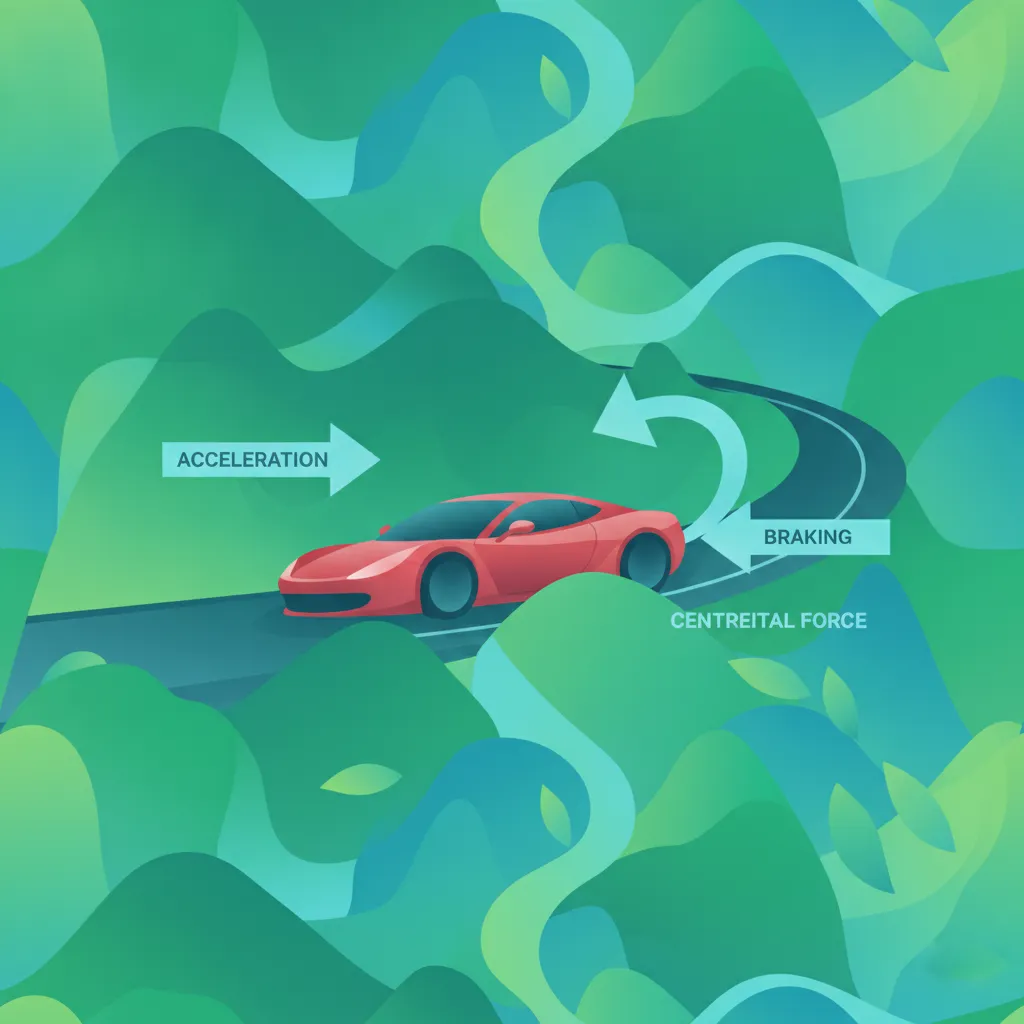
A load is not static; it is subjected to significant forces during transport. This lesson explains how acceleration, braking (deceleration), and cornering create powerful inertial forces that try to move the cargo. Load securing systems must be strong enough to counteract these forces to prevent the load from sliding forward during braking, backward during acceleration, or sideways when turning.

Motorway driving requires constant concentration due to high speeds. This lesson emphasizes the importance of staying in the right-hand lane unless overtaking and the specific restrictions on lorry overtaking in Switzerland. It reinforces the need for a following distance of at least four seconds to compensate for the vehicle's long stopping distance and provides guidance on safely merging and exiting.

Proper visibility is paramount for the safety of large vehicles, especially at night or in poor weather. This lesson covers the full range of required lights, including headlights, indicators, brake lights, and side and rear marker lights. It also explains the function of reflectors and the mandatory high-visibility conspicuity markings that outline the vehicle's shape to other drivers.

Coupling and uncoupling are high-risk manoeuvres if not performed correctly. This lesson provides a theoretical, sequential guide to the process, covering aligning the tractor unit, raising the trailer's landing gear, locking the fifth-wheel mechanism onto the kingpin, and performing a 'tug test' to confirm a secure connection. The uncoupling process is also detailed, emphasizing the importance of a firm, level surface.

Driving in the Alps requires a high level of skill and vehicle sympathy. This lesson covers techniques for climbing steep gradients by selecting the correct gear to maintain momentum without straining the engine. It reiterates the critical importance of using low gears and auxiliary brakes for descending, to ensure the service brakes remain cool and effective for the entire descent.

While others may have loaded the vehicle, the driver holds the final legal responsibility for the security of the load once on the public highway. This lesson clarifies this crucial point of law, explaining that the driver must inspect the load and its securing arrangements before departure and re-check them during the journey. The consequences of a load shifting or falling can be catastrophic and result in severe legal penalties for the driver.
Explore the essential methods of blocking cargo and using dunnage to prevent shifting. Learn how these techniques contribute to overall load security and vehicle stability on Swiss roads.
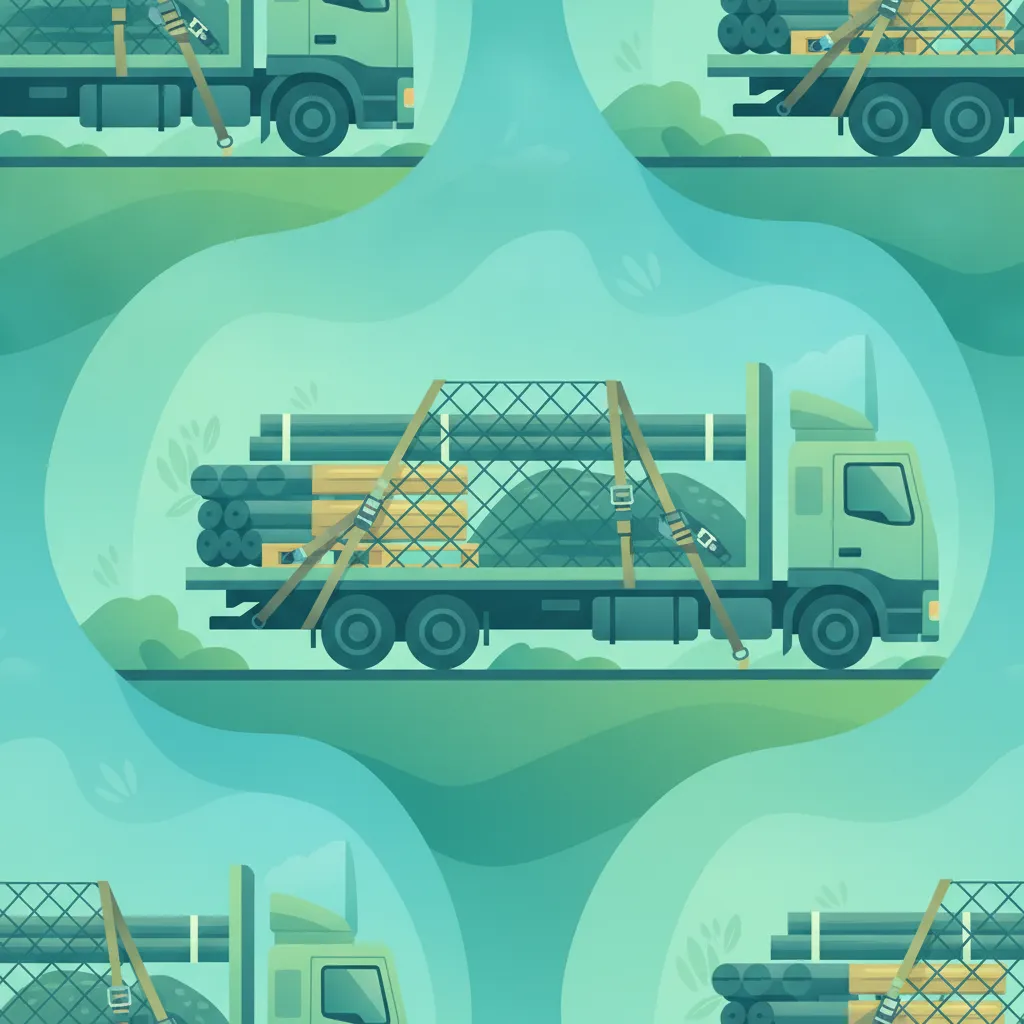
There is no one-size-fits-all solution for load securing. This lesson provides examples of how to secure different common cargo types, from standard palletized goods to challenging loads like pipes, which can roll, or heavy coils. It highlights that the securing method must be tailored to the specific characteristics of the load to be effective.
A load is not static; it is subjected to significant forces during transport. This lesson explains how acceleration, braking (deceleration), and cornering create powerful inertial forces that try to move the cargo. Load securing systems must be strong enough to counteract these forces to prevent the load from sliding forward during braking, backward during acceleration, or sideways when turning.
While others may have loaded the vehicle, the driver holds the final legal responsibility for the security of the load once on the public highway. This lesson clarifies this crucial point of law, explaining that the driver must inspect the load and its securing arrangements before departure and re-check them during the journey. The consequences of a load shifting or falling can be catastrophic and result in severe legal penalties for the driver.

Heavy goods vehicles are fitted with specific safety structures to mitigate the severity of collisions with smaller vehicles and vulnerable road users. This lesson explains the function of the rear underrun bar, which prevents cars from going underneath the truck in a rear-end collision. It also covers side guards, which are designed to stop cyclists and pedestrians from falling under the vehicle's wheels during a side impact.
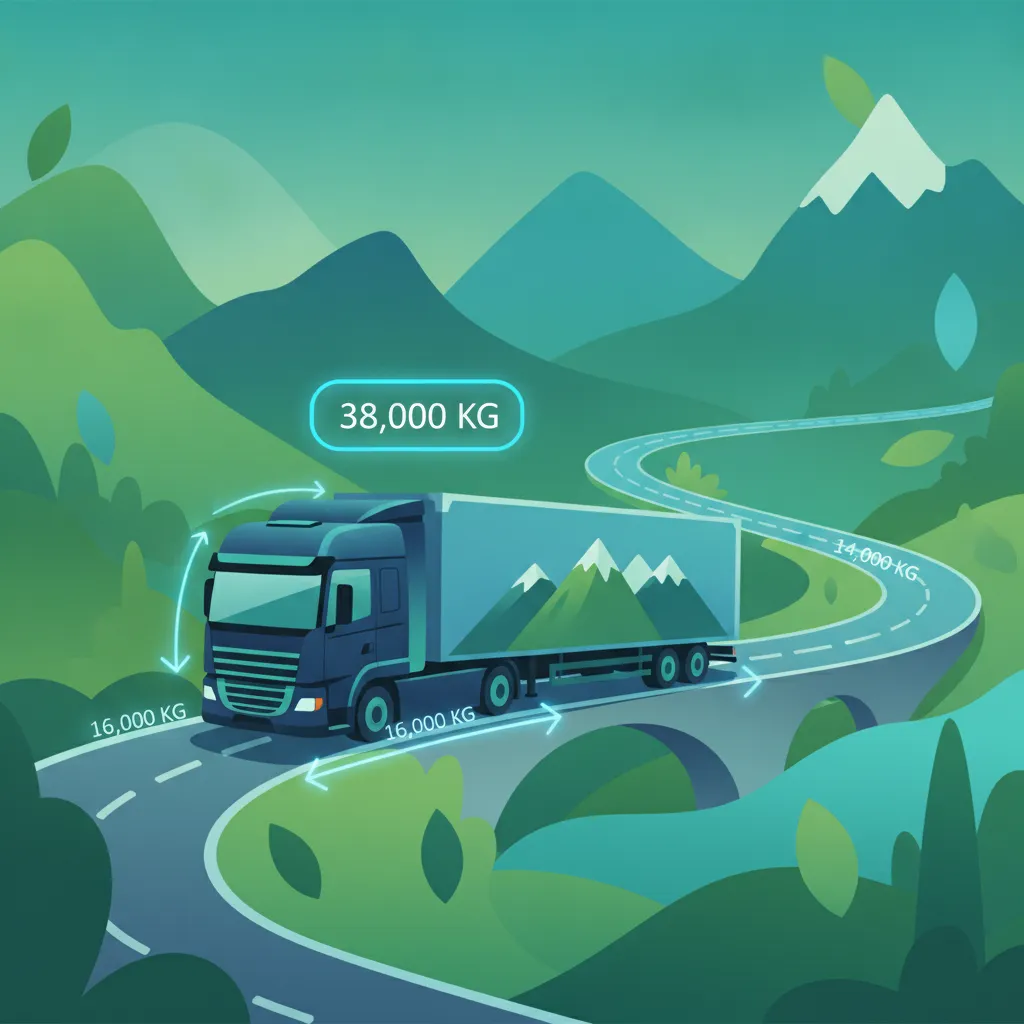
The total weight of a vehicle is supported by its axles, and Swiss regulations set strict limits on the load each axle can bear. This lesson explains how to correctly distribute a load to comply with maximum axle load (Achslast) limits, which is vital for vehicle stability, steering control, and braking efficiency. Incorrect distribution can lead to dangerous handling characteristics and cause significant damage to road surfaces.
Correct load distribution is essential for safe handling and braking. This lesson explains that loads should be placed as low as possible and distributed evenly to maintain a low centre of gravity and comply with axle weight limits. A high or poorly positioned centre of gravity dramatically increases the risk of rollover, especially when cornering or in an emergency manoeuvre.
Using the right equipment is crucial for effective load securing. This lesson introduces common lashing equipment, including synthetic webbing straps with ratchets and heavy-duty chains with binders. It emphasizes the importance of inspecting all equipment for cuts, wear, or damage before use and understanding the labels that indicate their load capacity (Lashing Capacity - LC).
Overloading is a serious offence with severe safety and legal ramifications. This lesson details how excess weight drastically increases braking distances, puts extreme stress on tyres leading to blowouts, and negatively affects steering and overall stability. Furthermore, it discusses the substantial fines, potential license withdrawal, and driver liability that result from violating Swiss weight regulations.
The immense mass of a loaded truck means its braking distance is far greater than that of a car. This lesson breaks down total stopping distance into reaction distance and braking distance, explaining how speed, weight, and road conditions have an exponential effect. It reinforces the necessity of maintaining a significantly larger following distance to ensure enough space to stop safely in an emergency.

Unsecured items can become dangerous projectiles in the event of a sudden stop or collision. This lesson covers the driver's responsibility for overseeing the secure stowage of passenger belongings. It includes rules for using luggage compartments on coaches and designated spaces for prams and mobility aids on city buses.
Find clear answers to common questions learners have about Methods of Load Securing (Ladungssicherung): Blocking and Lashing. Learn how the lesson is structured, which driving theory objectives it supports, and how it fits into the overall learning path of units and curriculum progression in Switzerland. These explanations help you understand key concepts, lesson flow, and exam focused study goals.
Blocking involves using fixed structures or dunnage to physically prevent cargo movement by filling gaps, whereas lashing uses tension devices like straps to increase the friction of the load against the floor or to hold the cargo directly against restraints.
Friction lashing relies on the downward pressure of the straps to increase the friction between the cargo and the vehicle bed. For heavy or high-center-of-gravity loads, direct lashing, which physically fixes the load to the chassis, is often required to prevent tipping or shifting during sharp maneuvers.
In Switzerland, the driver carries the primary responsibility for the security of the load. Regardless of who loaded the vehicle, the driver must verify that the cargo is secured according to safety regulations before starting the journey.
Yes, all lashing equipment must be certified and in good condition. The labels must indicate the lashing capacity (LC) and pre-tension force (STF), which must be checked regularly for wear and tear as part of the vehicle's roadworthiness.
Pinpoint specific Swiss traffic rules, road signs, or driving situations you need to master. Use the practice search to start a focused revision session now and build confidence for your official driving theory exam.