
This lesson details the mandatory lighting and conspicuity requirements for heavy goods vehicles on Swiss roads. You will learn to identify the necessary equipment to ensure visibility and meet legal standards for Categories C and C1, forming a vital part of your vehicle roadworthiness knowledge.

Lesson content overview
Driving heavy goods vehicles, such as those in Category C and C1, demands an exceptional level of awareness and safety, especially concerning visibility. This comprehensive lesson, part of the Official Swiss Driving Theory Course for Category C & C1 Goods Vehicles, details the crucial requirements for vehicle lighting, reflectors, and conspicuity markings. Ensuring your vehicle is always seen, and its intentions are clear, is paramount to preventing collisions and enhancing road safety for all users.
Proper visibility allows other road users to accurately judge the size, speed, and direction of your large vehicle, particularly at night, in adverse weather conditions, or during complex manoeuvres. The regulations discussed here are not merely legal obligations; they are fundamental safety principles designed to protect drivers, passengers, and vulnerable road users alike.
The sheer size and mass of Category C and C1 goods vehicles mean that any collision can have severe consequences. Visibility plays a direct role in mitigating this risk. The primary goal of all lighting, reflective materials, and markings is to guarantee that your vehicle can be seen and identified by its shape, dimensions, and intended movements under any driving conditions.
This involves more than just having working lights. It encompasses understanding when to use specific lights, how different lighting systems function together, and ensuring passive visibility elements like reflectors and high-visibility markings are correctly maintained. Swiss traffic law mandates precise lighting to communicate vehicle status, movements, and dimensions, contributing to overall road safety. This lesson builds on foundational knowledge of vehicle construction and will directly influence safe manoeuvring, particularly on motorways and in low-visibility environments.
Several core principles underpin the requirements for heavy goods vehicle lighting and marking:
The various lighting systems on a heavy goods vehicle serve distinct purposes, working together to ensure comprehensive visibility and communication.
Headlights are the primary system for illuminating the road ahead and making your vehicle visible to oncoming traffic. They typically consist of two main types:
Associated Rules: Low beam headlights must be switched on from sunset to sunrise and whenever visibility is reduced. High beams should only be used when no vehicle is approaching within approximately 150 metres from the front or 250 metres from the rear. Using high beams in fog is generally counterproductive as the light reflects off fog droplets, reducing visibility due to backscatter.
Position lights, also known as parking lights or side and rear lights, are fixed illumination systems designed to outline the vehicle's dimensions from the front, side, and rear.
These lights allow other road users to accurately gauge the width and length of your heavy goods vehicle, even when it is stationary. They must be lit from sunset to sunrise and during low-visibility conditions, regardless of whether the vehicle is moving or parked. Neglecting to use them, especially when parked at night, makes the vehicle's silhouette poorly defined and increases the risk of collision.
Brake lights are crucial safety features located at the rear of the vehicle. They are red and illuminate automatically when the driver applies the foot brake, signaling deceleration or stopping to following vehicles.
Swiss law mandates that brake lights must illuminate immediately upon brake pedal actuation. Furthermore, for heavy goods vehicles, there is often a requirement for dual-circuit redundancy, meaning two independent electrical circuits power the brake lights. This ensures that if one circuit fails, the other can still activate the lights, providing a vital safety net against rear-end collisions.
Reverse lights are white rear lights that activate automatically when the vehicle's transmission is shifted into reverse gear. Their purpose is to alert nearby road users and pedestrians that the vehicle intends to move backward. This is particularly important for large vehicles backing out of loading bays or navigating tight spaces, as they have significant blind spots.
Always ensure your reverse lights are functional. They provide a critical visual cue for anyone in the vicinity of your heavy goods vehicle, enhancing safety during reversing manoeuvres.
Turn indicators, or signal lights, are flashing amber lights located at the front, side, and rear of the vehicle. They are used to communicate a driver's planned left or right turn or lane change to surrounding traffic.
Associated Rules: Indicators must be switched on sufficiently in advance of the manoeuvre – typically at least 5 seconds before turning or changing lanes – and should continue flashing until the manoeuvre is completed. This provides other drivers ample time to react and adjust their speed or position, preventing misunderstandings and potential collisions.
Hazard warning lights involve all turn indication lights flashing simultaneously. They are used to indicate that a stationary or slowly moving vehicle presents a danger or obstruction to other road users.
Associated Rules: Hazard warning lights should be activated when your vehicle is stationary on the roadway due to a breakdown, an accident, or during loading/unloading operations that might obstruct traffic. They can also be used when moving at a significantly reduced speed due to a hazard. It is crucial not to use hazard lights while driving in normal traffic conditions, as this can confuse other drivers about your vehicle's status.
Beyond the primary lighting systems, heavy goods vehicles rely heavily on passive and active systems to enhance their side and rear visibility, especially for their extended dimensions.
Side marker lights are small amber lights positioned along the sides of the vehicle. For longer vehicles, these are particularly important as they help define the full length of the vehicle to drivers approaching from the side. They often work in conjunction with reflective tape or materials.
Associated Rules: Like position lights, side marker lights must be lit from sunset to sunrise and during periods of low visibility. For certain vehicle configurations or lengths, integrated side reflective tapes may be considered part of this requirement, but dedicated electrical side marker lights are often also mandatory.
Conspicuity markings are high-visibility elements designed to make the vehicle's outline more prominent, especially at night or in poor light conditions, enabling distant road users to quickly perceive its silhouette. These are passive elements that reflect light from other vehicles.
Types of Conspicuity Markings:
Practical Meaning: These markings allow other drivers to perceive the full dimensions of your large vehicle, even in their peripheral vision, which is crucial for judging safe overtaking distances or anticipating turns. Swiss regulations specify the exact placement, colour, and size of these markings, ensuring consistency and maximum effectiveness across all heavy goods vehicles.
In addition to standard lighting, heavy goods vehicles may be equipped with auxiliary lights designed for specific adverse conditions or tasks.
Fog lights are specialized lights designed to improve visibility in challenging weather conditions such as fog, heavy rain, or snowfall.
Associated Rules: Both front and rear fog lights may only be used during actual fog, heavy rain, or heavy snowfall where visibility is severely reduced. It is prohibited to use them in clear weather, as their intensity can cause dazzling and discomfort to other drivers. They must be switched off as soon as visibility improves. Using high beams in fog is counterproductive, as the light reflects off the fog droplets, impairing your own visibility.
Compliance with Swiss regulations for vehicle lighting is critical for safety and to avoid penalties. The following table summarizes key rules for Category C and C1 goods vehicles:
| Regulation | Rule Statement | Applicability | Legal Status | Rationale | Example (Correct) | Example (Incorrect) |
|---|---|---|---|---|---|---|
| Headlights (Low Beam) | Must be used from sunset to sunrise and during reduced visibility (fog, rain, snow). | Nighttime, adverse weather. | Mandatory | Ensures driver can see and vehicle is seen. | Low beams turned on at dusk on a motorway. | Driving with headlights off at night. |
| Headlights (High Beam) | Use only when no vehicle is approaching within specified distances (e.g., 150m front, 250m rear). | Open road with no oncoming traffic. | Mandatory | Prevents dazzling other drivers. | Switching to high beam on a rural road with no opposing traffic. | Using high beam when a car approaches from the opposite direction. |
| Position Lights | Must be lit from sunset to sunrise and during reduced visibility, regardless of vehicle speed or motion. | Anytime lights are required. | Mandatory | Outlines vehicle shape and dimensions. | Position lights on when parked at night. | Forgetting to turn on position lights while parked in a dark area. |
| Brake Lights | Must illuminate when the foot brake is applied, requiring dual independent circuits for redundancy. | Whenever the vehicle slows or stops. | Mandatory | Provides clear warning to following traffic. | Brake lights flash instantly upon brake pedal actuation. | Brake lights fail to illuminate due to a single-circuit fault. |
| Rear Fog Lights | (If equipped) May only be used in dense fog, heavy rain, or snowfall and must be turned off when visibility improves. | Low-visibility conditions only. | Mandatory | Prevents dazzling following drivers. | Rear fog lights activated during dense fog. | Using rear fog lights on a clear night. |
| Side Marker Lights | (Or equivalent reflective tape) Must be lit from sunset to sunrise and during reduced visibility. | Nighttime and low-visibility, regardless of vehicle motion. | Mandatory | Increases vehicle side visibility. | Side marker lights turned on when parking a lorry at night. | Relying solely on reflective tape without electrical side marker lights where required. |
| Hazard Warning Lights | May be used when the vehicle is stationary on the carriageway or moving at a reduced speed due to a hazard. | Vehicle stopped or moving dangerously slow. | Mandatory | Warns other road users of a potential hazard. | Hazard lights flashing while a lorry is stopped on the hard shoulder. | Using hazard lights while driving at normal speed in traffic. |
| Conspicuity Markings | Reflective tape, safety paint, or metal reflectors must cover specified parts of the rear, sides, and front corners according to vehicle dimension regulations. | Permanent vehicle fitting. | Mandatory | Allows quick recognition of vehicle dimensions and shape. | Reflective tape correctly placed on rear corners of a lorry. | Missing reflective markings on the side of the vehicle. |
| Turn Indicators | Must be activated sufficiently (e.g., at least 5 seconds) before a turn or lane change and must flash until the manoeuvre is complete. | Any signalling of direction change. | Mandatory | Provides clear communication of intended manoeuvre. | Indicator flashing while preparing to take an exit on a motorway. | Turning without using indicators on a curved road. |
| Reverse Lights | Must be automatically activated when the transmission is shifted into reverse. | Whenever the vehicle is set to reverse gear. | Mandatory | Alerts nearby users to reverse movement. | Reverse lights on when the lorry backs out of a loading bay. | Relying on hand-operative reverse lights that are not automatically triggered. |
| Auxiliary Fog Lights | May only be used during fog, heavy snow, or heavy rain and must be turned off when visibility improves. | Low-visibility conditions. | Mandatory | Prevents glare and excessive illumination. | Fog lights turned on during a blizzard. | Driving with fog lights on a clear sunny day. |
Understanding and avoiding common mistakes related to vehicle lighting is crucial for safe heavy vehicle operation.
The appropriate use of lighting varies significantly depending on external conditions and the vehicle's operational state.
| Condition | Lighting Requirement | Reasoning |
|---|---|---|
| Nighttime (sunset to sunrise) | Headlights (low beam) on; high beam optional if no oncoming traffic within safe distance; position lights always on. | Ensures vehicle is visible and driver can see road conditions. |
| Adverse Weather (fog, heavy rain, snowfall) | Headlights low beam; auxiliary fog lights (front and rear) may be used; position lights mandatory; hazard lights if stopped on the carriageway due to hazard. | Improves visibility despite scattering effects; rear fog lights increase rear conspicuity in severe conditions. |
| Urban Low-Speed Areas (< 30 km/h) | Headlights low beam; position lights mandatory; brake lights mandatory; indicators mandatory when turning. | Maintains essential visibility while acknowledging ambient lighting in urban settings. |
| Motorway High-Speed (> 80 km/h) | Headlights low beam; high beam permissible where safe (no oncoming/following traffic); position lights mandatory; brake lights functional; indicators for lane changes/exits. | High speeds require optimal forward illumination and clear signalling over longer distances. |
| Loading/Unloading Operations | Headlights low beam; hazard lights mandatory when stationary on the carriageway and posing a hazard; position lights on. | Alerts other road users to an unexpected stationary vehicle that may obstruct traffic. |
| Vehicle with Trailer or Semi-trailer | All lighting requirements apply to both the towing vehicle and the trailer/semi-trailer; separate, fully functional rear lights and reflectors are required for each unit. | Ensures each component of the combination vehicle is individually visible and its intentions are clear. |
| Electrical Failure of a Light | Immediate replacement or repair is required before the vehicle is used on public roads. | Legal compliance and safety mandate fully functional lighting at all times. |
| Maintenance Checks | Verify all lighting functions weekly or before each journey; ensure reflectors are clean, undamaged, and properly positioned. | Prevents failures during road use and maintains optimal visibility. |
The regulations governing lighting, reflectors, and markings are built upon fundamental safety principles:
Never compromise on lighting. A non-functional light, a dirty reflector, or an incorrectly used auxiliary light can significantly increase the risk of a collision, particularly with a large commercial vehicle. Regular checks and correct usage are fundamental aspects of safe heavy vehicle operation.
The comprehensive approach to vehicle lighting, reflectors, and markings for Category C and C1 goods vehicles in Switzerland is a cornerstone of road safety. It ensures that these large vehicles are always visible, their intentions are clearly communicated, and their dimensions are easily perceivable by all other road users.
Key takeaways include:
By diligently adhering to these requirements, you not only ensure legal compliance but, more importantly, contribute significantly to preventing accidents and enhancing safety on Swiss roads for everyone.
This lesson covers the full range of mandatory and auxiliary lighting systems required for Swiss Category C and C1 heavy goods vehicles, including headlights, position lights, brake lights, indicators, hazard lights, reverse lights, fog lights, and side marker lights. It details the specific conditions for each light type, such as low beam activation from sunset to sunrise and fog light restrictions to adverse weather only. The lesson also covers conspicuity markings (reflective tape, high-visibility paint, metal reflectors) that passively outline vehicle dimensions, and emphasizes dual-circuit redundancy for safety-critical brake lights. Learners will understand when and how to use each lighting system, recognize common violations, and apply this knowledge to both the theory exam and real-world professional driving.
A short set of high-value points that capture the most important learning from this lesson.
Mandatory lighting systems must be fully operational at all times, including headlights (low beam from sunset to sunrise), position lights, brake lights, reverse lights, turn indicators, hazard warning lights, and side marker lights.
Auxiliary fog lights (front and rear) are strictly for adverse weather conditions and must be switched off immediately when visibility improves; using them in clear weather is prohibited.
Conspicuity markings (reflective tape, high-visibility paint, metal reflectors) passively outline the vehicle silhouette and are permanently required to enhance detection in peripheral vision, especially at night.
Dual-circuit redundancy for brake lights ensures the stopping signal reaches following traffic even if one electrical circuit fails, making pre-drive inspections of both circuits essential.
Drivers must adapt lighting strategy to conditions: high beams only when no traffic within approximately 150m front or 250m rear, indicators activated at least 5 seconds before any turn or lane change.
Explore all units and lessons included in this driving theory course.
Low beam headlights are mandatory from sunset to sunrise and whenever visibility is reduced (fog, rain, snow, heavy traffic).
Rear fog lights are significantly brighter than standard rear position lights and may only be used in dense fog, heavy rain, or heavy snowfall.
Side marker lights must be lit from sunset to sunrise and during low visibility, working alongside reflective tape for extended vehicle dimensions.
Hazard warning lights signal a stationary hazard or dangerously slow vehicle; they must NOT be used while driving at normal speed in traffic.
Conspicuity markings must cover specified parts of the rear, sides, and front corners according to vehicle dimension regulations, remaining clean and undamaged.
Using high beams in fog causes backscatter, which reduces your own visibility; switch to low beams or fog lights instead.
Failing to activate position lights when parked at night makes the vehicle silhouette poorly defined and greatly increases collision risk.
Driving with faulty brake lights (single-circuit failure) means following traffic receives no warning of deceleration, creating severe rear-end collision risk.
Using fog lights in clear weather dazzles other drivers; rear fog lights are especially prohibited in clear conditions due to their high intensity.
Relying solely on reflective tape where dedicated electrical side marker lights are also required by Swiss regulations.
Lesson content overview
A short set of high-value points that capture the most important learning from this lesson.
Mandatory lighting systems must be fully operational at all times, including headlights (low beam from sunset to sunrise), position lights, brake lights, reverse lights, turn indicators, hazard warning lights, and side marker lights.
Auxiliary fog lights (front and rear) are strictly for adverse weather conditions and must be switched off immediately when visibility improves; using them in clear weather is prohibited.
Conspicuity markings (reflective tape, high-visibility paint, metal reflectors) passively outline the vehicle silhouette and are permanently required to enhance detection in peripheral vision, especially at night.
Dual-circuit redundancy for brake lights ensures the stopping signal reaches following traffic even if one electrical circuit fails, making pre-drive inspections of both circuits essential.
Drivers must adapt lighting strategy to conditions: high beams only when no traffic within approximately 150m front or 250m rear, indicators activated at least 5 seconds before any turn or lane change.
Explore all units and lessons included in this driving theory course.
Low beam headlights are mandatory from sunset to sunrise and whenever visibility is reduced (fog, rain, snow, heavy traffic).
Rear fog lights are significantly brighter than standard rear position lights and may only be used in dense fog, heavy rain, or heavy snowfall.
Side marker lights must be lit from sunset to sunrise and during low visibility, working alongside reflective tape for extended vehicle dimensions.
Hazard warning lights signal a stationary hazard or dangerously slow vehicle; they must NOT be used while driving at normal speed in traffic.
Conspicuity markings must cover specified parts of the rear, sides, and front corners according to vehicle dimension regulations, remaining clean and undamaged.
Using high beams in fog causes backscatter, which reduces your own visibility; switch to low beams or fog lights instead.
Failing to activate position lights when parked at night makes the vehicle silhouette poorly defined and greatly increases collision risk.
Driving with faulty brake lights (single-circuit failure) means following traffic receives no warning of deceleration, creating severe rear-end collision risk.
Using fog lights in clear weather dazzles other drivers; rear fog lights are especially prohibited in clear conditions due to their high intensity.
Relying solely on reflective tape where dedicated electrical side marker lights are also required by Swiss regulations.
Explore search topics learners often look for when studying Lighting, Reflectors, and Marking Requirements. These topics reflect common questions about road rules, driving situations, safety guidance, and lesson level theory preparation for learners in Switzerland.
Browse additional driving theory lessons that cover connected traffic rules, road signs, and common driving situations related to this topic. Improve your understanding of how different rules interact across everyday traffic scenarios.
Understand the specific legal requirements in Switzerland for headlights, position lights, brake lights, and conspicuity markings on category C and C1 vehicles. Ensure your heavy goods vehicle is visible and compliant with Swiss traffic law.

This lesson examines the different lighting systems on a vehicle, including headlamps, fog lights, and turn signals. It explains the appropriate use of low-beam and high-beam headlights and the conditions for activating fog lights. Understanding proper lighting usage improves visibility and safety, especially in low-light or adverse weather conditions.
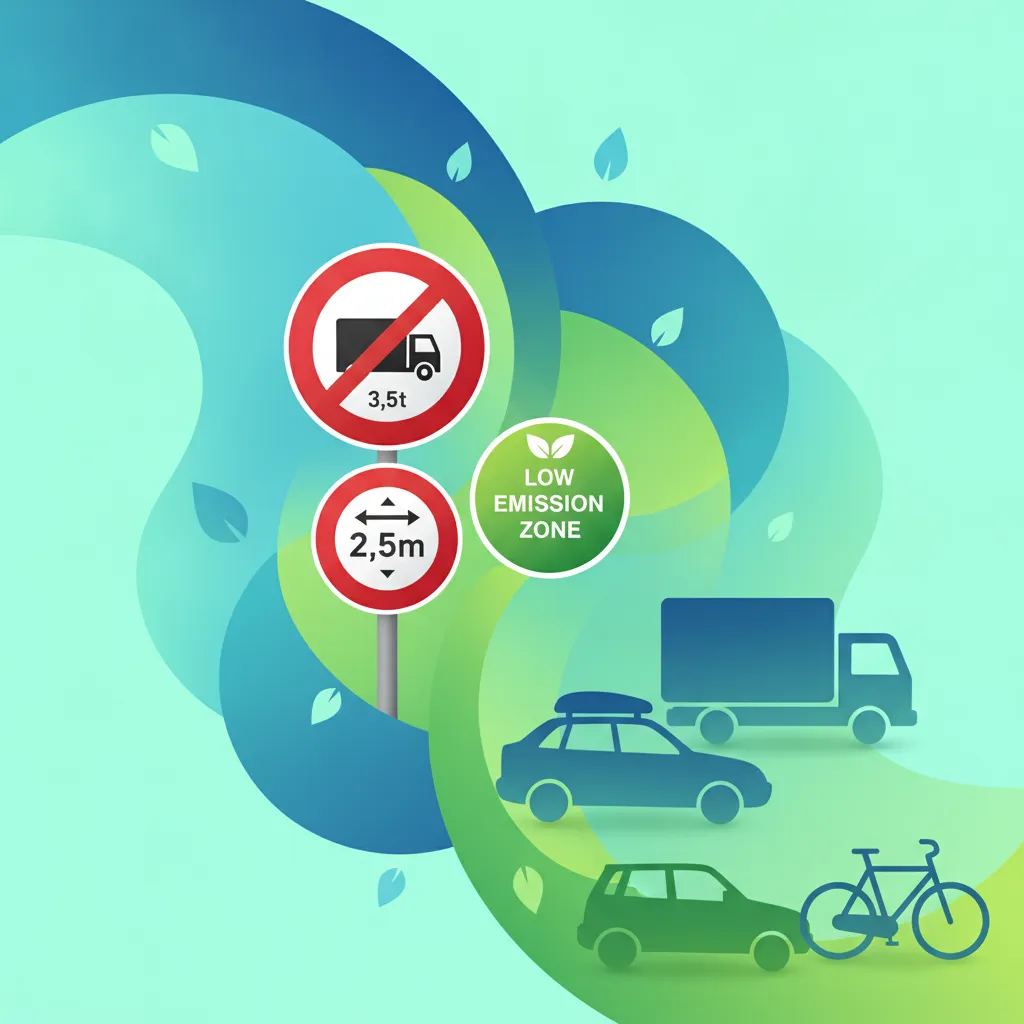
Many urban areas have restrictions to manage traffic and protect infrastructure. This lesson teaches drivers to identify and interpret traffic signs that prohibit access based on gross vehicle weight, axle load, height, or width. It also covers the growing prevalence of environmental or low-emission zones, which may restrict entry for older, more polluting vehicles.

Swiss law strictly regulates the maximum dimensions of commercial vehicles to ensure they can safely navigate the infrastructure. This lesson specifies the standard limits for vehicle height (4.0m), width (2.55m), and length for various lorry and trailer combinations. Adhering to these dimensions is crucial for avoiding collisions with bridges, tunnels, and other structures, and for navigating narrow roads.

This lesson outlines the mandatory documentation required during any professional transport journey in Switzerland. Drivers must be able to present the vehicle registration document ('Fahrzeugausweis'), their valid driving license, and the OACP qualification card upon request. It also touches upon transport-specific documents like consignment notes, which are crucial for legal compliance during roadside inspections by authorities.

This lesson focuses on the concept of conspicuity, or how easily a rider can be seen by others. It explains the legal requirements for vehicle lights and reflectors in Switzerland and the benefits of wearing bright or reflective clothing. Learners will understand how to maximize their visibility during the day, at night, and in poor weather conditions.

Being seen and being able to see are critical for safety. This lesson covers the systematic check of all exterior lights, including headlights, brake lights, and indicators. It also emphasizes the importance of ensuring all mirrors and camera lenses are clean, undamaged, and properly adjusted for maximum visibility.

The driver is legally responsible for the roadworthiness of their vehicle at the start of and during every journey. This lesson outlines the formal process for reporting any identified defects to the transport manager or maintenance staff. It stresses the critical rule that a vehicle with a known safety-critical defect must not be driven until it has been professionally repaired and declared safe.

Motorway driving requires constant concentration due to high speeds. This lesson emphasizes the importance of staying in the right-hand lane unless overtaking and the specific restrictions on lorry overtaking in Switzerland. It reinforces the need for a following distance of at least four seconds to compensate for the vehicle's long stopping distance and provides guidance on safely merging and exiting.

This lesson provides a clear definition of the Swiss heavy goods vehicle license categories. It details the weight limits and vehicle configurations for Category C (lorries over 3.5t) and C1 (lorries from 3.5t to 7.5t). Furthermore, it explains how categories CE and C1E grant the entitlement to tow heavy trailers, forming articulated vehicles or road trains, which is crucial for professional transport operations.
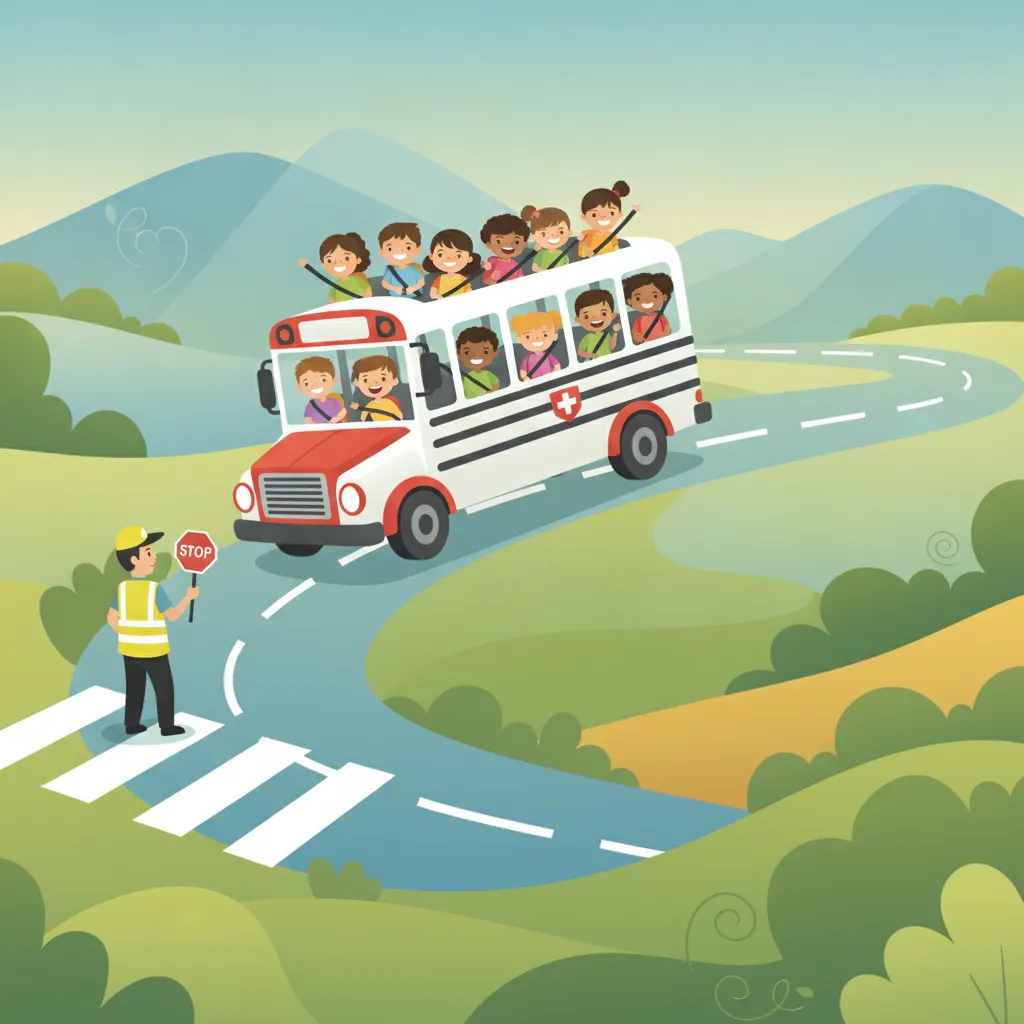
Transporting children carries the highest level of responsibility. This lesson covers the specific legal requirements for school buses in Switzerland, including the use of special signs and warning lights. It details the safe procedures for stopping, boarding, and alighting, and the driver's role in supervising children.
Learn about the correct usage of auxiliary lights such as fog lights and how various factors like weather and time of day impact the visibility requirements for heavy goods vehicles in Switzerland. Essential theory for safe driving.
This lesson examines the different lighting systems on a vehicle, including headlamps, fog lights, and turn signals. It explains the appropriate use of low-beam and high-beam headlights and the conditions for activating fog lights. Understanding proper lighting usage improves visibility and safety, especially in low-light or adverse weather conditions.
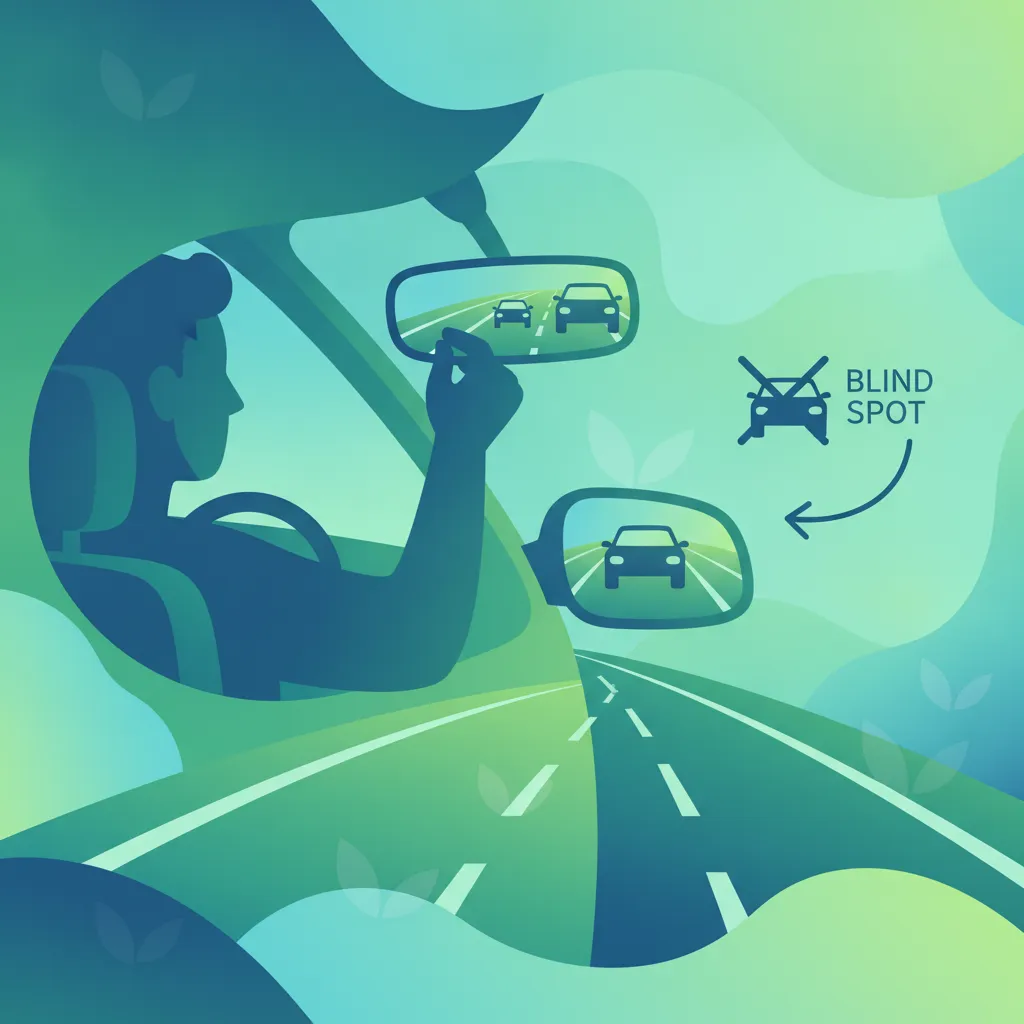
Despite the complex mirror systems, large areas around a truck remain hidden from the driver's view. This lesson maps out these significant blind spots: directly in front, behind, and along both sides of the vehicle. It teaches drivers to be constantly aware of these 'no-zones' and to anticipate that smaller vehicles, cyclists, or pedestrians may be hidden within them, especially before changing lanes or turning.
Being seen and being able to see are critical for safety. This lesson covers the systematic check of all exterior lights, including headlights, brake lights, and indicators. It also emphasizes the importance of ensuring all mirrors and camera lenses are clean, undamaged, and properly adjusted for maximum visibility.

This lesson examines the impact of weather and visibility on driving safety and speed selection. It covers how fog, rain, snow, and darkness affect visibility and reaction times, providing guidelines on adjusting speed. It also includes strategies for improving visibility, such as proper headlamp use, to ensure you can adapt to varying weather conditions.
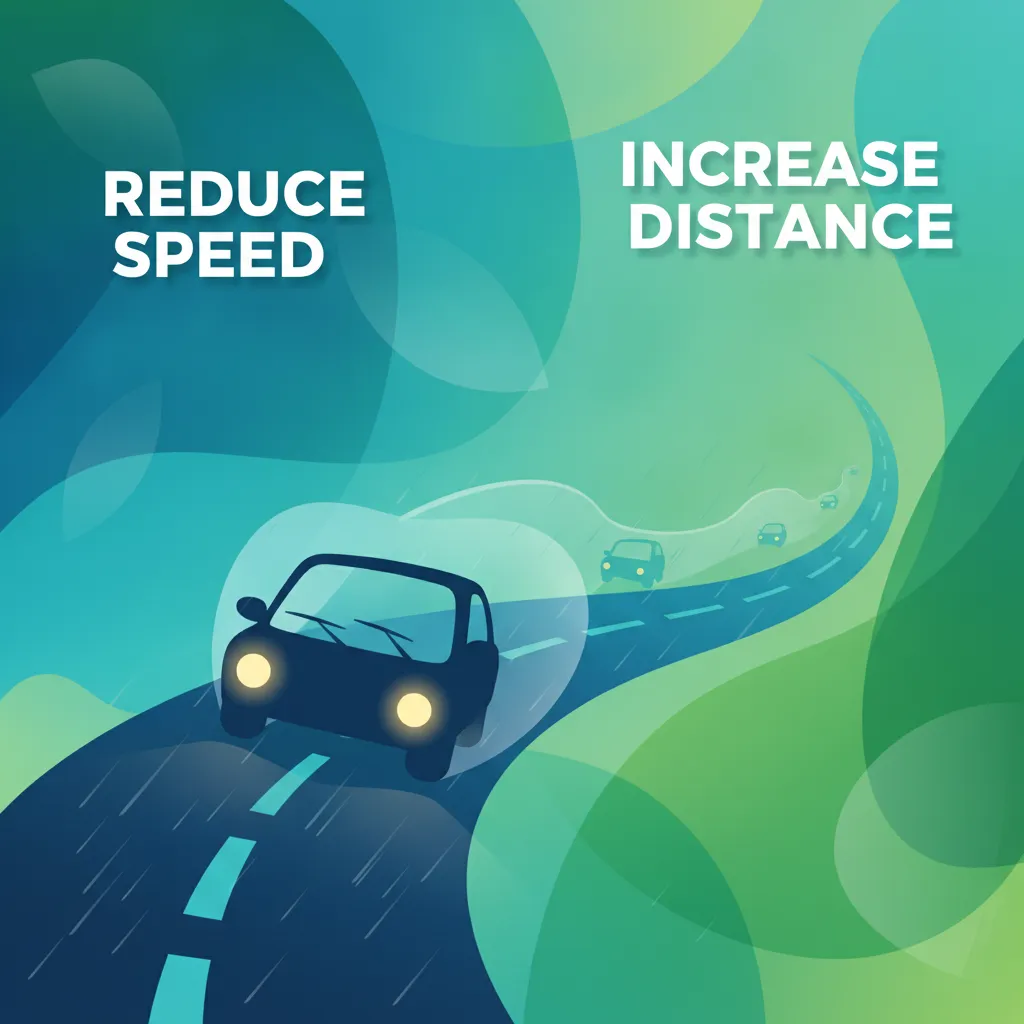
Weather has a profound impact on vehicle handling and visibility. This lesson teaches you how to reduce speed, increase following distances, and use controls smoothly to maintain traction in poor conditions. It also covers the legal requirements and practical application of snow chains in winter.

A lorry is equipped with multiple mirrors (up to six) to cover different fields of view. This lesson explains the function of each type: the main mirrors, wide-angle mirrors, and close-proximity (kerb and front) mirrors. It stresses the importance of adjusting them properly before every journey and developing a routine of constantly scanning all mirrors to maintain situational awareness.

The dashboard is the vehicle's primary communication interface with the driver. This lesson explains how to read essential gauges, such as the air pressure gauges for the braking system, the tachometer, and the fuel level. It focuses on recognizing the meaning of different warning lights (red for urgent, amber for caution) and the importance of stopping safely to investigate any critical alerts immediately.
This lesson focuses on techniques and equipment designed to increase a motorcyclist's visibility to others. It explains the strategic use of reflective materials, high-visibility clothing, and the mandatory use of daytime running lights. Understanding how to enhance conspicuity is a critical component of proactive self-protection on the road.
Many urban areas have restrictions to manage traffic and protect infrastructure. This lesson teaches drivers to identify and interpret traffic signs that prohibit access based on gross vehicle weight, axle load, height, or width. It also covers the growing prevalence of environmental or low-emission zones, which may restrict entry for older, more polluting vehicles.

Driving in the Alps requires a high level of skill and vehicle sympathy. This lesson covers techniques for climbing steep gradients by selecting the correct gear to maintain momentum without straining the engine. It reiterates the critical importance of using low gears and auxiliary brakes for descending, to ensure the service brakes remain cool and effective for the entire descent.
Find clear answers to common questions learners have about Lighting, Reflectors, and Marking Requirements. Learn how the lesson is structured, which driving theory objectives it supports, and how it fits into the overall learning path of units and curriculum progression in Switzerland. These explanations help you understand key concepts, lesson flow, and exam focused study goals.
Yes, specific conspicuity markings are required for heavy goods vehicles to improve visibility for other road users, especially at night. You must be able to identify these requirements for your exam.
You are legally required to perform a daily walk-around check before starting your shift. This includes ensuring all lights, reflectors, and markings are functional and clean.
While the core principles are similar, specific requirements regarding the size and number of lights can vary based on vehicle dimensions. Always refer to the specific legal standards for your category.
Operating a commercial vehicle with defective safety equipment can result in significant fines, potential impounding of the vehicle, and points on your record, as it compromises road safety.
Pinpoint specific Swiss traffic rules, road signs, or driving situations you need to master. Use the practice search to start a focused revision session now and build confidence for your official driving theory exam.