
This lesson guides you through the technical theory of safely coupling and uncoupling trailers for heavy goods vehicles. It is a critical component of professional vehicle management, focusing on the mechanical processes and safety checks necessary to prevent incidents during operation.

Lesson content overview
Operating a heavy goods vehicle, particularly those with trailers or semitrailers, demands a high level of skill and meticulous attention to safety. Among the most critical manoeuvres professional drivers perform daily are the coupling and uncoupling procedures. These operations, while seemingly routine, are inherently high-risk. Incorrect execution can lead to severe consequences, including accidental trailer detachment, jack-knifing, uncontrolled vehicle movements, and devastating accidents.
This lesson provides a comprehensive theoretical guide to the coupling and uncoupling processes, emphasizing the essential steps, critical safety checks, and underlying principles required for all Category C and C1 drivers in the Official Swiss Driving Theory Course. Mastery of these procedures is not merely a recommendation but a mandatory aspect of safe and legal heavy goods vehicle operation on Swiss roads.
The core objective of coupling is to establish a robust mechanical, pneumatic (air), and electrical connection between the tractor unit and the trailer, ensuring the combination functions as a single, controllable vehicle. Uncoupling, conversely, involves safely detaching the trailer while securing it against unintended movement.
These procedures are governed by strict safety principles and Swiss traffic regulations. Failure to adhere to these can have serious implications for road safety, vehicle integrity, and legal compliance. Understanding the rationale behind each step, from aligning the tractor unit to performing a "tug test," is crucial for preventing accidents and ensuring stable, efficient transport.
Before delving into the step-by-step procedures, it is vital to understand the key components involved in mechanically linking a tractor unit to a semitrailer.
The fifth-wheel coupling is a heavy, rotating plate mounted on the tractor unit, designed to receive and securely lock onto the trailer's kingpin. It acts as the primary pivot point, allowing the semitrailer to articulate (pivot) relative to the tractor unit during turns and manoeuvres.
This mechanism typically features an opening that guides the kingpin into position, where a set of locking jaws automatically or manually close around it. These jaws are crucial for preventing accidental detachment and ensuring the transfer of forces between the tractor and trailer. Fifth-wheel couplings must be regularly inspected for wear, damage, and freedom from debris. A worn or damaged fifth-wheel can compromise the integrity of the coupling, leading to potential failure.
The kingpin is a robust, vertical steel pin permanently affixed to the underside of the semitrailer's front bolster plate. This pin is designed to slide into the fifth-wheel coupling on the tractor unit, creating the mechanical link.
The integrity of the kingpin is paramount. It must be perfectly straight, clean, and free from any damage, bends, or excessive wear. Any compromise to the kingpin's structure can prevent proper engagement with the fifth-wheel's locking jaws, leading to an insecure coupling and potential detachment. During the coupling process, the kingpin slides into the fifth-wheel cavity, and the locking jaws must fully engage around its neck with a distinct, audible "click."
Landing gear, also known as trailer support legs, are retractable mechanisms located at the front of a semitrailer. Their primary function is to support the trailer's weight when it is uncoupled from the tractor unit, ensuring its stability and preventing it from tipping.
The landing gear typically consists of two robust legs, often operated manually via a crank handle, or in some advanced systems, hydraulically. Proper management of the landing gear is critical for both coupling and uncoupling. Before coupling, the landing gear holds the trailer at the correct height for the tractor unit. After coupling, the landing gear must be fully raised and secured to transfer the trailer's weight onto the tractor's fifth-wheel and prevent the legs from dragging or catching obstacles during transit. Conversely, before uncoupling, the landing gear must be fully lowered and firmly planted on the ground to support the trailer's weight.
Coupling a tractor unit to a semitrailer is a precise, sequential process that demands concentration and adherence to safety protocols. Each step builds upon the last, ensuring a secure and stable connection.
Begin by thoroughly inspecting both the tractor unit's fifth-wheel coupling and the trailer's kingpin and landing gear. Ensure the fifth-wheel is clean, free of debris, and properly greased to allow smooth articulation. Check that the locking jaws are open and ready to receive the kingpin. Verify the kingpin is clean, straight, and undamaged. Confirm the trailer's landing gear is correctly positioned to allow the kingpin to enter the fifth-wheel without interference, usually set slightly lower than the fifth-wheel plate.
Carefully reverse the tractor unit towards the trailer. The goal is to align the longitudinal axis of the tractor unit directly with the longitudinal axis of the trailer. Use your mirrors and, if available, a spotter, to ensure precise alignment. Misalignment can damage the fifth-wheel or kingpin, or prevent proper locking. Aim to position the fifth-wheel directly beneath the kingpin, ensuring the kingpin is centered with the fifth-wheel's opening.
Slowly reverse the tractor unit until the fifth-wheel plate makes contact with the underside of the trailer's bolster plate. Continue reversing gently, allowing the kingpin to slide into the fifth-wheel's opening. As the kingpin fully engages, the fifth-wheel's locking jaws should automatically close around it with a clear, audible "click." This sound indicates a mechanical lock has been achieved.
This is a critical safety step that must never be skipped. After hearing the locking "click," gently apply the tractor's parking brake. Release the tractor's service brakes and slowly attempt to move the tractor unit forward by about 1 to 2 metres. If the fifth-wheel is securely locked, you will feel distinct resistance, confirming the kingpin is firmly engaged. If the tractor moves freely without resistance, the coupling is not secure, and you must re-evaluate and repeat the engagement process.
Once the tug test confirms a secure mechanical lock, raise the trailer's landing gear completely. This transfers the full weight of the trailer's front end from the support legs to the tractor's fifth-wheel. Ensure the landing gear is fully retracted and securely stowed in its up position. Leaving the landing gear partially lowered is extremely dangerous as it can snag on obstacles, cause a sudden load shift, or even lead to detachment while driving.
After the landing gear is raised, connect the pneumatic (air) brake lines and the electrical cables between the tractor and trailer.
Conduct a comprehensive walk-around inspection. Verify:
Uncoupling a semitrailer requires an equally meticulous approach to ensure the trailer remains stable and secure after separation.
Choose a firm, level surface for uncoupling. This is crucial to prevent the trailer from rolling once detached and to ensure stability when the landing gear supports its weight. Avoid soft ground, slopes, or areas with significant unevenness.
Carefully manoeuvre the vehicle combination into the desired uncoupling spot. Ensure there's sufficient space around the trailer for safe movement. Bring the tractor unit to a complete, controlled stop.
Apply the trailer's parking brake (often a yellow button or lever in the cab). This will lock the trailer wheels, preventing it from moving once detached. If on a slight incline or for added security, place wheel chocks against the trailer wheels.
Lower the trailer's landing gear until the feet are firmly planted on the ground and begin to take the weight of the trailer. Continue to lower it slightly further, so that when the tractor unit moves away, the fifth-wheel will separate cleanly from the kingpin without lifting the trailer excessively or placing undue stress on the coupling.
Disconnect the electrical cable and the two air brake lines from the trailer. Stow the air lines and electrical connector securely on the tractor unit to prevent damage. Ensure the air lines are capped or positioned to prevent debris and moisture ingress.
Locate the fifth-wheel release handle, usually found on the side of the tractor unit. Pull this handle to open the locking jaws of the fifth-wheel. In some systems, this may require a fair amount of force.
Slowly and carefully drive the tractor unit forward, clear of the trailer. Once the tractor unit is fully separated from the trailer, bring it to a complete stop and engage its parking brake.
Perform a final visual check to ensure the uncoupled trailer is stable, the landing gear is securely supporting its weight, the parking brake is engaged, and any wheel chocks are properly in place.
Adhering to core principles and legal mandates ensures the safety of all road users. In Switzerland, specific regulations govern heavy goods vehicle operations, including coupling and uncoupling.
| Principle | Purpose / Rationale | Implications for Drivers |
|---|---|---|
| Secure Mechanical Coupling | Prevents accidental detachment, ensuring safe force transfer. | Driver must verify the lock via tug test before moving. |
| Alignment of Tractor/Trailer | Guarantees smooth coupling and prevents equipment damage. | Requires precise positioning using mirrors and visual checks. |
| Landing Gear Management | Transfers weight to the fifth-wheel or supports trailer. | Must be fully raised after coupling and lowered before uncoupling. |
| Tug Test Confirmation | Detects any incomplete lock before departure. | Driver must feel resistance or hear a click. |
| Level Surface Requirement | Prevents accidental rolling and ensures stability. | Drivers must find suitable locations, use chocks on slopes. |
| Pre-Departure Safety Checks | Ensures all systems are functional and safe. | Failure can lead to loss of trailer or brake failure. |
Swiss road traffic act mandates that the trailer must be securely coupled to the tractor unit before any forward movement. This includes ensuring the fifth-wheel jaws are fully locked onto the kingpin and the landing gear is fully raised. Brake and electrical connections must be checked for integrity and proper function. Before uncoupling, the tractor must be completely stopped, and the trailer's parking brake applied. After uncoupling, the trailer must be secured, ideally with wheel chocks, especially on any gradient. Drivers must always ensure coupling devices are free from debris and damage and that the kingpin is aligned correctly.
Even experienced drivers can make mistakes. Understanding common pitfalls helps prevent them.
The coupling and uncoupling procedures must be adapted to different environmental conditions and circumstances.
Always be aware of your surroundings. Ensure the coupling/uncoupling area is clear of pedestrians, cyclists, or other vehicles before initiating any movement. Use appropriate warning signals if maneuvering in busy areas.
When a semitrailer is coupled, a significant portion of its weight, known as the kingpin load, transfers from the landing gear to the tractor unit's fifth-wheel. This load then becomes part of the total weight distributed across the tractor's axles (front steer axle, drive axles).
Proper load distribution is critical for stable handling, effective braking, and compliance with legal axle load limits (e.g., in Switzerland, maximum axle loads are strictly enforced). An improperly coupled trailer, or one where the landing gear is not fully raised, can result in an incomplete or uneven load transfer. This can lead to:
The theoretical knowledge gained in this lesson forms the foundation for safe heavy goods vehicle operation. It is strongly recommended to combine this theory with practical training and continued vigilance.
Coupling and uncoupling heavy goods vehicle combinations requires strict sequential procedures to ensure mechanical, pneumatic, and electrical integrity between the tractor unit and semitrailer. The critical steps include aligning the tractor with the trailer, engaging the fifth-wheel with the kingpin (producing an audible click), performing the mandatory tug test to verify the lock, raising the landing gear to transfer weight, and connecting all air and electrical lines before a final walk-around inspection. Uncoupling reverses this sequence: secure the trailer with parking brake and wheel chocks, lower the landing gear to take the weight, disconnect lines, release the fifth-wheel lock, then drive the tractor clear. Common violations such as skipping the tug test or driving without connected brake lines can lead to catastrophic accidents including trailer detachment or brake failure, making rigorous adherence to these procedures essential for road safety in Switzerland.
A short set of high-value points that capture the most important learning from this lesson.
Coupling requires precise alignment of the tractor unit's longitudinal axis with the trailer so the fifth-wheel directly receives the kingpin.
The tug test—gently pulling the tractor forward after engagement—is a mandatory safety verification to confirm the fifth-wheel locking jaws have fully secured the kingpin.
Landing gear must be fully raised after coupling (to transfer weight to the fifth-wheel) and fully lowered before uncoupling (to support the trailer independently).
Air brake lines (supply and service) and the electrical connector must be securely connected and checked for leaks before departure.
Uncoupling requires a firm, level surface, trailer parking brake applied, and wheel chocks on any gradient to prevent uncontrolled trailer movement.
Explore all units and lessons included in this driving theory course.
The fifth-wheel is a rotating plate on the tractor unit with locking jaws that automatically close around the trailer's kingpin to create the mechanical articulation point.
Never force the coupling—if the kingpin does not engage smoothly, pull forward, realign, and try again to prevent damage to components.
A distinct audible "click" indicates the fifth-wheel locking jaws have engaged around the kingpin's neck.
Before uncoupling, lower the landing gear until it takes the trailer's weight before releasing the fifth-wheel lock and moving the tractor away.
After coupling, always perform a full walk-around inspection including lights, brake lines, and landing gear before departure.
Skipping the tug test and assuming the coupling is secure without physical verification, risking trailer detachment during movement.
Coupling or uncoupling on slopes without securing the trailer with wheel chocks, allowing the trailer to roll away.
Failing to fully raise the landing gear after coupling, leaving the trailer partially supported by the legs which can cause instability or damage.
Driving with disconnected or leaking air brake lines, rendering the trailer's brakes ineffective—a severe safety violation and legal offense.
Forcing the coupling when alignment is incorrect, which can damage the fifth-wheel, kingpin, or prevent proper locking.
Lesson content overview
A short set of high-value points that capture the most important learning from this lesson.
Coupling requires precise alignment of the tractor unit's longitudinal axis with the trailer so the fifth-wheel directly receives the kingpin.
The tug test—gently pulling the tractor forward after engagement—is a mandatory safety verification to confirm the fifth-wheel locking jaws have fully secured the kingpin.
Landing gear must be fully raised after coupling (to transfer weight to the fifth-wheel) and fully lowered before uncoupling (to support the trailer independently).
Air brake lines (supply and service) and the electrical connector must be securely connected and checked for leaks before departure.
Uncoupling requires a firm, level surface, trailer parking brake applied, and wheel chocks on any gradient to prevent uncontrolled trailer movement.
Explore all units and lessons included in this driving theory course.
The fifth-wheel is a rotating plate on the tractor unit with locking jaws that automatically close around the trailer's kingpin to create the mechanical articulation point.
Never force the coupling—if the kingpin does not engage smoothly, pull forward, realign, and try again to prevent damage to components.
A distinct audible "click" indicates the fifth-wheel locking jaws have engaged around the kingpin's neck.
Before uncoupling, lower the landing gear until it takes the trailer's weight before releasing the fifth-wheel lock and moving the tractor away.
After coupling, always perform a full walk-around inspection including lights, brake lines, and landing gear before departure.
Skipping the tug test and assuming the coupling is secure without physical verification, risking trailer detachment during movement.
Coupling or uncoupling on slopes without securing the trailer with wheel chocks, allowing the trailer to roll away.
Failing to fully raise the landing gear after coupling, leaving the trailer partially supported by the legs which can cause instability or damage.
Driving with disconnected or leaking air brake lines, rendering the trailer's brakes ineffective—a severe safety violation and legal offense.
Forcing the coupling when alignment is incorrect, which can damage the fifth-wheel, kingpin, or prevent proper locking.
Explore search topics learners often look for when studying The Coupling and Uncoupling Procedure (Theory). These topics reflect common questions about road rules, driving situations, safety guidance, and lesson level theory preparation for learners in Switzerland.
Browse additional driving theory lessons that cover connected traffic rules, road signs, and common driving situations related to this topic. Improve your understanding of how different rules interact across everyday traffic scenarios.
Understand the critical risks and frequent errors drivers make during coupling and uncoupling procedures. This lesson focuses on preventing accidents and ensuring compliance with Swiss heavy vehicle regulations.

The fifth wheel is the critical link between the tractor and semitrailer. This lesson details a visual inspection of the coupling, focusing on ensuring the locking jaws are secure, the safety latch is in place, and there is adequate lubrication on the skid plate. A thorough check of the fifth wheel mechanism is a non-negotiable part of the pre-drive inspection and after every coupling procedure.

After stopping for an emergency, making the scene safe is the top priority. This lesson details the procedure: activate hazard warning lights, put on high-visibility clothing before exiting the cab, and place the warning triangle at the correct distance behind the vehicle (at least 100m on motorways). This warns approaching traffic and creates a safer environment for the driver and emergency responders.

A secure connection between the tractor and trailer requires linking the braking and electrical systems. This lesson explains the function of the red (emergency) and yellow (service) air lines and the main electrical socket, which powers the trailer's lights and ABS. It outlines the correct, safe sequence for connecting and disconnecting these lines to ensure the trailer's brakes function correctly.

Overloading is a serious offence with severe safety and legal ramifications. This lesson details how excess weight drastically increases braking distances, puts extreme stress on tyres leading to blowouts, and negatively affects steering and overall stability. Furthermore, it discusses the substantial fines, potential license withdrawal, and driver liability that result from violating Swiss weight regulations.

Pedestrians, cyclists, motorcyclists, and e-scooter riders are extremely vulnerable in any interaction with a heavy vehicle. This lesson instills a defensive mindset, teaching drivers to be hyper-aware of VRUs, especially near junctions, crossings, and cycle lanes. It focuses on anticipation and giving VRUs extra space, as they can be unpredictable and are often hidden in blind spots.

Losing part of a load on the road creates an immediate and serious hazard for other drivers. This lesson outlines the driver's responsibilities: stop in a safe place, assess the situation from a safe distance, and immediately alert the police. The driver's primary role is to warn other road users and not to attempt to retrieve the load from a live carriageway.

A tyre blowout or engine failure can be a frightening experience. This lesson provides a clear action plan: maintain a firm grip on the steering wheel, avoid harsh braking, signal, and move the vehicle to a safe location like the hard shoulder if possible. It then covers the essential safety steps of activating hazard lights, placing the warning triangle, and waiting in a safe place away from the vehicle.
Tunnels are enclosed environments where incidents can quickly escalate. This lesson outlines the specific rules for tunnel driving: remove sunglasses, turn on dipped headlights, maintain a safe following distance, and tune the radio to the indicated frequency. It also covers the critical emergency procedures to follow in the event of a fire or breakdown inside a tunnel.

Driving in the Alps requires a high level of skill and vehicle sympathy. This lesson covers techniques for climbing steep gradients by selecting the correct gear to maintain momentum without straining the engine. It reiterates the critical importance of using low gears and auxiliary brakes for descending, to ensure the service brakes remain cool and effective for the entire descent.

The driver is legally responsible for the roadworthiness of their vehicle at the start of and during every journey. This lesson outlines the formal process for reporting any identified defects to the transport manager or maintenance staff. It stresses the critical rule that a vehicle with a known safety-critical defect must not be driven until it has been professionally repaired and declared safe.
Master the theoretical aspects of safely connecting pneumatic brake lines and electrical systems between tractor units and semitrailers. Essential knowledge for secure heavy vehicle operation in Switzerland.
A secure connection between the tractor and trailer requires linking the braking and electrical systems. This lesson explains the function of the red (emergency) and yellow (service) air lines and the main electrical socket, which powers the trailer's lights and ABS. It outlines the correct, safe sequence for connecting and disconnecting these lines to ensure the trailer's brakes function correctly.
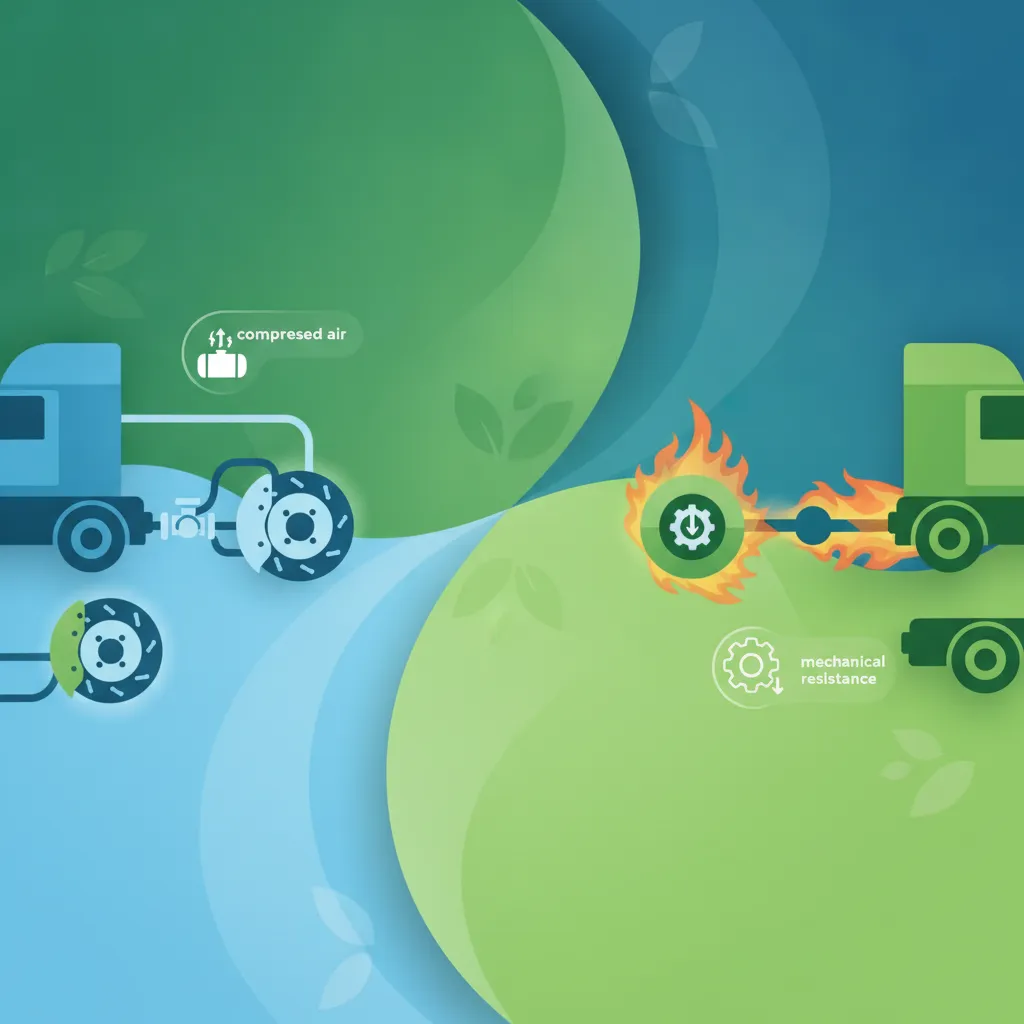
Large passenger vehicles rely on powerful air brake systems. This lesson explains how these systems work, including the importance of monitoring air pressure. It also details the function and proper use of auxiliary braking systems (retarders) to control speed on long descents and reduce wear on the service brakes.
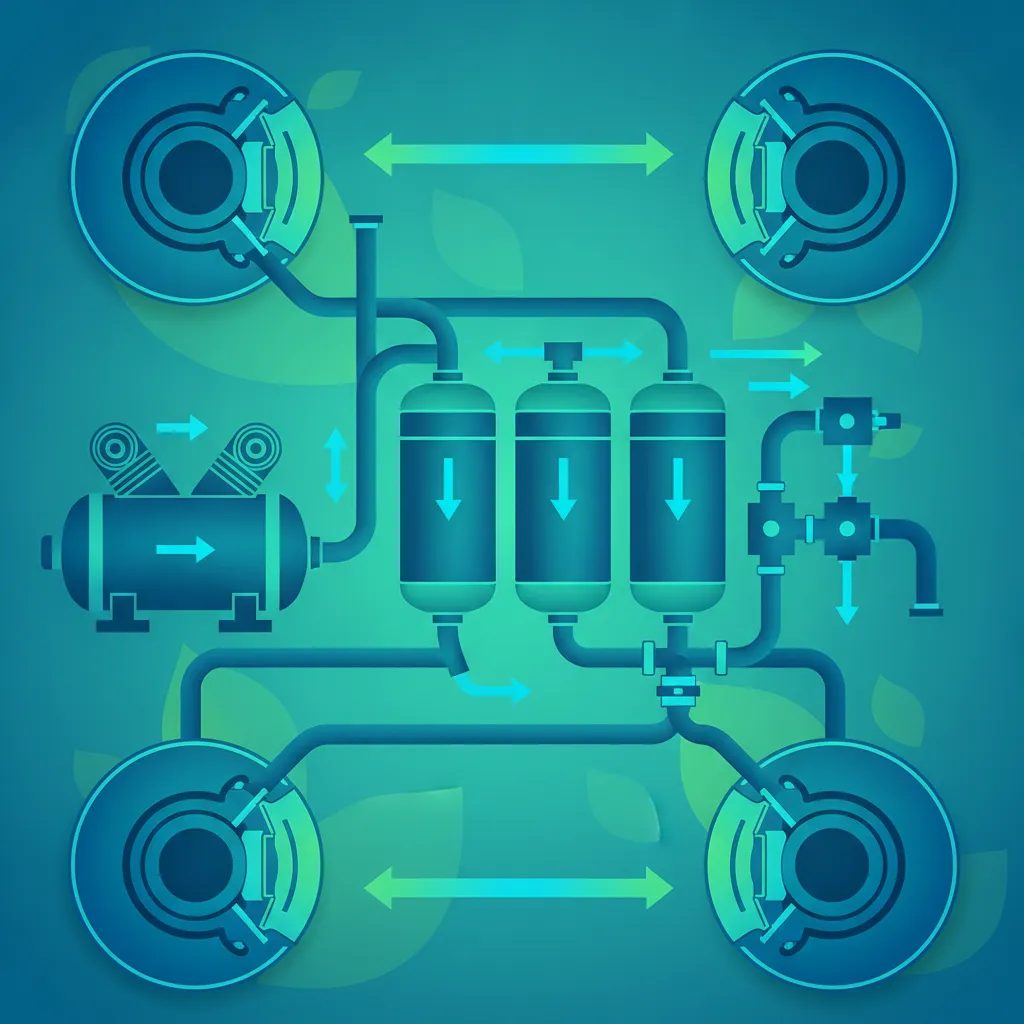
Unlike the hydraulic brakes in cars, heavy vehicles use a compressed-air system for its power and reliability. This lesson explains the basic operating principle, covering key components like the engine-driven compressor, air storage tanks, and the brake chambers that actuate the brakes. Understanding this system is fundamental to appreciating its capabilities and limitations.

This lesson details the function of the two primary braking circuits. The service brake (Betriebsbremse) is the main system operated by the foot pedal for slowing and stopping the vehicle. The parking brake (Feststellbremse) is a powerful spring-applied system that is held off by air pressure, meaning it engages automatically if a major air leak occurs, serving as a critical fail-safe.

To prevent the service brakes from overheating and failing on long downhill gradients, heavy vehicles are equipped with endurance (or auxiliary) braking systems. This lesson explains the function of engine brakes (which alter valve timing) and retarders (which use hydrodynamic or electromagnetic force). These systems allow the driver to maintain a safe, controlled speed without relying solely on the service brakes.

Modern lorries are equipped with advanced electronic safety systems. This lesson explains how the Anti-lock Braking System (ABS) prevents wheels from locking up during hard braking, allowing the driver to maintain steering control. It also covers Electronic Stability Control (ESC), which can detect and mitigate skids or potential rollovers by automatically applying individual brakes and reducing engine power.
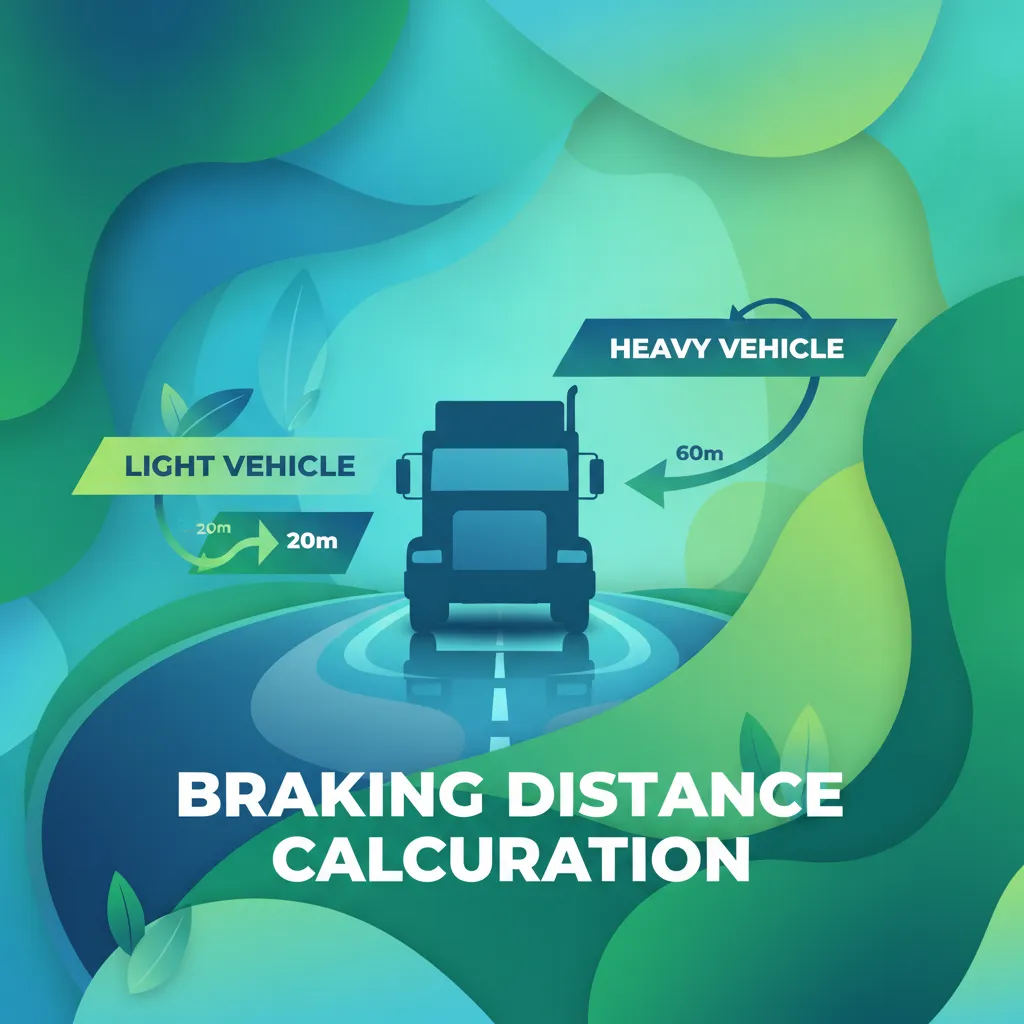
The immense mass of a loaded truck means its braking distance is far greater than that of a car. This lesson breaks down total stopping distance into reaction distance and braking distance, explaining how speed, weight, and road conditions have an exponential effect. It reinforces the necessity of maintaining a significantly larger following distance to ensure enough space to stop safely in an emergency.
Find clear answers to common questions learners have about The Coupling and Uncoupling Procedure (Theory). Learn how the lesson is structured, which driving theory objectives it supports, and how it fits into the overall learning path of units and curriculum progression in Switzerland. These explanations help you understand key concepts, lesson flow, and exam focused study goals.
The tug test is a physical check performed by pulling the tractor forward slightly while the trailer brakes are engaged. It ensures the fifth-wheel locking mechanism has securely engaged with the trailer kingpin, preventing the risk of the trailer dropping during transit.
Uncoupling on an uneven surface can cause the trailer to roll away or cause the landing gear to buckle under uneven load distribution. A flat, level surface ensures the stability of the trailer once it is disconnected from the tractor.
Typically, you should disconnect the supply line (red) first to set the trailer brakes, followed by the control line (yellow), and finally the electrical cables. This order ensures the trailer remains securely braked throughout the disconnection process.
Pinpoint specific Swiss traffic rules, road signs, or driving situations you need to master. Use the practice search to start a focused revision session now and build confidence for your official driving theory exam.