
This lesson explores the physical forces that act upon cargo during the operation of Category C and C1 heavy goods vehicles. Understanding how inertia, acceleration, and cornering influence a load is essential for ensuring safety and preventing common cargo-related incidents on Swiss roads.
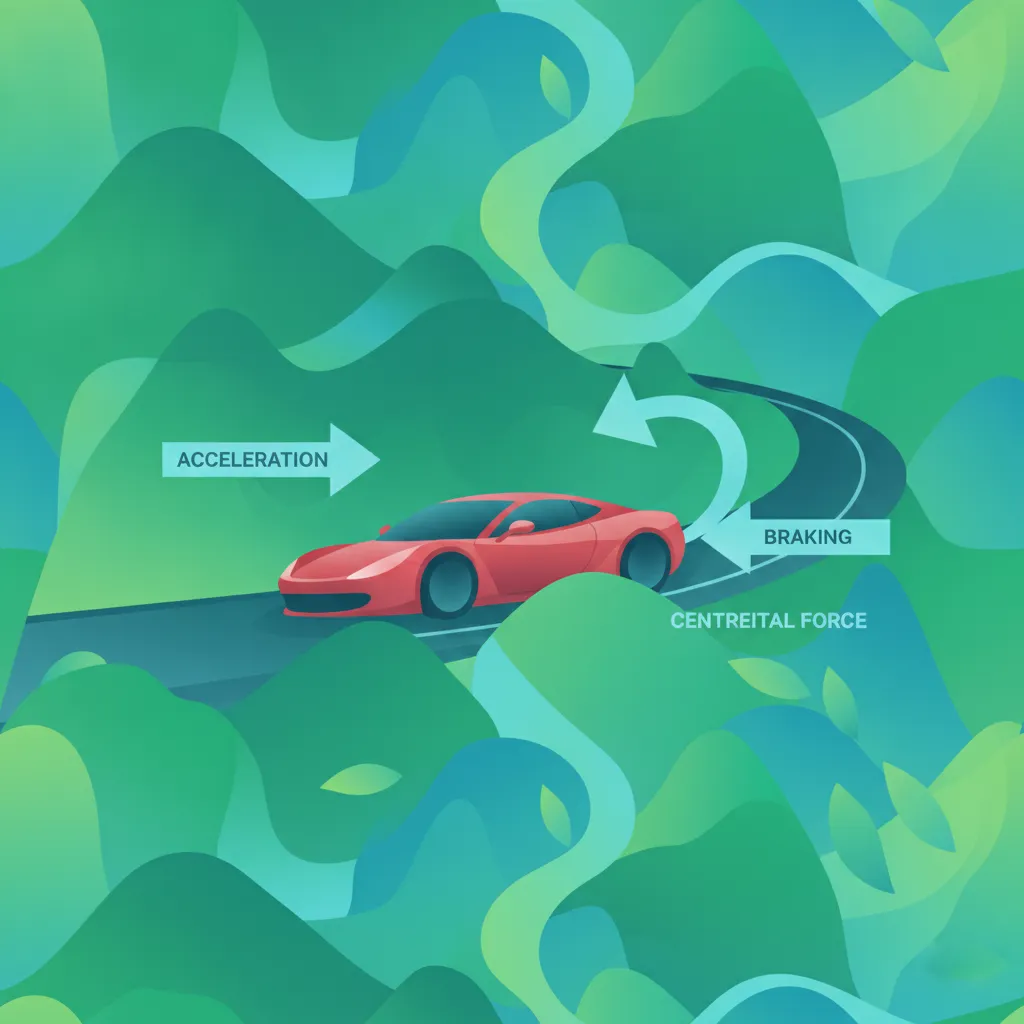
Lesson content overview
Operating heavy goods vehicles, especially in a demanding environment like Switzerland, requires a deep understanding of vehicle dynamics and, crucially, how loads behave during transit. A load is not a static object; it is constantly subjected to powerful forces that can challenge its stability and, if unsecured, compromise the safety of the entire journey. This lesson explores the fundamental inertial forces—those generated by acceleration, braking, and cornering—that act upon cargo, explaining why proper load securing is not just a regulatory requirement but a critical safety imperative for Category C and C1 goods vehicles.
Every object possesses inertia, a fundamental property of matter that resists changes in its state of motion. When a heavy goods vehicle accelerates, brakes, or turns, the cargo inside it, due to inertia, attempts to maintain its previous state of motion. This resistance manifests as an apparent force acting on the cargo, commonly referred to as an inertial force. These forces are dynamic and can be surprisingly powerful, often far exceeding what static friction alone can counteract.
An inertial force is an apparent force that acts on a body whenever its reference frame (in this case, the vehicle) accelerates. It is not a force in the classical sense, but rather a consequence of an object's mass and its resistance to being accelerated. Imagine a passenger in a car being "pushed back" into their seat when the car accelerates; no one is actually pushing them, but their body's inertia resists the forward motion of the car. The same principle applies to cargo. These forces invariably act in the direction opposite to the vehicle's acceleration.
For practical purposes in heavy goods transport, inertial forces are primarily categorized by their direction relative to the vehicle's movement:
Understanding the direction and potential magnitude of these forces is the first step in effective load securing. Failure to account for them can lead to dangerous cargo shifts, vehicle instability, and potentially severe accidents.
Longitudinal forces are a constant factor in any journey, directly linked to changes in the vehicle's speed. Whether you are speeding up or slowing down, these forces are at play, attempting to shift your cargo along the length of the vehicle.
When a heavy goods vehicle applies its brakes, it decelerates, meaning it undergoes negative acceleration. Due to inertia, the cargo within the vehicle tries to continue moving forward at its previous speed. This creates a powerful forward inertial force that pushes the load towards the front of the vehicle. In an emergency stop, this force can be immense, easily overcoming static friction and causing inadequately secured cargo to slide forward, potentially damaging the vehicle's cabin, injuring the driver, or even protruding onto the road.
Conversely, when a vehicle accelerates, the cargo, again due to inertia, resists this forward motion. This results in a rearward inertial force pushing the load towards the back of the vehicle. While typically less powerful than braking forces, especially in heavy goods vehicles known for their deliberate acceleration, it is still significant enough to cause cargo to shift backward if not properly secured. This shift can affect weight distribution, potentially overloading the rear axle or creating gaps that allow for further movement during subsequent braking.
Friction plays a crucial role in preventing cargo movement, but its limitations must be understood.
A dimensionless quantity representing the ratio of the frictional force between two surfaces to the normal force pressing them together. It indicates how much friction alone can resist movement.
While friction, particularly static friction, is helpful, it is rarely sufficient to secure heavy goods against the inertial forces encountered during normal driving, let alone emergency maneuvers. Factors like wet surfaces, oily residues, or vibrations can significantly reduce the coefficient of friction (µ), making mechanical securing methods absolutely essential.
When a heavy goods vehicle navigates a curve, its direction of travel changes. Just as with changes in speed, this change in direction generates inertial forces that demand careful consideration for load stability.
During a turn, the vehicle and its cargo are constantly changing direction, essentially accelerating towards the centre of the curve. Due to inertia, the cargo resists this change in direction and attempts to continue moving in a straight line. This resistance is perceived as a force pushing the cargo outwards, away from the centre of the curve. This is often referred to as centrifugal force. The magnitude of this lateral force increases with the vehicle's speed and the sharpness of the curve (i.e., a smaller turning radius).
Uncontrolled lateral forces pose a significant risk to heavy goods vehicles. If cargo shifts sideways, it directly alters the vehicle's centre of gravity (CoG). A higher or shifted CoG makes the vehicle more susceptible to rollovers, especially in conjunction with the inherent instability of tall or top-heavy loads. Even a minor shift can destabilize the vehicle, impairing steering and potentially leading to a loss of control, particularly on challenging roads such as mountain passes or roundabouts. Lateral forces also demand robust side restraints to prevent cargo from sliding off the vehicle or causing it to list dangerously.
Beyond simply shifting the cargo, longitudinal forces cause a phenomenon known as load transfer, which is the redistribution of weight between the vehicle's axles during acceleration or braking. This has critical implications for vehicle performance, handling, and safety.
Proper weight distribution is crucial for managing load transfer and maintaining vehicle stability. Placing heavy loads low and centred within the vehicle minimizes the effects of load transfer and keeps the overall centre of gravity stable. Drivers must ensure that cargo is distributed in a way that respects individual axle load limits and the vehicle's gross vehicle weight (GVW), both when stationary and under dynamic conditions.
Always aim to keep the heaviest parts of your load as low as possible on the vehicle bed and as close to the longitudinal centerline as feasible. This lowers the vehicle's overall centre of gravity, significantly improving stability against both lateral and longitudinal forces.
Given the powerful nature of inertial forces, relying solely on friction is insufficient for safe heavy goods transport. Effective load securing employs mechanical methods designed to counteract these forces, ensuring the cargo remains stationary relative to the vehicle throughout the journey. The two primary categories of securing are blocking and lashing.
Blocking refers to the use of rigid barriers placed directly against the cargo to prevent its movement in a specific direction. It is primarily used for longitudinal restraint (forward and backward movement) and, with appropriate side structures, for lateral movement.
Lashing involves using straps, ropes, chains, or nets to apply tension to the cargo, pressing it against the vehicle bed or against other securing elements. Lashing provides tension restraint and is crucial for securing cargo in all directions—longitudinal, lateral, and vertical.
For most heavy goods, a combination of blocking and lashing is necessary. The securing hierarchy prioritizes restraining the load against the vehicle's structure where possible, followed by blocking, and then lashing. This multi-faceted approach ensures that cargo is held firmly, minimizing the risk of movement regardless of the forces encountered.
In Switzerland, the safe transport of goods is strictly regulated to prevent accidents and protect all road users. Article 37g of the Swiss Road Traffic Regulations (Verkehrsregelverordnung, VRV) explicitly mandates robust load securing practices for all vehicles, including heavy goods vehicles (Category C & C1). Adherence to these regulations is not just a legal obligation but a cornerstone of professional driving responsibility.
According to Article 37g, loads must be positioned and secured in such a way that they cannot slide, tip, roll, fall, or cause noise during transport. This applies even during sudden braking, emergency maneuvers, or driving on uneven terrain. The securing measures must be capable of counteracting the full range of inertial forces expected during transit. This means anticipating not just normal driving but also extreme situations.
Blocking is crucial for longitudinal and sometimes lateral restraint. Swiss regulations, often referencing European standards, specify requirements for blocking:
For instance, guidelines often suggest that blocking devices (such as headboards or load restraints) must be able to withstand a significant percentage of the load's weight acting forward (e.g., 80% of the load weight). Rear blocking might be required to withstand a lower percentage (e.g., 50% of the load weight). Additionally, there might be specific requirements for the number or strength of blocks based on cargo weight, for example, "one block for each 500 kg of cargo" as mentioned in the blueprint. It is imperative for drivers to verify the precise and current legal requirements.
Lashing equipment, such as straps, chains, and nets, must be of adequate strength and in good condition.
Commonly, lashing devices must have a breaking load (LC - Lashing Capacity) that provides a safety factor of at least 1.5 times the weight of the cargo they are securing. This means if a strap is intended to secure an 800 kg load against a particular force, its breaking load must be at least 1,200 kg for that direction. Regular inspection of lashing equipment for wear, cuts, or damage is mandatory, and any compromised equipment must be immediately removed from service.
The theory of inertial forces and securing methods must be applied dynamically, considering various real-world factors that can influence load stability and the effectiveness of securing systems.
Many heavy vehicle accidents involving cargo shift stem from common, preventable errors. Understanding these helps drivers avoid similar mistakes:
Inadequate load securing is a serious offense in Switzerland and can result in significant fines, points on your license, vehicle immobilization, and potential criminal charges if an accident occurs. Always prioritize safety over speed or convenience.
The ultimate responsibility for a securely loaded vehicle rests with the driver. Before every journey, and periodically during long trips, professional drivers must meticulously check their load and securing equipment.
Inspect Cargo: Ensure cargo is evenly distributed, respecting axle load limits and the vehicle's overall gross weight. Heavy items should be placed low and centered.
Check Blocking: Verify that all front, rear, and lateral blocking elements are securely in place, rigid, and adequately sized for the load.
Examine Lashing Equipment: Check all straps, chains, and nets for cuts, fraying, wear, or corrosion. Ensure they are correctly routed and adequately tensioned.
Verify Anchorage Points: Confirm that all tie-down points on the vehicle are intact, free from damage, and rated for the forces they will endure.
Assess Vehicle Stability: Consider the overall centre of gravity and potential for rollover, especially with tall or wide loads.
During transit, particularly after the first few kilometres, after significant braking events, or on challenging road sections, drivers should stop safely and visually re-check the load and its securing. Vibrations and movements can cause straps to loosen or cargo to settle.
The repercussions of failing to secure a load properly are severe and far-reaching:
Understanding and actively counteracting the inertial forces acting on a load is not merely a theoretical exercise; it is a fundamental skill for every Category C and C1 heavy goods vehicle driver. It is the cornerstone of safe and professional transport, protecting lives, goods, and livelihoods.
This lesson explains the fundamental inertial forces that act on cargo in heavy goods vehicles: longitudinal forces during acceleration and braking, and lateral centrifugal forces during cornering. Understanding how these forces attempt to move cargo is essential for proper load securing, which relies on blocking (rigid barriers against movement) and lashing (tension restraints) rather than friction alone. Swiss Article 37g regulations mandate that loads must be secured against all expected inertial forces, with front blocking typically required to withstand 80% of cargo weight and lashing equipment needing a 1.5x safety factor. Drivers must perform pre-trip inspections and periodically re-check securing during transit, particularly on challenging Swiss alpine routes where combined forces are most severe.
A short set of high-value points that capture the most important learning from this lesson.
Inertial forces act opposite to the vehicle's direction of acceleration, pushing cargo forward during braking, rearward during acceleration, and sideways during cornering
Static friction is stronger than kinetic friction, but friction alone is insufficient to secure heavy loads against dynamic forces
Blocking uses rigid barriers to prevent cargo movement in a specific direction, while lashing uses tension restraints to hold cargo in place
Load transfer redistributes weight between axles during acceleration and braking, directly affecting vehicle handling and braking efficiency
Swiss law requires that loads cannot shift even during sudden braking, emergency maneuvers, or on uneven terrain
Explore all units and lessons included in this driving theory course.
Inertial forces always act OPPOSITE to vehicle acceleration: forward during braking, rearward during acceleration, outward during turns
Static friction prevents motion initiation but once cargo starts sliding, kinetic friction takes over and is weaker
Front blocking must withstand approximately 80% of cargo weight; rear blocking approximately 50%
Lashing equipment must have a minimum safety factor of 1.5 times the cargo weight it secures
Alpine roads with steep gradients and hairpin bends significantly amplify both longitudinal and lateral forces on loads
Assuming heavy cargo is secure simply because it feels stable at rest and underestimating dynamic forces during emergency braking
Failing to install lateral restraints (side straps, nets, or side blocking), especially on routes with many curves
Not re-tensioning lashing straps after the first few kilometers, as vibrations and cargo settling cause straps to loosen
Placing heavy loads high on the vehicle, which raises the centre of gravity and increases rollover risk during cornering
Using damaged, frayed, or corroded lashing equipment that may fail under load due to reduced breaking strength
Lesson content overview
A short set of high-value points that capture the most important learning from this lesson.
Inertial forces act opposite to the vehicle's direction of acceleration, pushing cargo forward during braking, rearward during acceleration, and sideways during cornering
Static friction is stronger than kinetic friction, but friction alone is insufficient to secure heavy loads against dynamic forces
Blocking uses rigid barriers to prevent cargo movement in a specific direction, while lashing uses tension restraints to hold cargo in place
Load transfer redistributes weight between axles during acceleration and braking, directly affecting vehicle handling and braking efficiency
Swiss law requires that loads cannot shift even during sudden braking, emergency maneuvers, or on uneven terrain
Explore all units and lessons included in this driving theory course.
Inertial forces always act OPPOSITE to vehicle acceleration: forward during braking, rearward during acceleration, outward during turns
Static friction prevents motion initiation but once cargo starts sliding, kinetic friction takes over and is weaker
Front blocking must withstand approximately 80% of cargo weight; rear blocking approximately 50%
Lashing equipment must have a minimum safety factor of 1.5 times the cargo weight it secures
Alpine roads with steep gradients and hairpin bends significantly amplify both longitudinal and lateral forces on loads
Assuming heavy cargo is secure simply because it feels stable at rest and underestimating dynamic forces during emergency braking
Failing to install lateral restraints (side straps, nets, or side blocking), especially on routes with many curves
Not re-tensioning lashing straps after the first few kilometers, as vibrations and cargo settling cause straps to loosen
Placing heavy loads high on the vehicle, which raises the centre of gravity and increases rollover risk during cornering
Using damaged, frayed, or corroded lashing equipment that may fail under load due to reduced breaking strength
Explore search topics learners often look for when studying Forces Acting on a Load: Acceleration, Braking, Cornering. These topics reflect common questions about road rules, driving situations, safety guidance, and lesson level theory preparation for learners in Switzerland.
Browse additional driving theory lessons that cover connected traffic rules, road signs, and common driving situations related to this topic. Improve your understanding of how different rules interact across everyday traffic scenarios.
Understand how acceleration, braking, and cornering generate significant inertial forces on cargo. This lesson explains these dynamics and their direct impact on load stability and vehicle safety, crucial for Swiss C and C1 drivers.

There is no one-size-fits-all solution for load securing. This lesson provides examples of how to secure different common cargo types, from standard palletized goods to challenging loads like pipes, which can roll, or heavy coils. It highlights that the securing method must be tailored to the specific characteristics of the load to be effective.

Buses have a high centre of gravity, making them susceptible to rollover forces. This lesson explains how factors like passenger load, luggage placement, and speed affect vehicle stability. Understanding these principles is essential for safe cornering, navigating roundabouts, and handling the vehicle in strong crosswinds.

Heavy vehicles, especially those with a high centre ofgravity, are susceptible to rolling over. This lesson examines the primary causes, including excessive speed on bends or roundabouts, sudden steering manoeuvres, and the 'sloshing' effect of liquid loads in tankers. It reinforces that maintaining a sensible speed and driving smoothly are the best ways to mitigate this serious risk.

Correct load distribution is essential for safe handling and braking. This lesson explains that loads should be placed as low as possible and distributed evenly to maintain a low centre of gravity and comply with axle weight limits. A high or poorly positioned centre of gravity dramatically increases the risk of rollover, especially when cornering or in an emergency manoeuvre.

The total weight of a vehicle is supported by its axles, and Swiss regulations set strict limits on the load each axle can bear. This lesson explains how to correctly distribute a load to comply with maximum axle load (Achslast) limits, which is vital for vehicle stability, steering control, and braking efficiency. Incorrect distribution can lead to dangerous handling characteristics and cause significant damage to road surfaces.
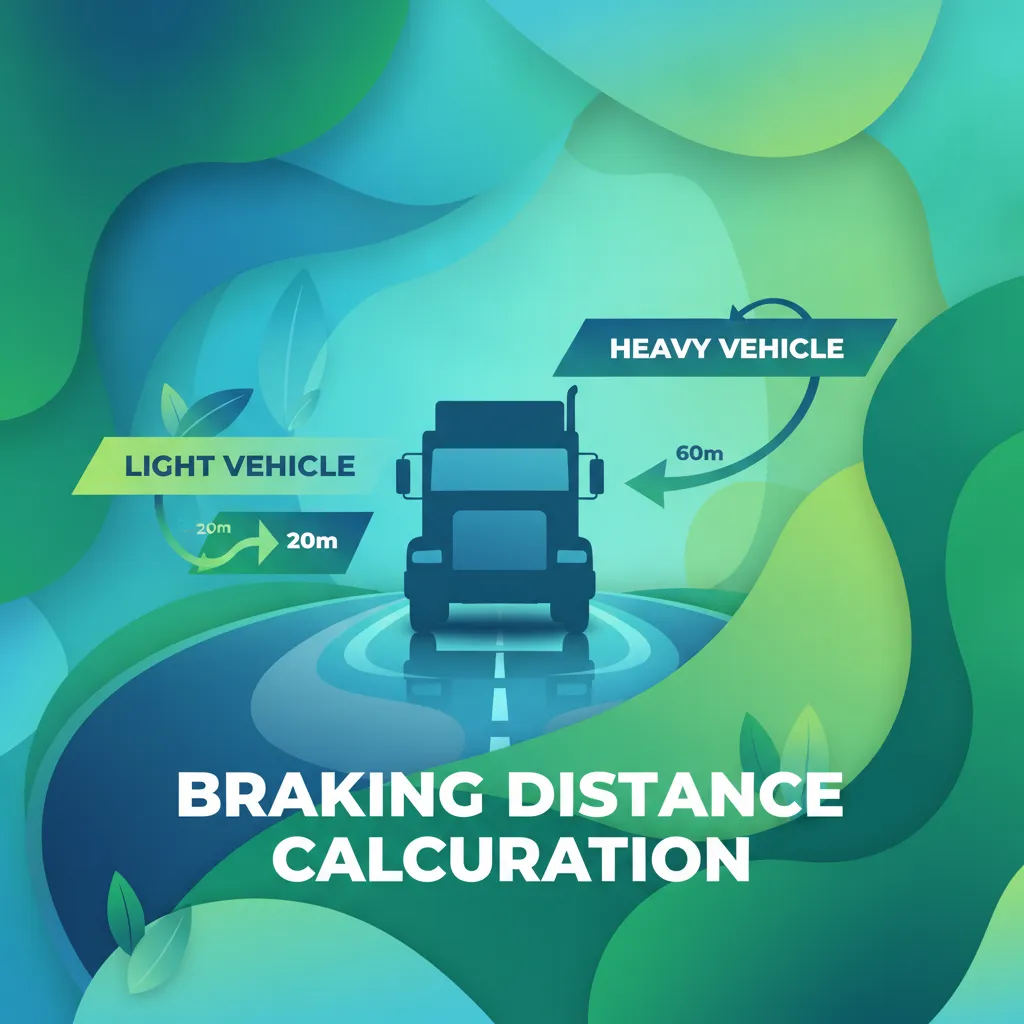
The immense mass of a loaded truck means its braking distance is far greater than that of a car. This lesson breaks down total stopping distance into reaction distance and braking distance, explaining how speed, weight, and road conditions have an exponential effect. It reinforces the necessity of maintaining a significantly larger following distance to ensure enough space to stop safely in an emergency.

This lesson details the main techniques used for effective load securing. Blocking involves placing cargo snugly against fixed structures like the headboard or using dunnage to fill gaps and prevent sliding. Lashing involves using devices like straps or chains to either tie the load down, increasing friction (friction lashing), or to directly restrain it against movement (direct lashing).
Explore essential load securing principles, including blocking and lashing techniques, and understand driver responsibilities under Swiss Article 37g. Learn how to counteract physical forces to ensure cargo safety on all Swiss roads.

While others may have loaded the vehicle, the driver holds the final legal responsibility for the security of the load once on the public highway. This lesson clarifies this crucial point of law, explaining that the driver must inspect the load and its securing arrangements before departure and re-check them during the journey. The consequences of a load shifting or falling can be catastrophic and result in severe legal penalties for the driver.
This lesson details the main techniques used for effective load securing. Blocking involves placing cargo snugly against fixed structures like the headboard or using dunnage to fill gaps and prevent sliding. Lashing involves using devices like straps or chains to either tie the load down, increasing friction (friction lashing), or to directly restrain it against movement (direct lashing).

This lesson explores the correct use of seat belts, the installation of child restraints, and the importance of securing loads. It covers weight distribution guidelines, maximum load limits, and conditions for towing a trailer. Guidance is also provided for safely transporting animals and ensuring all loads are properly secured to prevent movement.

Swiss law strictly regulates the maximum dimensions of commercial vehicles to ensure they can safely navigate the infrastructure. This lesson specifies the standard limits for vehicle height (4.0m), width (2.55m), and length for various lorry and trailer combinations. Adhering to these dimensions is crucial for avoiding collisions with bridges, tunnels, and other structures, and for navigating narrow roads.

This lesson outlines the mandatory documentation required during any professional transport journey in Switzerland. Drivers must be able to present the vehicle registration document ('Fahrzeugausweis'), their valid driving license, and the OACP qualification card upon request. It also touches upon transport-specific documents like consignment notes, which are crucial for legal compliance during roadside inspections by authorities.

Overloading is a serious offence with severe safety and legal ramifications. This lesson details how excess weight drastically increases braking distances, puts extreme stress on tyres leading to blowouts, and negatively affects steering and overall stability. Furthermore, it discusses the substantial fines, potential license withdrawal, and driver liability that result from violating Swiss weight regulations.

Operating a heavy goods vehicle involves a significant responsibility for the safety of all road users. This lesson emphasizes the professional driver's enhanced duty of care due to the vehicle's size, mass, and potential impact in a collision. It covers the importance of a professional attitude, constant vigilance, and adherence to all traffic regulations to prevent incidents and maintain a high standard of road safety.
There is no one-size-fits-all solution for load securing. This lesson provides examples of how to secure different common cargo types, from standard palletized goods to challenging loads like pipes, which can roll, or heavy coils. It highlights that the securing method must be tailored to the specific characteristics of the load to be effective.

Unsecured items can become dangerous projectiles in the event of a sudden stop or collision. This lesson covers the driver's responsibility for overseeing the secure stowage of passenger belongings. It includes rules for using luggage compartments on coaches and designated spaces for prams and mobility aids on city buses.

Losing part of a load on the road creates an immediate and serious hazard for other drivers. This lesson outlines the driver's responsibilities: stop in a safe place, assess the situation from a safe distance, and immediately alert the police. The driver's primary role is to warn other road users and not to attempt to retrieve the load from a live carriageway.
Find clear answers to common questions learners have about Forces Acting on a Load: Acceleration, Braking, Cornering. Learn how the lesson is structured, which driving theory objectives it supports, and how it fits into the overall learning path of units and curriculum progression in Switzerland. These explanations help you understand key concepts, lesson flow, and exam focused study goals.
Acceleration forces can cause unsecured cargo to slide backwards, potentially damaging the headboard or affecting the weight distribution of the lorry, which can impact steering and traction.
Braking forces act in the direction of travel, pushing the load forward due to inertia. Cornering forces (centrifugal forces) push the load sideways toward the outside of the turn, increasing the risk of the vehicle tipping if the load is not properly secured.
Yes, the fundamental principles of physics regarding inertia and motion apply to all vehicle types. However, articulated vehicles often face more complex force distribution, making load security even more critical for stability.
The exam primarily focuses on understanding the concepts and your legal responsibility as a driver to secure loads. You should be able to identify which forces act on the cargo during common driving situations.
Pinpoint specific Swiss traffic rules, road signs, or driving situations you need to master. Use the practice search to start a focused revision session now and build confidence for your official driving theory exam.