
This lesson explains the critical phenomenon of rear swing when operating heavy goods vehicles in confined spaces. You will learn how to anticipate the wide arc of your vehicle's rear end to protect vulnerable road users and avoid collisions while manoeuvring.

Lesson content overview
Operating heavy goods vehicles, especially those in Categories C and C1, requires a comprehensive understanding of their unique dynamics. One critical phenomenon, particularly hazardous in confined environments, is rear swing, also known as rear overhang swing. This lesson explores the mechanics of rear swing, its potential dangers, and the essential strategies drivers must employ to mitigate risks, ensuring the safety of all road users and preventing collisions.
The Official Swiss Driving Theory Course for Category C & C1 Goods Vehicles emphasizes this topic due to the prevalence of accidents caused by drivers underestimating the swept path of their vehicle's rear. Mastery of these principles is not just about compliance with Swiss regulations, but about professional responsibility and safe operation.
Rear swing refers to the outward movement of a vehicle's rear end when the front end pivots during a turn. This creates a larger turning radius for the rear overhang compared to the path of the front wheels. Unlike off-tracking (also known as cut-in), where the rear wheels follow a tighter path than the front wheels, rear swing describes the arc traced by the extreme rear of the vehicle or trailer, which can swing outward into an adjacent lane, onto a sidewalk, or towards a fixed obstacle.
This phenomenon is most pronounced in long, rigid vehicles (like buses or certain lorries) and, even more so, in articulated vehicle combinations (tractor-trailer units) where the trailer has a significant overhang beyond its rearmost axle. The greater the rear overhang and the sharper the turn, the wider the arc described by the swinging rear.
Several elements contribute to the extent and danger of rear swing:
Rear swing is not limited to forward motion. It manifests differently depending on the direction of travel:
The primary hazard of rear swing is the potential for collisions. Heavy goods vehicles operate in diverse environments, from open motorways to congested urban streets and narrow industrial loading docks. In confined spaces, the margin for error due to rear swing shrinks dramatically, posing significant risks to:
Pedestrians, cyclists, and motorcyclists are particularly susceptible to rear swing accidents. They may not anticipate the wide arc of a heavy vehicle's rear, especially if they are on a pavement or riding close to the kerb. A right turn by a long vehicle can easily sweep the rear of the trailer or rigid body across a sidewalk, striking an unsuspecting pedestrian or cyclist. Such incidents can result in severe injuries or fatalities.
Always assume vulnerable road users may be in your blind spots or unaware of your vehicle's full dimensions during a turn. Their safety is paramount.
Buildings, lampposts, traffic signs, parked cars, railings, and other street furniture are all at risk. In tight urban settings or during complex manoeuvres into loading bays, the swinging rear of a truck or trailer can collide with these objects, causing significant property damage and potentially rendering the vehicle inoperable.
When making sharp turns, especially at intersections or when pulling away from a kerb, the rear swing can encroach into adjacent traffic lanes. This creates a collision risk with vehicles travelling alongside or oncoming traffic. This is particularly dangerous if other drivers are unaware of the heavy vehicle's extended swept path.
Effective mirror use is arguably the most crucial skill in managing rear swing hazards. Heavy goods vehicles are equipped with multiple mirrors designed to cover various areas around the vehicle, including those that are direct blind spots.
Before starting any journey, and especially before performing manoeuvres in confined spaces, drivers must ensure all mirrors are correctly adjusted. This includes:
Visual Sweep: Before initiating any turn, perform a comprehensive visual sweep of the area around your vehicle, including areas not covered by mirrors.
Sequential Mirror Check: Systematically check all relevant mirrors (e.g., left main, left wide-angle, left kerb, internal (if rigid vehicle), right kerb, right wide-angle, right main).
Dynamic Monitoring: Continuously monitor your mirrors throughout the turn. The position of vulnerable road users or obstacles can change rapidly.
Head Checks: In situations of extreme doubt or when blind spots are unavoidable, a quick head check (when safe to do so) can provide crucial additional information.
Even with optimally adjusted mirrors, heavy vehicles have significant blind spots. These are areas around the vehicle that are not visible directly or through any mirror. Rear swing zones often fall within or extend into these blind spots, making constant vigilance essential. Drivers must mentally map the potential swing path and actively scan for anything that could enter this zone.
Minimizing the risks of rear swing requires a combination of proactive planning, careful execution, and a thorough understanding of vehicle dynamics.
The golden rule for manoeuvring in confined spaces is to reduce your speed. Operating at a walking pace or slower provides:
Before initiating a turn, position your vehicle to allow for the widest possible arc, accommodating both off-tracking and rear swing. This often means approaching a turn from a wider position than you would in a car:
When making a right turn with a long vehicle, remember that the front of your vehicle will need to move further out into the intersection or opposite lane before the turn to allow the rear to clear the corner and avoid the kerb.
Instead of making one sharp steering input, use smooth, incremental adjustments. This helps to control the vehicle's path more precisely and minimizes sudden, exaggerated rear swing. Monitor your mirrors constantly as you steer, making small corrections as needed.
The type, weight, and distribution of your load significantly impact how a heavy vehicle behaves during turns, directly affecting rear swing dynamics.
Drivers must always check that loads are secured and balanced according to regulations (as covered in Lesson 5: Loads, Weight Distribution, Load Securing and Vehicle Stability). Awareness of the load's impact on handling is crucial for assessing the required clearance for rear swing.
Swiss road traffic regulations (e.g., the Strassenverkehrsgesetz (SVG) and its implementing ordinances like the Verkehrsregelnverordnung (VRV)) impose strict duties on drivers of heavy goods vehicles regarding vehicle control and safety, including accounting for phenomena like rear swing.
Failure to manage rear swing effectively can lead to severe consequences:
Setting: You are driving a Category C lorry through a historic Swiss village with narrow streets and tightly packed buildings. You need to make a right turn onto another equally narrow street with a pedestrian crossing immediately after the corner.
Correct Action:
Incorrect Action: Approaching the turn too fast and too close to the kerb. The driver attempts a sharp, quick right turn, causing the rear of the lorry to swing dramatically left, hitting a parked car on the opposite side of the narrow street or endangering a pedestrian attempting to cross.
Setting: You are operating a Category CE articulated combination and need to reverse into a narrow loading bay at a warehouse. There are other trucks parked nearby and limited space to manoeuvre.
Correct Action:
Incorrect Action: Attempting to reverse quickly without surveying the area or making small adjustments. The driver over-steers, causing the trailer to jackknife slightly and its rear to swing violently into a nearby support column or another parked vehicle, resulting in significant damage.
Rear swing is an inherent characteristic of long and articulated heavy goods vehicles. It is not an anomaly but a predictable outcome of vehicle geometry during turns. Therefore, it demands constant awareness and proactive management from Category C and C1 drivers.
By understanding the principles of rear overhang, articulation, and their impact on swing paths, combined with diligent mirror use, appropriate speed management, and careful load consideration, drivers can significantly reduce the risk of accidents. Adherence to Swiss road traffic regulations and a strong sense of professional duty of care are not merely legal requirements but fundamental pillars of heavy vehicle safety.
Rear swing is a predictable physical phenomenon where the rear overhang of a heavy goods vehicle arcs outward during turns, creating collision risks for pedestrians, cyclists, fixed obstacles, and other vehicles. It is most severe with long rear overhangs, sharp steering angles, and articulated vehicle combinations. Safe management requires approaching confined spaces at very low speed, performing systematic mirror checks before and during turns, and positioning the vehicle to accommodate the full swept path. Swiss road traffic law obliges drivers to ensure their entire vehicle, including any rear overhang, does not endanger other road users.
A short set of high-value points that capture the most important learning from this lesson.
Rear swing is the outward arc of a vehicle's rear overhang during turns, occurring on the opposite side of forward turns
Longer rear overhangs and sharper steering angles produce wider, more dangerous swing paths
Forward turns cause the rear to swing opposite to the turn direction; reversing turns cause the rear to swing in the same direction as the steer
Heavy goods vehicles must be operated at near-walking pace in confined spaces to allow time for mirror checks and corrections
Loads with a high centre of gravity or uneven distribution can exaggerate rear swing and reduce vehicle stability
Explore all units and lessons included in this driving theory course.
Off-tracking describes rear wheels cutting inside the front path; rear swing describes the extreme rear corner swinging outward
A right turn in forward motion swings the rear to the left and vice versa - always check the opposite side of your turn
Every mirror must be checked sequentially before, during, and after any turn in a heavy vehicle
Position wide before turns - right turns require positioning toward the centre line to give the rear clearance from the kerb
If visibility is lost or clearance is uncertain, stop immediately rather than continue
Turning too sharply or at normal traffic speed, causing the rear to swing unpredictably into adjacent lanes or pavements
Failing to continuously monitor mirrors during the turn - the swing path can be encroached upon by pedestrians or vehicles mid-manoeuvre
Approaching right turns too close to the kerb, leading the rear to sweep across the pavement or into fixed obstacles
Not checking for vulnerable road users on pavements or at crossings before initiating a turn
Over-steering during reverse manoeuvres, causing exaggerated jackknife-like swings that are difficult to correct
Lesson content overview
A short set of high-value points that capture the most important learning from this lesson.
Rear swing is the outward arc of a vehicle's rear overhang during turns, occurring on the opposite side of forward turns
Longer rear overhangs and sharper steering angles produce wider, more dangerous swing paths
Forward turns cause the rear to swing opposite to the turn direction; reversing turns cause the rear to swing in the same direction as the steer
Heavy goods vehicles must be operated at near-walking pace in confined spaces to allow time for mirror checks and corrections
Loads with a high centre of gravity or uneven distribution can exaggerate rear swing and reduce vehicle stability
Explore all units and lessons included in this driving theory course.
Off-tracking describes rear wheels cutting inside the front path; rear swing describes the extreme rear corner swinging outward
A right turn in forward motion swings the rear to the left and vice versa - always check the opposite side of your turn
Every mirror must be checked sequentially before, during, and after any turn in a heavy vehicle
Position wide before turns - right turns require positioning toward the centre line to give the rear clearance from the kerb
If visibility is lost or clearance is uncertain, stop immediately rather than continue
Turning too sharply or at normal traffic speed, causing the rear to swing unpredictably into adjacent lanes or pavements
Failing to continuously monitor mirrors during the turn - the swing path can be encroached upon by pedestrians or vehicles mid-manoeuvre
Approaching right turns too close to the kerb, leading the rear to sweep across the pavement or into fixed obstacles
Not checking for vulnerable road users on pavements or at crossings before initiating a turn
Over-steering during reverse manoeuvres, causing exaggerated jackknife-like swings that are difficult to correct
Explore search topics learners often look for when studying Rear Swing and Its Hazards in Tight Spaces. These topics reflect common questions about road rules, driving situations, safety guidance, and lesson level theory preparation for learners in Switzerland.
Browse additional driving theory lessons that cover connected traffic rules, road signs, and common driving situations related to this topic. Improve your understanding of how different rules interact across everyday traffic scenarios.
Learn about rear swing, the dangerous outward movement of a heavy vehicle's rear during turns. Essential knowledge for Category C and C1 drivers in Switzerland to navigate tight spaces safely and avoid collisions with pedestrians, cyclists, and property.

Depots and loading bays present unique challenges with tight spaces, other moving vehicles, and pedestrians. This lesson focuses on the principles of safe manoeuvring in these environments, stressing the need for extremely low speeds, constant observation, and patience. It covers techniques for aligning with loading docks and navigating around fixed obstacles and other site traffic.

Reversing a heavy vehicle is inherently dangerous due to severely restricted visibility. This lesson outlines a safe-reversing protocol, which includes a thorough check of the area behind the vehicle before starting and using a competent banksman (signaller) whenever possible. It covers the standardized hand signals used for communication and emphasizes moving at a slow, walking pace.

Reversing is the most dangerous manoeuvre a large vehicle can perform and should be avoided whenever possible. This lesson details a safe system of work for when reversing is unavoidable. It covers the importance of a 360-degree check before starting, the use of a banksman, and how to interpret standard hand signals.

Turning a long vehicle requires careful planning and execution. This lesson covers the correct procedure: approach, observation, signalling, and positioning the vehicle correctly to allow for the trailer's off-tracking without mounting the kerb. It also highlights the need for constant mirror checks throughout the turn to monitor for cyclists or other vulnerable road users who may enter the danger zone.
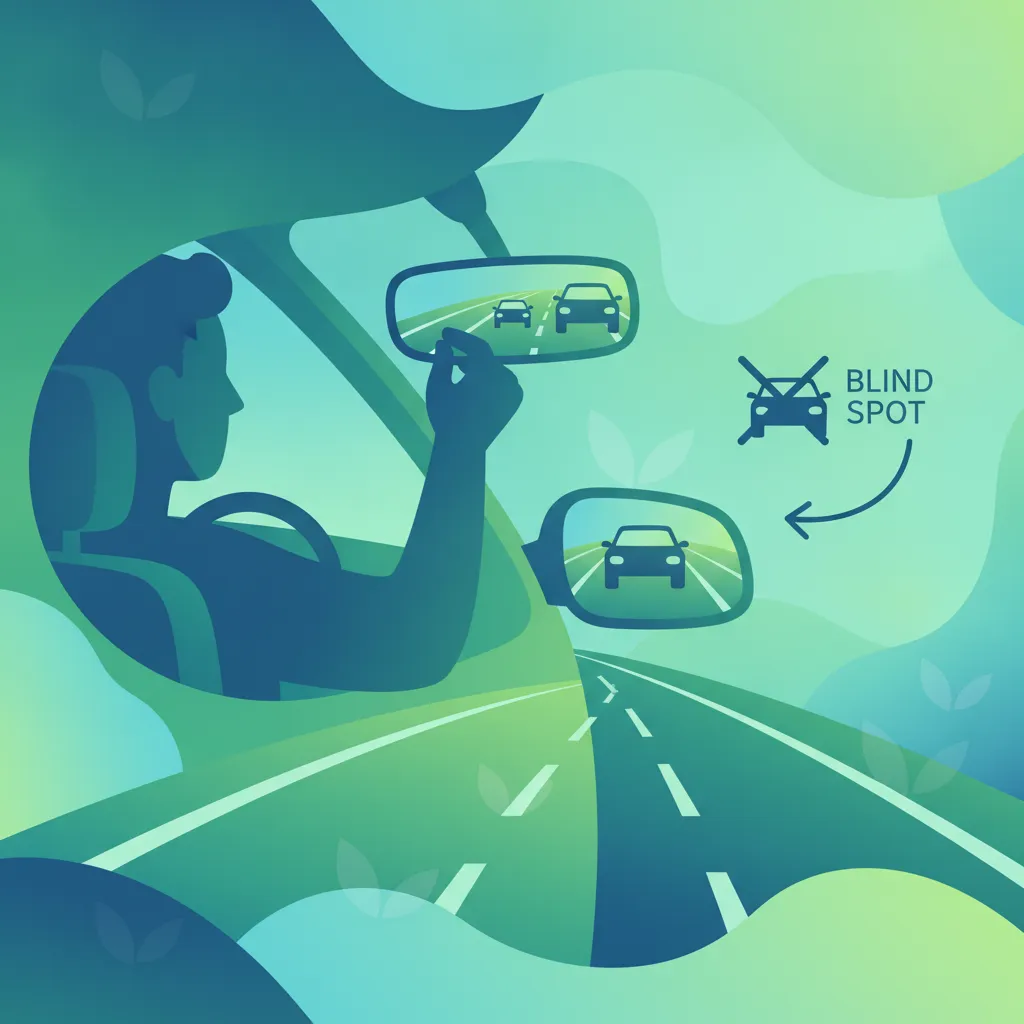
Despite the complex mirror systems, large areas around a truck remain hidden from the driver's view. This lesson maps out these significant blind spots: directly in front, behind, and along both sides of the vehicle. It teaches drivers to be constantly aware of these 'no-zones' and to anticipate that smaller vehicles, cyclists, or pedestrians may be hidden within them, especially before changing lanes or turning.

When a long vehicle turns, the rear wheels follow a shorter path than the front wheels (swept path), and the rear of the vehicle swings outwards (tail swing). This lesson explains these critical concepts. You will learn how to position the vehicle before a turn to avoid mounting the kerb or striking objects like signs and pedestrians with the rear corner.

Construction sites and industrial areas are non-public roads with their own set of rules and hazards. This lesson covers the need to follow site-specific safety instructions, be aware of moving plant machinery and personnel on the ground, and assess ground conditions. It highlights that reversing is often required and should be done with a signaller wherever possible.

A jack-knife occurs when the tractor unit and semitrailer skid and fold in on each other, resulting in a complete loss of control. This lesson explains the primary causes, which include harsh braking (especially while turning) or driving too fast for the conditions, causing the drive axles to lose traction. The key to prevention is smooth driving, anticipating hazards, and adapting speed to road and weather conditions.
Explore how vehicle dimensions, articulation, and speed affect turning dynamics like off-tracking and rear swing. Crucial insights for Swiss C and C1 drivers to safely manoeuvre long vehicles and combinations in complex environments.

When an articulated vehicle turns, the trailer wheels do not follow the same path as the tractor's front wheels; they take a shortcut, or 'cut-in'. This lesson explains this principle of off-tracking and why the driver must take a wider path when initiating a turn. Failing to account for off-tracking is a common cause of striking kerbs, street furniture, or other vehicles.

This lesson provides a more detailed look at managing off-tracking in challenging situations like sharp urban corners or tight industrial estate roads. It explains the technique of moving towards the centre line before a right turn (in a right-hand drive context) to create space for the trailer to follow. This requires careful judgement and observation to ensure it is safe to do so.
When a long vehicle turns, the rear wheels follow a shorter path than the front wheels (swept path), and the rear of the vehicle swings outwards (tail swing). This lesson explains these critical concepts. You will learn how to position the vehicle before a turn to avoid mounting the kerb or striking objects like signs and pedestrians with the rear corner.
Turning a long vehicle requires careful planning and execution. This lesson covers the correct procedure: approach, observation, signalling, and positioning the vehicle correctly to allow for the trailer's off-tracking without mounting the kerb. It also highlights the need for constant mirror checks throughout the turn to monitor for cyclists or other vulnerable road users who may enter the danger zone.
Despite the complex mirror systems, large areas around a truck remain hidden from the driver's view. This lesson maps out these significant blind spots: directly in front, behind, and along both sides of the vehicle. It teaches drivers to be constantly aware of these 'no-zones' and to anticipate that smaller vehicles, cyclists, or pedestrians may be hidden within them, especially before changing lanes or turning.

The left-hand turn (in Switzerland) is a moment of high risk, as a cyclist can easily be hidden in the vehicle's nearside blind spot. This lesson provides a detailed analysis of this scenario, mandating a slow approach and meticulous, repeated mirror checks before and during the turn. It emphasizes that the driver must assume a cyclist could be there, even if one isn't immediately visible.
Depots and loading bays present unique challenges with tight spaces, other moving vehicles, and pedestrians. This lesson focuses on the principles of safe manoeuvring in these environments, stressing the need for extremely low speeds, constant observation, and patience. It covers techniques for aligning with loading docks and navigating around fixed obstacles and other site traffic.

Heavy vehicles, especially those with a high centre ofgravity, are susceptible to rolling over. This lesson examines the primary causes, including excessive speed on bends or roundabouts, sudden steering manoeuvres, and the 'sloshing' effect of liquid loads in tankers. It reinforces that maintaining a sensible speed and driving smoothly are the best ways to mitigate this serious risk.
A jack-knife occurs when the tractor unit and semitrailer skid and fold in on each other, resulting in a complete loss of control. This lesson explains the primary causes, which include harsh braking (especially while turning) or driving too fast for the conditions, causing the drive axles to lose traction. The key to prevention is smooth driving, anticipating hazards, and adapting speed to road and weather conditions.
Find clear answers to common questions learners have about Rear Swing and Its Hazards in Tight Spaces. Learn how the lesson is structured, which driving theory objectives it supports, and how it fits into the overall learning path of units and curriculum progression in Switzerland. These explanations help you understand key concepts, lesson flow, and exam focused study goals.
Because heavy vehicles have a long rear overhang, the back of the vehicle swings outward during a turn. This can hit pedestrians, cyclists, or street furniture without the driver realizing it if they only focus on the front of the vehicle.
You must use all available mirrors, including wide-angle and kerb mirrors, to monitor the path of the rear end. If space is extremely tight or visibility is obscured, you should use a banksman to guide you safely.
It affects both. Any vehicle with a significant rear overhang behind the rear axle will experience a swing effect. The longer the distance from the rear axle to the tail of the vehicle, the more pronounced the swing will be.
Swiss law mandates that you must drive with heightened care in urban areas, especially regarding vulnerable road users. You are legally responsible for any damage caused by the rear swing of your vehicle during any manoeuvre.
Pinpoint specific Swiss traffic rules, road signs, or driving situations you need to master. Use the practice search to start a focused revision session now and build confidence for your official driving theory exam.