
This lesson provides essential training on identifying potential fire hazards in passenger vehicles and the correct procedures for using on-board fire extinguishers. As part of your professional Category D training, you will learn how to prioritize passenger safety during a crisis and when it is appropriate to attempt to fight a fire yourself.
Lesson content overview
Driving a bus or coach in Switzerland comes with significant responsibility, especially concerning passenger safety. A fire on a passenger vehicle represents one of the most critical emergencies a professional driver can face. Due to the confined space, the high number of occupants, and the potential for rapid fire spread, immediate and correct action is paramount to protecting lives and minimizing damage. This comprehensive guide will equip you with the essential knowledge to identify common fire risks, implement preventative checks, and effectively manage a small fire with an on-board extinguisher, always prioritizing the safety of passengers and yourself.
To effectively prevent and respond to vehicle fires, it is crucial to understand the basic principles that govern fire. The "Fire Triangle" is a fundamental concept illustrating the three elements required for combustion to occur and sustain itself: heat, fuel, and oxygen. Removing any one of these elements can prevent a fire from starting or extinguish an existing one. In a passenger vehicle, these elements can converge in various forms, making pre-emptive risk assessment a critical part of a driver's duties.
The three essential elements—heat, fuel, and oxygen—that must be present for a fire to ignite and continue burning.
The primary purpose of identifying fire risks and understanding how to use an extinguisher aligns with the professional driver's duty of care. This duty requires you to ensure the safety and well-being of all occupants and to act decisively in an emergency. Legal frameworks, such as those in the Swiss Category D Driving License Theory Course, mandate the maintenance of fire safety equipment and appropriate responses to fire incidents, emphasizing that human safety always takes precedence over property preservation.
Not all fires are the same, and attempting to extinguish a fire with the wrong agent can be ineffective or even dangerous. Fire classes categorize fires based on the type of fuel involved, guiding the selection of the correct extinguishing agent. Understanding these classifications is fundamental for any professional driver.
Most fire extinguishers found on passenger vehicles are designed to tackle Class A, B, and C fires, as these are the most common types encountered. Always check the labeling on the extinguisher to confirm its suitable fire classes.
Passenger vehicles are legally required to carry portable fire extinguishers, which are self-contained devices designed to suppress small, contained fires. Knowing the type, location, and proper operation of these extinguishers is a core competency for all professional drivers.
Several types of extinguishing agents are commonly used in vehicle fire extinguishers, each suited for specific fire classes:
Always verify the specific type of extinguisher installed in your vehicle and familiarize yourself with its capabilities and limitations. Fire extinguishers must be clearly labeled, serviced annually, and readily accessible without requiring passengers to move or doors to be unlocked.
In an emergency, knowing how to use a fire extinguisher quickly and correctly can make a significant difference. The PASS method is a universally recognized technique for operating a portable fire extinguisher.
P - Pull the Pin: Remove the safety pin or ring, which also breaks the tamper seal. This action arms the extinguisher.
A - Aim at the Base: Point the nozzle or hose at the very base of the fire, not at the flames themselves. Aiming at the flames will only scatter burning material and is ineffective.
S - Squeeze the Handle: Depress the operating lever to release the extinguishing agent. Maintain a steady stream or spray.
S - Sweep Side-to-Side: Sweep the nozzle from side to side across the base of the fire until the flames are extinguished. Continue monitoring the area for re-ignition.
The most effective way to manage fire risks is to prevent fires from starting. A systematic pre-trip inspection, as required for all professional vehicle operations, is a critical preventative measure. This checklist allows you to identify potential fire hazards before they escalate into dangerous situations during operation.
Regular checks should focus on areas prone to generating heat, housing flammable materials, or containing electrical components.
Never skip the pre-trip fire risk checklist, even when under time pressure. Detecting and addressing a minor issue before departure is far safer and less costly than dealing with a full-blown emergency on the road.
Despite thorough prevention, a fire can still occur. Your response in such a situation must be swift, decisive, and always prioritize human life.
The overarching principle in any fire emergency is the prioritization of human safety over vehicle preservation. This means that if a fire cannot be immediately and safely controlled with the on-board extinguisher, or if it poses an immediate threat to occupants, evacuation must be the absolute first action.
The fundamental principle that in any emergency, the protection of lives (passengers and driver) takes precedence over the preservation of property.
If a fire develops while the vehicle is in motion, the driver must immediately stop the vehicle in a safe location if feasible, without endangering other road users. This involves pulling over onto the hard shoulder or a safe lay-by, activating hazard lights, and turning off the engine.
Stop Safely and Secure Vehicle: If feasible, pull over to a safe location, away from buildings or dense traffic. Activate hazard lights, engage the parking brake, and turn off the engine to cut power and fuel supply.
Activate Emergency Alarm: Use the vehicle’s emergency alarm (audible and/or visual) to alert all passengers to the emergency.
Communicate Clearly: Deliver calm, concise verbal instructions to passengers regarding the evacuation. Guide them towards the nearest safe exits.
Open Doors and Exits: Ensure all primary doors are opened. If they are inoperable, use the emergency release mechanisms for doors and emergency windows.
Assist Vulnerable Passengers: Pay particular attention to passengers with limited mobility, children, or the elderly, providing direct assistance as needed. Plan for additional time and equipment (e.g., ramps) if necessary for wheelchair users.
Use Fire Extinguisher (If Safe and Small): Only attempt to extinguish the fire using the PASS method if it is small, localized, and doing so does not compromise your safety or delay passenger evacuation. Never attempt to tackle a large, spreading fire.
Move to a Safe Distance: Once everyone is off the vehicle, direct passengers to move to a safe distance (at least 50 metres) upwind and away from the burning vehicle and any potential traffic hazards.
Prompt and clear communication with emergency services is vital to ensure a rapid and effective response. Once passengers are safely evacuated, your next immediate action is to contact the authorities.
Dial the Emergency Number: In Switzerland, dial 112 for general emergencies, 118 for the fire brigade, or 144 for an ambulance.
Provide Essential Information: Clearly state your exact location (road name, nearest town, kilometre marker, visible landmarks).
Describe the Incident: Explain the nature of the emergency (on-board vehicle fire), the type of vehicle (bus/coach), and an estimate of the number of passengers involved.
Report Injuries: Inform the dispatcher if there are any injured persons.
Stay on the Line: Do not hang up until the dispatcher tells you to. They may have further questions or instructions.
Compliance with Swiss road traffic laws and ordinances is mandatory for all professional Category D drivers. These regulations specifically address fire safety equipment and emergency procedures, underscoring their critical importance.
Even with training, certain mistakes can jeopardize safety during a fire incident. Understanding these common pitfalls helps you act correctly under pressure.
Your response to a fire emergency may need to be adapted based on various environmental and operational factors.
Effective fire safety on a passenger vehicle is a combination of diligent prevention, clear understanding of fire dynamics, and swift, responsible emergency response. As a professional driver in the Swiss Category D Driving License Theory Course, you must integrate this knowledge into your routine practice.
Regular pre-trip inspections are your first line of defense, allowing you to identify and mitigate potential fire hazards before they become critical. Understanding fire classes and the correct use of different extinguishing agents empowers you to tackle small fires safely. Above all, the unwavering principle of prioritizing human safety means that evacuation must always come before attempting to extinguish a large or uncontrolled fire. Prompt communication with emergency services and clear guidance for passengers complete the cycle of a responsible emergency response. By mastering these concepts, you uphold the highest standards of safety for yourself and your passengers.
This lesson covers essential fire safety knowledge for professional Category D drivers in Switzerland, focusing on prevention through systematic pre-trip inspections of engine, electrical, heating, exhaust, and fuel systems. It teaches the Fire Triangle concept and fire classifications (A, B, C, D, F) to ensure drivers select the correct extinguishing agent, whether CO2, dry powder, or foam. The universally recognized PASS method (Pull, Aim, Squeeze, Sweep) provides a step-by-step framework for safe extinguisher operation, while Swiss regulations explicitly mandate prioritizing passenger evacuation over firefighting when flames exceed extinguisher capacity. Key emergency procedures include stopping safely, activating the emergency alarm, providing clear verbal instructions, assisting vulnerable passengers, and contacting emergency services with precise location and incident details.
A short set of high-value points that capture the most important learning from this lesson.
The Fire Triangle requires heat, fuel, and oxygen - removing any one element prevents or extinguishes a fire
Match your extinguisher to the fire class: CO2 or dry powder for electrical (Class C) and flammable liquid (Class B) fires, foam or dry powder for solid materials (Class A)
The PASS method (Pull the pin, Aim at the base, Squeeze the handle, Sweep side-to-side) is the universal technique for operating any portable extinguisher
Pre-trip inspections must cover engine compartment, electrical systems, heating/ventilation, exhaust, fuel lines, and brakes to catch fire hazards before departure
Swiss law mandates that human safety always takes priority over vehicle preservation - evacuate passengers immediately if a fire cannot be safely controlled with the on-board extinguisher
Explore all units and lessons included in this driving theory course.
Swiss Road Traffic Act Article 67 requires a functional fire extinguisher on all passenger vehicles, inspected annually per Vehicle Equipment Ordinance Article 30
Water and foam are conductive or water-based - never use them on electrical fires (Class C) due to electrocution risk
Always aim at the base of the fire, not the flames - targeting flames only scatters burning material and wastes the agent
Move evacuated passengers at least 50 metres upwind and away from traffic hazards after leaving the vehicle
Call emergency services (112 general, 118 fire brigade, 144 ambulance in Switzerland) after every fire incident, regardless of size
Using water on flammable liquid (Class B) fires, which spreads the burning fuel instead of extinguishing it
Aiming the extinguisher at visible flames rather than the base of the fire, making suppression ineffective
Attempting to extinguish a large or spreading fire with a small on-board extinguisher instead of prioritizing immediate evacuation
Skipping pre-trip fire risk checks due to time pressure, allowing preventable hazards to develop into emergencies
Failing to communicate clearly with passengers during evacuation, leading to confusion, panic, and delayed evacuation
Lesson content overview
A short set of high-value points that capture the most important learning from this lesson.
The Fire Triangle requires heat, fuel, and oxygen - removing any one element prevents or extinguishes a fire
Match your extinguisher to the fire class: CO2 or dry powder for electrical (Class C) and flammable liquid (Class B) fires, foam or dry powder for solid materials (Class A)
The PASS method (Pull the pin, Aim at the base, Squeeze the handle, Sweep side-to-side) is the universal technique for operating any portable extinguisher
Pre-trip inspections must cover engine compartment, electrical systems, heating/ventilation, exhaust, fuel lines, and brakes to catch fire hazards before departure
Swiss law mandates that human safety always takes priority over vehicle preservation - evacuate passengers immediately if a fire cannot be safely controlled with the on-board extinguisher
Explore all units and lessons included in this driving theory course.
Swiss Road Traffic Act Article 67 requires a functional fire extinguisher on all passenger vehicles, inspected annually per Vehicle Equipment Ordinance Article 30
Water and foam are conductive or water-based - never use them on electrical fires (Class C) due to electrocution risk
Always aim at the base of the fire, not the flames - targeting flames only scatters burning material and wastes the agent
Move evacuated passengers at least 50 metres upwind and away from traffic hazards after leaving the vehicle
Call emergency services (112 general, 118 fire brigade, 144 ambulance in Switzerland) after every fire incident, regardless of size
Using water on flammable liquid (Class B) fires, which spreads the burning fuel instead of extinguishing it
Aiming the extinguisher at visible flames rather than the base of the fire, making suppression ineffective
Attempting to extinguish a large or spreading fire with a small on-board extinguisher instead of prioritizing immediate evacuation
Skipping pre-trip fire risk checks due to time pressure, allowing preventable hazards to develop into emergencies
Failing to communicate clearly with passengers during evacuation, leading to confusion, panic, and delayed evacuation
Explore search topics learners often look for when studying Identifying Fire Risks and Using an Extinguisher. These topics reflect common questions about road rules, driving situations, safety guidance, and lesson level theory preparation for learners in Switzerland.
Browse additional driving theory lessons that cover connected traffic rules, road signs, and common driving situations related to this topic. Improve your understanding of how different rules interact across everyday traffic scenarios.
Learn essential fire safety measures for passenger vehicles in Switzerland. Understand common fire risks, preventative checks, and the correct use of on-board fire extinguishers to ensure passenger and driver safety during emergencies.
This lesson focuses on the legally required safety equipment that must be on board every passenger vehicle. You will learn how to locate and check the fire extinguisher, first aid kit, and emergency hammers. It also covers the inspection of emergency exits to ensure they are unobstructed and functional.
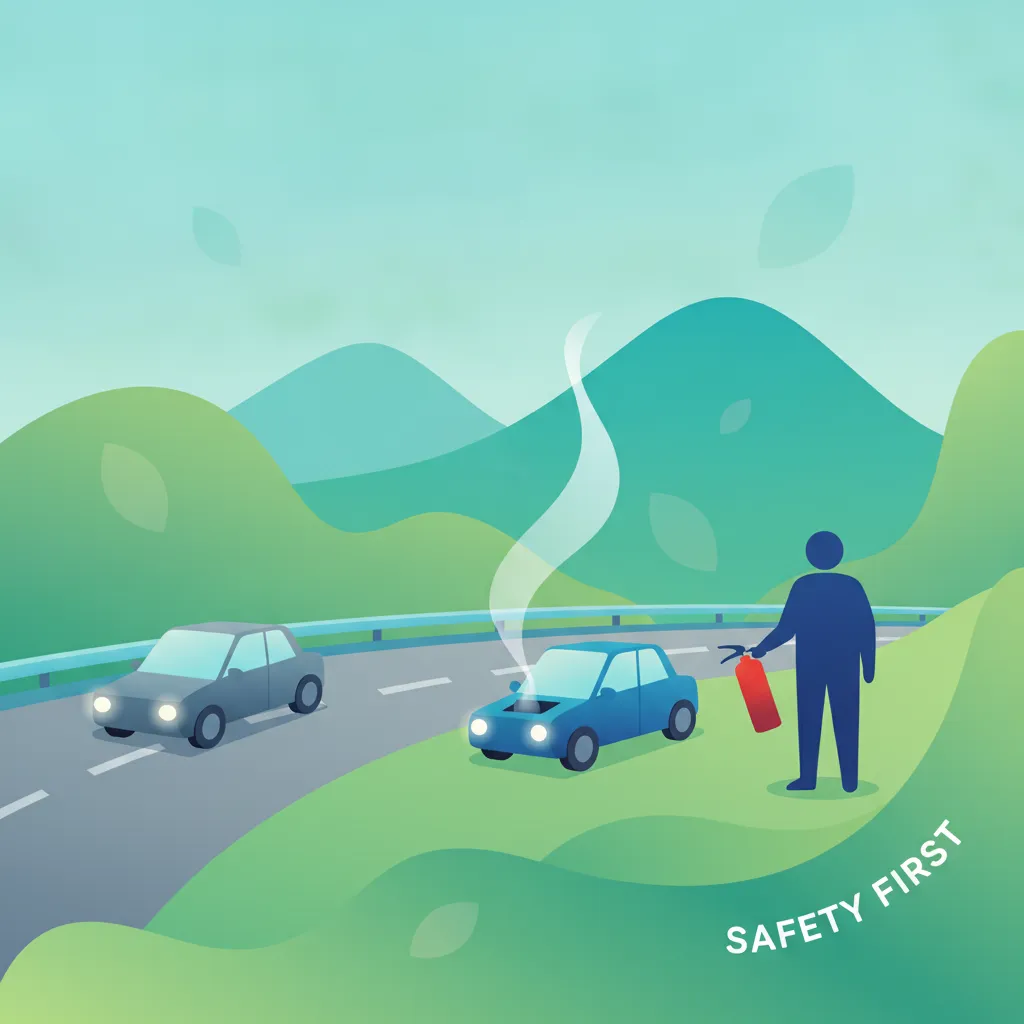
Vehicle fires can start from overheated brakes, tyres, or electrical faults. This lesson covers preventative checks and the immediate actions to take if a fire is detected: stop safely, shut off the engine, and call the emergency services. It provides guidance on using the on-board fire extinguisher for small, accessible fires but stresses that personal safety is paramount and the driver should not take unreasonable risks.
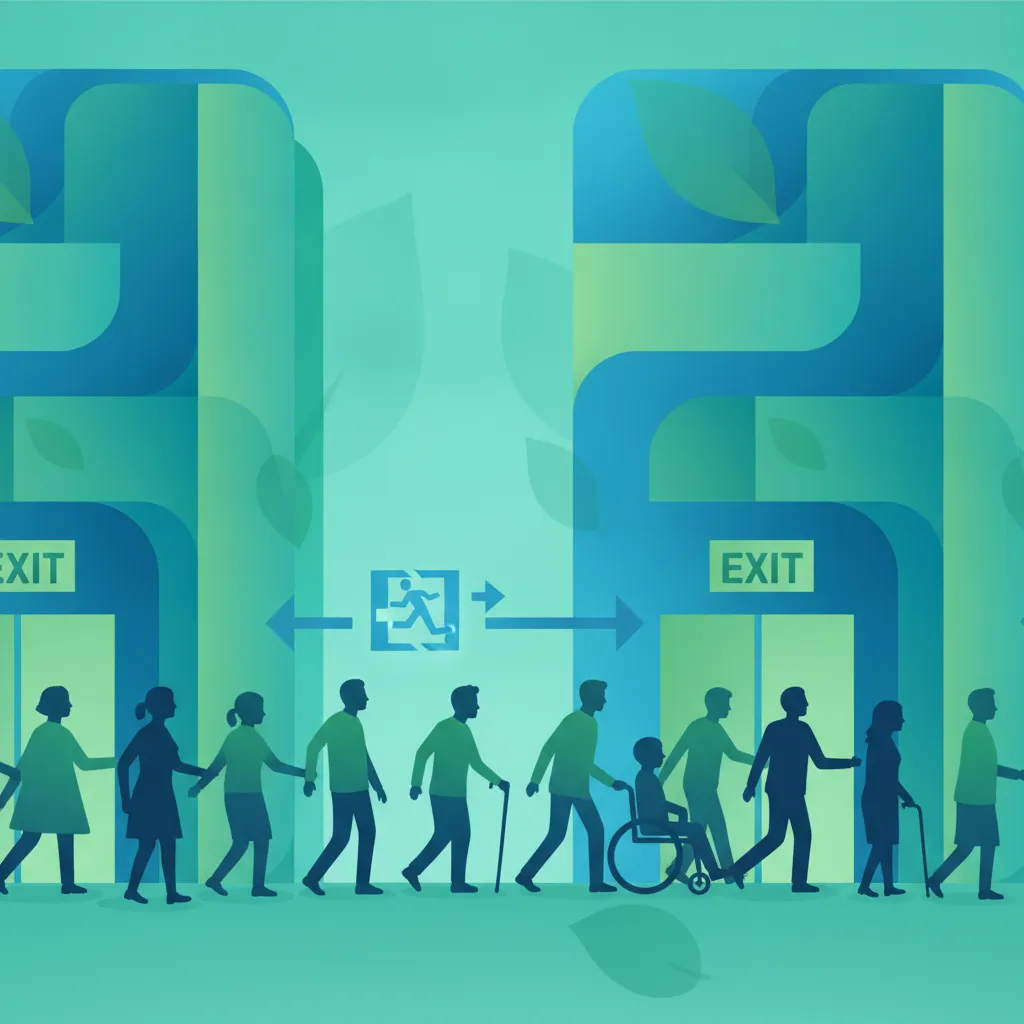
In the event of a fire or other serious danger, a driver must be able to lead an evacuation. This lesson covers the decision-making process, how to use all available emergency exits, and the importance of clear, authoritative communication to guide passengers. The goal is to move everyone to a safe location away from the vehicle and any traffic.
This lesson outlines the steps a driver should take when a passenger becomes ill or requires medical attention. It covers safely stopping the vehicle, making an emergency call to the correct number (144/112), and providing basic assistance until professional help arrives. The focus is on a calm, systematic response to a stressful situation.
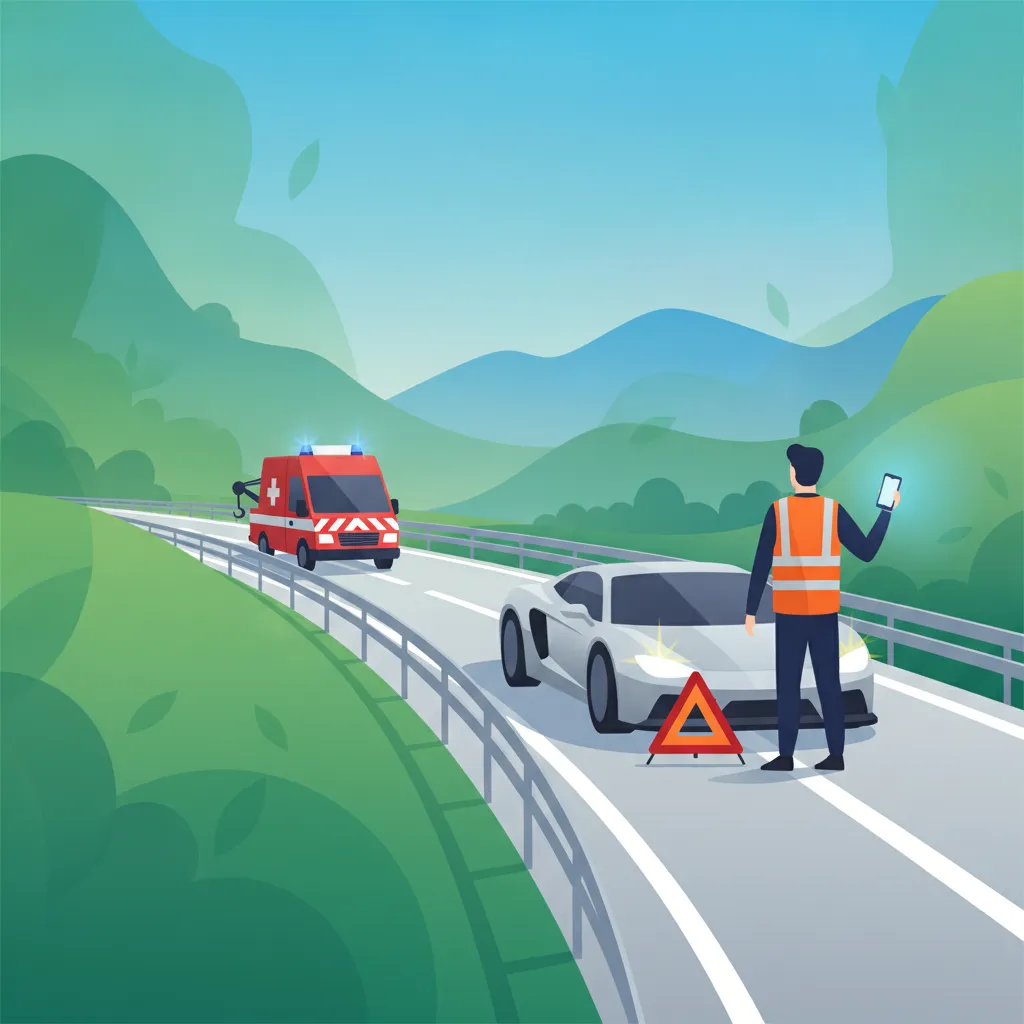
A breakdown can be a dangerous situation, especially on a busy road or motorway. This lesson provides a clear, sequential guide to follow. It includes pulling over to a safe location, activating hazard lights, placing the warning triangle, ensuring passenger safety, and contacting the appropriate services for assistance.
Transporting children carries the highest level of responsibility. This lesson covers the specific legal requirements for school buses in Switzerland, including the use of special signs and warning lights. It details the safe procedures for stopping, boarding, and alighting, and the driver's role in supervising children.
Effective communication is vital during an emergency. This lesson teaches you what critical information to provide when calling emergency services, including precise location and the nature of the incident. It also covers techniques for communicating with passengers to provide reassurance and instruction, helping to maintain calm and order.
After stopping for an emergency, making the scene safe is the top priority. This lesson details the procedure: activate hazard warning lights, put on high-visibility clothing before exiting the cab, and place the warning triangle at the correct distance behind the vehicle (at least 100m on motorways). This warns approaching traffic and creates a safer environment for the driver and emergency responders.

This lesson covers the proper use of seat belts, airbags, and child restraint systems. You will understand how seat belts protect occupants and the correct installation of child seats using ISOFIX anchors. The content also discusses situations where airbags should be deactivated and emphasizes correct restraint usage for passengers of all ages.
This lesson covers the immediate actions to take following a collision. The priorities are to prevent further incidents by securing the scene, to assess the situation for injuries, and to alert the emergency services. You will learn the correct procedures for making the area safe for yourself, your passengers, and other road users.
Understand the critical importance of passenger evacuation in fire emergencies for Swiss Category D drivers. Covers legal requirements, communication protocols, and safe evacuation steps in line with Swiss traffic law.
In the event of a fire or other serious danger, a driver must be able to lead an evacuation. This lesson covers the decision-making process, how to use all available emergency exits, and the importance of clear, authoritative communication to guide passengers. The goal is to move everyone to a safe location away from the vehicle and any traffic.
This lesson focuses on the legally required safety equipment that must be on board every passenger vehicle. You will learn how to locate and check the fire extinguisher, first aid kit, and emergency hammers. It also covers the inspection of emergency exits to ensure they are unobstructed and functional.
Vehicle fires can start from overheated brakes, tyres, or electrical faults. This lesson covers preventative checks and the immediate actions to take if a fire is detected: stop safely, shut off the engine, and call the emergency services. It provides guidance on using the on-board fire extinguisher for small, accessible fires but stresses that personal safety is paramount and the driver should not take unreasonable risks.
This lesson covers the immediate actions to take following a collision. The priorities are to prevent further incidents by securing the scene, to assess the situation for injuries, and to alert the emergency services. You will learn the correct procedures for making the area safe for yourself, your passengers, and other road users.
Transporting children carries the highest level of responsibility. This lesson covers the specific legal requirements for school buses in Switzerland, including the use of special signs and warning lights. It details the safe procedures for stopping, boarding, and alighting, and the driver's role in supervising children.
This lesson outlines the steps a driver should take when a passenger becomes ill or requires medical attention. It covers safely stopping the vehicle, making an emergency call to the correct number (144/112), and providing basic assistance until professional help arrives. The focus is on a calm, systematic response to a stressful situation.

This lesson focuses on general driving safety in areas with a high concentration of children. It stresses the importance of significantly reducing speed, being prepared for unexpected events, and scanning for children between parked cars. The driver must exhibit maximum vigilance in these high-risk environments at all times.
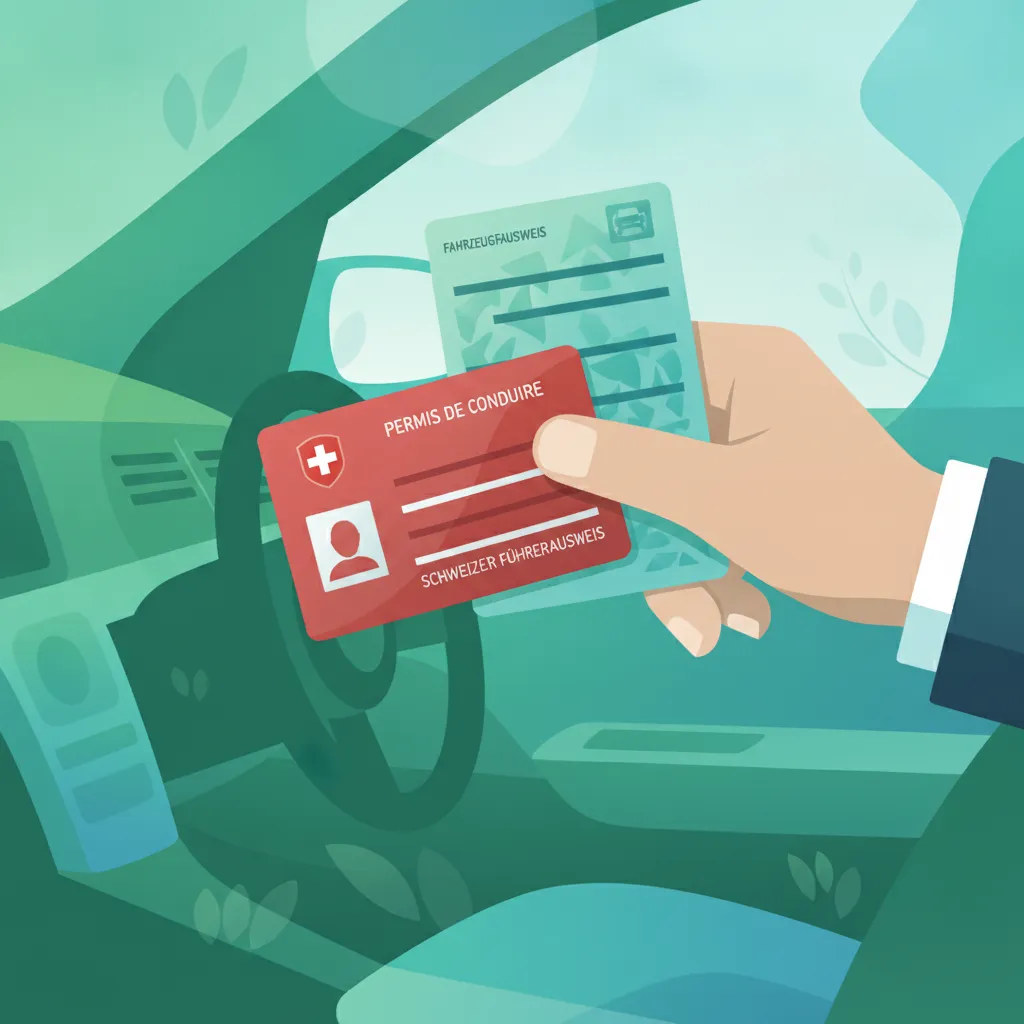
This lesson details the specific documents that must be present in the vehicle and on the driver's person during service. It covers the driving license, OACP card, vehicle registration, and tachograph records. You will learn the importance of ensuring all paperwork is current and correct to ensure legal compliance at all times.
Effective communication is vital during an emergency. This lesson teaches you what critical information to provide when calling emergency services, including precise location and the nature of the incident. It also covers techniques for communicating with passengers to provide reassurance and instruction, helping to maintain calm and order.

This lesson focuses on the heightened legal and ethical responsibilities a driver holds when carrying passengers. It explains the concept of duty of care, covering the obligation to ensure passenger safety from boarding to alighting. You will understand the potential consequences of negligence and the importance of upholding professional standards to protect every individual on board.
Find clear answers to common questions learners have about Identifying Fire Risks and Using an Extinguisher. Learn how the lesson is structured, which driving theory objectives it supports, and how it fits into the overall learning path of units and curriculum progression in Switzerland. These explanations help you understand key concepts, lesson flow, and exam focused study goals.
The absolute priority is always the safety and evacuation of your passengers. Before attempting to use an extinguisher, ensure all passengers are moved to a safe location away from the vehicle and that emergency services have been alerted.
Yes. You must be familiar with the types of extinguishers provided on your specific vehicle, as they are rated for different classes of fires, such as electrical or fuel-based. Check your vehicle manual and ensure you know the location of all on-board equipment.
The exam tests your knowledge of emergency management, the legal obligation to ensure passenger safety, and your understanding of vehicle maintenance. You may encounter situational questions regarding how to react to signs of fire while driving.
No. Never risk your life or the lives of your passengers if the fire is too large or spreading rapidly. Your primary duty is to initiate an orderly evacuation and contact emergency services; only use an extinguisher if it is safe to do so on a small, contained fire.
Pinpoint specific Swiss traffic rules, road signs, or driving situations you need to master. Use the practice search to start a focused revision session now and build confidence for your official driving theory exam.