
This lesson details the critical safety equipment required on board passenger vehicles under Swiss law. You will learn how to identify, inspect, and maintain essential items such as fire extinguishers, first aid kits, and emergency exit mechanisms, ensuring your vehicle is compliant and ready for passenger transport.
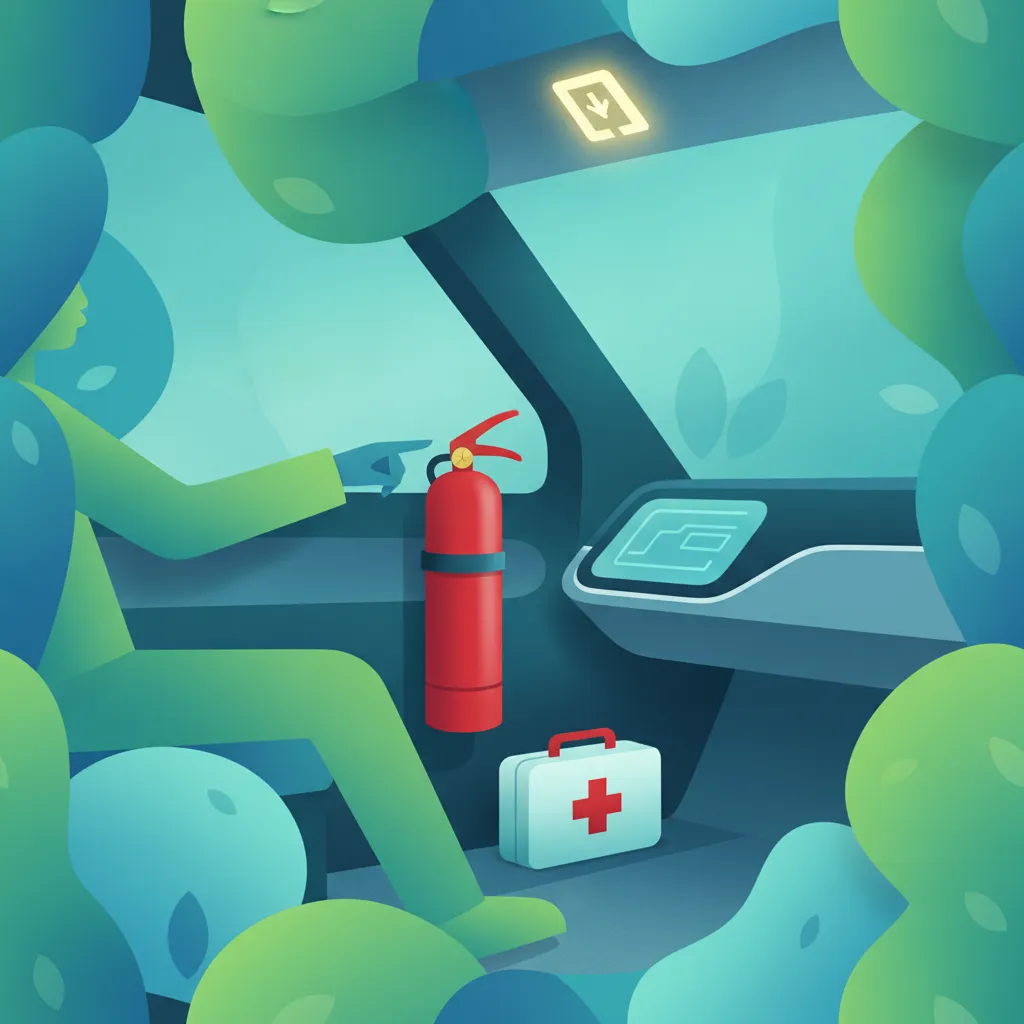
Lesson content overview
Operating a passenger vehicle, such as a bus or coach, carries significant responsibility for the safety and well-being of all occupants. Beyond safe driving practices, a professional driver in the Swiss Category D Driving License Theory Course must ensure their vehicle is equipped with essential safety gear. This lesson delves into the legally mandated on-board safety equipment, including fire extinguishers, first-aid kits, emergency exit tools, and the critical role of well-maintained emergency exits. Understanding the type, location, inspection, and proper use of these items is paramount for mitigating risks during unforeseen emergencies.
The presence and readiness of specific safety equipment on a passenger vehicle are not merely regulatory checkboxes; they are fundamental to the driver's duty of care and the overarching safety of passengers. In an emergency situation, every second counts. Having the right tools immediately accessible can make the difference between a minor incident and a serious catastrophe, potentially preventing injuries, saving lives, and limiting vehicle damage.
The core principles guiding the requirements for on-board safety equipment can be summarized as "contain, aid, and evacuate." This means equipping the vehicle with the means to suppress a fire, provide immediate medical assistance, and enable rapid and safe evacuation of all passengers. Adherence to these principles through proper equipment management empowers the driver to respond effectively to hazardous situations before they escalate, thereby significantly reducing risk.
Swiss road traffic regulations are explicit about the mandatory safety equipment for passenger vehicles falling under Category D (buses and coaches). These regulations are designed to ensure the highest standards of safety for public transport. Non-compliance with these laws can lead to severe consequences, including fines, vehicle impoundment, or even the revocation of a professional driving license. Professional drivers must be intimately familiar with the following key legislative acts:
These regulations collectively ensure that passenger vehicles are prepared for a range of potential emergencies, from fires and medical incidents to the need for rapid evacuation.
A fire extinguisher is a portable, active fire protection device used to extinguish or control small fires. It is a critical piece of equipment for professional drivers, providing the first line of defense against onboard fires.
For buses and coaches, specific types of fire extinguishers are required due to the nature of potential fires.
Swiss regulations stipulate that the fire extinguisher must be fixed in a conspicuous and easily reachable area within the bus. Typically, this means near the driver's seat or in a central aisle, ensuring the driver can access it immediately without obstruction. For buses, a minimum capacity is legally required, often around 3 kg of dry powder. Secure mounting is crucial; the extinguisher must be firmly fastened to prevent it from becoming a projectile during sudden braking or a collision.
Regular inspection of the fire extinguisher is non-negotiable.
Before Each Journey: Visually check that the extinguisher is present, securely mounted, and that the pressure gauge (if applicable) is in the green "ready" zone. Ensure the tamper seal is intact and there are no signs of physical damage or corrosion.
Annual Professional Service: At least once a year, the fire extinguisher must be inspected and serviced by a certified professional. This ensures internal components are functional, the extinguishing agent is viable, and the unit is correctly pressurized.
Expiry Dates: Pay close attention to the extinguisher's expiry date. An expired extinguisher may not function correctly, rendering it useless in an emergency. Replace or service it according to the manufacturer's guidelines or legal requirements.
In the event of a fire, knowing how to use the extinguisher quickly and effectively is vital. The common technique is known as PASS:
Pull the pin: This unlocks the operating lever. Aim low: Direct the nozzle or hose at the base of the fire, not the flames. Squeeze the lever: Depress the handle to release the extinguishing agent. Sweep side-to-side: Move the nozzle or hose back and forth across the base of the fire until it appears to be out. Continue to watch the area for re-ignition.
A first-aid kit is a collection of medical supplies required for treating injuries and medical emergencies onboard. Its purpose is to provide immediate care until professional medical help arrives, potentially stabilizing a patient or preventing a condition from worsening.
The Swiss Ordinance on First-Aid Supplies (FOA) mandates a specific list of items that must be present in a first-aid kit for passenger vehicles. While the exact list may be extensive, it typically includes:
The first-aid kit must be stored in a location that is readily accessible to the driver, ideally within reach of the driver's seat or near one of the main emergency exits. Its placement should be conspicuous and clearly marked to ensure that in a stressful situation, anyone on board can quickly locate it.
Like fire extinguishers, the first-aid kit requires diligent attention.
Before Each Trip: A visual check for completeness and integrity of contents is required. Ensure all items are present and in their original packaging, if applicable.
Regular Replenishment: Any item used must be immediately replaced.
Expiry Dates: Crucially, check the expiry dates of all sterile items, medications (if any are allowed, though generally not for public transport kits), and antiseptic wipes. Expired items can be ineffective or even harmful.
In the event of an accident where standard exits are blocked or jammed, emergency exit tools become vital. These tools allow passengers and drivers to create an escape route by breaking windows or freeing themselves from seat belts.
The primary emergency exit tool found in buses and coaches is typically a combination device:
Swiss regulations (RVR – Paragraph 12.6) mandate that an emergency hammer, complete with a seat-belt cutter, must be positioned at or near each emergency exit door. These tools must be securely mounted but also easily accessible and operable without additional tools. This ensures that in any section of the bus, an emergency exit tool is within immediate reach of passengers or the driver.
Before Each Trip: Conduct a visual inspection of all emergency hammers and seat-belt cutters.
Check for Damage: Ensure the hammerhead is intact and not chipped or cracked. Verify that the seat-belt cutter blade is present and appears sharp.
Security: Confirm that each tool is securely mounted in its designated bracket.
Replace if Damaged: Any tool that is damaged, missing, or appears non-functional must be immediately replaced.
Emergency exits are designated doors, windows, or hatches specifically designed to allow rapid egress of passengers in an emergency. Their functionality and accessibility are paramount for safe evacuation.
Buses and coaches are equipped with multiple types of emergency exits:
One of the most critical aspects of emergency exit safety is ensuring they are completely free from obstructions at all times. The Swiss Ordinance on Emergency Exits (EOE) explicitly states that emergency exits must be clear of luggage, seats, or any other objects that could impede their opening or block the evacuation path. Even small items can cause delays and panic during an emergency. The driver is responsible for conducting regular checks to ensure all aisles and exit areas are clear before and during a journey.
Emergency exits must be clearly and conspicuously marked to be easily identified, even in low-visibility conditions such as smoke, fog, or darkness.
Emergency exits must not only be clear and marked but also fully functional.
Daily Visual Check: Before each trip, the driver must visually inspect all emergency exits.
Operability from Inside: Ensure all emergency exits are operable from the inside without requiring additional tools, except for specific window-breaking tools where appropriate. This means checking that latches, handles, and release mechanisms move freely.
Hinges and Latches: Regularly inspect hinges and latches for signs of wear, corrosion, or damage that could prevent smooth operation.
Roof Hatch Operation: Test roof hatches to ensure they can be opened and secured in an emergency.
Signage Functionality: Verify that all illuminated exit signs are working correctly, especially during night operations or in low-light conditions.
The driver plays a critical role in ensuring all safety equipment is present and functional. This responsibility integrates directly with the daily walk-around checks covered in Lesson 2.4.
Failure to comply with safety equipment regulations not only poses a severe risk to passengers but also carries legal repercussions for the driver and transport company.
The effectiveness and checking requirements for safety equipment can be influenced by various operational contexts:
The rigorous management of on-board safety equipment is a cornerstone of professional passenger transport. By understanding and diligently applying the following principles, Category D drivers ensure the highest level of safety for their passengers:
By mastering these elements, professional drivers are not just meeting regulatory demands but are actively upholding their crucial role in safeguarding lives and ensuring the safest possible journey for all passengers.
Swiss Category D drivers must ensure their vehicles carry legally mandated safety equipment including a dry powder fire extinguisher (minimum 3 kg), a fully stocked first-aid kit conforming to FOA specifications, and emergency hammers with seat-belt cutters at each exit. Regular inspections using systematic checklists are required: daily visual checks before each trip and annual professional servicing for fire extinguishers. Emergency exits must always remain unobstructed, clearly marked with illuminated signage, and fully functional. The driver's duty of care encompasses pre-trip safety equipment verification, ensuring readiness for containment, aid, and evacuation when emergencies arise.
A short set of high-value points that capture the most important learning from this lesson.
Fire extinguishers, first-aid kits, and emergency hammers are legally mandatory for all Swiss Category D passenger vehicles and non-compliance carries severe penalties.
The fire extinguisher must be a dry powder ABC type with minimum 3 kg capacity, securely mounted within easy reach of the driver.
An emergency hammer with an integrated seat-belt cutter must be positioned at each emergency exit, operable without additional tools.
Emergency exits must remain completely unobstructed and equipped with illuminated signage at all times.
Daily pre-trip inspections of all safety equipment are mandatory for every journey.
Explore all units and lessons included in this driving theory course.
The core safety principle is Contain, Aid, Evacuate — suppress fire, provide medical help, enable rapid passenger egress.
Remember PASS: Pull the pin, Aim low at the base, Squeeze the lever, Sweep side-to-side.
Swiss VEO Article 7 specifies fire extinguisher type and capacity; Swiss FOA Article 4 defines first-aid kit contents; Swiss RVR Paragraph 12.6 mandates emergency hammers.
First-aid kit contents and fire extinguishers both have expiry dates that must be checked and managed diligently.
Illuminated emergency exit signs must function correctly, especially during night operations or low-visibility conditions.
Using an expired fire extinguisher or failing to check the pressure gauge, which may result in equipment failure during an emergency.
Obstructing emergency exits with luggage or personal items, preventing or delaying safe evacuation.
Missing or damaged emergency hammers — the hammerhead cracked or seat-belt cutter blade missing from one or more exits.
First-aid kit left incomplete after previous use without immediate replenishment, or containing expired sterile supplies.
Improper equipment placement, such as storing extinguishers or first-aid kits in locked compartments or luggage holds where they are inaccessible.
Lesson content overview
A short set of high-value points that capture the most important learning from this lesson.
Fire extinguishers, first-aid kits, and emergency hammers are legally mandatory for all Swiss Category D passenger vehicles and non-compliance carries severe penalties.
The fire extinguisher must be a dry powder ABC type with minimum 3 kg capacity, securely mounted within easy reach of the driver.
An emergency hammer with an integrated seat-belt cutter must be positioned at each emergency exit, operable without additional tools.
Emergency exits must remain completely unobstructed and equipped with illuminated signage at all times.
Daily pre-trip inspections of all safety equipment are mandatory for every journey.
Explore all units and lessons included in this driving theory course.
The core safety principle is Contain, Aid, Evacuate — suppress fire, provide medical help, enable rapid passenger egress.
Remember PASS: Pull the pin, Aim low at the base, Squeeze the lever, Sweep side-to-side.
Swiss VEO Article 7 specifies fire extinguisher type and capacity; Swiss FOA Article 4 defines first-aid kit contents; Swiss RVR Paragraph 12.6 mandates emergency hammers.
First-aid kit contents and fire extinguishers both have expiry dates that must be checked and managed diligently.
Illuminated emergency exit signs must function correctly, especially during night operations or low-visibility conditions.
Using an expired fire extinguisher or failing to check the pressure gauge, which may result in equipment failure during an emergency.
Obstructing emergency exits with luggage or personal items, preventing or delaying safe evacuation.
Missing or damaged emergency hammers — the hammerhead cracked or seat-belt cutter blade missing from one or more exits.
First-aid kit left incomplete after previous use without immediate replenishment, or containing expired sterile supplies.
Improper equipment placement, such as storing extinguishers or first-aid kits in locked compartments or luggage holds where they are inaccessible.
Explore search topics learners often look for when studying On-Board Safety Equipment: Fire Extinguishers, First Aid, and Emergency Exits. These topics reflect common questions about road rules, driving situations, safety guidance, and lesson level theory preparation for learners in Switzerland.
Browse additional driving theory lessons that cover connected traffic rules, road signs, and common driving situations related to this topic. Improve your understanding of how different rules interact across everyday traffic scenarios.
Learn the essential daily and periodic inspection procedures for mandatory on-board safety equipment on Swiss Category D buses. Ensure fire extinguishers, first-aid kits, and emergency exits are always functional and accessible for passenger safety.
A fire on a passenger vehicle is a critical emergency. This lesson covers common fire risks and preventative checks. It provides clear instructions on if, when, and how to tackle a small fire with an on-board extinguisher, always emphasizing that passenger and driver safety is the absolute first priority.

The condition of tyres and wheels is paramount to safety. This lesson details how to check tyre pressures, tread depth, and sidewalls for any damage or defects. You will also learn to inspect wheel nuts for security and look for signs of issues with the suspension system.

A daily walk-around check is a legal requirement and a critical safety routine. This lesson teaches a logical sequence for inspecting the exterior and interior of the bus. You will learn what to look for, from fluid leaks and body damage to the condition of passenger areas, ensuring the vehicle is safe before starting service.
In the event of a fire or other serious danger, a driver must be able to lead an evacuation. This lesson covers the decision-making process, how to use all available emergency exits, and the importance of clear, authoritative communication to guide passengers. The goal is to move everyone to a safe location away from the vehicle and any traffic.

Being seen and being able to see are critical for safety. This lesson covers the systematic check of all exterior lights, including headlights, brake lights, and indicators. It also emphasizes the importance of ensuring all mirrors and camera lenses are clean, undamaged, and properly adjusted for maximum visibility.
Unsecured items can become dangerous projectiles in the event of a sudden stop or collision. This lesson covers the driver's responsibility for overseeing the secure stowage of passenger belongings. It includes rules for using luggage compartments on coaches and designated spaces for prams and mobility aids on city buses.
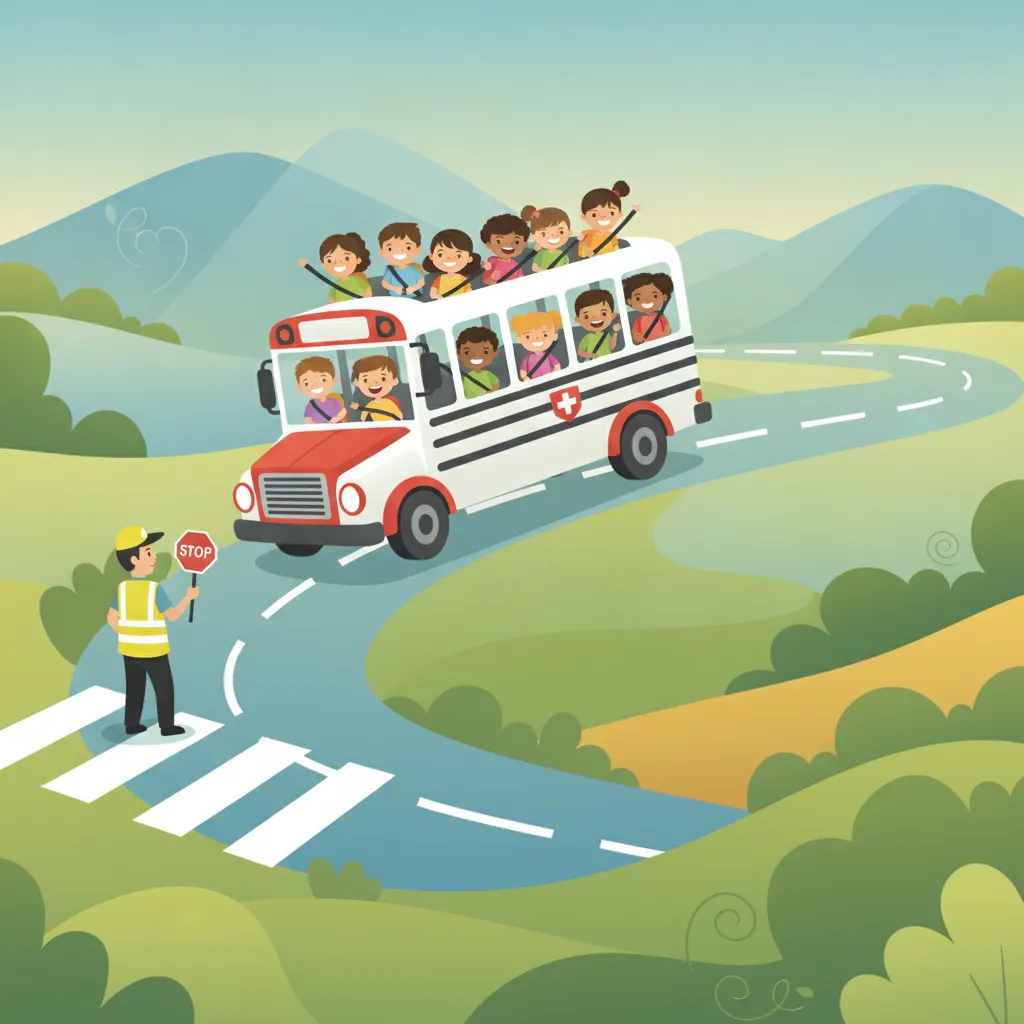
Transporting children carries the highest level of responsibility. This lesson covers the specific legal requirements for school buses in Switzerland, including the use of special signs and warning lights. It details the safe procedures for stopping, boarding, and alighting, and the driver's role in supervising children.

Departing from a bus stop is a high-risk manoeuvre. This lesson details the critical sequence of actions: checking all passengers are clear of the doors, performing a comprehensive mirror and blind spot check, signalling, and waiting for a safe gap in traffic. This systematic approach is essential for preventing collisions with overtaking vehicles, cyclists, or pedestrians.
This lesson provides step-by-step instructions on how to safely deploy, operate, and stow wheelchair ramps and lifts. It covers pre-operation checks, correct positioning of the vehicle, and the procedures for safely securing a wheelchair inside the bus. Proper use of this equipment is vital for the safety of both the passenger and the driver.
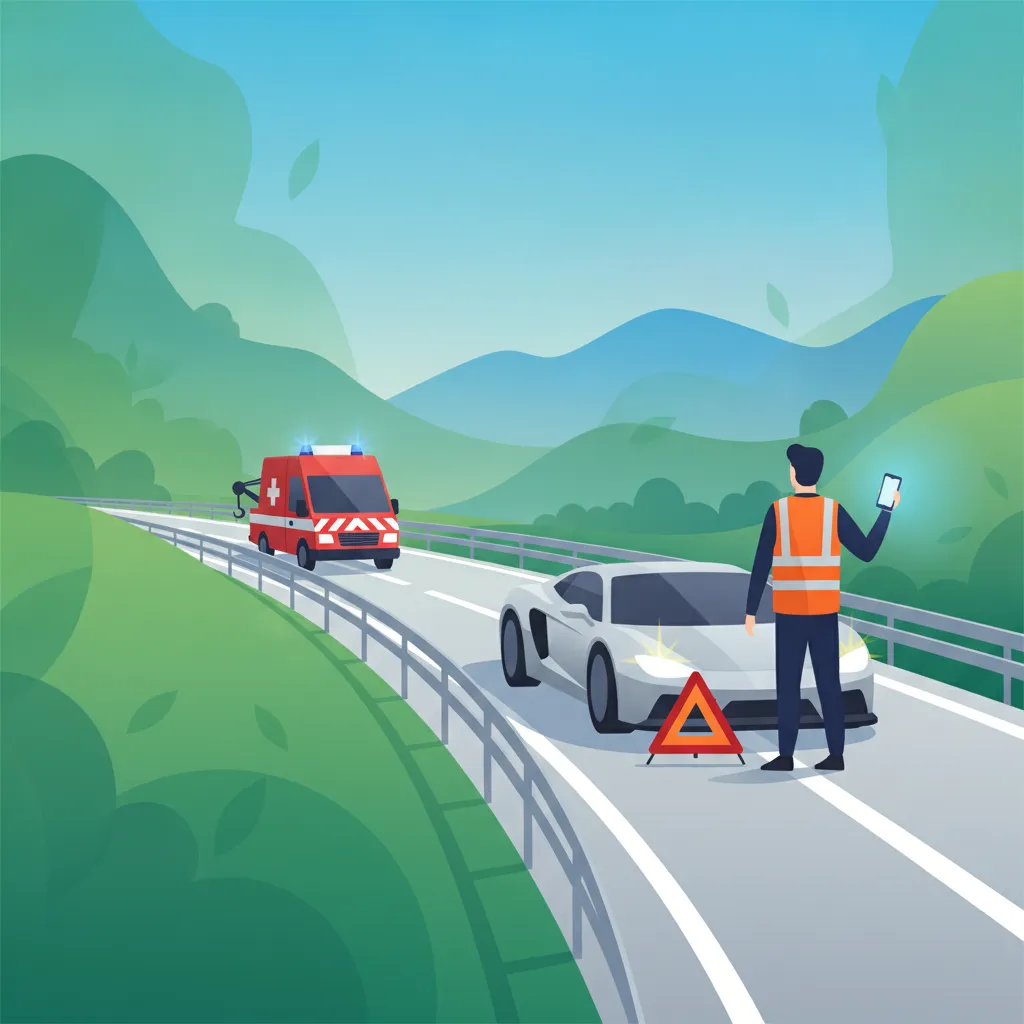
A breakdown can be a dangerous situation, especially on a busy road or motorway. This lesson provides a clear, sequential guide to follow. It includes pulling over to a safe location, activating hazard lights, placing the warning triangle, ensuring passenger safety, and contacting the appropriate services for assistance.
Understand critical emergency preparedness and response strategies for Swiss Category D drivers. This lesson covers handling onboard fires, medical emergencies, and effective passenger evacuation using safety equipment.
In the event of a fire or other serious danger, a driver must be able to lead an evacuation. This lesson covers the decision-making process, how to use all available emergency exits, and the importance of clear, authoritative communication to guide passengers. The goal is to move everyone to a safe location away from the vehicle and any traffic.
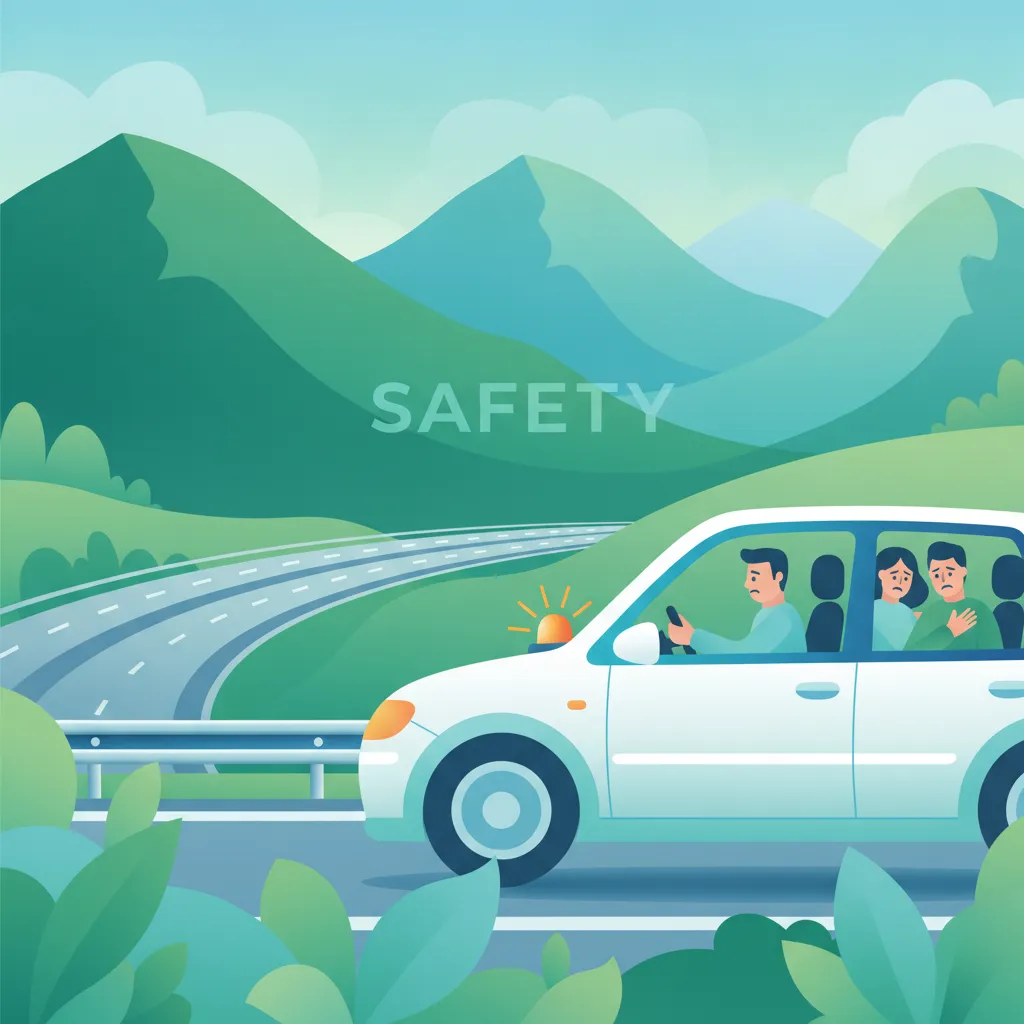
This lesson outlines the steps a driver should take when a passenger becomes ill or requires medical attention. It covers safely stopping the vehicle, making an emergency call to the correct number (144/112), and providing basic assistance until professional help arrives. The focus is on a calm, systematic response to a stressful situation.
A fire on a passenger vehicle is a critical emergency. This lesson covers common fire risks and preventative checks. It provides clear instructions on if, when, and how to tackle a small fire with an on-board extinguisher, always emphasizing that passenger and driver safety is the absolute first priority.
Effective communication is vital during an emergency. This lesson teaches you what critical information to provide when calling emergency services, including precise location and the nature of the incident. It also covers techniques for communicating with passengers to provide reassurance and instruction, helping to maintain calm and order.
This lesson covers the immediate actions to take following a collision. The priorities are to prevent further incidents by securing the scene, to assess the situation for injuries, and to alert the emergency services. You will learn the correct procedures for making the area safe for yourself, your passengers, and other road users.
This lesson covers essential first aid skills and the procedures for reporting accidents in Switzerland. It details the use of emergency numbers 112 and 144, the correct placement of warning triangles, and the use of high-visibility vests. The content outlines the steps for securing an accident scene, providing assistance, and coordinating with emergency services.
Vehicle fires can start from overheated brakes, tyres, or electrical faults. This lesson covers preventative checks and the immediate actions to take if a fire is detected: stop safely, shut off the engine, and call the emergency services. It provides guidance on using the on-board fire extinguisher for small, accessible fires but stresses that personal safety is paramount and the driver should not take unreasonable risks.
After stopping for an emergency, making the scene safe is the top priority. This lesson details the procedure: activate hazard warning lights, put on high-visibility clothing before exiting the cab, and place the warning triangle at the correct distance behind the vehicle (at least 100m on motorways). This warns approaching traffic and creates a safer environment for the driver and emergency responders.
Unsecured items can become dangerous projectiles in the event of a sudden stop or collision. This lesson covers the driver's responsibility for overseeing the secure stowage of passenger belongings. It includes rules for using luggage compartments on coaches and designated spaces for prams and mobility aids on city buses.
A breakdown can be a dangerous situation, especially on a busy road or motorway. This lesson provides a clear, sequential guide to follow. It includes pulling over to a safe location, activating hazard lights, placing the warning triangle, ensuring passenger safety, and contacting the appropriate services for assistance.
Find clear answers to common questions learners have about On-Board Safety Equipment: Fire Extinguishers, First Aid, and Emergency Exits. Learn how the lesson is structured, which driving theory objectives it supports, and how it fits into the overall learning path of units and curriculum progression in Switzerland. These explanations help you understand key concepts, lesson flow, and exam focused study goals.
Fire extinguishers must be inspected regularly, usually following the manufacturer’s schedule and official Swiss standards. You should check the pressure gauge daily during your walk-around to ensure it remains in the operational zone.
You must verify that all emergency exits are clearly marked, easily accessible, and free of any obstructions such as luggage or passenger belongings. The emergency hammers must also be present and secured in their designated holders.
Yes, the first aid kit must be easily accessible to the driver and passengers in the event of an emergency. It must be clearly identified with standard signage and kept fully stocked with non-expired materials.
As a professional driver, you are legally responsible for the safety of your passengers. Exam questions verify that you can identify essential safety tools and understand their role in emergency prevention and passenger protection.
Pinpoint specific Swiss traffic rules, road signs, or driving situations you need to master. Use the practice search to start a focused revision session now and build confidence for your official driving theory exam.