
This lesson provides essential training on how to communicate effectively during emergencies, a critical requirement for professional passenger transport drivers. You will learn the specific procedures for contacting Swiss emergency services and the best practices for maintaining order and reassurance among passengers in high-stress situations. This knowledge is fundamental for passing the Category D theory exam and ensuring safety on the road.
Lesson content overview
As a professional driver undertaking the Swiss Category D Driving License Theory Course, you are entrusted with the safety and well-being of numerous passengers. In an emergency, effective communication becomes your most critical tool, alongside your driving skills. This lesson provides a comprehensive guide on how to communicate with emergency services and your passengers during a crisis, ensuring timely assistance and maintaining order. Mastery of these protocols is fundamental to managing incidents, reducing risks, and fulfilling your duty of care.
Effective crisis communication is a multifaceted skill, integrating legal obligations, human psychological factors, and practical operational considerations. It is a control action, much like braking or steering, designed to mitigate risks after an incident has occurred. Understanding the underlying principles ensures you act decisively and correctly when every second counts.
Remember that clear and precise communication in an emergency can significantly reduce response times and improve outcomes for all involved. Practice mentally rehearsing these procedures.
The swift notification of emergency services is paramount in any incident that endangers life, health, or the operational integrity of your vehicle. Delaying this notification can critically impede the rapid dispatch of appropriate assistance, potentially worsening injuries or escalating the incident.
Simultaneously, providing accurate and concise information is vital. Emergency services rely on precise details to understand the situation, locate you quickly, and send the correct resources (e.g., fire brigade, ambulance, police, or rescue units). Vague or incorrect information can lead to significant delays and misallocation of resources, jeopardizing lives.
Several core principles underpin effective communication during a bus or coach emergency:
When an incident occurs, your immediate priority after securing the vehicle and ensuring initial safety is to contact emergency services. Knowing the correct numbers and what information to provide is crucial.
In Switzerland, the primary emergency numbers are:
In most situations, calling 117 (Police) is recommended first as they can coordinate all necessary services.
Dial the appropriate emergency number. For a general incident, start with 117.
State the nature of the emergency clearly and concisely. For example, "We have a bus accident," or "A passenger requires urgent medical attention."
Provide your precise location. This is the most critical piece of information.
Describe the incident in more detail. Include any immediate hazards and the number of people involved.
Give your contact information (phone number) and identify yourself as the driver.
Follow any instructions given by the dispatcher. Do not hang up until they tell you to do so.
Vague descriptions like "somewhere on the road" are unacceptable and dangerous. Emergency responders need an exact location to reach you without delay.
After location, a clear description of the incident allows dispatchers to send the appropriate emergency units (e.g., an ambulance for injuries, a fire truck for a fire, or police for traffic control).
Avoid over-exaggeration or downplaying the situation. Stick to factual observations. Dispatchers are trained to ask clarifying questions.
During a crisis, your passengers will look to you for guidance and reassurance. Clear, calm, and consistent communication from the driver is essential to prevent panic, ensure cooperation, and facilitate safe procedures.
A structured approach to communicating with passengers helps maintain order and control.
Maintain a Calm Demeanour: Your tone of voice and body language are critical. A calm driver instills confidence and reduces passenger anxiety.
Use the Public Address (PA) System: This is the most effective way to address all passengers simultaneously and clearly. Ensure it is working and speak slowly and clearly.
Announce the Situation (Briefly): Provide a concise, factual summary of what has happened. Avoid technical jargon or alarming details. For example, "Ladies and gentlemen, we have experienced a minor mechanical issue."
Provide Clear Instructions: Tell passengers exactly what you need them to do. Examples: "Please remain seated," "Fasten your seatbelts," "Prepare for evacuation through the front door."
Offer Reassurance: Inform them of the steps you are taking (e.g., "Emergency services have been contacted and are on their way").
Repeat Instructions and Updates: In a stressful situation, people may not absorb information the first time. Periodically repeat key instructions and provide updates as the situation evolves.
Address Special Needs: Be mindful of passengers with reduced mobility, hearing impairments, or young children. Ensure they understand instructions and receive necessary assistance.
Verbal instructions should often be supplemented with visual and auditory signals to enhance understanding and message reliability.
Redundant communication (e.g., verbal instructions via PA system and visual cues like illuminated emergency exit signs) significantly improves comprehension and compliance in high-stress situations.
As a professional Category D driver, you have specific legal obligations regarding emergency communication and passenger safety. Non-compliance can lead to serious legal consequences.
Understanding common pitfalls helps prevent them in real-world scenarios.
The specifics of your communication strategy may need to adapt based on the circumstances of the incident.
Let's consider practical examples of effective crisis communication.
Effective communication is the cornerstone of managing any emergency as a professional bus or coach driver in Switzerland.
This lesson teaches essential emergency communication protocols for professional Swiss bus drivers, covering how to contact emergency services with precise location and incident details, manage passenger anxiety through calm PA announcements, and fulfill legal reporting obligations. Key procedures include the step-by-step emergency call process, the five core communication principles, and passenger communication protocols emphasizing repetition and reassurance. The content also addresses contextual variations based on road type, weather, and passenger vulnerabilities, reinforced by three practical scenarios demonstrating both correct and incorrect responses. Mastery of these communication skills ensures rapid emergency response, prevents secondary incidents, and maintains passenger safety and order during crises.
A short set of high-value points that capture the most important learning from this lesson.
Emergency communication follows five core principles: immediate notification, accurate location reporting, clear incident description, passenger management, and standardized signals.
When calling Swiss emergency services, always provide precise location using kilometer markers, road numbers, or landmarks to minimize response time.
Use the PA system to deliver calm, clear, and concise instructions to passengers, repeating key information as stress impairs comprehension.
Activate hazard lights immediately upon any unexpected stop to alert other road users and reduce secondary collision risk.
Adapt your communication strategy based on road type, weather conditions, time of day, and passenger vulnerabilities.
Explore all units and lessons included in this driving theory course.
Swiss emergency numbers: 117 (Police), 118 (Fire), 144 (Ambulance), 112 (European general emergency).
Never hang up until the dispatcher instructs you to do so; follow their guidance precisely.
Hazard lights are mandatory when stopped unexpectedly on a public road due to an emergency.
Redundant communication using verbal, visual, and auditory signals significantly improves passenger comprehension in high-stress situations.
Legal duty of care requires keeping passengers informed with clear, calm instructions during any emergency.
Delaying the call to emergency services hoping the problem resolves itself, which can critically endanger lives.
Providing vague location information like 'near the big tree' instead of specific markers, causing significant response delays.
Failing to activate hazard lights immediately, especially on high-speed roads where secondary collisions are a serious risk.
Panicking and shouting contradictory instructions, which confuses passengers and can cause chaos during evacuation.
Continuing to drive with a critically ill passenger instead of stopping and calling emergency services immediately.
Lesson content overview
A short set of high-value points that capture the most important learning from this lesson.
Emergency communication follows five core principles: immediate notification, accurate location reporting, clear incident description, passenger management, and standardized signals.
When calling Swiss emergency services, always provide precise location using kilometer markers, road numbers, or landmarks to minimize response time.
Use the PA system to deliver calm, clear, and concise instructions to passengers, repeating key information as stress impairs comprehension.
Activate hazard lights immediately upon any unexpected stop to alert other road users and reduce secondary collision risk.
Adapt your communication strategy based on road type, weather conditions, time of day, and passenger vulnerabilities.
Explore all units and lessons included in this driving theory course.
Swiss emergency numbers: 117 (Police), 118 (Fire), 144 (Ambulance), 112 (European general emergency).
Never hang up until the dispatcher instructs you to do so; follow their guidance precisely.
Hazard lights are mandatory when stopped unexpectedly on a public road due to an emergency.
Redundant communication using verbal, visual, and auditory signals significantly improves passenger comprehension in high-stress situations.
Legal duty of care requires keeping passengers informed with clear, calm instructions during any emergency.
Delaying the call to emergency services hoping the problem resolves itself, which can critically endanger lives.
Providing vague location information like 'near the big tree' instead of specific markers, causing significant response delays.
Failing to activate hazard lights immediately, especially on high-speed roads where secondary collisions are a serious risk.
Panicking and shouting contradictory instructions, which confuses passengers and can cause chaos during evacuation.
Continuing to drive with a critically ill passenger instead of stopping and calling emergency services immediately.
Explore search topics learners often look for when studying Communicating with Emergency Services and Passengers During a Crisis. These topics reflect common questions about road rules, driving situations, safety guidance, and lesson level theory preparation for learners in Switzerland.
Browse additional driving theory lessons that cover connected traffic rules, road signs, and common driving situations related to this topic. Improve your understanding of how different rules interact across everyday traffic scenarios.
Master essential emergency communication protocols for Swiss Category D drivers. Learn how to accurately report incidents to emergency services and effectively manage passengers to maintain calm and order during a crisis.
This lesson outlines the steps a driver should take when a passenger becomes ill or requires medical attention. It covers safely stopping the vehicle, making an emergency call to the correct number (144/112), and providing basic assistance until professional help arrives. The focus is on a calm, systematic response to a stressful situation.
In the event of a fire or other serious danger, a driver must be able to lead an evacuation. This lesson covers the decision-making process, how to use all available emergency exits, and the importance of clear, authoritative communication to guide passengers. The goal is to move everyone to a safe location away from the vehicle and any traffic.
This lesson covers the immediate actions to take following a collision. The priorities are to prevent further incidents by securing the scene, to assess the situation for injuries, and to alert the emergency services. You will learn the correct procedures for making the area safe for yourself, your passengers, and other road users.
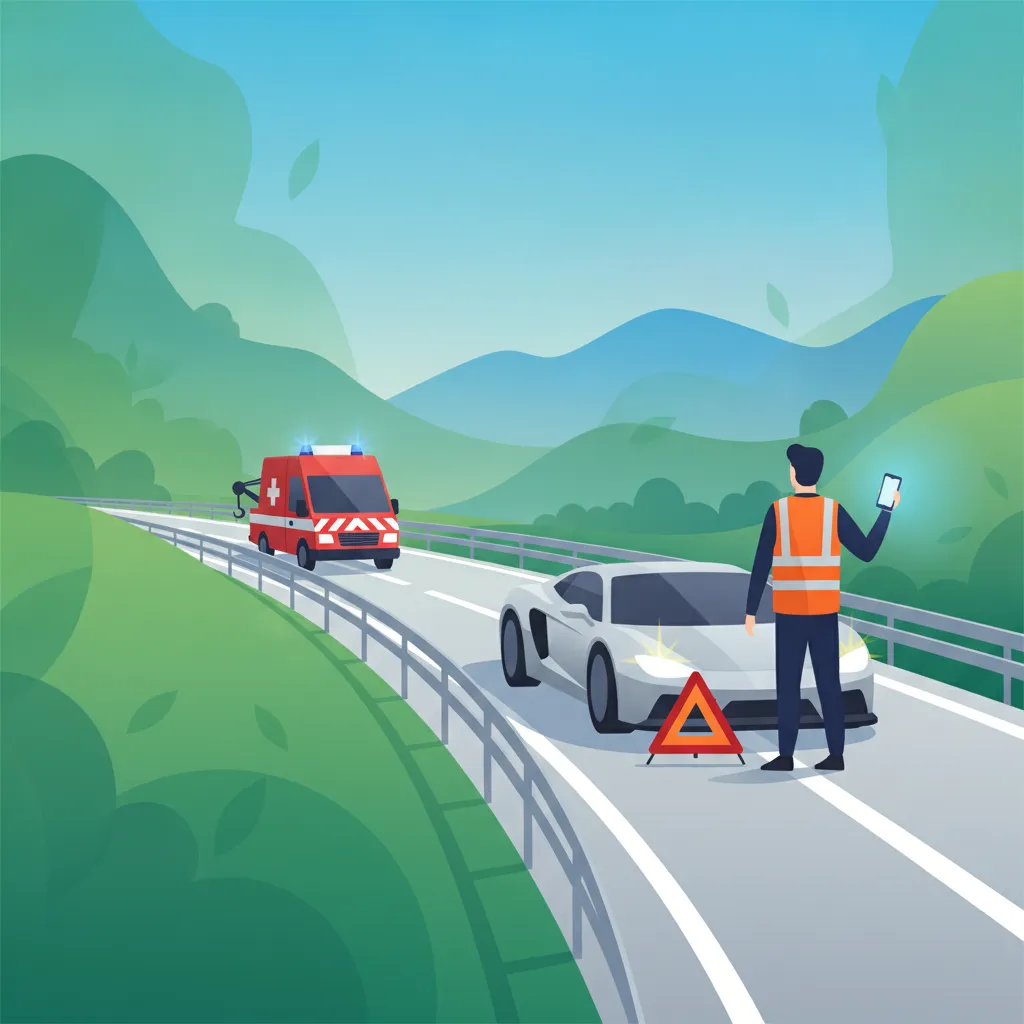
A breakdown can be a dangerous situation, especially on a busy road or motorway. This lesson provides a clear, sequential guide to follow. It includes pulling over to a safe location, activating hazard lights, placing the warning triangle, ensuring passenger safety, and contacting the appropriate services for assistance.

Drivers may occasionally face difficult or disruptive passengers. This lesson introduces strategies for de-escalating potential conflicts through calm communication and professional conduct. The focus is on maintaining safety for all passengers and the driver, and knowing when and how to seek external assistance.

A fire on a passenger vehicle is a critical emergency. This lesson covers common fire risks and preventative checks. It provides clear instructions on if, when, and how to tackle a small fire with an on-board extinguisher, always emphasizing that passenger and driver safety is the absolute first priority.
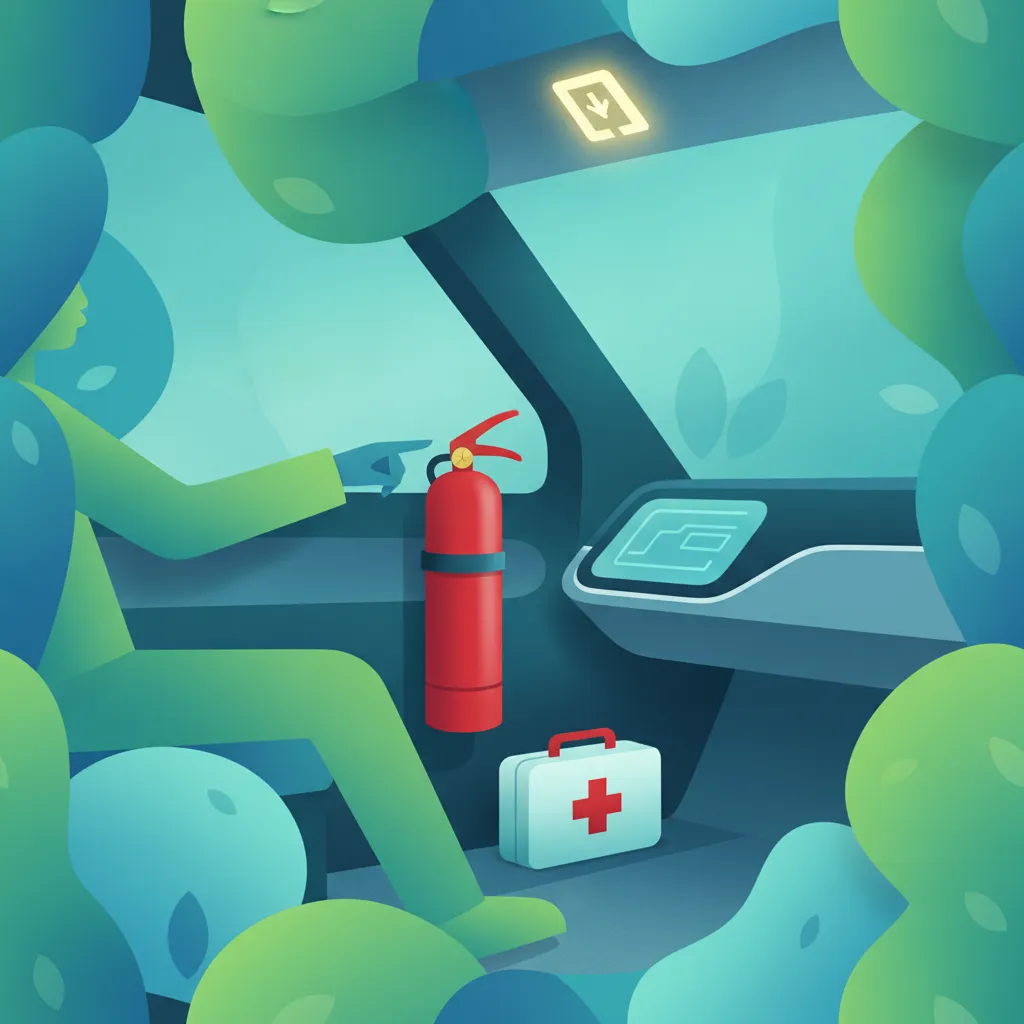
This lesson focuses on the legally required safety equipment that must be on board every passenger vehicle. You will learn how to locate and check the fire extinguisher, first aid kit, and emergency hammers. It also covers the inspection of emergency exits to ensure they are unobstructed and functional.
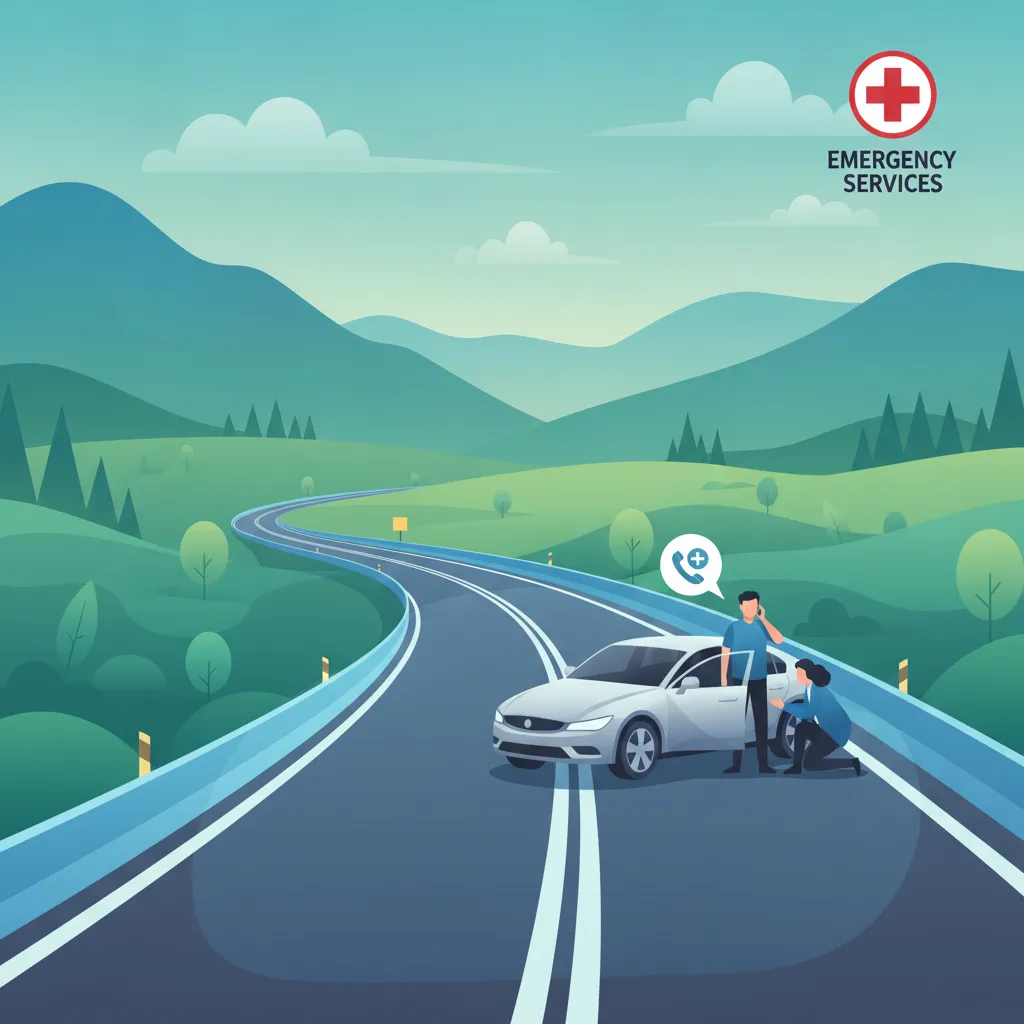
This lesson covers essential first aid skills and the procedures for reporting accidents in Switzerland. It details the use of emergency numbers 112 and 144, the correct placement of warning triangles, and the use of high-visibility vests. The content outlines the steps for securing an accident scene, providing assistance, and coordinating with emergency services.

Departing from a bus stop is a high-risk manoeuvre. This lesson details the critical sequence of actions: checking all passengers are clear of the doors, performing a comprehensive mirror and blind spot check, signalling, and waiting for a safe gap in traffic. This systematic approach is essential for preventing collisions with overtaking vehicles, cyclists, or pedestrians.
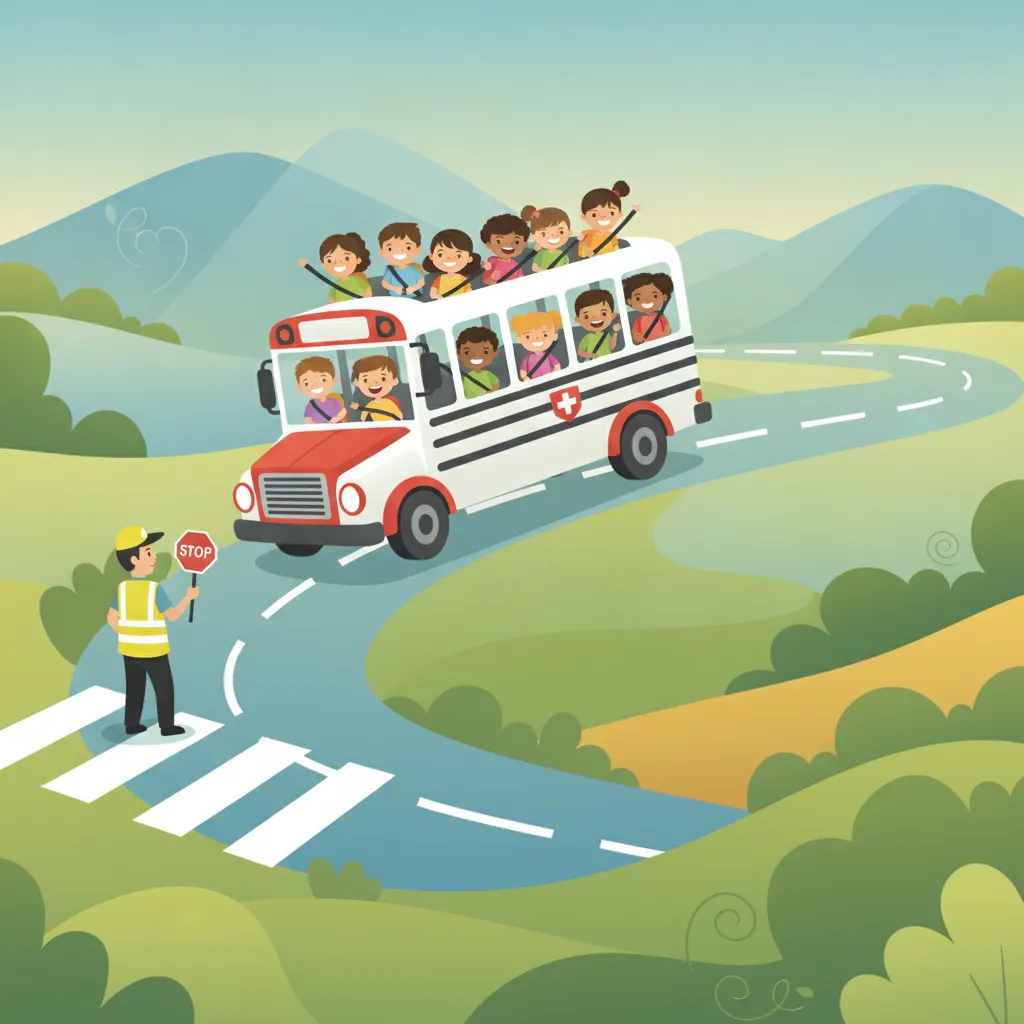
Transporting children carries the highest level of responsibility. This lesson covers the specific legal requirements for school buses in Switzerland, including the use of special signs and warning lights. It details the safe procedures for stopping, boarding, and alighting, and the driver's role in supervising children.
Develop vital skills in communicating with passengers during emergencies. This lesson focuses on providing calm reassurance, clear instructions, and managing passenger behaviour to ensure safety and order in critical situations.

Clear communication is key to a smooth and pleasant passenger experience. This lesson covers best practices for making announcements, answering questions, and providing information about the route or delays. It also introduces basic techniques for calmly managing difficult situations and maintaining a professional demeanor with all passengers.
This lesson outlines the steps a driver should take when a passenger becomes ill or requires medical attention. It covers safely stopping the vehicle, making an emergency call to the correct number (144/112), and providing basic assistance until professional help arrives. The focus is on a calm, systematic response to a stressful situation.
Drivers may occasionally face difficult or disruptive passengers. This lesson introduces strategies for de-escalating potential conflicts through calm communication and professional conduct. The focus is on maintaining safety for all passengers and the driver, and knowing when and how to seek external assistance.
In the event of a fire or other serious danger, a driver must be able to lead an evacuation. This lesson covers the decision-making process, how to use all available emergency exits, and the importance of clear, authoritative communication to guide passengers. The goal is to move everyone to a safe location away from the vehicle and any traffic.
The driver must ensure all boarding passengers are safely on board and stable before moving off. This lesson covers managing the flow of passengers, dealing with fares or tickets efficiently, and encouraging people to move away from the doorway. The primary goal is to prevent falls that can occur if the vehicle moves prematurely.

Standing passengers are particularly vulnerable to sudden vehicle movements. This lesson covers the driver's responsibility to adapt their driving style when people are standing. It emphasizes even smoother control, heightened awareness, and clear communication to minimize the risk of falls and injuries.
This lesson covers the immediate actions to take following a collision. The priorities are to prevent further incidents by securing the scene, to assess the situation for injuries, and to alert the emergency services. You will learn the correct procedures for making the area safe for yourself, your passengers, and other road users.
Professional drivers play a crucial role in ensuring public transport is accessible to everyone. This lesson provides guidance on how to communicate with and offer assistance to passengers with various needs. It covers best practices for helping elderly passengers, people with visual impairments, and other disabilities, always with a focus on dignity and respect.
Departing from a bus stop is a high-risk manoeuvre. This lesson details the critical sequence of actions: checking all passengers are clear of the doors, performing a comprehensive mirror and blind spot check, signalling, and waiting for a safe gap in traffic. This systematic approach is essential for preventing collisions with overtaking vehicles, cyclists, or pedestrians.
A fire on a passenger vehicle is a critical emergency. This lesson covers common fire risks and preventative checks. It provides clear instructions on if, when, and how to tackle a small fire with an on-board extinguisher, always emphasizing that passenger and driver safety is the absolute first priority.
Find clear answers to common questions learners have about Communicating with Emergency Services and Passengers During a Crisis. Learn how the lesson is structured, which driving theory objectives it supports, and how it fits into the overall learning path of units and curriculum progression in Switzerland. These explanations help you understand key concepts, lesson flow, and exam focused study goals.
You must provide your precise location, the nature of the emergency, the number of passengers involved, and the status of any injuries. Being calm and clear is vital to ensure responders arrive at the right place with the correct equipment.
Use clear, authoritative, yet reassuring language. Explain only what is necessary, provide specific instructions on safety procedures, and prevent the spread of misinformation among passengers.
Professional drivers have a duty of care. Any incident involving injury, significant vehicle damage, or risk to public safety must be reported immediately through official channels.
Yes, always prioritize the European emergency number 112 or local police 117. Familiarize yourself with location markers on motorways and road tunnels to assist dispatchers.
Pinpoint specific Swiss traffic rules, road signs, or driving situations you need to master. Use the practice search to start a focused revision session now and build confidence for your official driving theory exam.