
This lesson details the critical decision-making processes and safety procedures required for the emergency evacuation of a bus or coach. You will learn how to lead passengers to safety, communicate effectively under pressure, and manage exits during an emergency as required for your Swiss Category D license.
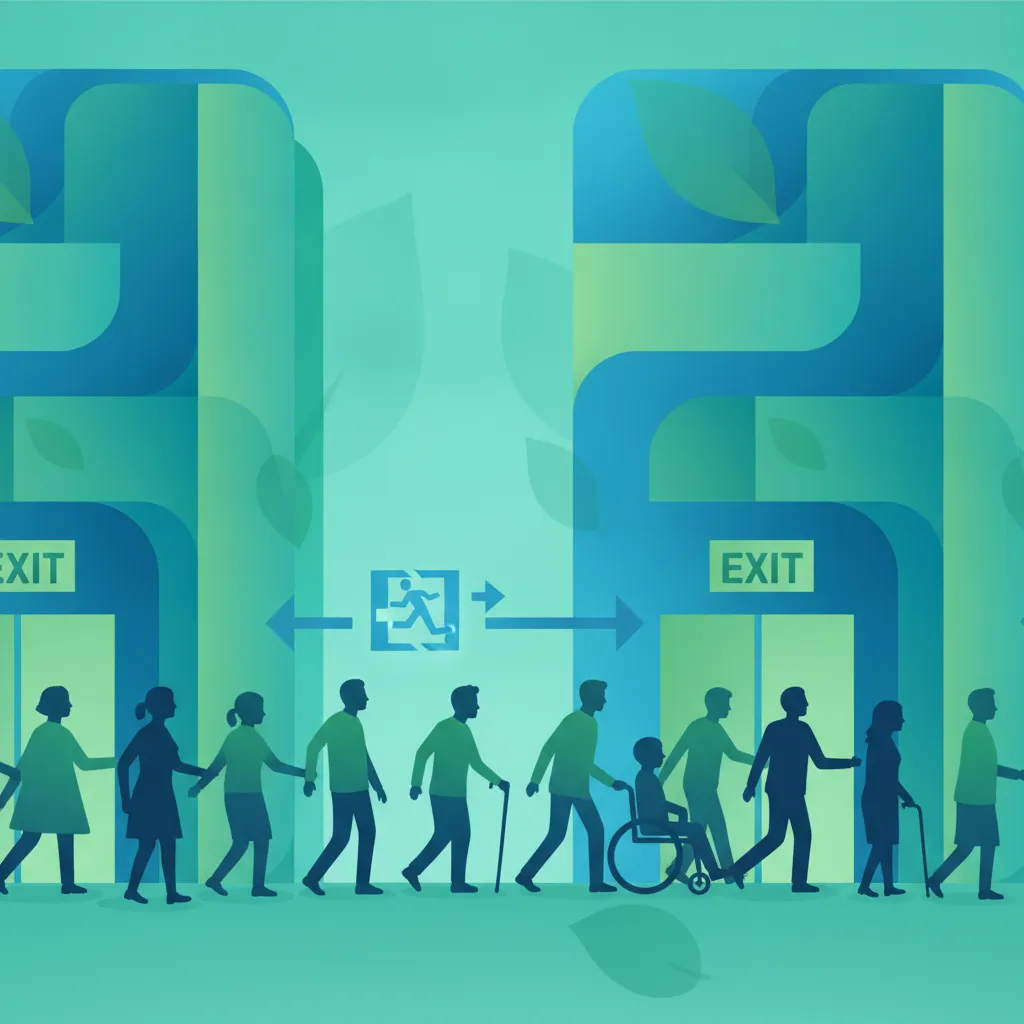
Lesson content overview
For every professional driver holding a Swiss Category D Driving License, the ability to execute a safe and efficient emergency evacuation of their bus or coach is a paramount skill. While rare, situations like vehicle fires, serious accidents, or external hazards demand immediate, decisive action. This lesson outlines the critical decision-making process, the effective use of all available emergency exits, and the indispensable role of clear, authoritative communication to guide passengers to safety. The ultimate goal is to move everyone away from the vehicle and any traffic, minimizing risk and preventing further harm.
In any on-board emergency requiring evacuation, the driver transitions from operating the vehicle to becoming the primary incident commander. This responsibility underscores the professional nature of the Swiss Category D license and the profound duty of care owed to every passenger. Your actions in the initial moments of a crisis can significantly influence the outcome, determining the safety and survival of all on board.
Rapid and orderly evacuation is a life-saving skill that protects passengers and the driver from immediate threats such as fire, smoke inhalation, or the risk of secondary collisions. Beyond direct physical danger, a well-managed evacuation minimizes panic, reduces confusion, and prevents the vehicle itself from becoming an additional hazard on the roadway. As a professional driver, your training in these procedures ensures compliance with regulatory and ethical duties to prioritize human life above all else, including the preservation of the vehicle.
The driver is legally and ethically obligated to assume command during an emergency evacuation. This leadership role means providing clear, concise, and authoritative instructions to passengers, thereby establishing a clear chain of command and preventing chaos. Maintaining composure under pressure is crucial, as your calm demeanor can help alleviate passenger panic and encourage cooperation. Your position as the leader implies directing passenger movement, overseeing the entire process, and being the central point of contact until emergency services arrive.
Familiarize yourself with the layout of every vehicle you operate. Knowing the exact location and operation of all emergency exits, fire extinguishers, and first-aid kits without hesitation is vital for effective leadership in a crisis.
Every bus or coach is equipped with multiple means of egress designed for emergency situations. A professional Category D driver must be intimately familiar with each type of exit, its location, and its specific operating mechanism. This knowledge enables you to direct passengers to the nearest, safest, and most accessible exit based on the nature of the emergency and environmental conditions.
The vehicle's regular service doors, typically located at the front, middle, or rear, are often the primary means of evacuation if they remain unobstructed and functional. These doors are designed for frequent use and rapid opening. In an emergency, they can usually be opened manually from the inside using a designated emergency release mechanism, even if the electrical system fails. It is crucial to check these mechanisms during your pre-trip inspection to ensure they are fully operable.
Beyond the primary doors, buses and coaches feature secondary, auxiliary exits specifically for emergencies. These include:
Understanding which secondary exits are available and how to operate them is essential, especially in scenarios where primary doors are inaccessible due to fire, collision damage, or external hazards.
All emergency exits, by regulation, must be operable without the use of external tools. This ensures that anyone inside, including passengers if the driver is incapacitated, can open them. During your pre-trip inspections, always verify that all emergency release mechanisms are unobstructed and function correctly. Common mistakes include attempting to force a blocked door or not knowing the specific release procedure for a particular window or hatch, wasting precious seconds.
Primary Doors: Locate the emergency release lever (often red or clearly marked). Pull or push the lever, then manually open the door.
Emergency Windows: Find the emergency hammer or release mechanism. If a hammer, strike the marked corner of the window. If a lever, activate it and push the window outwards.
Roof Hatches: Locate the release catches. Unlock them and push the hatch upwards or outwards.
Executing an emergency evacuation is a systematic process that requires quick thinking, decisive action, and clear communication. The following steps provide a structured approach to managing a crisis effectively, ensuring the safety of all passengers under your care.
Upon identifying a potential threat, your first action is a rapid assessment of the situation. Determine the nature of the emergency (e.g., fire location, external hazard, structural damage) and its urgency. This assessment guides your decision on when and how to evacuate. If evacuation is necessary, immediately:
Once the vehicle is secured, assume command and issue clear, authoritative verbal instructions. Use a calm, firm tone to counter panic. Your instructions should be precise and direct, indicating which exits to use. For example: "Attention all passengers! We need to evacuate the bus immediately. Please use the rear doors only. Walk calmly, do not push." If the vehicle is equipped, use the public address (PA) system to ensure all passengers hear your commands clearly. Repeat instructions if necessary.
Direct passengers to move a safe distance away from the vehicle and the roadway. The general guideline is to move at least 50 meters from the vehicle, to a location that is clear of traffic, potential falling debris, or fire hazards. On motorways (Autobahnen) or busy roads, this might involve moving passengers behind a barrier or up an embankment, away from passing vehicles.
This safe zone should be an assembly point where you can monitor passengers and await emergency services. Emphasize to passengers the importance of staying together and not wandering off.
After all passengers appear to have exited, perform a quick visual sweep of the vehicle to confirm no one is left behind, trapped, or unconscious. If possible, conduct a headcount at the safe zone to match against the number of passengers you had onboard. This step is critical for your legal duty of care and ensures that emergency services are accurately informed about the situation. Never assume everyone has evacuated without verification.
Effective communication is the cornerstone of a successful emergency evacuation. It encompasses not only what you say but also how you say it, ensuring that your message is received, understood, and acted upon by passengers who may be experiencing fear or confusion.
Your verbal commands must be calm yet firm, projecting confidence to instill a sense of order. Avoid ambiguous language like "Leave quickly" and instead use direct, action-oriented commands such as "Exit through the front doors, single file, immediately!"
If noise levels are high, or if visibility is poor (e.g., due to smoke or darkness), supplement verbal instructions with clear visual signals. Hand gestures pointing towards exits, or sweeping motions to direct movement, can be invaluable. At night, use interior emergency lighting or a flashlight to illuminate exits and guide paths.
Most modern buses and coaches are equipped with a public address system. This is a powerful tool for delivering instructions simultaneously and clearly to all passengers, especially in larger vehicles or those with multiple compartments. Practice using your PA system regularly so you can operate it instinctively under pressure. Ensure your announcements are brief, clear, and repeated as necessary. Avoid using alarm tones that could be confused with emergency vehicle sirens.
Your responsibilities do not end once passengers are safely evacuated. Managing the scene effectively involves continuous interaction with surrounding traffic and, crucially, coordinating with emergency services upon their arrival.
As mentioned, activating your hazard warning lights is mandatory immediately upon stopping due to an emergency. This warns other drivers of your presence and the potential hazard. If feasible and safe, place a warning triangle (often legally required in Switzerland when stopping on roads outside built-up areas for an extended period) a suitable distance behind your vehicle to further alert oncoming traffic. Your initial actions to secure the vehicle and alert others reduce the risk of secondary incidents with passing traffic, which could endanger both passengers and first responders.
When emergency services (police, fire brigade, paramedics) arrive, you are the primary source of information. Approach them calmly and provide concise, accurate details:
Your ability to relay this information accurately enables responders to allocate resources efficiently and initiate rescue and medical assistance without delay.
Emergency evacuations are rarely textbook. Various external factors and passenger characteristics can significantly influence the procedure, requiring adaptability and foresight from the driver.
When passengers include individuals with disabilities, young children, or the elderly, the evacuation process requires additional care:
Stopping a bus on a motorway (Autobahn) presents unique dangers due to high-speed traffic.
As a professional Category D driver in Switzerland, your legal and ethical responsibilities during an emergency evacuation are significant. Understanding these duties and being aware of common pitfalls can prevent serious consequences.
Swiss traffic law and professional driving regulations place a high duty of care on bus and coach drivers. In an emergency, this means you are legally responsible for the safety of all passengers. Failure to act responsibly, or negligence in leading an evacuation, can lead to severe legal liability, including criminal charges in cases of serious injury or fatality. This duty underscores the importance of thorough training, preparedness, and adherence to established procedures.
Mistakes during an emergency can have catastrophic outcomes. Be mindful of these common violations and edge cases:
In a fire emergency, remember that smoke inhalation is often more immediately dangerous than flames. Prioritize rapid evacuation to fresh air.
The principles and procedures for emergency evacuation are fundamental to the safety responsibilities of every Category D driver in Switzerland. Your ability to act as a calm, decisive leader, utilize all available emergency exits effectively, and communicate clearly under pressure will dictate the success of any evacuation. Remember to prioritize moving passengers to a safe zone at least 50 meters from the vehicle, ensure full passenger accountability, and coordinate precisely with emergency services. By mastering these critical skills, you uphold your professional duty and significantly enhance the safety of all who travel with you.
This lesson covers the complete emergency evacuation procedure for Swiss Category D bus drivers, emphasizing the driver's role as incident commander responsible for passenger safety. Key procedures include rapid situation assessment, securing the vehicle with hazard lights, issuing clear authoritative commands via PA system or verbal instructions, and guiding all passengers to a safe zone at least 50 meters from the vehicle. The lesson details all emergency exit types—primary doors, roof hatches, and emergency windows—and their specific operation methods. Critical legal duties include verifying complete evacuation through visual sweep and headcount, accounting for all passengers, and providing accurate information to emergency services. Special considerations address adverse weather, night-time conditions, motorway evacuations, and assistance for vulnerable passengers.
A short set of high-value points that capture the most important learning from this lesson.
The Category D driver becomes the primary incident commander during any emergency evacuation, legally and ethically responsible for passenger safety
Emergency exits include primary service doors, roof hatches, and designated emergency windows—all operable without external tools
The evacuation sequence follows: secure vehicle with hazard lights, issue clear verbal commands, guide passengers to a safe zone at least 50 meters away, then verify complete evacuation
Effective crisis communication requires calm, authoritative commands supplemented by visual signals and PA system announcements when available
The driver should be the last to leave after confirming all passengers have evacuated and accounting for everyone at the safe zone
Explore all units and lessons included in this driving theory course.
Hazard lights must be activated immediately upon stopping to warn other road users and prevent secondary collisions
Smoke inhalation is often more immediately dangerous than flames—prioritize rapid evacuation to fresh air over vehicle preservation
Never attempt to force a blocked exit; quickly assess and redirect to the next safest exit option instead
Vulnerable passengers (elderly, disabled, children) require additional assistance but must not be allowed to obstruct the overall evacuation flow
When emergency services arrive, report exact location, nature of emergency, passenger count, evacuation status, known injuries, and remaining hazards
Failing to activate hazard lights, significantly increasing the risk of a rear-end collision by passing traffic
Wasting precious seconds attempting to force open a jammed door while alternative exits remain available and accessible
Directing passengers into active traffic lanes instead of guiding them to a traffic-free safe zone behind barriers
Leaving the vehicle before completing a full visual sweep and headcount, potentially leaving trapped or injured passengers behind
Providing vague or incorrect information to emergency responders, which can delay rescue operations and appropriate resource allocation
Lesson content overview
A short set of high-value points that capture the most important learning from this lesson.
The Category D driver becomes the primary incident commander during any emergency evacuation, legally and ethically responsible for passenger safety
Emergency exits include primary service doors, roof hatches, and designated emergency windows—all operable without external tools
The evacuation sequence follows: secure vehicle with hazard lights, issue clear verbal commands, guide passengers to a safe zone at least 50 meters away, then verify complete evacuation
Effective crisis communication requires calm, authoritative commands supplemented by visual signals and PA system announcements when available
The driver should be the last to leave after confirming all passengers have evacuated and accounting for everyone at the safe zone
Explore all units and lessons included in this driving theory course.
Hazard lights must be activated immediately upon stopping to warn other road users and prevent secondary collisions
Smoke inhalation is often more immediately dangerous than flames—prioritize rapid evacuation to fresh air over vehicle preservation
Never attempt to force a blocked exit; quickly assess and redirect to the next safest exit option instead
Vulnerable passengers (elderly, disabled, children) require additional assistance but must not be allowed to obstruct the overall evacuation flow
When emergency services arrive, report exact location, nature of emergency, passenger count, evacuation status, known injuries, and remaining hazards
Failing to activate hazard lights, significantly increasing the risk of a rear-end collision by passing traffic
Wasting precious seconds attempting to force open a jammed door while alternative exits remain available and accessible
Directing passengers into active traffic lanes instead of guiding them to a traffic-free safe zone behind barriers
Leaving the vehicle before completing a full visual sweep and headcount, potentially leaving trapped or injured passengers behind
Providing vague or incorrect information to emergency responders, which can delay rescue operations and appropriate resource allocation
Explore search topics learners often look for when studying Principles and Procedures for Emergency Evacuation. These topics reflect common questions about road rules, driving situations, safety guidance, and lesson level theory preparation for learners in Switzerland.
Browse additional driving theory lessons that cover connected traffic rules, road signs, and common driving situations related to this topic. Improve your understanding of how different rules interact across everyday traffic scenarios.
Explore complex emergency evacuation scenarios for Swiss Category D drivers. Learn about handling special circumstances like adverse weather, vulnerable passengers, and incidents on motorways to ensure passenger safety in any critical situation.
Effective communication is vital during an emergency. This lesson teaches you what critical information to provide when calling emergency services, including precise location and the nature of the incident. It also covers techniques for communicating with passengers to provide reassurance and instruction, helping to maintain calm and order.
This lesson outlines the steps a driver should take when a passenger becomes ill or requires medical attention. It covers safely stopping the vehicle, making an emergency call to the correct number (144/112), and providing basic assistance until professional help arrives. The focus is on a calm, systematic response to a stressful situation.
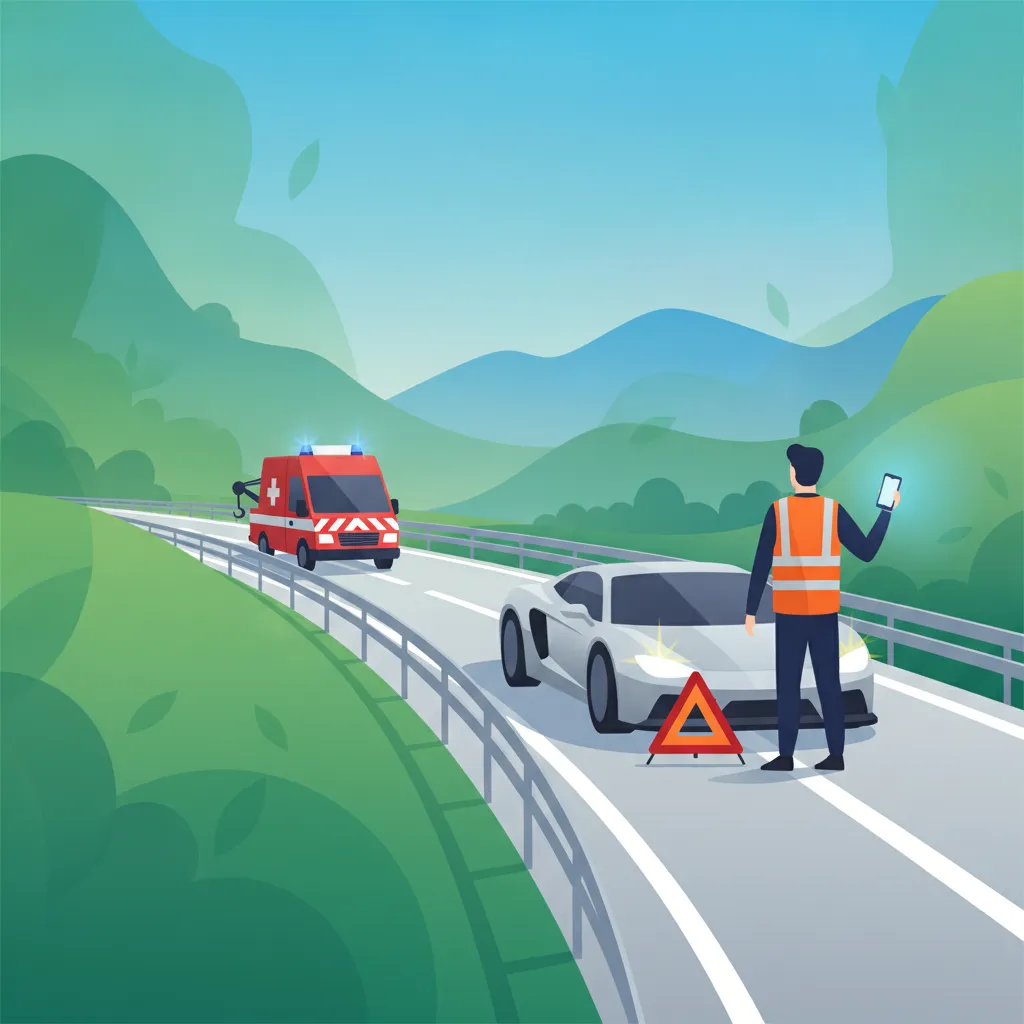
A breakdown can be a dangerous situation, especially on a busy road or motorway. This lesson provides a clear, sequential guide to follow. It includes pulling over to a safe location, activating hazard lights, placing the warning triangle, ensuring passenger safety, and contacting the appropriate services for assistance.

Drivers may occasionally face difficult or disruptive passengers. This lesson introduces strategies for de-escalating potential conflicts through calm communication and professional conduct. The focus is on maintaining safety for all passengers and the driver, and knowing when and how to seek external assistance.
This lesson covers the immediate actions to take following a collision. The priorities are to prevent further incidents by securing the scene, to assess the situation for injuries, and to alert the emergency services. You will learn the correct procedures for making the area safe for yourself, your passengers, and other road users.
This lesson focuses on the legally required safety equipment that must be on board every passenger vehicle. You will learn how to locate and check the fire extinguisher, first aid kit, and emergency hammers. It also covers the inspection of emergency exits to ensure they are unobstructed and functional.

A fire on a passenger vehicle is a critical emergency. This lesson covers common fire risks and preventative checks. It provides clear instructions on if, when, and how to tackle a small fire with an on-board extinguisher, always emphasizing that passenger and driver safety is the absolute first priority.

Departing from a bus stop is a high-risk manoeuvre. This lesson details the critical sequence of actions: checking all passengers are clear of the doors, performing a comprehensive mirror and blind spot check, signalling, and waiting for a safe gap in traffic. This systematic approach is essential for preventing collisions with overtaking vehicles, cyclists, or pedestrians.
The driver must ensure all boarding passengers are safely on board and stable before moving off. This lesson covers managing the flow of passengers, dealing with fares or tickets efficiently, and encouraging people to move away from the doorway. The primary goal is to prevent falls that can occur if the vehicle moves prematurely.

After stopping for an emergency, making the scene safe is the top priority. This lesson details the procedure: activate hazard warning lights, put on high-visibility clothing before exiting the cab, and place the warning triangle at the correct distance behind the vehicle (at least 100m on motorways). This warns approaching traffic and creates a safer environment for the driver and emergency responders.
Master effective communication techniques for leading passenger evacuations and coordinating with emergency services. Understand how clear, authoritative instructions and accurate reporting are crucial for passenger safety and incident resolution in Switzerland.
Effective communication is vital during an emergency. This lesson teaches you what critical information to provide when calling emergency services, including precise location and the nature of the incident. It also covers techniques for communicating with passengers to provide reassurance and instruction, helping to maintain calm and order.
This lesson outlines the steps a driver should take when a passenger becomes ill or requires medical attention. It covers safely stopping the vehicle, making an emergency call to the correct number (144/112), and providing basic assistance until professional help arrives. The focus is on a calm, systematic response to a stressful situation.
Drivers may occasionally face difficult or disruptive passengers. This lesson introduces strategies for de-escalating potential conflicts through calm communication and professional conduct. The focus is on maintaining safety for all passengers and the driver, and knowing when and how to seek external assistance.

Clear communication is key to a smooth and pleasant passenger experience. This lesson covers best practices for making announcements, answering questions, and providing information about the route or delays. It also introduces basic techniques for calmly managing difficult situations and maintaining a professional demeanor with all passengers.

This lesson moves beyond simply staying within the lines, teaching how to actively position your vehicle within the lane to manage risk. You will learn to create a 'safety cushion' of space around your bus. This proactive approach improves your reaction time and gives other road users more space, reducing the likelihood of conflicts.
This lesson covers the immediate actions to take following a collision. The priorities are to prevent further incidents by securing the scene, to assess the situation for injuries, and to alert the emergency services. You will learn the correct procedures for making the area safe for yourself, your passengers, and other road users.

Tourists are often unfamiliar with local traffic rules and may be distracted by sightseeing, leading to unpredictable behavior. This lesson teaches drivers to be extra cautious in these zones. It focuses on anticipating sudden crossings, being aware of other tour vehicles, and maintaining a large safety bubble around the bus.
A breakdown can be a dangerous situation, especially on a busy road or motorway. This lesson provides a clear, sequential guide to follow. It includes pulling over to a safe location, activating hazard lights, placing the warning triangle, ensuring passenger safety, and contacting the appropriate services for assistance.
A fire on a passenger vehicle is a critical emergency. This lesson covers common fire risks and preventative checks. It provides clear instructions on if, when, and how to tackle a small fire with an on-board extinguisher, always emphasizing that passenger and driver safety is the absolute first priority.
The driver must ensure all boarding passengers are safely on board and stable before moving off. This lesson covers managing the flow of passengers, dealing with fares or tickets efficiently, and encouraging people to move away from the doorway. The primary goal is to prevent falls that can occur if the vehicle moves prematurely.
Find clear answers to common questions learners have about Principles and Procedures for Emergency Evacuation. Learn how the lesson is structured, which driving theory objectives it supports, and how it fits into the overall learning path of units and curriculum progression in Switzerland. These explanations help you understand key concepts, lesson flow, and exam focused study goals.
The first step is always to remain calm, stop the vehicle in a safe location away from traffic, and secure the parking brake before alerting passengers.
No, while most follow standard protocols, you must be familiar with the specific manual release mechanisms and break-glass procedures for your particular vehicle type.
Use clear, loud, and authoritative instructions. Avoid panic-inducing language; give simple directions on which exit to use and where to assemble outside the vehicle.
After ensuring the vehicle is empty, your priority is to ensure all passengers are safely grouped away from the road and to contact emergency services immediately.
Pinpoint specific Swiss traffic rules, road signs, or driving situations you need to master. Use the practice search to start a focused revision session now and build confidence for your official driving theory exam.