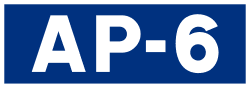
Route number signs are your essential guide to Spain's road network, indicating whether you're on a European highway, a major national route, or a toll road. Understanding these signs is crucial for staying on track, making timely navigation decisions, and ultimately, for passing your driving theory exam with confidence. This section will equip you to interpret these vital directional markers.
An explanation of how Route Number Signs road signs apply in real traffic situations in Spain. Learn where these signs are typically placed, what drivers are expected to do when they appear, and how correct reactions help you stay safe, avoid fines, and succeed in your Spanish driving theory exam.
Route number signs are ubiquitous across the road network, from major motorways to regional roads. You'll see European route signs like the E-number within a green rectangle to confirm you're on an international corridor. Highway and dual carriageway signs, often in blue or white, clearly mark major arteries designed for faster travel. Specific signs alert you to toll roads, indicating a potential cost for using that route. National network signs, further categorised into first, second, and third-level autonomous highways, help you navigate within the country's internal road system. Drivers must pay close attention to these signs to ensure they are on the intended route, especially when planning long journeys or navigating complex interchanges, as incorrect interpretation can lead to significant detours or missed exits.
An overview of the key learning outcomes when studying the Route Number Signs road sign category. Understand the main concepts, sign meanings, and traffic situations covered here so you can recognise patterns, answer theory questions more confidently, and build a solid foundation for safe driving in Spain.
Studying these route number signs together helps you quickly identify and follow specific Spanish road networks, from major motorways to European routes. Recognizing their distinct formats is crucial for effective navigation and accurate interpretation of traffic signs, enhancing your overall driving theory knowledge for the DGT exam.

Understand the European Route sign (S-400) to follow the correct path.

Master the S-410 Sign for Navigating Highways and Dual Carriageways in Spain

This sign indicates you are on a State General Network Road.

Navigate with Confidence: Understanding the First Level Autonomous Highway Sign (S-430)
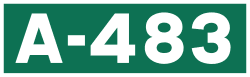
Navigate effectively with the Second Level Autonomous Highway sign (S-440)

S-450: Navigating Third Level Autonomous Highways in Spain
Clear answers to common questions about the Route Number Signs road sign category. Use this FAQ to review tricky rules, understand how these signs appear in exam scenarios, and remove confusion that often leads to mistakes in the Spanish driving theory exam in Spain.
A highway or dual carriageway sign (often blue or white) indicates a major road designed for high-speed traffic within a country. A European route sign (typically a white number on a green shield) signifies that the road is part of a larger, internationally recognised network connecting multiple European countries.
Toll roads are usually indicated by a specific sign, often a blue rectangle with white lettering that clearly states 'Toll Road' or shows the toll symbol. Some route number signs themselves might also be associated with toll sections, or a separate sign will appear shortly before the entry point.
Route number signs primarily serve an informational purpose, telling you which road you are on. However, by confirming you are on the correct numbered route, they indirectly guide you, especially when combined with directional signs at junctions. They confirm your position within the road network.
The first, second, and third-level autonomous highway signs (S-430, S-440, S-450) denote different tiers within a region's or autonomous community's road network. Generally, higher levels (like first level) are more significant arterial roads, while lower levels serve more localised or regional traffic. They help understand the hierarchy of roads within a specific area.
Yes, route number signs frequently appear alongside other traffic signs. For example, a highway sign might be placed near speed limit signs, or a European route sign could be situated above an upcoming exit indicating directions. Always consider the route number sign in conjunction with any other signs present to understand the complete traffic situation.
Dive deeper into specific road sign groups to test your knowledge and reinforce your understanding of Spanish traffic regulations. Start exploring each category to build a strong foundation for your DGT driving theory exam and ensure you drive safely on Spanish roads.
Browse Road Sign Categories