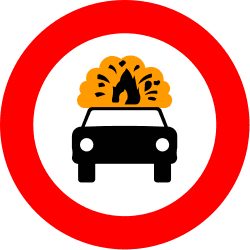
The R-109 traffic sign in Spain indicates a prohibition for vehicles carrying explosive or flammable materials. This entry restriction applies beyond the sign unless specific exemptions or limits are indicated by additional panels. It's crucial to understand if your vehicle falls under this restriction or if you need to seek an alternative route to ensure road safety and comply with Spanish traffic regulations.
This sign mandates understanding the specific restrictions for vehicles transporting explosive or flammable goods in Spain. Crucial for theory test revision, it ensures safe passage by clarifying what action is prohibited according to DGT regulations.
The sign for no vehicles transporting explosive or flammable goods is part of the Spanish regulatory system that creates a direct restriction on how the road may be used. Depending on the symbol or measurement shown, it can ban entry, cap a physical dimension, limit a maneuver, or prohibit a behavior such as speeding, overtaking, stopping, or parking. Drivers must obey it from the point where the sign applies until the condition ends, whether by an end sign, a junction, or a different signed rule. Any figures, vehicle symbols, time limits, or additional panels shown with the sign are legally important and can narrow or widen who the restriction affects.
This entry prohibition sign means that no vehicles transporting explosive or flammable goods is not allowed beyond the sign or is allowed only within the stated limit. Check any panels, symbols, or measurements shown on the sign before continuing.
Get clear, practical answers to the most common questions about the R-109 - No vehicles transporting explosive or flammable goods road sign. Learn how the sign works, what rules it represents, and how it affects real driving situations. This FAQ strengthens your understanding and supports accurate decision making for the Spanish driving theory exam in Spain.
The R-109 sign means that vehicles transporting explosive or flammable goods are prohibited from entering the area beyond the sign, or are only allowed within specific limits shown on supplementary panels. You must check any additional information on the sign assembly before proceeding.
You must not enter the restricted zone if your vehicle is transporting explosive or flammable goods, unless an accompanying panel provides an exemption or specifies conditions. Do not rely on assumptions; always observe the full sign assembly, including any panels detailing vehicle type, weight, or dimensions.
If your vehicle transports explosive or flammable goods, you must look for an alternative permitted route. Pay close attention to any supplementary panels accompanying the R-109 sign, as they might specify conditions under which entry is allowed, such as for certain vehicle types or weights.
A common trap is assuming the restriction applies to all vehicles or not carefully checking any accompanying panels. Learners might forget to consider specific exemptions for certain vehicle types, weights, or dimensions that could be indicated, leading to a misunderstanding of the actual rule in force.
Not necessarily. While it signifies a prohibition, the R-109 sign can have limitations specified by additional panels. These might include restrictions based on the quantity of goods, vehicle weight, dimensions, or even specific times of day. Always check the full sign assembly for precise details.
A clear reference image of the R-109 - No vehicles transporting explosive or flammable goods road sign used in Spain.
The R-109 - No vehicles transporting explosive or flammable goods road sign may also be known by these alternative names or terms.
The R-109 - No vehicles transporting explosive or flammable goods road sign is part of the Entry Prohibition Signs category, which groups together signs with similar rules and functions.
Mastering Spanish traffic rules means distinguishing between closely related signs. Comparing R-109 with other prohibition signs aids sign recognition and reduces errors in your theory test revision.
What the 'R-100 No Vehicles' Sign Means for Your Drive in Spain

Obey the R-101 'No Entry' sign to avoid violations and ensure road safety.
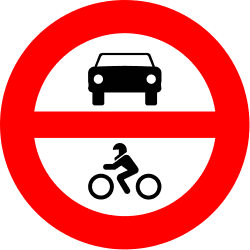
Understand the 'No Motor Vehicles' Sign (R-102)
R-103: No Motor Vehicles Allowed, Except for Two-Wheeled Motorcycles
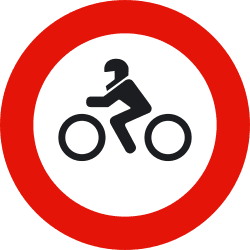
What the R-104 'No Motorcycles' sign means for your drive in Spain.
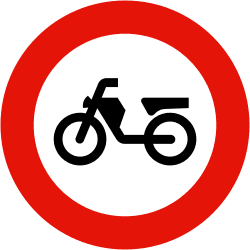
What the 'No Mopeds (and vehicles for people with reduced mobility)' road sign means
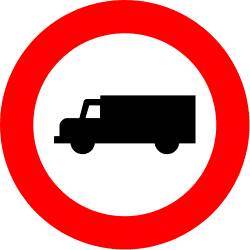
What does the R-106 'No vehicles intended for the transport of goods' sign mean?
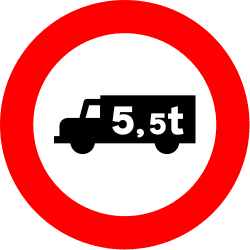
Understand the 'No Heavy Goods Vehicles Over Indicated Mass' Restriction Sign (R-107)
You've explored the complete list of Spanish road signs. Now, deepen your understanding by reviewing specific sign groups or testing your knowledge with practice questions. Fully prepare for your DGT driving theory exam and confidently navigate Spanish roads.
Browse All Spanish Road Signs