This S-993 traffic sign warns of a potential risk of rear-end collisions on an upcoming uphill section of a motorway or dual carriageway. It's an important informational sign designed to help you anticipate hazardous driving conditions. Always interpret this sign in conjunction with road markings, lane configurations, and any additional panels to ensure your driving decisions are safe and timely.
This sign warns of potential rear-end collisions on upcoming uphill motorway or dual carriageway sections. Recognizing this specific traffic sign explanation is crucial for safe theory test revision and navigating Spanish road conditions.
The sign for advertencia de riesgo de alcances en tramo de motorway o dual carriageway en pendiente ascendente belongs to the Spanish information and guidance system that helps road users understand where they are, where to go, or how a section of road is organized. Unlike a prohibition sign, it mainly provides route, lane, service, location, or access information so the driver can make the correct decision in time. Its practical effect depends on the symbol, arrows, road names, route numbers, and any extra panels shown with it. For safe driving, read it early and combine it with the current lane layout, road markings, and any nearby regulatory signs.
This sign indicates advertencia de riesgo de alcances en tramo de motorway o dual carriageway en pendiente ascendente. Read it together with the road layout, markings, and any additional panels so you apply it correctly.
Get clear, practical answers to the most common questions about the S-993 - Advertencia de riesgo de alcances en tramo de motorway o dual carriageway en pendiente ascendente road sign. Learn how the sign works, what rules it represents, and how it affects real driving situations. This FAQ strengthens your understanding and supports accurate decision making for the Spanish driving theory exam in Spain.
The S-993 sign serves as a warning to drivers about the increased risk of rear-end collisions on uphill gradients of motorways or dual carriageways. It prompts drivers to be more vigilant, adjust their speed, and maintain a safe distance from the vehicle ahead.
When you see the S-993 sign, prepare for an uphill climb on a motorway or dual carriageway. You should anticipate potential speed reductions by slower vehicles and increase your following distance. Focus on maintaining a safe speed and being ready to brake if necessary, while also being aware of vehicles approaching from behind.
A common mistake is not understanding that this sign isn't a prohibition but a warning. Learners might overreact or underestimate the risk. It's crucial to remember that it requires increased awareness and adjusted driving, not necessarily an immediate change in speed unless conditions demand it. Always consider the overall traffic situation and road layout.
Not necessarily immediately. The S-993 sign is a warning to prepare for conditions that increase the risk of rear-end collisions. You should assess the current traffic situation, the steepness of the incline, and the behaviour of other vehicles. Adjusting your speed to maintain a safe distance is key, rather than a mandatory, abrupt slowdown.
'Alcances' translates to rear-end collisions. The sign specifically warns that the road layout ahead, particularly an uphill gradient on a motorway or dual carriageway, creates conditions where vehicles are more likely to collide with the one in front.
A clear reference image of the S-993 - Advertencia de riesgo de alcances en tramo de motorway o dual carriageway en pendiente ascendente road sign used in Spain.
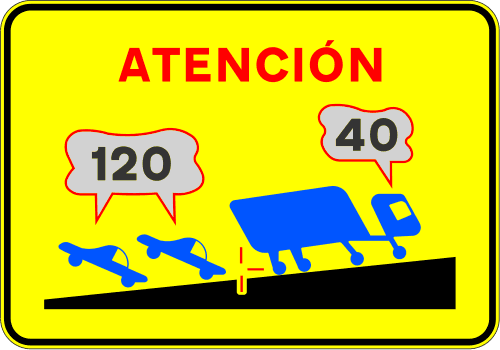
The S-993 - Advertencia de riesgo de alcances en tramo de motorway o dual carriageway en pendiente ascendente road sign may also be known by these alternative names or terms.
The S-993 - Advertencia de riesgo de alcances en tramo de motorway o dual carriageway en pendiente ascendente road sign is part of the Other Signs category, which groups together signs with similar rules and functions.
Comparing similar road signs and traffic signals aids in distinguishing subtle differences, crucial for accurate theory test revision. Understanding these distinctions helps improve sign recognition and recall, leading to better performance in your Spanish driving licence exam.

Understand the Spanish Country Confirmation Sign (S-930)
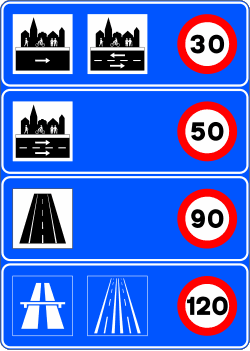
Understanding the S-940 General Speed Limit Sign in Spain
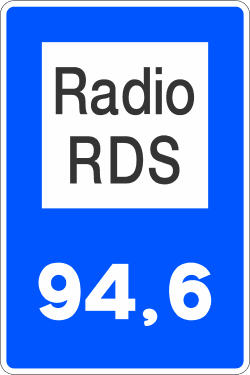
Understand the S-950 Sign for Radio Frequency Road Information
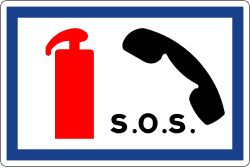
Emergency Phone and Fire Extinguisher Location Sign (S-970)
You've explored the complete list of Spanish road signs. Now, deepen your understanding by reviewing specific sign groups or testing your knowledge with practice questions. Fully prepare for your DGT driving theory exam and confidently navigate Spanish roads.
Browse All Spanish Road Signs