
This lesson provides essential training on vehicle safety systems including seat belts, airbags, and child restraint devices. As part of our Category B course, you will learn the legal requirements and best practices to ensure all occupants are properly protected while driving on Swiss roads.

Lesson content overview
Understanding and correctly using passive safety systems is paramount for every driver in Switzerland, particularly for those preparing for the Category B driving theory exam. These systems, including seat belts, airbags, and child restraint systems, are your vehicle's first line of defense in the event of a collision, significantly reducing the risk of severe injury or fatality. This comprehensive guide will delve into the mechanisms, proper usage, and legal obligations surrounding these crucial safety features, ensuring you're well-equipped to protect yourself and your passengers on Swiss roads.
Seat belts are the most fundamental and effective passive safety device in any vehicle. They are designed to secure occupants in their seats during sudden deceleration, such as in a collision, preventing them from being thrown forward or sideways and impacting the vehicle's interior.
The primary function of a seat belt is to manage the kinetic energy generated during a crash. When a vehicle abruptly stops, the occupants continue to move forward at the vehicle's original speed due to inertia. A properly worn seat belt distributes the immense forces across the strongest parts of the body – the pelvis and the shoulder – helping to decelerate the occupant at a controlled rate and minimizing injury.
Most modern vehicles are equipped with three-point seat belts, which combine a lap belt across the pelvis and a shoulder belt across the chest and collarbone. This design offers superior protection by securing both the lower and upper body, effectively preventing "submarining" (sliding under the lap belt) and reducing the risk of head, chest, and spinal injuries. Some older vehicles, or specific rear seating positions, might still feature two-point lap belts, which only secure the occupant across the waist. While offering some protection, these are less effective than three-point belts and carry a higher risk of abdominal and spinal injuries in a collision.
In Switzerland, the use of seat belts is legally mandatory for all vehicle occupants, regardless of age or seating position. This rule applies to drivers, front-seat passengers, and all rear-seat passengers. Non-compliance is subject to legal penalties because statistics consistently show that seat belts drastically reduce injury severity and save lives.
Correct seat belt positioning is crucial for its effectiveness:
Drivers must ensure that all passengers, especially children, are correctly restrained before commencing their journey. Seat adjustments and proper occupant positioning are essential to achieve optimal seat belt geometry and maximise safety.
Modern seat belts often incorporate advanced features like pre-tensioners. These devices automatically tighten the seat belt in milliseconds during a crash, removing any slack just before the primary impact occurs. This crucial action ensures the occupant is held firmly in place, maximizing the effectiveness of the restraint and allowing other safety systems, like airbags, to function optimally. Regular inspection of these systems is important to ensure they remain in working order.
Belt anchor points are the fixed structural points within the vehicle where the seat belts are securely attached. These points are engineered to withstand significant forces during a collision, providing a robust foundation for the restraint system. Their placement varies slightly between driver, front passenger, and rear seats to accommodate different occupant positions and ensure effective protection. Incorrect or compromised anchor points can severely reduce the effectiveness of the seat belt.
Airbags are sophisticated inflatable safety devices designed to supplement seat belts by providing an additional cushion for occupants during a collision. They deploy in mere milliseconds, creating a soft barrier between the occupant and the hard surfaces of the vehicle interior, significantly reducing impact forces on vulnerable areas like the head and chest.
Airbags are not a substitute for seat belts; rather, they work in conjunction with them. Without a seat belt, an occupant could be too close to the deploying airbag or be moving too fast, leading to severe injury from the airbag itself.
Common types of airbags include:
A particularly important aspect of airbag safety, especially for those transporting children, concerns the front passenger airbag. Swiss regulations explicitly state that the front passenger airbag must be deactivated if a rearward-facing child seat is installed on the front passenger seat. This is a mandatory requirement.
Why is this critical? A rearward-facing child seat positions the child's head very close to the dashboard. If the frontal airbag deploys with significant force, it can cause severe, even fatal, head and neck injuries to the infant or young child. Many modern vehicles offer a switch or a menu option to deactivate the front passenger airbag. Always ensure it is turned off before installing a rearward-facing child seat in the front and verify its deactivated status. For forward-facing child seats on the front passenger seat, while deactivation is not legally mandatory, it is generally recommended to consult the vehicle and child seat manufacturer's guidelines, as some recommend deactivation for younger children even in forward-facing seats.
Never place a rearward-facing child seat on the front passenger seat if the vehicle's passenger-side airbag cannot be deactivated. In such cases, the child seat must always be placed in the rear of the vehicle.
Children, due to their developing bodies and disproportionately large heads, require specialized restraint systems designed specifically for their size, weight, and age. Swiss law (Art. 54 of the Road Traffic Ordinance) mandates the use of appropriate Child Restraint Systems (CRS) for all children under 12 years old who are shorter than 150 cm. These systems are crucial for preventing injury by ensuring children are correctly positioned and protected in a collision.
Child seats are broadly categorized based on the child's weight and height:
Rearward-facing seats: These are mandatory for infants and young children, typically up to at least 13 kg (and often up to 18 kg or more, depending on the model). They are designed to be installed facing the rear of the vehicle. This orientation provides superior protection for a child's delicate head, neck, and spine by cradling the child and distributing impact forces across a larger area of the body in a frontal collision. Children should remain in a rearward-facing seat for as long as possible, up to the maximum weight or height limit of the seat.
Forward-facing seats with harness: Once a child has outgrown their rearward-facing seat, they can transition to a forward-facing seat with an integrated five-point harness. These seats are typically suitable for children from 9 kg to 18 kg. The harness system secures the child directly to the seat, distributing crash forces effectively.
Booster seats: For older children who have outgrown forward-facing seats but are still under 12 years old or shorter than 150 cm, a booster seat is used. Booster seats elevate the child, allowing the vehicle's standard three-point seat belt to fit correctly across their shoulder (over the collarbone) and lap (over the pelvis), avoiding the neck or abdomen. Booster seats come in two main types: high-back boosters (offering head and side support) and backless boosters. High-back boosters are generally recommended for better protection.
Always consult the manufacturer's instructions for both the child seat and your vehicle to ensure proper installation and compatibility.
ISOFIX anchors are a standardized, international mounting system that revolutionized child seat installation. This system provides rigid connection points that lock the child seat directly to dedicated anchors integrated into the vehicle's structure. This eliminates the need to use the vehicle's seat belt for installation, significantly reducing the risk of incorrect fitting and ensuring a consistently secure connection.
Most modern vehicles are equipped with ISOFIX anchor points, usually indicated by a label or symbol. Child seats compatible with ISOFIX feature connectors that click directly onto these anchors. Many ISOFIX seats also include a top tether strap or a support leg (load leg) to further enhance stability and prevent rotation or excessive forward movement during an impact.
While ISOFIX offers a highly secure and user-friendly installation method, child seats that are installed using the vehicle's seat belts are equally safe if installed correctly. The key is always to follow the specific instructions provided by the child seat manufacturer.
Incorrect installation or misuse of child restraint systems is a significant concern, as it can completely nullify their protective benefits. Some common mistakes include:
Seat belts, airbags, and child restraints are not isolated components but rather a complementary restraint system designed to work together to provide optimal protection. Seat belts are the primary restraint, ensuring the occupant is held securely in their seat. Airbags then deploy to cushion the impact, especially in frontal collisions, further reducing impact forces. For children, the specific design of their restraint system works with the vehicle's passive safety features to offer tailored protection.
The effectiveness and proper use of these systems can also be influenced by various driving conditions:
Swiss road traffic law is clear and strict regarding occupant safety. Adhering to these regulations is not only a legal obligation but a fundamental responsibility for every driver to protect themselves and their passengers.
Violations of seat belt and child restraint regulations carry legal penalties, including fines. More importantly, however, non-compliance vastly increases the risk of severe injury or death for occupants in the event of a collision. The law reflects the clear safety statistics and aims to foster a culture of safety on the roads.
The proper use and maintenance of passive safety systems are non-negotiable for safe driving.
This lesson covers the essential passive safety systems required for the Swiss Category B theory exam: seat belts, airbags, and child restraint systems. Seat belts are legally mandatory for all occupants in Switzerland and must be worn correctly with the lap portion across the hips and shoulder portion over the collarbone. A critical safety rule is that the front passenger airbag must be deactivated whenever a rearward-facing child seat is installed in that position. Children under 12 years old or under 150 cm must use appropriate child restraint systems matched to their weight and height, progressing from rearward-facing seats through forward-facing harness seats to booster seats. ISOFIX anchors offer a secure alternative to seat belt installation, though proper seat belt installation remains equally safe when done correctly according to manufacturer instructions.
A short set of high-value points that capture the most important learning from this lesson.
Three-point seat belts are the primary passive safety system, distributing crash forces across the pelvis and shoulder while preventing submarining
The front passenger airbag MUST be deactivated when a rearward-facing child seat is installed in that seating position to prevent fatal injuries
Swiss law (Art. 54 Road Traffic Ordinance) requires all children under 12 years old or shorter than 150 cm to use an appropriate child restraint system
Child restraint systems progress through three stages: rearward-facing seats, forward-facing seats with harness, and booster seats, each based on weight and height limits
ISOFIX anchors provide a standardized, rigid connection for child seats that significantly reduces incorrect installation compared to seat belt routing methods
Explore all units and lessons included in this driving theory course.
Seat belt lap portion must lie low across the hips and pelvis, never over the abdomen; shoulder belt must cross the chest and collarbone, never under the arm or behind the back
Rearward-facing child seats provide superior protection for a child's head, neck, and spine and children should remain in them as long as possible within weight/height limits
Never place a rearward-facing child seat on the front passenger seat if the airbag cannot be deactivated—in such cases, the seat must be installed in the rear
Booster seats are only appropriate when the vehicle's three-point seat belt fits correctly across the child's shoulder and pelvis, not the neck or abdomen
Pre-tensioners automatically tighten seat belts during a crash to remove slack and maximize restraint effectiveness
Wearing the lap belt incorrectly over the abdomen instead of low across the hips, which risks severe abdominal and spinal injuries in a collision
Failing to deactivate the front passenger airbag when installing a rearward-facing child seat, which can cause fatal head and neck injuries from airbag deployment
Installing a child seat too loosely—the seat should move less than 2-3 cm at the belt path or ISOFIX connection when tugged firmly
Moving a child to a forward-facing seat or booster seat prematurely, before they meet the minimum weight or height requirements
Using a child seat that has passed its expiry date or has been involved in a crash, even if no visible damage is apparent
Lesson content overview
A short set of high-value points that capture the most important learning from this lesson.
Three-point seat belts are the primary passive safety system, distributing crash forces across the pelvis and shoulder while preventing submarining
The front passenger airbag MUST be deactivated when a rearward-facing child seat is installed in that seating position to prevent fatal injuries
Swiss law (Art. 54 Road Traffic Ordinance) requires all children under 12 years old or shorter than 150 cm to use an appropriate child restraint system
Child restraint systems progress through three stages: rearward-facing seats, forward-facing seats with harness, and booster seats, each based on weight and height limits
ISOFIX anchors provide a standardized, rigid connection for child seats that significantly reduces incorrect installation compared to seat belt routing methods
Explore all units and lessons included in this driving theory course.
Seat belt lap portion must lie low across the hips and pelvis, never over the abdomen; shoulder belt must cross the chest and collarbone, never under the arm or behind the back
Rearward-facing child seats provide superior protection for a child's head, neck, and spine and children should remain in them as long as possible within weight/height limits
Never place a rearward-facing child seat on the front passenger seat if the airbag cannot be deactivated—in such cases, the seat must be installed in the rear
Booster seats are only appropriate when the vehicle's three-point seat belt fits correctly across the child's shoulder and pelvis, not the neck or abdomen
Pre-tensioners automatically tighten seat belts during a crash to remove slack and maximize restraint effectiveness
Wearing the lap belt incorrectly over the abdomen instead of low across the hips, which risks severe abdominal and spinal injuries in a collision
Failing to deactivate the front passenger airbag when installing a rearward-facing child seat, which can cause fatal head and neck injuries from airbag deployment
Installing a child seat too loosely—the seat should move less than 2-3 cm at the belt path or ISOFIX connection when tugged firmly
Moving a child to a forward-facing seat or booster seat prematurely, before they meet the minimum weight or height requirements
Using a child seat that has passed its expiry date or has been involved in a crash, even if no visible damage is apparent
Explore search topics learners often look for when studying Seat Belts, Airbags, and Child Restraints. These topics reflect common questions about road rules, driving situations, safety guidance, and lesson level theory preparation for learners in Switzerland.
Browse additional driving theory lessons that cover connected traffic rules, road signs, and common driving situations related to this topic. Improve your understanding of how different rules interact across everyday traffic scenarios.
Learn the mandatory rules for child restraint systems (CRS) in Switzerland, including rearward-facing seats, booster seats, and correct ISOFIX installation for children under 12 or 150 cm.

This lesson explores the correct use of seat belts, the installation of child restraints, and the importance of securing loads. It covers weight distribution guidelines, maximum load limits, and conditions for towing a trailer. Guidance is also provided for safely transporting animals and ensuring all loads are properly secured to prevent movement.
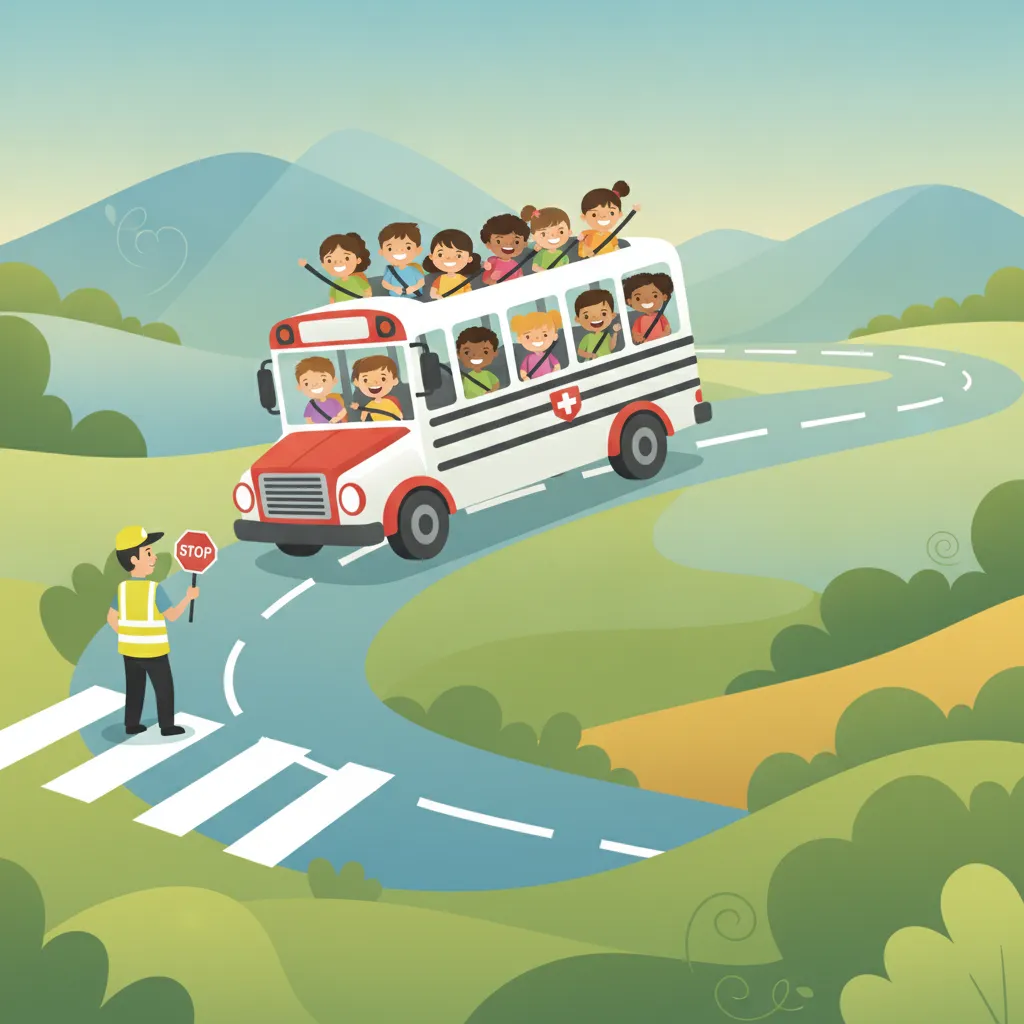
Transporting children carries the highest level of responsibility. This lesson covers the specific legal requirements for school buses in Switzerland, including the use of special signs and warning lights. It details the safe procedures for stopping, boarding, and alighting, and the driver's role in supervising children.

This lesson focuses on general driving safety in areas with a high concentration of children. It stresses the importance of significantly reducing speed, being prepared for unexpected events, and scanning for children between parked cars. The driver must exhibit maximum vigilance in these high-risk environments at all times.
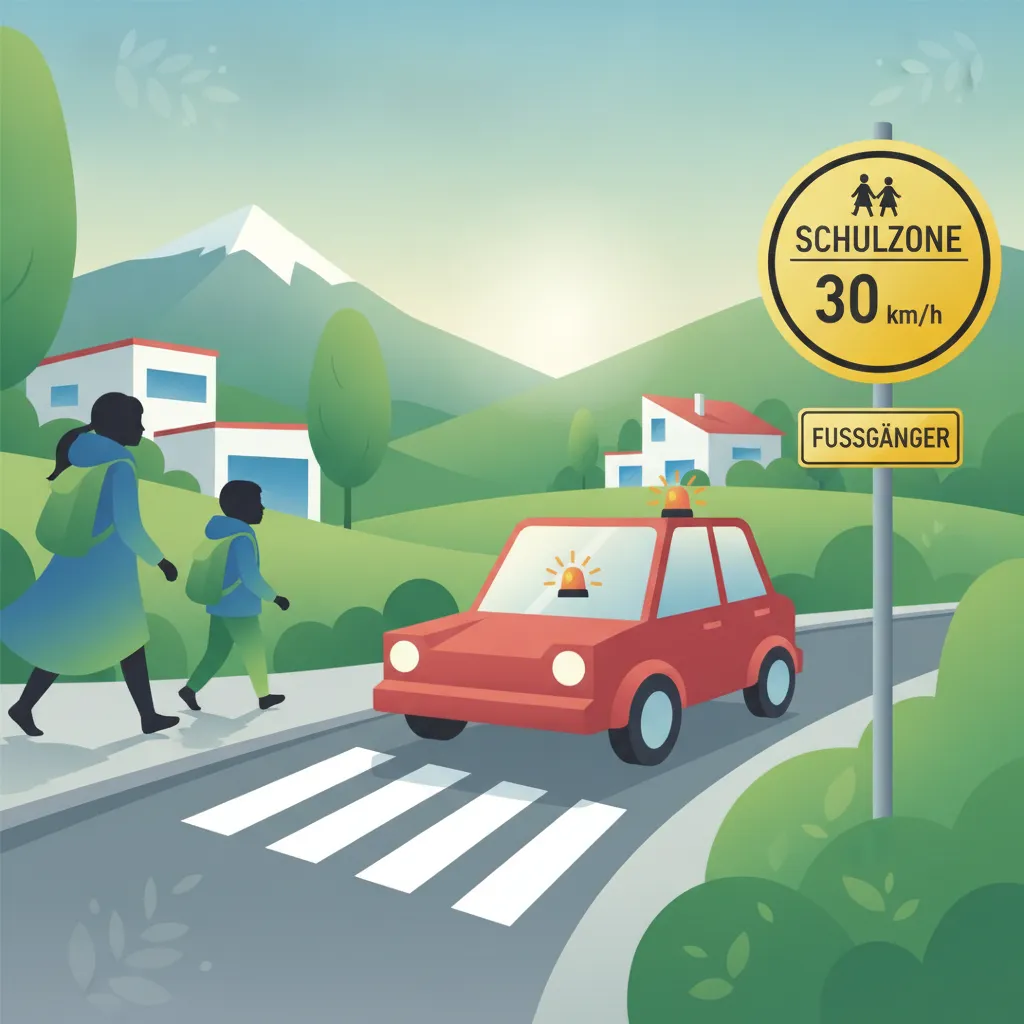
This lesson focuses on school zones, where special speed limits and cautionary measures are required. You will learn to recognize school zone signs, understand reduced speed limits, and be aware of designated child crossing zones. The content also emphasizes the need for heightened vigilance when school buses stop for students to ensure child safety.
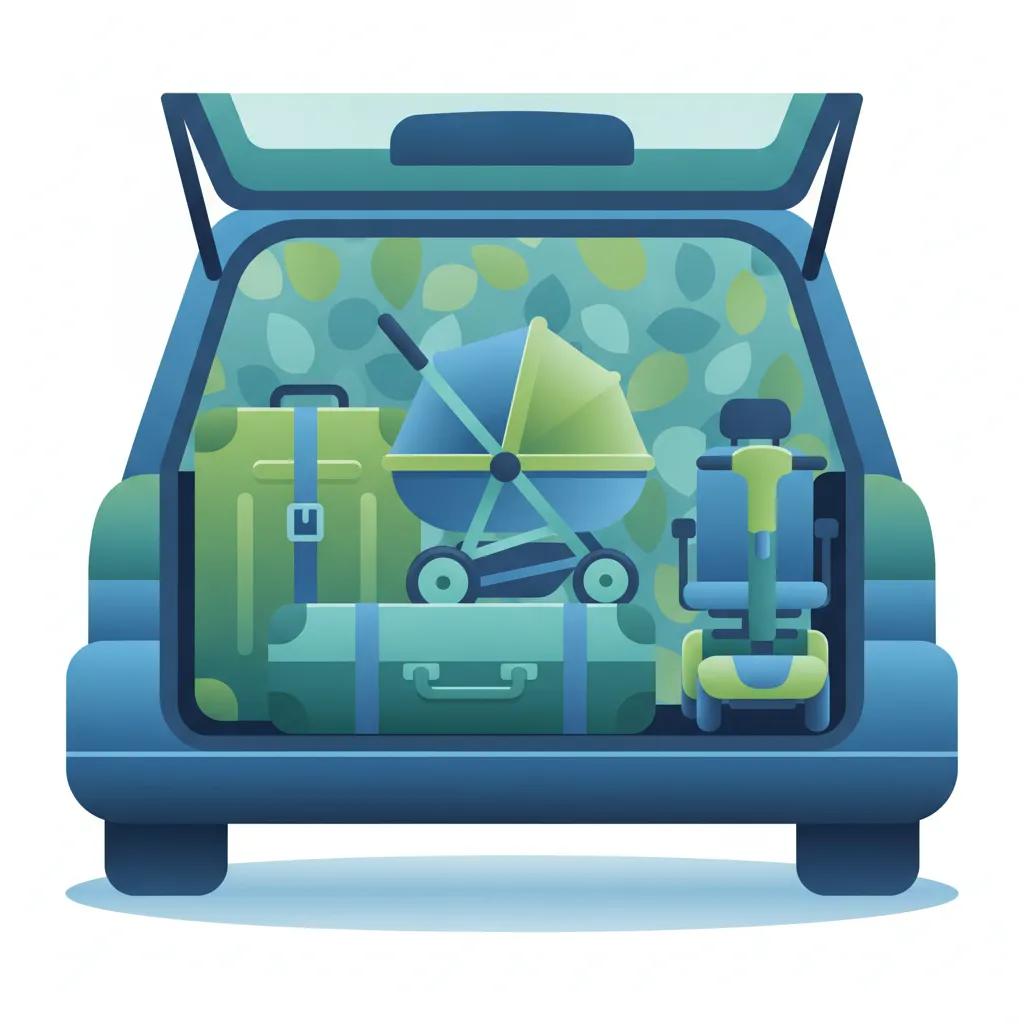
Unsecured items can become dangerous projectiles in the event of a sudden stop or collision. This lesson covers the driver's responsibility for overseeing the secure stowage of passenger belongings. It includes rules for using luggage compartments on coaches and designated spaces for prams and mobility aids on city buses.
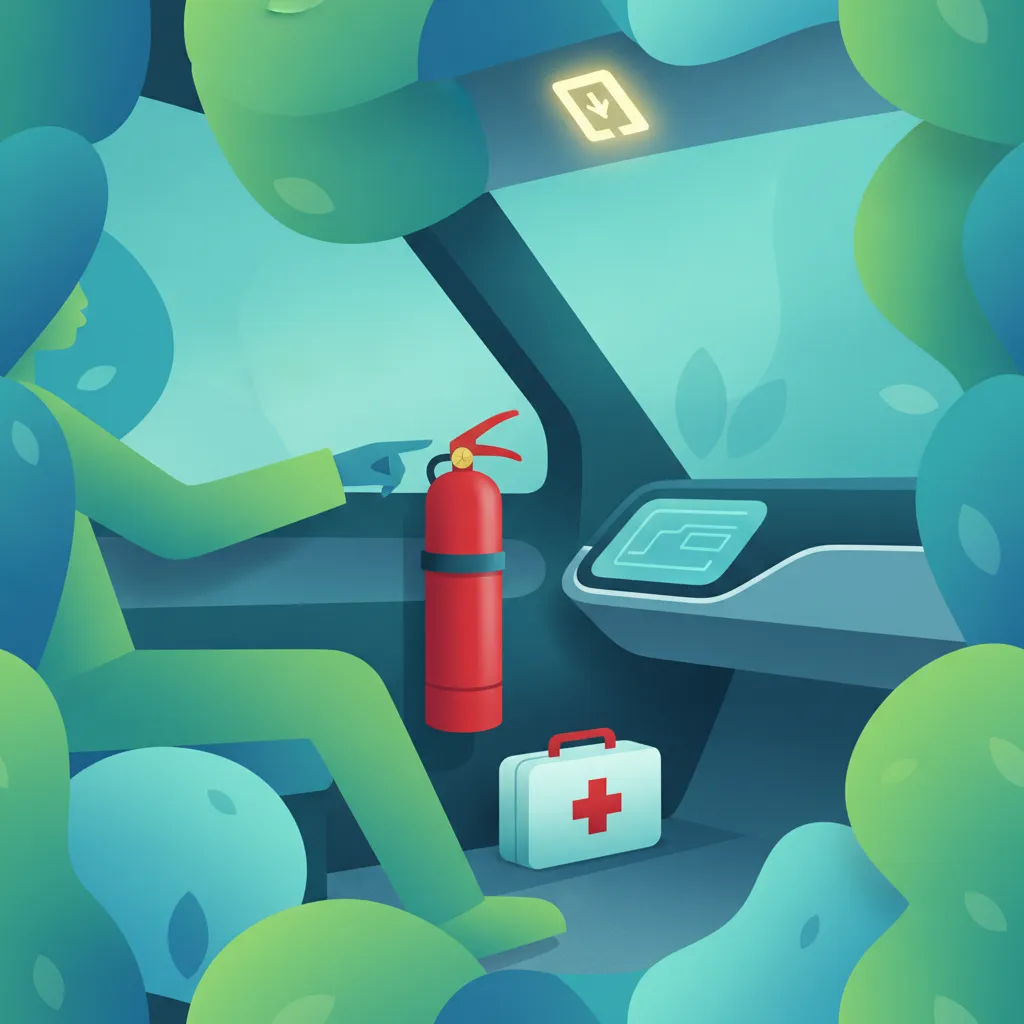
This lesson focuses on the legally required safety equipment that must be on board every passenger vehicle. You will learn how to locate and check the fire extinguisher, first aid kit, and emergency hammers. It also covers the inspection of emergency exits to ensure they are unobstructed and functional.

Heavy goods vehicles are fitted with specific safety structures to mitigate the severity of collisions with smaller vehicles and vulnerable road users. This lesson explains the function of the rear underrun bar, which prevents cars from going underneath the truck in a rear-end collision. It also covers side guards, which are designed to stop cyclists and pedestrians from falling under the vehicle's wheels during a side impact.
This lesson focuses on maintaining proper vehicle positioning within the lane, aligning correctly, and respecting road markings. You will understand how correct positioning contributes to safe overtaking and smooth turning. The content also discusses adjustments required in different scenarios, such as narrow roads and multi-lane highways, to maintain optimal lane discipline.
This lesson focuses on the rules governing when and how to stop a vehicle safely. You will learn to calculate the required stopping distance, considering reaction time and braking distance. The content also covers how to adjust stopping behavior for different road conditions and safe stopping techniques on inclines to ensure the vehicle remains under control.
Understand the critical interplay between seat belts and airbags, including mandatory airbag deactivation rules for child seats, to maximise occupant protection in Swiss vehicles.
This lesson explores the correct use of seat belts, the installation of child restraints, and the importance of securing loads. It covers weight distribution guidelines, maximum load limits, and conditions for towing a trailer. Guidance is also provided for safely transporting animals and ensuring all loads are properly secured to prevent movement.
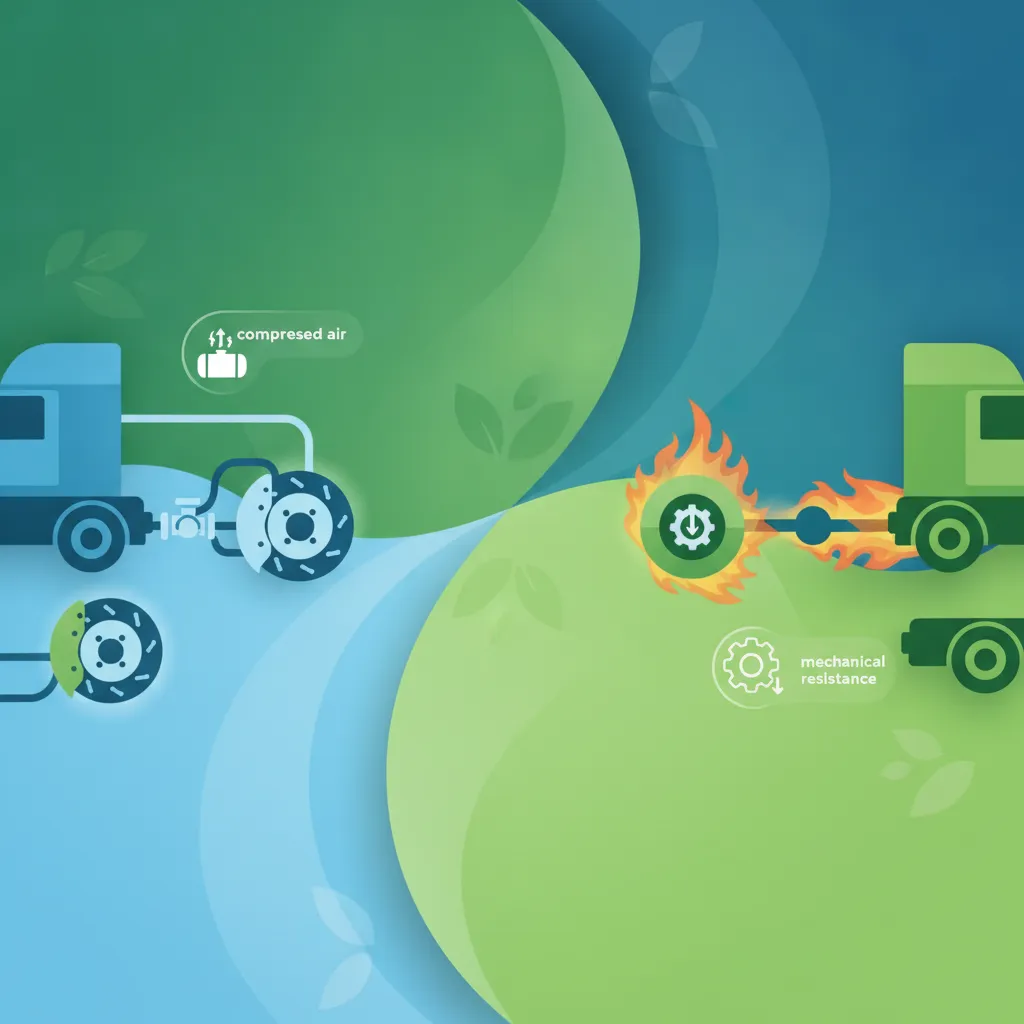
Large passenger vehicles rely on powerful air brake systems. This lesson explains how these systems work, including the importance of monitoring air pressure. It also details the function and proper use of auxiliary braking systems (retarders) to control speed on long descents and reduce wear on the service brakes.
Heavy goods vehicles are fitted with specific safety structures to mitigate the severity of collisions with smaller vehicles and vulnerable road users. This lesson explains the function of the rear underrun bar, which prevents cars from going underneath the truck in a rear-end collision. It also covers side guards, which are designed to stop cyclists and pedestrians from falling under the vehicle's wheels during a side impact.
This lesson focuses on general driving safety in areas with a high concentration of children. It stresses the importance of significantly reducing speed, being prepared for unexpected events, and scanning for children between parked cars. The driver must exhibit maximum vigilance in these high-risk environments at all times.
This lesson focuses on the legally required safety equipment that must be on board every passenger vehicle. You will learn how to locate and check the fire extinguisher, first aid kit, and emergency hammers. It also covers the inspection of emergency exits to ensure they are unobstructed and functional.

This lesson moves beyond simply staying within the lines, teaching how to actively position your vehicle within the lane to manage risk. You will learn to create a 'safety cushion' of space around your bus. This proactive approach improves your reaction time and gives other road users more space, reducing the likelihood of conflicts.
This lesson focuses on maintaining proper vehicle positioning within the lane, aligning correctly, and respecting road markings. You will understand how correct positioning contributes to safe overtaking and smooth turning. The content also discusses adjustments required in different scenarios, such as narrow roads and multi-lane highways, to maintain optimal lane discipline.
This lesson covers the immediate actions to take following a collision. The priorities are to prevent further incidents by securing the scene, to assess the situation for injuries, and to alert the emergency services. You will learn the correct procedures for making the area safe for yourself, your passengers, and other road users.
This lesson introduces defensive driving principles, focusing on hazard anticipation, continuous scanning, and proactive positioning. You will learn how to anticipate potential hazards by observing traffic patterns and maintaining situational awareness. Emphasis is placed on proactive speed management to avoid dangerous situations before they arise.
Unsecured items can become dangerous projectiles in the event of a sudden stop or collision. This lesson covers the driver's responsibility for overseeing the secure stowage of passenger belongings. It includes rules for using luggage compartments on coaches and designated spaces for prams and mobility aids on city buses.
Find clear answers to common questions learners have about Seat Belts, Airbags, and Child Restraints. Learn how the lesson is structured, which driving theory objectives it supports, and how it fits into the overall learning path of units and curriculum progression in Switzerland. These explanations help you understand key concepts, lesson flow, and exam focused study goals.
In Switzerland, children under 12 years of age and under 150 cm in height must use an approved child restraint system. It is vital to use the correct seat based on their weight and height to ensure maximum protection.
You must deactivate the front passenger airbag whenever a rear-facing child seat is placed on the front passenger seat. Failing to do so poses a severe risk to the child if the airbag deploys.
Exemptions are rare and typically limited to specific professional tasks like driving in reverse or local delivery services where the vehicle makes frequent stops. For standard driving, all passengers must wear seat belts.
ISOFIX is a standardized international system for attaching child seats to the vehicle frame. It minimizes the risk of incorrect installation, which is a common cause of child seat failure during accidents.
Pinpoint specific Swiss traffic rules, road signs, or driving situations you need to master. Use the practice search to start a focused revision session now and build confidence for your official driving theory exam.