
This lesson teaches you how to actively position your bus within a lane to manage hazards and maintain a critical safety cushion. Building on your understanding of vehicle dynamics, you will learn proactive techniques to enhance passenger safety and reduce conflict with other road users in Swiss traffic.

Lesson content overview
As a professional driver undertaking the Swiss Category D Driving License Theory Course, mastering strategic lane positioning is crucial for the safe and efficient operation of a bus or coach. This lesson extends beyond merely staying within your lane; it involves actively placing your vehicle to manage risks, enhance visibility, and create a vital buffer zone known as a "safety cushion." This proactive approach improves your reaction time, provides greater space for other road users, and significantly reduces the likelihood of traffic conflicts and collisions.
Strategic lane positioning refers to the deliberate placement of your passenger vehicle within its designated lane to maximize safety and efficiency. It’s an advanced driving skill that considers not just your vehicle's immediate surroundings, but also upcoming road features, traffic flow, and potential hazards. Unlike simply staying centered, strategic positioning is a dynamic process that adapts to every changing condition on the road.
The core idea is to establish a safety cushion – a protective zone of space around your bus. This buffer minimizes risks from other vehicles that may deviate, provides ample room for sudden swerves or emergency maneuvers, and ensures passenger comfort during all driving situations. By proactively adjusting your position, you improve your field of view, facilitate safer lane changes, and fulfill your legal obligations to drive responsibly under Swiss traffic law, specifically as stipulated in regulations like the Verkehrsregelnverordnung (VRV) or Ordonnance sur les règles de la circulation routière (OCR), commonly known as RVV.
This concept builds upon fundamental knowledge of lane markings and vehicle dimensions, and the principles of safe following distances. It forms a critical foundation for later topics such as advanced maneuvering and protecting vulnerable road users, making it an indispensable part of your professional driver training.
For a heavy and long vehicle like a bus or coach, the concept of a safety cushion is paramount. Due to their size, weight, and passenger capacity, these vehicles require more space and time to react and maneuver safely. A well-maintained safety cushion directly translates into increased safety for your passengers, other road users, and your vehicle.
A safety cushion is defined as a buffer zone of clear space maintained around your vehicle, both within its lane and extending to adjacent areas. This zone provides sufficient distance to avoid contact in case of unexpected movements, whether from your own vehicle, other traffic, or environmental factors.
It can be broken down into two main components:
Practically, drivers should aim to maintain a buffer of at least 0.5 metres from both lane markings on standard roads. In more dynamic situations or on high-speed roads, this distance may need to be significantly increased to account for potential vehicle sway or external factors. Swiss road regulations, such as Article 32 of the RVV 1990, mandate maintaining a safe distance from traffic and road boundaries, reinforcing the importance of this safety principle. It is a misconception to believe that simply staying centered automatically creates a sufficient cushion; rather, it requires active awareness of lane width variations and surrounding conditions.
For buses and coaches, a robust safety cushion is indispensable for several reasons. Firstly, it provides crucial extra time for the driver to react to sudden braking ahead, unexpected lane changes by other vehicles, or unforeseen obstacles. Secondly, it mitigates the risk of side impacts, which are particularly dangerous for high-sided vehicles like buses due to their larger blind spots and potential for greater damage upon collision.
Furthermore, a well-maintained safety cushion contributes significantly to passenger comfort. Smooth, controlled driving without sudden swerves or sharp corrections is possible when there is ample space to maneuver. In an emergency stop, this space also helps to absorb the forces on occupants. Ultimately, by consistently applying the safety cushion principle, professional bus drivers enhance overall road safety, reduce vehicle wear, and uphold their duty of care.
Effective lane positioning for a bus driver is guided by three interconnected core principles: the safety cushion, lane discipline, and proactive positioning. Each plays a vital role in ensuring safe and comfortable travel for passengers and other road users.
The Safety Cushion Principle dictates that you must always maintain a buffer zone of clear space around your vehicle within its lane. This zone provides additional time and distance to react to unexpected events, significantly reducing the risk of collisions. This means actively avoiding driving too close to lane lines, other vehicles ahead, or lateral boundaries. For instance, maintaining sufficient lateral clearance ensures that even a slight sway of your heavy vehicle doesn't inadvertently touch a lane line or an adjacent vehicle.
Lane Discipline is the fundamental requirement to keep your vehicle entirely within its designated lane boundaries. This means preventing any part of your bus from encroaching into adjacent lanes or onto the shoulder, except when legally permitted for maneuvers like overtaking or turning. The purpose of strict lane discipline is to ensure orderly traffic flow, prevent conflicts with vehicles in neighboring lanes, and maintain predictability for all road users. It reinforces consistent positioning and prevents dangerous drifting, which can be particularly hazardous for long vehicles.
Proactive Positioning involves adjusting your vehicle's placement within the lane based on anticipated traffic conditions, surrounding vehicles, and upcoming road geometry. This is not merely a reactive measure but an anticipatory one, designed to ease future maneuvers and mitigate potential hazards before they arise. For example, you might shift slightly to the right within your lane before a right turn to create more space between the bus and the curb, accounting for the vehicle's rear overhang. This thoughtful adjustment allows for smoother, safer driving and helps in managing the unique dynamics of a bus or coach.
Several factors specifically influence how a professional bus driver should position their vehicle within a lane. These range from the inherent characteristics of the bus itself to the design of the road and the prevailing traffic conditions.
The dimensions of a bus – its length, width, height, and turning radius – have a profound impact on safe lane positioning. Buses are significantly wider and longer than standard passenger cars, requiring more lateral and longitudinal space. This means a wider vehicle inherently needs more clearance from lane markings and other vehicles. Drivers must constantly account for their bus's full width, especially on narrow roads or when navigating tight spaces. For example, on a narrow city street, a bus driver might need to align the vehicle slightly left of center to provide adequate room for cyclists or parked cars on the right, ensuring sufficient lateral clearance. Swiss regulations, such as Article 36 RVV 1990, specifically address clearance requirements for wider vehicles, emphasizing the need for professional drivers to internalize these constraints.
The width of the lane itself is a critical factor in determining optimal lane positioning. Lanes vary significantly in width depending on the road type:
In narrower urban lanes, the available safety cushion may be reduced, yet it must remain sufficient to prevent encroachment and ensure safety. Professional drivers must understand that simply fitting within the lane lines does not automatically guarantee safety. For example, on a 3.0-metre urban lane, a bus driver might maintain approximately 0.4 metres of lateral cushion on each side, a reduced but still critical buffer. Article 29 RVV 1990 specifies minimum lane widths for heavy vehicles on motorways (2.75 metres), highlighting that these are minimums, and actual safe operating widths are often greater for passenger transport.
Dynamic Lane Positioning involves adjusting the vehicle's lateral location in real time based on changes in speed, traffic density, and road curvature. This adaptive approach ensures continuous safety and efficiency.
Believing a static, centered position suffices regardless of traffic dynamics is a common misunderstanding. For instance, on a motorway, a bus driver might maintain a central position when cruising above 80 km/h, but adopt a slight left offset when preparing to overtake slower traffic, thus maximizing the lateral cushion during the maneuver. Dynamic adjustments are essential for navigating complex and rapidly changing traffic environments safely.
Adhering to Swiss traffic regulations is fundamental for all drivers, especially professional bus and coach operators. These laws provide the legal framework for safe lane positioning and maintaining adequate safety distances.
Rule: Drivers must keep their vehicle entirely within the lane boundaries at all times, except when legally permitted to cross them (e.g., for overtaking, turning, or avoiding an obstacle).
Applicability: This rule applies to all road types and under all driving conditions.
Legal Status: Mandatory (Swiss Road Traffic Act – Article 38 RVV).
Rationale: This regulation is crucial for preventing encroachment on adjacent lanes, maintaining orderly traffic flow, and ensuring predictability for all road users. For heavy vehicles, maintaining strict lane discipline prevents side collisions and reduces the risk of cutting corners in turns.
Correct Example: A bus cruising on a motorway remains fully within its designated lane, with no part of the vehicle extending over the lane markings.
Incorrect Example: A bus drifts consistently towards the left lane marking, occasionally crossing into the adjacent lane, even when not actively changing lanes or overtaking.
Rule: A minimum lateral clearance of 0.5 metres from lane markings must be maintained on road types where lane width permits. This applies to both the left and right sides of the vehicle.
Applicability: This rule is applicable on urban and rural roads with standard lane widths (typically ≥ 3.0 metres).
Legal Status: Mandatory (Swiss RVV 1990, Article 31).
Rationale: This regulation provides a crucial safety cushion, allowing for minor steering corrections or unexpected lateral movements without making contact with lane edges, curbs, or adjacent traffic. For buses, this cushion is vital given their width and potential for body sway.
Correct Example: A bus drives down a two-lane road, consistently maintaining approximately 0.5 metres of clear space between its right side and the right edge marking.
Incorrect Example: A bus drives within 0.2 metres of the left lane marking, leaving insufficient room for a minor correction and risking side contact.
Rule: The driver must ensure that the vehicle’s mirrors and line of sight provide an unobstructed observation of adjacent lanes and the vehicle’s surroundings.
Applicability: This rule applies in all driving conditions and is especially important before maneuvers.
Legal Status: Mandatory (Art. 30 RVV 1990).
Rationale: Comprehensive visibility is essential for safely changing lanes, overtaking, and detecting vulnerable road users in blind spots. Proper lane positioning helps optimize mirror angles and direct vision.
Correct Example: Before starting a route, the bus driver adjusts all mirrors to cover as much of the blind spots as possible, and regularly checks them while driving.
Incorrect Example: The driver neglects to adjust their mirrors correctly, creating significant blind spots that impede safe observation of adjacent traffic.
Rule: Drivers must not intentionally use parts of the lane adjacent to the one they are traveling in, except when overtaking, preparing for a turn, or yielding to an emergency vehicle.
Applicability: This rule applies on all road types, prohibiting casual or continuous "riding" between lanes.
Legal Status: Mandatory (RVV 1990, Article 38).
Rationale: This prevents side collisions, maintains clear lane assignments, and ensures predictable traffic flow. Intentional encroachment without proper justification can lead to dangerous situations and legal penalties.
Correct Example: A bus driver only moves into the left lane when actively commencing an overtaking maneuver, returning to the right lane once safe to do so.
Incorrect Example: A bus "rides" the line between two lanes for an extended period, making it unclear to other drivers which lane it intends to occupy.
Rule: When approaching merges, intersections, lane changes, or roundabouts, drivers should proactively increase their safety cushion to at least 1.0 metres laterally from potential conflict points.
Applicability: This is especially relevant at points where traffic flow combines or diverges.
Legal Status: Recommended (non-mandatory, but considered best practice for professional drivers).
Rationale: Providing additional lateral margin at these dynamic points accounts for other vehicles entering or exiting the lane, allows for unexpected braking or swerving, and reduces the risk of side collisions where multiple paths converge.
Correct Example: As a bus approaches a motorway merge point from the right, the driver subtly adjusts their position to the left within their lane, creating an increased lateral clearance of approximately 1.0 metre from the merging lane.
Incorrect Example: A bus maintains its standard 0.5-metre lateral cushion when approaching a merge, leaving minimal room for a vehicle trying to enter the main traffic flow.
Even experienced drivers can fall into habits that compromise safe lane positioning. Awareness of common violations and edge cases helps prevent these dangerous situations.
Common Error: Driving too close to the lane markings or road edges, leading to accidental contact with curbs, barriers, or roadside obstacles. This is known as lane edge drift.
Consequence: Damage to the bus tires or body, potential loss of control, and increased risk of collision.
Correction: Consistently maintain a minimum safety cushion of 0.5 metres from both lateral lane boundaries. Use mirrors frequently to monitor your vehicle's position relative to the lane lines.
Common Error: Overtaking another vehicle on the wrong side (e.g., passing on the right where only left-side overtaking is permitted).
Consequence: Potential for collision due to unexpected maneuvers from the overtaken vehicle, and a clear legal violation in Switzerland.
Correction: Always adhere to the prescribed overtaking side (typically the left in Switzerland). Ensure sufficient longitudinal and lateral clearance before and during the maneuver, returning to your original lane only when safe.
Common Error: Failing to provide adequate lateral space for vehicles merging into your lane, leading to conflicts or near misses.
Consequence: Increased risk of side-swipe collisions, especially with smaller vehicles whose drivers might underestimate a bus's size.
Correction: Proactively expand your safety cushion (aim for 1.0 metre lateral clearance) when approaching merge points. Anticipate merging traffic and adjust your speed and position to facilitate a smooth and safe merge for others.
Common Error: Assuming standard car driving rules apply and failing to adequately account for the bus's greater width on narrow lanes, leading to encroachment into adjacent lanes or striking fixed objects.
Consequence: Side-swipe collisions with other vehicles or fixed objects, potential damage to the bus, and legal penalties.
Correction: Always be conscious of your bus's full width. On narrow streets, be prepared to adjust your lane position to provide maximum clearance for hazards on either side, even if it means moving slightly off-center.
Common Error: Maintaining a perfectly centered position on a curve, causing the rear of the vehicle (especially longer buses) to "cut the corner" into the inner lane or over the curb due to the vehicle's turning radius and body overhang.
Consequence: Side collision with vehicles in the adjacent lane, striking curbs or infrastructure, or causing passenger discomfort.
Correction: As you approach a curve, slightly offset your bus towards the outer edge of the lane. This allows the rear of the bus to track more safely through the curve, maintaining proper clearance on the inner side.
Common Error: Failing to increase both longitudinal and lateral safety cushions during adverse weather conditions like rain, snow, or ice.
Consequence: Collisions due to reduced traction, hydroplaning, or unexpected vehicle drift. Other vehicles may also drift more in poor conditions.
Correction: Always increase your safety cushion (to at least 1.0 metre laterally) when conditions are wet, icy, or snowy. Reduce your speed, increase following distance, and allow more space for all maneuvers.
Common Error: Not maintaining enough lateral space from lane edges, especially on high-speed roads, which could be critical during an emergency stop.
Consequence: Inability to stop safely without drifting into an adjacent lane or off the road, increasing the risk of multi-vehicle collisions.
Correction: Continuously maintain sufficient lateral clearance from lane edges, even when traveling at high speeds. This ensures that an emergency braking maneuver can be executed safely within your lane.
Optimal lane positioning is not a static concept; it must dynamically adapt to a myriad of changing conditions. Professional bus drivers must be adept at making these real-time adjustments.
Weather significantly impacts road conditions and the behavior of other drivers, necessitating adjustments to lane positioning:
The environment dictates specific lane positioning strategies:
The load a bus carries directly affects its handling characteristics:
Vulnerable road users (VRUs) such as cyclists, motorcyclists, and pedestrians require special consideration:
Road design features also demand specific positioning:
Mastering strategic lane positioning brings a multitude of benefits for professional bus drivers, encompassing enhanced safety, improved passenger comfort, and strict adherence to legal obligations.
Firstly, the most significant advantage is increased reaction time. By maintaining generous lateral and longitudinal safety cushions, drivers gain precious extra milliseconds to perceive, process, and respond to unexpected hazards. This additional time can be the critical difference between avoiding an accident and being involved in a collision. The greater space around the vehicle allows for more controlled and gradual corrective actions, preventing abrupt steering or braking that could destabilize the bus.
Secondly, proficient lane positioning directly leads to a reduced likelihood of side collisions. Heavy vehicles have larger blind spots and require more space to maneuver. By consciously placing the bus away from lane edges and adjacent traffic, drivers minimize the risk of accidental contact, especially during lane changes, turns, or when navigating narrow spaces. This proactive spacing also mitigates the danger of other vehicles drifting into the bus's path.
Furthermore, optimal lane positioning contributes significantly to improved passenger comfort. Smooth, predictable driving without sudden swerves or excessive corrections is a hallmark of a skilled professional driver. When ample space is maintained, the driver can execute maneuvers gracefully, reducing passenger anxiety and enhancing their overall travel experience. This is especially important for passengers who may be standing or have mobility challenges.
Finally, consistent application of strategic lane positioning ensures full compliance with Swiss traffic regulations. Adhering to rules regarding lane discipline, minimum lateral clearance, and safe overtaking distances prevents legal violations, fines, and potential points on a driving record. This professional conduct not only protects the driver and the company but also reinforces the driver's reputation as a safe and responsible operator within the Swiss transport system.
In essence, masterful lane positioning is not merely a technical skill; it is a holistic approach to driving that integrates spatial awareness, anticipation, vehicle dynamics, and legal knowledge to create the safest and most efficient environment on the road.
This lesson teaches professional bus drivers how to strategically position their vehicle within the lane to maximize safety and create a protective buffer zone called a safety cushion. The safety cushion consists of both lateral clearance (side-to-side distance from lane markings) and longitudinal clearance (distance from vehicles ahead and behind). Key Swiss regulations require maintaining at least 0.5 metres of lateral clearance on standard roads, with specific rules in the RVV 1990 governing lane discipline and observation zones. Professional drivers must dynamically adjust their position based on vehicle dimensions, road width, weather conditions, and upcoming hazards. Common errors include lane edge drift, inadequate clearance at merges, and failing to offset appropriately on curves to prevent the rear of the bus from encroaching on adjacent lanes.
A short set of high-value points that capture the most important learning from this lesson.
Strategic lane positioning requires actively managing your vehicle's placement within the lane, not just staying centered between lines.
A safety cushion is a buffer zone of clear space maintained both laterally and longitudinally around your bus to provide reaction time.
Maintain a minimum lateral clearance of 0.5 metres from lane markings on standard roads, increasing to 1.0 metre at merge points and intersections.
Vehicle dimensions of a bus require greater lateral clearance than standard cars, especially on narrow urban lanes (3.0-3.5 metres wide).
Dynamic lane positioning means adjusting your lateral location in real time based on speed, traffic density, weather, and road curvature.
Explore all units and lessons included in this driving theory course.
Swiss RVV Article 31 mandates a minimum 0.5m lateral clearance from lane markings on roads where lane width permits.
On curves, offset your bus slightly toward the outer lane edge to prevent the rear from cutting into the inner lane or over the curb.
Adverse weather conditions (rain, snow, ice, wind) require increasing both lateral and longitudinal safety cushions.
Maintain at least 1.0 metre lateral clearance when passing cyclists, motorcyclists, or pedestrians to protect vulnerable road users.
A loaded bus has a higher centre of gravity and requires extra lateral clearance on curves compared to an empty vehicle.
Lane edge drift: driving too close to lane markings, leaving insufficient buffer for minor corrections or vehicle sway.
Maintaining a static centered position regardless of traffic conditions, rather than adjusting dynamically to speed and traffic flow.
Failing to increase lateral clearance at merge points, creating conflicts with vehicles entering or exiting the lane.
Not accounting for bus width on narrow roads, assuming standard car positioning rules apply to a much wider vehicle.
On curves, staying centered causes the rear of a long bus to cut the corner into adjacent lanes or strike curbs.
Lesson content overview
A short set of high-value points that capture the most important learning from this lesson.
Strategic lane positioning requires actively managing your vehicle's placement within the lane, not just staying centered between lines.
A safety cushion is a buffer zone of clear space maintained both laterally and longitudinally around your bus to provide reaction time.
Maintain a minimum lateral clearance of 0.5 metres from lane markings on standard roads, increasing to 1.0 metre at merge points and intersections.
Vehicle dimensions of a bus require greater lateral clearance than standard cars, especially on narrow urban lanes (3.0-3.5 metres wide).
Dynamic lane positioning means adjusting your lateral location in real time based on speed, traffic density, weather, and road curvature.
Explore all units and lessons included in this driving theory course.
Swiss RVV Article 31 mandates a minimum 0.5m lateral clearance from lane markings on roads where lane width permits.
On curves, offset your bus slightly toward the outer lane edge to prevent the rear from cutting into the inner lane or over the curb.
Adverse weather conditions (rain, snow, ice, wind) require increasing both lateral and longitudinal safety cushions.
Maintain at least 1.0 metre lateral clearance when passing cyclists, motorcyclists, or pedestrians to protect vulnerable road users.
A loaded bus has a higher centre of gravity and requires extra lateral clearance on curves compared to an empty vehicle.
Lane edge drift: driving too close to lane markings, leaving insufficient buffer for minor corrections or vehicle sway.
Maintaining a static centered position regardless of traffic conditions, rather than adjusting dynamically to speed and traffic flow.
Failing to increase lateral clearance at merge points, creating conflicts with vehicles entering or exiting the lane.
Not accounting for bus width on narrow roads, assuming standard car positioning rules apply to a much wider vehicle.
On curves, staying centered causes the rear of a long bus to cut the corner into adjacent lanes or strike curbs.
Explore search topics learners often look for when studying Strategic Lane Positioning and Maintaining a Safety Cushion. These topics reflect common questions about road rules, driving situations, safety guidance, and lesson level theory preparation for learners in Switzerland.
Browse additional driving theory lessons that cover connected traffic rules, road signs, and common driving situations related to this topic. Improve your understanding of how different rules interact across everyday traffic scenarios.
Learn how to adapt your lane positioning for buses and coaches on narrow Swiss roads and through curves. Understand how to manage rear overhang and maintain safety cushions to navigate challenging road geometries effectively, ensuring passenger safety and compliance.

Bus lanes are a key tool for improving service reliability, but they come with specific rules. This lesson covers how to correctly interpret bus lane signs and markings. It also explains the regulations for entering and leaving the lane to make turns or avoid obstructions, and the priority rules associated with them.
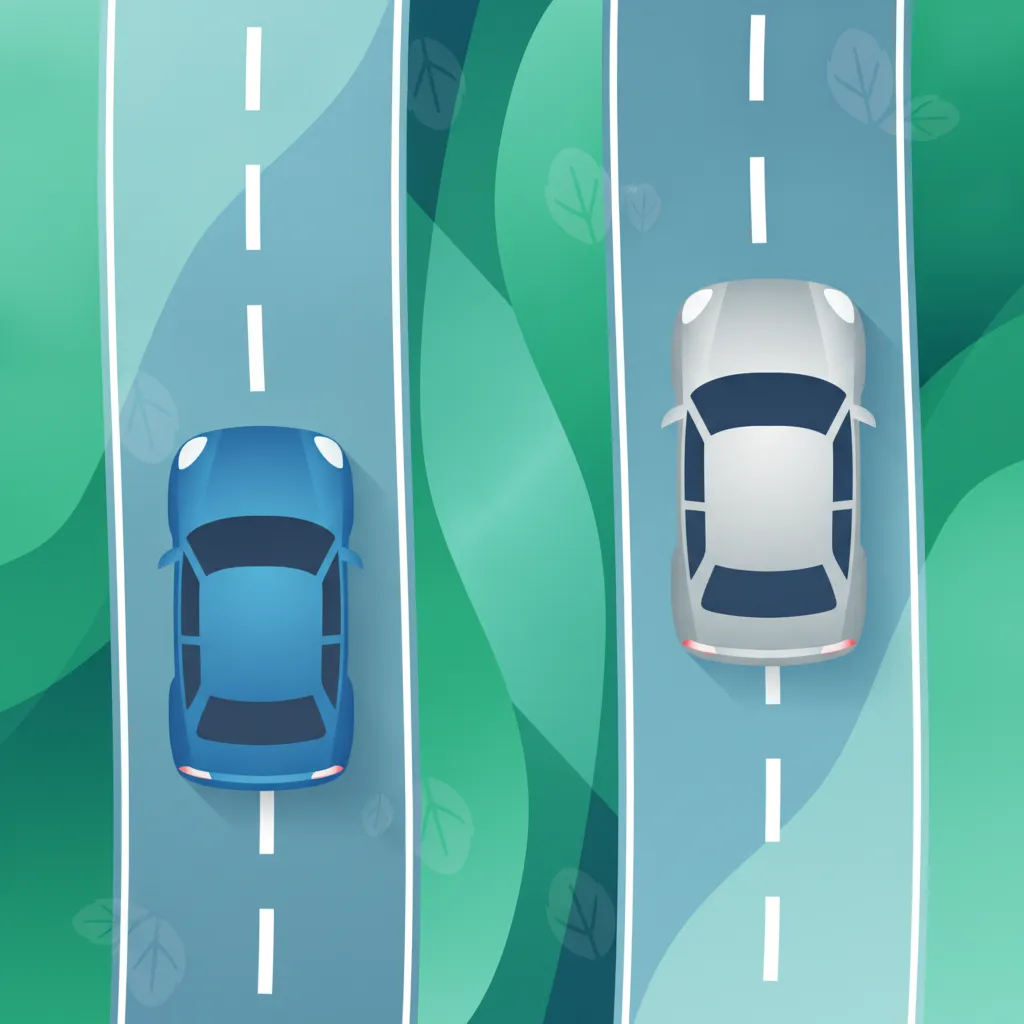
This lesson focuses on maintaining proper vehicle positioning within the lane, aligning correctly, and respecting road markings. You will understand how correct positioning contributes to safe overtaking and smooth turning. The content also discusses adjustments required in different scenarios, such as narrow roads and multi-lane highways, to maintain optimal lane discipline.

Driving a bus in older parts of a city requires exceptional spatial awareness and precise control. This lesson focuses on assessing clearances, managing front and rear overhang, and negotiating tight turns around parked cars and buildings. A key theme is slow, careful, and deliberate manoeuvring to avoid contact.

Rural driving requires a different mindset from urban driving. This lesson covers how to position your vehicle on narrow roads, how to use passing places effectively, and how to anticipate hazards like slow-moving farm machinery, animals, and concealed junctions. Managing vehicle width and height is a key focus.

Motorway driving involves high speeds and requires constant concentration. This lesson covers correct lane discipline, safe procedures for joining and leaving the motorway, and techniques for overtaking other large vehicles. Maintaining appropriate speed and a safe following distance is emphasized throughout.
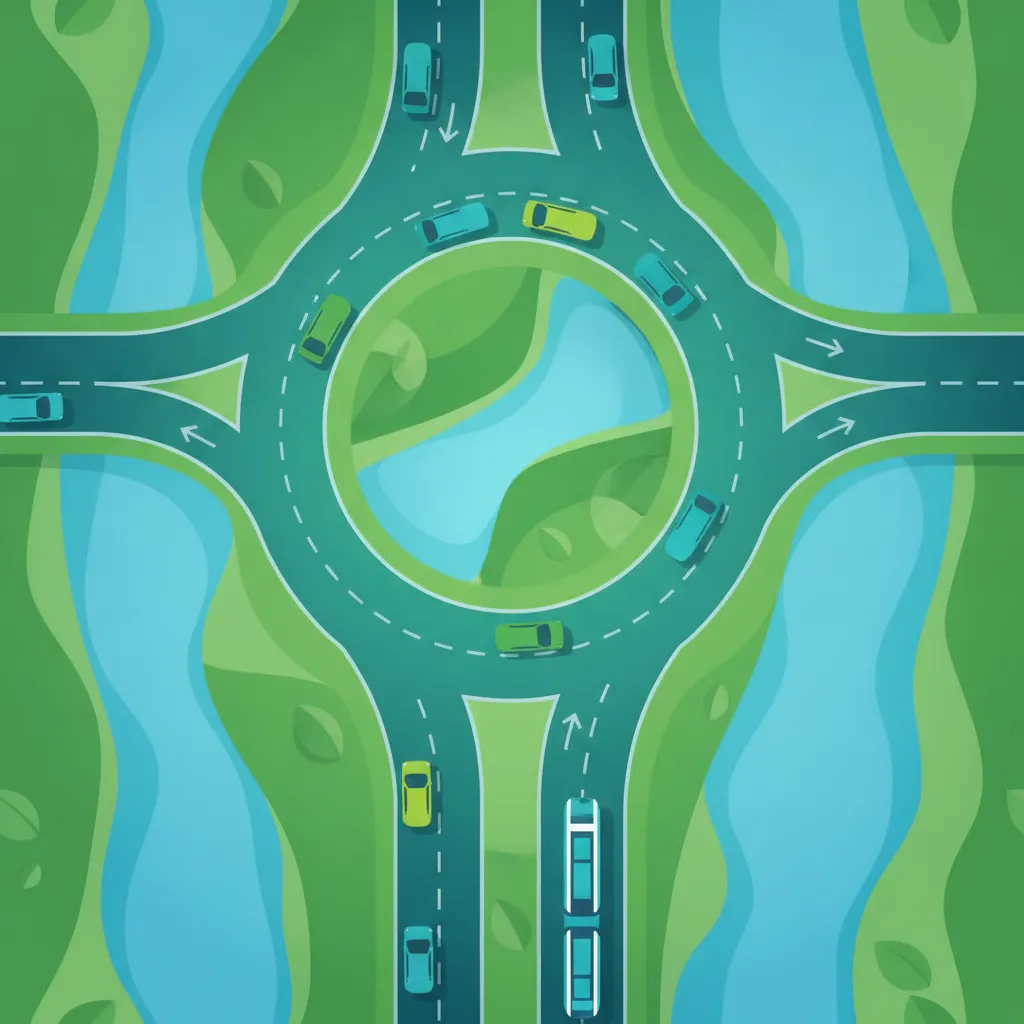
The size of a bus requires careful planning when negotiating complex intersections. This lesson teaches the importance of early lane selection, clear signalling, and comprehensive observation. It provides specific techniques for managing the vehicle's swept path through multi-lane roundabouts and other challenging urban junctions.

This lesson explains strategic lane positioning to enhance visibility and safety in traffic. It covers how to choose a lane position that helps you see and be seen by other drivers, avoiding their blind spots. The content emphasizes maintaining a space cushion around the motorcycle to allow for reaction time and potential escape routes.

Motorway driving requires constant concentration due to high speeds. This lesson emphasizes the importance of staying in the right-hand lane unless overtaking and the specific restrictions on lorry overtaking in Switzerland. It reinforces the need for a following distance of at least four seconds to compensate for the vehicle's long stopping distance and provides guidance on safely merging and exiting.

The approach to a stop sets the stage for a safe passenger exchange. This lesson covers signalling in good time, decelerating smoothly, and aiming for a final position that is close and parallel to the kerb. Proper positioning minimizes the step for passengers and prevents them from having to step into traffic.

Rural roads present challenges like narrow lanes, poor surfaces, sharp bends, and limited visibility. This lesson teaches drivers how to position their large vehicle to maximize space and visibility, anticipate oncoming traffic at blind corners, and be aware of specific rural hazards. These hazards include slow-moving agricultural vehicles, animals on the road, and concealed farm entrances.
Identify and learn to avoid frequent mistakes drivers make with lane positioning and maintaining a safety cushion. This lesson focuses on practical tips and theoretical understanding to enhance your spatial awareness and defensive driving skills for the Swiss Category D exam.
The approach to a stop sets the stage for a safe passenger exchange. This lesson covers signalling in good time, decelerating smoothly, and aiming for a final position that is close and parallel to the kerb. Proper positioning minimizes the step for passengers and prevents them from having to step into traffic.

Departing from a bus stop is a high-risk manoeuvre. This lesson details the critical sequence of actions: checking all passengers are clear of the doors, performing a comprehensive mirror and blind spot check, signalling, and waiting for a safe gap in traffic. This systematic approach is essential for preventing collisions with overtaking vehicles, cyclists, or pedestrians.

Buses and coaches require significantly more distance to stop than cars. This lesson explains why the 'two-second rule' is insufficient and teaches the appropriate methods for calculating a safe gap in various conditions. Maintaining an adequate safety cushion is one of the most important defensive driving skills.
Bus lanes are a key tool for improving service reliability, but they come with specific rules. This lesson covers how to correctly interpret bus lane signs and markings. It also explains the regulations for entering and leaving the lane to make turns or avoid obstructions, and the priority rules associated with them.
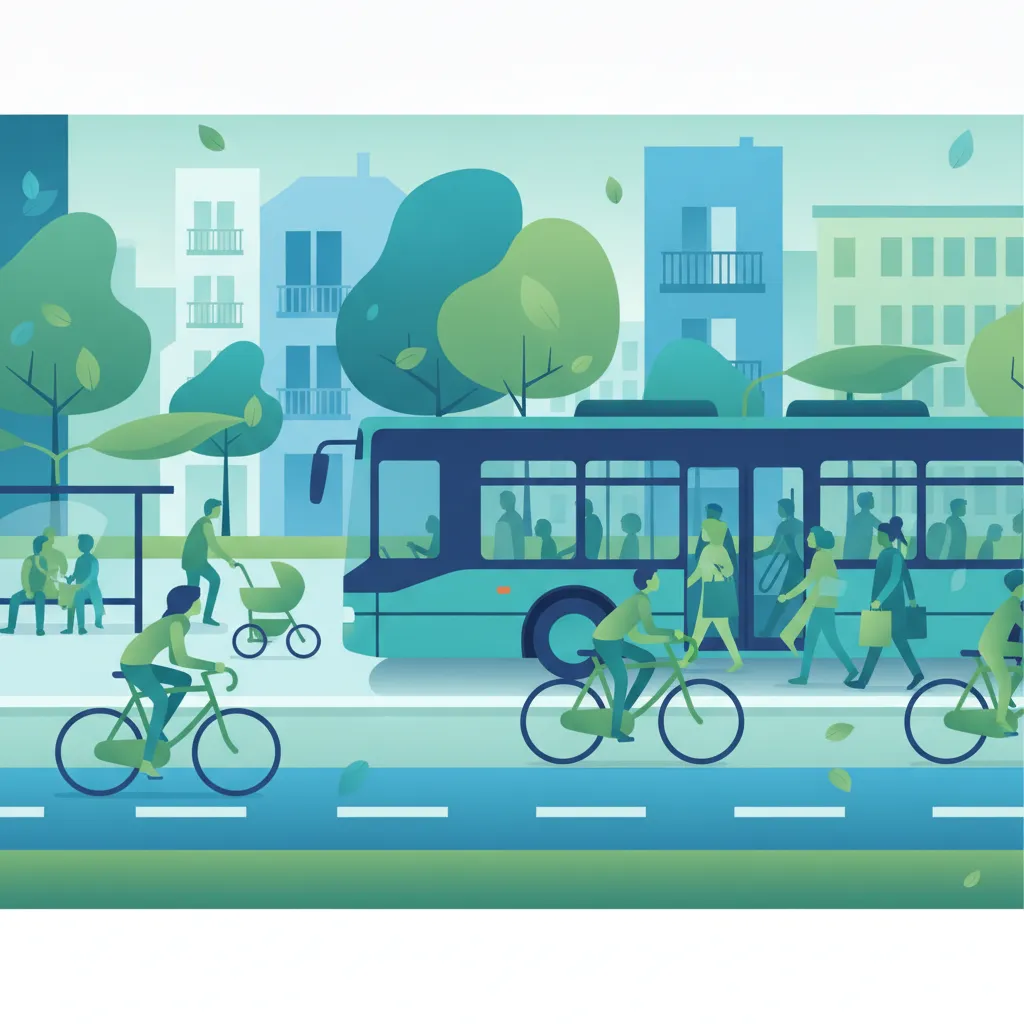
A stopped bus creates a significant visual obstruction for other road users. This lesson focuses on the risk of pedestrians stepping out from in front of the bus and cyclists passing unexpectedly on either side. It reinforces the need for exhaustive mirror and blind spot checks before moving off to prevent tragic 'pull-away' accidents.
This lesson focuses on maintaining proper vehicle positioning within the lane, aligning correctly, and respecting road markings. You will understand how correct positioning contributes to safe overtaking and smooth turning. The content also discusses adjustments required in different scenarios, such as narrow roads and multi-lane highways, to maintain optimal lane discipline.
Motorway driving involves high speeds and requires constant concentration. This lesson covers correct lane discipline, safe procedures for joining and leaving the motorway, and techniques for overtaking other large vehicles. Maintaining appropriate speed and a safe following distance is emphasized throughout.
The size of a bus requires careful planning when negotiating complex intersections. This lesson teaches the importance of early lane selection, clear signalling, and comprehensive observation. It provides specific techniques for managing the vehicle's swept path through multi-lane roundabouts and other challenging urban junctions.

This lesson focuses on general driving safety in areas with a high concentration of children. It stresses the importance of significantly reducing speed, being prepared for unexpected events, and scanning for children between parked cars. The driver must exhibit maximum vigilance in these high-risk environments at all times.
Driving a bus in older parts of a city requires exceptional spatial awareness and precise control. This lesson focuses on assessing clearances, managing front and rear overhang, and negotiating tight turns around parked cars and buildings. A key theme is slow, careful, and deliberate manoeuvring to avoid contact.
Find clear answers to common questions learners have about Strategic Lane Positioning and Maintaining a Safety Cushion. Learn how the lesson is structured, which driving theory objectives it supports, and how it fits into the overall learning path of units and curriculum progression in Switzerland. These explanations help you understand key concepts, lesson flow, and exam focused study goals.
Category D vehicles have significantly larger dimensions, including greater width and length, which leaves less margin for error in a standard lane. Proper positioning is required to avoid mounting curbs or encroaching into adjacent lanes, while maintaining a safety cushion is vital for the safety of your passengers.
A safety cushion is the empty space maintained around your bus on all sides. It provides the reaction time and room needed to maneuver safely if a cyclist, pedestrian, or another driver makes a sudden movement or error near your vehicle.
Positioning your vehicle to avoid sudden steering inputs or abrupt changes keeps the ride smooth. By anticipating the road ahead and positioning your bus early for turns or lane changes, you minimize the swaying and jarring that can occur with larger vehicles.
Yes, the Swiss theory exam includes scenarios that test your ability to assess spacing and hazard avoidance. You are expected to demonstrate knowledge of how road position, speed, and surrounding traffic interact to maintain that critical safety cushion.
Pinpoint specific Swiss traffic rules, road signs, or driving situations you need to master. Use the practice search to start a focused revision session now and build confidence for your official driving theory exam.