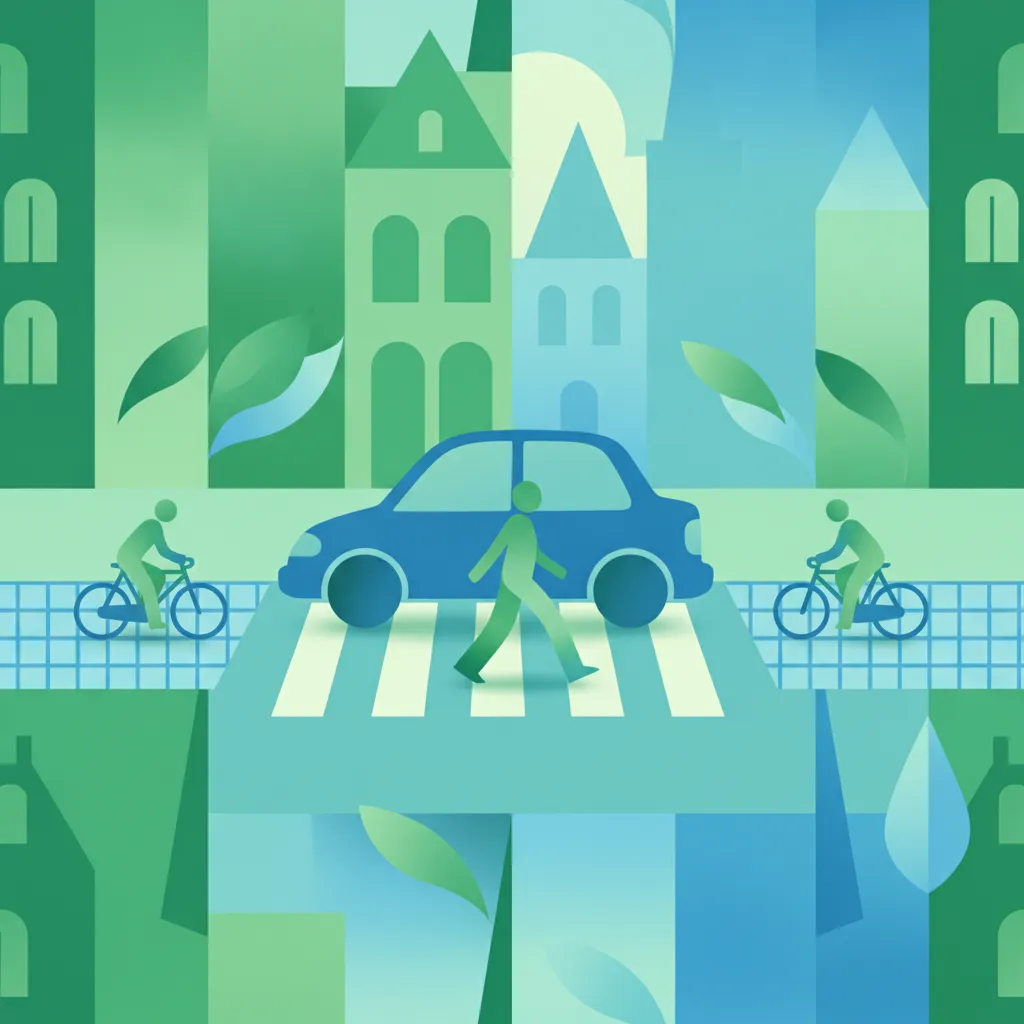
This lesson guides you through the legal obligations and safety requirements for navigating pedestrian and bicycle crossings as a motorcyclist in Belgium. You will learn to correctly anticipate vulnerable road user behavior to ensure compliance with traffic rules and enhance your overall road safety. This is a critical skill for both your theory exam and real-world urban riding.
Lesson content overview
As a motorcyclist in Belgium, understanding your obligations and the specific rules governing road crossings, pedestrian zones, and bicycle crossings is paramount for safety and legal compliance. These areas are designed to protect vulnerable road users such as pedestrians and cyclists, who are at a higher risk in the event of a collision. This comprehensive lesson details the legal requirements, practical considerations, and defensive riding techniques necessary to navigate these environments safely and efficiently.
Successfully mastering the nuances of these crossings is crucial for preventing accidents and ensuring a smooth flow of traffic, particularly in busy urban settings. This topic builds upon fundamental principles covered in the Comprehensive Belgian Motorcycle Theory Course: Licence A, A1 & A2, especially those related to priority rules, road markings, and mixed traffic dynamics.
Road crossings are points where different streams of traffic, including pedestrians, cyclists, and motor vehicles, intersect. These intersections are fundamental to urban mobility but also present significant challenges for motorcyclists due to the varied types of users and associated priority rules. Recognizing the distinct characteristics of each crossing type is the first step towards safe navigation.
Crossings can range from unmarked intersections, where general priority rules apply, to complex junctions regulated by traffic signals and specific road markings. Each type demands a unique approach, requiring motorcyclists to be constantly aware of their surroundings, anticipate potential hazards, and adhere strictly to Belgian traffic regulations. Ignoring specific signs or markings, or assuming the right to proceed without thorough checks, constitutes common mistakes that can lead to dangerous situations.
Pedestrian zones are urban areas specifically designated to give priority to pedestrians. These zones are often found in city centres, shopping districts, or near public amenities, aiming to create a safer and more pleasant environment for people on foot. As a motorcyclist, your approach to and navigation through these areas must be characterized by extreme caution and deference to pedestrians.
Entry into a pedestrian zone is typically restricted or subject to strict conditions. Motorcyclists must be vigilant for specific signage that indicates the start of such zones. These signs often feature a blue circular background with a white pedestrian symbol, sometimes accompanied by arrows indicating permitted traffic directions or exceptions. Unless explicit signage permits limited motorized traffic, motorcyclists must stop before entering any pedestrian zone and yield completely to pedestrians. Assuming that a one-way cyclist lane within a pedestrian zone allows motor vehicle passage is a common and dangerous misconception.
The core principle in pedestrian zones is that pedestrians have overwhelming priority. Your presence as a motorcyclist is secondary, and you must adjust your speed, positioning, and overall behavior to ensure their safety. This often means reducing speed to a crawl or even stopping to allow pedestrians ample space and time to cross or move freely.
Bicycle crossings are specifically designed points on the road where cyclists are given priority to cross vehicle traffic lanes. These crossings are integral to promoting cycling as a mode of transport and ensuring the safety of cyclists, who are considered vulnerable road users. For motorcyclists, recognizing and respecting these crossings is essential for preventing collisions.
Bicycle crossings are typically marked with distinct symbols on the road surface, such as bicycle icons or dedicated lane markings. They may also be accompanied by specific traffic signs or, in some cases, traffic lights that regulate the flow for both cyclists and motor vehicles. Upon approaching a bicycle crossing, motorcyclists must actively search for these markings and signs to understand the priority rules in effect.
The fundamental rule at a bicycle crossing is that motorcyclists must give way to cyclists crossing at these designated points. This means slowing down significantly, being prepared to stop, and allowing any cyclist who is on or approaching the crossing to pass safely before proceeding. Cutting across a bicycle crossing without yielding can endanger cyclists and lead to serious penalties. Even if no cyclist is immediately visible, a thorough visual check is always required before proceeding.
A specific type of marked pedestrian crossing characterized by alternating white and black stripes on the road surface, indicating a point where pedestrians have legal priority to cross the road.
Zebra crossings are one of the most common and legally significant types of pedestrian crossings. In Belgium, as in many other countries, these distinct white-striped markings signify a legally protected area for pedestrians. The rules at zebra crossings are absolute: motorcyclists must give priority to pedestrians.
Upon approaching a zebra crossing, motorcyclists are legally obliged to reduce their speed and be prepared to stop. If a pedestrian is waiting to cross, or is already on the crossing, you must come to a complete stop at the stop line, if present, or far enough back to allow the pedestrian to cross safely without feeling rushed or threatened. This rule applies regardless of other traffic signals or signs that might seem to grant you priority in other contexts. A common mistake is not stopping even if a pedestrian is merely about to step onto the crossing, or assuming that because the pedestrian has not yet stepped off the kerb, you can proceed.
Failing to yield to a pedestrian at a zebra crossing is a serious violation in Belgium and can result in significant fines and points on your licence, in addition to the obvious risk of collision.
Visual checks are exceptionally important at zebra crossings. Due to the inherent blind spots on a motorcycle, it is crucial to scan thoroughly for pedestrians approaching from either side, especially children who may be less predictable in their movements. Maintain a safe distance from other vehicles approaching the crossing to allow yourself sufficient reaction time if the vehicle in front suddenly stops or a pedestrian emerges unexpectedly.
Traffic lights are designed to regulate the flow of traffic at intersections and crossings, providing clear instructions for all road users, including motorcyclists, pedestrians, and cyclists. Understanding how these signals interact and your responsibilities under different light phases is critical for safe navigation.
At crossings controlled by traffic lights, motorcyclists must obey the signals meticulously. A green light for motor traffic does not automatically negate the priority of pedestrians or cyclists who may have a green signal simultaneously. Many intersections feature separate pedestrian and bicycle signals, which may be green while the motor vehicle light is also green, allowing for parallel crossing. In such scenarios, motorcyclists must still exercise extreme caution and be prepared to yield, especially when making turns that intersect with pedestrian or bicycle paths.
Common mistakes include ignoring or misinterpreting flashing amber lights, which typically indicate caution and a requirement to yield if necessary, or assuming that simply because your light is green, all other movements are prohibited. Always scan the intersection comprehensively before proceeding, even on a green light, to account for any unexpected movements or violations by other road users. Be particularly alert for pedestrians who may start crossing late or against their signal.
The overarching principle at all types of crossings is the protection of vulnerable road users. Belgian traffic law places a significant duty of care on motorcyclists to ensure the safety of pedestrians and cyclists. Adhering to specific rules and adopting proactive safety practices minimizes risk for everyone.
Awareness of common errors can significantly enhance a motorcyclist's safety and compliance. Many incidents at crossings arise not from malicious intent, but from a lack of vigilance, misunderstanding of rules, or misjudgment of situations.
Safe riding at crossings requires more than just knowing the rules; it demands constant situational awareness and the ability to adapt to varying conditions.
Understanding key terms ensures clarity and precision when discussing road safety.
Successfully navigating road crossings, pedestrian zones, and bicycle crossings is a fundamental aspect of safe motorcycle riding in Belgium. This requires a deep understanding of the legal framework that prioritizes vulnerable road users. Motorcyclists must consistently practice defensive riding techniques, including thorough visual checks, maintaining safe speeds, and being prepared to stop.
Always remember that pedestrians and cyclists are afforded protective measures through specific road designs, traffic signs, and legal rules. Your responsibility as a motorcyclist is to recognize and respect these measures, exercising an enhanced duty of care. By internalizing these principles and applying them consistently, you contribute significantly to road safety and ensure a smoother, more predictable traffic flow for all users.
This lesson covers the critical rules and safety practices for motorcyclists navigating crossings and shared spaces in Belgium, with emphasis on protecting vulnerable road users. Key legal obligations include absolute pedestrian priority at zebra crossings, yielding at bicycle crossings, and exercising extreme caution in pedestrian zones. Belgian traffic law places enhanced responsibility on motorcyclists to conduct thorough visual checks, maintain safe speeds, and be prepared to stop. Common mistakes include failing to yield properly, misinterpreting traffic signals, and inadequate scanning for hidden pedestrians or cyclists. Successful navigation requires defensive riding habits, situational awareness, and consistent application of these priority rules in all conditions.
A short set of high-value points that capture the most important learning from this lesson.
Pedestrians at marked zebra crossings have absolute legal priority; you must stop completely regardless of any other signals
Bicycle crossings are designated points where cyclists have priority and motorcyclists must actively search for them and yield
Pedestrian zones are primarily pedestrian spaces where motorized traffic is secondary and must yield completely unless explicit signage permits otherwise
Visual checks must extend beyond the immediate crossing area to include blind spots and approaches where pedestrians or cyclists may be obscured
Belgian traffic law places an enhanced duty of care on motorcyclists to protect vulnerable road users (pedestrians and cyclists)
Explore all units and lessons included in this driving theory course.
At zebra crossings, stop at the stop line if a pedestrian is waiting or crossing; proceed only when the crossing is completely clear
In pedestrian zones, entry is typically restricted; look for the blue circular C3 sign and any exceptions below it before proceeding
Flashing amber lights at crossings mean proceed only if safe and only after yielding to any pedestrians or cyclists present
Always reduce speed significantly and be prepared to stop when approaching any crossing, not just when you can see someone waiting
Adverse conditions (rain, fog, darkness, heavy traffic) require even greater vigilance as pedestrians and cyclists are harder to see
Failing to yield to pedestrians at zebra crossings, believing they have not yet stepped off the kerb
Riding over bicycle crossings without checking for or yielding to cyclists approaching the crossing point
Entering pedestrian zones without verifying permitted access or assuming one-way cyclist lanes allow motor vehicle passage
Not stopping at the stop line before a crossing when a pedestrian is waiting, potentially encroaching on the crossing area
Proceeding on a green traffic light without checking for pedestrians or cyclists crossing simultaneously, especially when making turns
Lesson content overview
A short set of high-value points that capture the most important learning from this lesson.
Pedestrians at marked zebra crossings have absolute legal priority; you must stop completely regardless of any other signals
Bicycle crossings are designated points where cyclists have priority and motorcyclists must actively search for them and yield
Pedestrian zones are primarily pedestrian spaces where motorized traffic is secondary and must yield completely unless explicit signage permits otherwise
Visual checks must extend beyond the immediate crossing area to include blind spots and approaches where pedestrians or cyclists may be obscured
Belgian traffic law places an enhanced duty of care on motorcyclists to protect vulnerable road users (pedestrians and cyclists)
Explore all units and lessons included in this driving theory course.
At zebra crossings, stop at the stop line if a pedestrian is waiting or crossing; proceed only when the crossing is completely clear
In pedestrian zones, entry is typically restricted; look for the blue circular C3 sign and any exceptions below it before proceeding
Flashing amber lights at crossings mean proceed only if safe and only after yielding to any pedestrians or cyclists present
Always reduce speed significantly and be prepared to stop when approaching any crossing, not just when you can see someone waiting
Adverse conditions (rain, fog, darkness, heavy traffic) require even greater vigilance as pedestrians and cyclists are harder to see
Failing to yield to pedestrians at zebra crossings, believing they have not yet stepped off the kerb
Riding over bicycle crossings without checking for or yielding to cyclists approaching the crossing point
Entering pedestrian zones without verifying permitted access or assuming one-way cyclist lanes allow motor vehicle passage
Not stopping at the stop line before a crossing when a pedestrian is waiting, potentially encroaching on the crossing area
Proceeding on a green traffic light without checking for pedestrians or cyclists crossing simultaneously, especially when making turns
Explore search topics learners often look for when studying Road Crossings, Pedestrian Zones, and Bicycle Crossings. These topics reflect common questions about road rules, driving situations, safety guidance, and lesson level theory preparation for learners in Belgium.
Browse additional driving theory lessons that cover connected traffic rules, road signs, and common driving situations related to this topic. Improve your understanding of how different rules interact across everyday traffic scenarios.
Explore detailed Belgian traffic law explanations for navigating pedestrian zones and bicycle crossings. Understand specific priority rules and cyclist interactions for motorcyclists.
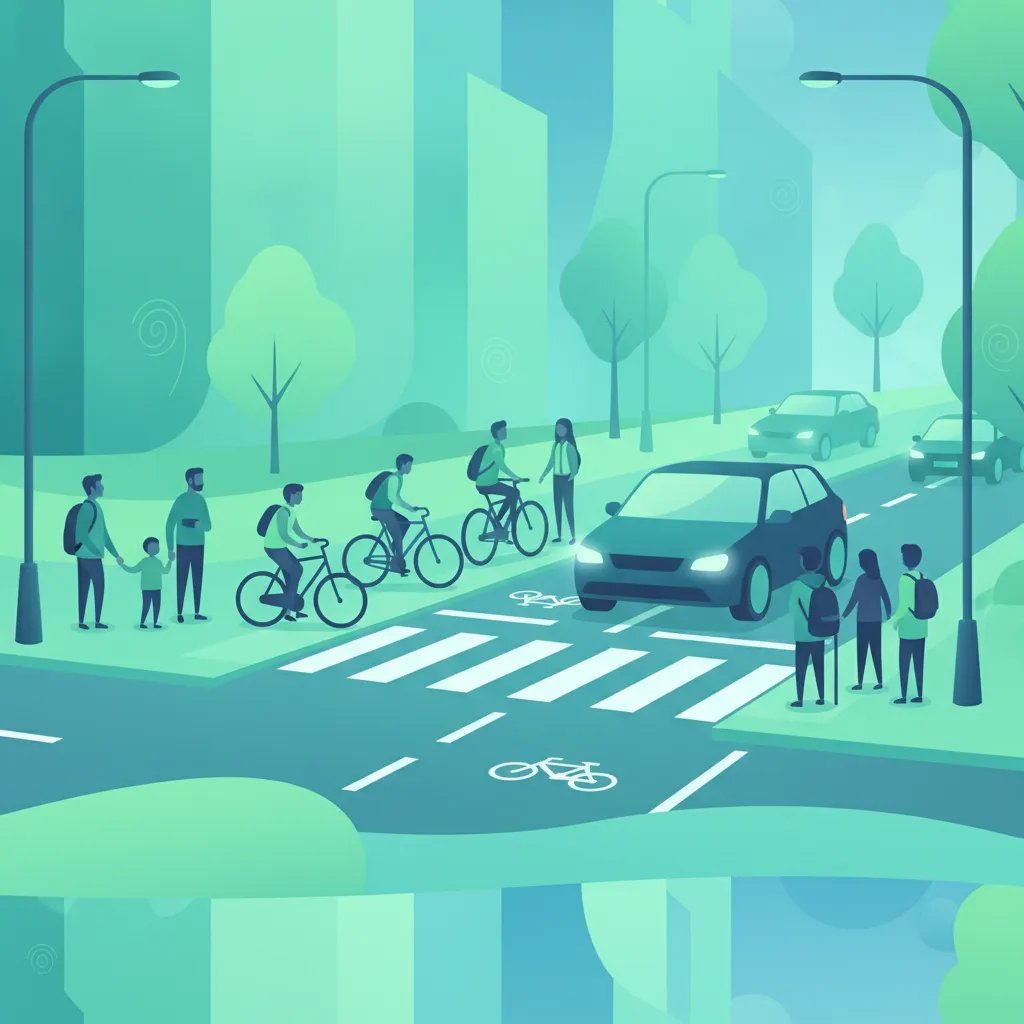
This lesson focuses on the heightened awareness required when approaching and traversing pedestrian and cyclist crossings. It clarifies the legal rules, including the absolute priority of pedestrians on zebra crossings, and the importance of reducing speed. Riders will learn how to anticipate the movements of these vulnerable road users and position their vehicle to ensure a safe interaction.

This lesson focuses on the rules governing pedestrian crossings, including marked zebra crossings and signal-controlled crossings. Special attention is given to school zones and residential areas where pedestrian activity is high. Learners will understand how to recognize and respect pedestrian priority in various crossing scenarios to ensure their safety.
This lesson provides a systematic approach to navigating intersections, emphasizing the importance of observation, speed control, and correct positioning. It reinforces the application of priority-from-the-right and other right-of-way rules in real-world junction scenarios. You will learn effective visual scanning techniques to anticipate the actions of other road users and ensure a safe passage.

This lesson details the safe and systematic approach to different types of intersections, both signal-controlled and uncontrolled. It explains how to use road signs and markings to determine right-of-way and when to stop or yield. The importance of comprehensive scanning for traffic from all directions and adjusting approach speed is emphasized to ensure safe passage.

This lesson delves into the complex priority rules that govern Belgian roadways, with a strong focus on the default 'priority from the right' principle. It explains how to interpret priority signs, such as 'give way' and 'stop', and apply the correct right-of-way at various types of junctions. You will learn the hierarchy of road users and the specific rules for yielding in different traffic scenarios.
This lesson examines the operation of traffic light systems in Belgium, clarifying the meaning of red, amber, and green signals, including flashing lights and directional arrows. It details a motorcyclist's legal obligations when approaching and navigating signal-controlled intersections. The content also addresses specialized signals for pedestrians and trams that riders must recognize and respond to correctly.
This lesson addresses unique traffic environments and special zones commonly found in Belgian urban areas. It clarifies the specific regulations concerning tramways, including where trams have absolute priority, and the conditions under which motorcycles may use bus lanes. The lesson also explains how to identify and comply with restrictions in low-emission zones.

This lesson offers specific strategies for motorcyclists navigating roundabouts in Belgium. It covers the rules for entering the roundabout, including yielding to circulating traffic, and how to choose the correct lane for your intended exit. The content stresses the importance of clear signaling and maintaining awareness of other vehicles during entry and exit maneuvers.
This lesson introduces the core principles of priority that govern traffic flow in Belgium, with a primary focus on the 'priority from the right' rule. It explains how to identify priority roads indicated by signs and how to act at uncontrolled intersections where the default rule applies. Understanding these rules is critical for AM riders to navigate junctions, intersections, and roundabouts safely and without conflict.
This lesson teaches motorcyclists how to safely navigate mixed traffic environments that include cars, buses, and trams. It highlights the significant blind spots of larger vehicles and explains the absolute priority of trams on their tracks. You will learn the rules for sharing space with public transport and how to maintain safe distances when following or overtaking buses.
Learn about frequent errors and violations motorcyclists make at crossings, pedestrian zones, and bicycle lanes. Understand how to avoid these mistakes according to Belgian traffic law.
This lesson focuses on the heightened awareness required when approaching and traversing pedestrian and cyclist crossings. It clarifies the legal rules, including the absolute priority of pedestrians on zebra crossings, and the importance of reducing speed. Riders will learn how to anticipate the movements of these vulnerable road users and position their vehicle to ensure a safe interaction.
This lesson focuses on the rules governing pedestrian crossings, including marked zebra crossings and signal-controlled crossings. Special attention is given to school zones and residential areas where pedestrian activity is high. Learners will understand how to recognize and respect pedestrian priority in various crossing scenarios to ensure their safety.
This lesson examines the operation of traffic light systems in Belgium, clarifying the meaning of red, amber, and green signals, including flashing lights and directional arrows. It details a motorcyclist's legal obligations when approaching and navigating signal-controlled intersections. The content also addresses specialized signals for pedestrians and trams that riders must recognize and respond to correctly.
This lesson details the safe and systematic approach to different types of intersections, both signal-controlled and uncontrolled. It explains how to use road signs and markings to determine right-of-way and when to stop or yield. The importance of comprehensive scanning for traffic from all directions and adjusting approach speed is emphasized to ensure safe passage.
This lesson provides a systematic approach to navigating intersections, emphasizing the importance of observation, speed control, and correct positioning. It reinforces the application of priority-from-the-right and other right-of-way rules in real-world junction scenarios. You will learn effective visual scanning techniques to anticipate the actions of other road users and ensure a safe passage.
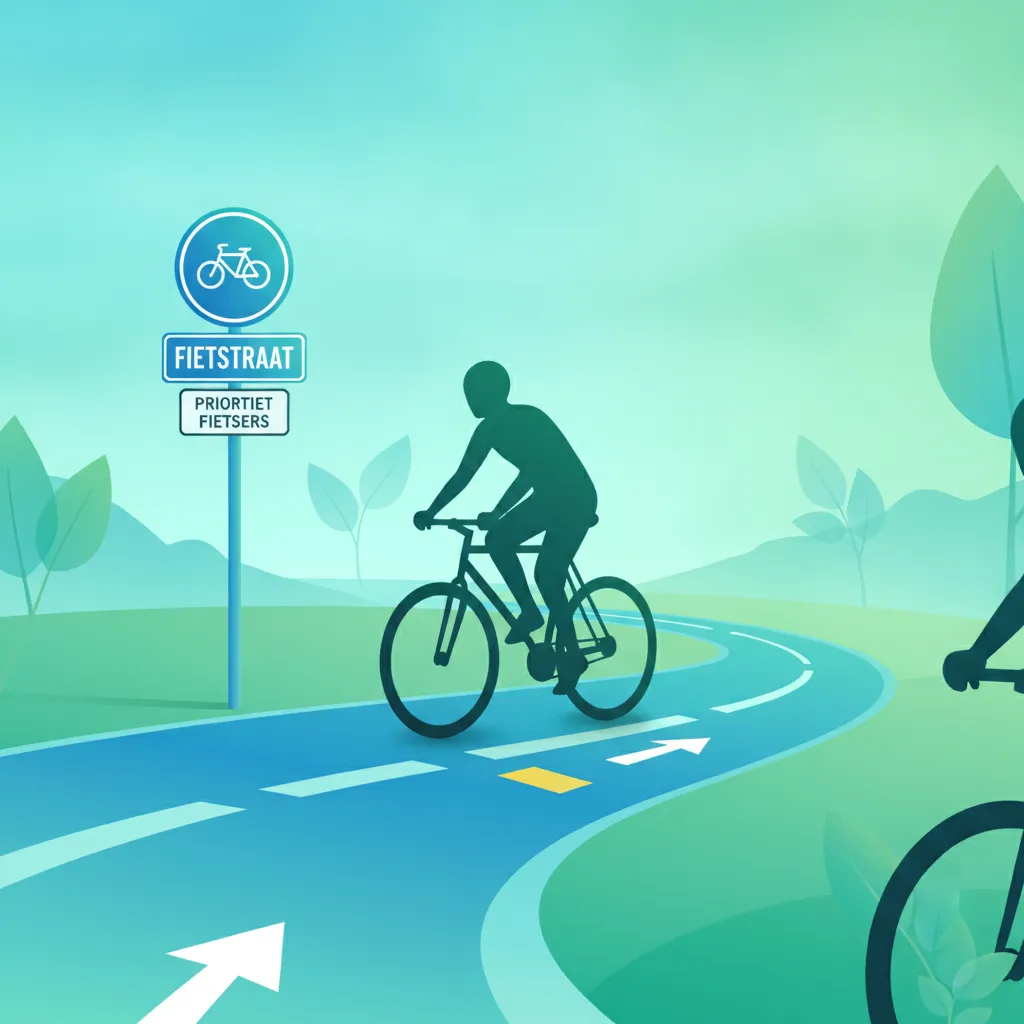
Cyclists are a significant part of Belgian traffic, and this lesson explores the rules and infrastructure that support safe cycling. Learners will study dedicated bicycle lanes, bicycle streets, and where cyclists have priority. The lesson also covers safe overtaking distances and the importance of anticipating cyclist movements.
This lesson offers specific strategies for motorcyclists navigating roundabouts in Belgium. It covers the rules for entering the roundabout, including yielding to circulating traffic, and how to choose the correct lane for your intended exit. The content stresses the importance of clear signaling and maintaining awareness of other vehicles during entry and exit maneuvers.

This lesson provides a detailed explanation of the various road markings found on Belgian roads and their specific significance for motorcyclists. It covers the rules associated with solid and broken lane lines, stop lines at junctions, and markings for pedestrian and bicycle crossings. Understanding these markings is essential for correct lane positioning and safe navigation.

This lesson provides a step-by-step guide to executing a safe overtaking maneuver in compliance with Belgian law. It covers the necessary pre-maneuver checks, proper signaling, and how to accurately judge the speed and distance of oncoming traffic. You will learn the correct procedure for passing a vehicle and safely returning to your original lane.
This lesson teaches motorcyclists how to safely navigate mixed traffic environments that include cars, buses, and trams. It highlights the significant blind spots of larger vehicles and explains the absolute priority of trams on their tracks. You will learn the rules for sharing space with public transport and how to maintain safe distances when following or overtaking buses.
Find clear answers to common questions learners have about Road Crossings, Pedestrian Zones, and Bicycle Crossings. Learn how the lesson is structured, which driving theory objectives it supports, and how it fits into the overall learning path of units and curriculum progression in Belgium. These explanations help you understand key concepts, lesson flow, and exam focused study goals.
You are not required to stop if a pedestrian is merely standing on the sidewalk; however, you must be prepared to stop if they show a clear intention to cross. In the Belgian theory exam, always look for signs of intent, like foot movement or eye contact.
A pedestrian crossing (marked with zebra stripes) allows pedestrians to cross the road, while a pedestrian zone is a specific area where the entire street is generally restricted to pedestrians. Motorcycles must adhere to specific access signs when entering these zones.
If the cyclist is already on the crossing or clearly about to enter it, you must yield. However, always be aware of the specific road markings and signals; in some cases, cyclists must follow the same priority rules as other vehicles.
Common mistakes happen by assuming priority based on speed. Always remember that pedestrians are the most vulnerable; when in doubt in an exam scenario, the safest legal action is to slow down and prioritize them.
Ready to focus your Belgian driving theory revision? Utilize our powerful search tool to pinpoint exact topics, road signs, or difficulty levels. Engage with practice questions that directly address your learning needs and solidify your understanding of Belgian traffic laws for your upcoming exam.