
This lesson guides you through the crucial rules for safely approaching and traversing pedestrian and cyclist crossings on your moped or speed pedelec. As part of your Category AM theory preparation, you will learn to anticipate the movements of vulnerable road users to prevent accidents in complex urban environments.
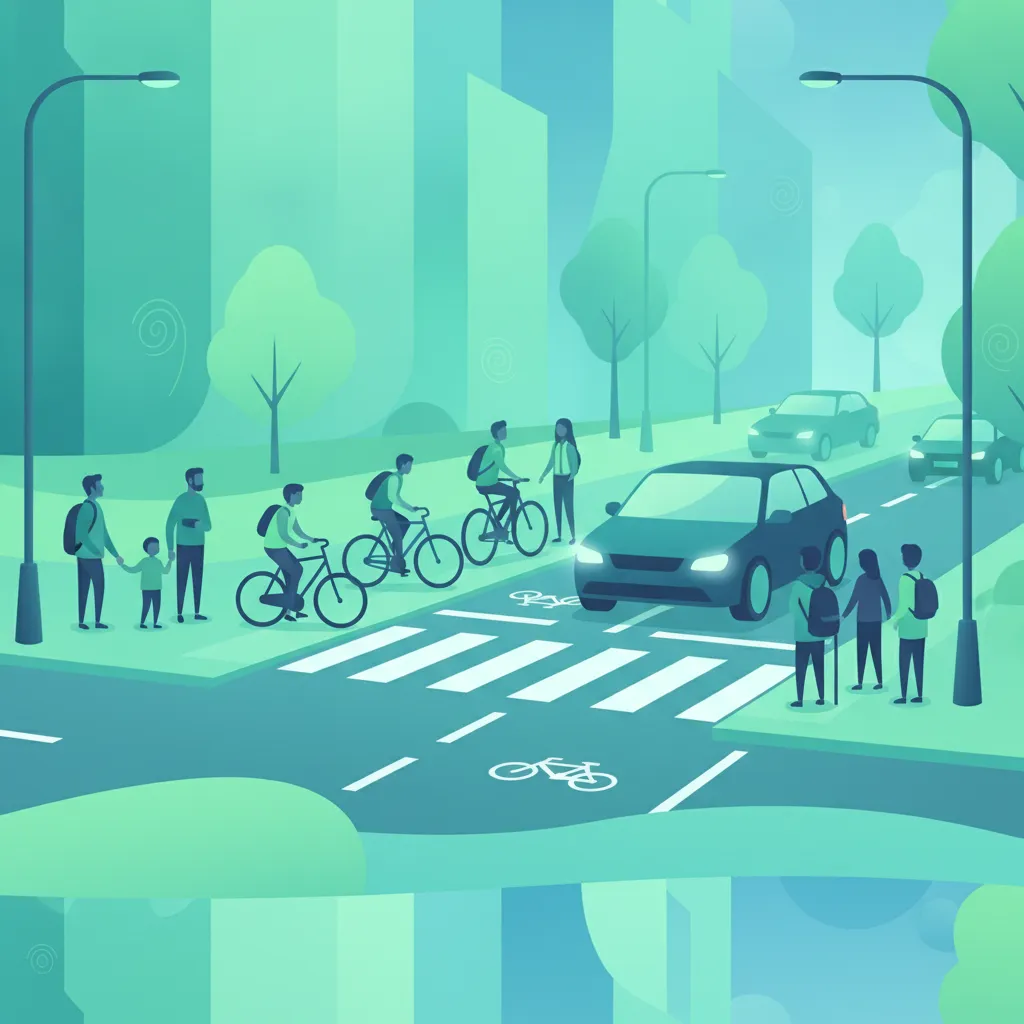
Lesson content overview
Operating a small, exposed vehicle like a moped or speed pedelec in Belgium requires exceptional awareness, especially when encountering pedestrians and cyclists. These vulnerable road users, lacking the protection of a car's chassis, are at a higher risk in the event of a collision. This lesson, part of the Official Belgian Driving Theory Course for Category AM License, focuses on the critical rules and defensive strategies necessary to safely navigate various pedestrian and cyclist crossings. By understanding the legal framework, anticipating actions, and adjusting your driving behavior, you can significantly contribute to road safety for everyone.
Crossings are designated points on the road network designed to facilitate the safe passage of pedestrians and cyclists across vehicle traffic lanes. They are easily identifiable by specific road signs and markings, and each type comes with its own set of rules and priorities. Recognizing these distinct types is the first step towards safe interaction.
Zebra crossings are perhaps the most common and critical type of pedestrian crossing. They are marked by distinctive black and white stripes painted directly on the road surface. In Belgium, the rules governing zebra crossings are clear and absolute: pedestrians always have priority when they are on, or about to step onto, a zebra crossing. This means that as a driver of a Category AM vehicle, you must stop to allow pedestrians to cross safely, even if they have not yet fully stepped onto the stripes but clearly indicate their intention to cross.
It is crucial to understand that this priority applies regardless of traffic signals or the volume of traffic. Your obligation is to yield. Failing to stop for a pedestrian at a zebra crossing is not only dangerous but also a serious violation of the Belgian Highway Code, carrying significant penalties.
While zebra crossings rely on driver vigilance, signal-controlled crossings use traffic lights to manage the flow of pedestrians, cyclists, and vehicles. These typically fall into two main categories:
At any signal-controlled crossing, your primary responsibility is to obey the traffic signals. A green light for pedestrians or cyclists means you must stop, even if your vehicle light was momentarily green before the crossing activated. Always be prepared for signals to change rapidly, especially in busy urban areas.
Beyond knowing the types of crossings, a set of core principles guides safe driving practices for Category AM license holders. These principles emphasize a proactive, defensive approach, particularly given the vulnerability of pedestrians and cyclists.
One of the most critical aspects of approaching any crossing is effective speed management. You must reduce your speed sufficiently to allow for a safe stop if necessary. This isn't just about adhering to posted speed limits; it's about driving at a speed appropriate for the conditions, including potential hazards.
Near many crossings, especially in residential areas, school zones, or urban centers, you will often encounter signs indicating a reduced speed limit, such as 30 km/h. These limits are legally binding and are put in place specifically to enhance safety for vulnerable road users. Lower speeds provide several benefits:
Always anticipate the need to slow down and be ready to stop well before you reach the crossing.
Anticipatory driving, also known as defensive driving, is paramount when approaching crossings. This means actively observing your surroundings, predicting potential actions of pedestrians and cyclists, and adjusting your driving accordingly. Vulnerable road users, particularly children or individuals distracted by phones, may not always follow traffic rules or make predictable movements.
Consider these aspects of anticipatory driving:
Your position on the road when approaching a crossing directly impacts your visibility of vulnerable road users and their visibility of you. Proper road positioning helps you to see and be seen, providing more time to react.
When approaching a crossing, especially one with poor visibility, consider flashing your headlights briefly to make yourself more noticeable to potential crossers. This is not a signal of priority, but merely an added measure for visibility.
Understanding the legal obligations at pedestrian and cyclist crossings in Belgium is not just about avoiding penalties; it's fundamental to road safety. These rules are enshrined in the Belgian Highway Code to protect the most vulnerable road users.
As mentioned, the rule for zebra crossings (oversteekplaatsen voor voetgangers) is absolute: Drivers must always yield to pedestrians who are on a zebra crossing or clearly demonstrating their intention to step onto one. This means stopping completely and waiting until the pedestrian has safely cleared your path of travel.
It is a common misconception that you only need to stop if a pedestrian is already halfway across. This is incorrect. If a pedestrian is at the edge of the crossing, looking to cross, you must anticipate their movement and be ready to stop.
Speed limits are often reduced in areas with frequent pedestrian and cyclist activity, particularly around crossings. For Category AM license holders, these reduced limits, typically 30 km/h, are not suggestions but mandatory regulations. Signs indicating these limits (C43) must be obeyed strictly. Beyond official signage, a responsible driver will always assess the specific situation and reduce speed even further if conditions (such as heavy pedestrian traffic, adverse weather, or poor visibility) warrant it.
At signal-controlled crossings (often found in busier urban environments), traffic lights dictate priority.
Even with good intentions, drivers can make mistakes that compromise safety at crossings. Being aware of these common pitfalls can help Category AM license holders develop safer habits.
A frequent error is assuming a pedestrian will wait, or misjudging their speed. Remember that pedestrians at a zebra crossing have absolute priority. If there is any doubt about their intention, or if they are looking towards the crossing, prepare to stop. Never try to "rush" past a pedestrian or assume they will halt for you.
Many collisions occur because drivers approach crossings too quickly, leaving insufficient time to react. This can happen even when no official speed limit sign is present. Always evaluate the context: Is it a school zone? Is it peak hour? Is visibility poor? Reduce your speed proactively, even if it means driving slower than the posted general limit.
Switching lanes abruptly near a crossing, tailgating the vehicle in front, or failing to anticipate sightline obstructions (like a delivery van parked illegally) are all common mistakes. These actions can hide pedestrians or cyclists from your view, or prevent them from seeing your vehicle, leading to dangerous encounters. Maintain a safe following distance and position your vehicle to maximize your field of vision at all times.
Never assume that other drivers will stop for pedestrians or cyclists, or that they have seen what you have seen. Always act as if you are the sole person responsible for safety at the crossing. For instance, if a vehicle in an adjacent lane stops, there's a good chance they are yielding to a pedestrian; you must also be prepared to stop.
Driving conditions are rarely static. Various environmental and situational factors can impact visibility, stopping distances, and the predictability of vulnerable road users. Adjusting your driving based on these factors is a hallmark of a responsible driver.
Your Category AM vehicle's condition plays a critical role in your ability to react safely at crossings.
Ignoring priority rules at crossings carries serious legal and ethical implications. In Belgium, violations such as failing to yield to pedestrians at a zebra crossing are treated with severity due to the high risk involved.
Failing to stop for a pedestrian at a zebra crossing is not just a minor infraction; it demonstrates a disregard for fundamental safety principles and the legal rights of vulnerable road users.
Let's explore some practical scenarios to solidify your understanding of how to behave at different types of crossings.
You are riding your Category AM vehicle down a quiet residential street. Up ahead, you spot a zebra crossing. As you get closer, you see a pedestrian standing at the curb, looking in your direction and then towards the opposite side of the road, clearly intending to cross.
Correct Behavior: Immediately reduce your speed and prepare to stop. As the pedestrian takes a step onto the crossing, or even just clearly indicates their intention by leaning forward, bring your moped to a complete stop before the crossing markings. Wait patiently until the pedestrian has fully cleared the crossing and is safely on the other side before proceeding.
Incorrect Behavior: Maintaining your speed, assuming the pedestrian will wait for you. Accelerating to try and pass before the pedestrian fully commits to crossing. Stopping only when the pedestrian is in the middle of the road. All these actions are dangerous and illegal.
You are approaching a busy intersection with a Toucan crossing. Your vehicle's traffic light is green, and you intend to proceed straight. However, just as you are about to reach the stop line, the signal for pedestrians and cyclists at the Toucan crossing turns green, and a cyclist starts to pedal onto the crossing.
Correct Behavior: Immediately and safely brake to a stop before the stop line, even though your vehicle light was green. The activation of the pedestrian/cyclist green signal takes precedence. Wait for the cyclist to cross safely, and for the pedestrian/cyclist signal to turn red, and your vehicle light to turn green again (and the crossing to be clear) before proceeding.
Incorrect Behavior: Attempting to rush through the crossing because your light was initially green. Honking at the cyclist. Assuming the cyclist will yield to you because you had momentum.
It's morning, and you are riding through a school zone marked with a 30 km/h speed limit sign and a warning sign for children. There's a designated school crossing ahead. You observe several children on the pavement, and one group is already crossing the road.
Correct Behavior: Reduce your speed well below 30 km/h, perhaps to 15-20 km/h, and prepare to stop. Even if the crossing is a zebra crossing (where children have priority) or a signal-controlled one, children can be unpredictable. Be extra vigilant, make eye contact, and only proceed once all children have safely cleared the entire crossing area and there are no others indicating an intention to cross.
Incorrect Behavior: Maintaining 30 km/h (even if it's the limit) as if it's a target speed, rather than a maximum. Being distracted by the activity around the school. Assuming the children will look before crossing.
The safety of pedestrians and cyclists at crossings is a non-negotiable aspect of responsible driving for Category AM license holders in Belgium. By mastering the rules of priority, especially the absolute right of way for pedestrians at zebra crossings, and by practicing anticipatory and defensive driving techniques, you become a safer, more considerate road user. Always adjust your speed, maintain optimal road positioning, and remain vigilant for the often unpredictable actions of vulnerable road users. Your adherence to these principles not only helps you avoid legal penalties but, more importantly, prevents accidents and ensures everyone can share the road safely.
This lesson covers the critical rules for safely navigating pedestrian and cyclist crossings as a Category AM rider in Belgium. Zebra crossings grant absolute priority to pedestrians, requiring you to stop whenever they are on or about to step onto the crossing. Signal-controlled crossings use Pelican and Toucan systems where pedestrian/cyclist signals override vehicle green lights. Safe crossing interaction requires proactive speed reduction (especially in 30 km/h zones), anticipatory observation of the environment, and optimal road positioning for maximum visibility of and by vulnerable road users.
A short set of high-value points that capture the most important learning from this lesson.
Pedestrians have absolute priority at zebra crossings in Belgium - you must stop even when they only indicate intention to cross
At signal-controlled crossings (Pelican/Toucan), pedestrians and cyclists take priority even if your vehicle light is green
Speed reduction near crossings is mandatory, not optional - 30 km/h limits exist to provide reaction time and reduce impact severity
Anticipatory driving at crossings involves scanning beyond the crossing, making eye contact, and reading body language
Your vehicle position at crossings affects both your visibility of and by vulnerable road users
Explore all units and lessons included in this driving theory course.
At zebra crossings (black and white stripes), pedestrians on or stepping onto the crossing always have priority by law
Lower speeds mean shorter stopping distances - at 30 km/h you can stop much faster than at 50 km/h
Always assume pedestrians or cyclists may act unpredictably, especially children or distracted individuals
Maintain adequate following distance so your view of the crossing remains unobstructed
If a pedestrian signal turns green at a crossing, you must stop even if your vehicle light is also green
Assuming a pedestrian will wait for you to pass rather than yielding to their priority
Approaching crossings too quickly, leaving insufficient time to brake safely
Poor lane positioning that obstructs sightlines to pedestrians or cyclists
Relying on other drivers to stop for pedestrians and not verifying it yourself
Trying to rush through a crossing because your light was green before the pedestrian signal activated
Lesson content overview
A short set of high-value points that capture the most important learning from this lesson.
Pedestrians have absolute priority at zebra crossings in Belgium - you must stop even when they only indicate intention to cross
At signal-controlled crossings (Pelican/Toucan), pedestrians and cyclists take priority even if your vehicle light is green
Speed reduction near crossings is mandatory, not optional - 30 km/h limits exist to provide reaction time and reduce impact severity
Anticipatory driving at crossings involves scanning beyond the crossing, making eye contact, and reading body language
Your vehicle position at crossings affects both your visibility of and by vulnerable road users
Explore all units and lessons included in this driving theory course.
At zebra crossings (black and white stripes), pedestrians on or stepping onto the crossing always have priority by law
Lower speeds mean shorter stopping distances - at 30 km/h you can stop much faster than at 50 km/h
Always assume pedestrians or cyclists may act unpredictably, especially children or distracted individuals
Maintain adequate following distance so your view of the crossing remains unobstructed
If a pedestrian signal turns green at a crossing, you must stop even if your vehicle light is also green
Assuming a pedestrian will wait for you to pass rather than yielding to their priority
Approaching crossings too quickly, leaving insufficient time to brake safely
Poor lane positioning that obstructs sightlines to pedestrians or cyclists
Relying on other drivers to stop for pedestrians and not verifying it yourself
Trying to rush through a crossing because your light was green before the pedestrian signal activated
Explore search topics learners often look for when studying Pedestrian and Cyclist Crossings. These topics reflect common questions about road rules, driving situations, safety guidance, and lesson level theory preparation for learners in Belgium.
Browse additional driving theory lessons that cover connected traffic rules, road signs, and common driving situations related to this topic. Improve your understanding of how different rules interact across everyday traffic scenarios.
Explore more complex scenarios and specific legal nuances for interacting with pedestrians and cyclists at various crossings in Belgium. Understand challenging situations and Belgian Highway Code specifics beyond basic priority.
This lesson details a motorcyclist's obligations when approaching various types of crossings, including marked pedestrian and bicycle lanes. It emphasizes the legal requirement to yield to vulnerable road users and the importance of thorough visual checks before proceeding. You will learn how to maintain a safe distance and anticipate the movements of pedestrians and cyclists in urban areas.

This lesson details the safe and systematic approach to different types of intersections, both signal-controlled and uncontrolled. It explains how to use road signs and markings to determine right-of-way and when to stop or yield. The importance of comprehensive scanning for traffic from all directions and adjusting approach speed is emphasized to ensure safe passage.

This lesson focuses on the rules governing pedestrian crossings, including marked zebra crossings and signal-controlled crossings. Special attention is given to school zones and residential areas where pedestrian activity is high. Learners will understand how to recognize and respect pedestrian priority in various crossing scenarios to ensure their safety.
This lesson examines the operation of traffic light systems in Belgium, clarifying the meaning of red, amber, and green signals, including flashing lights and directional arrows. It details a motorcyclist's legal obligations when approaching and navigating signal-controlled intersections. The content also addresses specialized signals for pedestrians and trams that riders must recognize and respond to correctly.

This lesson provides a comprehensive overview of the mandatory lighting systems for all Category AM vehicles under Belgian law. It details the required functions of headlamps, rear lights, brake lights, and turn signals, explaining their importance for communication and visibility. Learners will understand the legal standards for this equipment and how to perform simple pre-ride checks to ensure all lights are functioning correctly.
This lesson provides specific instructions for navigating roundabouts, a common feature on Belgian roads. It covers the rules of priority upon entry, the correct lane choice based on the intended exit, and the proper use of signals. Learners will understand how to safely circulate and exit, while being mindful of other vehicles, particularly larger ones with significant blind spots.
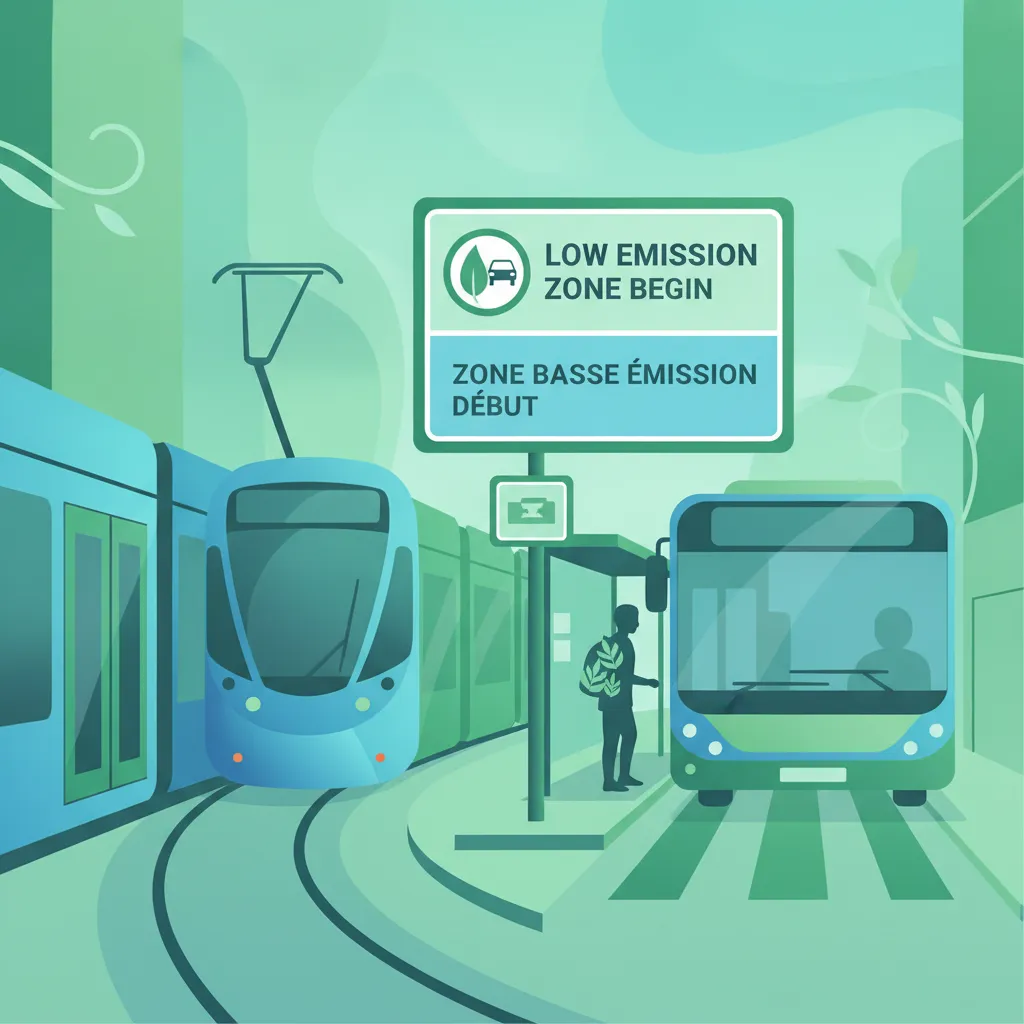
This lesson addresses unique traffic environments and special zones commonly found in Belgian urban areas. It clarifies the specific regulations concerning tramways, including where trams have absolute priority, and the conditions under which motorcycles may use bus lanes. The lesson also explains how to identify and comply with restrictions in low-emission zones.
This lesson introduces the core principles of priority that govern traffic flow in Belgium, with a primary focus on the 'priority from the right' rule. It explains how to identify priority roads indicated by signs and how to act at uncontrolled intersections where the default rule applies. Understanding these rules is critical for AM riders to navigate junctions, intersections, and roundabouts safely and without conflict.
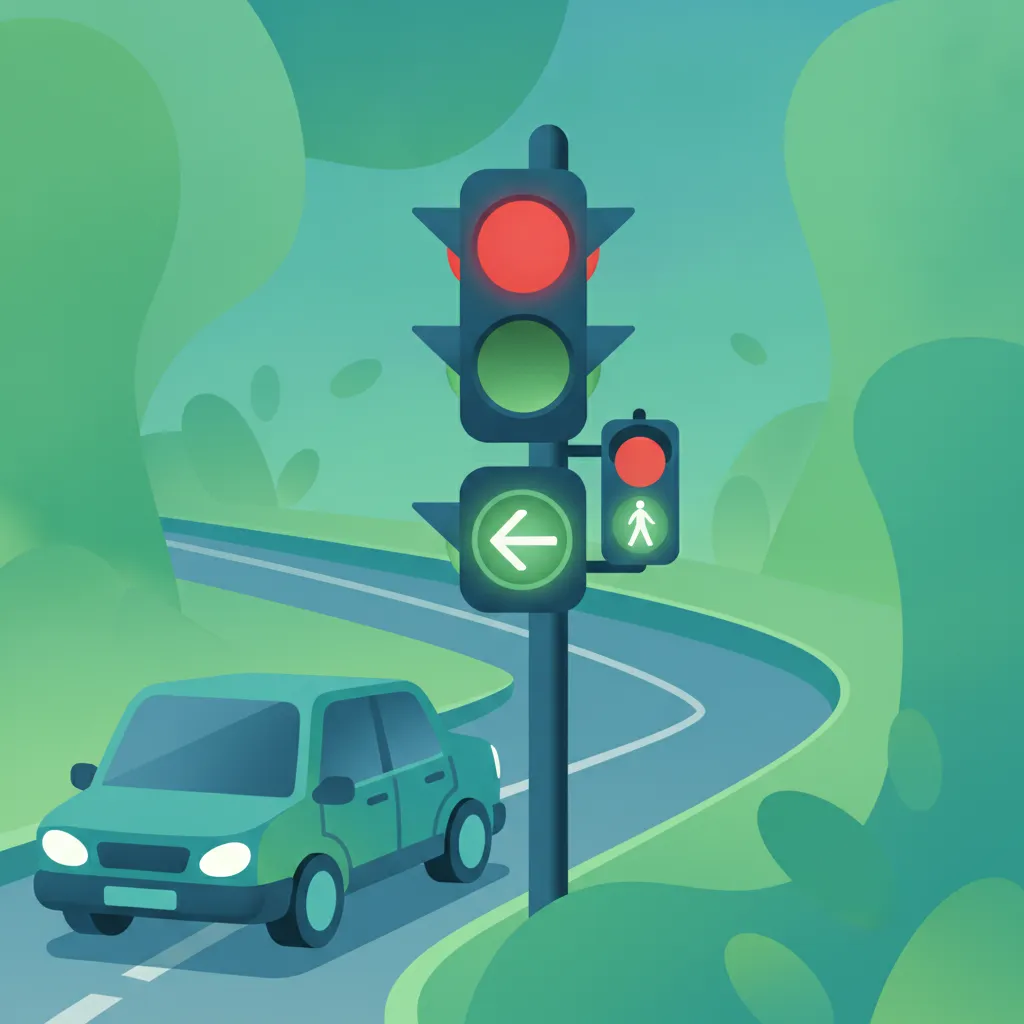
This lesson provides a detailed explanation of traffic light systems and the correct response to each signal. It covers the standard red, amber, and green light sequence, as well as specific signals for pedestrians and cyclists that AM riders must also obey. The meaning of flashing amber and red lights is also clarified to ensure correct and safe behavior at signalized intersections.
This lesson teaches motorcyclists how to safely navigate mixed traffic environments that include cars, buses, and trams. It highlights the significant blind spots of larger vehicles and explains the absolute priority of trams on their tracks. You will learn the rules for sharing space with public transport and how to maintain safe distances when following or overtaking buses.
Learn from practical driving scenarios at pedestrian and cyclist crossings in Belgium. Identify common errors AM license holders make and understand how to avoid them to ensure safety for all road users.
This lesson focuses on the rules governing pedestrian crossings, including marked zebra crossings and signal-controlled crossings. Special attention is given to school zones and residential areas where pedestrian activity is high. Learners will understand how to recognize and respect pedestrian priority in various crossing scenarios to ensure their safety.
This lesson details a motorcyclist's obligations when approaching various types of crossings, including marked pedestrian and bicycle lanes. It emphasizes the legal requirement to yield to vulnerable road users and the importance of thorough visual checks before proceeding. You will learn how to maintain a safe distance and anticipate the movements of pedestrians and cyclists in urban areas.
This lesson details the safe and systematic approach to different types of intersections, both signal-controlled and uncontrolled. It explains how to use road signs and markings to determine right-of-way and when to stop or yield. The importance of comprehensive scanning for traffic from all directions and adjusting approach speed is emphasized to ensure safe passage.
This lesson focuses on the legal duties and responsibilities that an AM vehicle operator must uphold on Belgian roads. It covers critical rules such as adhering to speed limits, correctly applying right-of-way principles, and following regulations for overtaking other vehicles. The lesson also explains the system of fines and penalty points for traffic violations, emphasizing the legal consequences of non-compliance to foster responsible driving habits.

This lesson explains the concept of strategic road positioning to enhance safety and visibility. It teaches riders how to select the best position within a lane to be seen by other drivers and to have a good view of the road ahead. A key focus is on identifying and staying out of the large blind spots of cars, vans, and trucks to prevent dangerous situations.
This lesson provides a detailed explanation of traffic light systems and the correct response to each signal. It covers the standard red, amber, and green light sequence, as well as specific signals for pedestrians and cyclists that AM riders must also obey. The meaning of flashing amber and red lights is also clarified to ensure correct and safe behavior at signalized intersections.
This lesson provides specific instructions for navigating roundabouts, a common feature on Belgian roads. It covers the rules of priority upon entry, the correct lane choice based on the intended exit, and the proper use of signals. Learners will understand how to safely circulate and exit, while being mindful of other vehicles, particularly larger ones with significant blind spots.
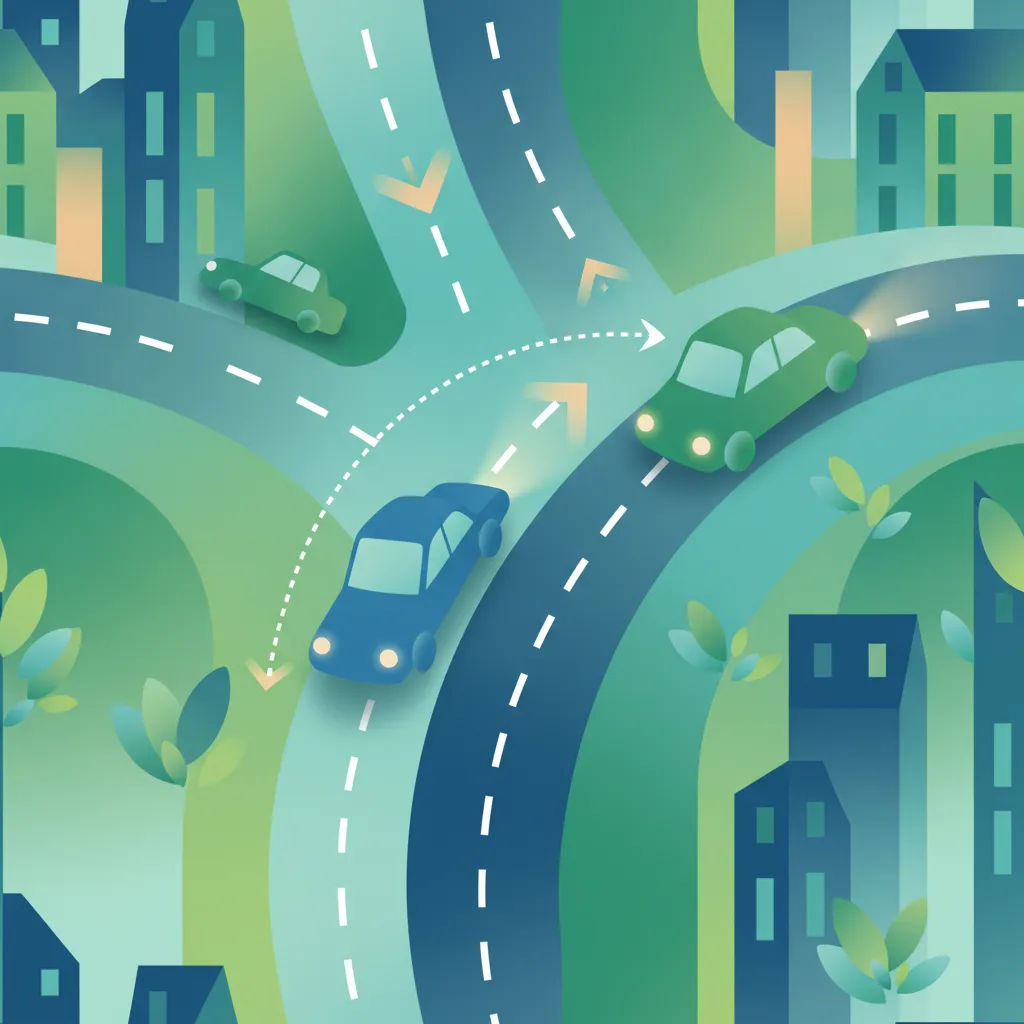
This lesson provides a step-by-step guide to executing turns and lane changes safely and efficiently. It covers the critical sequence of checking mirrors, signaling intent, and performing a head check for blind spots before any maneuver. Learners will also understand how to manage their speed and balance during cornering to maintain full control of the vehicle.
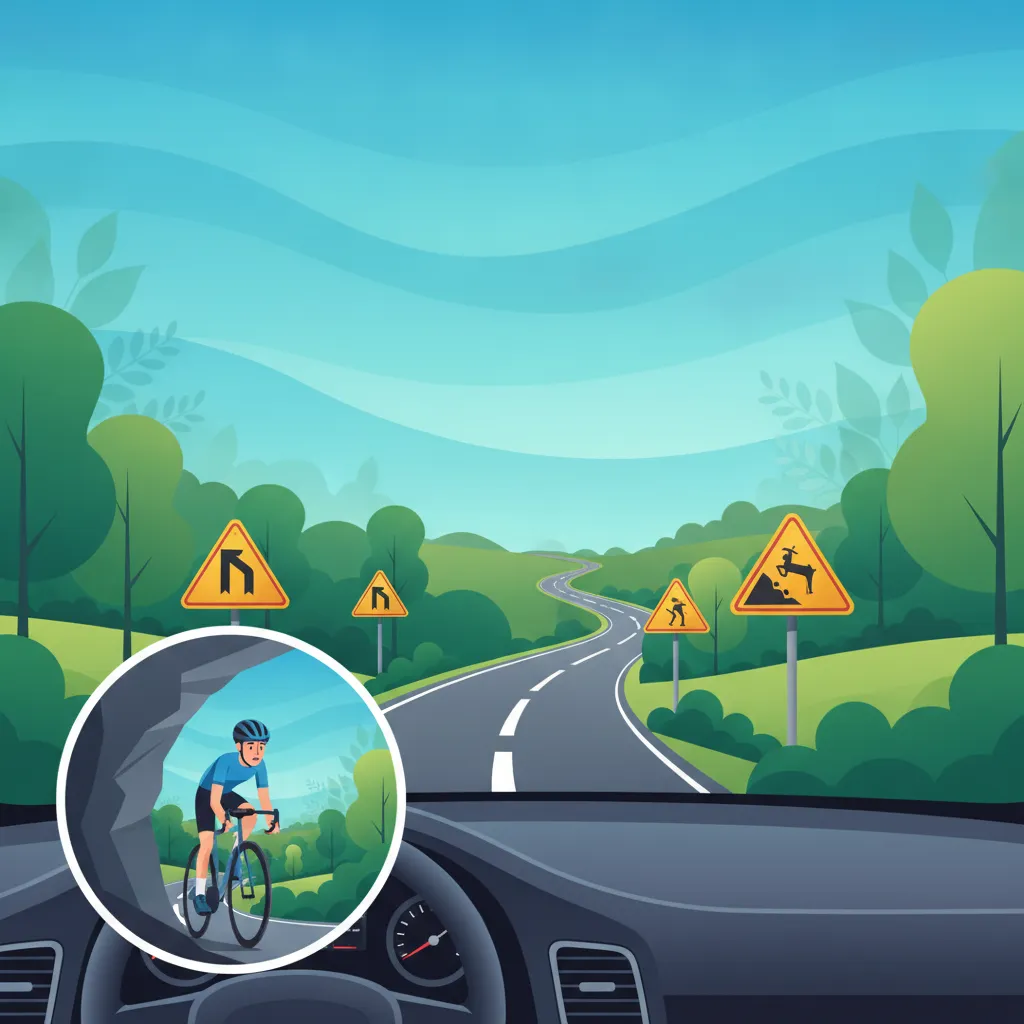
This lesson is dedicated to warning signs, which are designed to alert drivers to potential dangers ahead. It covers the interpretation of signs indicating sharp curves, steep gradients, slippery surfaces, and the presence of pedestrians or animals. By understanding these warnings, riders can anticipate potential hazards and adjust their speed and position proactively for safer travel.
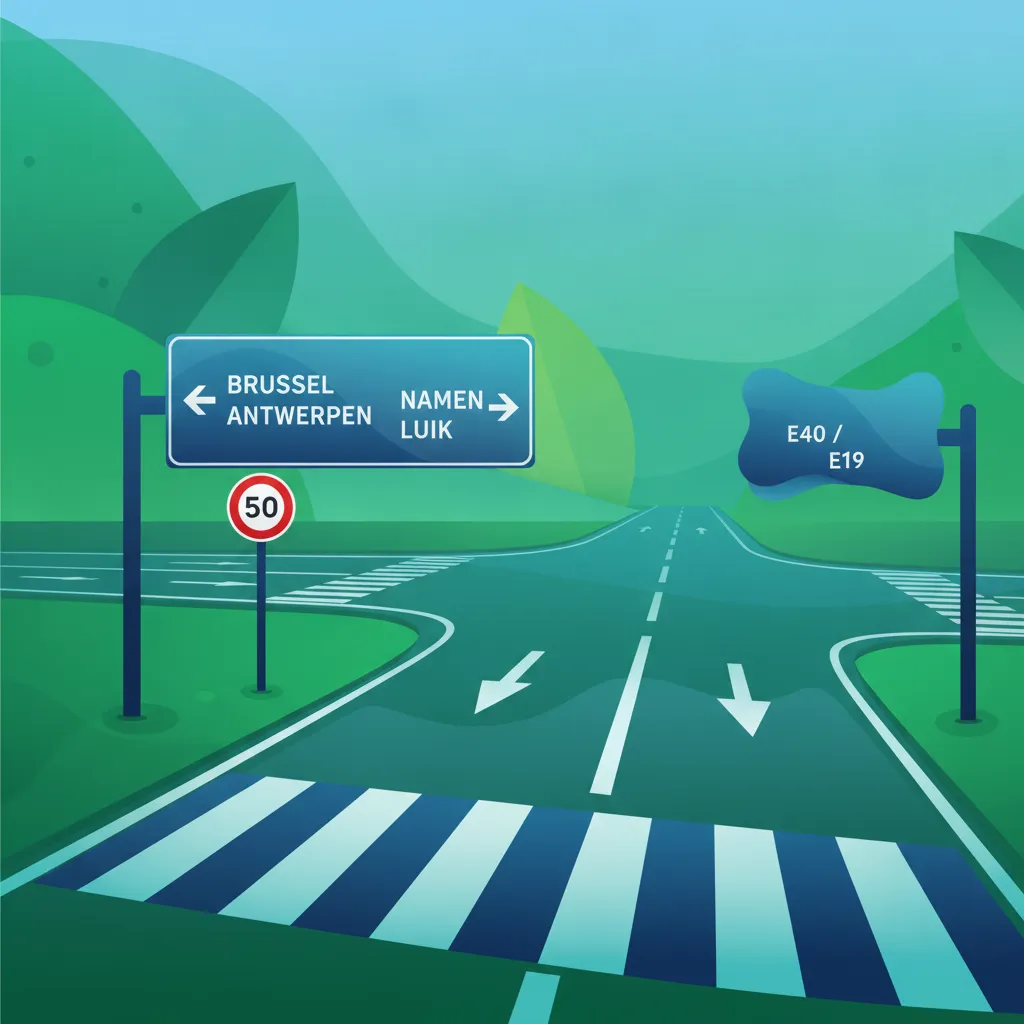
This lesson explains the role of information signs and road markings in guiding road users. It covers directional signs that help with navigation and markings that delineate lanes, pedestrian crossings, and zones for specific users like cyclists. Learners will understand how to use this information to maintain correct lane positioning and navigate their route efficiently and safely.
Find clear answers to common questions learners have about Pedestrian and Cyclist Crossings. Learn how the lesson is structured, which driving theory objectives it supports, and how it fits into the overall learning path of units and curriculum progression in Belgium. These explanations help you understand key concepts, lesson flow, and exam focused study goals.
Yes, if a pedestrian is standing at a zebra crossing or clearly intending to cross, you must stop and allow them to pass. Failing to yield to a pedestrian at a marked crossing is a serious offence in Belgian traffic law and a common point of failure in theory exams.
When you cross a cycle path, you must ensure that you do not endanger or hinder cyclists. If the cycle path is part of a priority road or intersection, standard priority rules apply, but you should always exercise extra caution as cyclists are vulnerable road users.
Yes, you must always signal your intent to turn well in advance. However, signaling does not grant you the right of way over pedestrians crossing the road you are turning into, so you must always check the crossing before completing your turn.
While both fall under the Category AM umbrella, speed pedelecs are often treated similarly to mopeds regarding road use. Always follow the specific road signs in the area, as some zones may have specific restrictions for motorized vehicles regarding cycle paths.
Ready to focus your Belgian driving theory revision? Utilize our powerful search tool to pinpoint exact topics, road signs, or difficulty levels. Engage with practice questions that directly address your learning needs and solidify your understanding of Belgian traffic laws for your upcoming exam.