This lesson guides you through the essential rules for navigating intersections safely as a Category AM driver in Belgium. You will learn how to read signs and markings to determine right-of-way while developing the scanning habits necessary to protect yourself as a vulnerable road user. This knowledge is critical for passing your theory exam and navigating real-world Belgian streets.
Lesson content overview
Navigating intersections safely is a fundamental skill for any road user, especially for those operating smaller, more exposed vehicles like mopeds and speed pedelecs under the Official Belgian Driving Theory Course for Category AM License. Intersections are points where multiple traffic streams converge, making them common locations for collisions if not approached with caution and adherence to specific rules. This lesson will guide you through the systematic process of approaching and crossing various types of intersections, ensuring you understand the necessary actions to take based on signs, markings, and signals.
Intersections are critical areas on the road network where different roads meet or cross. They are inherently complex due to the potential for traffic from multiple directions, often including pedestrians and cyclists, all vying for passage. For operators of Category AM vehicles, the importance of understanding and correctly applying intersection rules is amplified due to your increased vulnerability compared to car drivers.
A proper approach to any intersection involves several core principles:
This lesson builds upon your existing knowledge of basic traffic signs, road markings, and general priority rules, preparing you for safe and confident intersection navigation throughout Belgium.
Controlled intersections are those where the flow of traffic is explicitly regulated by external means such as traffic lights, barriers, or the directives of a police officer. These controls override general priority rules, making it essential to obey their specific instructions.
Traffic lights are the most common form of control at busy intersections. They use a sequence of colours to dictate when vehicles may proceed, prepare to stop, or must stop.
Never enter an intersection on a red light. If the light turns red while you are already in the intersection (e.g., waiting to turn left), you must complete your manoeuvre as soon as it is safe, even if other traffic has a green light.
In some situations, a police officer may be directing traffic at an intersection. Their signals take precedence over any traffic lights or road signs. Always observe and obey the instructions of a police officer, as they are managing the immediate safety and flow of traffic.
A frequent mistake drivers make is misinterpreting the amber light, treating it as a signal to speed up rather than slow down. This significantly increases the risk of rear-end collisions or side-impact accidents. Always anticipate the need to stop and approach amber lights with caution. At intersections controlled by lights, ensure you also scan for other road users who might be making a permitted turn or who might be ignoring their own signals.
Uncontrolled intersections are those without traffic lights, stop signs, or yield signs. At these intersections, you must rely on general priority rules to determine who has the right-of-way. In Belgium, the primary rule for uncontrolled intersections is the "yield to the right" principle.
At an uncontrolled intersection where no specific road signs or markings indicate priority, the rule is to yield to traffic approaching from your right. This means that if another vehicle is coming from the road to your right, they have priority, and you must give way to them.
At an uncontrolled intersection, you must give priority to vehicles approaching from your immediate right. This is a fundamental rule in Belgian traffic law.
This rule applies universally unless explicitly overridden by other signs (like a yield sign, stop sign, or priority road sign). It is crucial for maintaining orderly traffic flow in the absence of other controls.
While the right-hand yield rule seems straightforward, applying it in real-world scenarios requires careful observation. You must scan the intersection well in advance, looking for any signs that might alter priority (e.g., a priority road sign on the intersecting road). Even if you technically have priority, always be prepared to yield if another driver fails to observe the rule. For AM license holders, exercising defensive driving is paramount.
The "priority road" concept is another key element that overrides the general right-hand yield rule. A priority road is a main thoroughfare that has precedence over all intersecting roads that are not themselves priority roads.
In Belgium, a priority road is indicated by a specific diamond-shaped sign:
This sign signifies that traffic on the road you are currently using has the right-of-way at any upcoming intersections, unless specific traffic lights or other signs indicate otherwise for a particular intersection. You do not need to stop or yield to traffic from the right if you are on a priority road, unless specifically instructed by a separate sign (e.g., a 'Give Way' sign (B1) or 'Stop' sign (B5) at a specific intersection).
Drivers approaching an intersection from a road that is not designated as a priority road must yield to traffic on the priority road. This is often indicated by a 'Give Way' sign or a 'Stop' sign on the non-priority road.
It is important to remember that priority road status does not continue indefinitely. The sign B11 explicitly marks the end of a priority road, after which standard priority rules (like the right-hand yield) or new signage will apply. Always be vigilant for these changes in priority status.
Road markings painted on the road surface provide crucial guidance at intersections, often reinforcing or clarifying the rules established by signs and signals. Understanding these markings is vital for safe and legal navigation.
A stop line is a continuous white line painted across your lane at an intersection. It indicates the precise point where you must bring your vehicle to a complete stop when commanded by a traffic light, a stop sign, or a police officer.
A continuous white line on the road surface, indicating the exact point at which a vehicle must stop when required by a signal or sign.
It is imperative to stop before the stop line, ensuring that no part of your vehicle crosses it. Stopping beyond the line can obstruct pedestrian crossings, block the view of other drivers, or interfere with cross-traffic.
A yield line (or give way line) consists of a series of white triangles painted across your lane, pointing towards your vehicle. This marking, often accompanied by a 'Give Way' sign, indicates that you must yield the right-of-way to traffic on the intersecting road.
A series of white triangles painted on the road, indicating that drivers must give way to traffic on the intersecting road.
While you may not always need to stop completely at a yield line, you must slow down sufficiently to assess the situation and be prepared to stop if there is intersecting traffic. You can only proceed when it is safe to do so without causing other road users to change their speed or direction.
Two of the most critical techniques for safely navigating intersections, particularly for Category AM license holders, are comprehensive scanning and appropriate speed adjustment. These actions enhance your awareness and control, significantly reducing risk.
Scanning is the active process of visually checking all relevant directions for traffic, pedestrians, cyclists, and any potential hazards. It's a continuous process that begins well before you reach the intersection and continues as you pass through it.
Approach Scan: As you approach, scan far ahead for signs, signals, and road markings. Identify the type of intersection.
Initial Look: Before reaching the decision point, quickly scan left, straight ahead, and right to get a general overview of the traffic situation.
Detailed Scan at Decision Point: If you are yielding or stopping, perform a more detailed scan: first left (for oncoming traffic), then right (for traffic with priority), then left again (as conditions may have changed), and finally ahead (for pedestrians/cyclists). Pay special attention to vulnerable road users who may be less visible.
Through Scan: As you proceed through the intersection, continue scanning. Be alert for drivers who might run a red light or fail to yield.
For AM vehicle operators, your smaller size makes you less visible, so it's vital to actively seek out potential threats and ensure other drivers have seen you. Never assume you have been seen.
Speed adjustment means reducing your vehicle speed in anticipation of potential stopping, yielding, or maneuvering at an intersection. This should not be a last-minute brake application but a gradual deceleration well in advance.
Always approach intersections at a speed that allows you to stop safely if necessary, even if you anticipate having priority. This proactive reduction in speed is crucial for mopeds and speed pedelecs due to their often lighter braking capabilities and increased vulnerability.
Slowing down early offers several advantages:
Even when traffic lights are green or you have priority, reduce your speed to confirm the intersection is truly clear before proceeding.
Adhering to traffic laws at intersections is not just about avoiding fines; it's fundamental to road safety. Violating these rules can lead to serious consequences, especially for vulnerable road users.
Here are key legal obligations and common violations:
In addition to direct rule violations, other unsafe practices at intersections include:
Safe intersection navigation requires adjusting your behavior based on prevailing conditions, which can significantly affect visibility, grip, and the actions of other road users.
At night, intersections can be harder to assess due to reduced light.
As an AM license holder, you are a vulnerable road user. However, you must also be mindful of others even more vulnerable than you:
Navigating intersections requires a systematic approach to ensure safety and compliance. By consistently applying these steps, you build confidence and reduce risk.
Observe and Anticipate: Well in advance, look for signs, signals, and road markings. Identify whether the intersection is controlled or uncontrolled, and what priority rules apply.
Adjust Speed Early: Begin to reduce your speed proactively, allowing ample time to react, assess, and stop if necessary. Cover your brakes.
Position Correctly: Ensure your vehicle is positioned correctly for your intended direction (straight, left, or right turn).
Scan Comprehensively: Perform thorough visual checks left, right, and ahead. Pay special attention to blind spots and vulnerable road users.
Determine Priority: Based on signs, signals, and rules, establish who has the right-of-way.
Proceed Safely: Only proceed when it is safe and the intersection is clear. Maintain your scanning as you cross.
Mastering intersection navigation is paramount for safety, especially for Category AM license holders. Key takeaways include:
By diligently applying these principles, you will navigate Belgian intersections with confidence and safety, contributing to a smoother and more secure traffic environment for everyone.
This lesson covers the essential skills for safely navigating Belgian intersections as an AM license holder. You will learn to distinguish between controlled intersections (governed by traffic lights or police) and uncontrolled intersections (where Belgian priority rules apply). The critical right-hand yield rule (priorité de droite) requires yielding to traffic from your immediate right at uncontrolled junctions, while the B9 priority road sign grants precedence over intersecting roads. Safe intersection navigation requires comprehensive scanning in all directions, early speed adjustment, correct positioning, and strict adherence to road markings including stop lines and yield lines. Always remain extra vigilant for vulnerable road users like pedestrians and cyclists who may be harder to see.
A short set of high-value points that capture the most important learning from this lesson.
At uncontrolled Belgian intersections, always yield to traffic approaching from your right (priorité de droite)
Traffic lights and police officer signals override all other priority rules at intersections
The diamond-shaped B9 priority road sign grants right-of-way until superseded by B11 (end of priority) or specific yield/stop signs
Comprehensive scanning in all directions is essential before and during crossing to detect vulnerable road users
Adjust your speed early before approaching any intersection to ensure you can stop safely if needed
Explore all units and lessons included in this driving theory course.
Stop before the stop line (continuous white line) when required by red light or stop sign
Amber light means prepare to stop unless you are already too close to stop safely
Yield lines are painted white triangles pointing toward your vehicle, requiring you to slow and give way
Perform a left-right-left scan when yielding at an intersection as conditions change rapidly
Priority road status does not continue indefinitely; watch for the B11 'End of Priority Road' sign
Accelerating on amber light to 'beat' the red, which is dangerous and illegal
Assuming priority at an intersection without checking for B9 priority road signs on the other road
Inadequate scanning that misses pedestrians, cyclists, or vehicles in blind spots
Entering an intersection without confirming it is clear, risking side collisions
Failing to yield at uncontrolled intersections by not applying the right-hand yield rule correctly
Lesson content overview
A short set of high-value points that capture the most important learning from this lesson.
At uncontrolled Belgian intersections, always yield to traffic approaching from your right (priorité de droite)
Traffic lights and police officer signals override all other priority rules at intersections
The diamond-shaped B9 priority road sign grants right-of-way until superseded by B11 (end of priority) or specific yield/stop signs
Comprehensive scanning in all directions is essential before and during crossing to detect vulnerable road users
Adjust your speed early before approaching any intersection to ensure you can stop safely if needed
Explore all units and lessons included in this driving theory course.
Stop before the stop line (continuous white line) when required by red light or stop sign
Amber light means prepare to stop unless you are already too close to stop safely
Yield lines are painted white triangles pointing toward your vehicle, requiring you to slow and give way
Perform a left-right-left scan when yielding at an intersection as conditions change rapidly
Priority road status does not continue indefinitely; watch for the B11 'End of Priority Road' sign
Accelerating on amber light to 'beat' the red, which is dangerous and illegal
Assuming priority at an intersection without checking for B9 priority road signs on the other road
Inadequate scanning that misses pedestrians, cyclists, or vehicles in blind spots
Entering an intersection without confirming it is clear, risking side collisions
Failing to yield at uncontrolled intersections by not applying the right-hand yield rule correctly
Explore search topics learners often look for when studying Approaching and Crossing Intersections. These topics reflect common questions about road rules, driving situations, safety guidance, and lesson level theory preparation for learners in Belgium.
Browse additional driving theory lessons that cover connected traffic rules, road signs, and common driving situations related to this topic. Improve your understanding of how different rules interact across everyday traffic scenarios.
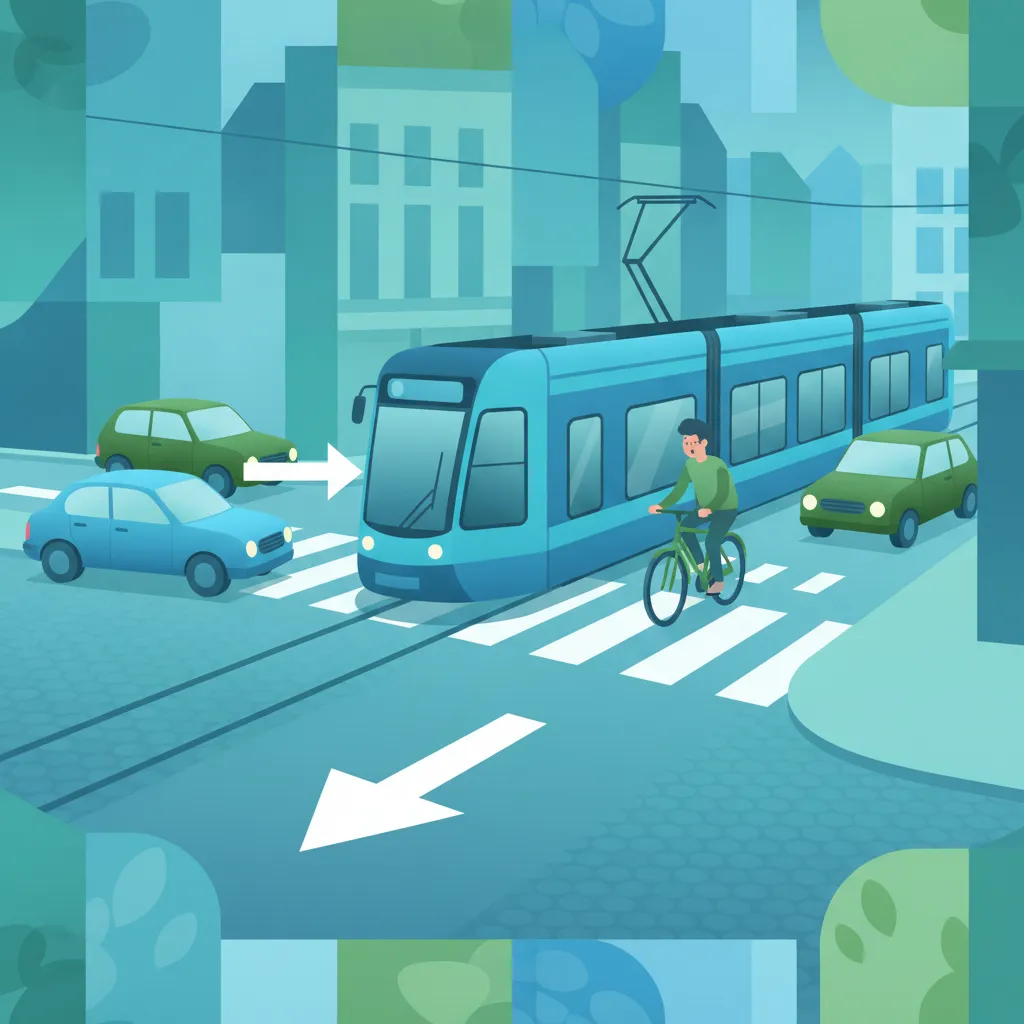
Explore advanced priority rules and challenging scenarios at complex intersections beyond basic right-of-way. Learn about specific junction types, traffic light sequences, and interactions with trams and cyclists, crucial for AM licence holders in Belgium.
This lesson delves into the complex priority rules that govern Belgian roadways, with a strong focus on the default 'priority from the right' principle. It explains how to interpret priority signs, such as 'give way' and 'stop', and apply the correct right-of-way at various types of junctions. You will learn the hierarchy of road users and the specific rules for yielding in different traffic scenarios.
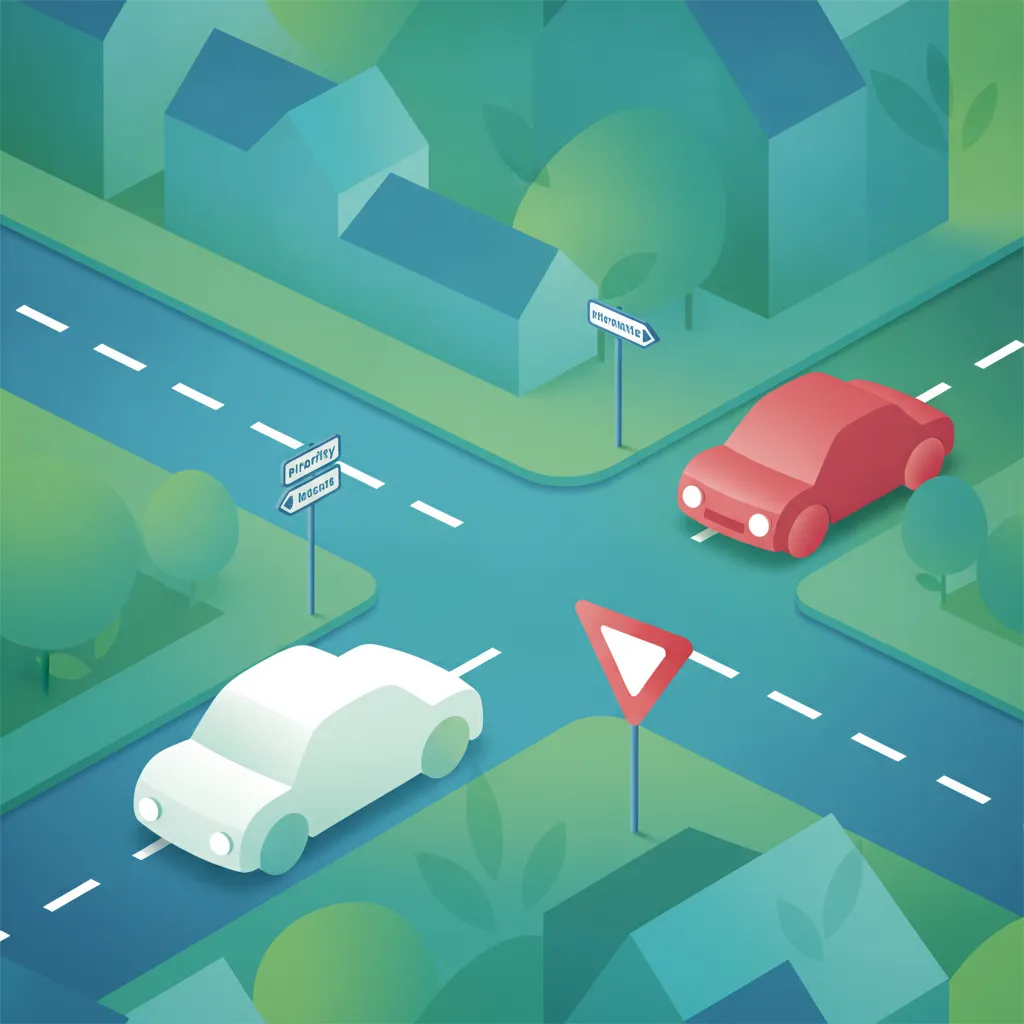
This lesson focuses on the distinction between the default priority from the right and designated priority roads, explaining how drivers should yield or proceed. Learners will discover the specific signs that indicate a priority road and when that priority ends. Understanding these concepts is essential for predictable and safe road use at intersections.
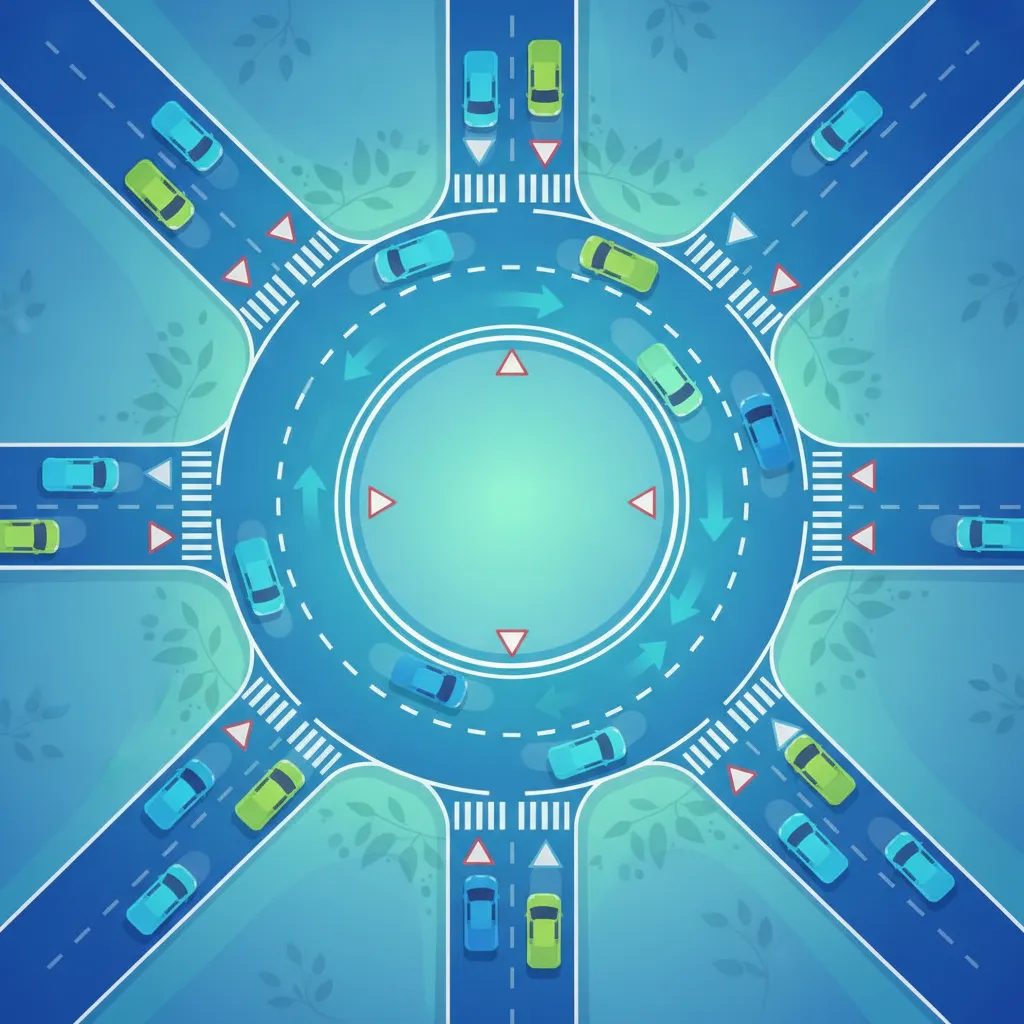
Roundabouts are a key feature of Belgian traffic management. This lesson explains how to approach, enter, navigate, and exit a roundabout safely, with a focus on yielding priority to traffic already circulating. Learners will also study correct lane positioning on multi-lane roundabouts and the appropriate use of signals.
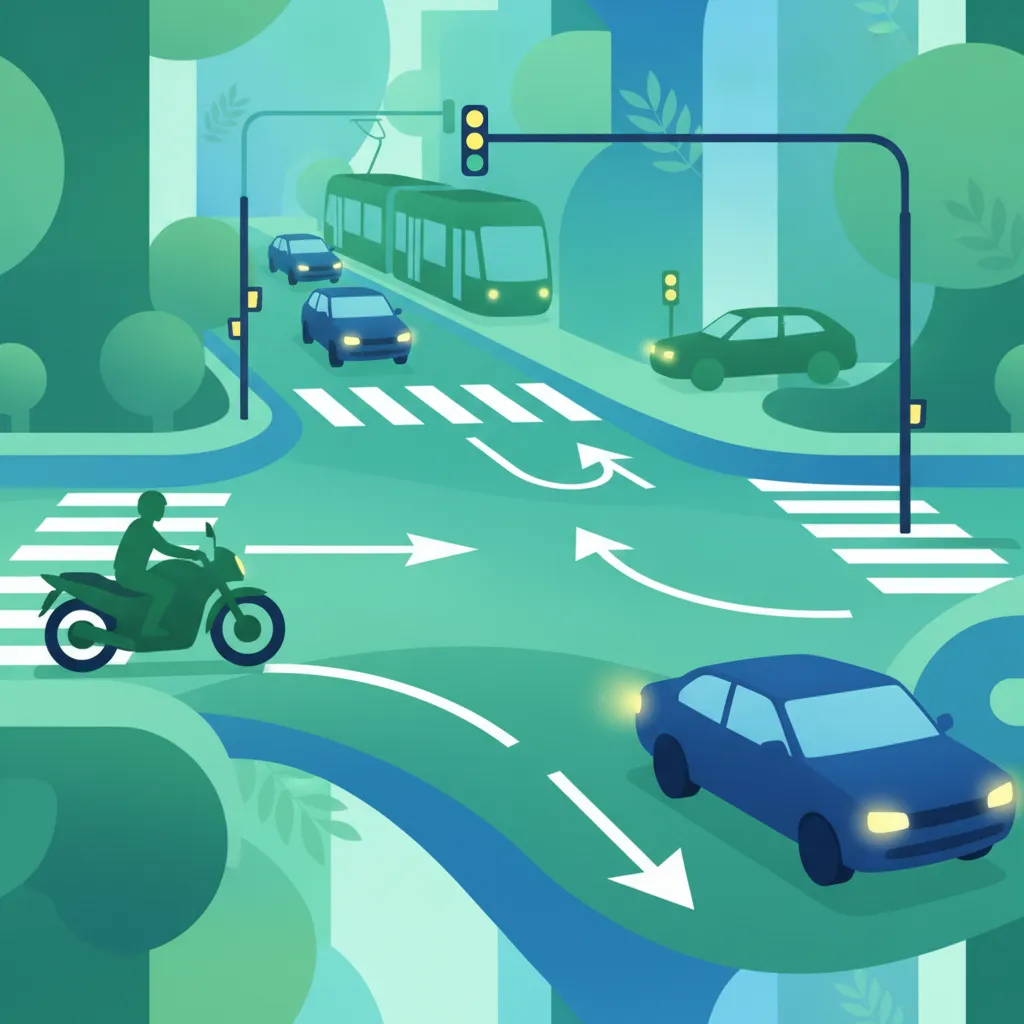
In this lesson, learners will examine the fundamental priority rules that dictate traffic flow at unmarked intersections. The lesson focuses on the principle of priority from the right, the hierarchy of traffic signs and signals, and situations requiring yielding or stopping. Understanding these principles is crucial for safe and lawful navigation of Belgian road networks.
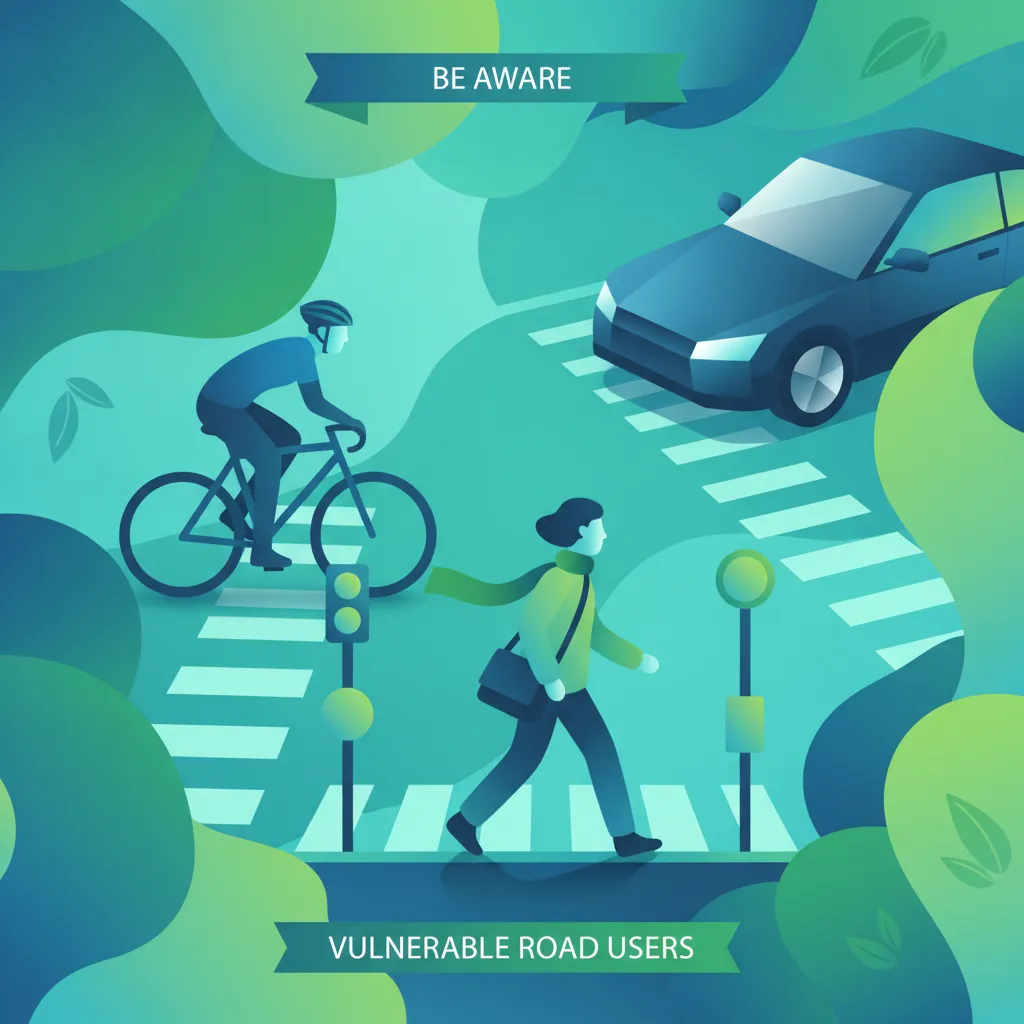
This lesson provides a systematic approach to navigating intersections, emphasizing the importance of observation, speed control, and correct positioning. It reinforces the application of priority-from-the-right and other right-of-way rules in real-world junction scenarios. You will learn effective visual scanning techniques to anticipate the actions of other road users and ensure a safe passage.

This lesson provides detailed guidance on navigating various intersections, focusing on yielding behaviors at give way signs and mandatory stops at stop signs. Learners will explore how traffic lights override other priority rules and the importance of granting right-of-way to pedestrians and cyclists. The lesson emphasizes safe crossing procedures and correct yielding.
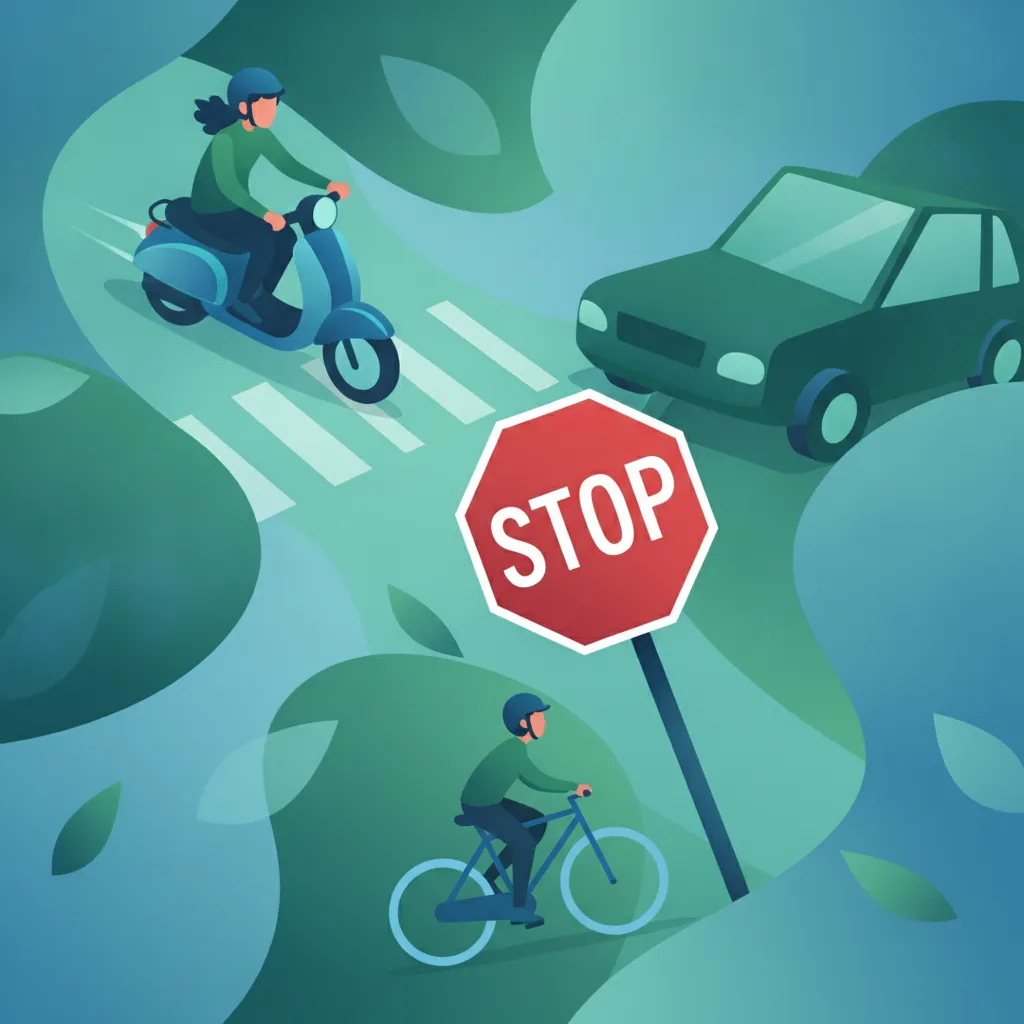
This lesson introduces the core principles of priority that govern traffic flow in Belgium, with a primary focus on the 'priority from the right' rule. It explains how to identify priority roads indicated by signs and how to act at uncontrolled intersections where the default rule applies. Understanding these rules is critical for AM riders to navigate junctions, intersections, and roundabouts safely and without conflict.
This lesson focuses on the rules governing pedestrian crossings, including marked zebra crossings and signal-controlled crossings. Special attention is given to school zones and residential areas where pedestrian activity is high. Learners will understand how to recognize and respect pedestrian priority in various crossing scenarios to ensure their safety.
This lesson focuses on basic manoeuvres, covering the proper use of indicators, safe lane positioning, and correct steering for turns. Learners will study the importance of checking blind spots and maintaining appropriate speed for a smooth transition when changing lanes. It also addresses turning at intersections and signaling intentions clearly to other road users.
This lesson covers the specific challenges of driving on motorways, rural roads, and navigating roadworks. Learners will review lane discipline on high-speed roads and identify hazards common to rural roads, such as sharp bends and wildlife. It also explains the importance of adjusting speed and following temporary signage in construction zones.
Understand how to identify and mitigate hazards when approaching and crossing intersections in Belgium. This lesson focuses on systematic scanning techniques, anticipating other road users' actions, and maintaining situational awareness for AM licence theory.
Driving safely requires anticipating potential hazards before they become immediate threats. This lesson covers hazard perception techniques, such as effective road scanning and identifying high-risk situations. Learners will practice recognizing common hazards and learn how to formulate a safe response plan in advance to avoid accidents.
This lesson covers the specific challenges of driving on motorways, rural roads, and navigating roadworks. Learners will review lane discipline on high-speed roads and identify hazards common to rural roads, such as sharp bends and wildlife. It also explains the importance of adjusting speed and following temporary signage in construction zones.
This lesson focuses on basic manoeuvres, covering the proper use of indicators, safe lane positioning, and correct steering for turns. Learners will study the importance of checking blind spots and maintaining appropriate speed for a smooth transition when changing lanes. It also addresses turning at intersections and signaling intentions clearly to other road users.
This lesson focuses on warning signs designed to alert drivers to potential hazards ahead. Topics include warnings for sharp curves, steep gradients, slippery surfaces, and zones with high pedestrian or wildlife activity. Learners will understand how to correctly interpret these signs and adjust their driving behavior to maintain safety on the road.
Roundabouts are a key feature of Belgian traffic management. This lesson explains how to approach, enter, navigate, and exit a roundabout safely, with a focus on yielding priority to traffic already circulating. Learners will also study correct lane positioning on multi-lane roundabouts and the appropriate use of signals.
This lesson is dedicated to warning signs, which are designed to alert drivers to potential dangers ahead. It covers the interpretation of signs indicating sharp curves, steep gradients, slippery surfaces, and the presence of pedestrians or animals. By understanding these warnings, riders can anticipate potential hazards and adjust their speed and position proactively for safer travel.
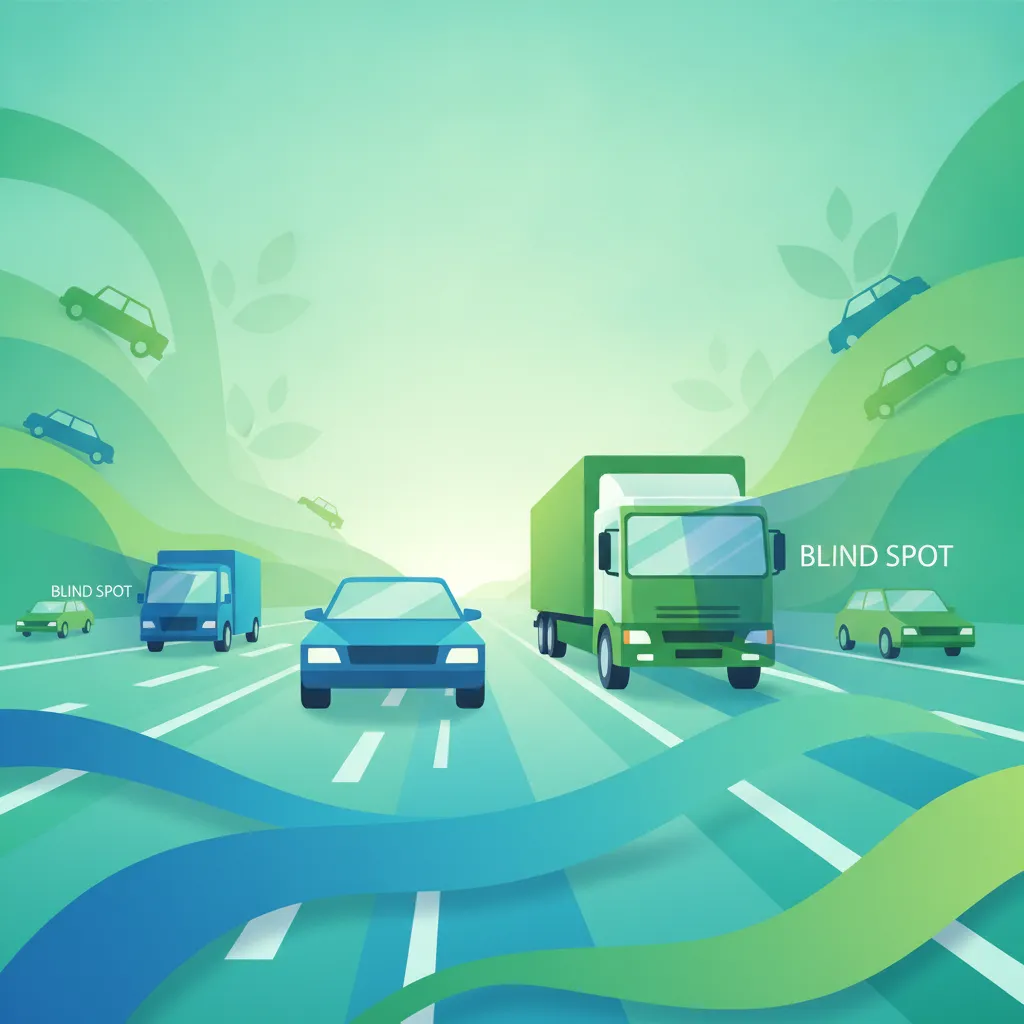
This lesson focuses on recognizing and staying out of the blind spots of other vehicles, especially large trucks and buses where 'no-zones' are significant. It provides practical strategies for managing your position on the road to ensure you remain visible to other drivers at all times. You will learn to anticipate lane changes and other maneuvers from vehicles that may not be aware of your presence.
This lesson provides a systematic approach to navigating intersections, emphasizing the importance of observation, speed control, and correct positioning. It reinforces the application of priority-from-the-right and other right-of-way rules in real-world junction scenarios. You will learn effective visual scanning techniques to anticipate the actions of other road users and ensure a safe passage.
This lesson provides detailed guidance on navigating various intersections, focusing on yielding behaviors at give way signs and mandatory stops at stop signs. Learners will explore how traffic lights override other priority rules and the importance of granting right-of-way to pedestrians and cyclists. The lesson emphasizes safe crossing procedures and correct yielding.

This lesson focuses on driving safely in adverse weather like rain, fog, and low sun glare, which affects road friction and visibility. It provides guidelines on speed adaptation, maintaining a safe following distance, and the proper use of vehicle equipment like lights and wipers. Learners will understand how to reduce risks like hydroplaning and skidding.
Find clear answers to common questions learners have about Approaching and Crossing Intersections. Learn how the lesson is structured, which driving theory objectives it supports, and how it fits into the overall learning path of units and curriculum progression in Belgium. These explanations help you understand key concepts, lesson flow, and exam focused study goals.
Unless signs indicate otherwise, you must grant priority to vehicles coming from your right at all times. This applies to all intersections unless a main road sign or traffic light sequence dictates a different right-of-way.
You should position yourself clearly within your lane, avoiding the gutters where debris or oil may gather. Always maintain a position that ensures you are visible to drivers behind you and allows you a clear view of traffic from all directions.
While you do not need to stop if you have the right-of-way and the path is clear, you must always reduce your speed and scan thoroughly. If visibility is obstructed, you are legally required to proceed with caution or stop to ensure the way is clear before crossing.
Speed pedelecs must follow the same intersection and priority rules as mopeds. You must always be prepared to yield to vehicles from the right and obey all regulatory road signs regarding stopping or giving way.
Ready to focus your Belgian driving theory revision? Utilize our powerful search tool to pinpoint exact topics, road signs, or difficulty levels. Engage with practice questions that directly address your learning needs and solidify your understanding of Belgian traffic laws for your upcoming exam.