
This lesson guides you through the complexities of navigating roundabouts safely while operating an AM vehicle. It builds upon your basic knowledge of priority and positioning to ensure you can handle these common road features confidently during your theory exam and in real-world traffic.

Lesson content overview
Roundabouts are a common feature of Belgian road infrastructure, designed to improve traffic flow and reduce the severity of collisions compared to traditional intersections. For Category AM license holders, operating a moped or speed pedelec, mastering roundabout navigation is not just a regulatory requirement but a critical safety skill. This lesson provides a comprehensive guide to entering, circulating within, and exiting roundabouts safely and efficiently, with a particular focus on the unique considerations for vulnerable road users.
A roundabout is a circular intersection where traffic flows in one direction around a central island. In Belgium, as in most of continental Europe, traffic moves counter-clockwise. Unlike traditional intersections with stop signs or traffic lights at every entry point, roundabouts manage traffic through a continuous yielding principle.
The primary purpose of a roundabout is to reduce conflict points, which are locations where vehicles might collide. Traditional four-way intersections have numerous potential conflict points, especially for turning movements. Roundabouts streamline these interactions, allowing traffic to merge and diverge more smoothly. This design inherently reduces the likelihood of severe head-on or right-angle collisions, replacing them with less dangerous glancing blows if incidents do occur. Furthermore, the continuous flow often improves traffic efficiency, particularly during peak hours, by eliminating long waits at traffic lights.
Successful navigation of any roundabout, especially on a moped or speed pedelec, hinges on three core principles:
The most fundamental rule at roundabouts in Belgium is the yielding principle. This means that vehicles entering the roundabout must give way to all traffic that is already inside and circulating. This rule is designed to maintain continuous flow and prevent congestion at entry points.
Upon approaching a roundabout, you must anticipate the need to slow down and potentially stop. Your primary task is to observe the traffic already circulating within the roundabout. Any vehicle that has already entered the circular flow has priority over you. You may only enter the roundabout when there is a safe and sufficient gap in circulating traffic, allowing you to merge without causing another vehicle to brake or swerve suddenly. This requires careful judgment of speeds and distances.
The yielding rule is almost universally reinforced by specific road signs and markings at roundabout entries in Belgium.
This triangular sign, often accompanied by a solid white line (or a dashed line) across your lane, explicitly indicates that you must yield. The solid line means you must stop before it if there is traffic to yield to, while a dashed line suggests you only need to stop if necessary. Additionally, the roundabout itself is typically marked with a circular arrow sign, further indicating its nature. Always be vigilant for these visual cues as they confirm the yielding requirement.
Selecting the appropriate lane before entering a multi-lane roundabout is crucial for safe and efficient navigation. For Category AM drivers, this decision is particularly important as incorrect lane choice can lead to dangerous maneuvers and increase exposure to larger vehicles.
Your intended exit dictates your entry lane choice. Before you even reach the roundabout, you should know which exit you plan to take. This foresight allows you to position your vehicle correctly and smoothly, preventing last-minute lane changes that can be hazardous. Look for directional signs preceding the roundabout, which often indicate which lane is best for specific destinations.
In a single-lane roundabout, lane choice is straightforward as there is only one lane for entry and circulation. However, AM drivers must still be vigilant. Position your moped or speed pedelec clearly within the lane, not too far to the left or right, to make your presence known. Be extra cautious of other vehicles, especially those that might misjudge your speed or presence. Cyclists and pedestrians may also be present near the entry and exit points, requiring heightened awareness.
When approaching a multi-lane roundabout, the general rule in Belgium is as follows:
These are general guidelines, and it is imperative to always check specific road markings and signs. Sometimes, lanes are explicitly marked with arrows indicating which exits they serve. Adhering to these markings prevents the need for dangerous lane changes once inside the roundabout.
Road markings on the approach to a roundabout provide explicit instructions for lane usage. These can include:
Always prioritize these markings over general rules if they conflict. Once you have chosen your lane, you must stay in it. Changing lanes inside a multi-lane roundabout is generally prohibited and extremely dangerous, especially for smaller vehicles like mopeds, as it creates conflict points where traffic flows are meant to be separated.
Proper use of turn signals (indicators) is paramount for safe roundabout navigation. It communicates your intentions to other drivers and helps prevent misunderstandings, which is vital for the safety of Category AM drivers.
In Belgium, it is mandatory to signal your intention to exit a roundabout. This signal must be activated in good time to alert following and entering traffic. Generally, you should activate your right indicator just as you pass the exit immediately preceding your intended exit. This timing allows other drivers to anticipate your departure and either prepare to enter the roundabout or adjust their speed if they are following you.
For Category AM drivers, early and clear signaling is especially important due to your smaller size and potentially lower visibility. Ensure your indicators are bright and noticeable.
While lane changes within a roundabout are generally discouraged, some larger roundabouts with specific markings may permit them. If you are in a situation where a lane change is necessary and allowed (e.g., specific signage indicates it), you must use your indicator to signal your intention, just as you would on any other road section. Always check your mirrors and blind spots carefully before initiating such a maneuver. For Category AM drivers, it is generally safest to avoid lane changes inside the roundabout if possible, by selecting the correct lane upon entry.
Several common mistakes can undermine the effectiveness of your signaling:
Once inside the roundabout, maintaining safe circulation involves careful positioning, speed management, and constant awareness of your surroundings, especially for Category AM license holders.
Keep your moped or speed pedelec clearly within your chosen lane. Avoid riding too close to the central island or too close to the outer edge, as this can confuse other drivers about your intentions or create unsafe gaps. Maintain a safe following distance from the vehicle ahead, providing yourself enough space to react to sudden braking or unexpected maneuvers. This distance is particularly critical for two-wheeled vehicles, which require more stopping distance in certain conditions.
One of the most significant hazards for AM drivers in roundabouts comes from larger vehicles such as trucks and buses. These vehicles have extensive blind spots, especially along their sides and rear. A driver in a large vehicle may not see a moped or speed pedelec positioned in one of these areas.
When circulating:
While Category AM drivers are themselves vulnerable road users, it is crucial to extend the same protective behavior to even more vulnerable groups: cyclists and pedestrians. Roundabouts often have dedicated cycle paths or pedestrian crossings at their entry and exit points.
Exiting a roundabout safely requires careful coordination of signaling, speed, and observation. This is often where many incidents occur due to miscommunication or lack of awareness.
As you approach your intended exit, ensure your right indicator is active. Begin to smoothly transition your vehicle towards the exit. Your speed should be appropriate for the exit, allowing you to comfortably navigate any bends or merges with subsequent roads. Avoid sudden braking or acceleration as you exit, maintaining a controlled and predictable path.
Just before fully committing to your exit, it is absolutely vital for Category AM drivers to perform a final blind spot check. This means quickly glancing over your right shoulder (if exiting right) to ensure no other vehicle, especially a smaller one like another moped, bicycle, or even a fast-moving pedestrian, has moved into your blind spot. This check is supplementary to your mirror checks and provides a crucial last-second verification. Failure to perform this check is a common cause of side-swipe collisions, particularly at multi-lane exits where other vehicles might be exiting alongside you.
Identify your exit and activate your right indicator as you pass the exit immediately before yours.
Adjust your speed to smoothly prepare for the exit.
Check your mirrors for traffic behind and beside you.
Perform a quick over-the-shoulder blind spot check to ensure no vehicles are alongside you.
Steer smoothly into the exit lane, ensuring you maintain a safe distance from the curb or any cycle paths.
Deactivate your indicator once you have fully exited the roundabout and straightened your vehicle.
Understanding common mistakes can help Category AM drivers avoid them, enhancing their safety and adherence to the Belgian highway code.
This is perhaps the most frequent and dangerous violation. Entering a roundabout without giving way to circulating traffic forces other drivers to brake sharply or take evasive action, leading to a high risk of collision. Always approach with caution, ready to stop.
Choosing the wrong lane on entry, or attempting to change lanes within the roundabout, disrupts the intended flow of traffic. This is especially risky for AM vehicles, which are harder to spot by larger vehicles. Stick to your chosen lane from entry to exit.
Roundabouts can present different challenges depending on external factors. As a Category AM driver, you must adjust your approach to maintain safety in all circumstances.
As a Category AM driver, you are operating a relatively small and exposed vehicle. This means:
Navigating roundabouts in Belgium requires a clear understanding of priority rules, effective lane discipline, precise signaling, and constant awareness of your surroundings. For Category AM drivers, these skills are amplified by the need for extra vigilance due to your vehicle's size and exposure. By consistently applying the yielding principle, choosing the correct lanes, signaling your intentions clearly, managing blind spots, and adapting to varying conditions, you can safely and efficiently traverse roundabouts, contributing to smoother traffic flow and your own protection on Belgian roads.
This lesson covers the essential skills for navigating roundabouts safely on a moped or speed pedelec in Belgium, focusing on the three pillars of successful navigation: yielding to circulating traffic, maintaining correct lane discipline based on your intended exit, and signaling your intentions clearly. For Category AM drivers, particular emphasis is placed on awareness of blind spots from larger vehicles and the need for extra visibility precautions. The content also addresses practical adaptations for adverse weather and high-traffic situations, as well as the responsibility to protect more vulnerable road users like cyclists and pedestrians who share roundabout spaces.
A short set of high-value points that capture the most important learning from this lesson.
Always yield to circulating traffic when entering a Belgian roundabout; this is the fundamental priority rule.
Choose your entry lane based on your intended exit: rightmost lane for first exit or right turns, middle lane for straight ahead, leftmost lane for left turns or U-turns.
Activate your right indicator just as you pass the exit immediately before your intended exit to signal departure.
Avoid riding alongside large vehicles in roundabouts; stay well ahead or behind them to remain visible and safe.
Perform a final over-the-shoulder blind spot check before committing to your exit, especially for smaller vehicles that may be in your blind spot.
Explore all units and lessons included in this driving theory course.
Belgian roundabouts operate counter-clockwise; always give way to traffic already inside the circle.
Once inside a roundabout, do not change lanes unless explicitly permitted by road markings; stay in your chosen lane.
In Belgium, signaling when exiting a roundabout is mandatory and must be done in good time.
Cyclists on marked cycle paths and pedestrians at crossings have priority at roundabouts and must be yielded to.
Wet roads significantly increase stopping distances; approach roundabouts at reduced speed in adverse weather.
Entering the roundabout without yielding to circulating traffic, creating dangerous conflict points.
Signaling too early when exiting, which misleads drivers waiting to enter into thinking you are taking an earlier exit.
Choosing the wrong lane on entry and then attempting to change lanes inside the roundabout, which is prohibited and hazardous.
Failing to check blind spots before exiting, particularly missing smaller vehicles like motorcycles or bicycles.
Not reducing speed appropriately for weather conditions, especially on wet or icy surfaces where grip is significantly reduced.
Lesson content overview
A short set of high-value points that capture the most important learning from this lesson.
Always yield to circulating traffic when entering a Belgian roundabout; this is the fundamental priority rule.
Choose your entry lane based on your intended exit: rightmost lane for first exit or right turns, middle lane for straight ahead, leftmost lane for left turns or U-turns.
Activate your right indicator just as you pass the exit immediately before your intended exit to signal departure.
Avoid riding alongside large vehicles in roundabouts; stay well ahead or behind them to remain visible and safe.
Perform a final over-the-shoulder blind spot check before committing to your exit, especially for smaller vehicles that may be in your blind spot.
Explore all units and lessons included in this driving theory course.
Belgian roundabouts operate counter-clockwise; always give way to traffic already inside the circle.
Once inside a roundabout, do not change lanes unless explicitly permitted by road markings; stay in your chosen lane.
In Belgium, signaling when exiting a roundabout is mandatory and must be done in good time.
Cyclists on marked cycle paths and pedestrians at crossings have priority at roundabouts and must be yielded to.
Wet roads significantly increase stopping distances; approach roundabouts at reduced speed in adverse weather.
Entering the roundabout without yielding to circulating traffic, creating dangerous conflict points.
Signaling too early when exiting, which misleads drivers waiting to enter into thinking you are taking an earlier exit.
Choosing the wrong lane on entry and then attempting to change lanes inside the roundabout, which is prohibited and hazardous.
Failing to check blind spots before exiting, particularly missing smaller vehicles like motorcycles or bicycles.
Not reducing speed appropriately for weather conditions, especially on wet or icy surfaces where grip is significantly reduced.
Explore search topics learners often look for when studying Roundabouts: Entry, Circulation, and Exit. These topics reflect common questions about road rules, driving situations, safety guidance, and lesson level theory preparation for learners in Belgium.
Browse additional driving theory lessons that cover connected traffic rules, road signs, and common driving situations related to this topic. Improve your understanding of how different rules interact across everyday traffic scenarios.
Explore complex multi-lane roundabout scenarios for AM license holders in Belgium. Learn advanced lane discipline, right-of-way nuances, and hazard avoidance techniques beyond basic entry and exit procedures. Understand specific Belgian traffic law for these intersections.
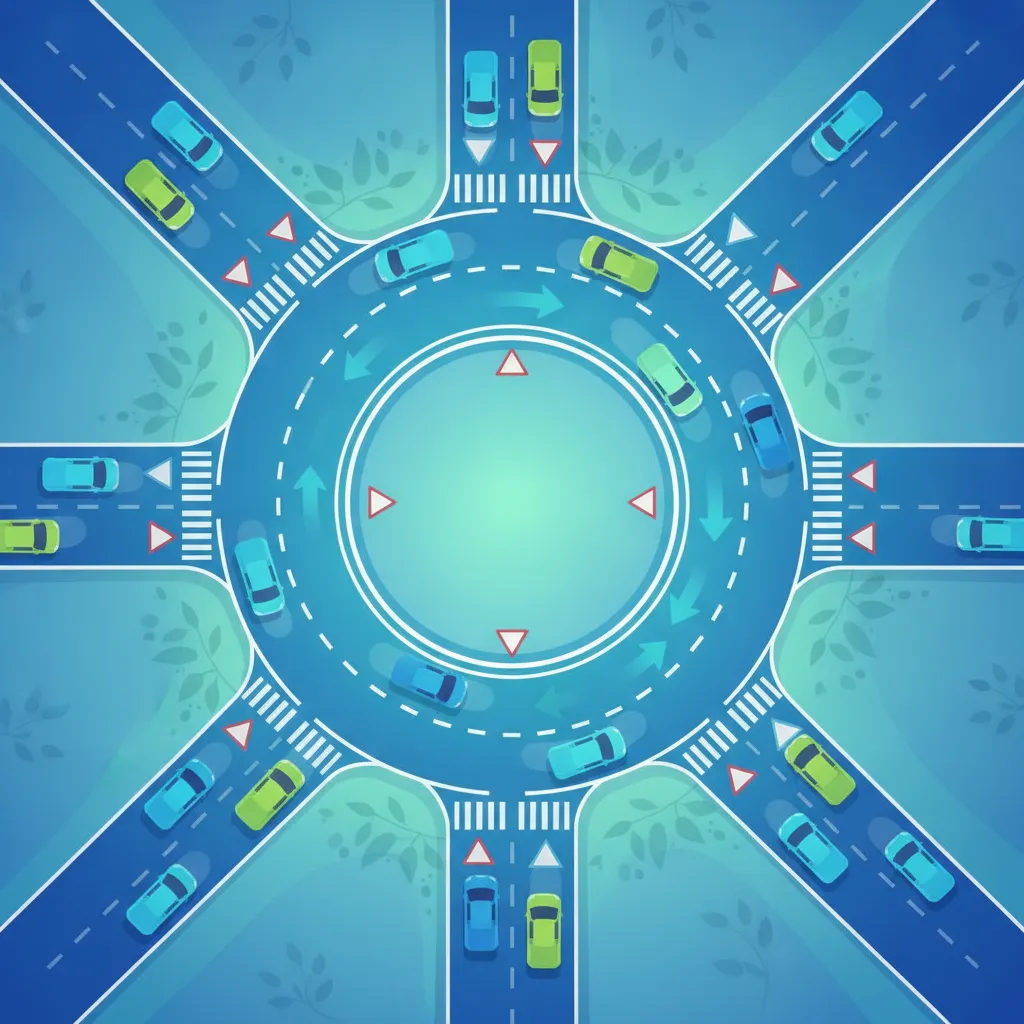
Roundabouts are a key feature of Belgian traffic management. This lesson explains how to approach, enter, navigate, and exit a roundabout safely, with a focus on yielding priority to traffic already circulating. Learners will also study correct lane positioning on multi-lane roundabouts and the appropriate use of signals.

This lesson offers specific strategies for motorcyclists navigating roundabouts in Belgium. It covers the rules for entering the roundabout, including yielding to circulating traffic, and how to choose the correct lane for your intended exit. The content stresses the importance of clear signaling and maintaining awareness of other vehicles during entry and exit maneuvers.
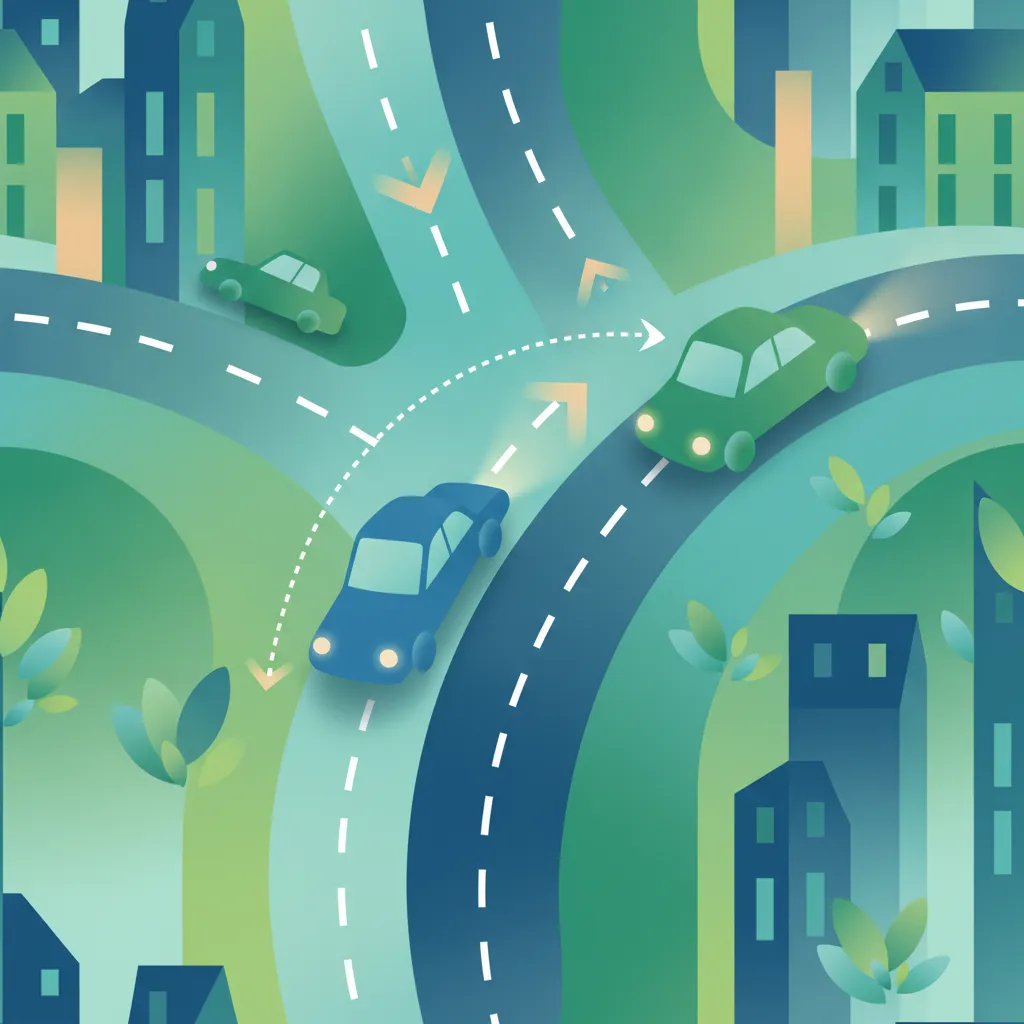
This lesson provides a step-by-step guide to executing turns and lane changes safely and efficiently. It covers the critical sequence of checking mirrors, signaling intent, and performing a head check for blind spots before any maneuver. Learners will also understand how to manage their speed and balance during cornering to maintain full control of the vehicle.
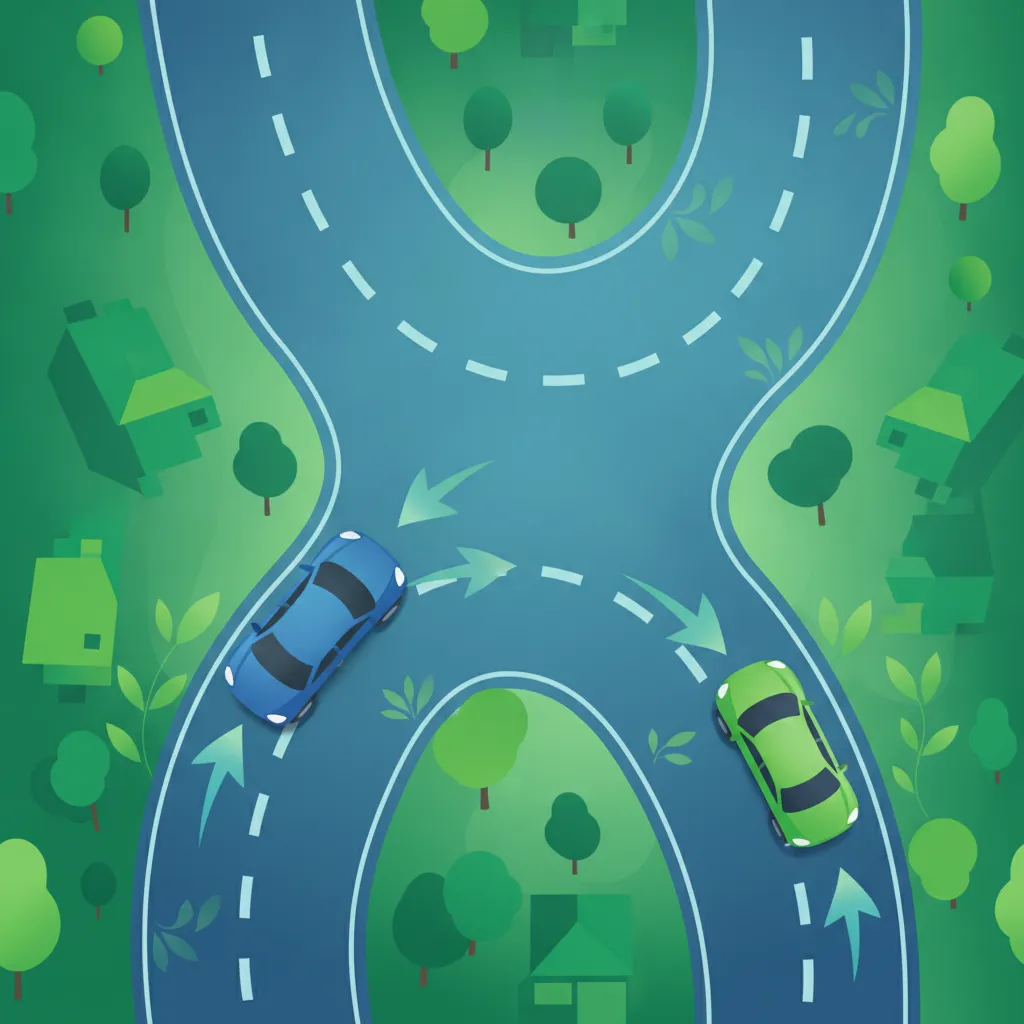
This lesson focuses on basic manoeuvres, covering the proper use of indicators, safe lane positioning, and correct steering for turns. Learners will study the importance of checking blind spots and maintaining appropriate speed for a smooth transition when changing lanes. It also addresses turning at intersections and signaling intentions clearly to other road users.
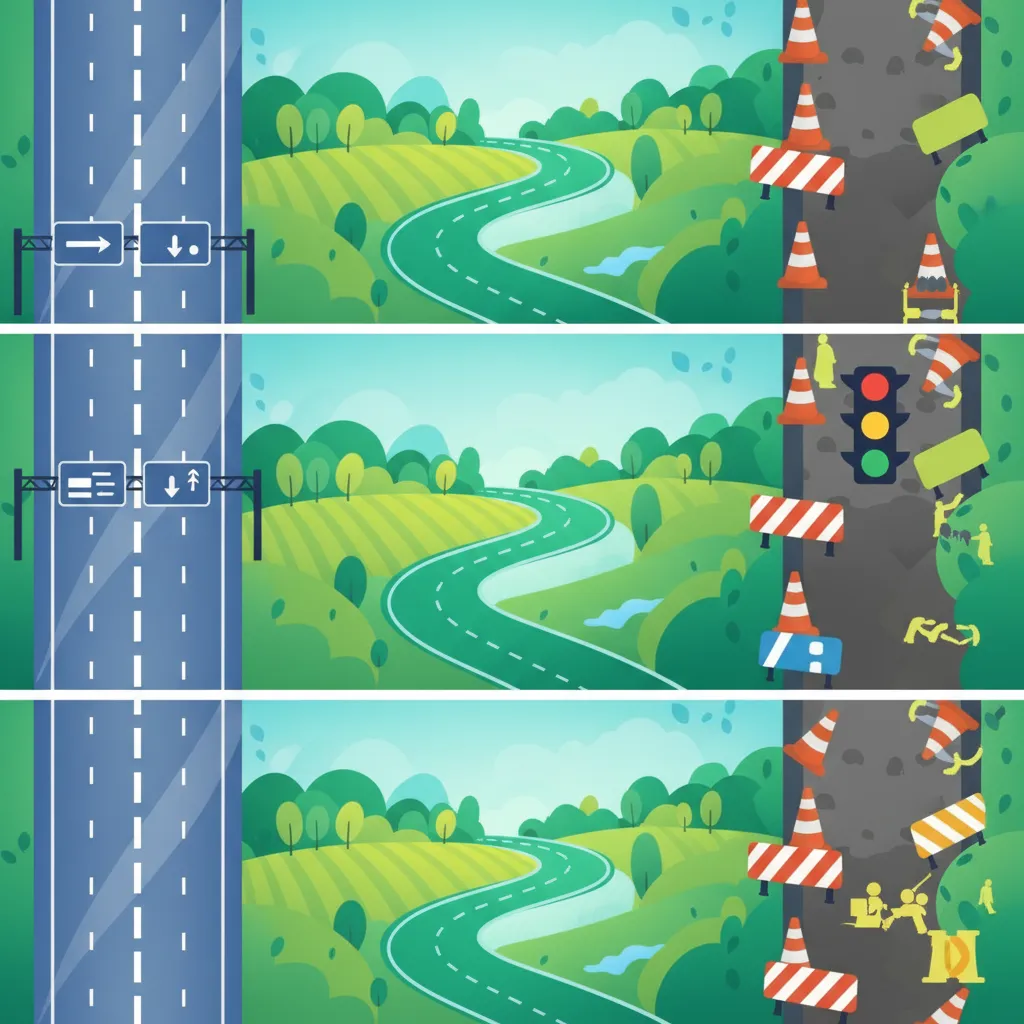
This lesson covers the specific challenges of driving on motorways, rural roads, and navigating roadworks. Learners will review lane discipline on high-speed roads and identify hazards common to rural roads, such as sharp bends and wildlife. It also explains the importance of adjusting speed and following temporary signage in construction zones.

The focus of this lesson is on maintaining proper lane discipline, especially on motorways and other high-speed roads. Learners will explore the rules for changing lanes, overtaking, and positioning in the correct lane based on speed and traffic flow. Emphasis is placed on safe merging techniques and adherence to all lane markings for fluid traffic movement.

Overtaking safely is a critical driving skill. This lesson explains where and how overtaking is permitted in Belgium, the importance of correct signaling, and maintaining a sufficient speed differential. Learners will understand the rules for passing on motorways and single-carriageway roads, and how to identify zones where overtaking is prohibited.

This lesson provides a comprehensive guide to motorway riding, starting with the procedure for safely merging into high-speed traffic from a slip road. It details the importance of strict lane discipline, including the rules for overtaking and the proper use of lanes. You will also learn the correct technique for planning and executing a safe exit from the motorway.

This lesson details the safe and systematic approach to different types of intersections, both signal-controlled and uncontrolled. It explains how to use road signs and markings to determine right-of-way and when to stop or yield. The importance of comprehensive scanning for traffic from all directions and adjusting approach speed is emphasized to ensure safe passage.
Merging onto motorways requires understanding the dynamics of fast-moving traffic. This lesson covers the correct use of entrance ramps, acceleration lanes, and the technique of matching speed with the flow of traffic. Learners will practice safe merging procedures, including selecting an appropriate gap and yielding to mainline traffic when necessary.
Understand common errors and violations learners make when navigating Belgian roundabouts. This lesson clarifies typical mistakes like failing to yield, incorrect lane discipline, and signaling errors, providing essential theory for safe AM license operation.
Roundabouts are a key feature of Belgian traffic management. This lesson explains how to approach, enter, navigate, and exit a roundabout safely, with a focus on yielding priority to traffic already circulating. Learners will also study correct lane positioning on multi-lane roundabouts and the appropriate use of signals.
This lesson offers specific strategies for motorcyclists navigating roundabouts in Belgium. It covers the rules for entering the roundabout, including yielding to circulating traffic, and how to choose the correct lane for your intended exit. The content stresses the importance of clear signaling and maintaining awareness of other vehicles during entry and exit maneuvers.
This lesson provides a step-by-step guide to executing turns and lane changes safely and efficiently. It covers the critical sequence of checking mirrors, signaling intent, and performing a head check for blind spots before any maneuver. Learners will also understand how to manage their speed and balance during cornering to maintain full control of the vehicle.
This lesson focuses on basic manoeuvres, covering the proper use of indicators, safe lane positioning, and correct steering for turns. Learners will study the importance of checking blind spots and maintaining appropriate speed for a smooth transition when changing lanes. It also addresses turning at intersections and signaling intentions clearly to other road users.
Overtaking safely is a critical driving skill. This lesson explains where and how overtaking is permitted in Belgium, the importance of correct signaling, and maintaining a sufficient speed differential. Learners will understand the rules for passing on motorways and single-carriageway roads, and how to identify zones where overtaking is prohibited.
This lesson focuses on the legal duties and responsibilities that an AM vehicle operator must uphold on Belgian roads. It covers critical rules such as adhering to speed limits, correctly applying right-of-way principles, and following regulations for overtaking other vehicles. The lesson also explains the system of fines and penalty points for traffic violations, emphasizing the legal consequences of non-compliance to foster responsible driving habits.
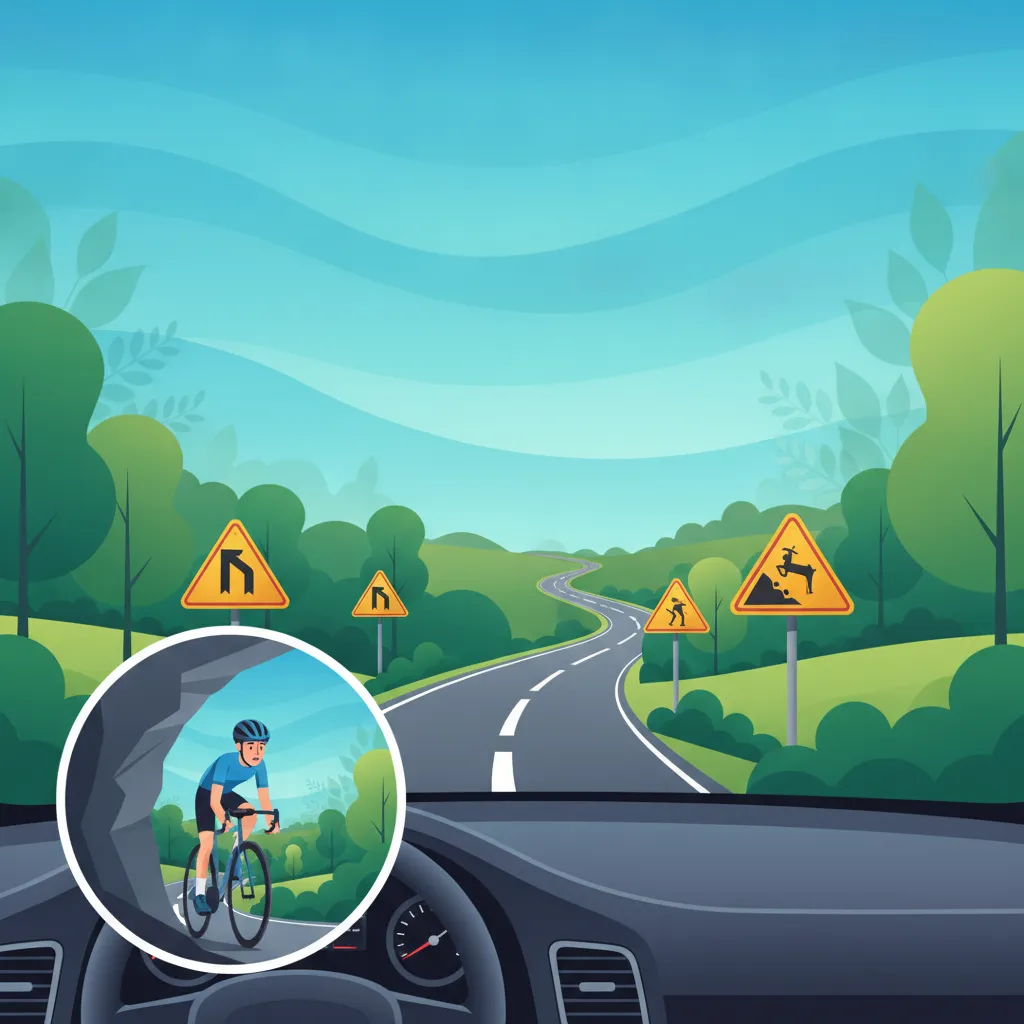
This lesson is dedicated to warning signs, which are designed to alert drivers to potential dangers ahead. It covers the interpretation of signs indicating sharp curves, steep gradients, slippery surfaces, and the presence of pedestrians or animals. By understanding these warnings, riders can anticipate potential hazards and adjust their speed and position proactively for safer travel.
This lesson covers the specific challenges of driving on motorways, rural roads, and navigating roadworks. Learners will review lane discipline on high-speed roads and identify hazards common to rural roads, such as sharp bends and wildlife. It also explains the importance of adjusting speed and following temporary signage in construction zones.
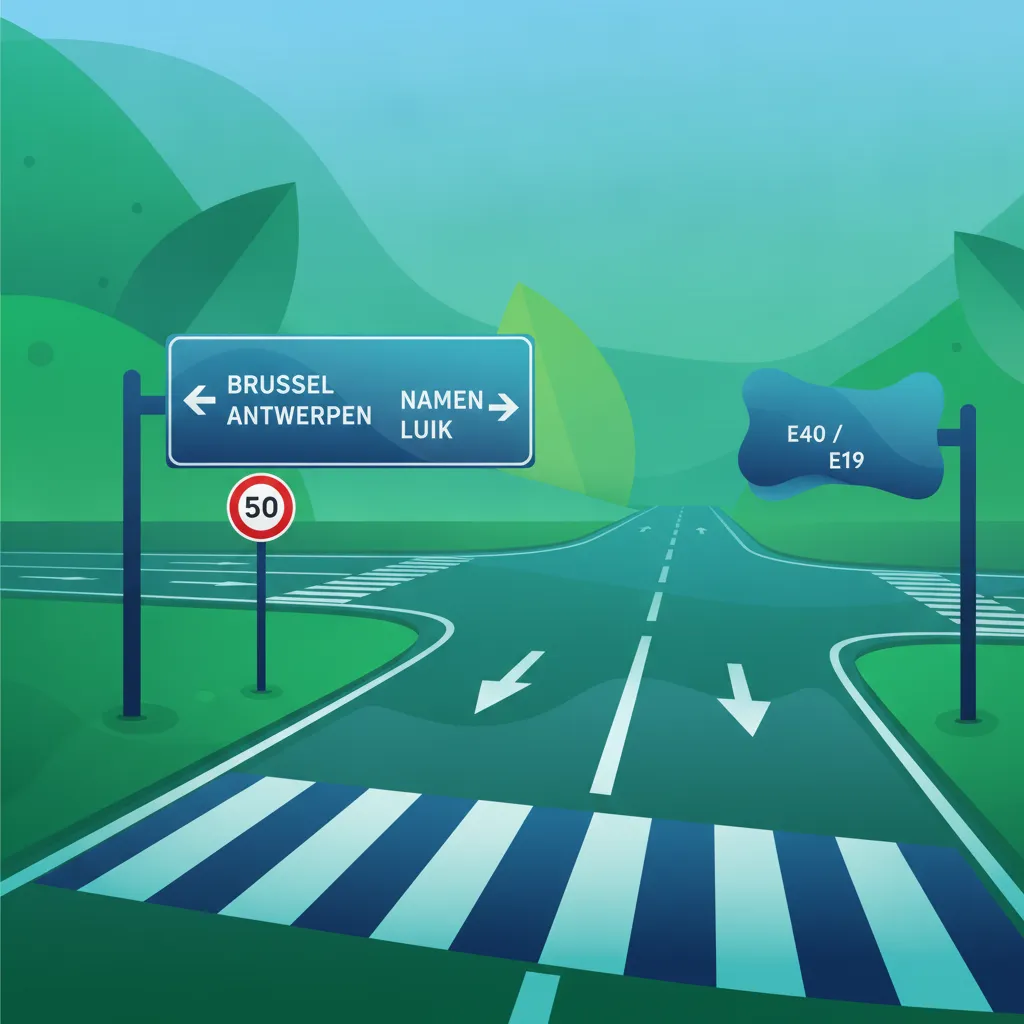
This lesson explains the role of information signs and road markings in guiding road users. It covers directional signs that help with navigation and markings that delineate lanes, pedestrian crossings, and zones for specific users like cyclists. Learners will understand how to use this information to maintain correct lane positioning and navigate their route efficiently and safely.
This lesson details the safe and systematic approach to different types of intersections, both signal-controlled and uncontrolled. It explains how to use road signs and markings to determine right-of-way and when to stop or yield. The importance of comprehensive scanning for traffic from all directions and adjusting approach speed is emphasized to ensure safe passage.
Find clear answers to common questions learners have about Roundabouts: Entry, Circulation, and Exit. Learn how the lesson is structured, which driving theory objectives it supports, and how it fits into the overall learning path of units and curriculum progression in Belgium. These explanations help you understand key concepts, lesson flow, and exam focused study goals.
Yes. You must use your indicator to signal your intention to exit just after you have passed the exit immediately preceding the one you intend to take.
Generally, traffic already circulating on the roundabout has priority over those attempting to enter, unless otherwise indicated by signs or road markings.
Stay in the lane that corresponds with your intended exit. For smaller vehicles like mopeds, staying visible is key, so avoid driving in the blind spots of larger vehicles.
The rules for roundabouts remain the same for all vehicles. However, because you are more vulnerable, always assume other drivers may not see you and maintain clear, predictable positioning.
Ready to focus your Belgian driving theory revision? Utilize our powerful search tool to pinpoint exact topics, road signs, or difficulty levels. Engage with practice questions that directly address your learning needs and solidify your understanding of Belgian traffic laws for your upcoming exam.