
This lesson guides you through the fundamental vehicle maneuvers required for the Belgian Category B driving theory exam. You will learn the correct protocols for signaling, checking your surroundings, and executing turns and lane changes safely on Belgian roads.
Lesson content overview
Navigating the roads safely and efficiently requires a solid understanding of fundamental driving manoeuvres. This lesson delves into the essential techniques for basic turning and changing lanes, crucial skills for every driver seeking the Belgian Category B driving licence. By mastering these foundational manoeuvres, you ensure not only your own safety but also contribute to a predictable and smooth traffic flow for all road users.
Understanding how to execute turns and lane changes correctly integrates knowledge of traffic regulations, vehicle dynamics, and keen observation skills. We will explore the proper use of indicators, maintaining safe lane positioning, adjusting your speed, effectively checking blind spots, and applying correct steering techniques. These principles form the bedrock for more advanced driving skills, such as overtaking and merging onto motorways, making them indispensable for confident and lawful driving on Belgian roads.
Basic turning and lane changing are more than just routine actions; they are critical elements of safe and effective road navigation. Correct execution of these manoeuvres ensures that your vehicle's behaviour is predictable to others, significantly reducing the risk of collisions. This predictability fosters trust among drivers and enhances overall traffic flow, preventing sudden braking or swerving that can lead to hazardous situations.
These manoeuvres require a comprehensive approach, combining legal obligations like proper signalling with practical considerations such as vehicle physics and thorough safety checks, especially regarding visibility and blind spots. A strong grasp of these techniques serves as a prerequisite for tackling more complex driving scenarios, building a foundation of skill and confidence essential for safe driving in Belgium and beyond.
Every successful turn or lane change is built upon a set of core principles designed to maximise safety and efficiency. Integrating these principles into your driving routine will make your actions predictable and reduce risks.
The Indication Principle mandates the use of your vehicle's indicators (also known as blinkers or turn signals) to communicate your intended turns or lane changes. This legal requirement is vital for informing other road users – drivers, cyclists, and pedestrians – of your upcoming actions. By signalling in advance, you give others sufficient time to adjust their speed and position, thereby preventing misunderstandings and potential collisions. Failure to signal, or signalling incorrectly, can lead to dangerous situations and legal penalties under Belgian traffic law.
The Positioning Principle involves accurately placing and maintaining your vehicle within its lane and choosing the correct lane for your manoeuvre. This ensures adequate clearance from other vehicles, road infrastructure, and pedestrians. Correct positioning supports safe transitions, allows for smooth steering, and helps you comply with road markings and signs. Drifting towards lane edges, occupying multiple lanes unnecessarily, or failing to use designated turn lanes can create obstacles, encroach on other drivers' space, and limit your visibility, increasing the risk of an incident.
The Speed Adaptation Principle emphasises the critical need to adjust your vehicle's speed to suit the specific manoeuvre, prevailing road conditions, and current traffic flow. Approaching a turn or preparing for a lane change at an appropriate speed allows you to maintain full control of your vehicle without endangering yourself or others. Excessive speed reduces your reaction time, makes smooth steering difficult, and significantly increases the risk of losing control, particularly on sharp bends or slippery surfaces.
The Blind Spot Management Principle involves actively checking and accounting for vehicles or objects that are not visible through your mirrors. Your vehicle's mirrors provide a good general view, but they always leave certain areas, known as blind spots, unobserved. Before any lateral movement, such as a lane change or turn, it is mandatory to physically look over your shoulder – performing a "shoulder check" – to confirm that these blind spots are clear. Overreliance on mirrors without a proper shoulder check is a common cause of side collisions.
The Steering Technique Principle focuses on applying smooth and controlled inputs to the steering wheel when navigating turns or changing lanes. Gentle and deliberate steering maintains vehicle stability, which is especially important at higher speeds or on roads with reduced grip. Jerky, abrupt, or excessive steering can lead to loss of traction, cause your vehicle to swerve unexpectedly, or result in an unintended trajectory, making it harder to maintain your desired path and control.
Let's break down these core principles into practical, actionable steps for your daily driving.
Indicators are your primary communication tool on the road. Their correct and timely use is a legal obligation and a vital safety measure.
An electrical light on the vehicle, usually amber, that flashes to signal a driver’s intention to turn left, turn right, or change lanes. Also known as a turn signal or blinker.
Always check your mirrors before signalling to ensure the space you intend to move into is clear, then signal, then perform your manoeuvre. This sequence is often referred to as MSPSL (Mirror, Signal, Position, Speed, Look).
Your vehicle's position on the road dictates your safety and ability to complete manoeuvres successfully.
Blind spots are areas around your vehicle that cannot be seen using your rearview or side mirrors. They pose a significant hazard if not checked diligently.
Check Mirrors: Look in your rearview mirror and the side mirror in the direction you wish to move to assess traffic conditions.
Signal: Activate your indicator to signal your intention, giving other drivers sufficient warning.
Blind Spot Check: Briefly glance over your shoulder in the direction of the lane change to confirm the blind spot is clear.
Adjust Speed: Accelerate or decelerate smoothly as needed to match the speed of traffic in the target lane.
Steer Smoothly: Gently steer into the new lane, maintaining a smooth trajectory.
Cancel Signal: Once fully in the new lane and stable, turn off your indicator.
Managing your speed effectively is paramount to maintaining control, especially when turning.
Never enter a turn at a speed higher than is safe, even if it is below the posted speed limit. Speed limits are maximums, not targets, and conditions often require driving significantly slower.
Smooth and controlled steering inputs are vital for stable vehicle movement.
Specific rules govern these manoeuvres on Belgian roads to ensure safety and order.
Being aware of common errors can help you prevent them.
Driving conditions are rarely static; adapting your techniques to changing environments is key to safe driving.
It is crucial to understand that these principles do not operate in isolation; they are deeply interconnected and must be applied concurrently for safe driving.
Each principle reinforces the others, creating a cohesive approach to basic manoeuvres that enhances predictability, reduces collision risk, and ensures you maintain control of your vehicle at all times.
These examples illustrate the application of the principles discussed.
You are approaching a T-junction on a two-lane road with a dedicated left-turn lane.
You are driving on the right lane of a three-lane highway and need to move to the middle lane to overtake a slower vehicle.
You are approaching a residential intersection with a stop sign and intend to turn right.
Mastering basic turning and lane change techniques is fundamental for obtaining and maintaining your Belgian Category B driving licence and for safe driving throughout your life. Remember these key takeaways:
These principles are interdependent; applying them concurrently increases predictability for other road users, enhances your visibility on the road, improves your reaction time to unexpected events, and respects the vehicle dynamics necessary for safe control. Consistent application of these techniques will lead to safer, more confident, and more enjoyable driving experiences on Belgian roads.
This lesson covers the five core principles for safe turning and lane changing on Belgian roads: proper indicator use (at least 30 meters before the manoeuvre), correct lane positioning and discipline, effective blind spot management through shoulder checks, appropriate speed adaptation before turns, and smooth steering techniques. Belgian traffic law requires indicators throughout the entire manoeuvre and mandatory blind spot checks before any lateral movement. The lesson emphasizes that these principles are interdependent—signaling supports positioning, blind spot checks confirm the safety of your intended path, and appropriate speed enables smooth steering. Common mistakes include signaling too late, neglecting shoulder checks, entering turns too fast, and drifting out of lane during turns. Learners should practice the MSPSL procedure (Mirror, Signal, Position, Speed, Look) consistently and adapt techniques for weather, night driving, different road types, and the presence of vulnerable road users.
A short set of high-value points that capture the most important learning from this lesson.
Always signal at least 30 meters before any turn or lane change and keep the indicator active until the manoeuvre is fully completed
Never rely solely on mirrors; a physical shoulder check over your shoulder is mandatory before any lateral movement to verify blind spots are clear
Reduce your speed before entering a turn, not during it, and brake before the curve to maintain vehicle stability and control
Use the correct designated lane for your intended turn at intersections and complete lane changes before entering the intersection
Maintain smooth, controlled steering inputs with hands at 9 and 3 o'clock or 8 and 4 o'clock positions to ensure vehicle stability
Explore all units and lessons included in this driving theory course.
MSPSL sequence: Mirror, Signal, Position, Speed, Look before executing any lane change
On Belgian roads, lane changes required for turns must be completed before entering the intersection
Heavy or loaded vehicles require longer braking distances and wider turning radius, affecting all manoeuvre timing
Indicators must remain active continuously throughout the entire manoeuvre; deactivating too early is a common and dangerous mistake
After completing a turn, enter the closest available lane in your direction of travel unless markings indicate otherwise
Forgetting to signal or activating the indicator less than 30 meters before the manoeuvre, leaving other road users insufficient time to react
Relying only on mirrors without performing a shoulder check, risking side collisions with vehicles or cyclists in the blind spot
Entering turns at excessive speed, which reduces control and can cause loss of traction especially on sharp bends or wet surfaces
Changing lanes mid-intersection instead of completing lane changes before entering, creating hazardous conflicts with other traffic
Turning off the indicator before the manoeuvre is fully complete, causing confusion about the driver's continued intentions
Lesson content overview
A short set of high-value points that capture the most important learning from this lesson.
Always signal at least 30 meters before any turn or lane change and keep the indicator active until the manoeuvre is fully completed
Never rely solely on mirrors; a physical shoulder check over your shoulder is mandatory before any lateral movement to verify blind spots are clear
Reduce your speed before entering a turn, not during it, and brake before the curve to maintain vehicle stability and control
Use the correct designated lane for your intended turn at intersections and complete lane changes before entering the intersection
Maintain smooth, controlled steering inputs with hands at 9 and 3 o'clock or 8 and 4 o'clock positions to ensure vehicle stability
Explore all units and lessons included in this driving theory course.
MSPSL sequence: Mirror, Signal, Position, Speed, Look before executing any lane change
On Belgian roads, lane changes required for turns must be completed before entering the intersection
Heavy or loaded vehicles require longer braking distances and wider turning radius, affecting all manoeuvre timing
Indicators must remain active continuously throughout the entire manoeuvre; deactivating too early is a common and dangerous mistake
After completing a turn, enter the closest available lane in your direction of travel unless markings indicate otherwise
Forgetting to signal or activating the indicator less than 30 meters before the manoeuvre, leaving other road users insufficient time to react
Relying only on mirrors without performing a shoulder check, risking side collisions with vehicles or cyclists in the blind spot
Entering turns at excessive speed, which reduces control and can cause loss of traction especially on sharp bends or wet surfaces
Changing lanes mid-intersection instead of completing lane changes before entering, creating hazardous conflicts with other traffic
Turning off the indicator before the manoeuvre is fully complete, causing confusion about the driver's continued intentions
Explore search topics learners often look for when studying Basic Turning and Lane Change Techniques. These topics reflect common questions about road rules, driving situations, safety guidance, and lesson level theory preparation for learners in Belgium.
Browse additional driving theory lessons that cover connected traffic rules, road signs, and common driving situations related to this topic. Improve your understanding of how different rules interact across everyday traffic scenarios.
Explore complex real-world driving scenarios for turns and lane changes in Belgium. This lesson covers advanced situations, potential hazards, and common mistakes to avoid, building upon basic manoeuvre principles.

The focus of this lesson is on maintaining proper lane discipline, especially on motorways and other high-speed roads. Learners will explore the rules for changing lanes, overtaking, and positioning in the correct lane based on speed and traffic flow. Emphasis is placed on safe merging techniques and adherence to all lane markings for fluid traffic movement.

This lesson provides a step-by-step guide to executing turns and lane changes safely and efficiently. It covers the critical sequence of checking mirrors, signaling intent, and performing a head check for blind spots before any maneuver. Learners will also understand how to manage their speed and balance during cornering to maintain full control of the vehicle.

Overtaking safely is a critical driving skill. This lesson explains where and how overtaking is permitted in Belgium, the importance of correct signaling, and maintaining a sufficient speed differential. Learners will understand the rules for passing on motorways and single-carriageway roads, and how to identify zones where overtaking is prohibited.

Roundabouts are a key feature of Belgian traffic management. This lesson explains how to approach, enter, navigate, and exit a roundabout safely, with a focus on yielding priority to traffic already circulating. Learners will also study correct lane positioning on multi-lane roundabouts and the appropriate use of signals.
Directional symbols and arrows painted on the road surface guide drivers on permitted lane movements and turning directions. This lesson explains the interpretation of these arrows, covering rules for one-way streets, mandatory turns, and lane-specific instructions. Learners will understand how to comply with these symbols to navigate complex intersections safely and efficiently.
This lesson covers the specific challenges of driving on motorways, rural roads, and navigating roadworks. Learners will review lane discipline on high-speed roads and identify hazards common to rural roads, such as sharp bends and wildlife. It also explains the importance of adjusting speed and following temporary signage in construction zones.

Merging onto motorways requires understanding the dynamics of fast-moving traffic. This lesson covers the correct use of entrance ramps, acceleration lanes, and the technique of matching speed with the flow of traffic. Learners will practice safe merging procedures, including selecting an appropriate gap and yielding to mainline traffic when necessary.

This lesson provides specific instructions for navigating roundabouts, a common feature on Belgian roads. It covers the rules of priority upon entry, the correct lane choice based on the intended exit, and the proper use of signals. Learners will understand how to safely circulate and exit, while being mindful of other vehicles, particularly larger ones with significant blind spots.
This lesson delves into the complex priority rules that govern Belgian roadways, with a strong focus on the default 'priority from the right' principle. It explains how to interpret priority signs, such as 'give way' and 'stop', and apply the correct right-of-way at various types of junctions. You will learn the hierarchy of road users and the specific rules for yielding in different traffic scenarios.

This lesson offers specific strategies for motorcyclists navigating roundabouts in Belgium. It covers the rules for entering the roundabout, including yielding to circulating traffic, and how to choose the correct lane for your intended exit. The content stresses the importance of clear signaling and maintaining awareness of other vehicles during entry and exit maneuvers.
Understand the nuances of intersection etiquette and priority rules when turning or changing lanes on Belgian roads. This lesson clarifies right of way, yielding, and safe interaction with other road users at junctions.

This lesson focuses on the distinction between the default priority from the right and designated priority roads, explaining how drivers should yield or proceed. Learners will discover the specific signs that indicate a priority road and when that priority ends. Understanding these concepts is essential for predictable and safe road use at intersections.

This lesson provides detailed guidance on navigating various intersections, focusing on yielding behaviors at give way signs and mandatory stops at stop signs. Learners will explore how traffic lights override other priority rules and the importance of granting right-of-way to pedestrians and cyclists. The lesson emphasizes safe crossing procedures and correct yielding.
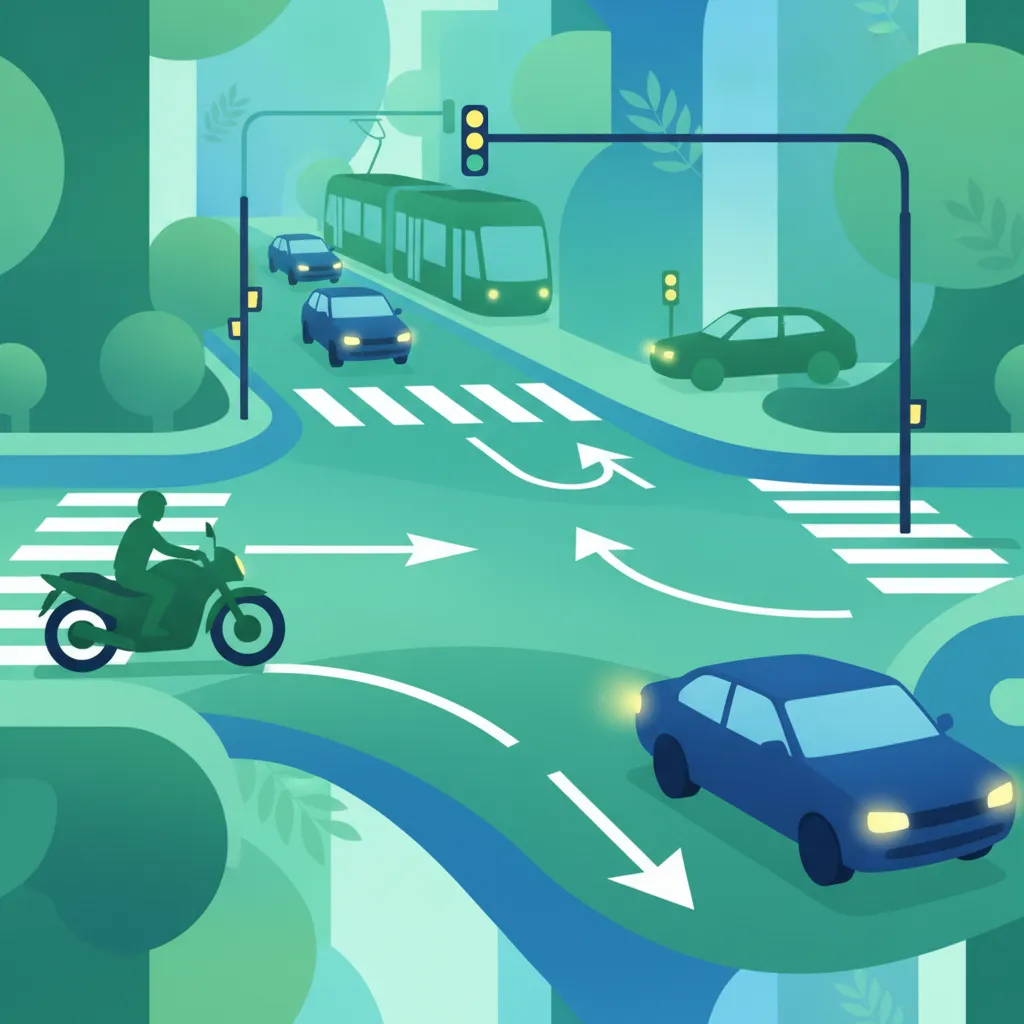
In this lesson, learners will examine the fundamental priority rules that dictate traffic flow at unmarked intersections. The lesson focuses on the principle of priority from the right, the hierarchy of traffic signs and signals, and situations requiring yielding or stopping. Understanding these principles is crucial for safe and lawful navigation of Belgian road networks.
This lesson delves into the complex priority rules that govern Belgian roadways, with a strong focus on the default 'priority from the right' principle. It explains how to interpret priority signs, such as 'give way' and 'stop', and apply the correct right-of-way at various types of junctions. You will learn the hierarchy of road users and the specific rules for yielding in different traffic scenarios.
Roundabouts are a key feature of Belgian traffic management. This lesson explains how to approach, enter, navigate, and exit a roundabout safely, with a focus on yielding priority to traffic already circulating. Learners will also study correct lane positioning on multi-lane roundabouts and the appropriate use of signals.

This lesson details the safe and systematic approach to different types of intersections, both signal-controlled and uncontrolled. It explains how to use road signs and markings to determine right-of-way and when to stop or yield. The importance of comprehensive scanning for traffic from all directions and adjusting approach speed is emphasized to ensure safe passage.
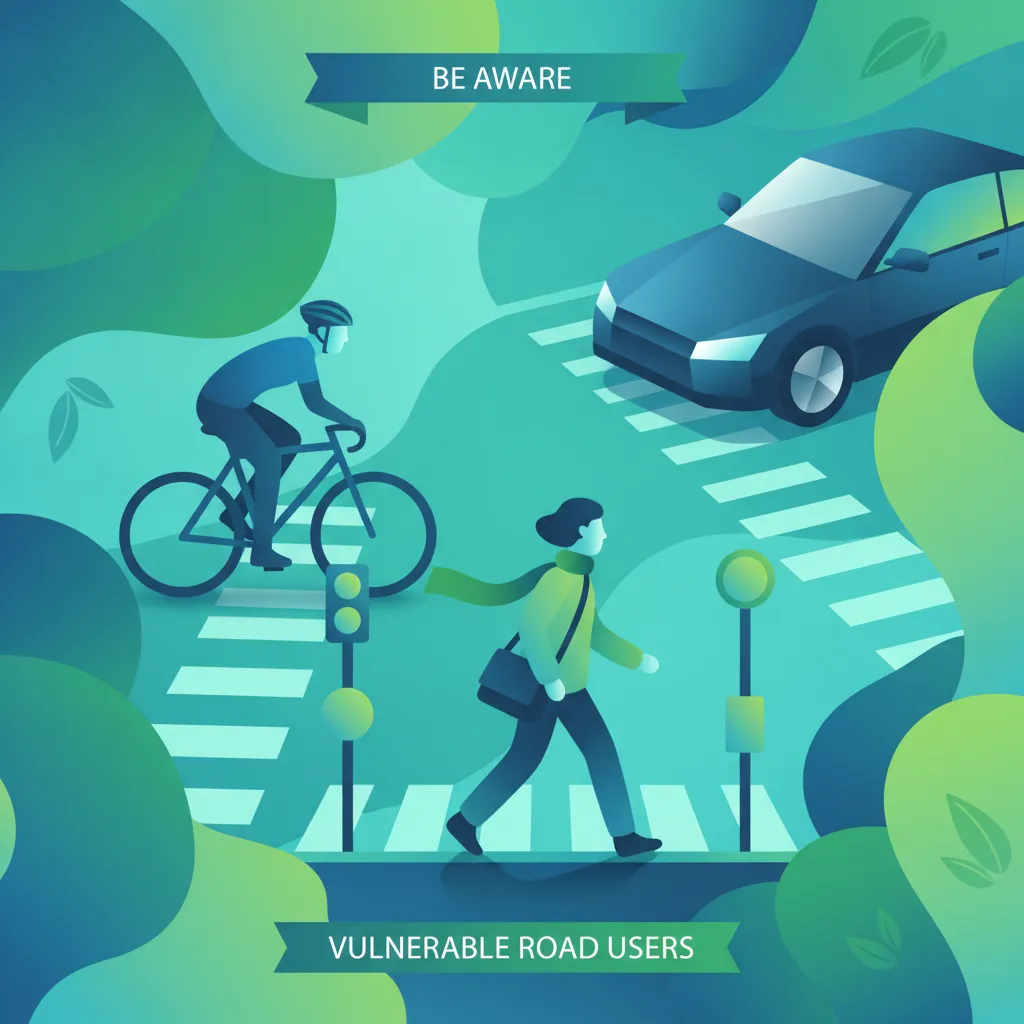
This lesson provides a systematic approach to navigating intersections, emphasizing the importance of observation, speed control, and correct positioning. It reinforces the application of priority-from-the-right and other right-of-way rules in real-world junction scenarios. You will learn effective visual scanning techniques to anticipate the actions of other road users and ensure a safe passage.
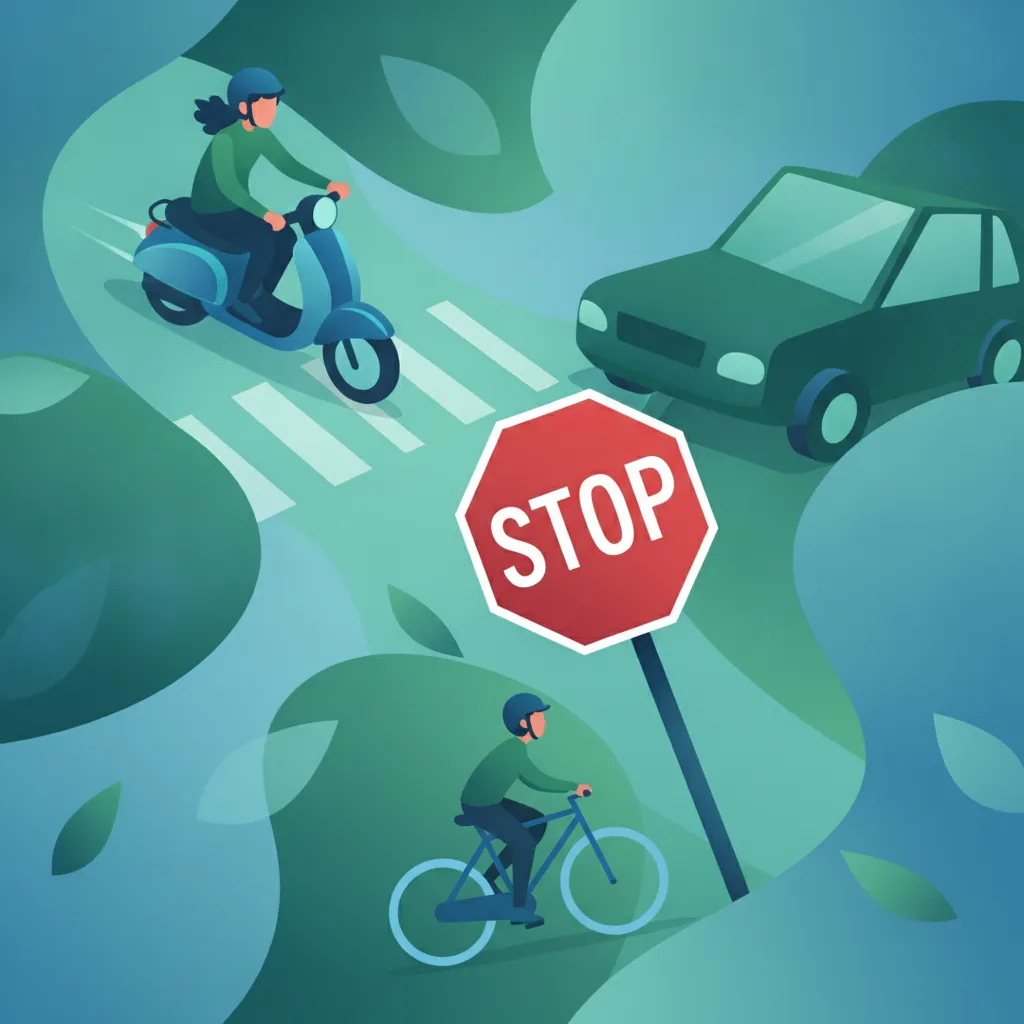
This lesson introduces the core principles of priority that govern traffic flow in Belgium, with a primary focus on the 'priority from the right' rule. It explains how to identify priority roads indicated by signs and how to act at uncontrolled intersections where the default rule applies. Understanding these rules is critical for AM riders to navigate junctions, intersections, and roundabouts safely and without conflict.
Directional symbols and arrows painted on the road surface guide drivers on permitted lane movements and turning directions. This lesson explains the interpretation of these arrows, covering rules for one-way streets, mandatory turns, and lane-specific instructions. Learners will understand how to comply with these symbols to navigate complex intersections safely and efficiently.
The focus of this lesson is on maintaining proper lane discipline, especially on motorways and other high-speed roads. Learners will explore the rules for changing lanes, overtaking, and positioning in the correct lane based on speed and traffic flow. Emphasis is placed on safe merging techniques and adherence to all lane markings for fluid traffic movement.
Find clear answers to common questions learners have about Basic Turning and Lane Change Techniques. Learn how the lesson is structured, which driving theory objectives it supports, and how it fits into the overall learning path of units and curriculum progression in Belgium. These explanations help you understand key concepts, lesson flow, and exam focused study goals.
In Belgium, you must indicate your intention well in advance of the turn or lane change. Your signal must be clearly visible to other road users, but must not mislead them regarding your exact point of turning.
Yes, checking your mirrors is not enough. You must physically perform a shoulder check (blind spot check) to see what is beside you before moving your vehicle laterally, as this is a core safety requirement in the Belgian theory and practical test.
For a left turn on a standard road, you should move toward the center of the roadway or the designated left-turn lane, ensuring you do not cross into the path of oncoming traffic prematurely.
Many learners forget that signaling does not give you the right of way. You must always ensure that the lane is clear and it is safe to move before initiating the maneuver, even after you have signaled your intent.
Ready to focus your Belgian driving theory revision? Utilize our powerful search tool to pinpoint exact topics, road signs, or difficulty levels. Engage with practice questions that directly address your learning needs and solidify your understanding of Belgian traffic laws for your upcoming exam.