
This lesson guides you through the complexities of navigating roundabouts on Belgian roads, a critical skill for both the theory exam and practical driving. By building on your knowledge of general priority rules, you will learn how to approach, enter, and exit roundabouts while maintaining safety and flow.
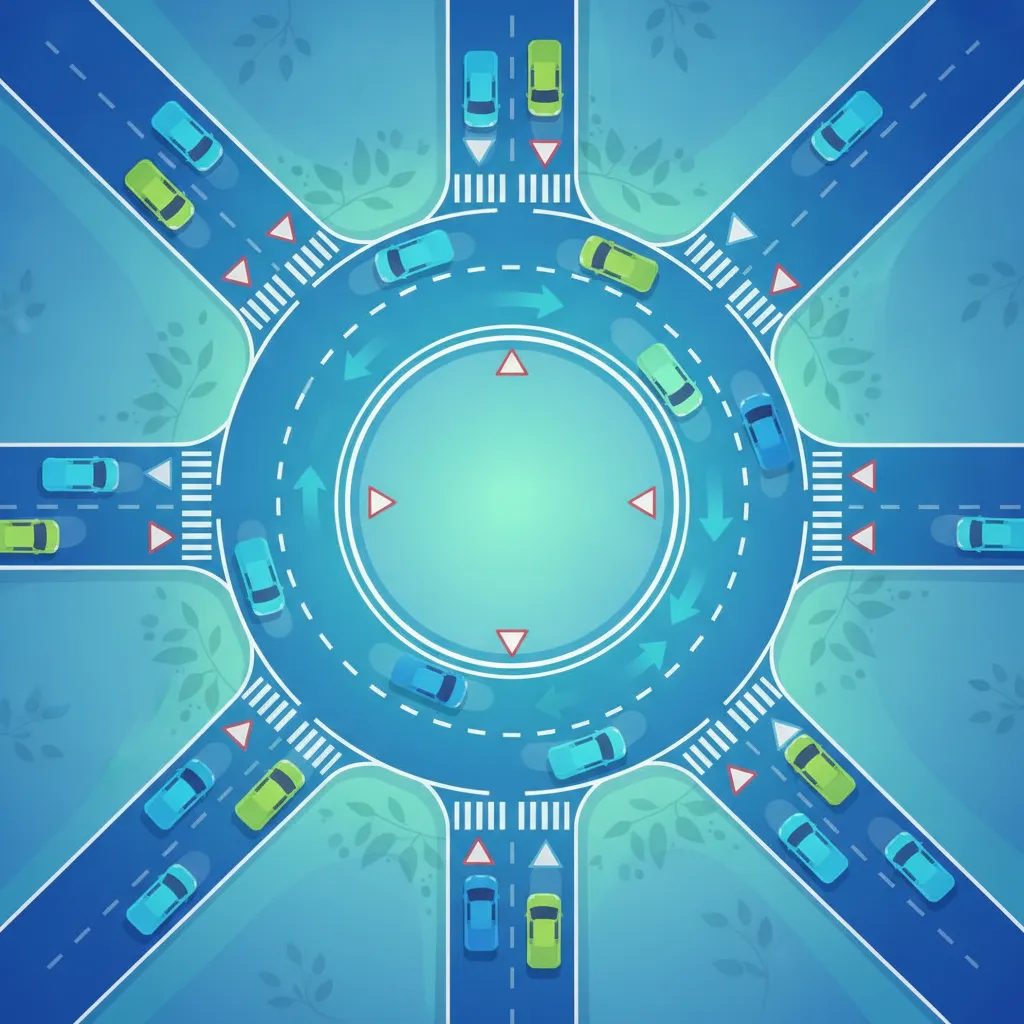
Lesson content overview
Roundabouts are an integral part of the Belgian road network, designed to enhance traffic flow and improve safety by reducing the number of direct conflict points compared to traditional intersections. Mastering the rules for navigating roundabouts is essential for obtaining your Belgian Category B driving licence and for safe driving in general. This comprehensive lesson will guide you through every aspect, from approaching and entering to circulating and exiting, ensuring you understand the necessary priority rules, lane discipline, and signaling requirements.
A roundabout is a type of circular intersection where traffic flows in one direction around a central island. Instead of relying on stop signs or traffic lights at every entry, roundabouts primarily manage traffic flow through a universal priority rule: traffic already circulating within the roundabout has priority over vehicles attempting to enter. This design minimizes the need for full stops, allowing for a more continuous movement of vehicles, which reduces delays, fuel consumption, and emissions.
The circular flow significantly reduces the most severe types of collisions, such as T-bone or head-on crashes, by converting potential straight-on collisions into glancing blows or sideswipes, which are generally less severe. Proper behavior in a roundabout, including yielding, correct lane selection, and signaling, is crucial for realizing these safety and efficiency benefits.
Your successful navigation of a roundabout begins long before you actually enter it. Proper preparation involves understanding the type of roundabout, identifying your intended exit, and positioning your vehicle correctly. This proactive approach ensures a smooth and safe transition into the circulating traffic.
As you approach any roundabout in Belgium, the most critical rule to remember is to yield to circulating traffic. This means that vehicles already inside the roundabout have the right of way. You must be prepared to stop at the entry point if there is traffic approaching from your left within the roundabout.
The yield line (often a broken white line) marks the exact point where you must stop and give way. It's imperative not to cross this line if yielding is required. Look to your left for oncoming vehicles within the roundabout before proceeding.
A broken white line or a set of inverted triangles at the entry of a roundabout, indicating where drivers must stop and yield to circulating traffic before entering.
On multi-lane roundabouts, selecting the correct lane before entering is paramount. Unlike some other intersections where lane changes within the intersection might be permissible, changing lanes inside a roundabout is generally discouraged and can be dangerous, leading to confusion and collisions. Therefore, observe road markings and signs carefully as you approach.
Typically, the lane choices are guided by your intended exit:
Road markings, such as flèches leaders (leader arrows) painted on the road surface, explicitly indicate which lane to use for which exit. Pay close attention to these indicators.
Plan your route and identify your exit before you reach the roundabout. This allows you to choose the correct entry lane well in advance, reducing stress and the risk of last-minute maneuvers.
Once you have identified your lane and checked for circulating traffic, you can proceed to enter the roundabout. This phase requires careful judgment of gaps in traffic and maintaining your chosen lane.
The golden rule for entering a roundabout in Belgium is to yield to any vehicle already circulating within the roundabout. This means you must:
Even if you are on what appears to be a priority road, the specific rule for roundabouts supersedes general priority-from-the-right rules at the entry. Traffic within the roundabout takes precedence.
The principles of yielding remain the same, but navigation differs slightly between single-lane and multi-lane roundabouts.
On a single-lane roundabout, all vehicles share the same circular path. Once you've yielded and entered, you simply follow the lane around until your exit. There's no need for internal lane changes. Maintain a safe following distance and be ready to signal your exit.
Multi-lane roundabouts require more attention to lane discipline. Once you've chosen your entry lane and entered safely:
Correct use of your turn signals (indicators) is vital for communicating your intentions to other road users, both those behind you and those waiting to enter.
In Belgium, the rule is clear: you must signal right when you are about to exit the roundabout.
Signaling too early (e.g., indicating right while still passing multiple exits) can mislead other drivers into thinking you are taking an earlier exit, causing them to enter unsafely. Signal only when approaching your specific exit.
An often-overlooked rule is the requirement to yield to pedestrians crossing at the exits of a roundabout. As you approach your chosen exit and prepare to leave the roundabout, pay close attention to any pedestrian crossings.
A marked area where pedestrians have priority to cross the road, often present at the exits of roundabouts.
Vulnerable road users, such as cyclists and motorcyclists, require special attention and have specific positioning rules within roundabouts. Drivers of motor vehicles must be particularly vigilant for their presence.
Cyclists and motorcyclists can be harder to spot due to their smaller size. Their positioning rules depend on the presence of dedicated infrastructure:
Drivers must always maintain a safe distance from cyclists and motorcyclists and check their blind spots carefully, especially when preparing to exit, as a cyclist may be alongside your vehicle.
While the primary function of a roundabout is to facilitate continuous flow, some large or complex roundabouts may incorporate traffic lights at their entry points.
If a roundabout entry is controlled by traffic lights (red/green), these signals take precedence over the general yield-to-circulating-traffic rule.
These traffic lights are typically used during peak hours to manage high traffic volumes or to give priority to certain directions. Always look for traffic light signals as you approach a roundabout.
Understanding the rules is one thing; applying them safely and avoiding common pitfalls is another. Here are some frequent errors and critical safety insights for navigating roundabouts.
Never use the hard shoulder or verge to bypass traffic or change lanes at a roundabout. This is illegal and extremely dangerous.
Navigating roundabouts safely and efficiently is a fundamental skill for drivers in Belgium. By consistently applying the core principles outlined in this lesson, you will contribute to safer roads and smoother traffic flow.
Belgian roundabouts follow the universal principle that circulating traffic has priority over entering vehicles, which overrides even general priority-from-the-right rules. Safe navigation requires selecting the correct entry lane based on your intended exit before arriving at the roundabout, maintaining lane discipline throughout circulation, and signaling right only when approaching your specific exit. Special attention must be given to cyclists in dedicated lanes or the main carriageway, pedestrians at exits, and any traffic lights at entries that take precedence over standard yield rules. Adhering strictly to these procedures ensures both exam success and real-world safety.
A short set of high-value points that capture the most important learning from this lesson.
Yielding to circulating traffic is the fundamental rule—vehicles already inside the roundabout always have priority over those attempting to enter.
Choose your entry lane before reaching the roundabout based on your intended exit: right lane for first or second exit, left lane for third exit or left turns.
In Belgium, only a right turn signal is used when exiting a roundabout—activate it as you pass the exit before your intended one.
Cyclists may ride in dedicated lanes (with their own priority rules) or in the general traffic lane where they are entitled to occupy the full lane for safety.
At signal-controlled roundabout entries, traffic lights take precedence over the general yield-to-circulating-traffic rule.
Explore all units and lessons included in this driving theory course.
The yield line (broken white line or inverted triangles) marks where you must stop and give way to circulating traffic.
Never change lanes inside a roundabout unless absolutely necessary—if you miss your exit, go around again rather than risk a dangerous maneuver.
Even on a priority road, circulating traffic within the roundabout has priority over your entry.
Pedestrians crossing at roundabout exits always have right of way and must be yielded to.
Leader arrows (flèches leaders) on the road surface indicate which lane to use for which exit before you enter.
Assuming priority-road signs override roundabout entry rules—circulating traffic always has priority regardless of road classification.
Signaling left when entering or circulating, which is not correct in Belgium and misleads other drivers.
Entering the wrong lane because the driver did not plan their route and identify their exit in advance.
Failing to yield to pedestrians at exits while focusing only on vehicle traffic within the roundabout.
Attempting overtaking maneuvers within multi-lane roundabouts, which creates dangerous conflict points.
Lesson content overview
A short set of high-value points that capture the most important learning from this lesson.
Yielding to circulating traffic is the fundamental rule—vehicles already inside the roundabout always have priority over those attempting to enter.
Choose your entry lane before reaching the roundabout based on your intended exit: right lane for first or second exit, left lane for third exit or left turns.
In Belgium, only a right turn signal is used when exiting a roundabout—activate it as you pass the exit before your intended one.
Cyclists may ride in dedicated lanes (with their own priority rules) or in the general traffic lane where they are entitled to occupy the full lane for safety.
At signal-controlled roundabout entries, traffic lights take precedence over the general yield-to-circulating-traffic rule.
Explore all units and lessons included in this driving theory course.
The yield line (broken white line or inverted triangles) marks where you must stop and give way to circulating traffic.
Never change lanes inside a roundabout unless absolutely necessary—if you miss your exit, go around again rather than risk a dangerous maneuver.
Even on a priority road, circulating traffic within the roundabout has priority over your entry.
Pedestrians crossing at roundabout exits always have right of way and must be yielded to.
Leader arrows (flèches leaders) on the road surface indicate which lane to use for which exit before you enter.
Assuming priority-road signs override roundabout entry rules—circulating traffic always has priority regardless of road classification.
Signaling left when entering or circulating, which is not correct in Belgium and misleads other drivers.
Entering the wrong lane because the driver did not plan their route and identify their exit in advance.
Failing to yield to pedestrians at exits while focusing only on vehicle traffic within the roundabout.
Attempting overtaking maneuvers within multi-lane roundabouts, which creates dangerous conflict points.
Explore search topics learners often look for when studying Roundabouts and Traffic Flow. These topics reflect common questions about road rules, driving situations, safety guidance, and lesson level theory preparation for learners in Belgium.
Browse additional driving theory lessons that cover connected traffic rules, road signs, and common driving situations related to this topic. Improve your understanding of how different rules interact across everyday traffic scenarios.
Explore realistic scenarios for navigating Belgian roundabouts. Understand common driving errors, how to avoid them, and reinforce correct procedures for safe and efficient traffic flow, especially on multi-lane roundabouts.

This lesson provides specific instructions for navigating roundabouts, a common feature on Belgian roads. It covers the rules of priority upon entry, the correct lane choice based on the intended exit, and the proper use of signals. Learners will understand how to safely circulate and exit, while being mindful of other vehicles, particularly larger ones with significant blind spots.

This lesson offers specific strategies for motorcyclists navigating roundabouts in Belgium. It covers the rules for entering the roundabout, including yielding to circulating traffic, and how to choose the correct lane for your intended exit. The content stresses the importance of clear signaling and maintaining awareness of other vehicles during entry and exit maneuvers.
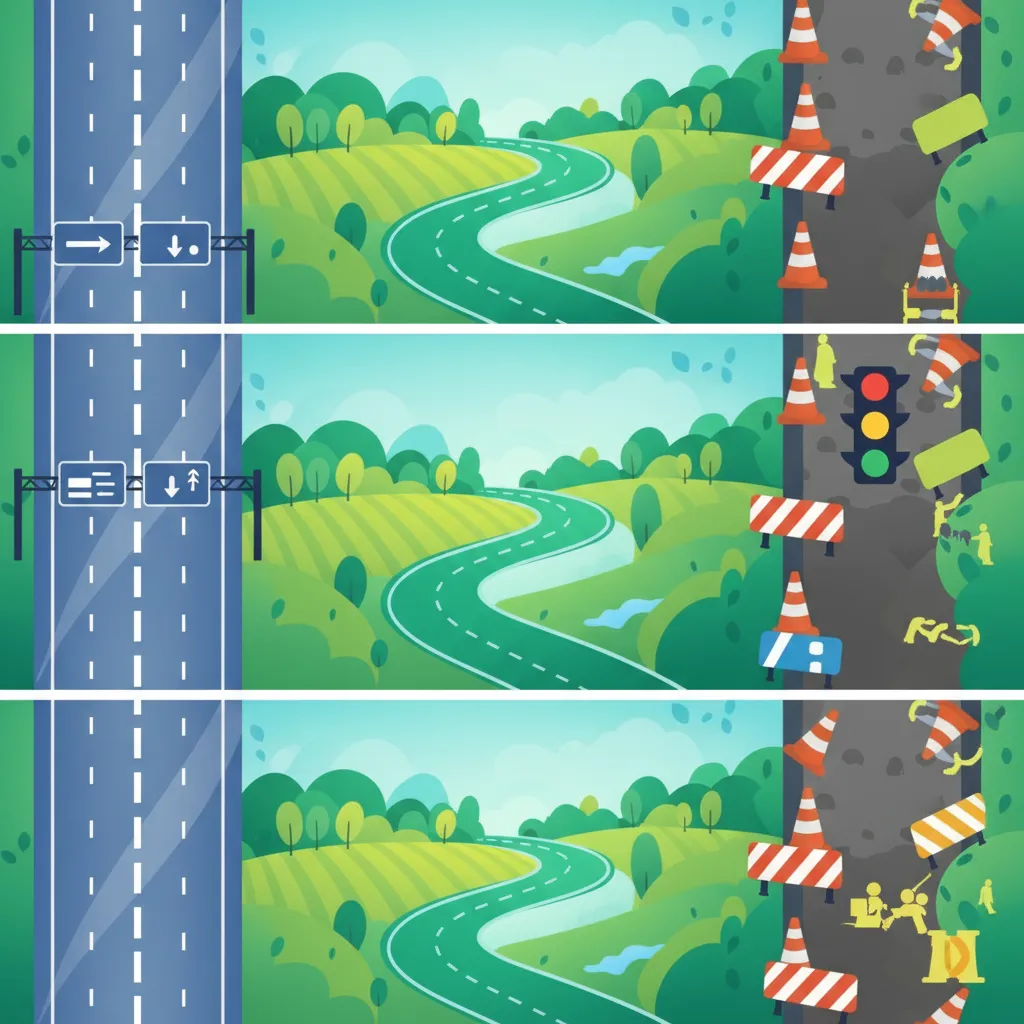
This lesson covers the specific challenges of driving on motorways, rural roads, and navigating roadworks. Learners will review lane discipline on high-speed roads and identify hazards common to rural roads, such as sharp bends and wildlife. It also explains the importance of adjusting speed and following temporary signage in construction zones.
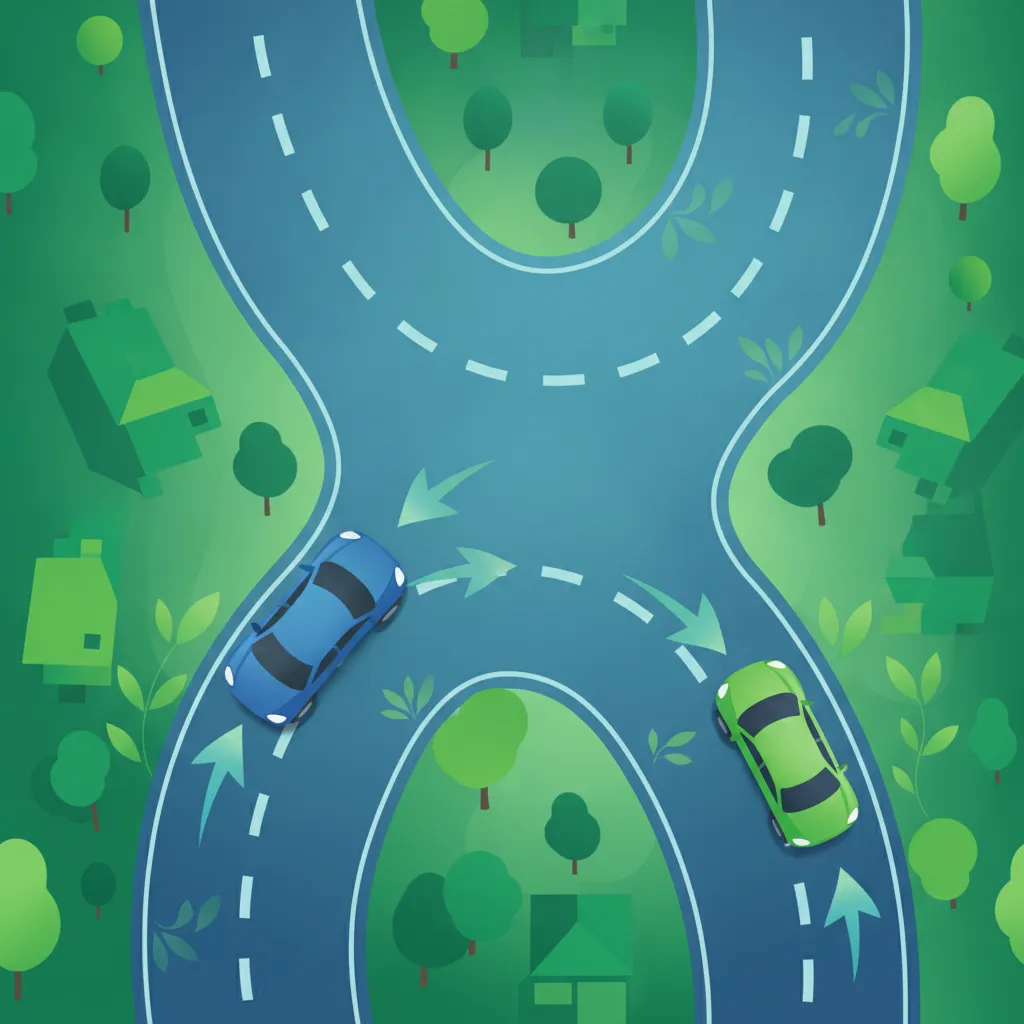
This lesson focuses on basic manoeuvres, covering the proper use of indicators, safe lane positioning, and correct steering for turns. Learners will study the importance of checking blind spots and maintaining appropriate speed for a smooth transition when changing lanes. It also addresses turning at intersections and signaling intentions clearly to other road users.
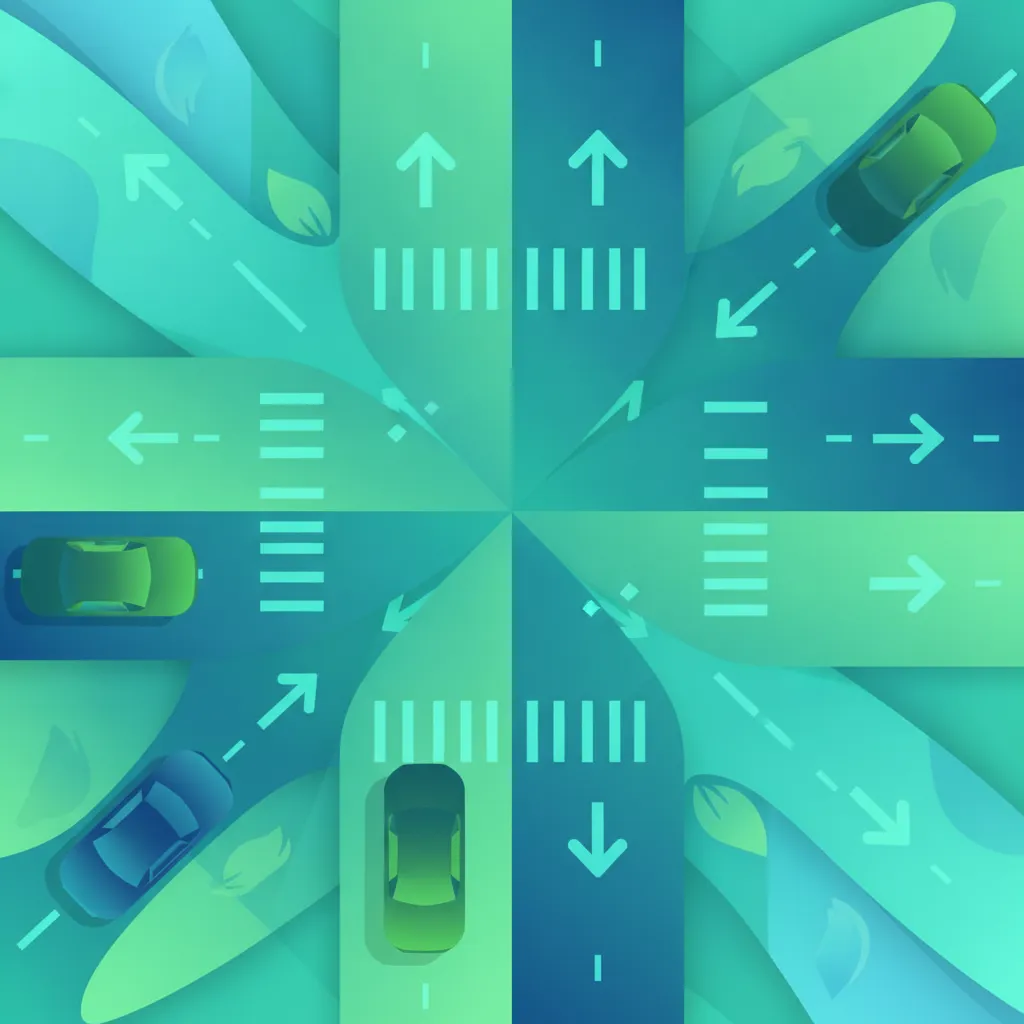
Directional symbols and arrows painted on the road surface guide drivers on permitted lane movements and turning directions. This lesson explains the interpretation of these arrows, covering rules for one-way streets, mandatory turns, and lane-specific instructions. Learners will understand how to comply with these symbols to navigate complex intersections safely and efficiently.
The focus of this lesson is on maintaining proper lane discipline, especially on motorways and other high-speed roads. Learners will explore the rules for changing lanes, overtaking, and positioning in the correct lane based on speed and traffic flow. Emphasis is placed on safe merging techniques and adherence to all lane markings for fluid traffic movement.

Overtaking safely is a critical driving skill. This lesson explains where and how overtaking is permitted in Belgium, the importance of correct signaling, and maintaining a sufficient speed differential. Learners will understand the rules for passing on motorways and single-carriageway roads, and how to identify zones where overtaking is prohibited.
Merging onto motorways requires understanding the dynamics of fast-moving traffic. This lesson covers the correct use of entrance ramps, acceleration lanes, and the technique of matching speed with the flow of traffic. Learners will practice safe merging procedures, including selecting an appropriate gap and yielding to mainline traffic when necessary.

This lesson focuses on warning signs designed to alert drivers to potential hazards ahead. Topics include warnings for sharp curves, steep gradients, slippery surfaces, and zones with high pedestrian or wildlife activity. Learners will understand how to correctly interpret these signs and adjust their driving behavior to maintain safety on the road.
This lesson delves into the complex priority rules that govern Belgian roadways, with a strong focus on the default 'priority from the right' principle. It explains how to interpret priority signs, such as 'give way' and 'stop', and apply the correct right-of-way at various types of junctions. You will learn the hierarchy of road users and the specific rules for yielding in different traffic scenarios.
Master the essential rules for priority from the right and circulating traffic at Belgian roundabouts. Learn correct lane selection and positioning for multi-lane roundabouts to ensure safe and legal navigation.
The focus of this lesson is on maintaining proper lane discipline, especially on motorways and other high-speed roads. Learners will explore the rules for changing lanes, overtaking, and positioning in the correct lane based on speed and traffic flow. Emphasis is placed on safe merging techniques and adherence to all lane markings for fluid traffic movement.
Overtaking safely is a critical driving skill. This lesson explains where and how overtaking is permitted in Belgium, the importance of correct signaling, and maintaining a sufficient speed differential. Learners will understand the rules for passing on motorways and single-carriageway roads, and how to identify zones where overtaking is prohibited.
This lesson provides specific instructions for navigating roundabouts, a common feature on Belgian roads. It covers the rules of priority upon entry, the correct lane choice based on the intended exit, and the proper use of signals. Learners will understand how to safely circulate and exit, while being mindful of other vehicles, particularly larger ones with significant blind spots.
This lesson focuses on basic manoeuvres, covering the proper use of indicators, safe lane positioning, and correct steering for turns. Learners will study the importance of checking blind spots and maintaining appropriate speed for a smooth transition when changing lanes. It also addresses turning at intersections and signaling intentions clearly to other road users.
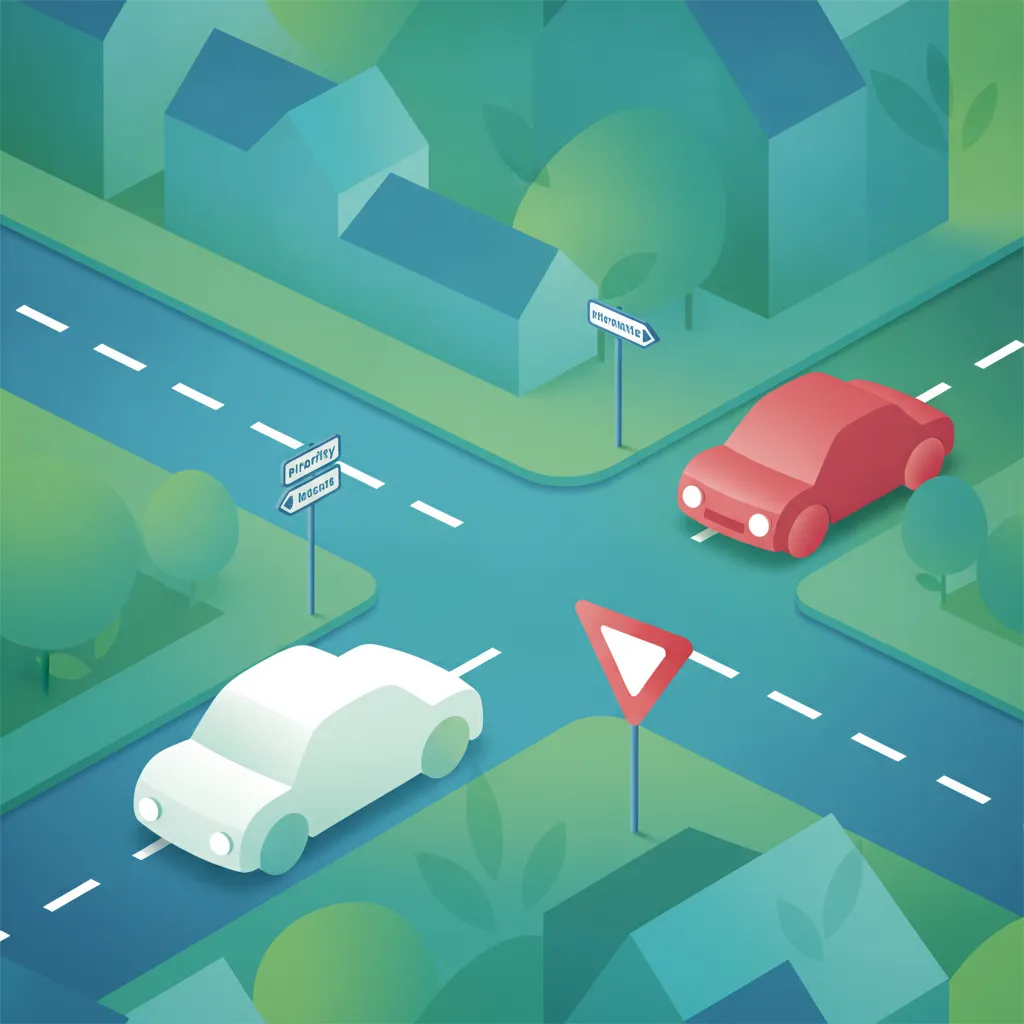
This lesson focuses on the distinction between the default priority from the right and designated priority roads, explaining how drivers should yield or proceed. Learners will discover the specific signs that indicate a priority road and when that priority ends. Understanding these concepts is essential for predictable and safe road use at intersections.
This lesson delves into the complex priority rules that govern Belgian roadways, with a strong focus on the default 'priority from the right' principle. It explains how to interpret priority signs, such as 'give way' and 'stop', and apply the correct right-of-way at various types of junctions. You will learn the hierarchy of road users and the specific rules for yielding in different traffic scenarios.
This lesson covers the specific challenges of driving on motorways, rural roads, and navigating roadworks. Learners will review lane discipline on high-speed roads and identify hazards common to rural roads, such as sharp bends and wildlife. It also explains the importance of adjusting speed and following temporary signage in construction zones.
This lesson offers specific strategies for motorcyclists navigating roundabouts in Belgium. It covers the rules for entering the roundabout, including yielding to circulating traffic, and how to choose the correct lane for your intended exit. The content stresses the importance of clear signaling and maintaining awareness of other vehicles during entry and exit maneuvers.
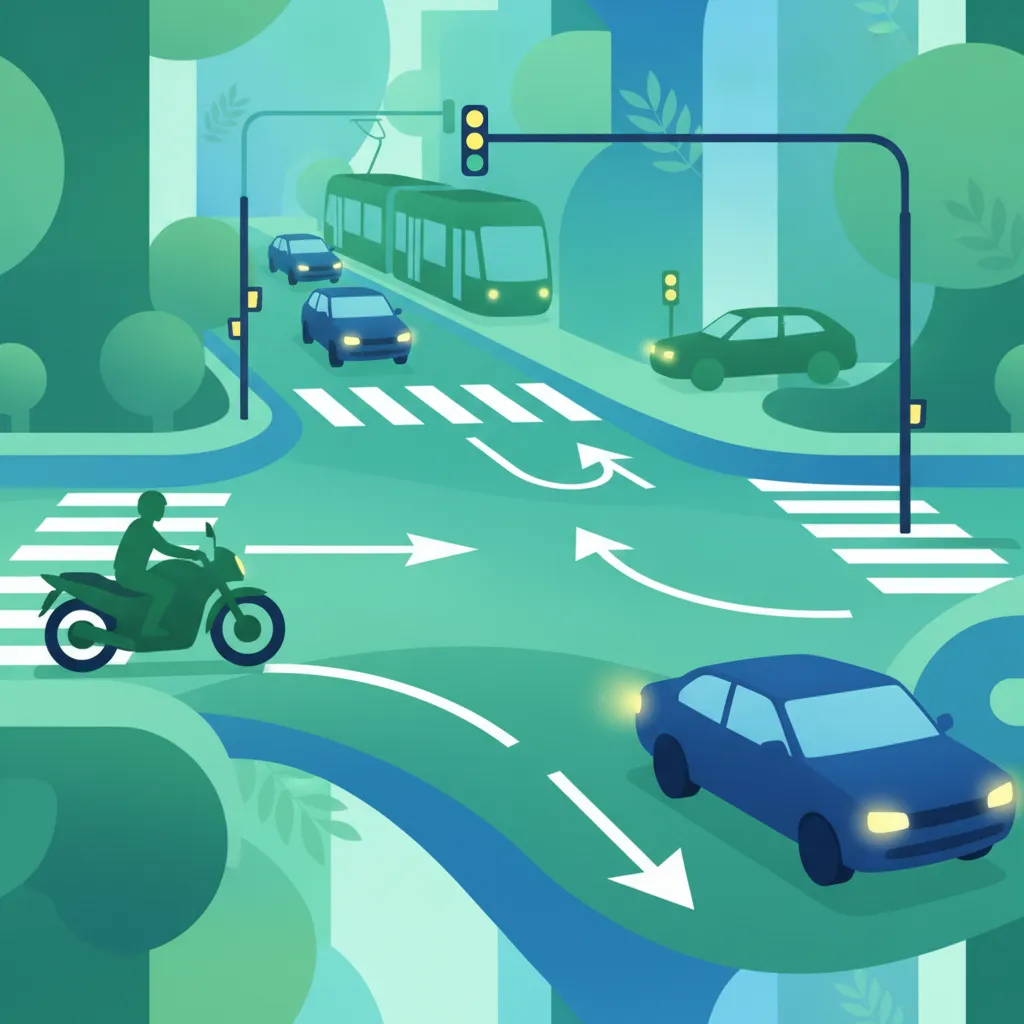
In this lesson, learners will examine the fundamental priority rules that dictate traffic flow at unmarked intersections. The lesson focuses on the principle of priority from the right, the hierarchy of traffic signs and signals, and situations requiring yielding or stopping. Understanding these principles is crucial for safe and lawful navigation of Belgian road networks.
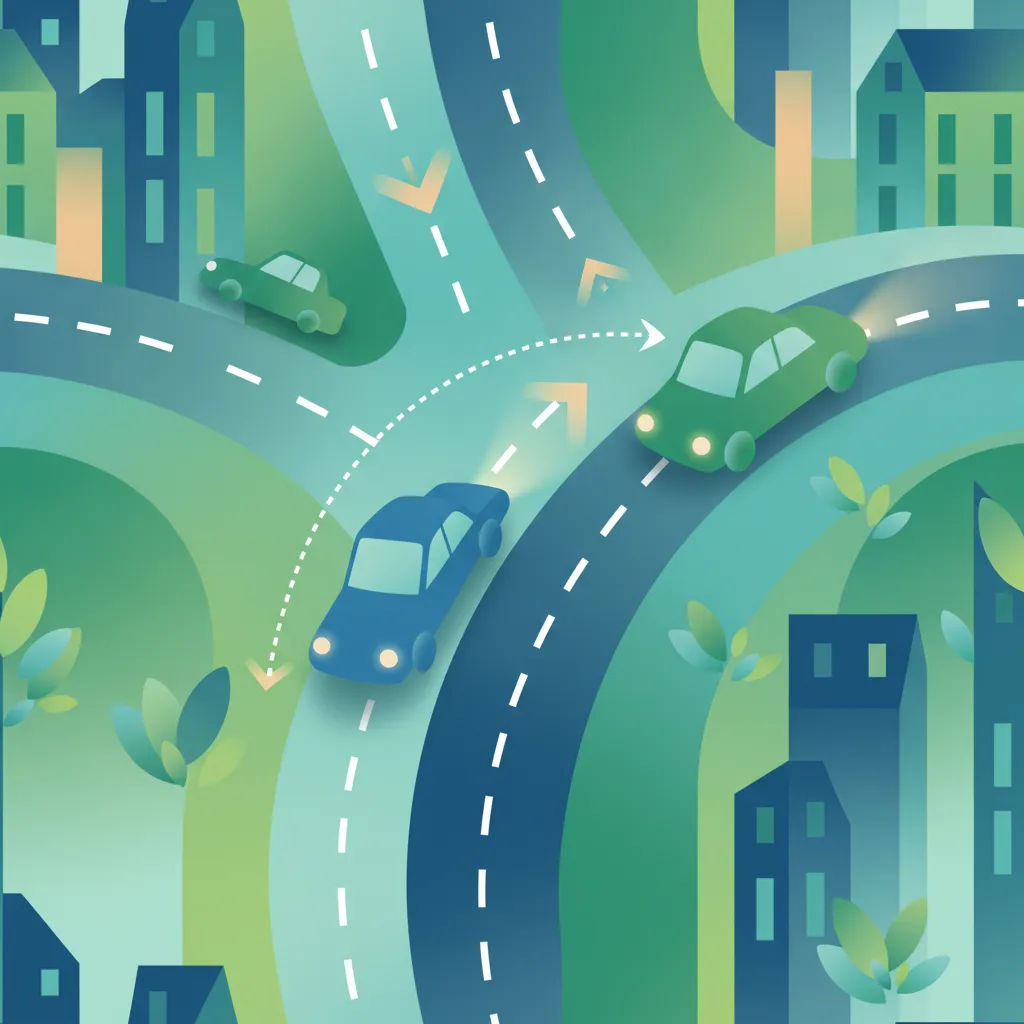
This lesson provides a step-by-step guide to executing turns and lane changes safely and efficiently. It covers the critical sequence of checking mirrors, signaling intent, and performing a head check for blind spots before any maneuver. Learners will also understand how to manage their speed and balance during cornering to maintain full control of the vehicle.
Find clear answers to common questions learners have about Roundabouts and Traffic Flow. Learn how the lesson is structured, which driving theory objectives it supports, and how it fits into the overall learning path of units and curriculum progression in Belgium. These explanations help you understand key concepts, lesson flow, and exam focused study goals.
No. In Belgium, you generally only need to signal when leaving the roundabout. However, you must signal your intent to change lanes if you are on a multi-lane roundabout.
Unless specific signs indicate otherwise, the rule of priority from the right applies. However, almost all modern roundabouts in Belgium have 'Yield' signs at the entrance, meaning traffic already on the roundabout has priority.
If you are taking the first exit (turning right), use the outer lane. If you are going straight or turning left, use the inner lane, ensuring you move to the outer lane well before your exit while checking your blind spot.
The exam often uses diagrams of roundabouts where you must identify the correct lane for a specific destination or decide who must yield. Pay close attention to signs and road markings in these images.
Ready to focus your Belgian driving theory revision? Utilize our powerful search tool to pinpoint exact topics, road signs, or difficulty levels. Engage with practice questions that directly address your learning needs and solidify your understanding of Belgian traffic laws for your upcoming exam.