
This lesson teaches you how to maintain balance and control when riding your moped or speed pedelec at low speeds. You will learn the correct techniques for cornering, including speed selection and body positioning, which are vital skills for both your theory exam and daily riding safety.

Lesson content overview
Operating a moped or speed pedelec, especially as part of the Official Belgian Driving Theory Course for Category AM License, requires precise control in various situations. This comprehensive lesson delves into two fundamental yet challenging skills: maneuvering at very low speeds and navigating corners safely and smoothly. Mastering these techniques is not only crucial for passing your driving exam but, more importantly, for ensuring your safety and stability as a vulnerable road user in Belgium's diverse traffic environments.
These skills are vital for maintaining vehicle stability, preventing accidents in congested areas, and confidently handling bends on all types of roads. They build upon your foundational knowledge of vehicle control, speed management, and road signs, setting the stage for more advanced driving scenarios.
Low-speed maneuvering, often referred to as "creeping," is the art of controlling your moped or speed pedelec at speeds typically below 20 km/h. This skill is indispensable for navigating congested traffic, performing precise parking maneuvers, or simply moving through tight spaces without losing balance or control. It requires a delicate touch and a keen understanding of your vehicle's dynamics.
Maintaining control at low speeds reduces the risk of minor collisions or accidental tip-overs, which can be particularly dangerous for exposed vehicle operators. It allows you to react calmly to sudden stops in traffic, weave safely around stationary obstacles, and position your vehicle accurately, whether you are filtering through a queue or parking alongside other vehicles. Without proper low-speed control, even simple tasks can become stressful and hazardous.
Achieving smooth, controlled movement at minimal speeds involves a combination of synchronized inputs:
This technique is central to low-speed control, especially for mopeds with a manual clutch. Feathering means gently engaging and disengaging the clutch while simultaneously applying subtle throttle inputs. The goal is to find the "friction point" of the clutch – the point at which power starts to transfer to the rear wheel – and use it to precisely regulate your speed.
By applying just enough throttle to prevent the engine from stalling and modulating the clutch engagement, you can maintain a constant, slow forward motion without jerking or surging. This allows you to creep forward smoothly, making small adjustments as needed.
The rear brake is a powerful tool for low-speed stability that is often overlooked. When moving slowly, light pressure on the rear brake can help you maintain balance and fine-tune your speed even further. It effectively acts as an anchor, allowing you to control the vehicle's momentum with greater precision.
Applying the rear brake slightly while feathering the clutch and throttle creates a stable platform, preventing the vehicle from surging unexpectedly. This technique is particularly useful when navigating very tight turns or making U-turns, where a sudden loss of balance can lead to a fall.
At low speeds, it's tempting to look directly down at your handlebars or the road immediately in front of you. However, to maintain balance and direction, you should look ahead to where you want to go. Your body naturally follows your gaze, and focusing on a distant point helps stabilize your trajectory. This principle applies equally to low-speed maneuvers and cornering.
Cornering is an essential skill for any driver, but for AM license holders on mopeds and speed pedelecs, it demands particular attention due to the vehicle's inherent instability compared to a car. Safe cornering involves a precise interplay of speed management, line selection, body positioning, and steering input to maintain control and stability through a bend.
Navigating bends safely hinges on four interconnected principles that work in harmony:
Let's explore each of these in detail.
The most critical factor in safe cornering is selecting the appropriate speed before, during, and after the bend. Entering a turn too quickly is a common mistake that can lead to a loss of control.
The outward force experienced by an object moving in a circular path. In cornering, it pushes the vehicle away from the center of the turn.
Before you even begin to turn, you must assess the curve's severity, road conditions, and any potential hazards. This assessment dictates your approaching speed. Reduce your speed before entering the curve, not while you are already turning. This allows you to complete any necessary braking in a straight line, where your vehicle is most stable and has maximum grip.
Late braking, or braking while already in a turn, significantly reduces tire grip and can cause your moped or speed pedelec to become unstable, potentially leading to a skid or fall. Always slow down sufficiently before leaning into the turn.
Your corner entry speed should be low enough that you feel comfortable and in control throughout the entire bend. Once you begin to lean into the turn, you should typically maintain a steady throttle or even slightly accelerate very gently through the curve. This keeps the suspension settled and the tires loaded, improving stability.
The "apex" is the innermost point of a curve that your vehicle passes through. For most road turns, especially on a moped or speed pedelec, your speed should be at its lowest point or just beginning to increase slightly as you pass the apex. This is the point where you transition from turning into straightening out.
After passing the apex, you can gradually begin to accelerate as you straighten the vehicle and exit the turn. This controlled acceleration helps you regain stability and smoothly transition back to straight-line travel. Avoid abrupt throttle increases, which can unbalance the vehicle.
Line selection refers to the trajectory you choose to follow through a bend. The optimal line maximizes your visibility, provides the widest possible turning radius, and helps you manage centrifugal force more effectively.
For most road users, particularly those on mopeds and speed pedelecs, the safest and most effective line through a bend typically follows an "outside-inside-outside" path:
For AM license holders, especially when learning, choosing a "middle line" that doesn't push the absolute limits of the outside-inside-outside principle is often the safest bet. This provides a good balance of visibility and safety margin without risking crossing into oncoming traffic or hitting the curb.
Body lean, or tilting, is the act of inclining your body towards the inside of a curve. This is crucial for mopeds and speed pedelecs to maintain balance and stability during a turn, especially as speeds increase.
When you lean into a turn, you shift your center of gravity. This counteracts the centrifugal force that tries to push you and your vehicle upright and towards the outside of the turn. By aligning your combined center of gravity (rider + vehicle) with the lean angle of the vehicle, you improve tire grip and prevent the vehicle from feeling like it wants to "fall over."
The amount of body lean required depends on your speed and the radius of the curve. At very low speeds, only a slight lean may be necessary. As your speed increases, a greater lean angle will be required to maintain stability. The lean should be smooth and initiated from the hips, allowing your body to move naturally with the vehicle.
Overextending your lean or initiating it abruptly can lead to a loss of stability and control. The lean should be a natural extension of the steering input and coordinated with your speed.
Steering input refers to how you manipulate the handlebars to guide your moped or speed pedelec through a bend. The key here is smoothness and gradual control.
Your steering actions should be predictive, meaning you anticipate the curve and begin to turn the handlebars gently. Avoid sudden or jerky movements, especially at higher speeds, as these can upset the vehicle's balance and lead to an abrupt weight transfer. Abrupt steering can reduce the grip available from your tires, potentially causing a skid.
Once you pass the apex and begin to exit the curve, gradually straighten the handlebars. This coordinated effort with subtle throttle input ensures a smooth transition out of the turn. Overcorrecting or suddenly snapping the handlebars straight can cause the vehicle to drift or even oversteer, where the rear wheel loses traction.
Whether you are performing a low-speed maneuver or cornering at a moderate pace, maintaining adequate grip and traction between your tires and the road surface is paramount. Traction is the friction that allows your tires to transfer power, steer, and brake effectively.
At low speeds, sudden throttle inputs, abrupt braking, or jerky steering can momentarily reduce traction and cause a loss of balance. During cornering, your tires are under increased stress due to the combined forces of acceleration/braking and turning. Smooth, controlled inputs in all aspects of vehicle operation are essential to preserve this critical grip. Road conditions, such as wet surfaces or gravel, will significantly reduce available grip, demanding an even more cautious approach.
Adhering to specific traffic regulations, in addition to mastering handling techniques, is crucial for safety on Belgian roads.
Rule: Drivers must reduce their speed before entering a bend, especially sharp curves.
Rule: Drivers must not cut across lanes or cross lane markings while cornering.
Even experienced riders can make mistakes when navigating turns or controlling their vehicle at low speeds. Understanding these common pitfalls is the first step to avoiding them.
The principles of low-speed control and cornering remain constant, but their application must be adapted based on various external factors.
Understanding the direct consequences of your actions reinforces the importance of proper technique:
Let's consider how these concepts translate into real-world driving situations for a Category AM license holder.
The techniques discussed are not arbitrary; they are rooted in fundamental physics and safety principles:
To confidently and safely operate your moped or speed pedelec, especially on Belgian roads, remember these critical takeaways:
This lesson teaches essential low-speed control and cornering techniques for moped and speed pedelec riders seeking their Belgian Category AM license. Key skills include feathering the clutch and throttle for smooth creeping, using rear brake pressure for stability, and maintaining visual focus ahead. For cornering, the critical principles are reducing speed before the bend, selecting an outside-inside-outside or middle line, coordinating body lean with speed, and applying smooth steering inputs throughout the turn. Belgian traffic rules require mandatory speed reduction before bends and prohibit crossing lane markings while cornering. Understanding how centrifugal force affects vehicle stability and how traction can be compromised by abrupt inputs helps riders anticipate and avoid common mistakes that lead to loss of control.
A short set of high-value points that capture the most important learning from this lesson.
Low-speed control requires gentle throttle-clutch coordination (feathering) and light rear brake pressure to maintain balance while creeping
Safe cornering demands speed reduction BEFORE entering the bend, with all braking completed in a straight line
Choose an outside-inside-outside line through bends to maximize visibility and maintain a wide turning radius
Body lean must be coordinated with speed and steering to counteract centrifugal force and maintain stability
Smooth, gradual inputs for steering, throttle, and braking preserve tire traction in all conditions
Explore all units and lessons included in this driving theory course.
The friction point is where clutch engagement begins transferring power; finding and using it enables precise low-speed control
Centrifugal force pushes your vehicle outward in a turn; reducing speed and leaning counteracts this force
The apex is the innermost point of a curve where your speed should be lowest or beginning to increase as you exit
Never brake while already leaning into a turn—this reduces tire grip and risks a skid or fall
Look where you want to go, not at your handlebars or the wheel—your body naturally follows your gaze
Entering a bend too fast, causing understeer or forcing an unstable excessive lean angle
Late braking while already turning or leaning, which compromises vehicle stability and reduces tire grip
Abrupt or jerky steering inputs that upset balance and momentarily reduce traction
Looking down at the road immediately in front instead of focusing ahead on the intended path
Stalling the engine at low speeds by forgetting to feather the clutch or over-braking with the rear brake
Lesson content overview
A short set of high-value points that capture the most important learning from this lesson.
Low-speed control requires gentle throttle-clutch coordination (feathering) and light rear brake pressure to maintain balance while creeping
Safe cornering demands speed reduction BEFORE entering the bend, with all braking completed in a straight line
Choose an outside-inside-outside line through bends to maximize visibility and maintain a wide turning radius
Body lean must be coordinated with speed and steering to counteract centrifugal force and maintain stability
Smooth, gradual inputs for steering, throttle, and braking preserve tire traction in all conditions
Explore all units and lessons included in this driving theory course.
The friction point is where clutch engagement begins transferring power; finding and using it enables precise low-speed control
Centrifugal force pushes your vehicle outward in a turn; reducing speed and leaning counteracts this force
The apex is the innermost point of a curve where your speed should be lowest or beginning to increase as you exit
Never brake while already leaning into a turn—this reduces tire grip and risks a skid or fall
Look where you want to go, not at your handlebars or the wheel—your body naturally follows your gaze
Entering a bend too fast, causing understeer or forcing an unstable excessive lean angle
Late braking while already turning or leaning, which compromises vehicle stability and reduces tire grip
Abrupt or jerky steering inputs that upset balance and momentarily reduce traction
Looking down at the road immediately in front instead of focusing ahead on the intended path
Stalling the engine at low speeds by forgetting to feather the clutch or over-braking with the rear brake
Explore search topics learners often look for when studying Low-Speed Control and Cornering. These topics reflect common questions about road rules, driving situations, safety guidance, and lesson level theory preparation for learners in Belgium.
Browse additional driving theory lessons that cover connected traffic rules, road signs, and common driving situations related to this topic. Improve your understanding of how different rules interact across everyday traffic scenarios.
Understand the core techniques for precise low-speed maneuvering and safe cornering. Learn about clutch and throttle control, rear brake stabilization, and body lean for maintaining balance and stability on Belgian roads.
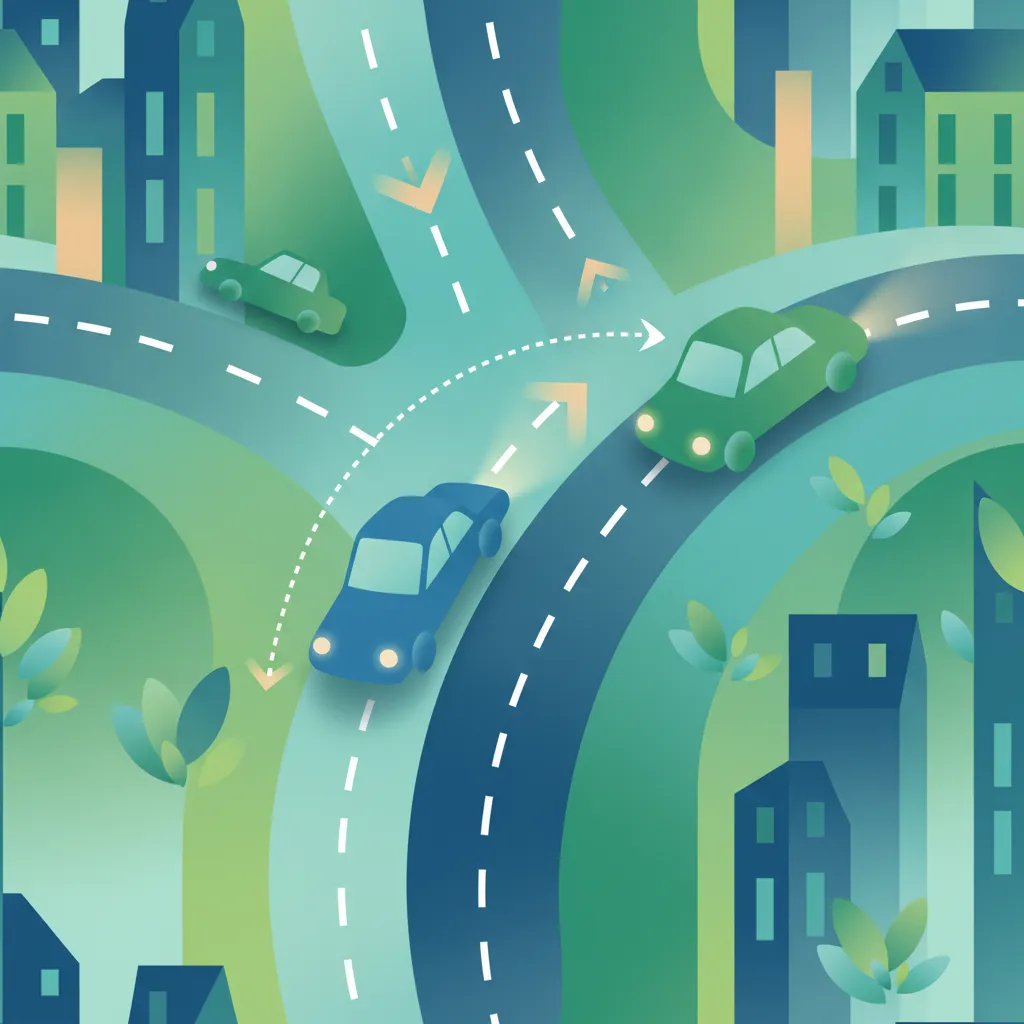
This lesson provides a step-by-step guide to executing turns and lane changes safely and efficiently. It covers the critical sequence of checking mirrors, signaling intent, and performing a head check for blind spots before any maneuver. Learners will also understand how to manage their speed and balance during cornering to maintain full control of the vehicle.
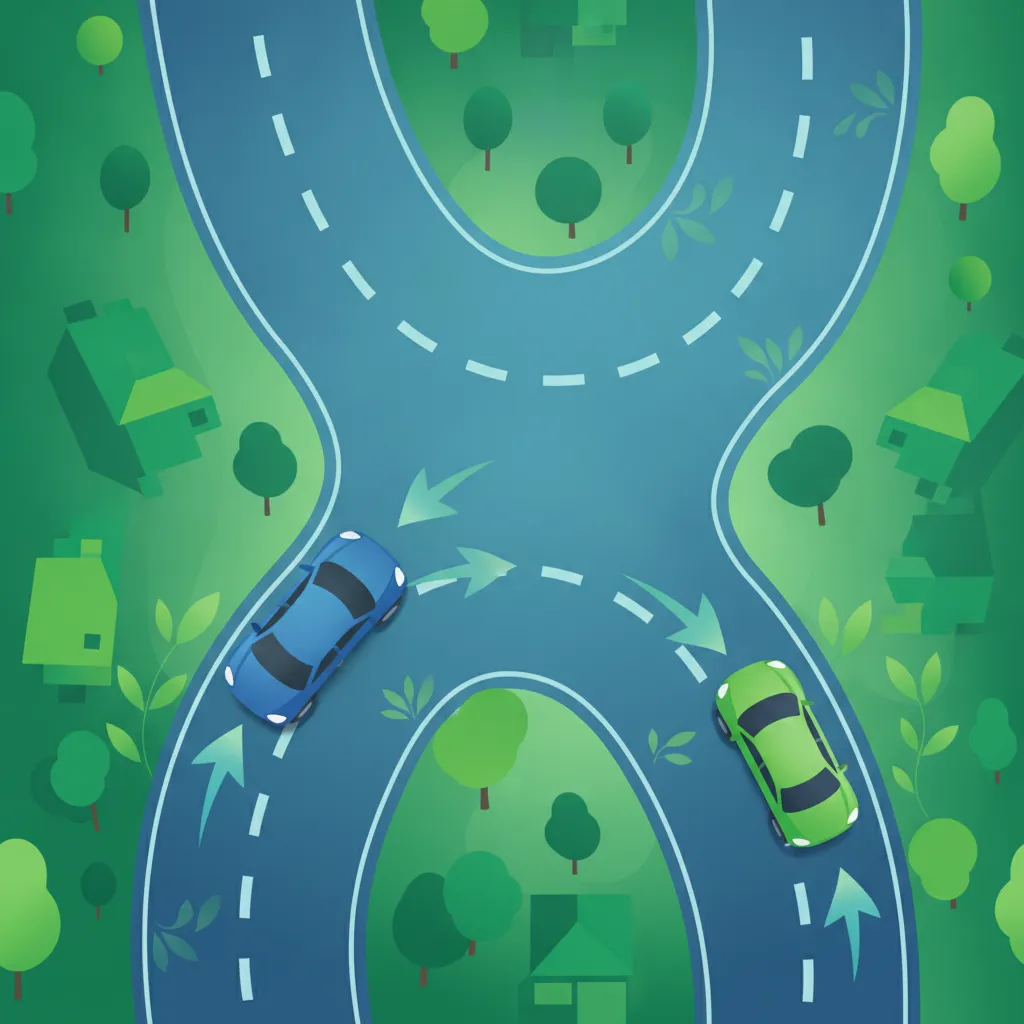
This lesson focuses on basic manoeuvres, covering the proper use of indicators, safe lane positioning, and correct steering for turns. Learners will study the importance of checking blind spots and maintaining appropriate speed for a smooth transition when changing lanes. It also addresses turning at intersections and signaling intentions clearly to other road users.

This lesson breaks down the art of cornering into distinct phases: approach, entry, and exit. It explains how to select the correct line through a bend, manage your speed before entry, and use the throttle to stabilize the motorcycle on exit. You will learn the relationship between speed, lean angle, and radius of the turn for safe and efficient cornering.

This lesson provides specific instructions for navigating roundabouts, a common feature on Belgian roads. It covers the rules of priority upon entry, the correct lane choice based on the intended exit, and the proper use of signals. Learners will understand how to safely circulate and exit, while being mindful of other vehicles, particularly larger ones with significant blind spots.
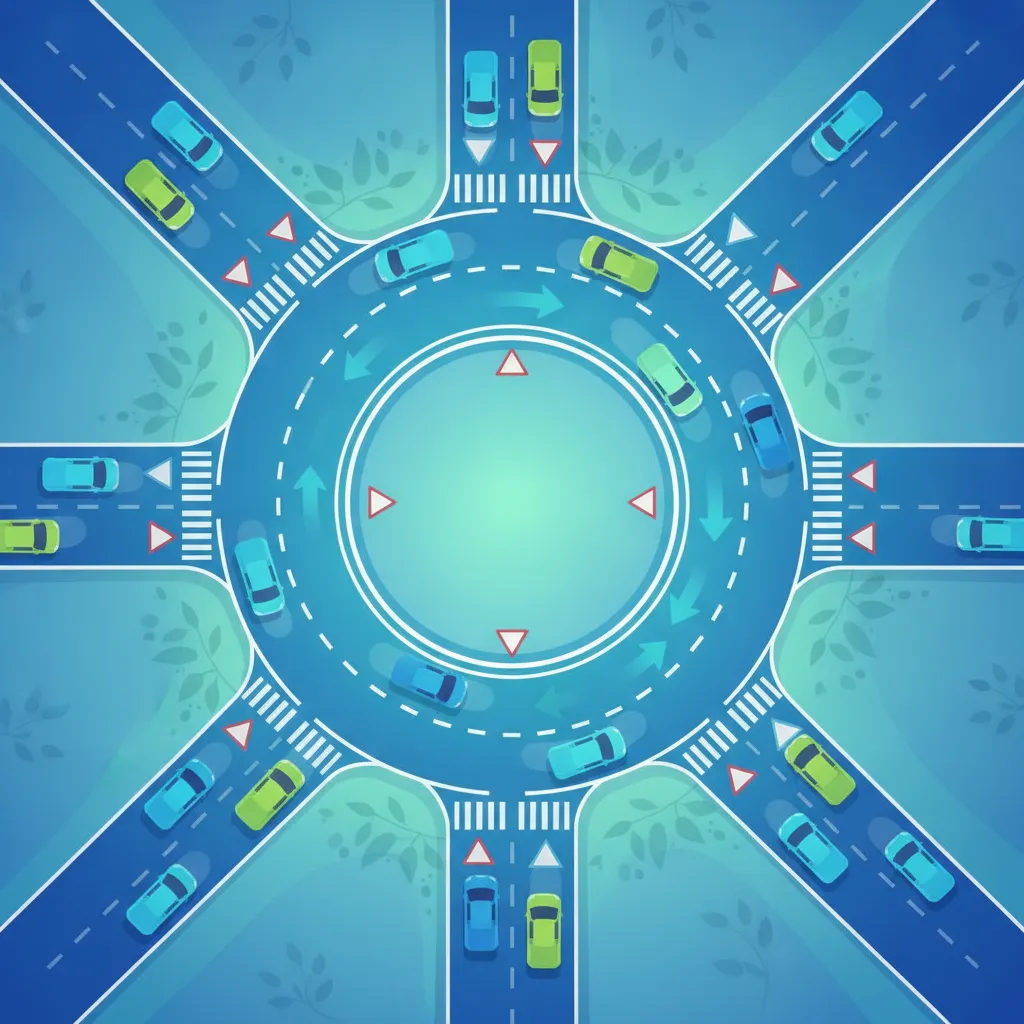
Roundabouts are a key feature of Belgian traffic management. This lesson explains how to approach, enter, navigate, and exit a roundabout safely, with a focus on yielding priority to traffic already circulating. Learners will also study correct lane positioning on multi-lane roundabouts and the appropriate use of signals.
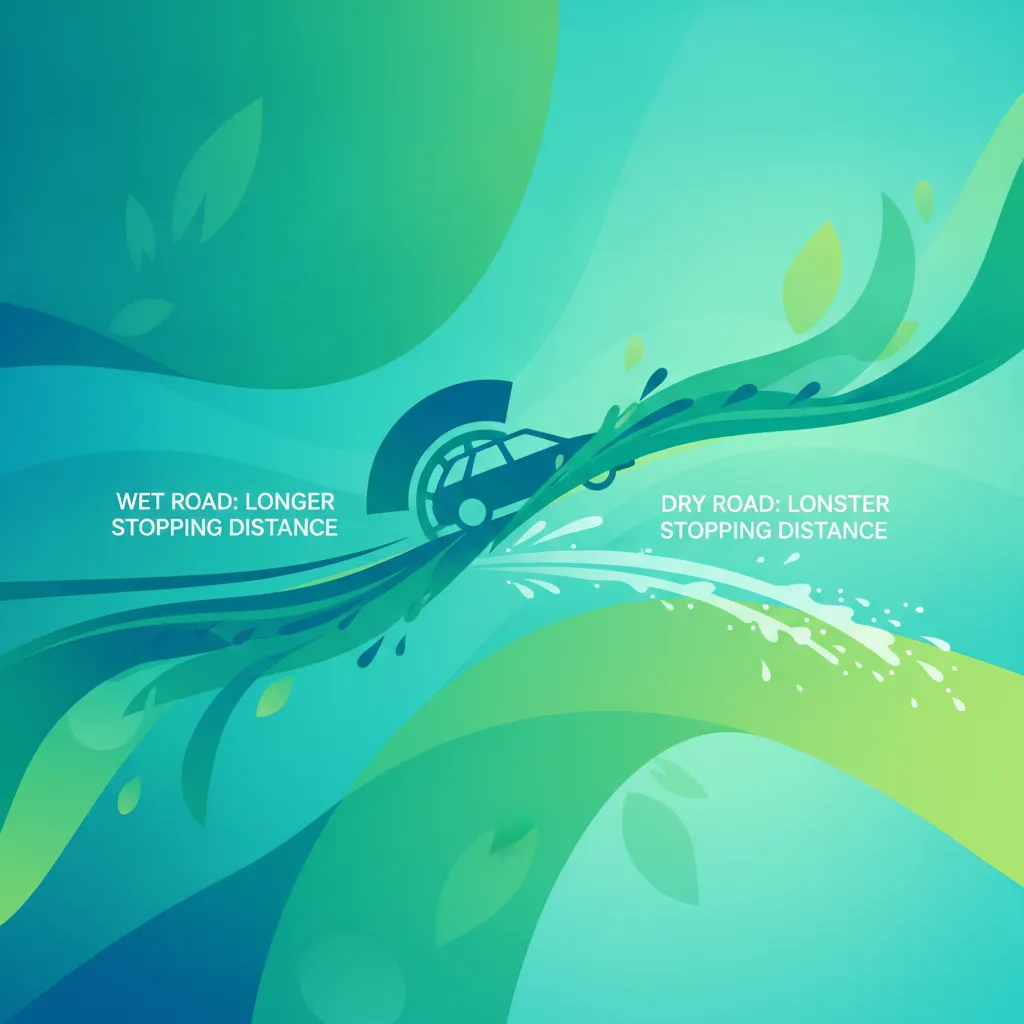
This lesson covers the principles of effective braking, distinguishing between controlled, progressive braking and emergency braking techniques. It breaks down the total stopping distance into reaction distance and braking distance, explaining how speed and road surface conditions dramatically affect the latter. Learners will understand how to use both front and rear brakes correctly to stop quickly and safely without losing control.

This lesson explains the concept of strategic road positioning to enhance safety and visibility. It teaches riders how to select the best position within a lane to be seen by other drivers and to have a good view of the road ahead. A key focus is on identifying and staying out of the large blind spots of cars, vans, and trucks to prevent dangerous situations.
This lesson focuses on the legal duties and responsibilities that an AM vehicle operator must uphold on Belgian roads. It covers critical rules such as adhering to speed limits, correctly applying right-of-way principles, and following regulations for overtaking other vehicles. The lesson also explains the system of fines and penalty points for traffic violations, emphasizing the legal consequences of non-compliance to foster responsible driving habits.
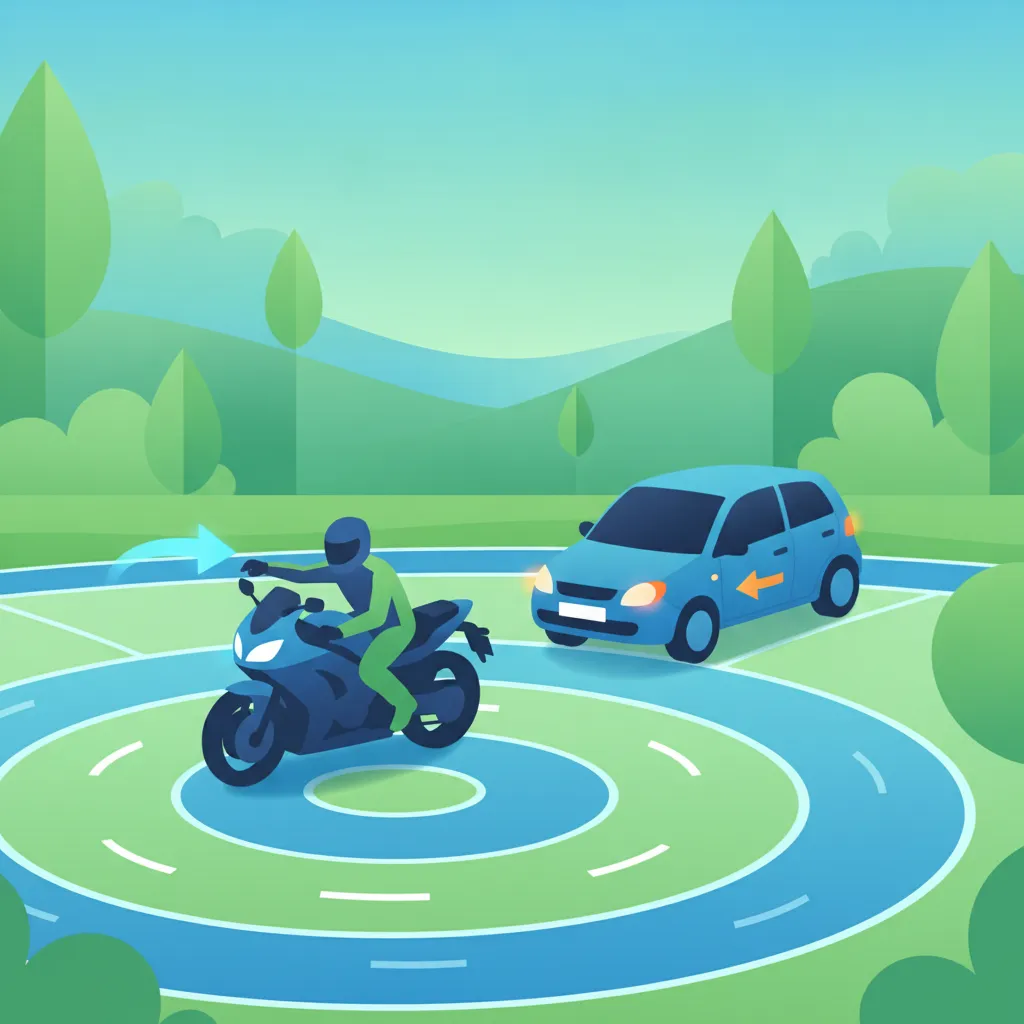
This lesson offers specific strategies for motorcyclists navigating roundabouts in Belgium. It covers the rules for entering the roundabout, including yielding to circulating traffic, and how to choose the correct lane for your intended exit. The content stresses the importance of clear signaling and maintaining awareness of other vehicles during entry and exit maneuvers.
This lesson covers the specific challenges of driving on motorways, rural roads, and navigating roadworks. Learners will review lane discipline on high-speed roads and identify hazards common to rural roads, such as sharp bends and wildlife. It also explains the importance of adjusting speed and following temporary signage in construction zones.
Explore the physics behind cornering, including centrifugal force, and learn about selecting the optimal path through bends. Understand how speed, lean, and line choice affect vehicle stability and safety for your AM license.
This lesson breaks down the art of cornering into distinct phases: approach, entry, and exit. It explains how to select the correct line through a bend, manage your speed before entry, and use the throttle to stabilize the motorcycle on exit. You will learn the relationship between speed, lean angle, and radius of the turn for safe and efficient cornering.
This lesson explains the concept of strategic road positioning to enhance safety and visibility. It teaches riders how to select the best position within a lane to be seen by other drivers and to have a good view of the road ahead. A key focus is on identifying and staying out of the large blind spots of cars, vans, and trucks to prevent dangerous situations.
This lesson explores the concept of tire grip, or traction, and its importance for vehicle stability and control. It explains how different road surfaces, such as wet asphalt, gravel, or oily patches, can reduce grip and increase the risk of skidding. The content also highlights the role of correct tire pressure in maintaining optimal contact with the road, helping riders avoid a loss of traction.
This lesson provides a step-by-step guide to executing turns and lane changes safely and efficiently. It covers the critical sequence of checking mirrors, signaling intent, and performing a head check for blind spots before any maneuver. Learners will also understand how to manage their speed and balance during cornering to maintain full control of the vehicle.
This lesson covers the principles of effective braking, distinguishing between controlled, progressive braking and emergency braking techniques. It breaks down the total stopping distance into reaction distance and braking distance, explaining how speed and road surface conditions dramatically affect the latter. Learners will understand how to use both front and rear brakes correctly to stop quickly and safely without losing control.
This lesson teaches the importance of smooth control over the vehicle's speed. It covers how to apply the throttle for gentle acceleration and how to decelerate smoothly using both the brakes and engine braking. The content encourages riders to look ahead and anticipate changes in traffic flow, allowing for gradual speed adjustments that enhance safety, comfort, and control.

This lesson explains the essential and often misunderstood principle of counter-steering, the primary method for initiating turns on a motorcycle at speed. It details how to apply this technique for precise and responsive directional control. You will also learn techniques for maintaining balance and stability, particularly during challenging low-speed maneuvers.
This lesson offers specific strategies for motorcyclists navigating roundabouts in Belgium. It covers the rules for entering the roundabout, including yielding to circulating traffic, and how to choose the correct lane for your intended exit. The content stresses the importance of clear signaling and maintaining awareness of other vehicles during entry and exit maneuvers.

This lesson provides crucial advice for riding in rainy conditions, a frequent occurrence in Belgium. It explains how water on the road surface dramatically reduces tire grip, extends stopping distances, and creates a risk of hydroplaning. Riders will learn how to adjust their speed, increase following distances, and manage reduced visibility from rain and road spray to maintain safety.

This lesson focuses on the critical skill of managing traction by understanding how tyres interact with different road surfaces. It teaches you to identify and react to low-grip surfaces such as wet roads, gravel, painted markings, and manhole covers. You will learn how to adjust your speed, braking, and cornering to prevent loss of traction and maintain control.
Find clear answers to common questions learners have about Low-Speed Control and Cornering. Learn how the lesson is structured, which driving theory objectives it supports, and how it fits into the overall learning path of units and curriculum progression in Belgium. These explanations help you understand key concepts, lesson flow, and exam focused study goals.
Even for smaller vehicles, subtle shifts in body weight help maintain the balance point through a corner. While you don't need to lean like a motorcycle racer, proper positioning ensures your center of gravity remains stable, especially when navigating tight urban turns.
Many riders fail to set their speed before the turn. If you enter a corner too fast or brake suddenly while in the bend, you risk losing traction or drifting wide into oncoming traffic. Always finish your braking before you start the turn.
The exam often uses images of intersections or roundabouts and asks you to identify the safest path or the correct maneuver to take. Understanding these physical handling principles helps you interpret these traffic situations correctly.
Both require similar principles of line selection and speed management. However, speed pedelecs are often lighter and narrower, meaning they are more sensitive to steering inputs and uneven road surfaces.
Ready to focus your Belgian driving theory revision? Utilize our powerful search tool to pinpoint exact topics, road signs, or difficulty levels. Engage with practice questions that directly address your learning needs and solidify your understanding of Belgian traffic laws for your upcoming exam.