
This lesson explores the essential physics of motorcycle handling, specifically focusing on counter-steering to initiate turns at speed. You will also learn how to maintain stability and balance during slow-speed maneuvers, building the control skills needed for both the theory exam and practical riding. This is a critical step in mastering the physical control of your motorcycle under the Belgian licensing framework.

Lesson content overview
Welcome to this crucial lesson in your Comprehensive Belgian Motorcycle Theory Course for Licence A, A1 & A2. Understanding and mastering counter-steering and balance control are not just techniques; they are fundamental principles that transform a novice rider into a confident and capable motorcyclist. These skills are essential for navigating turns safely at speed and maintaining stability in challenging low-speed scenarios, directly contributing to your safety and control on Belgian roads.
This lesson will demystify the physics behind turning a motorcycle and provide practical insights into how your body and precise inputs work together to maintain stability. You will learn why pushing the handlebars feels counter-intuitive yet is the key to effective turning, and how subtle shifts in body weight and careful throttle application keep your machine upright at a crawl.
Counter-steering is the primary technique used by motorcyclists to initiate a turn, especially at speeds generally above 30 km/h. It’s a concept that often seems contradictory to new riders, as it involves briefly steering the handlebars in the opposite direction of the intended turn. However, this seemingly paradoxical action is the most effective and safest way to make a motorcycle lean into a turn.
At very low speeds, such as parking or navigating tight spaces, you turn the handlebars directly in the direction you want to go, similar to a bicycle. But as your speed increases, the gyroscopic forces of the spinning wheels become dominant, making direct steering less effective and potentially unstable. This is where counter-steering becomes indispensable, allowing you to quickly and smoothly initiate a lean and consequently, a turn.
The science behind counter-steering primarily involves two physical principles: gyroscopic precession and the resulting lean moment. A motorcycle wheel, like any spinning gyroscope, resists changes to its plane of rotation. When you apply a force perpendicular to the wheel's axis of rotation, the wheel reacts by tilting (precessing) at a 90-degree angle to the applied force.
When you momentarily push forward on the right handlebar to turn left, you are effectively steering the front wheel slightly to the right. This small, momentary steering input causes the motorcycle to lean to the left due to gyroscopic precession. As the bike begins to lean, gravity takes over, and the motorcycle naturally turns in the direction of the lean. Once the desired lean angle is achieved, you typically relax the handlebar pressure, allowing the handlebars to realign and the motorcycle to hold its lean through the turn. This process can be broken down into two phases:
A common misunderstanding among new riders is the belief that one must turn the handlebars towards the turn. This is physically incorrect at speed and can lead to a delayed reaction or an unstable response from the motorcycle. Counter-steering is an almost subconscious action for experienced riders, becoming an intuitive part of motorcycle control.
Applying counter-steering effectively requires smooth, deliberate inputs. It's not about violently wrenching the handlebars, but rather applying gentle, increasing pressure. Imagine you want to turn left:
Scan Ahead: Look through the turn to where you want the motorcycle to go, not just at the road directly in front of you. Your eyes guide your body and the bike.
Apply Pressure: Gently but firmly push the right handlebar forward. You will feel the bike momentarily twitch to the right before immediately leaning to the left.
Maintain Lean: Once the motorcycle is leaning sufficiently for the turn, maintain that lean angle by holding consistent, light pressure on the handlebars, or by subtly adjusting your body weight.
Exit the Turn: As you approach the exit of the turn, gradually reduce the lean by applying slight pressure to the left handlebar (counter-steering to the right to stand the bike up) and/or smoothly increasing throttle.
The amount of pressure required depends on your speed, the sharpness of the turn, and the weight of your motorcycle. Faster speeds and sharper turns require more counter-steering input to achieve a greater lean angle. This technique works with the physics of the motorcycle to provide quick, responsive, and stable directional control.
While counter-steering dominates at higher speeds, maintaining balance is a continuous challenge, particularly during low-speed maneuvers, in traffic, or when coming to a stop. Balance control refers to the rider's ability to keep the motorcycle upright and stable through appropriate body positioning, throttle control, and subtle steering inputs. This skill is critical for navigating congested city streets, performing tight turns in parking lots, or simply stopping smoothly without putting a foot down too early.
Motorcycles are inherently unstable at a standstill but gain stability once in motion, thanks to the gyroscopic effect of the spinning wheels. However, at speeds below approximately 10-15 km/h, these gyroscopic forces are minimal, and the rider must actively manage stability.
Effective balance control is crucial for rider confidence and accident prevention. An unbalanced motorcycle can wobble, tip over, or make precise maneuvers difficult, especially in tight spaces or heavy traffic.
Your body is a significant part of the motorcycle's total mass, and how you position it greatly influences stability. During low-speed maneuvers, using your body, rather than just the handlebars, is key to maintaining balance.
Navigating at low speeds, typical in city riding or parking, requires a specific set of techniques to maintain stability and prevent tip-overs.
Beyond just propelling the motorcycle, the throttle and clutch are critical tools for maintaining balance, especially at lower speeds.
A slight, constant throttle input, even just above engine idling speed, significantly enhances a motorcycle's stability. This is because:
Abrupt throttle changes, whether accelerating or decelerating, can upset the bike's balance, causing it to pitch forward or backward and making it harder to maintain a stable line. Smooth, progressive throttle application is always recommended.
The clutch's friction zone is the narrow range where the clutch is neither fully engaged nor fully disengaged, allowing engine power to be partially transferred to the rear wheel. Mastering the friction zone is vital for low-speed control:
While often discussed separately, counter-steering and balance control are deeply interconnected and work in harmony during dynamic motorcycle handling. Counter-steering uses the physics of gyroscopic forces to initiate the lean required for turning at speed, while balance control, through body positioning and throttle/clutch management, maintains that lean and overall stability throughout the maneuver and at low speeds.
For instance, when you counter-steer into a fast curve, the bike leans. Throughout that lean, your balance control (subtle body shifts, smooth throttle adjustments) ensures you maintain the desired lean angle and line through the turn. Conversely, if you're navigating a slow, tight turn in a parking lot, your primary inputs are direct steering and balance control via body and throttle, but even here, the principle of leaning the bike to turn remains paramount.
Smooth transitions between these techniques, along with an intuitive understanding of how your motorcycle reacts to different inputs, are hallmarks of an expert rider.
In Belgium, as in all jurisdictions, motorcycle riders are legally mandated to maintain control of their vehicle at all times. While the Belgian road code may not explicitly detail "counter-steering" or "balance control," these techniques fall under the overarching requirement for safe and competent operation. Failure to maintain control, especially if it leads to an accident or dangerous situation, can result in penalties and legal consequences. The rationale is clear: effective control prevents accidents and ensures safety for both the rider and other road users.
The way you apply counter-steering and balance control must adapt to varying conditions.
Mastering counter-steering and balance control is absolutely essential for becoming a safe and proficient motorcyclist on Belgian roads and beyond. Counter-steering provides the crucial ability to initiate turns at speed with precision and stability, using the motorcycle's inherent physics to your advantage. Balance control, reinforced by effective body positioning and fine throttle/clutch management, empowers you to maintain stability in all situations, particularly during challenging low-speed maneuvers.
These techniques, when practiced and applied smoothly, allow you to command your motorcycle with confidence and responsiveness, significantly reducing the risk of accidents caused by loss of control. Continuously practice these skills, adapt them to varying conditions, and always ride within your limits to ensure a safe and enjoyable experience on two wheels.
Counter-steering is the fundamental technique for initiating turns at speed on a motorcycle, involving briefly pushing the opposite handlebar to cause the bike to lean through gyroscopic precession. Balance control is equally critical, especially below 15 km/h where gyroscopic forces are minimal, requiring riders to use body positioning through hips and knees rather than just handlebars. Effective throttle and clutch control in the friction zone maintains stability during low-speed maneuvers like U-turns and parking. Environmental conditions such as wet surfaces, wind, and road imperfections require smoother inputs and reduced lean angles. Common errors include target fixation, stiff arms, oversteering, and incorrectly steering toward rather than away from the turn direction.
A short set of high-value points that capture the most important learning from this lesson.
Counter-steering initiates turns by briefly pushing the handlebar opposite to the intended direction, causing the motorcycle to lean
Above approximately 30 km/h, gyroscopic forces make direct steering less effective, making counter-steering the primary turning technique
Balance at low speeds requires using hips and knees to shift body weight rather than relying solely on handlebars
A slight, constant throttle input maintains gyroscopic stability and keeps the bike feeling stable even at slow speeds
Counter-steering and balance control work together continuously during all riding maneuvers, from high-speed curves to parking lot U-turns
Explore all units and lessons included in this driving theory course.
To turn left, push the right handlebar forward—this causes the bike to lean left
Below about 10-15 km/h, gyroscopic forces are minimal and the rider must actively manage balance
Keep arms relaxed with elbows bent to allow natural handlebar movement for balance corrections
Always look where you want to go, never at obstacles you want to avoid
The clutch friction zone allows precise speed control at low speeds without stalling
Turning handlebars toward the intended turn instead of using counter-steering, which causes delayed or unstable responses at speed
Gripping handlebars tightly or locking elbows, which prevents the motorcycle from self-correcting and makes control twitchy
Staring at obstacles (target fixation) instead of looking at the intended path, often causing the bike to veer toward the obstacle
Using only handlebars for balance at low speeds instead of employing body weight shifts with hips and knees
Applying abrupt or excessive counter-steering inputs that cause overcorrection and instability, especially on slippery surfaces
Lesson content overview
A short set of high-value points that capture the most important learning from this lesson.
Counter-steering initiates turns by briefly pushing the handlebar opposite to the intended direction, causing the motorcycle to lean
Above approximately 30 km/h, gyroscopic forces make direct steering less effective, making counter-steering the primary turning technique
Balance at low speeds requires using hips and knees to shift body weight rather than relying solely on handlebars
A slight, constant throttle input maintains gyroscopic stability and keeps the bike feeling stable even at slow speeds
Counter-steering and balance control work together continuously during all riding maneuvers, from high-speed curves to parking lot U-turns
Explore all units and lessons included in this driving theory course.
To turn left, push the right handlebar forward—this causes the bike to lean left
Below about 10-15 km/h, gyroscopic forces are minimal and the rider must actively manage balance
Keep arms relaxed with elbows bent to allow natural handlebar movement for balance corrections
Always look where you want to go, never at obstacles you want to avoid
The clutch friction zone allows precise speed control at low speeds without stalling
Turning handlebars toward the intended turn instead of using counter-steering, which causes delayed or unstable responses at speed
Gripping handlebars tightly or locking elbows, which prevents the motorcycle from self-correcting and makes control twitchy
Staring at obstacles (target fixation) instead of looking at the intended path, often causing the bike to veer toward the obstacle
Using only handlebars for balance at low speeds instead of employing body weight shifts with hips and knees
Applying abrupt or excessive counter-steering inputs that cause overcorrection and instability, especially on slippery surfaces
Explore search topics learners often look for when studying Counter-Steering and Balance Control. These topics reflect common questions about road rules, driving situations, safety guidance, and lesson level theory preparation for learners in Belgium.
Browse additional driving theory lessons that cover connected traffic rules, road signs, and common driving situations related to this topic. Improve your understanding of how different rules interact across everyday traffic scenarios.
Learn essential body positioning techniques and throttle control to master motorcycle balance, especially during challenging low-speed maneuvers on Belgian roads. Understand how to maintain stability in traffic and tight spaces.

This lesson focuses on two key handling skills: maneuvering at low speeds and navigating corners safely. It provides techniques for maintaining balance and making smooth steering inputs in tight spaces. For cornering, it explains the principles of selecting an appropriate speed, choosing a safe line through the bend, and using body lean to maintain stability.
This lesson offers specific strategies for motorcyclists navigating roundabouts in Belgium. It covers the rules for entering the roundabout, including yielding to circulating traffic, and how to choose the correct lane for your intended exit. The content stresses the importance of clear signaling and maintaining awareness of other vehicles during entry and exit maneuvers.

This lesson provides instruction on how to react in an emergency situation, covering techniques for performing a rapid, controlled stop. It explains how to apply maximum braking force without locking the wheels and how to manage a skid if one occurs. You will also learn about avoidance maneuvers, such as swerving, and the psychological challenge of overcoming target fixation.

This lesson details the specific precautions and techniques required for riding in rain and fog. It explains how water on the road affects tyre grip and braking distances, and how to avoid aquaplaning. You will learn the correct use of lights to be seen in low visibility and how to adjust your speed and following distance accordingly.
This lesson breaks down the art of cornering into distinct phases: approach, entry, and exit. It explains how to select the correct line through a bend, manage your speed before entry, and use the throttle to stabilize the motorcycle on exit. You will learn the relationship between speed, lean angle, and radius of the turn for safe and efficient cornering.
This lesson teaches the importance of smooth control over the vehicle's speed. It covers how to apply the throttle for gentle acceleration and how to decelerate smoothly using both the brakes and engine braking. The content encourages riders to look ahead and anticipate changes in traffic flow, allowing for gradual speed adjustments that enhance safety, comfort, and control.
This lesson provides a step-by-step guide to executing turns and lane changes safely and efficiently. It covers the critical sequence of checking mirrors, signaling intent, and performing a head check for blind spots before any maneuver. Learners will also understand how to manage their speed and balance during cornering to maintain full control of the vehicle.

This lesson provides a comprehensive guide to motorway riding, starting with the procedure for safely merging into high-speed traffic from a slip road. It details the importance of strict lane discipline, including the rules for overtaking and the proper use of lanes. You will also learn the correct technique for planning and executing a safe exit from the motorway.

This lesson provides a step-by-step guide to executing a safe overtaking maneuver in compliance with Belgian law. It covers the necessary pre-maneuver checks, proper signaling, and how to accurately judge the speed and distance of oncoming traffic. You will learn the correct procedure for passing a vehicle and safely returning to your original lane.
This lesson synthesizes key safety concepts into the practice of defensive riding, a proactive mindset focused on anticipation and risk reduction. It teaches you to continuously scan for potential hazards, predict the actions of other road users, and always maintain an escape path. By mastering these strategies, you learn to manage the space around you and take control of your own safety.
Understand the core physics behind counter-steering, the fundamental principle for initiating motorcycle turns at speed. Learn how gyroscopic forces and rider inputs create stable directional control on Belgian roads.
This lesson offers specific strategies for motorcyclists navigating roundabouts in Belgium. It covers the rules for entering the roundabout, including yielding to circulating traffic, and how to choose the correct lane for your intended exit. The content stresses the importance of clear signaling and maintaining awareness of other vehicles during entry and exit maneuvers.
This lesson focuses on basic manoeuvres, covering the proper use of indicators, safe lane positioning, and correct steering for turns. Learners will study the importance of checking blind spots and maintaining appropriate speed for a smooth transition when changing lanes. It also addresses turning at intersections and signaling intentions clearly to other road users.
This lesson provides a step-by-step guide to executing turns and lane changes safely and efficiently. It covers the critical sequence of checking mirrors, signaling intent, and performing a head check for blind spots before any maneuver. Learners will also understand how to manage their speed and balance during cornering to maintain full control of the vehicle.
This lesson breaks down the art of cornering into distinct phases: approach, entry, and exit. It explains how to select the correct line through a bend, manage your speed before entry, and use the throttle to stabilize the motorcycle on exit. You will learn the relationship between speed, lean angle, and radius of the turn for safe and efficient cornering.
This lesson provides instruction on how to react in an emergency situation, covering techniques for performing a rapid, controlled stop. It explains how to apply maximum braking force without locking the wheels and how to manage a skid if one occurs. You will also learn about avoidance maneuvers, such as swerving, and the psychological challenge of overcoming target fixation.
This lesson focuses on two key handling skills: maneuvering at low speeds and navigating corners safely. It provides techniques for maintaining balance and making smooth steering inputs in tight spaces. For cornering, it explains the principles of selecting an appropriate speed, choosing a safe line through the bend, and using body lean to maintain stability.
This lesson provides a step-by-step guide to executing a safe overtaking maneuver in compliance with Belgian law. It covers the necessary pre-maneuver checks, proper signaling, and how to accurately judge the speed and distance of oncoming traffic. You will learn the correct procedure for passing a vehicle and safely returning to your original lane.
This lesson delves into the complex priority rules that govern Belgian roadways, with a strong focus on the default 'priority from the right' principle. It explains how to interpret priority signs, such as 'give way' and 'stop', and apply the correct right-of-way at various types of junctions. You will learn the hierarchy of road users and the specific rules for yielding in different traffic scenarios.
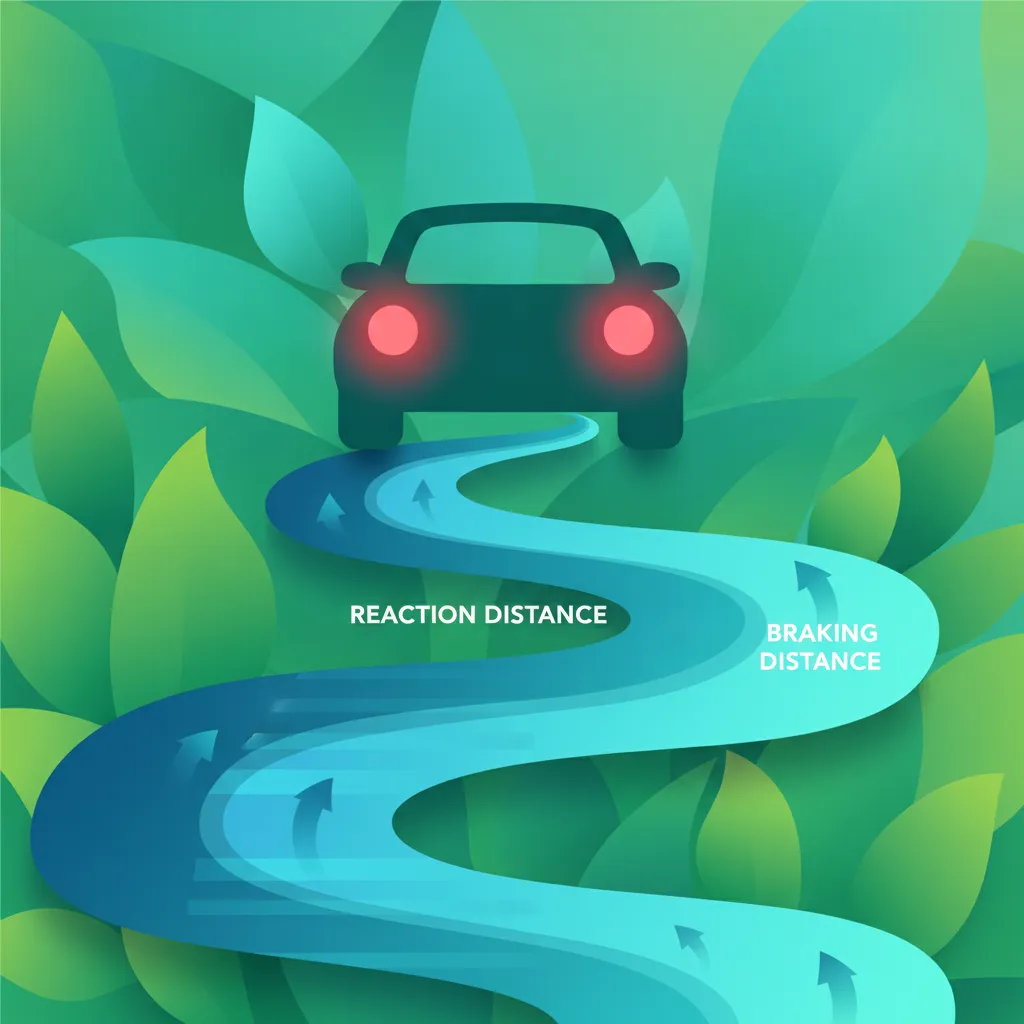
This lesson provides a comprehensive guide to motorcycle braking techniques, explaining the distinct roles of the front and rear brakes. It covers the concept of progressive brake application for smooth, controlled stops and the factors influencing total stopping distance. You will also learn about the function of Anti-lock Braking Systems (ABS) and how to adapt your braking for different conditions.
This lesson provides a comprehensive guide to motorway riding, starting with the procedure for safely merging into high-speed traffic from a slip road. It details the importance of strict lane discipline, including the rules for overtaking and the proper use of lanes. You will also learn the correct technique for planning and executing a safe exit from the motorway.
Find clear answers to common questions learners have about Counter-Steering and Balance Control. Learn how the lesson is structured, which driving theory objectives it supports, and how it fits into the overall learning path of units and curriculum progression in Belgium. These explanations help you understand key concepts, lesson flow, and exam focused study goals.
Counter-steering is the technique of applying pressure to the handlebar in the direction you want to turn, which causes the bike to lean and initiate the turn. It is the primary method for steering any motorcycle at speeds above 15-20 km/h.
Yes, you may encounter questions regarding the mechanics of motorcycle control, including steering, weight distribution, and handling principles essential for safe riding on public roads.
Low-speed balance relies on the coordination of the throttle, clutch, and rear brake, combined with stable gaze and body positioning. This lesson covers the theory behind these inputs to help you maintain control in congested urban areas.
Not at all; in fact, it is the safest and most effective way to turn at speed. Many riders do it instinctively, but learning the theory ensures you can perform emergency swerves correctly when needed.
Ready to focus your Belgian driving theory revision? Utilize our powerful search tool to pinpoint exact topics, road signs, or difficulty levels. Engage with practice questions that directly address your learning needs and solidify your understanding of Belgian traffic laws for your upcoming exam.